If you love both lemon meringue pie and cheesecake, this lemon meringue cheesecake recipe is about to become your new obsession.
It takes everything you adore about a classic lemon meringue pie, that tangy citrus filling and pillowy toasted meringue, and layers it on top of a rich, creamy cheesecake sitting in a buttery graham cracker crust.
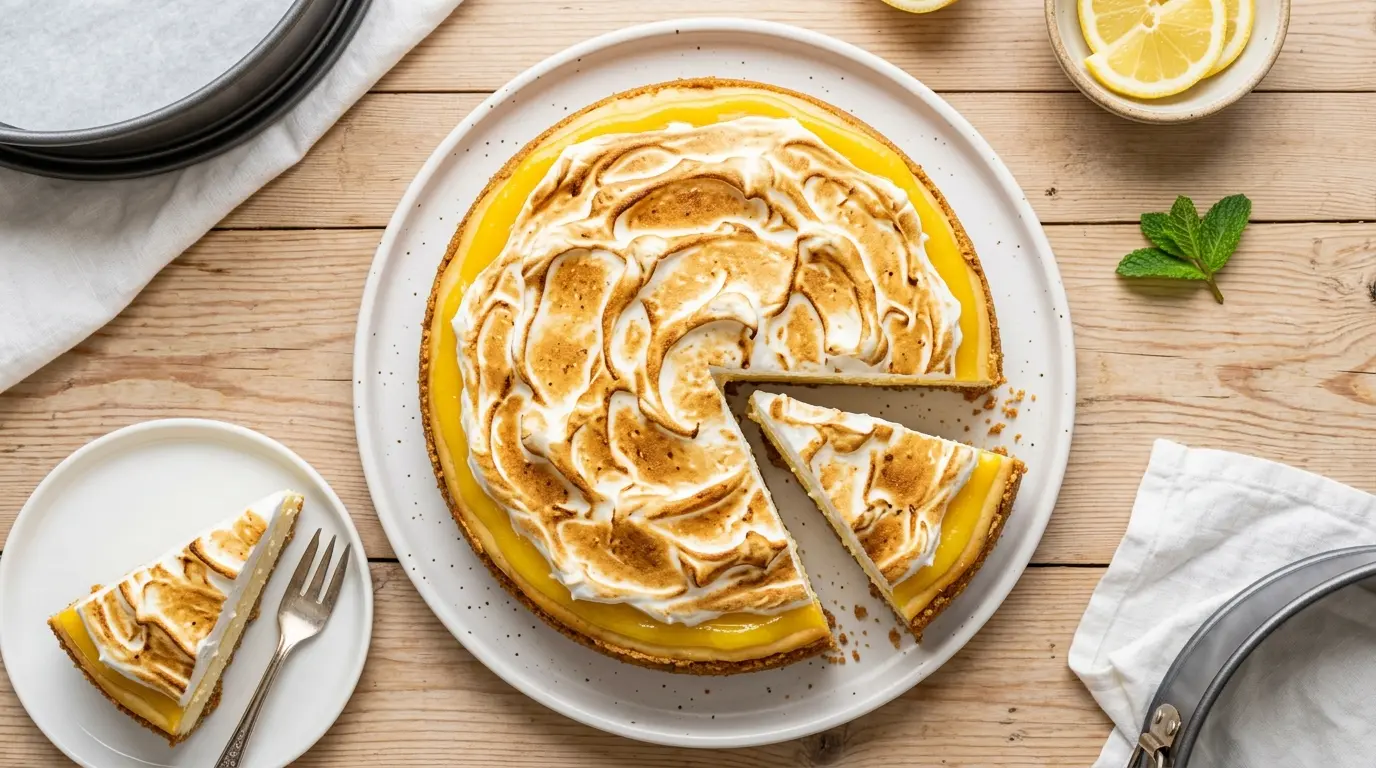
The result is a showstopping dessert with four distinct layers: a crisp golden crust, silky lemon-kissed cheesecake filling, a tart lemon curd layer, and a sky-high toasted meringue top.
It looks like a celebration, and it tastes even better than it looks.
This is the kind of dessert that makes guests go quiet for a second after the first bite. It is equally impressive for a holiday table, a birthday, or a summer dinner party when you want to serve something that feels genuinely special.
If you have ever been on the fence about attempting cheesecake from scratch, this is a great recipe to start with. The tips throughout will walk you through every step so you know exactly what to expect.
You might also enjoy: Lemon Cheesecake Recipe
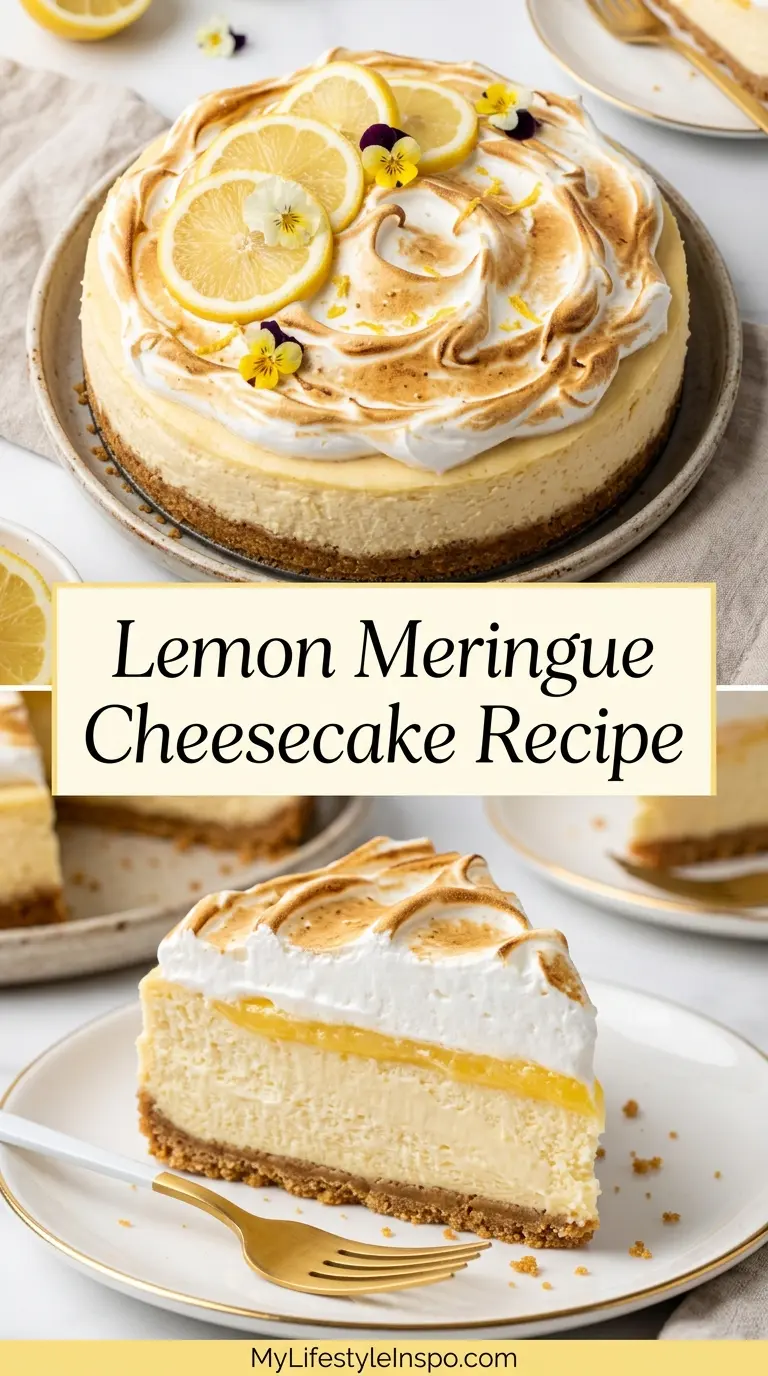
Why You’ll Love This Lemon Meringue Cheesecake Recipe
This recipe combines two beloved classics into one stunning dessert that delivers on every level.
The bright, tangy lemon curd on top cuts right through the richness of the cream cheese filling, creating a balance that keeps every bite from feeling too heavy or too sweet.
The toasted meringue adds a beautiful visual element and a light, airy contrast to the dense cheesecake beneath it.
It is a make-ahead dessert, which makes it ideal for entertaining since you can prepare it a day in advance and simply add the meringue before serving.
Here is why bakers keep coming back to this recipe:
- The graham cracker crust provides the perfect buttery, slightly salty base that holds up beautifully when sliced
- The lemon zest in the cheesecake filling gives a subtle citrus flavor that works in harmony with the tart curd layer
- The Swiss-style meringue is stable, glossy, and holds its shape far better than a basic meringue
- Each component can be prepared in stages, so the process never feels overwhelming
- The finished cheesecake is stunning enough to serve without any extra decoration
Read Also: Lemon Meringue Pie Recipe
Ingredients
This recipe is built from four components: the crust, the cheesecake filling, the lemon curd, and the meringue. Here is everything you need:
For the Graham Cracker Crust:
- 2 cups (200g) graham cracker crumbs (about 14 full crackers)
- 3 tablespoons (38g) granulated sugar
- 6 tablespoons (85g) unsalted butter, melted
For the Lemon Cheesecake Filling:
- 24 oz (680g) full-fat cream cheese, softened to room temperature
- 1 cup (200g) granulated sugar
- 3 large eggs, separated (yolks for filling, whites for meringue)
- 1/2 cup (120g) full-fat sour cream, room temperature
- 2 tablespoons (30ml) fresh lemon juice
- 2 teaspoons fresh lemon zest (from about 2 large lemons)
- 1 teaspoon pure vanilla extract
For the Lemon Curd:
- 4 large egg yolks
- 1/2 cup (100g) granulated sugar
- 1/3 cup (80ml) fresh lemon juice (about 2-3 lemons)
- 1 teaspoon lemon zest
- 4 tablespoons (57g) unsalted butter, cut into small cubes
For the Swiss Meringue:
- 3 large egg whites (reserved from the cheesecake filling)
- 3/4 cup (150g) granulated sugar
- 1/4 teaspoon cream of tartar
- 1/2 teaspoon pure vanilla extract
You might also enjoy: Lemon Curd Recipe
Kitchen Equipment Needed
Having the right tools makes this recipe much easier and ensures the best possible results. Here is what you will need:
- 9-inch springform pan (essential for cleanly removing the cheesecake)
- Stand mixer or electric hand mixer (for the cheesecake filling and meringue)
- Kitchen torch (for toasting the meringue, or use the broiler)
- Candy thermometer or instant-read thermometer (for checking the Swiss meringue temperature)
- Offset spatula (for spreading the lemon curd and meringue evenly)
- Heatproof mixing bowl (for the double boiler method in the meringue)
- Medium saucepan (for the lemon curd)
- Large roasting pan or baking dish (for the water bath)
- Fine mesh sieve or strainer (for straining the lemon curd)
- Aluminum foil (for wrapping the springform pan for the water bath)
- Measuring cups and spoons
- Lemon zester or microplane
Read Also: Baked Cheesecake Recipe
Recommended Products for This Recipe
These are products that genuinely make a difference when making this cheesecake, selected for quality and practical value.
1. 9-Inch Springform Pan with Leak-Proof Bottom
A quality springform pan is non-negotiable for cheesecake. A tight-sealing pan prevents water from seeping in during the water bath and ensures clean, even sides when you release the cheesecake. Look for one with a reinforced latch and a non-stick coating for easy release.
2. Kitchen Torch for Creme Brulee and Meringue
A kitchen torch gives you precise control over the toasting of your meringue, letting you achieve those gorgeous golden-brown peaks without over-toasting the edges. It is a tool you will use again and again for everything from creme brulee to browning casserole tops.
3. Stainless Steel Double Boiler Set
The Swiss meringue in this recipe requires gently heating egg whites over simmering water. A proper double boiler insert ensures even, controlled heat so the egg whites warm safely without scrambling. It is also perfect for making the lemon curd.
4. Microplane Zester for Lemon and Citrus
Fresh lemon zest is what sets a good lemon dessert apart from a great one. A fine microplane zester captures the essential oils from the peel without any of the bitter white pith, giving you the most vibrant, fragrant zest possible.
5. Offset Cake Decorating Spatula
Spreading the lemon curd and meringue into smooth, even layers is so much easier with an offset spatula. The angled blade keeps your hand clear of the cheesecake surface and gives you full control for a clean, professional finish.
Another favorite: Raspberry Cheesecake Recipe
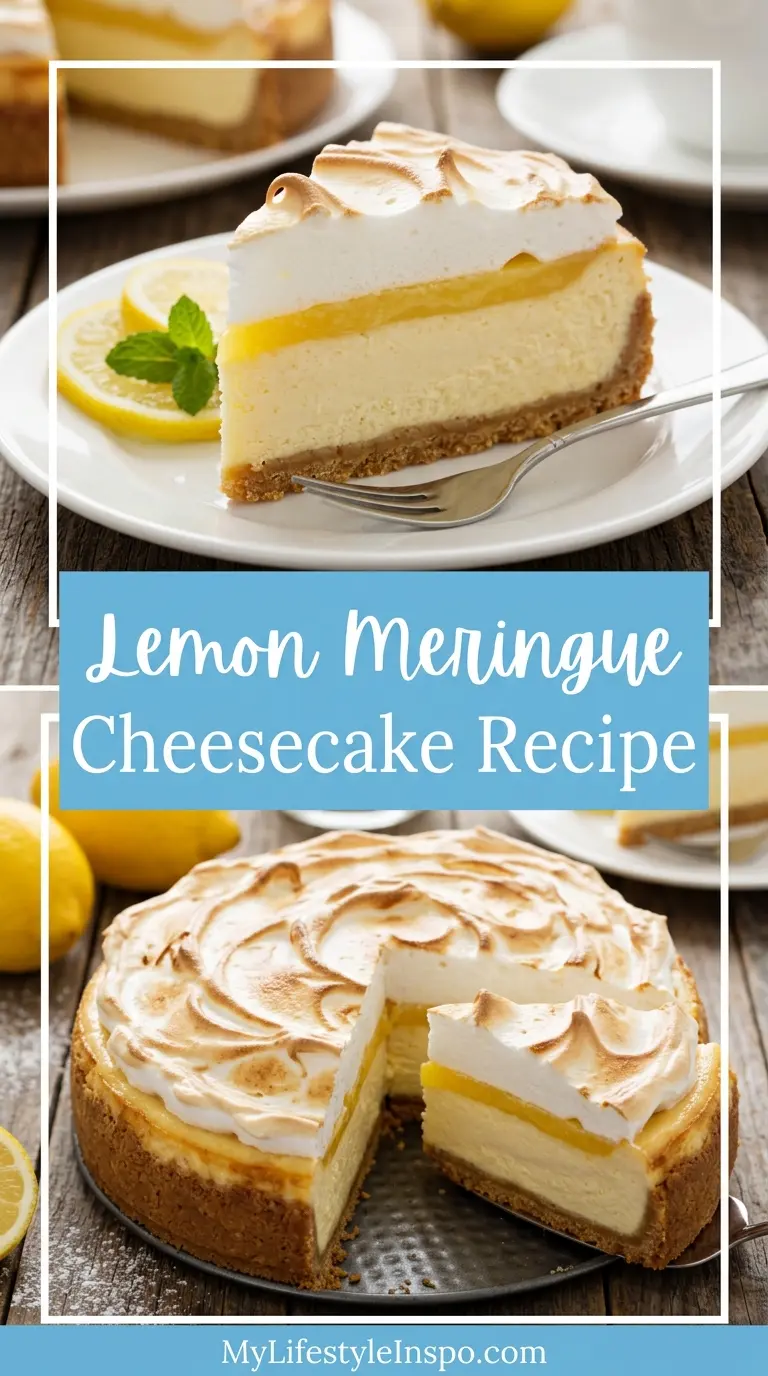
Step-by-Step Instructions
Step 1: Prepare the Graham Cracker Crust
- Preheat your oven to 325°F (163°C). Place a rack in the center of the oven.
- Wrap the outside of your 9-inch springform pan thoroughly with two layers of heavy-duty aluminum foil, pressing the foil up and around the sides. This creates a waterproof seal for the water bath later, preventing any water from seeping into the crust.
- In a medium bowl, combine 2 cups (200g) graham cracker crumbs and 3 tablespoons (38g) granulated sugar. Stir well to distribute the sugar evenly throughout the crumbs.
- Pour in 6 tablespoons (85g) of melted unsalted butter and mix until all the crumbs are moistened and the mixture holds together when pressed between your fingers. It should feel like wet sand.
- Tip the crumb mixture into the prepared springform pan. Use your fingers or the flat bottom of a measuring cup to press the crumbs firmly and evenly into the bottom of the pan, pushing about 1 inch up the sides as well. The higher crust helps contain the lemon curd layer later.
- Bake the crust for 8-10 minutes until it feels set and just barely golden. Remove from the oven and allow it to cool completely on a wire rack before adding the filling. Leave the oven on at 325°F.
Step 2: Make the Lemon Cheesecake Filling
- Ensure your cream cheese is fully at room temperature before starting. Cold cream cheese leads to a lumpy, uneven filling that never bakes smoothly. If you are short on time, cut the blocks into cubes and let them sit out for at least 30-45 minutes.
- In the bowl of a stand mixer fitted with the paddle attachment (or using a hand mixer), beat the 24 oz (680g) of softened cream cheese on medium speed for 2-3 minutes until completely smooth and fluffy, scraping down the sides of the bowl frequently.
- Add 1 cup (200g) granulated sugar and continue beating for another 2 minutes until well combined. Scrape the bowl again.
- Add the 1/2 cup (120g) of room-temperature sour cream and beat on low until just incorporated. The sour cream adds moisture and a subtle tang that makes the texture extra creamy.
- Add 2 tablespoons (30ml) fresh lemon juice, 2 teaspoons of lemon zest, and 1 teaspoon vanilla extract. Mix on low until combined.
- Separate your 3 large eggs. Set the 3 egg whites aside in a clean, grease-free bowl and cover with plastic wrap. You will use them for the meringue later.
- Add the 3 egg yolks one at a time to the cream cheese mixture, mixing on low after each addition just until incorporated. Do not overmix once the eggs are added, as this can incorporate too much air and cause the cheesecake to crack.
Step 3: Bake the Cheesecake in a Water Bath
- Place the foil-wrapped springform pan into a large roasting pan or deep baking dish.
- Pour the cream cheese filling over the cooled crust and use an offset spatula to smooth the top into an even layer.
- Carefully place the roasting pan on the oven rack. Pour very hot or boiling water into the roasting pan until it reaches about 1 inch up the sides of the springform pan. Do not let any water get over the top of the foil.
- Bake at 325°F (163°C) for 60-70 minutes. The cheesecake is done when the edges look set and matte, but the center 2-3 inches still have a slight jiggle when gently shaken. It will firm up completely as it cools.
- When done, turn the oven off and leave the cheesecake inside with the door cracked open for 1 hour. This gradual cooling prevents the surface from cracking.
- After 1 hour, remove the cheesecake from the water bath. Carefully peel away the foil and run a thin knife around the edge of the pan to loosen the sides. Allow the cheesecake to cool completely on a wire rack, then refrigerate uncovered for at least 4 hours, preferably overnight.
Step 4: Make the Lemon Curd
- In a medium saucepan, whisk together 4 large egg yolks, 1/2 cup (100g) granulated sugar, 1/3 cup (80ml) fresh lemon juice, and 1 teaspoon lemon zest until the mixture is smooth and pale yellow.
- Place the saucepan over medium-low heat and cook, stirring constantly with a rubber spatula or wooden spoon, for 8-10 minutes until the curd thickens enough to coat the back of the spoon. When you drag your finger across the coated spoon, the line should hold clean.
- Remove the pan from heat and immediately stir in 4 tablespoons (57g) of cold cubed butter, one piece at a time, until each piece is fully melted and the curd is smooth and glossy.
- Pour the finished curd through a fine mesh sieve into a clean bowl to remove any bits of cooked egg or zest that could make the texture grainy. Press plastic wrap directly onto the surface of the curd to prevent a skin from forming.
- Let the curd cool to room temperature, then refrigerate until it is fully chilled, at least 2 hours. Chilled curd spreads much more easily and stays in a neat layer on top of the cheesecake.
Step 5: Top the Cheesecake with Lemon Curd
- Remove the fully chilled cheesecake from the refrigerator. Use an offset spatula to spread the chilled lemon curd in an even layer across the top of the cheesecake, staying within the borders of the crust.
- Return the cheesecake to the refrigerator while you prepare the meringue. This helps the curd layer hold its position when you add the meringue on top.
Step 6: Make the Swiss Meringue
- Set up a double boiler by filling a medium saucepan with 1-2 inches of water and bringing it to a gentle simmer. Place a large heatproof mixing bowl on top, making sure the bottom of the bowl does not touch the water.
- Add the 3 reserved egg whites, 3/4 cup (150g) granulated sugar, and 1/4 teaspoon cream of tartar to the heatproof bowl.
- Whisk constantly while heating the mixture over the simmering water until the sugar is completely dissolved and the mixture reaches 160°F (71°C) on an instant-read thermometer, about 4-5 minutes. To test if the sugar is dissolved, rub a small amount of the mixture between your fingers. It should feel completely smooth with no graininess.
- Immediately transfer the warm mixture to the bowl of a stand mixer fitted with the whisk attachment. Beat on medium-high speed for 8-10 minutes until the meringue is very thick, glossy, and forms stiff peaks that hold their shape upright when the whisk is lifted.
- Add 1/2 teaspoon vanilla extract and beat for another 30 seconds to incorporate.
Step 7: Top the Cheesecake with Meringue and Toast
- Remove the cheesecake from the refrigerator. Using an offset spatula, pile the meringue generously on top of the lemon curd layer. Make sure the meringue touches and slightly overlaps the crust edges all the way around. This seals the lemon curd underneath and helps prevent the meringue from pulling away from the edges as it toasts.
- Use the back of a spoon or the offset spatula to create dramatic swoops and peaks in the meringue. These textured peaks will brown beautifully during toasting.
- Using a kitchen torch, hold the flame 2-3 inches from the meringue and move it in small, steady circles, toasting the peaks until they are golden brown. Work methodically from the outer edges inward, keeping the torch moving at all times to avoid burning any one spot.
- Alternatively, place the cheesecake under a preheated broiler (oven broil setting) for 2-4 minutes. Watch it every single second and rotate the pan for even browning. Do not walk away.
- Refrigerate the finished cheesecake for at least 1 hour before slicing and serving.
For a simpler base you can build on, the Philadelphia Cheesecake Recipe is a great starting point.
Tips for Success
These practical tips will help you get perfect results on your first attempt and every time after.
- Use only full-fat cream cheese and sour cream. Reduced-fat versions contain more water, which can make the filling loose and increase the risk of cracking during baking.
- Room temperature dairy is non-negotiable. Cold cream cheese or eggs can cause the batter to curdle, which results in an uneven texture in the finished cheesecake.
- Do not skip the water bath. The gentle, moist heat prevents the edges from overcooking before the center is done, which is the main cause of cracking.
- Chill the cheesecake fully before adding the curd. A warm cheesecake will melt the curd and cause it to pool rather than stay in a clean layer.
- Use a clean, completely grease-free bowl for the meringue. Even a trace of fat or egg yolk will prevent the egg whites from whipping properly.
- Press the meringue firmly against the crust edges. If there is a gap between the meringue and the crust, it will pull away and weep as it sits.
Here is a quick reference for the key tips:
- Soften cream cheese for at least 1 hour at room temperature before mixing
- Wrap the springform pan in two layers of heavy-duty foil to prevent leaks in the water bath
- The cheesecake center should still jiggle slightly when it comes out of the oven
- Let the cheesecake cool in the oven with the door cracked for 1 hour before refrigerating
- Strain the lemon curd through a fine mesh sieve for the smoothest texture
- Heat the Swiss meringue mixture to 160°F (71°C) to ensure it is safe to eat and stable
Read Also: Philadelphia No Bake Cheesecake Recipe
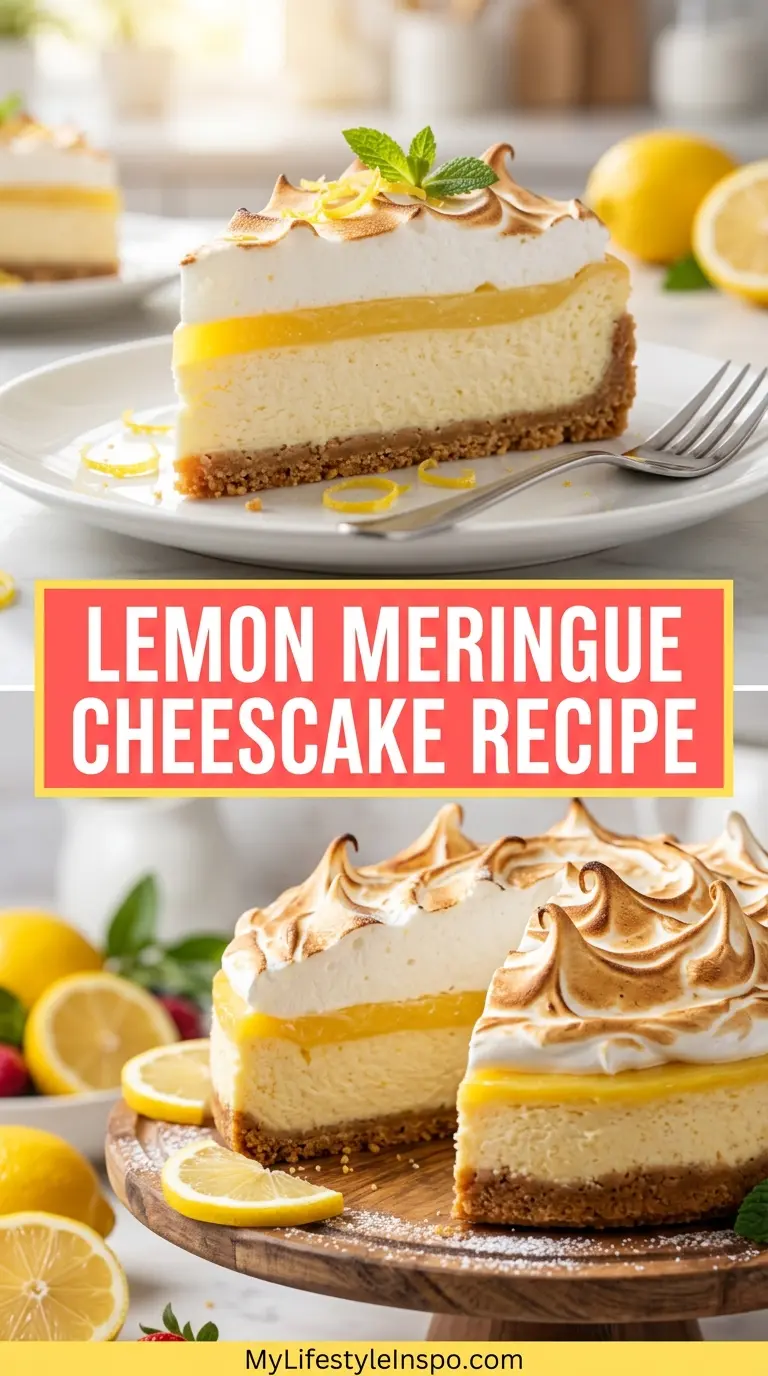
Serving Suggestions
This cheesecake is a complete showstopper on its own, but a few simple accompaniments can make it even more memorable.
Serve it chilled, directly from the refrigerator, for the cleanest slices. Use a sharp knife run under hot water and wiped clean between each cut for the most professional-looking presentation.
Here are some ideas for serving:
- Fresh raspberries or blueberries scattered alongside each slice for a pop of color and complementary tartness
- A small scoop of Vanilla Bean Ice Cream on the side for a warm-cold contrast if serving the cheesecake freshly torched
- Thin lemon slices or twists as a simple garnish on the serving platter
- A drizzle of Fresh Strawberry Sauce on the plate for a sweeter berry contrast to the tart lemon
Variations to Try
Once you have mastered the classic version, here are some fun ways to put a new spin on this recipe.
This lemon meringue cheesecake is already a creative twist on two classics, so the variations below explore other flavor combinations that follow the same layered structure.
- Lime Meringue Cheesecake: Swap the lemons for fresh limes throughout the filling and curd for a key lime-inspired version
- Orange Meringue Cheesecake: Use fresh orange juice and zest in the filling and make an orange curd topping for a sweeter, mellow citrus flavor
- Berry Swirl Version: Reduce the lemon zest in the filling and swirl a few tablespoons of raspberry jam through the cheesecake batter before baking, then top with lemon curd and meringue as usual
- Ginger Graham Crust: Add 1 teaspoon of ground ginger to the graham cracker crust mixture for a warmly spiced base that pairs beautifully with the lemon
- Chocolate Cookie Crust: Replace the graham crackers with crushed chocolate wafer cookies for a mocha-lemon flavor combination that is surprisingly delicious
- Mini Version: Use a standard 12-cup muffin tin with paper liners and divide the crust and filling among the cups. Bake for 18-22 minutes and top each with a small dollop of curd and meringue.
If you love citrus desserts, the Lemon Cake Recipe is another bright, beautiful bake worth trying.
Storage and Reheating
Proper storage is important for this cheesecake because the meringue can weep or deflate if exposed to moisture or humidity.
Store the cheesecake covered loosely in the refrigerator and plan to enjoy it within 2-3 days for the best meringue texture.
Here are the key storage details:
- Refrigerator: Store covered loosely with a tall cake dome or a large inverted bowl for up to 3 days. Avoid pressing plastic wrap directly onto the meringue.
- Freezing: Freezing this cheesecake is not recommended. The meringue does not freeze and thaw well, becoming watery and losing its texture. If you want to freeze the cheesecake, do so before adding the curd and meringue, then top and torch when ready to serve.
- Serving leftovers: Serve cold from the refrigerator. The meringue does not need reheating. If you notice any slight weeping (moisture pooling at the meringue edges), this is normal and can be blotted away with a paper towel.
- Make-ahead plan: The cheesecake itself can be baked and refrigerated up to 3 days ahead. The lemon curd can be made up to 1 week ahead and stored in a sealed jar in the refrigerator. Add the curd and meringue on the day of serving.
Another favorite: Blueberry Cheesecake Recipe
Nutritional Facts
The following is an approximate nutritional breakdown per slice based on 12 servings. Actual values may vary depending on specific brands used.
| Nutrient | Per Serving (1 slice) |
|---|---|
| Calories | 480 kcal |
| Total Fat | 31g |
| Saturated Fat | 18g |
| Cholesterol | 185mg |
| Sodium | 280mg |
| Total Carbohydrates | 44g |
| Sugars | 35g |
| Protein | 8g |
| Vitamin C | 6mg |
| Calcium | 95mg |
These values reflect a dessert meant to be enjoyed on special occasions. The recipe uses whole, real ingredients with no artificial substitutes, which means you know exactly what is going into every slice.
You might also enjoy: Low Calorie Cheesecake Recipe
Health Benefits of Key Ingredients
While this is a celebratory dessert, several of the key ingredients bring genuine nutritional value to the recipe.
The whole, minimally processed ingredients used here provide more than just great flavor.
Here is a closer look at some of the standout ingredients:
- Fresh lemon juice and zest: Lemons are an excellent source of vitamin C, which supports immune function and helps the body absorb iron. The zest also contains flavonoids that have antioxidant properties.
- Eggs: Whole eggs provide high-quality protein and are a rich source of choline, a nutrient important for brain health and cell membrane integrity. The recipe uses both the yolks and whites, making full use of the nutritional profile.
- Cream cheese: While high in fat, full-fat dairy provides fat-soluble vitamins A and D, and the fat content contributes to satiety, meaning a single slice is genuinely satisfying and reduces the urge to overindulge.
- Sour cream: Full-fat sour cream contains beneficial fatty acids and probiotics that support gut health, along with calcium for bone strength.
- Butter: Grass-fed butter in particular is a good source of butyrate, a short-chain fatty acid that supports colon health, as well as vitamins A, E, and K2.
Read Also: Sugar Free Cheesecake Recipe
Frequently Asked Questions
1. Why did my cheesecake crack on top?
Cracking is almost always caused by one of three things: overmixing the batter (especially after adding eggs), baking at too high a temperature, or cooling the cheesecake too quickly.
Always mix on low speed once the eggs are added, use a water bath, and cool the cheesecake gradually in the oven with the door cracked before moving it to the counter. In this recipe, even a cracked surface does not matter because it is completely covered by the lemon curd and meringue layers.
2. Can I use store-bought lemon curd instead of homemade?
Absolutely. A high-quality store-bought lemon curd works very well in this recipe and saves significant time.
You will need about 1 to 1.5 cups (240-360ml) of curd to cover the top of the cheesecake in a generous layer. Warm it very slightly in the microwave (about 10-15 seconds) before spreading so it pours smoothly and settles into an even layer.
3. What is the difference between Swiss meringue and regular meringue?
Swiss meringue is made by heating the egg whites and sugar together over a double boiler before whipping, which dissolves the sugar and gently pasteurizes the egg whites.
This creates a denser, glossier, more stable meringue that holds its shape for hours and does not weep as quickly as a standard French meringue made from cold raw egg whites. For a cheesecake that needs to sit in the refrigerator, Swiss meringue is the much better choice.
4. Can I make this cheesecake without a water bath?
You can, but there is a higher risk of cracking. The water bath creates humidity in the oven that slows and evens out the baking so the cheesecake sets gently without the edges overcooking.
If you skip it, reduce the oven temperature to 300°F (148°C) and bake for a little longer, watching carefully for that slight jiggle in the center. Since the lemon curd and meringue cover the top entirely, a crack will not be visible in the finished cheesecake, so this is truly a low-stakes situation.
5. Why is my meringue weeping or beading?
Weeping (liquid pooling under the meringue) usually happens when the meringue is added to a cold surface, or when it is not fully pressed against the edges to seal.
Beading (small sugar droplets on the surface) typically comes from undissolved sugar in the meringue. To prevent both, make sure the sugar is fully dissolved before whipping by rubbing the mixture between your fingers, press the meringue firmly all the way to the crust edges, and refrigerate the finished cheesecake promptly after toasting.
For more delicious cheesecake options, the New York Cheesecake Recipe is a timeless classic worth bookmarking.
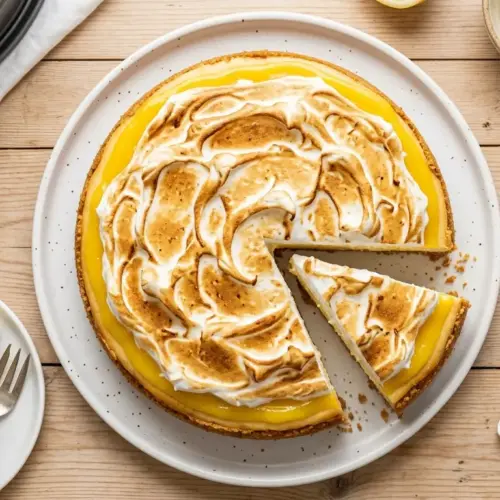
Lemon Meringue Cheesecake

Equipment
- 9-inch springform pan - leak-proof bottom recommended
- Stand mixer - or electric hand mixer
- Kitchen torch - or broiler for toasting meringue
- Candy thermometer - or instant-read thermometer
- Offset spatula
- Heatproof mixing bowl - for double boiler
- Medium saucepan - for lemon curd
- Large roasting pan - or deep baking dish for water bath
- Fine-mesh sieve - or strainer
- Aluminum foil - heavy-duty for wrapping springform pan
- Measuring cups and spoons
- Lemon zester - or microplane
Ingredients
- 2 cups graham cracker crumbs - 200g, about 14 full crackers
- 3 tablespoons granulated sugar - 38g
- 6 tablespoons unsalted butter - 85g, melted
For the Lemon Cheesecake Filling
- 24 oz cream cheese - 680g, full-fat, softened to room temperature
- 1 cup granulated sugar - 200g
- 3 large eggs - separated (yolks for filling, whites for meringue)
- 1/2 cup full-fat sour cream - 120g, room temperature
- 2 tablespoons fresh lemon juice - 30ml
- 2 teaspoons lemon zest - from about 2 large lemons
- 1 teaspoon pure vanilla extract
For the Lemon Curd
- 4 large egg yolks
- 1/2 cup granulated sugar - 100g
- 1/3 cup fresh lemon juice - 80ml, about 2-3 lemons
- 1 teaspoon lemon zest
- 4 tablespoons unsalted butter - 57g, cut into small cubes
For the Swiss Meringue
- 3 large egg whites - reserved from the cheesecake filling
- 3/4 cup granulated sugar - 150g
- 1/4 teaspoon cream of tartar
- 1/2 teaspoon pure vanilla extract
Instructions
- Preheat oven to 325°F. Wrap springform pan in two layers of foil. Combine graham cracker crumbs and sugar, then stir in melted butter. Press mixture into bottom and 1 inch up sides of pan. Bake 8-10 minutes until set. Cool completely.
- Beat softened cream cheese on medium speed 2-3 minutes until smooth. Add sugar and beat 2 more minutes. Mix in sour cream, lemon juice, lemon zest, and vanilla until combined. Add egg yolks one at a time on low speed, mixing just until incorporated.
- Pour filling over cooled crust and smooth top. Place springform pan in roasting pan and add hot water until 1 inch up the sides. Bake at 325°F for 60-70 minutes until edges are set but center jiggles slightly. Turn off oven, crack door, and leave inside 1 hour.
- Remove cheesecake from water bath, peel off foil, and run a knife around the edge. Cool completely on a wire rack, then refrigerate uncovered at least 4 hours or overnight.
- Whisk together egg yolks, sugar, lemon juice, and lemon zest in a saucepan. Cook over medium-low heat, stirring constantly, 8-10 minutes until thickened. Remove from heat and stir in cold butter cubes one at a time until smooth. Strain through sieve and press plastic wrap on surface. Chill at least 2 hours.
- Spread chilled lemon curd in an even layer over the top of the chilled cheesecake. Return to refrigerator while preparing the meringue.
- In a heatproof bowl over simmering water, whisk egg whites, sugar, and cream of tartar until sugar dissolves and mixture reaches 160°F (71°C). Transfer to stand mixer and beat on medium-high 8-10 minutes until thick, glossy, and stiff peaks form. Add vanilla and beat 30 seconds.
- Pile meringue generously over lemon curd, making sure it touches the crust edges all the way around. Create swoops and peaks with a spatula. Toast with a kitchen torch until golden brown, or broil 2-4 minutes watching carefully. Refrigerate at least 1 hour before serving.
Notes
- Use only full-fat cream cheese and sour cream for the best texture. Reduced-fat versions contain more water and can cause cracking.
- All dairy must be at room temperature before mixing. Cold ingredients will create a lumpy filling.
- The water bath is essential for gentle, even baking. Do not skip it to prevent cracking.
- Chill the cheesecake completely before adding lemon curd, or the curd will melt and pool.
- For the meringue, ensure bowls are completely grease-free. Even a trace of fat will prevent stiff peaks.
- Press the meringue firmly against the crust edges to prevent weeping and pulling away.
- Use a sharp knife run under hot water and wiped clean between cuts for clean, professional slices.
- This cheesecake can be baked and refrigerated up to 3 days ahead. Add lemon curd and meringue the day of serving.
- Store covered loosely in the refrigerator for up to 3 days. Avoid pressing plastic wrap directly onto the meringue.
- Freezing is not recommended as the meringue will become watery and lose its texture.
Final Thoughts
This lemon meringue cheesecake recipe truly delivers one of those dessert moments that people talk about long after the plate is empty.
Every layer, from the crisp buttery crust to the creamy lemon filling, the tart golden curd, and the billowy toasted meringue, comes together into something that feels both nostalgic and special.
It takes a little time and patience to build each component, but none of it is difficult, and the process itself is genuinely satisfying.
If you try this recipe, leave a comment below and let me know how it turned out! I would love to hear if you added your own twist or which layer was your favorite. And if you share it on social media, be sure to tag us so we can see your beautiful creation.
Recommended:
- Best Cheesecake Recipe
- No Bake Cheesecake Recipe
- Strawberry Cheesecake Recipe
- Oreo Cheesecake Recipe
- Keto Cheesecake Recipe
- Gluten Free Cheesecake Recipe
- Pumpkin Cheesecake Recipe
- Mini Cheesecake Recipe
- Lemon Chiffon Cake Recipe
- Cream Cheese Frosting Recipe