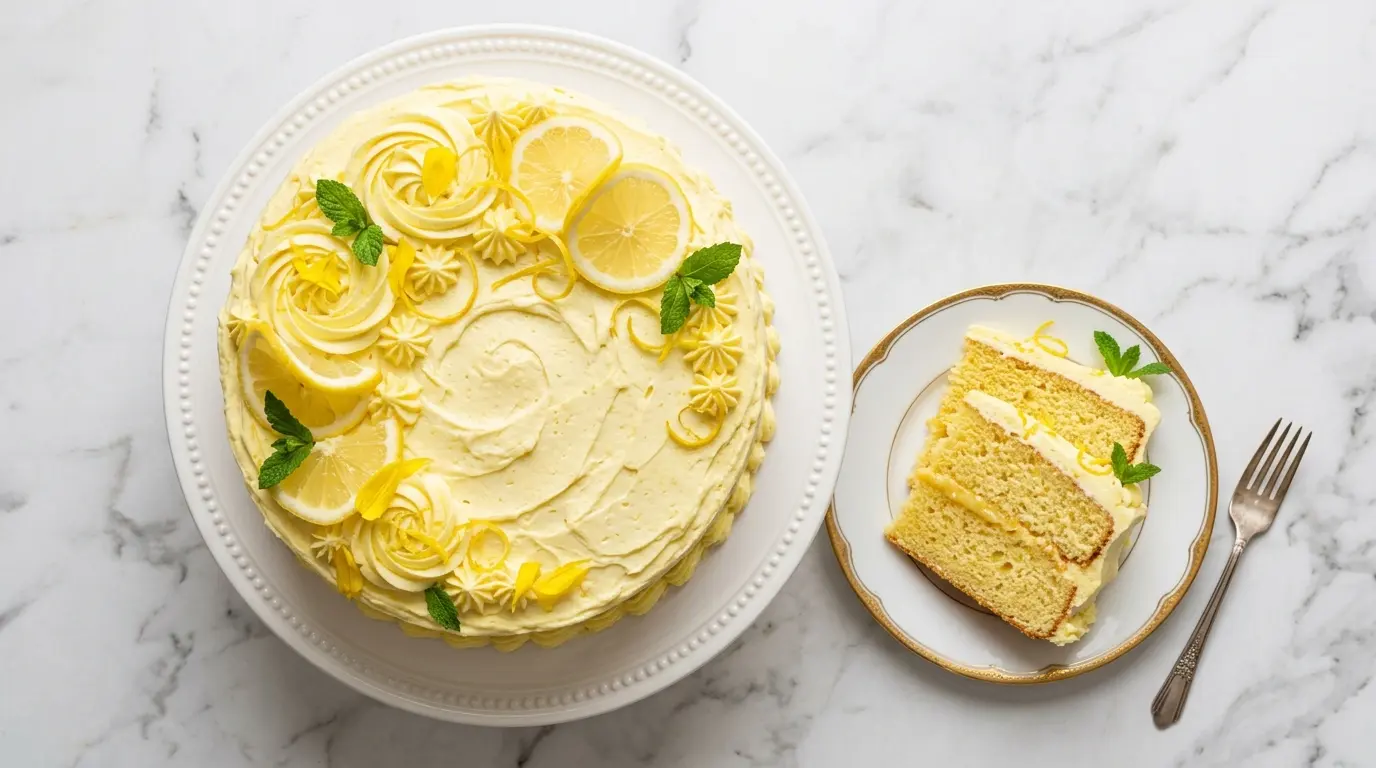
If you have been searching for the perfect Lemon Chiffon Cake Recipe, you are in exactly the right place. This cake is one of those old-fashioned treasures that never goes out of style. It is impossibly light, delicately springy, and filled with that bright, cheerful lemon flavor that makes every bite feel like a little celebration.
What makes a chiffon cake special is its unique method. Unlike a traditional butter cake, chiffon cakes are made with oil and whipped egg whites folded into the batter. The oil keeps the crumb moist and tender, while the whipped whites lift the whole thing into something almost ethereal. It sits somewhere between a rich layer cake and the cloud-like texture of an angel food cake, giving you the best of both worlds.
Fresh lemon zest and lemon juice are the heroes here. Using real lemons instead of bottled juice makes a massive difference in the final flavor. You get that floral, aromatic quality from the zest and a clean tartness from the juice that no extract can fully replicate (though a touch of lemon extract does not hurt!).
This recipe has been a beloved classic since the 1940s, when the original chiffon cake formula was sold to General Mills and spread across America through Betty Crocker marketing materials. It has earned its place in the recipe box for a reason.
Whether you are baking it for a spring celebration, an Easter table, a summer party, or simply because you want something beautiful and different on a weekend, this cake delivers.
You might also enjoy: Angel Food Cake Recipe

Why You’ll Love This Lemon Chiffon Cake Recipe
This cake is one of those recipes that surprises people every single time.
It looks impressive but is genuinely achievable for any home baker willing to follow the steps carefully. The technique is the kind you will want to repeat again and again.
The texture is absolutely unlike anything you get from a standard boxed cake mix. It is springy, feathery, and almost melts in your mouth.
Fresh lemon flavor runs through every layer without being overwhelmingly tart. It is bright, clean, and perfectly balanced.
The cake also stays moist for days thanks to the oil base. Oil-based cakes hold onto their moisture much better than butter-based ones, which means leftovers are just as good as the first slice.
It is a naturally crowd-pleasing dessert that works for every season. Light enough for a summer picnic, elegant enough for a dinner party centerpiece.
- Makes a large cake that easily feeds 12 to 16 people
- Works beautifully with a simple lemon glaze, whipped cream, or lemon buttercream frosting
- The cake can be baked ahead and stored, making it perfect for entertaining
- An excellent introduction to working with whipped egg whites if you are building your baking skills
- Customizable with different citrus fruits or additional flavorings
Read Also: Lemon Curd Recipe
Ingredients
The ingredient list for a classic lemon chiffon cake is straightforward, but each one plays an important role. Cake flour produces the most delicate, tender crumb because of its lower protein content, so it is worth seeking out rather than substituting all-purpose flour if you want the best texture. Fresh lemons are non-negotiable for the best flavor.
For the Cake:
- 2 1/4 cups (255g) cake flour, sifted
- 1 1/2 cups (300g) granulated sugar, divided
- 1 tablespoon baking powder
- 1 teaspoon fine salt
- 1/2 cup (120ml) vegetable oil or neutral canola oil
- 7 large eggs, separated (at room temperature)
- 3/4 cup (180ml) cold water
- 2 tablespoons fresh lemon juice (from about 1 large lemon)
- 2 tablespoons fresh lemon zest (from about 2 lemons)
- 1 teaspoon pure lemon extract
- 1 teaspoon pure vanilla extract
- 1/2 teaspoon cream of tartar
For the Lemon Buttercream Frosting (Optional):
- 1 cup (226g) unsalted butter, softened to room temperature
- 3 to 4 cups (360 to 480g) powdered sugar, sifted
- 3 tablespoons fresh lemon juice
- 1 tablespoon fresh lemon zest
- 1 to 2 tablespoons heavy cream, as needed
- Pinch of salt
This pairs beautifully with homemade Lemon Cheesecake if you are planning a full lemon-themed dessert spread.
Kitchen Equipment Needed
Having the right equipment is especially important for a chiffon cake. The pan choice in particular is critical. You must use an ungreased tube pan or angel food cake pan with a removable bottom. Do not grease the pan. The batter needs to grip the sides as it rises, which is what gives it that signature height. Greasing the pan will prevent this and cause the cake to collapse.
- 10-inch aluminum tube pan with removable bottom (angel food cake pan)
- Stand mixer or hand electric mixer with whisk attachment
- Two large mixing bowls
- Sifter or fine mesh sieve
- Rubber spatula or large balloon whisk (for folding)
- Microplane or citrus zester
- Citrus juicer
- Wire cooling rack
- Offset spatula (for frosting)
- Measuring cups and spoons
- Kitchen scale (recommended for accuracy)
Read Also: Pound Cake Recipe
Recommended Products for This Recipe
These products are recommended based on quality, performance, and the real difference they make in the outcome of your chiffon cake.
1. Nordic Ware Platinum Collection Angel Food Cake Pan
This aluminum tube pan with a removable bottom is the gold standard for chiffon and angel food cakes. It conducts heat evenly from the bottom up, ensuring a consistent bake, and the removable base makes releasing the cake clean and simple without disturbing the delicate crumb. Investing in a quality tube pan means your chiffon cakes will turn out beautifully every time.
2. Microplane Premium Classic Series Zester Grater
Getting the most flavorful lemon zest requires a razor-sharp zester, and Microplane delivers consistently fine, fragrant zest without any of the bitter white pith. The zest is one of the primary flavor contributors in this cake, so quality here matters. This tool is a workhorse in any baking kitchen.
3. Bob’s Red Mill Unbleached White Fine Pastry Flour (Cake Flour)
Cake flour is what separates a chiffon cake with an ultra-tender crumb from a denser, chewier one. The lower protein content means less gluten development, which is exactly what you want in a delicate cake like this. Bob’s Red Mill is a reliably high-quality option widely available for home bakers.
4. KitchenAid 5-Quart Tilt-Head Stand Mixer
Whipping the egg whites to stiff peaks is the single most important step in this recipe, and a stand mixer makes it effortless. The KitchenAid’s whisk attachment aerates the egg whites quickly and reliably, freeing up your hands to prepare the yolk batter. It is an investment that pays off across every baking project.
Another great lemon-forward recipe to try next is this Classic Yellow Cake Recipe for a more traditional butter cake comparison.

Step-by-Step Instructions
1. Prep Your Workspace
- Position your oven rack in the lower third of the oven. This placement ensures the tall chiffon cake bakes through fully without the top overbrowning.
- Preheat the oven to 325°F (163°C). Do not rush this step. Give your oven at least 15 to 20 minutes to fully come up to temperature.
- Set out your 10-inch tube pan but do NOT grease it. Leave it completely dry. This is essential for chiffon cake.
- Separate your 7 eggs, placing the yolks in one large bowl and the whites in the bowl of your stand mixer (or a separate large, clean bowl). Make sure the bowl for the whites is completely clean and grease-free. Even a trace of fat will prevent the egg whites from whipping correctly.
- Bring your eggs to room temperature if they have been refrigerated. Cold whites do not whip as well.
2. Mix the Dry Ingredients
- Place a fine mesh sieve or sifter over a large mixing bowl.
- Add the 2 1/4 cups (255g) of sifted cake flour, 1 1/4 cups (250g) of the granulated sugar (reserve the remaining 1/4 cup / 50g for the egg whites), the 1 tablespoon of baking powder, and the 1 teaspoon of salt to the sifter.
- Sift everything together into the bowl. Sifting the dry ingredients twice ensures they are completely lump-free and well aerated, which contributes to a lighter cake.
- Add the 2 tablespoons of fresh lemon zest directly to the dry ingredients and whisk it in briefly. The zest will perfume the flour with essential lemon oils as the batter comes together.
3. Combine the Wet Ingredients With the Dry
- Make a well in the center of the sifted dry ingredients by pushing the flour mixture to the sides of the bowl.
- Into the well, add the 1/2 cup (120ml) of vegetable oil, the 7 egg yolks, the 3/4 cup (180ml) of cold water, the 2 tablespoons of fresh lemon juice, the 1 teaspoon of lemon extract, and the 1 teaspoon of vanilla extract.
- Starting from the center and working outward, whisk the liquid ingredients together, gradually drawing in the dry ingredients from the sides of the bowl as you go.
- Continue whisking until you have a smooth, thick batter with no lumps. This should take about 1 to 2 minutes of whisking. Set the yolk batter aside.
4. Whip the Egg Whites
- Using your stand mixer fitted with the whisk attachment (or a hand mixer), begin beating the 7 egg whites on medium speed until they become frothy and opaque, about 1 to 2 minutes.
- Add the 1/2 teaspoon of cream of tartar. Cream of tartar is an acid that stabilizes the egg whites and helps them hold their structure, preventing them from collapsing.
- Increase the mixer speed to medium-high and continue beating until soft peaks begin to form. At this stage, when you lift the whisk, the peaks will curl over gently.
- With the mixer still running on medium-high, slowly sprinkle in the remaining 1/4 cup (50g) of granulated sugar, one tablespoon at a time. Adding the sugar gradually allows it to dissolve properly.
- Continue beating until you reach stiff, glossy peaks. When you lift the whisk, the peaks should stand straight up and hold their shape without drooping. The whites should look shiny, not dry or grainy. If they look dry or clumpy, they have been overbeaten.
5. Fold the Egg Whites Into the Batter
- Using a large rubber spatula or a balloon whisk (the whisk works beautifully here because the batter slips through the wires with minimal deflation), scoop about one-quarter of the whipped egg whites into the yolk batter.
- Fold gently but thoroughly. This first addition lightens the denser yolk batter, making it easier to fold in the remaining whites without losing too much volume.
- Add the remaining egg whites in three additions, folding gently each time with a large J-shaped motion. Cut down through the center of the batter, scoop along the bottom, and fold up and over.
- Stop folding as soon as you see no more streaks of white. Do not overmix. Overmixing will deflate the egg whites and result in a dense, flat cake.
6. Pour and Bake
- Carefully pour the batter into the ungreased 10-inch tube pan, filling it evenly. The pan should be about two-thirds to three-quarters full.
- Run a thin knife or skewer through the batter in a figure-eight motion to eliminate any large air pockets.
- Place the pan on the lower oven rack and bake at 325°F (163°C) for 50 to 55 minutes. The cake is done when the top springs back immediately when lightly pressed with your fingertip, and a wooden skewer inserted near the center comes out clean.
- Do not open the oven door during the first 45 minutes of baking. The sudden temperature drop can cause the cake to sink.
7. Cool the Cake Upside Down
- This is a crucial step that many beginners skip, and it makes all the difference. Immediately upon removing the cake from the oven, invert the pan upside down.
- If your tube pan has legs around the rim, it will stand on its own. If it does not have legs, invert it over the neck of a sturdy wine bottle or a large metal funnel.
- Allow the cake to cool completely in this inverted position, at least 1.5 to 2 hours. Cooling it upside down uses gravity to prevent the delicate structure from collapsing under its own weight while it sets.
- Once completely cool, run a thin knife carefully around the outer edges and around the center tube to release the cake. Gently push up on the removable bottom to release it from the pan sides, then run the knife under the cake to separate it from the base.
8. Make the Lemon Buttercream Frosting
- In a large bowl or the bowl of your stand mixer, beat the 1 cup (226g) of softened unsalted butter on medium-high speed for 2 to 3 minutes until pale and creamy.
- Reduce the speed to low and add the sifted powdered sugar one cup at a time, mixing after each addition until incorporated.
- Add the 3 tablespoons of fresh lemon juice, the 1 tablespoon of fresh lemon zest, and the pinch of salt. Mix until combined.
- Increase the speed to medium-high and beat for another 2 minutes. If the frosting is too thick, add heavy cream one tablespoon at a time until you reach your desired spreadable consistency.
- Taste and adjust with more lemon juice or powdered sugar as needed.
9. Frost and Serve
- Place the cooled cake on a cake stand or serving plate.
- Using an offset spatula, spread the lemon buttercream over the top and sides of the cake, swirling as you go.
- Garnish with fresh lemon zest, a few thin lemon slices, or fresh berries if desired.
- Slice with a serrated knife using a gentle sawing motion to preserve the delicate crumb.
This homemade Vanilla Buttercream Frosting is another great topping option if you want a more neutral, creamy finish.
Tips for Success
Chiffon cakes reward careful technique. Following these tips will help you avoid the most common pitfalls and bake a cake that rises beautifully and tastes as good as it looks.
- Do not grease the pan. This is the number one mistake. The batter must cling to the sides to rise properly. A greased pan will cause the cake to slide and collapse.
- Use room temperature eggs. Cold egg whites whip up with less volume and instability. Pull them from the fridge at least 30 minutes before you begin.
- Measure cake flour by weight, not volume, if possible. Spooning flour into a measuring cup compacts it, leading to a denser cake. A kitchen scale removes all guesswork.
- Do not overbeat the egg whites. Stiff, glossy peaks are the goal. Overbeaten whites look dry and grainy and will not fold smoothly, leaving lumps in the final batter.
- Fold, do not stir. A heavy stirring motion destroys the air bubbles you worked hard to create. Use a light, gentle folding motion and stop as soon as the whites are incorporated.
- Invert immediately after baking. Do not let the cake cool right-side up, even for a moment. Have your wine bottle or funnel ready before you pull the pan from the oven.
- Use fresh lemons. Bottled lemon juice is processed and flat-tasting. Fresh lemon juice and zest have a brightness and fragrance that makes an enormous difference.
- Do not skip the sifting. Sifting the dry ingredients together ensures even distribution of the baking powder and salt, which means a more consistent rise and texture.
Read Also: Cream Cheese Frosting Recipe
Serving Suggestions
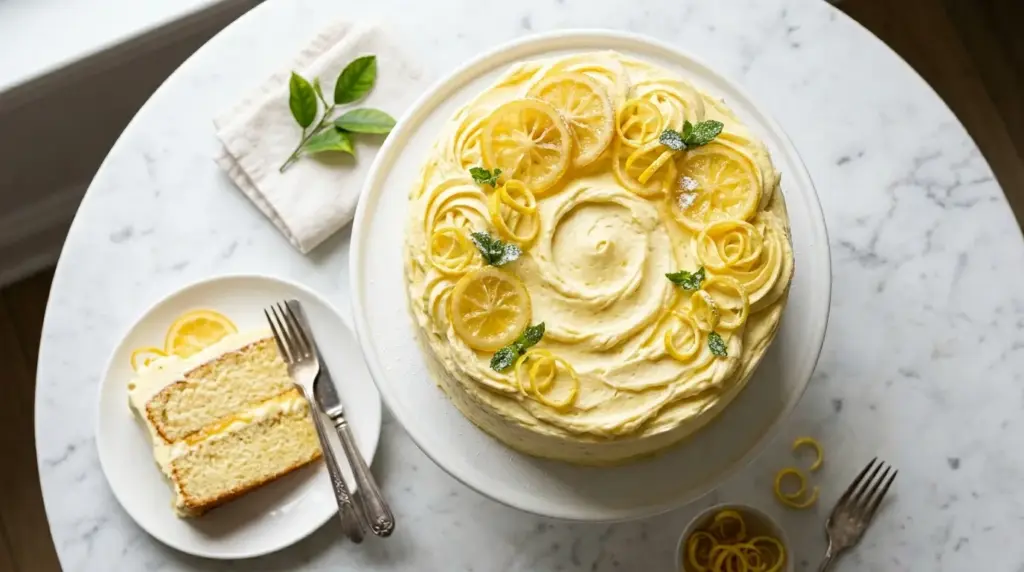
Lemon Chiffon Cake is one of those wonderfully versatile desserts that suits so many occasions and presentations.
The simplest and most classic serving option is a slice of the plain cake with a cloud of lightly sweetened whipped cream and a scattering of fresh berries. The contrast between the airy cake, the cool cream, and the juicy fruit is just perfect. You can also drizzle the cake with a simple lemon glaze (powdered sugar whisked with fresh lemon juice) for an elegant, low-effort finish.
- Top with Fresh Strawberry Sauce for a beautiful color contrast and fresh fruit flavor
- Serve alongside a scoop of vanilla bean ice cream for an indulgent pairing
- Dust the top simply with powdered sugar for a minimalist presentation
- Fill the center hole of the tube cake with a pile of fresh blueberries or raspberries as a beautiful garnish
- Serve with lemon curd spooned alongside each slice for extra citrus intensity
- Pair with a glass of fresh lemonade or iced tea for a perfect summer spread
Variations to Try
Once you have mastered the classic lemon version, there are so many delicious directions you can take this cake. The chiffon method translates beautifully across a whole range of flavors.
- Orange Chiffon Cake: Swap the lemon juice, zest, and extract for fresh orange juice, orange zest, and orange extract. The flavor is sweeter and warmer.
- Lime Chiffon Cake: Use fresh lime juice and zest for a sharper, slightly tropical citrus note. A coconut glaze on top would be stunning.
- Lemon Poppy Seed Chiffon Cake: Fold 2 tablespoons of poppy seeds into the finished batter just before pouring it into the pan.
- Grapefruit Chiffon Cake: Pink grapefruit juice and zest give this cake a gorgeous blush tone and a slightly more complex, bittersweet citrus flavor.
- Vanilla Chiffon Cake: Leave out the lemon entirely, increase the vanilla extract to 2 teaspoons, and add a pinch of cream of tartar to stabilize the whites. Classic and beautiful.
- Glazed Lemon Chiffon Cake (No Frosting): Whisk 1 1/2 cups of powdered sugar with 3 to 4 tablespoons of fresh lemon juice until smooth and drizzle over the cooled cake instead of using buttercream.
You might also love this Sour Cream Coffee Cake Recipe for another beautifully tender, crowd-pleasing tube cake option.
Storage and Reheating
Proper storage keeps your chiffon cake tasting fresh for several days, and the oil base actually helps it maintain moisture longer than butter cakes typically do.
- Store the unfrosted cake at room temperature, covered loosely with plastic wrap or a cake dome, for up to 3 days.
- If the cake has been frosted with buttercream, store it in an airtight container at room temperature for up to 2 days, or refrigerate for up to 5 days. Allow the cake to come to room temperature for 30 minutes before serving if it has been refrigerated, as the frosting will firm up in the cold.
- To freeze the unfrosted cake, wrap it tightly in plastic wrap and then in aluminum foil. Freeze for up to 2 months. Thaw overnight in the refrigerator and allow it to come to room temperature before frosting and serving.
- Chiffon cake does not need reheating. It is best served at room temperature.
- Store individual slices in an airtight container with parchment paper between layers if stacking.
This Pastry Cream Recipe makes a wonderful make-ahead filling if you want to build this into a more elaborate layered dessert.
Nutritional Facts
The following nutritional information is based on one slice of unfrosted lemon chiffon cake, assuming the cake is cut into 12 equal portions. Adding frosting or other toppings will increase calorie and sugar content.
| Nutrient | Per Serving (1/12 of cake) |
|---|---|
| Calories | ~290 kcal |
| Total Fat | 12g |
| Saturated Fat | 2g |
| Cholesterol | 110mg |
| Sodium | 210mg |
| Total Carbohydrates | 40g |
| Dietary Fiber | 0.5g |
| Total Sugars | 25g |
| Protein | 5g |
| Vitamin C | 4mg |
| Calcium | 70mg |
| Iron | 1mg |
These values are estimates and may vary based on specific brands and portion sizes used.
For a lighter dessert comparison, you might enjoy this Fruit Tart Recipe which packs a lot of fresh fruit into each serving.
Health Benefits of Key Ingredients
While this is absolutely a treat, several ingredients in this cake do bring real nutritional value to the table.
Enjoying this cake as part of a balanced diet means you can feel good about what is going into it.
- Eggs: Whole eggs are one of the most nutrient-dense foods available. They provide complete protein with all nine essential amino acids, along with vitamins B12, D, and choline, which is essential for brain health. Using seven eggs in this recipe means each slice provides a meaningful protein contribution.
- Fresh Lemon Juice and Zest: Lemons are an excellent source of vitamin C, a powerful antioxidant that supports immune function and skin health. The flavonoids found in lemon zest have also been studied for their anti-inflammatory properties. Using fresh lemon rather than extract maximizes these benefits.
- Vegetable Oil: Unlike butter, vegetable or canola oil is high in unsaturated fats and low in saturated fat, making it a heart-friendlier fat option in baking. The use of oil also means this cake is naturally lower in saturated fat than many traditional butter-based cakes.
- Cake Flour: While refined, cake flour’s lower protein content results in a cake that requires less gluten development, meaning less structural toughness and a more digestible final product compared to bread flour-heavy baked goods.
Read Also: Lemon Shortbread Cookies Recipe
Frequently Asked Questions
1. Why does my chiffon cake collapse after baking?
The most common cause of a collapsed chiffon cake is not inverting the pan immediately after baking.
Chiffon cake has a very delicate, airy structure that is still setting as it cools. If left right-side up, gravity pulls the structure down before it can firm up, causing it to compress. Always flip the pan upside down the moment it comes out of the oven and leave it until completely cool.
2. Can I bake this cake in regular round cake pans instead of a tube pan?
Yes, though the results will be slightly different.
Divide the batter between two 9-inch round cake pans lined with parchment (but still ungreased on the sides). Bake at 325°F for about 30 to 35 minutes, checking for doneness with the springy-top test. You can then layer the rounds with frosting and lemon curd for a beautiful layer cake presentation.
3. Why is it important not to grease the tube pan?
The batter needs to grab onto the pan walls as it rises, which allows it to climb up to its full height.
A greased pan creates a slippery surface that the batter slides on, preventing it from rising properly and causing the cake to be dense and flat. This is one rule in chiffon cake baking that truly cannot be skipped.
4. Can I use bottled lemon juice instead of fresh?
You can, but the flavor will be noticeably less vibrant.
Fresh lemon juice contains volatile aromatic compounds that give it a bright, clean taste. Bottled juice is heat-processed, which destroys many of those compounds. For a lemon dessert where citrus is the star, fresh juice and zest are strongly recommended.
5. Can I make this cake without lemon extract?
Yes. The lemon extract simply amplifies the lemon flavor alongside the fresh juice and zest.
If you do not have it, increase the amount of fresh lemon zest slightly (add an extra teaspoon) to compensate. The cake will still have beautiful, authentic lemon flavor.
This cake slices beautifully next to a scoop of Vanilla Bean Ice Cream for a classic pairing.

Lemon Chiffon Cake

Equipment
- 10-inch aluminum tube pan with removable bottom - angel food cake pan, do not grease
- Stand mixer or hand electric mixer - with whisk attachment
- Large mixing bowls - two required
- Sifter or fine-mesh sieve
- Rubber spatula or large balloon whisk - for folding
- Microplane or citrus zester
- Citrus juicer
- Wire cooling rack
- Offset spatula - for frosting
- Measuring cups and spoons
- Kitchen scale - recommended for accuracy
Ingredients
For the Cake
- 2 1/4 cups cake flour - 255g, sifted
- 1 1/2 cups granulated sugar - 300g, divided (1 1/4 cups / 250g for batter, 1/4 cup / 50g for egg whites)
- 1 tablespoon baking powder
- 1 teaspoon fine salt
- 1/2 cup vegetable oil or neutral canola oil - 120ml
- 7 large eggs - separated, at room temperature
- 3/4 cup cold water - 180ml
- 2 tablespoons fresh lemon juice - from about 1 large lemon
- 2 tablespoons fresh lemon zest - from about 2 lemons
- 1 teaspoon pure lemon extract
- 1 teaspoon pure vanilla extract
- 1/2 teaspoon cream of tartar
For the Lemon Buttercream Frosting (Optional)
- 1 cup unsalted butter - 226g, softened to room temperature
- 3 to 4 cups powdered sugar - 360-480g, sifted
- 3 tablespoons fresh lemon juice
- 1 tablespoon fresh lemon zest
- 1 to 2 tablespoons heavy cream - as needed
- pinch of salt
For Serving (Optional)
- fresh berries - for garnish
Instructions
- Position oven rack in lower third and preheat to 325°F (163°C). Do not grease the 10-inch tube pan. Separate eggs, placing yolks in one bowl and whites in a clean stand mixer bowl.
- Sift cake flour, 1 1/4 cups sugar, baking powder, and salt into a large bowl. Whisk in lemon zest until combined.
- Make a well in the dry ingredients. Add oil, egg yolks, water, lemon juice, lemon extract, and vanilla. Whisk from center outward until smooth with no lumps, about 1-2 minutes.
- Beat egg whites on medium speed until frothy. Add cream of tartar and increase speed to medium-high. Slowly sprinkle in remaining 1/4 cup sugar while beating until stiff, glossy peaks form.
- Fold one-quarter of whipped whites into yolk batter to lighten. Gently fold in remaining whites in three additions using a J-shaped motion until no streaks remain. Do not overmix.
- Pour batter into ungreased tube pan, filling two-thirds to three-quarters full. Run a knife through batter in figure-eight motion to remove air pockets. Bake 50-55 minutes until top springs back.
- Immediately invert pan upside down over a bottle neck or funnel. Cool completely, at least 1.5-2 hours. Run a knife around edges and tube to release, then remove from pan.
- Beat softened butter until pale and creamy. Gradually add powdered sugar, then lemon juice, zest, and salt. Beat until fluffy, adding cream as needed for spreadable consistency.
- Place cooled cake on serving plate. Spread buttercream over top and sides using an offset spatula. Garnish with zest, lemon slices, or berries. Slice with a serrated knife.
Notes
- Do not grease the pan: The batter must grip the sides to rise properly. Greasing will cause the cake to collapse.
- Use room temperature eggs: Cold egg whites whip up with less volume and stability. Remove from fridge 30 minutes before baking.
- Measure flour by weight: Use a kitchen scale for accuracy. Spooning flour into a cup compacts it and leads to a denser cake.
- Don’t overbeat egg whites: Stop at stiff, glossy peaks. Overbeaten whites look dry and grainy and won’t fold smoothly.
- Fold gently: Use a light J-shaped folding motion and stop as soon as whites are incorporated. Stirring will deflate the batter.
- Invert immediately: Flip the pan upside down the moment it comes out of the oven. Have your bottle or funnel ready beforehand.
- Use fresh lemons: Bottled juice lacks the bright, aromatic flavor of fresh. Fresh zest and juice are essential for the best taste.
- Store unfrosted cake: Keep at room temperature covered loosely for up to 3 days. Frosted cake stays fresh 2 days at room temperature or 5 days refrigerated.
- Freeze unfrosted: Wrap tightly in plastic wrap and foil, freeze up to 2 months. Thaw overnight in the refrigerator before serving.
- Citrus variations: Swap lemon for orange, lime, or grapefruit juice and zest for a completely different flavor profile.
Final Thoughts
A Lemon Chiffon Cake is one of those recipes that rewards patience and technique with something truly extraordinary.
It is not the quickest cake you will ever make, but it is absolutely one of the most rewarding. The moment you lift a slice and feel how impossibly light it is, you will understand why this cake has been a beloved classic for over 75 years.
Serve it simply with whipped cream and berries, go all out with a swoopy lemon buttercream, or drizzle it with a simple glaze. Any way you present it, it will be the dessert people remember.
Give this recipe a try this weekend and come back to let us know how it turned out in the comments below. Did you add a glaze, try a citrus swap, or serve it with a special topping? We would love to hear from you and see your beautiful cakes!
Recommended:
- Chocolate Ganache Recipe
- Vanilla Pudding Recipe
- Best Carrot Cake Recipe
- Strawberry Sauce Recipe
- Checkerboard Cake Recipe
- Tres Leches Cake Recipe
- Chocolate Buttercream Frosting Recipe
- Easy Lemonade Recipe
- Blueberry Cheesecake Recipe
- Boston Cream Pie Recipe