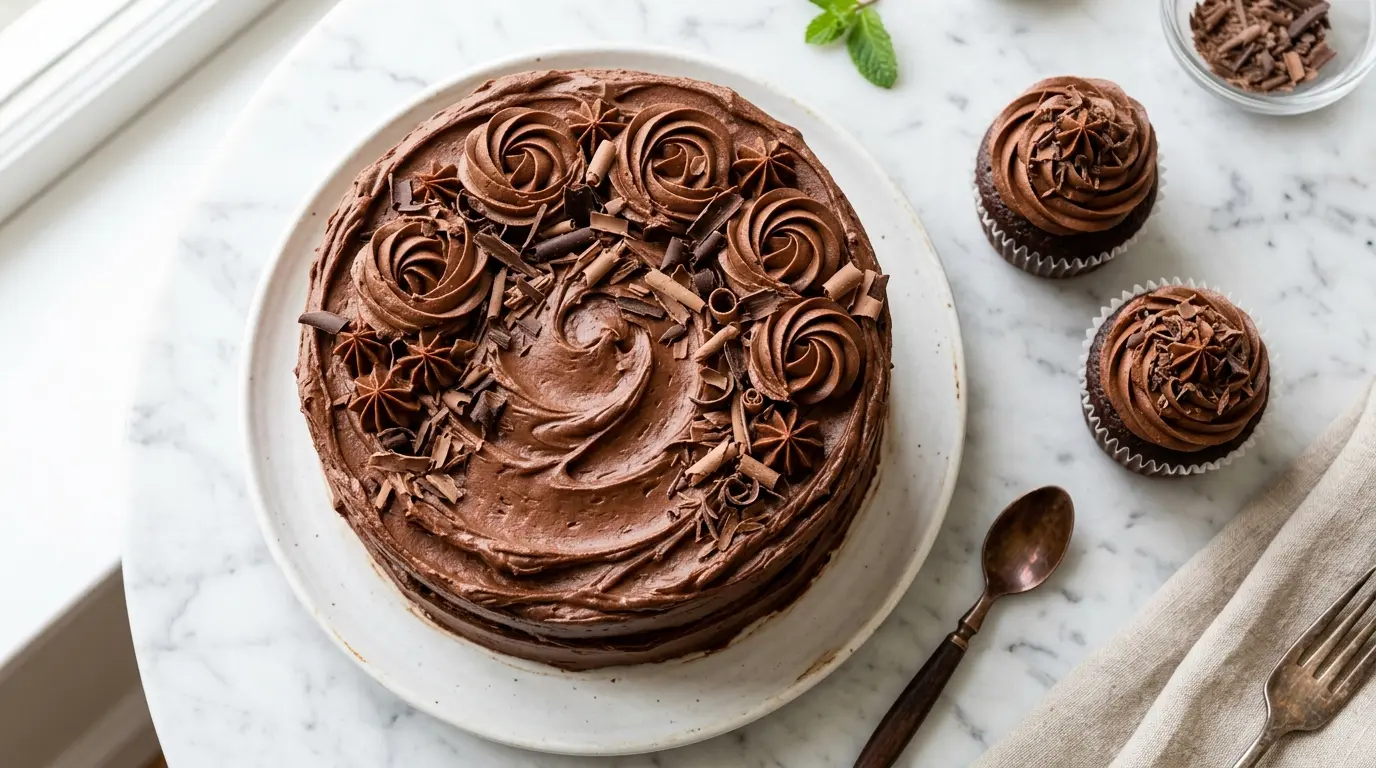
If you’ve been searching for a truly reliable chocolate buttercream frosting recipe, you’ve landed in the right place. This is the kind of frosting that gets requests by name — silky, deeply chocolatey, and just sweet enough to complement any cake or cupcake without being cloying.
The secret behind a great chocolate buttercream is the quality of your cocoa powder and the temperature of your butter. Cold butter will leave you with lumps; warm butter will make it greasy. Get those two things right, and everything else falls into place beautifully.
This recipe uses a simple combination of unsalted butter, powdered sugar, high-quality unsweetened cocoa powder, heavy cream, and a touch of vanilla extract. It comes together in under 15 minutes and pipes like a dream.
You might be surprised how much difference real, high-fat butter makes here. Cheaper butter brands contain more water, which can make your frosting too soft or even grainy. Stick with a good-quality unsalted butter for the best result every time.
Whether you’re frosting a birthday layer cake, piping rosettes on cupcakes, or spreading it on a sheet cake for a crowd, this recipe covers all your needs.
You might also enjoy: Vanilla Buttercream Frosting Recipe

Why You’ll Love This Chocolate Buttercream Frosting Recipe
This frosting hits every mark you want in a go-to chocolate buttercream. It’s smooth, stable, and genuinely chocolatey without tasting like a candy bar.
It pipes beautifully right out of the bowl and holds its shape for hours, even at room temperature. That makes it perfect for decorated celebration cakes and cupcakes that need to sit out during a party.
The recipe is endlessly customizable, too. You can thin it with extra cream for a spreadable consistency, or stiffen it up slightly with more powdered sugar for sharper piping.
It comes together using a hand mixer or stand mixer in about 10 minutes. No candy thermometer, no double boilers, no complicated technique.
- Rich chocolate flavor from quality unsweetened cocoa powder
- Perfectly fluffy texture thanks to whipping air into softened butter
- Easy to spread or pipe depending on how you adjust the consistency
- Stable at room temperature for several hours without melting or weeping
- Made with pantry staples you likely already have on hand
- Scales easily for larger batches when frosting tiered cakes
- Pairs with practically everything from classic yellow cake to brownies to cookies
Read Also: Moist Chocolate Cake Recipe
Ingredients
You’ll need just a handful of ingredients for this chocolate buttercream frosting, but every single one matters. Use room-temperature butter and sift your cocoa and powdered sugar for the smoothest, lump-free result.
- 1 cup (226 g / 2 sticks) unsalted butter, softened to room temperature
- 3 cups (360 g) powdered sugar (confectioners’ sugar), sifted
- ½ cup (50 g) unsweetened cocoa powder, sifted (Dutch-process or natural)
- 3–4 tablespoons (45–60 ml) heavy cream or whole milk, room temperature
- 2 teaspoons (10 ml) pure vanilla extract
- ¼ teaspoon (1.5 g) fine salt
This pairs beautifully with the Classic Yellow Cake Recipe for a timeless birthday cake combination.
Kitchen Equipment Needed
Having the right tools makes a noticeable difference in the final texture of your frosting. A powerful mixer is especially important here, since whipping incorporates air and creates that signature fluffy consistency.
- Stand mixer with paddle attachment, or a hand electric mixer
- Large mixing bowl
- Fine mesh sifter (for cocoa powder and powdered sugar)
- Rubber spatula
- Measuring cups and spoons
- Piping bags and tips (optional, for decorating)
- Offset spatula or butter knife (for spreading)
Read Also: Easy Chocolate Cake Recipe
Recommended Products for This Recipe
These are hand-picked products based on quality and performance that will genuinely elevate your chocolate buttercream frosting results.
1. Dutch-Process Cocoa Powder
Dutch-process cocoa powder delivers a deeper, smoother chocolate flavor compared to natural cocoa, and it dissolves more readily into the butter without any bitterness. It’s the professional baker’s choice for buttercream and produces a noticeably richer color. Using a high-quality cocoa powder is the single biggest upgrade you can make to this recipe.
2. KitchenAid Stand Mixer
A stand mixer whips air into your butter far more effectively than a hand mixer, giving you a noticeably fluffier and lighter chocolate buttercream. The paddle attachment creates the ideal texture without overworking the frosting. It’s a worthwhile investment for anyone who bakes regularly.
3. Ateco Piping Bag and Tips Set
Having a quality piping bag and tip set lets you create beautiful swirls, rosettes, and borders on your cakes and cupcakes with ease. The Ateco set includes a wide variety of tip sizes and shapes for everything from simple rounds to intricate star tips. Professional-looking results are much easier when your tools are up to the task.
4. Offset Spatula
An offset spatula gives you precise control when spreading frosting across cake layers, making it far easier to achieve smooth, even coverage compared to a regular butter knife. The angled blade keeps your knuckles away from the surface of the cake and allows for clean, professional-looking finishes. It’s an inexpensive tool that makes a huge difference.
5. Powdered Sugar (10X Confectioners’ Sugar)
A finely milled 10X confectioners’ sugar dissolves completely into the butter without leaving any grittiness, which is essential for a truly silky buttercream. Some brands grind their sugar less finely, which can leave a slightly grainy finish. Using a premium 10X powdered sugar ensures an ultra-smooth final product every time.
Another great recipe to try this frosting on: Carrot Cake with Cream Cheese Frosting Recipe

Step-by-Step Instructions
1. Soften Your Butter to the Right Temperature
- Remove the unsalted butter from the refrigerator at least 1 hour before you plan to make the frosting.
- The butter should be soft enough that you can press your finger into it and leave an indentation, but it should not be melted or shiny.
- If your kitchen is warm, 45 minutes may be sufficient. In cooler kitchens, allow a full 1 to 1.5 hours.
- Do not microwave the butter to speed this up. Melted or partially melted butter will make the frosting greasy and cause it to separate.
2. Sift the Dry Ingredients
- Place a fine mesh sifter over a bowl and add the 3 cups (360 g) powdered sugar and the ½ cup (50 g) unsweetened cocoa powder together.
- Sift both ingredients together so they are fully combined and any lumps are removed.
- This step is important: even small cocoa or sugar lumps will show up as gritty spots in your finished frosting.
- Set the sifted mixture aside until you are ready to add it.
3. Beat the Butter Until Pale and Fluffy
- Place the softened 1 cup (226 g) unsalted butter in the bowl of your stand mixer fitted with the paddle attachment, or in a large mixing bowl if using a hand mixer.
- Beat on medium-high speed for 3 to 4 full minutes, stopping once to scrape down the sides and bottom of the bowl.
- The butter should turn noticeably pale — almost ivory colored — and should look fluffy and airy.
- This step is the most important one in the entire recipe. Properly creamed butter is the foundation of a light, fluffy buttercream. Don’t rush it.
4. Add the Cocoa-Sugar Mixture
- Turn the mixer to low speed.
- Add the sifted cocoa and powdered sugar mixture to the beaten butter in three additions, adding about one-third at a time.
- After each addition, allow the mixer to run on low for about 20 to 30 seconds before adding the next portion.
- Adding the dry mixture all at once will cause a cloud of powdered sugar to escape the bowl and can result in uneven mixing.
- Once all the dry ingredients have been added, increase the speed to medium and beat for 1 minute until mostly combined.
5. Add the Cream, Vanilla, and Salt
- With the mixer running on low speed, pour in 3 tablespoons (45 ml) of heavy cream (or whole milk), the 2 teaspoons (10 ml) of pure vanilla extract, and the ¼ teaspoon (1.5 g) of fine salt.
- Mix on low for about 30 seconds to incorporate, then increase to medium-high speed.
- Beat on medium-high for 2 to 3 minutes, stopping once to scrape down the sides and bottom of the bowl with a rubber spatula.
- The frosting will become visibly lighter in color and fluffier in texture as you beat it.
6. Adjust the Consistency
- Check the consistency of the frosting by lifting the paddle or beaters. The frosting should hold a stiff peak that very slowly falls over.
- If the frosting is too thick to spread or pipe comfortably, add the remaining 1 tablespoon (15 ml) of heavy cream and beat for another 30 seconds.
- If the frosting seems too soft or loose (this can happen in warm kitchens), add an additional 2 to 3 tablespoons (15–22 g) of sifted powdered sugar and beat briefly.
- For a smoother, satin-like finish, switch from the paddle to the whisk attachment and beat for 1 additional minute.
7. Frost Your Cake or Cupcakes
- Use immediately for the best piping results, while the frosting is at room temperature and fully aerated.
- For spreading, use an offset spatula and work in smooth, sweeping strokes across the top and sides of the cake.
- For piping, transfer the frosting to a piping bag fitted with your desired tip (a 1M star tip creates beautiful rosettes on cupcakes).
- If the frosting sits for more than 30 minutes before use, give it a quick re-beat with the mixer for about 30 seconds to restore the texture.
You might also enjoy: Cake Pop Recipe
Tips for Success
A few small details can take your chocolate buttercream from good to genuinely excellent. Keep these in mind every time you make it.
- Use room-temperature butter, not melted. Cold butter won’t cream properly and melted butter will make the frosting greasy and unstable.
- Sift your cocoa and powdered sugar together. Even small lumps will show up in the finished frosting.
- Beat the butter for at least 3 minutes before adding anything else. This is the single most important step for achieving a fluffy, airy result.
- Add heavy cream sparingly. Start with 3 tablespoons and add more only if needed. Too much cream makes the frosting too soft to pipe.
- Use Dutch-process cocoa for a deeper, more complex chocolate flavor. Natural cocoa works too, but Dutch-process produces a noticeably richer result.
- Don’t skip the salt. A small amount of salt balances the sweetness and enhances the chocolate flavor dramatically.
- Scrape the bowl frequently. Butter that sticks to the bottom of the bowl won’t get properly incorporated, leading to uneven texture.
The same fluffy technique works beautifully in this Cinnamon Rolls Frosting Recipe Without Cream Cheese for a quick and easy cinnamon roll glaze.
Serving Suggestions
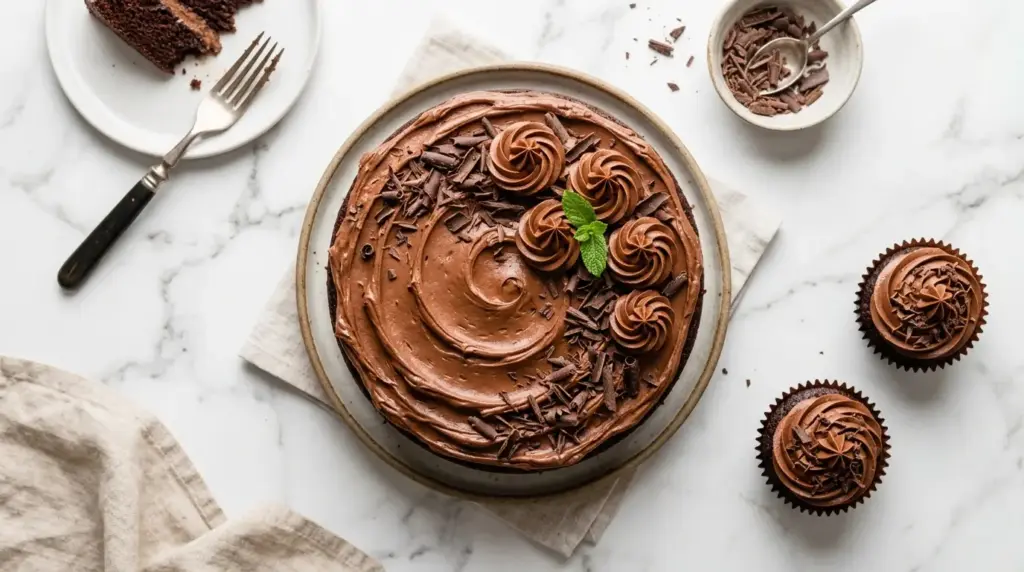
This chocolate buttercream is as versatile as it gets. It pairs with an enormous range of baked goods, from classic celebration cakes to everyday cookies.
It’s rich and deeply chocolatey enough to hold its own against bold flavors, but it won’t overpower more delicate cakes like vanilla or almond. The creamy, smooth texture makes it equally at home spread across a sheet cake or piped into elegant swirls on a celebration dessert.
- Spread thickly on a Moist Chocolate Cake for a fully chocolate experience
- Pipe onto vanilla, red velvet, or Angel Food Cake for a beautiful flavor contrast
- Use it as a filling between layers of a Classic Yellow Cake
- Spread it on Cut Out Sugar Cookies before decorating with sprinkles for a crowd-pleasing treat
- Dollop it generously on top of Fudge Brownies for an extra-indulgent layered dessert
- Use it as a dip for fresh strawberries or pretzels at a party dessert table
- Fill a Checkerboard Cake with alternating layers of this frosting and vanilla buttercream for a showstopping presentation
Read Also: Best Carrot Cake Recipe
Variations to Try
Once you’ve mastered the classic version, there are so many fun ways to customize this frosting. Each variation starts from the base recipe and adds one or two small changes.
- Espresso Chocolate Buttercream: Add 1 to 2 teaspoons of instant espresso powder dissolved in 1 teaspoon of warm water. The coffee deepens the chocolate flavor without making it taste like coffee.
- Mocha Buttercream: Replace the heavy cream with strong cooled brewed coffee for a pronounced mocha flavor.
- Dark Chocolate Buttercream: Use black cocoa powder (the kind used in Oreos) for an ultra-deep, almost black frosting with an intense bittersweet flavor.
- Mexican Chocolate Buttercream: Add ¼ teaspoon of cinnamon and a tiny pinch of cayenne pepper for a warm, spicy kick.
- Salted Caramel Chocolate Buttercream: Drizzle in 2 tablespoons of cooled caramel sauce along with the cream, and top the finished frosting with a sprinkle of flaky sea salt.
- Peanut Butter Chocolate Buttercream: Beat in ¼ cup of creamy peanut butter along with the butter at the beginning of the recipe.
- Dairy-Free Version: Substitute the butter with a high-quality vegan butter (such as Miyoko’s) and use full-fat coconut cream in place of heavy cream.
Another favorite to pair this frosting with: Classic Vanilla Cake Recipe
Storage and Reheating
This chocolate buttercream keeps well in multiple ways, making it convenient to prepare in advance. Proper storage preserves both the texture and flavor without any compromise.
- At room temperature: Frosted cakes and cupcakes can sit at room temperature for up to 2 days, covered loosely with a cake dome or plastic wrap. Keep out of direct sunlight or heat.
- In the refrigerator: Transfer the frosting to an airtight container and refrigerate for up to 1 week. Press a piece of plastic wrap directly against the surface of the frosting to prevent it from forming a crust.
- In the freezer: Chocolate buttercream freezes beautifully for up to 3 months. Store it in an airtight container or a zip-top freezer bag.
- To re-use from the refrigerator: Let the frosting sit at room temperature for 30 to 45 minutes until it softens, then re-beat with a mixer for 1 to 2 minutes to restore the fluffy texture.
- To re-use from the freezer: Thaw the frosting overnight in the refrigerator first. Then bring it to room temperature and re-beat before using.
Read Also: Easy Royal Icing Recipe
Nutritional Facts
The following nutrition information is based on approximately 2 tablespoons (about one serving) of frosting. This recipe makes enough to generously frost 12 cupcakes or one 2-layer 9-inch round cake.
| Nutrient | Per Serving (2 tbsp) |
|---|---|
| Calories | 215 kcal |
| Total Fat | 13 g |
| Saturated Fat | 8 g |
| Cholesterol | 34 mg |
| Sodium | 55 mg |
| Total Carbohydrates | 26 g |
| Sugar | 24 g |
| Dietary Fiber | 1 g |
| Protein | 1 g |
Nutritional values are estimates and may vary depending on specific brands and measurements used.
You might also enjoy: Chocolate Pudding Recipe
Health Benefits of Key Ingredients
While chocolate buttercream frosting is absolutely a treat, some of its key ingredients do offer genuine nutritional value worth noting.
Incorporating small, mindful portions of quality ingredients is always preferable to reaching for highly processed alternatives. Here’s what a few of this recipe’s key players bring to the table.
- Unsweetened cocoa powder is a rich source of flavonoids, particularly epicatechin, which has been studied for its potential to support heart health and improve circulation. It also provides magnesium, iron, and zinc in meaningful amounts.
- Unsalted butter contains fat-soluble vitamins A, D, E, and K2. Grass-fed butter in particular is a good source of conjugated linoleic acid (CLA), which may support a healthy metabolism.
- Heavy cream provides calcium and fat-soluble vitamins alongside its fat content, making it more nutritionally dense than skim milk alternatives.
- Vanilla extract contains small amounts of antioxidants and has a long history of use in traditional medicine for its calming and anti-inflammatory properties.
- Salt plays an important role in flavor development and helps balance sweetness. A moderate amount, as used in this recipe, supports proper fluid balance in the body.
Read Also: Fudge Brownie Recipe
Frequently Asked Questions
1. Why is my chocolate buttercream grainy?
Grainy buttercream is almost always caused by undissolved powdered sugar or cocoa powder. Make sure you sift both ingredients thoroughly before adding them to the butter.
Beating the frosting for an additional 2 to 3 minutes on medium-high speed can also help work out any remaining graininess as the friction warms the mixture slightly.
2. Why is my buttercream too soft or runny?
Soft or runny buttercream is usually a sign that the butter was too warm before mixing, or that too much cream was added. If the butter was slightly melted rather than just softened, place the frosting bowl in the refrigerator for 15 to 20 minutes, then re-beat.
If the issue is too much cream, gradually beat in additional sifted powdered sugar, one tablespoon at a time, until the desired consistency is reached.
3. Can I make this chocolate buttercream ahead of time?
Yes, absolutely. You can make it up to 1 week in advance and store it in an airtight container in the refrigerator.
When you’re ready to use it, let it come to room temperature for 30 to 45 minutes, then re-beat with a mixer for 1 to 2 minutes until it’s fluffy again.
4. Can I use salted butter instead of unsalted butter?
You can, but it will affect the flavor slightly and make it harder to control the overall saltiness of the frosting. If using salted butter, omit the additional salt called for in the recipe.
The result will generally still be delicious, but unsalted butter gives you the best control over the final flavor.
5. How much frosting does this recipe make?
This recipe makes approximately 3 cups of frosting, which is enough to generously frost 12 to 16 cupcakes or a 2-layer 9-inch round cake. For a 3-layer cake or a sheet cake, you may want to make 1.5 times the recipe.
If you’re adding a crumb coat before the final coat of frosting, always make a full double batch for a 3-layer cake to ensure you have enough.
This frosting also works beautifully as a filling for these Best Chocolate Chip Cookies for an indulgent cookie sandwich.

Chocolate Buttercream Frosting

Equipment
- Stand mixer with paddle attachment - Or hand electric mixer
- Large mixing bowl
- Fine mesh sifter
- Rubber spatula
- Measuring cups and spoons
- Piping bags and tips - optional, for decorating
- Offset spatula or butter knife - for spreading
Ingredients
- 1 cup unsalted butter - 226g / 2 sticks, softened to room temperature
- 3 cups powdered sugar (confectioners’ sugar) - 360g, sifted
- ½ cup unsweetened cocoa powder - 50g, sifted (Dutch-process or natural)
- 3-4 tablespoons heavy cream or whole milk - 45-60ml, room temperature
- 2 teaspoons pure vanilla extract - 10ml
- ¼ teaspoon fine salt - 1.5g
Instructions
- Remove the unsalted butter from the refrigerator at least 1 hour before you plan to make the frosting. The butter should be soft enough to leave an indentation when pressed, but not melted or shiny.
- Place a fine mesh sifter over a bowl and combine the powdered sugar and unsweetened cocoa powder. Sift together to remove lumps and ensure they are fully combined.
- Place the softened butter in the bowl of a stand mixer fitted with the paddle attachment. Beat on medium-high speed for 3 to 4 full minutes, scraping down the sides and bottom once, until the butter is pale, fluffy, and almost ivory colored.
- Turn the mixer to low speed and add the sifted cocoa and powdered sugar mixture in three additions, beating for about 20-30 seconds after each. Once all dry ingredients are added, increase speed to medium and beat for 1 minute until mostly combined.
- With the mixer running on low, pour in 3 tablespoons of heavy cream, vanilla extract, and salt. Mix for 30 seconds to incorporate, then increase to medium-high and beat for 2-3 minutes, scraping down the bowl once, until light and fluffy.
- Check the consistency. If too thick, add the remaining 1 tablespoon of cream and beat another 30 seconds. If too soft, add 2-3 tablespoons of sifted powdered sugar and beat briefly.
- Use immediately for the best piping results. For spreading, use an offset spatula in smooth, sweeping strokes. For piping, transfer to a piping bag with a desired tip.
Notes
- Use room-temperature butter, not melted. Cold butter won’t cream properly and melted butter will make the frosting greasy and unstable.
- Sift your cocoa and powdered sugar together. Even small lumps will show up in the finished frosting.
- Beat the butter for at least 3 minutes before adding anything else. This is the most important step for achieving a fluffy, airy result.
- Add heavy cream sparingly. Start with 3 tablespoons and add more only if needed. Too much cream makes the frosting too soft to pipe.
- Use Dutch-process cocoa for a deeper, more complex chocolate flavor. Natural cocoa works too, but Dutch-process produces a noticeably richer result.
- Don’t skip the salt. A small amount of salt balances the sweetness and enhances the chocolate flavor dramatically.
- Scrape the bowl frequently. Butter that sticks to the bottom of the bowl won’t get properly incorporated, leading to uneven texture.
- For a smoother, satin-like finish, switch from the paddle to the whisk attachment and beat for 1 additional minute after mixing.
- This frosting can be made up to 1 week in advance and stored in an airtight container in the refrigerator. Bring to room temperature and re-beat before using.
- Chocolate buttercream freezes beautifully for up to 3 months in an airtight container or zip-top freezer bag.
Final Thoughts
A great chocolate buttercream frosting recipe is one of those foundational kitchen skills that pays off every single time you bake. Once you nail the texture and flavor, you’ll find yourself reaching for it again and again.
This version is rich without being heavy, sweet without being cloying, and chocolatey in a way that actually tastes like real cocoa rather than candy. It’s the frosting your cakes and cupcakes deserve.
Give it a try the next time you have something worth celebrating — or even just because it’s Tuesday and brownies need frosting. Share your results in the comments below, and let me know how you customized it to make it your own!
Recommended:
- Vanilla Buttercream Frosting Recipe
- Easy Chocolate Cake Recipe
- Angel Food Cake Recipe
- Classic Yellow Cake Recipe
- Easy Vanilla Cake Recipe
- Tres Leches Cake Recipe
- Chocolate Pie Recipe
- Cut Out Sugar Cookie Recipe
- Easy Sugar Cookie Recipe
- Checkerboard Cake Recipe