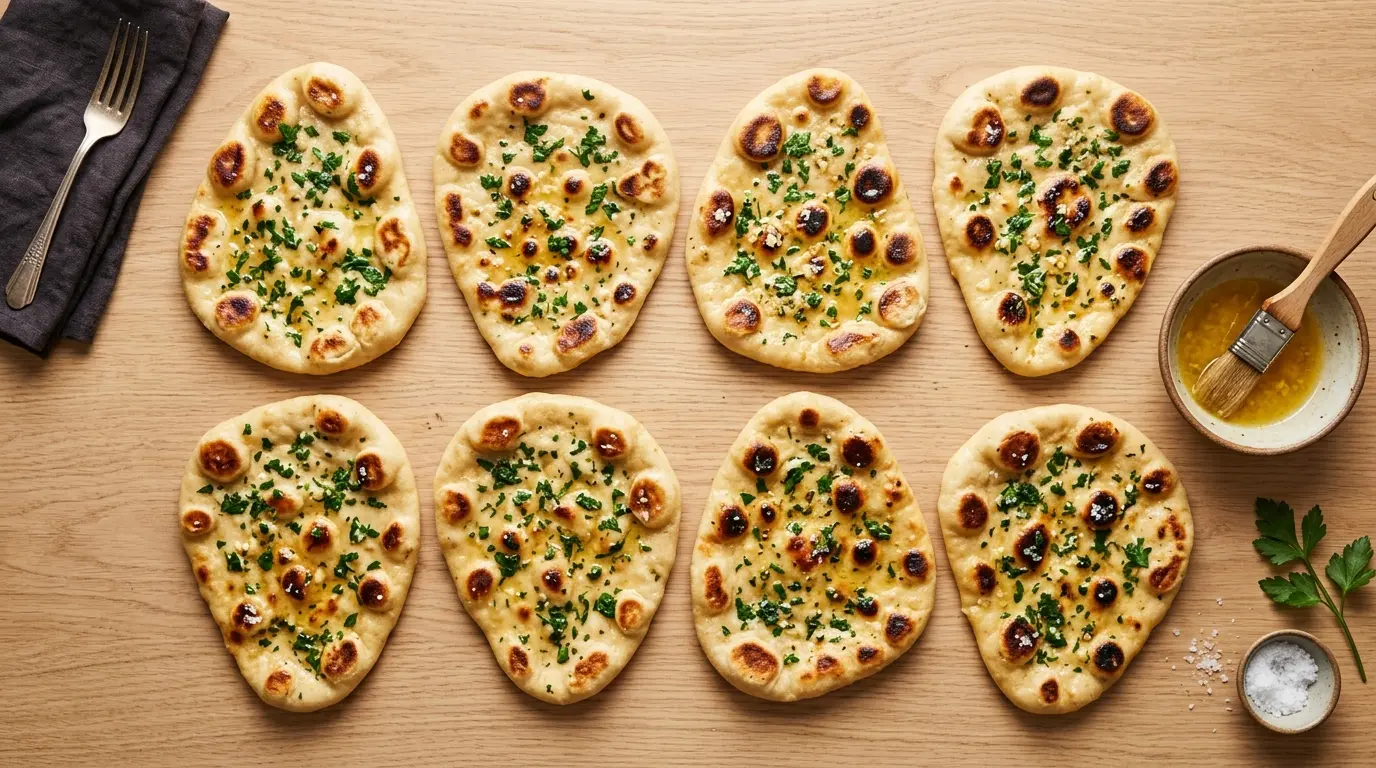
If you have a jar of sourdough discard sitting in your fridge, this sourdough discard naan recipe is exactly what you should make next. These flatbreads come out incredibly soft and tender with just a hint of tang from the discard, gorgeous golden spots on the outside, and a pillowy interior that practically melts in your mouth.
Naan is a leavened flatbread that originates from Central and South Asia, and it has been a staple of Indian cuisine for centuries. Traditionally, it is cooked in a tandoor oven at extremely high temperatures, which gives it its signature bubbles and charred spots. Since most home kitchens do not have a tandoor, a cast-iron skillet does a brilliant job of replicating those same results.
The key difference between this version and a traditional naan is the sourdough discard. It replaces some of the leavening work while adding a subtle fermented flavor that makes every bite more interesting. Combined with yogurt and milk, the dough comes out beautifully soft and stretchy every single time.
This recipe uses instant yeast alongside the discard, which means you get a reliable rise without waiting for a long fermentation. The whole process from mixing to eating can be done in about 45 minutes, making it totally practical for a weeknight dinner.
You can serve these alongside a bowl of Indian Chicken Curry, use them as a flatbread pizza base, or simply eat them warm from the pan with a brush of garlic butter.

Why You’ll Love This Sourdough Discard Naan Recipe
This recipe is one of the most satisfying ways to put your sourdough discard to work.
Rather than discarding that starter or letting it pile up in your fridge, you are turning it into something genuinely delicious that your whole family will eat in minutes.
The texture of these naans is exceptional. The yogurt and milk in the dough add fat and protein that result in a tender, fluffy crumb, while the discard brings a subtle sour note that adds depth to the flavor.
You do not need a stand mixer or any fancy equipment. A simple bowl, a rolling pin, and a hot skillet are all it takes.
The recipe is also extremely versatile. You can customize the thickness, add garlic and herbs to the butter finish, or even fold in toppings before cooking.
Here is a quick summary of what makes this recipe worth making:
- Uses up sourdough discard instead of throwing it away
- Ready in about 45 minutes from start to finish
- No special equipment needed beyond a hot skillet
- Perfectly soft and tender with golden, charred spots
- Easily customizable with garlic, herbs, or cheese
- Works as a side dish, wrap, pizza base, or standalone snack
- Dairy-free and vegan adaptations are simple to make
You might also enjoy: Sourdough Discard Flatbread
Ingredients
These are simple ingredients you likely already have on hand, which makes this recipe a great last-minute option when you have discard to use up.
- 1 cup (240g) sourdough discard, at room temperature
- ½ cup (120ml) warm water (around 100°F / 38°C)
- 1 teaspoon instant yeast
- ½ cup (120g) plain full-fat yogurt (Greek or regular)
- ¼ cup (60ml) whole milk
- 1 tablespoon olive oil (plus extra for greasing)
- 1 teaspoon sugar
- 1 teaspoon fine salt
- 2 ½ cups (315g) all-purpose flour (plus extra for dusting), or bread flour for a chewier result
- 3 tablespoons unsalted butter, melted (for brushing)
- 2 garlic cloves, finely minced (for garlic butter finish, optional)
- Fresh parsley or cilantro, chopped (for garnish, optional)
- Flaky sea salt, for sprinkling (optional)
Read Also: Sourdough Discard Focaccia Recipe
Kitchen Equipment Needed
You do not need much to pull this recipe off. A few basic tools are all that stand between you and warm, fresh naan.
- Large mixing bowl
- Cast-iron skillet (highly recommended for best results) or heavy-bottomed nonstick pan
- Rolling pin
- Kitchen scale (for accurate measurements)
- Pastry brush or silicone brush (for garlic butter)
- Wooden spoon or rubber spatula
- Plastic wrap or damp kitchen towel
- Tongs or spatula for flipping
- Cooling rack
Another favorite: Sourdough Discard Bagels
Recommended Products for This Recipe
These are a few products worth having on hand to get the best results from this recipe, chosen based on quality and performance.
1. Lodge Pre-Seasoned Cast Iron Skillet
A cast-iron skillet is the single best pan for making naan at home. It retains and distributes heat evenly, which creates those iconic golden brown spots and puffed bubbles that make naan look and taste authentic. Pre-seasoned cast iron is ready to use right out of the box and only gets better with time.
2. King Arthur All-Purpose Flour
Using a reliable, consistently milled flour makes a real difference in the texture of your naan. King Arthur’s all-purpose flour has a slightly higher protein content than many other brands, which helps build structure and gives the naan a satisfying chew without being tough. It measures consistently, which means your dough will behave the same way every time.
3. Kerrygold Unsalted Butter
Brushing the warm naan with good-quality butter makes an enormous difference to the final flavor. Kerrygold is made from grass-fed milk, which gives it a richer, more golden color and a noticeably creamier taste compared to standard butter. The quality really shines when used as a simple finish on fresh bread.
4. Maldon Sea Salt Flakes
A pinch of flaky sea salt over the warm, buttered naan right before serving adds a finishing touch that elevates the whole dish. Maldon flakes dissolve slightly on contact with the butter, creating little pockets of flavor in every bite. It is a small addition with a surprisingly big impact.
This technique works wonderfully in Sourdough Discard Bread as well.

Step-by-Step Instructions
Step 1: Activate the Yeast
- Add the warm water (100°F / 38°C) to a large mixing bowl. The water should feel warm on your wrist but not hot. Too-hot water will kill the yeast.
- Sprinkle the instant yeast over the water and let it sit for about 1 minute. The yeast should start to look slightly cloudy or clump together, which means it is active and ready.
- If you see no activity after 5 minutes, your yeast may be old. Start fresh with a new packet before continuing.
Step 2: Add the Wet Ingredients
- Add the sourdough discard to the yeast mixture. Make sure your discard is at room temperature so it does not cool down the water and slow the yeast.
- Add the plain yogurt, whole milk, olive oil, sugar, and salt.
- Stir everything together with a fork or whisk until the sourdough discard is fully dissolved and the mixture is smooth and uniform. This step ensures the discard is evenly distributed throughout the dough, which gives you consistent flavor in every piece.
Step 3: Mix the Dough
- Add the flour, 1 cup at a time, stirring after each addition with a wooden spoon or rubber spatula.
- Once the dough becomes too thick to stir, switch to using your hands to bring it together.
- Continue adding flour and mixing until a soft, slightly tacky dough forms. It should not stick aggressively to your hands, but it should not be stiff either.
- Knead the dough in the bowl for about 2 to 3 minutes until smooth and elastic. Alternatively, tip it onto a lightly floured surface and knead there.
- If the dough feels too sticky, add flour 1 tablespoon at a time. If it feels too dry, add water 1 teaspoon at a time.
Step 4: First Rest
- Drizzle a little olive oil over the dough and turn it to coat all sides. This prevents a skin from forming on the surface.
- Cover the bowl tightly with plastic wrap or a damp kitchen towel.
- Let the dough rest at room temperature for 30 to 60 minutes, or until it has visibly puffed up and roughly doubled in size.
- In a warm kitchen (around 75°F / 24°C), 30 minutes is usually enough. In a cooler kitchen, allow the full hour.
Step 5: Divide the Dough
- Once the dough has risen, turn it out onto a lightly floured surface.
- Gently press out any large bubbles with your palms, but do not punch it down aggressively.
- Divide the dough into 8 equal portions. The easiest way to do this is to shape it into a rough log, then cut it in half, then each half into half again, and each quarter in half once more.
- Roll each portion into a smooth ball by cupping your hand over it and rolling it in a circular motion on the countertop.
- Cover the dough balls loosely with a damp towel and let them rest for 10 minutes. This short rest relaxes the gluten and makes the dough much easier to roll out without it springing back.
Step 6: Roll Out the Naans
- Working with one dough ball at a time (keep the rest covered), place it on a lightly floured surface.
- Use a rolling pin to roll it out into an oval or teardrop shape, roughly ¼ inch (6mm) thick. Naan does not need to be perfectly round. The irregular shape is part of its charm.
- Roll from the center outward, turning the dough a quarter turn every few rolls to keep it even.
- If the dough keeps springing back, let it rest for another 2 minutes, then try again.
Step 7: Heat the Skillet
- Place your cast-iron skillet or heavy-bottomed pan over medium-high to high heat. Allow it to preheat for at least 2 to 3 minutes until it is very hot.
- To test if the pan is ready, hold your hand about 3 inches above the surface and you should feel strong heat radiating upward. Alternatively, sprinkle a tiny drop of water in the pan. If it evaporates instantly with a sizzle, the pan is ready.
- Do not add any oil to the pan. Naan is cooked in a dry skillet.
Step 8: Cook the Naan
- Carefully lay one rolled-out naan flat into the hot dry skillet.
- Cook for 1 to 2 minutes on the first side. You will see bubbles begin to form on the surface of the dough. This is exactly what you want.
- Once the underside is golden and has some charred spots, and the bubbles are pronounced on top, flip the naan using tongs.
- Cook for another 1 to 2 minutes on the second side until golden and cooked through.
- The naan should look puffed and spotted with golden-brown and slightly dark patches. This is the traditional naan appearance and indicates it is cooked correctly.
- Remove from the pan and set aside.
Step 9: Prepare the Garlic Butter and Finish
- While the remaining naans cook, combine the melted unsalted butter with the finely minced garlic in a small bowl.
- Immediately brush each cooked naan generously on both sides with the garlic butter while it is still hot. The butter will absorb into the warm bread and make it incredibly flavorful.
- Sprinkle with chopped fresh parsley or cilantro and a pinch of flaky sea salt if desired.
- Stack the finished naans on a plate and cover loosely with foil to keep them warm while you cook the rest.
Step 10: Serve and Enjoy
- Once all 8 naans are cooked, buttered, and seasoned, they are ready to serve.
- Serve them warm for the best texture and flavor. Cold naan becomes firmer and less pliable, though it can be quickly revived in a warm skillet.
- Enjoy them as a side dish, use them to scoop up curry or dip, or pile on toppings for a flatbread-style meal.
Read Also: Sourdough Discard English Muffins Recipe
Tips for Success
A few key tips will ensure your naan turns out perfectly every single time.
- Use room-temperature discard. Cold discard straight from the fridge will cool your dough down and slow fermentation. Take it out at least 30 minutes before you start.
- Do not skip the rest after dividing. Letting the dough balls rest for 10 minutes before rolling makes them dramatically easier to shape without fighting the gluten.
- Get your pan really hot. This is the single most important step. A pan that is not hot enough will produce pale, soft naan without any of those beautiful charred spots. Give it a full 2 to 3 minutes of preheating.
- Roll thin enough. Aim for about ¼ inch thick. Much thicker than that and the naan will be doughy in the center rather than fluffy.
- Brush with butter immediately. Apply the garlic butter right after the naan comes off the heat while it is still steaming. The bread absorbs it much better when hot.
- Keep cooked naans warm. Stack them under foil so they stay pliable and do not dry out while you finish cooking the batch.
- Adjust hydration for your discard. If your discard is thick (low hydration), add an extra tablespoon of water. If it is runny (high hydration), you may need a touch more flour.
This pairs wonderfully alongside Cucumber Raita for a complete Indian-inspired spread.
Serving Suggestions

The beauty of naan is how incredibly versatile it is at the table.
It pairs naturally with rich, saucy dishes that benefit from being scooped up and enjoyed together. Indian curries like butter chicken, dal makhani, or Palak Paneer are the most traditional and satisfying pairings.
Here are some wonderful ways to serve this sourdough discard naan:
- Alongside a bowl of Chicken Tikka Masala for a classic Indian dinner combination
- Dipped into Easy Hummus as an appetizer or snack
- As a flatbread pizza base topped with sauce, mozzarella, and your favorite toppings
- Used as a wrap filled with grilled chicken, fresh vegetables, and tzatziki
- Served with a bowl of Lentil Soup for a simple, hearty meal
- Topped with avocado, a poached egg, and chili flakes for a creative breakfast
- Cut into triangles and served with dips as a party appetizer
For another great Indian-inspired pairing, try making Jeera Rice to serve alongside.
Variations to Try
Once you have mastered the base recipe, there are so many fun ways to customize these naans.
- Garlic Naan. Add 2 minced garlic cloves directly into the dough at the mixing stage, plus a generous amount in the butter finish.
- Cheese Naan. Flatten a dough ball, place a small handful of shredded mozzarella in the center, fold the edges over to seal, and then roll it out gently. The cheese melts inside during cooking.
- Herb Naan. Mix finely chopped fresh cilantro, parsley, or chives directly into the dough.
- Spiced Naan. Add ½ teaspoon each of cumin and coriander to the flour for a warmly spiced bread that pairs especially well with curry.
- No-Yeast Version. Swap the instant yeast for 1 teaspoon baking powder and ¼ teaspoon baking soda. The naan will be slightly denser but still delicious, and you can skip the rise time entirely.
- Vegan Naan. Use a plant-based yogurt such as coconut or almond yogurt, swap the milk for oat milk or any non-dairy milk, and brush with vegan butter or olive oil instead.
- Whole Wheat Naan. Substitute up to half the all-purpose flour with whole wheat flour for a nuttier flavor and extra fiber.
Read Also: Sourdough Discard Crackers Recipe
Storage and Reheating
Naan stores well and reheats easily, making it great for meal prep.
- Store leftover naan in an airtight container or zip-lock bag at room temperature for up to 2 days.
- For longer storage, place cooled naans in a freezer-safe bag with a piece of parchment paper between each one. Freeze for up to 3 months.
- To reheat from room temperature, warm the naan in a dry skillet over medium heat for 30 to 60 seconds per side until soft and pliable again.
- To reheat from frozen, thaw at room temperature for 20 to 30 minutes, then warm in a skillet or wrap in a damp paper towel and microwave for 30 to 40 seconds.
- Avoid microwaving without a damp towel as the naan can become chewy or rubbery.
- You can also reheat naan in an oven at 350°F (175°C) for 5 minutes, wrapped loosely in foil.
You might also enjoy: Sourdough Discard Biscuits
Nutritional Facts
The following values are approximate and based on one naan (1 of 8 pieces) made with the standard ingredients, including the garlic butter finish.
| Nutrient | Amount Per Serving |
|---|---|
| Calories | 235 kcal |
| Total Fat | 7g |
| Saturated Fat | 3g |
| Cholesterol | 12mg |
| Sodium | 305mg |
| Total Carbohydrates | 36g |
| Dietary Fiber | 1g |
| Sugars | 2g |
| Protein | 6g |
Nutritional information is estimated and may vary based on exact ingredients, brands, and portion sizes used.
Read Also: Sourdough Discard Pizza Dough Recipe
Health Benefits of Key Ingredients
While naan is certainly a comfort food, several of its key ingredients bring genuine nutritional value to the table.
Each component of this recipe contributes something useful to your body, making this more than just a tasty side dish.
- Sourdough Discard. The fermentation process in sourdough starter helps partially break down the phytic acid in flour, which can improve mineral absorption. It also introduces beneficial organic acids that may support digestive health and give bread a lower glycemic response compared to non-fermented counterparts.
- Plain Yogurt. Yogurt is a great source of protein, calcium, and live probiotic cultures that support gut health. Using full-fat yogurt in this recipe adds richness while also providing fat-soluble vitamins like A and D.
- Olive Oil. A source of heart-healthy monounsaturated fats and antioxidants, olive oil is one of the most beneficial cooking oils available. It adds tenderness to the dough while contributing to a healthier fat profile.
- All-Purpose Flour. Provides the energy from carbohydrates needed for daily function, along with small amounts of B vitamins and iron. Opting for a higher-quality unbleached flour adds a slightly better nutritional profile.
- Whole Milk. Contributes calcium, vitamin D, and protein to the dough. It plays a role in creating the soft, tender texture and adds a subtle richness that skim milk cannot replicate.
- Garlic. Fresh garlic in the butter finish is not just flavorful. It contains allicin, a compound associated with anti-inflammatory and antimicrobial properties. Even a small amount adds real functional value.
This bread also pairs beautifully with Chicken Curry for a nutritious and filling dinner.
Frequently Asked Questions
1. Can I use active sourdough starter instead of discard?
Yes, you can use an active, freshly fed starter instead of discard. The naan will have a slightly milder flavor since fresh starter is less acidic than discard. The rise may also be slightly faster. Use the same amount as specified in the recipe.
2. Does the sourdough discard need to be fed before using?
No. For this recipe, unfed discard works perfectly. The instant yeast is doing the primary leavening, so the discard is mainly there for flavor and hydration. It can be discard that has been sitting in the fridge for up to a week or two, as long as it does not have any pink or orange streaks (signs of contamination).
3. Can I make the dough ahead of time?
Yes. You can prepare the dough, let it complete its initial rise, and then refrigerate it overnight in the bowl tightly covered with plastic wrap. The next day, let it come to room temperature for 30 to 45 minutes before dividing, resting, and rolling. The cold fermentation will deepen the flavor even more.
4. Why is my naan not puffing up?
The most common reason naan does not puff is that the pan is not hot enough. The steam inside the dough needs intense heat to puff the bread quickly. Make sure your skillet is thoroughly preheated over high heat before adding the dough. Another possible cause is dough that is rolled too thick. Aim for no more than ¼ inch (6mm) thickness.
5. Can I cook these on a grill instead of a skillet?
Absolutely. A grill works beautifully and gives you even more authentic charred spots. Preheat the grill to medium-high heat, brush the grates lightly with oil, and cook the rolled-out naans for 1 to 2 minutes per side, watching carefully as they can char quickly. The smoky flavor from the grill is a wonderful bonus.
Read Also: Sourdough Discard Cinnamon Rolls Recipe

Sourdough Discard Naan

Equipment
- Large mixing bowl
- Cast iron skillet - Highly recommended for best results, or use a heavy-bottomed nonstick pan
- Rolling Pin
- Kitchen scale - For accurate measurements
- Pastry brush or silicone brush - For garlic butter
- Wooden spoon or rubber spatula
- Plastic wrap or damp kitchen towel
- Tongs or spatula - For flipping
- Cooling rack
Ingredients
- 1 cup sourdough discard - 240g, at room temperature
- ½ cup warm water - 120ml, around 100°F / 38°C
- 1 teaspoon instant yeast
- ½ cup plain full-fat yogurt - 120g, Greek or regular
- ¼ cup whole milk - 60ml
- 1 tablespoon olive oil - plus extra for greasing
- 1 teaspoon sugar
- 1 teaspoon fine salt
- 2 ½ cups all-purpose flour - 315g, plus extra for dusting; or bread flour for a chewier result
- 3 tablespoons unsalted butter - melted, for brushing
- 2 cloves garlic - finely minced, for garlic butter finish (optional)
- fresh parsley or cilantro - chopped, for garnish (optional)
- flaky sea salt - for sprinkling (optional)
Instructions
- Add the warm water (100°F / 38°C) to a large mixing bowl. Sprinkle the instant yeast over the water and let it sit for about 1 minute until it looks slightly cloudy.
- Add the sourdough discard, yogurt, milk, olive oil, sugar, and salt. Stir until the discard is fully dissolved and the mixture is smooth and uniform.
- Add the flour 1 cup at a time, stirring with a wooden spoon. Once too thick to stir, use your hands to bring it together. Knead for 2 to 3 minutes until smooth and elastic.
- Drizzle a little olive oil over the dough and turn to coat. Cover the bowl tightly and let rest at room temperature for 30 to 60 minutes until puffed and roughly doubled in size.
- Turn the dough onto a lightly floured surface and gently press out any large bubbles. Divide into 8 equal portions and roll each into a smooth ball. Cover and rest for 10 minutes.
- Working with one dough ball at a time, roll it out into an oval or teardrop shape about ¼ inch (6mm) thick. Keep the other balls covered.
- Preheat your cast-iron skillet over medium-high to high heat for 2 to 3 minutes until very hot. Do not add any oil to the pan.
- Lay one rolled-out naan into the hot dry skillet. Cook for 1 to 2 minutes until bubbles form and the underside is golden, then flip and cook for 1 to 2 minutes more until puffed and spotted. Remove from pan.
- Combine the melted butter with minced garlic. Brush each cooked naan generously with garlic butter while still hot. Sprinkle with parsley or cilantro and flaky sea salt if desired.
- Stack the finished naans on a plate and cover loosely with foil to keep warm. Serve immediately warm, or use as a wrap, pizza base, or alongside curries and dips.
Notes
- Use room-temperature discard. Cold discard from the fridge will cool the dough and slow fermentation. Take it out at least 30 minutes before you start.
- Don’t skip the rest after dividing. Letting the dough balls rest for 10 minutes before rolling makes them dramatically easier to shape without fighting the gluten.
- Get your pan really hot. This is the single most important step. A pan that is not hot enough will produce pale, soft naan without any of those beautiful charred spots.
- Roll thin enough. Aim for about ¼ inch thick. Much thicker than that and the naan will be doughy in the center rather than fluffy.
- Brush with butter immediately. Apply the garlic butter right after the naan comes off the heat while it is still steaming. The bread absorbs it much better when hot.
- Keep cooked naans warm. Stack them under foil so they stay pliable and do not dry out while you finish cooking the batch.
- Adjust hydration for your discard. If your discard is thick (low hydration), add an extra tablespoon of water. If it is runny (high hydration), you may need a touch more flour.
- You can make the dough ahead of time. Refrigerate it overnight after the first rise, then bring to room temperature before dividing and rolling.
- Store leftover naan in an airtight container at room temperature for up to 2 days, or freeze for up to 3 months with parchment between each piece.
- To reheat, warm in a dry skillet over medium heat for 30-60 seconds per side until soft and pliable again.
Final Thoughts
This sourdough discard naan recipe is one of those recipes you will keep coming back to again and again. It is quick, reliable, and the results are genuinely impressive for the amount of effort involved.
The soft, pillowy texture and subtle sourdough tang make these naans far more flavorful than anything you would find at a grocery store. Once you make them homemade, it is very hard to go back.
Whether you serve them with curry, dip them in hummus, or simply eat them warm with garlic butter, they are always a hit at the table.
Give this recipe a try and let me know how it goes in the comments below. If you add your own twist, like cheese naan or a spiced version, share what you did. Happy cooking!
Recommended:
- Sourdough Discard Pancakes Recipe
- Sourdough Discard Chocolate Chip Cookies Recipe
- Sourdough Sandwich Bread Recipe
- Same Day Sourdough Bread Recipe
- Sourdough Focaccia Recipe
- Chicken Biryani Recipe
- Chicken Korma Recipe
- Basmati Rice Recipe
- Samosa Recipe
- Mango Chutney Recipe