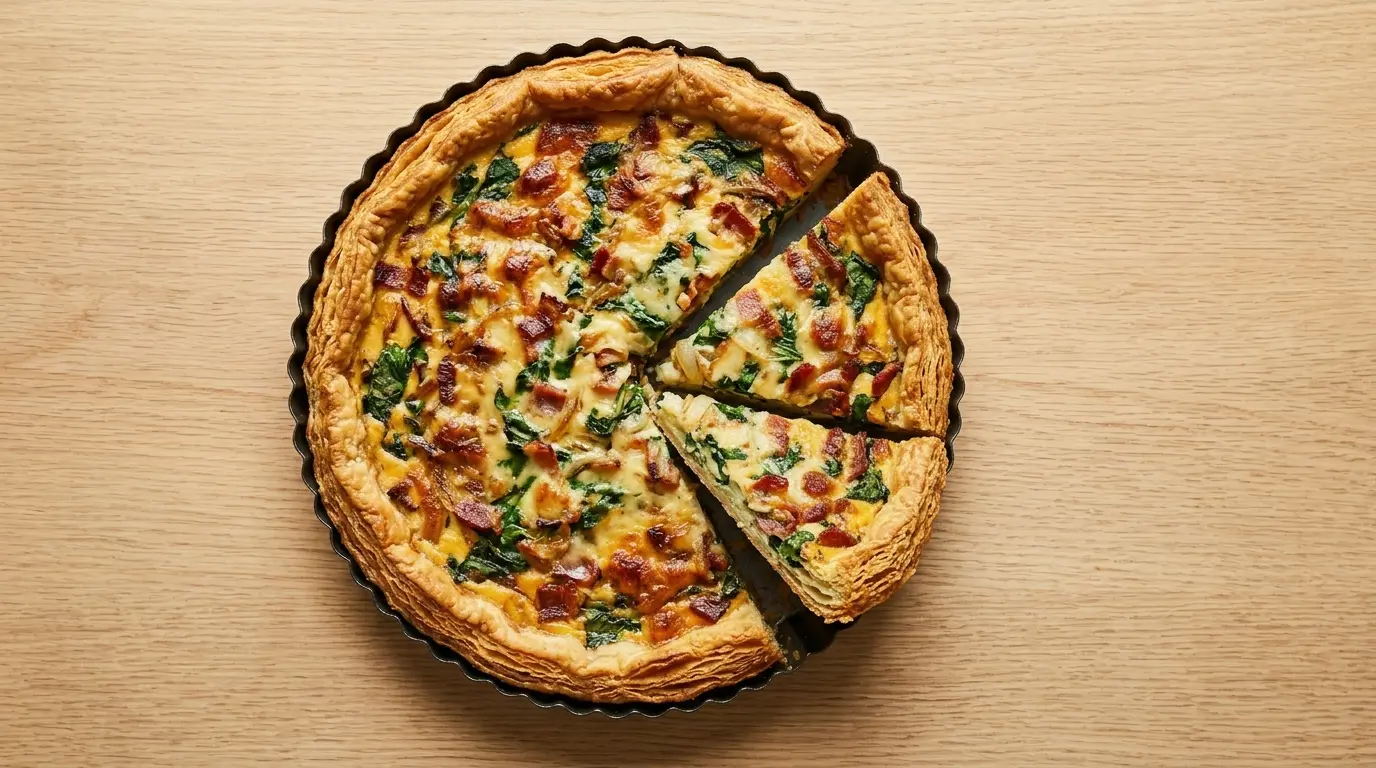
If you’ve been keeping a sourdough starter, you already know the bittersweet ritual of discarding a portion before each feed. Instead of throwing it away, this sourdough discard quiche crust recipe transforms that tangy, fermented starter into a buttery, flaky pastry shell that elevates any quiche filling you choose.
The acidity in the discard does something almost magical to the dough. It relaxes the gluten slightly, making the crust more tender, and it adds a subtle tang that pairs beautifully with savory egg custard fillings.
This is a traditional, roll-out flaky crust made with cold butter, all-purpose flour, and sourdough discard. It’s the most widely loved version, giving you that layered, shortcrust-style pastry you’d expect from a proper quiche.
It works beautifully with a classic Quiche Lorraine filling, a veggie-loaded brunch quiche, or even a simple cheese and egg custard. Once you try it, you’ll never go back to store-bought crust again.
If you love baking with sourdough discard, you’ll also want to try this Sourdough Discard Flatbread for a quick and satisfying savory bake.

Why You’ll Love This Sourdough Discard Quiche Crust Recipe
Making your own quiche crust from scratch sounds intimidating, but this recipe is genuinely approachable for bakers of all skill levels.
The sourdough discard adds a depth of flavor that plain shortcrust pastry simply doesn’t have. It brings a gentle tartness that complements rich, eggy fillings without overpowering them.
You’ll also love how versatile this crust is. It works equally well in a 9-inch pie dish or a tart tin with a removable bottom.
Cold butter is the secret to those flaky, shattering layers. Keeping every ingredient chilled prevents the fat from melting into the flour too early, which is what creates all those beautiful pastry layers.
This crust blind bakes beautifully, holding its shape without puffing or shrinking too dramatically. That means a clean, professional-looking result every single time.
- It uses up sourdough discard instead of wasting it
- The tangy flavor pairs perfectly with savory quiche fillings
- Works for any 9-inch quiche, tart, or pie
- Comes together in about 10 minutes of active work
- Can be made up to 3 days ahead and stored in the fridge
- Freezes well for longer-term meal prep
- Produces a genuinely flaky, layered, golden crust
You might also enjoy: Sourdough Discard Crackers
Ingredients
This crust uses simple pantry staples alongside your sourdough discard. Every ingredient plays a specific role, so don’t skip or substitute without knowing the impact.
- 1 1/4 cups (160g) all-purpose flour, plus more for dusting
- 1/2 teaspoon (3g) fine sea salt
- 1/2 cup (113g) unsalted butter, cold and cut into 1/2-inch cubes
- 1/2 cup (120g) sourdough discard, cold, at 100% hydration (equal parts flour and water)
- 1 to 2 tablespoons (15-30ml) ice water, as needed
Read Also: Sourdough Discard Cornbread Recipe
Kitchen Equipment Needed
You don’t need specialist tools for this crust, but having a few key items makes the process smoother and the result more consistent.
- 9-inch quiche tin or tart pan with removable bottom
- Pastry cutter or bench scraper
- Large mixing bowl, chilled if possible
- Plastic wrap or beeswax wrap for resting the dough
- Rolling pin
- Parchment paper
- Pie weights or dried beans
- Fork for docking
- Pastry brush for egg wash (optional)
This pairs wonderfully with a clean workspace and a chilled surface, like a marble slab, if you have one. Marble pastry board
Recommended Products for This Recipe
These are products I genuinely recommend based on how much they improve the process and the final result.
1. 9-Inch Tart Pan with Removable Bottom
A good-quality fluted tart pan with a removable base gives your quiche those beautiful crimped edges and makes unmolding effortless. Look for one with a non-stick coating for easy release. It distributes heat evenly, ensuring the crust bakes through without overbrowning.
2. Ceramic Pie Weights
Using ceramic pie weights instead of dried beans gives more even pressure during blind baking, which prevents the crust from puffing in spots. They also conduct heat better than beans, giving you a crispier base. They’re reusable indefinitely and a real investment for any serious home baker.
3. Marble Pastry Board
A chilled marble pastry board keeps your butter cold as you work the dough, which is the single biggest factor in achieving a flaky, layered crust. It stays naturally cool at room temperature and is easy to clean. If you make pastry regularly, it’s one of the most useful additions to your kitchen.
4. Danish Dough Whisk
A Danish dough whisk makes incorporating the sourdough discard into the flour mixture much easier than a fork or spoon. Its open wire design cuts through thick dough without overworking it, which is exactly what you want for a tender crust. It’s also great for mixing pancake batter, muffins, and quick breads.
Another favorite: Air Fryer Quiche Recipe

Step-by-Step Instructions
Step 1: Chill Your Ingredients and Tools
- Place your mixing bowl in the freezer for 10 to 15 minutes before you begin. A cold bowl keeps the butter firm throughout the mixing process.
- Cut your cold butter into 1/2-inch (1.25 cm) cubes and place them on a small plate. Return them to the freezer for 5 to 10 minutes while you prepare your flour mixture. The colder the butter, the flakier your crust will be.
- Measure out your sourdough discard from the refrigerator. You want it cold, not room temperature. If it has been sitting out, pop it in the fridge for 20 minutes before using.
- Fill a small glass or cup with water and add several ice cubes. Set aside. You may need 1 to 2 tablespoons of this ice water to bring the dough together.
Step 2: Combine the Flour and Salt
- Retrieve your chilled mixing bowl from the freezer.
- Add 1 1/4 cups (160g) of all-purpose flour to the bowl.
- Add 1/2 teaspoon (3g) of fine sea salt and use a fork or whisk to combine them evenly. The salt should be distributed throughout the flour before the butter goes in.
Step 3: Cut in the Cold Butter
- Add your frozen butter cubes to the flour mixture all at once.
- Using a pastry cutter, two knives, or your fingertips, work the butter into the flour. You want to break the butter into irregular, flat, pea-sized pieces, not a uniform sandy texture. Those flat, varied-sized pieces of butter are what create the flaky layers when the crust bakes and the butter steams off.
- Work quickly. The goal is to complete this step in under 2 minutes so the butter stays cold. If the butter starts to feel greasy or the mixture feels warm, put the bowl in the freezer for 5 minutes before continuing.
- The mixture is ready when it resembles coarse breadcrumbs with some larger, pea-sized flat flakes of butter still visible.
Step 4: Add the Sourdough Discard
- Pour the cold sourdough discard over the flour-butter mixture all at once.
- Using a fork or a Danish dough whisk, toss and stir the mixture to combine. The discard will moisten and start to bring the dough together.
- Stop mixing as soon as there are no more dry pockets of flour. The dough will still look shaggy and rough at this stage, and that is perfectly correct. Overmixing develops gluten, which makes the crust tough.
- If the dough still has dry, floury patches after incorporating the discard, drizzle in ice water, one tablespoon (15ml) at a time, tossing with the fork after each addition. You may need 1 to 2 tablespoons total, or none at all. The hydration level of your discard will determine this.
Step 5: Bring the Dough Together
- Turn the shaggy dough out onto a lightly floured work surface or a chilled marble slab.
- Using a bench scraper, fold the dough over itself 4 to 5 times, pressing it together firmly with your hand each time. This technique, called fraisage, smears some of the butter into thin sheets and brings the dough together without overworking it.
- Stop as soon as the dough holds together into a rough, cohesive disc. There should still be visible streaks of butter in the dough. If it looks perfectly smooth, you’ve worked it too long.
- Pat the dough into a flat disc about 1 inch (2.5cm) thick.
Step 6: Rest the Dough in the Fridge
- Wrap the dough disc tightly in plastic wrap or beeswax wrap.
- Refrigerate for a minimum of 1 hour, or up to 3 days. This rest period is non-negotiable. It allows the gluten to relax (making rolling easier) and the butter to firm back up (essential for flakiness). If the dough is too warm when it goes into the oven, the butter melts into the flour before creating steam, and you lose all the flakiness.
- For the very best results, rest it overnight.
Step 7: Roll Out the Dough
- Remove the dough from the refrigerator and let it sit on the counter for exactly 5 minutes. You want it firm enough to roll without cracking, but not so cold that it shatters.
- Lightly flour your work surface and rolling pin.
- Place the dough disc in the center and begin rolling from the middle outward, rotating the dough a quarter turn after every few passes. This keeps the circle even and prevents it from sticking.
- Roll the dough into a circle approximately 12 inches (30cm) in diameter for a 9-inch (23cm) quiche tin. The dough should be about 1/8 inch (3mm) thick.
- If cracks appear at the edges, use your fingers to press them back together gently.
Step 8: Line the Tin
- Carefully roll the dough sheet around your rolling pin, then unroll it over the quiche tin. Alternatively, fold it gently in half and then in quarters to transfer it.
- Ease the dough down into the tin, pressing it gently into the corners and up the sides without stretching it. Stretching causes the crust to shrink back during baking.
- Allow the excess dough to hang over the edges for now. Run the rolling pin over the top of the tin to trim the excess cleanly, or fold the overhang inward to build up the edges.
- Pinch or crimp the edges as desired.
Step 9: Dock and Chill Again
- Using a fork, prick the base of the dough all over with small holes. This is called docking and prevents the crust from puffing up as it bakes.
- Place the lined tin in the freezer for at least 20 minutes before blind baking. This second chill firms the fat again and dramatically reduces shrinkage.
Step 10: Blind Bake the Crust
- Preheat your oven to 375°F (190°C).
- Remove the chilled, lined tin from the freezer. Press a sheet of parchment paper into the crust, making sure it covers the sides too.
- Fill with ceramic pie weights or dried beans, pressing them all the way into the corners and sides of the crust. The weight is what prevents the sides from collapsing inward.
- Blind bake for 18 to 20 minutes, until the edges are set and beginning to look dry and opaque.
- Carefully lift out the parchment and weights. Return the crust to the oven for another 5 to 8 minutes until the base looks dry, matte, and very lightly golden. Do not let it brown at this stage, as it will bake further once filled.
- The crust is now ready to receive your quiche filling.
This crust works perfectly with Quiche Lorraine for a classic, crowd-pleasing combination.
Tips for Success
Getting a flaky, well-baked quiche crust is mostly about temperature control and restraint when mixing. Keep these tips close at hand the first few times you make this.
- Keep everything cold. Cold butter, cold discard, cold bowl, and cold hands are the four pillars of flaky pastry. Run cold water over your wrists to cool your hands before working the dough.
- Don’t overwork the dough. Gluten develops with every fold and press. Stop mixing as soon as the dough holds together.
- Use 100% hydration discard. This means your starter is equal parts flour and water by weight. If your starter is thicker or thinner, adjust the amount of ice water accordingly.
- Rest the dough. Skipping the fridge rest is the single most common cause of a tough, shrunken crust.
- Freeze before blind baking. That 20-minute freeze before blind baking makes a significant difference in how well the crust holds its shape.
- Weigh your ingredients. Using a kitchen scale gives much more consistent results than cup measurements, especially for flour, which can vary a lot depending on how it’s scooped.
Read Also: Sourdough Discard Biscuits Recipe
Serving Suggestions
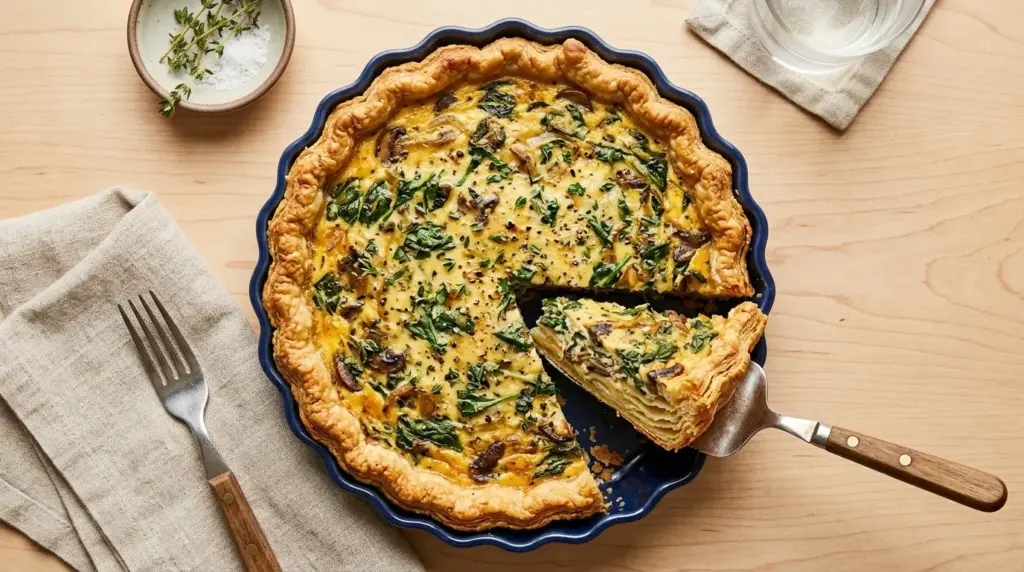
This crust is a blank canvas for virtually any quiche filling you enjoy. It holds up well to both light, creamy custard fillings and richer, cheeseier ones.
Fill it with a classic combination of sautéed leeks, Gruyère cheese, and a simple egg and cream custard for a timeless result. Serve slices warm or at room temperature alongside a lightly dressed green salad for a complete brunch or lunch.
- Scrambled Eggs and crispy bacon on the side make a satisfying breakfast plate
- Pair with a bowl of Broccoli Soup for a comforting lunch
- Serve alongside a Broccoli Salad for a fresh, crunchy contrast
- Fruit Salad brightens up a brunch spread nicely
- A simple Avocado Toast rounds out a light weekend brunch
- Slices pack well for lunches and taste great cold the next day
You might also enjoy: Sourdough Discard Crepes
Variations to Try
Once you’ve mastered the basic crust, there are many small tweaks you can make to tailor it to different fillings and occasions.
- Add fresh herbs to the dough. Work 1 tablespoon of finely chopped fresh thyme or rosemary into the flour before adding the butter. The herbs perfume the crust as it bakes and pair beautifully with cheese and vegetable fillings.
- Use half whole wheat flour. Swap half of the all-purpose flour for whole wheat flour to add a nuttier, earthier flavor. The crust will be slightly denser but still delicious.
- Add garlic powder. Mix in 1/4 teaspoon of garlic powder with the flour and salt for a savory boost that works particularly well with spinach and mushroom fillings.
- Use cultured butter. Cultured butter has a higher acidity and richer flavor than regular butter. Combined with the sourdough discard, it creates an even more complex-tasting crust.
- Long ferment the dough. After pressing the dough into the tin, cover it and refrigerate for up to 72 hours before blind baking. The extended fermentation time enhances the sourdough flavor and may improve digestibility.
- Make mini quiche crusts. Use the same dough to line a muffin tin for individual mini quiches. Reduce the blind baking time to 10 to 12 minutes.
Read Also: Sourdough Discard Pizza Dough Recipe
Storage and Reheating
This crust stores well at multiple stages, making it ideal for meal prep and planning ahead.
- Unbaked dough disc: Wrap tightly in plastic wrap and refrigerate for up to 3 days, or freeze for up to 3 months. Thaw frozen dough overnight in the refrigerator before rolling.
- Blind baked, unfilled crust: Store at room temperature, loosely covered, for up to 24 hours. For longer storage, wrap well and refrigerate for up to 3 days.
- Filled, baked quiche: Cool to room temperature, then cover and refrigerate for up to 4 days.
- Reheating: Place individual slices on a baking sheet in a 325°F (165°C) oven for 10 to 15 minutes until warmed through. This keeps the crust crisp. Microwaving works in a pinch but softens the crust significantly.
- Freezing the baked quiche: Wrap individual slices in foil and freeze for up to 2 months. Reheat from frozen at 350°F (175°C) for 25 to 30 minutes.
This crust keeps just as well as one made with this Easy Pie Crust Recipe.
Nutritional Facts
The following is an estimate for the crust only (for one 9-inch crust, divided into 8 slices). Nutritional values will change depending on how much butter and filling are used.
| Nutrient | Per Slice (1/8 crust) |
|---|---|
| Calories | 175 kcal |
| Total Fat | 11.5g |
| Saturated Fat | 7g |
| Carbohydrates | 15g |
| Fiber | 0.5g |
| Protein | 2.5g |
| Sodium | 145mg |
| Sugar | 0g |
Values are approximate and will vary based on the exact hydration level of your sourdough discard and any ingredient substitutions.
For a full meal, try pairing this crust with a Quiche Lorraine filling and serving alongside a Potato Salad.
Health Benefits of Key Ingredients
Each component of this crust contributes more than just flavor and structure. Here’s why these ingredients are worth understanding.
The sourdough discard is the standout ingredient from a health perspective. It contains naturally occurring acids from fermentation, which lower the glycemic impact of the flour and may improve mineral absorption by breaking down some of the phytic acid present in whole grains.
- All-purpose flour provides structure and a small amount of B vitamins and iron, particularly if using unbleached varieties
- Unsalted butter contains fat-soluble vitamins A, D, E, and K2, which support bone health and immune function; using unsalted butter also gives you control over the sodium content
- Sourdough discard contributes fermentation byproducts that may support gut health and digestive comfort compared to conventional pastry made with fresh, unfermented flour
- Sea salt in moderate amounts supports electrolyte balance and enhances the flavor of every other ingredient
Read Also: Sourdough Discard English Muffins Recipe
Frequently Asked Questions
1. Can I use active, fed sourdough starter instead of discard?
Yes, absolutely. Active starter works just as well as discard in this recipe. The flavor may be slightly milder, since discard that has been sitting longer tends to be more acidic. Either way, make sure it is cold when you add it to the flour mixture.
2. My dough cracked when I tried to roll it. What went wrong?
The dough was likely too cold. Let it sit on the counter for 5 to 8 minutes before rolling, which gives the gluten time to relax slightly. If cracks appear at the edges, just press them back together with your fingers. A small amount of cracking is normal and won’t affect the final crust.
3. Can I make this crust without a food processor?
Definitely. This recipe is written for hand mixing, which gives you excellent control over the texture. The key is to work quickly so your hands don’t warm the butter too much. Some bakers prefer to use a box grater to grate frozen butter directly into the flour, which makes the process even easier.
4. How do I prevent a soggy bottom?
Three things prevent a soggy quiche bottom. First, blind bake the crust thoroughly until the base looks dry and matte. Second, make sure any vegetables or meats in your filling are pre-cooked and have released most of their moisture before going into the crust. Third, brush the hot, blind-baked crust base with a thin layer of beaten egg and return it to the oven for 2 minutes before adding the filling. This creates a seal.
5. Can I use this crust recipe for a sweet tart or dessert?
You can, with a small modification. Omit the garlic or herbed variations and add 1 tablespoon (12g) of granulated sugar to the flour and salt mixture. The slight tang from the sourdough discard works surprisingly well in fruit tarts and custard tarts, adding a pleasant complexity.

Sourdough Discard Quiche Crust

Equipment
- 9-inch quiche tin or tart pan with removable bottom
- Pastry cutter or bench scraper
- Large mixing bowl - chilled if possible
- Plastic wrap or beeswax wrap
- Rolling Pin
- Parchment paper
- Pie weights or dried beans
- Fork - for docking
- Pastry brush - optional, for egg wash
- Marble pastry board - optional, but recommended
- Danish dough whisk - optional, but recommended
Ingredients
- 1 1/4 cups all-purpose flour - 160g, plus more for dusting
- 1/2 teaspoon fine sea salt - 3g
- 1/2 cup unsalted butter - 113g, cold and cut into 1/2-inch cubes
- 1/2 cup sourdough discard - 120g, cold, at 100% hydration (equal parts flour and water)
- 1 to 2 tablespoons ice water - 15-30ml, as needed
Instructions
- Chill your mixing bowl and butter cubes in the freezer for 10-15 minutes. Keep sourdough discard cold in the refrigerator.
- Combine 1 1/4 cups all-purpose flour and 1/2 teaspoon fine sea salt in the chilled mixing bowl.
- Cut cold butter cubes into the flour mixture using a pastry cutter until the butter is broken into irregular, pea-sized pieces.
- Add cold sourdough discard and toss with a fork until no dry pockets of flour remain. Add ice water, 1 tablespoon at a time, if needed to bring the dough together.
- Turn the shaggy dough onto a floured surface and fold it over itself 4-5 times until it holds together in a cohesive disc with visible butter streaks.
- Wrap the dough disc tightly and refrigerate for a minimum of 1 hour, or up to 3 days.
- Let the dough sit at room temperature for 5 minutes, then roll into a 12-inch circle about 1/8 inch thick.
- Transfer the dough to a 9-inch quiche tin, pressing gently into the corners and up the sides without stretching. Trim excess dough and crimp the edges.
- Prick the base all over with a fork and freeze the lined tin for at least 20 minutes.
- Preheat oven to 375°F. Line the crust with parchment paper, fill with pie weights, and blind bake for 18-20 minutes. Remove weights and bake for 5-8 more minutes until the base is dry and lightly golden.
Notes
- Keep all ingredients cold throughout the process for the flakiest results. Cold butter, discard, bowl, and hands are essential.
- Don’t overwork the dough. Stop mixing as soon as the dough holds together to prevent a tough crust.
- Use 100% hydration discard (equal parts flour and water by weight) for the best texture.
- Never skip the fridge rest. That 1-hour minimum is crucial for preventing shrinkage and ensuring flakiness.
- Freeze for 20 minutes before blind baking to significantly reduce crust shrinkage.
- Weigh your ingredients with a kitchen scale for the most consistent, reliable results.
- For a pre-baked unfilled crust, store at room temperature loosely covered for up to 24 hours or refrigerate for 3 days.
- Baked quiche keeps in the refrigerator for up to 4 days. Reheat slices in a 325°F oven for 10-15 minutes to keep the crust crisp.
- This dough can be frozen for up to 3 months. Thaw overnight in the refrigerator before rolling.
- To prevent a soggy bottom, blind bake thoroughly, pre-cook fillings, and brush the hot crust with beaten egg before adding the filling.
Final Thoughts
Making a sourdough discard quiche crust from scratch is one of those kitchen projects that sounds harder than it is. Once you’ve done it once, the process feels completely natural, and the results are so much better than anything from a box or the freezer aisle.
The key things to remember are cold ingredients, minimal mixing, and patience during the resting periods. Get those three things right, and you’ll have a genuinely beautiful, flaky, golden crust every time.
If you try this recipe, leave a comment below to let me know how it turned out. Sharing photos on social media with a tag makes my day, and hearing what fillings you paired it with is always the best kind of inspiration.
Recommended:
- Sourdough Discard Dinner Rolls
- Sourdough Discard Pancakes
- Sourdough Discard Waffles
- Sourdough Discard Cinnamon Rolls
- Sourdough Discard Banana Bread
- Sourdough Discard Muffins
- Sourdough Discard Brownies
- Sourdough Discard Chocolate Cake
- Sourdough Discard Coffee Cake
- Sourdough Discard Donuts