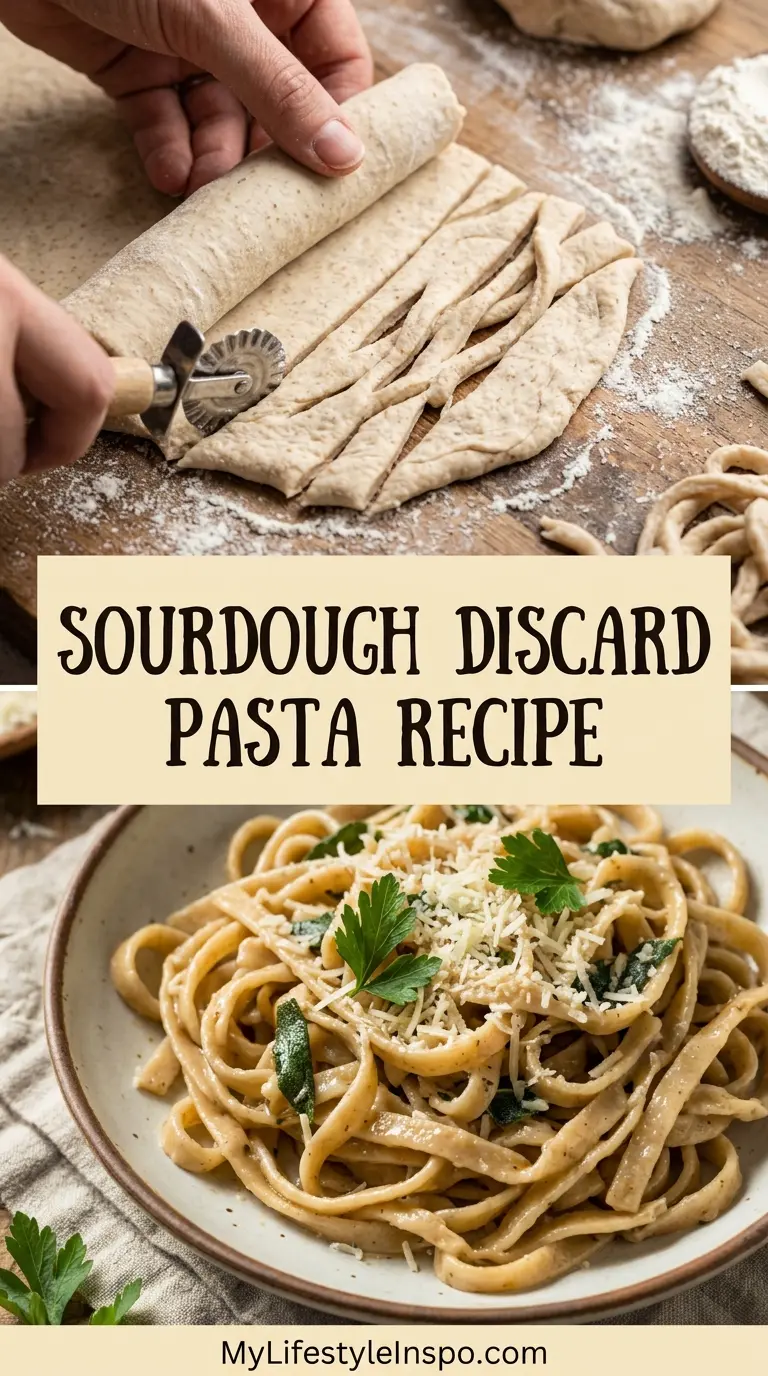
If you have a sourdough starter, you already know the guilt of tossing the discard. This sourdough discard pasta recipe is one of the best ways to put that extra starter to delicious use, turning it into silky, golden homemade noodles that are miles ahead of anything in a box.
The discard does something genuinely impressive here. It adds a subtle tangy depth to the dough, improves its elasticity, and creates a pasta that feels satisfying to work with. The noodles cook up tender yet firm, and they hold onto sauces beautifully.
The base recipe is simple: flour, eggs, sourdough discard, salt, and a touch of olive oil. Five ingredients, zero waste, and a result that will make you wonder why you ever bought dried pasta.
This recipe uses the same-day method, which means your pasta is ready within an hour. If you want to go deeper, a long-ferment overnight version is included in the variations section for even better flavor and digestibility.
Roll it into fettuccine, cut it into pappardelle, or shape it as you like. This dough handles it all.
You might also enjoy: Sourdough Discard Pizza Dough
Why You’ll Love This Sourdough Discard Pasta Recipe
This recipe is genuinely one of the most rewarding things you can make with your discard. Fresh pasta has a texture and flavor that no store-bought product can match, and the sourdough adds a layer of complexity that elevates even the simplest sauce.
It is also incredibly practical. Instead of throwing away discard every time you feed your starter, you are turning it into a proper dinner.
The dough comes together quickly and is forgiving for beginners. You do not need a pasta machine, though one makes the process even smoother.
Here is why this recipe stands out:
- Uses up sourdough discard so nothing goes to waste
- Only 5 ingredients and most are already in your kitchen
- Ready in about 1 hour with the same-day method
- Silky, tender noodles with a subtle tangy depth from the discard
- Completely customizable into any pasta shape you like
- Better digestibility compared to regular pasta due to the fermentation process
- Works with any sauce from simple butter and Parmesan to a rich bolognese
Read Also: Sourdough Discard Flatbread Recipe
Ingredients
This pasta dough uses a short ingredient list, but quality matters. Using good flour and fresh eggs will make a noticeable difference in the final texture of your noodles.
- 2 cups (240g) all-purpose flour or 00 flour, plus extra for dusting
- 2 large eggs, room temperature
- 100g (about 1/3 cup) sourdough discard, unfed or recently fed
- 1 teaspoon (5ml) olive oil
- 1/2 teaspoon (3g) fine sea salt
- 1-2 tablespoons (15-30ml) water, if needed to adjust dough consistency
Notes on ingredients:
- Flour: 00 flour is the traditional Italian choice for pasta. It is finely milled and produces an exceptionally silky dough. All-purpose flour works well too. For a slightly nuttier flavor, you can swap up to half with semolina flour.
- Sourdough discard: Use discard that is no more than 10 days old for the best flavor. Discard stored too long in the fridge can develop off-flavors.
- Eggs: Room-temperature eggs incorporate into the dough more easily and produce a smoother texture.
This dough pairs beautifully with a homemade tomato sauce or a simple garlic butter for a complete meal.
Kitchen Equipment Needed
You do not need much to make this pasta. A pasta machine makes rolling easier, but a heavy rolling pin works just as well with a little extra effort.
- Large mixing bowl or clean countertop surface for kneading
- Fork for mixing the initial dough
- Pasta machine (optional but highly recommended for even thickness)
- Heavy rolling pin for rolling dough by hand if no machine is available
- Sharp knife or pasta cutter wheel for cutting noodles
- Large pot for boiling pasta
- Colander for draining
- Clean kitchen towels or a pasta drying rack for resting and drying cut pasta
- Digital kitchen scale for accurate measurements (highly recommended)
- Plastic wrap or a clean bowl to cover resting dough
Read Also: Sourdough Discard Tortillas Recipe
Recommended Products for This Recipe
These are products I genuinely recommend based on quality and how much they improve the pasta-making process.
1. Caputo 00 Pasta Flour
Tipo 00 flour is the gold standard for fresh Italian pasta. Caputo’s version is finely milled from soft wheat, producing dough that is incredibly smooth and silky. The extra elasticity it gives the dough makes rolling easier, and the finished pasta has a noticeably lighter texture compared to all-purpose flour.
2. Marcato Atlas 150 Pasta Machine
This is the pasta machine that most home cooks graduate to once they fall in love with fresh pasta. It rolls dough evenly across nine thickness settings and comes with a cutter attachment for fettuccine and tagliolini. It is durable, easy to clean, and makes consistent pasta every single time.
3. OXO Good Grips Pasta Drying Rack
Letting your cut pasta dry slightly before cooking prevents the noodles from sticking together in the pot. This folding rack holds multiple portions at once, takes up minimal counter space, and folds flat for storage. A small investment that solves one of the most common fresh pasta frustrations.
4. Lodge Enameled Dutch Oven
For boiling pasta, you want a pot with plenty of room. The Lodge enameled Dutch oven retains heat beautifully and distributes it evenly so your water comes back to a boil quickly after you add the pasta. It doubles as a sauce pot, making it one of the most-used pieces of cookware in any kitchen.
For another great way to use up your discard, check out this Sourdough Discard Naan Recipe.

Step-by-Step Instructions
1. Mix the Dough
- Measure your flour by weight using a digital scale for the most consistent result. If using volume measurements, spoon the flour into your measuring cup and level it off rather than scooping directly from the bag.
- Pour the flour onto a clean, lightly floured work surface and create a wide well in the center. Alternatively, use a large mixing bowl.
- Crack the 2 eggs into the well and add the 100g of sourdough discard, 1 teaspoon of olive oil, and 1/2 teaspoon of salt.
- Using a fork, begin whisking the eggs and discard together in the center of the well, slowly incorporating the surrounding flour a little at a time.
- Continue pulling flour in from the sides until a shaggy dough begins to form. If the dough seems too dry or crumbly, add water one tablespoon at a time. If it feels too sticky, dust lightly with a small amount of additional flour.
- Once the dough is too thick to work with the fork, set the fork aside and begin working the dough with your hands.
2. Knead the Dough
- Turn the shaggy dough out onto your lightly floured work surface if you were working in a bowl.
- Knead the dough by pushing it away from you with the heel of your hand, then folding it back toward you and rotating it a quarter turn. Repeat this motion continuously.
- Knead for 8 to 10 minutes until the dough becomes smooth, elastic, and slightly tacky but not sticky. When you press a finger into it, the indentation should spring back slowly.
- If the dough sticks to your hands or the surface, dust very lightly with flour. Avoid adding too much flour, as this will toughen the pasta.
- Shape the dough into a smooth ball. The surface should look like soft leather with no rough tears.
3. Rest the Dough
- Wrap the dough ball tightly in plastic wrap or place it in a lightly oiled bowl and cover it with a clean kitchen towel.
- Let the dough rest at room temperature for at least 30 minutes. This resting period is essential. The gluten relaxes during this time, making the dough much easier to roll out without snapping back.
- If you are planning to make the overnight fermented version, place the wrapped dough in the refrigerator at this stage and let it rest for 12 to 24 hours. Remove it from the fridge 30 minutes before rolling to let it come back to room temperature.
- Do not skip the resting step. Dough that has not rested will be very elastic and difficult to roll thinly.
4. Divide and Flatten the Dough
- Once the dough has rested, unwrap it and place it on a lightly floured surface.
- Using a bench scraper or sharp knife, divide the dough into 4 equal portions. Working with smaller pieces makes the rolling process much more manageable.
- Flatten each portion into a rough oval shape with your hands before rolling. Keep the portions you are not currently working with covered under plastic wrap or a clean towel to prevent them from drying out.
- Lightly dust the work surface and the top of the first dough portion with flour before you begin rolling.
5. Roll Out the Dough
If using a pasta machine:
- Set the pasta machine to its widest setting (usually setting 1).
- Feed the flattened dough portion through the rollers once.
- Fold the dough in thirds like a letter, then feed it through the widest setting again. Repeat this folding and rolling step 2 to 3 more times to further develop the dough’s structure and smooth out any rough edges.
- Gradually decrease the thickness setting, rolling the dough through each setting once, until you reach your desired thickness. For fettuccine and tagliatelle, setting 5 or 6 out of 9 is ideal. For lasagna sheets, setting 4 or 5 works well.
- Lightly dust the dough with flour as needed between passes to prevent it from sticking.
If rolling by hand:
- Using a heavy rolling pin, roll each dough portion out from the center outward, rotating the dough regularly to keep it even.
- Work patiently and roll firmly, applying consistent pressure. The goal is a thin, even sheet roughly 1 to 2mm thick. Hold the sheet up to the light occasionally to check for evenness.
- Lightly dust with flour if the dough begins to stick to the surface.
6. Cut the Noodles
- Once all dough portions have been rolled out, it is time to cut them into noodles.
- For fettuccine or tagliatelle: Lightly dust the rolled sheet with flour, then loosely roll it up into a cylinder. Using a sharp knife, cut across the cylinder at 5mm to 6mm intervals. Carefully unroll the cut noodles and shake them gently to separate them.
- For pappardelle: Cut the dough sheet into wide ribbons, about 2cm to 2.5cm wide.
- For spaghetti: Use the spaghetti cutter attachment on the pasta machine, or cut the dough into very thin strips with a knife.
- As you cut the noodles, dust them lightly with flour and either hang them on a pasta drying rack or loosely nest them into small nests on a lightly floured tray. This prevents them from sticking together.
7. Cook the Pasta
- Bring a large pot of water to a rolling boil over high heat. Use plenty of water, at least 4 quarts (4 liters) per batch of pasta, so the noodles have room to move freely.
- Once the water is boiling vigorously, add a generous amount of salt. The water should taste pleasantly salty, roughly 1 to 2 tablespoons (15 to 30g) of salt per 4 quarts (4 liters) of water. This is the only opportunity to season the pasta itself.
- Add the fresh pasta to the boiling salted water. Stir immediately to prevent the noodles from sticking together.
- Cook for 2 to 4 minutes, depending on the thickness of your noodles. Fresh pasta cooks much faster than dried pasta. Start tasting at the 2-minute mark.
- The pasta is done when it is al dente, meaning it is cooked through but still has a very slight firmness when you bite into it.
- Reserve about 1 cup (240ml) of the pasta cooking water before draining. This starchy water is liquid gold for finishing sauces.
- Drain the pasta through a colander, then add it directly to your sauce. Toss to coat, adding splashes of the reserved pasta water as needed to loosen and emulsify the sauce.
Read Also: Spaghetti Alla Carbonara Recipe
Tips for Success
A few key techniques will take your sourdough pasta from good to genuinely great. Paying attention to these details makes a noticeable difference.
- Weigh your ingredients. Using a digital scale for the flour, discard, and even the eggs ensures consistent dough every time. Volume measurements can vary significantly, especially for flour.
- Do not rush the rest. Thirty minutes minimum resting time is non-negotiable. Trying to roll dough that has not rested is frustrating and produces tough, uneven pasta.
- Use fresh discard. Discard that is 5 to 10 days old or fresher produces the best flavor. Very old discard from the back of the fridge can make the pasta taste overly sour or off.
- Flour sparingly. Add only enough flour to prevent sticking during kneading and rolling. Too much flour makes the dough stiff and the pasta tough.
- Taste the pasta water. Properly salted pasta water is one of the biggest flavor differences between restaurant pasta and home pasta. It should taste like mild seawater.
- Reserve pasta water. Always scoop out a cup of the starchy cooking water before you drain. It thickens sauces and helps them cling to the noodles.
- Cook pasta directly in the sauce. After draining, add the pasta to the pan with your sauce and toss over medium heat for 30 to 60 seconds. This allows the pasta to finish cooking in the sauce and absorbs more flavor.
- Dry slightly before cutting. After rolling, let the sheet rest uncovered for 5 minutes before cutting. This prevents the cut edges from sticking together.
This technique also works beautifully in Sourdough Discard Breadsticks for a simple side dish alongside your pasta.
Serving Suggestions
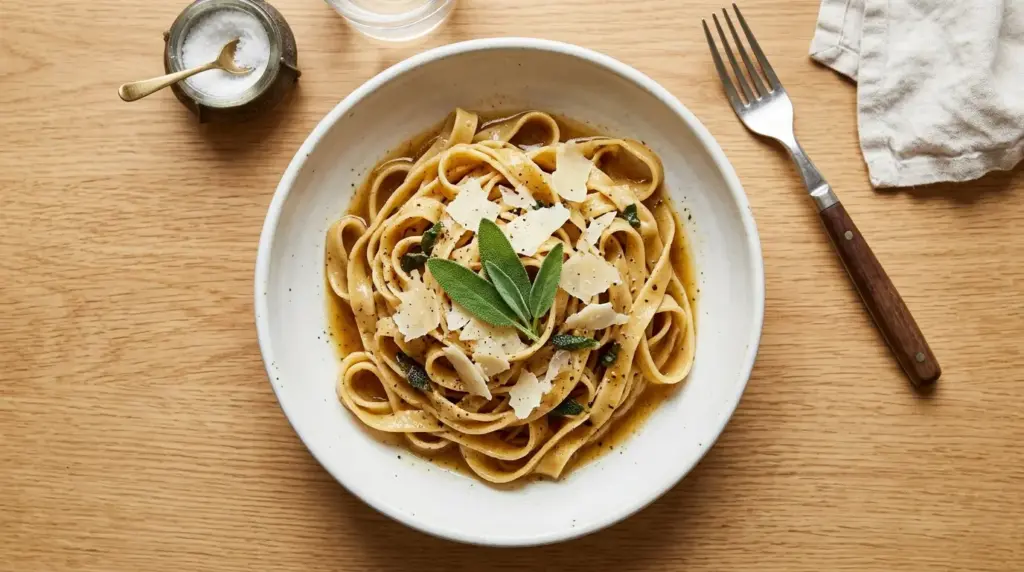
Fresh sourdough discard pasta is incredibly versatile and pairs well with both bold and delicate sauces. The subtle tang in the noodles complements a wide range of flavors.
The key to a great pasta dish is matching the sauce weight to the pasta shape. Thinner noodles like spaghetti suit lighter sauces, while wider pappardelle handles heartier ragus.
Here are some favorite ways to serve this pasta:
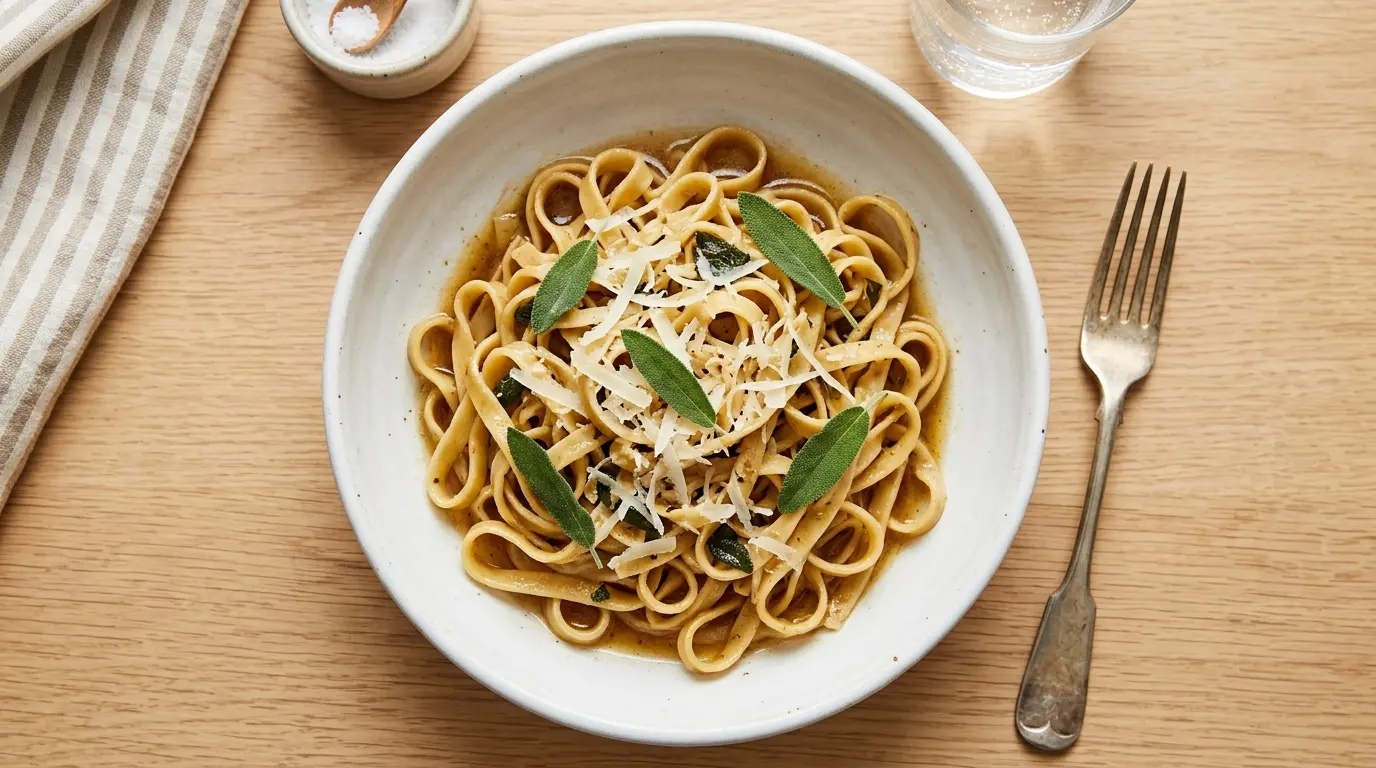
- Brown butter and sage: Melt butter in a pan until it turns golden and nutty, add fresh sage leaves and a pinch of salt, then toss with the cooked pasta and a handful of grated Parmesan. Simple and stunning.
- Classic marinara: A bright, fresh marinara sauce is one of the best partners for homemade pasta. The noodles absorb the tomato flavor beautifully.
- Basil pesto: Toss the cooked pasta with basil pesto, a splash of pasta water, and torn fresh mozzarella for a quick and vibrant meal.
- Creamy Alfredo: A rich homemade Alfredo sauce clings to the wide noodles and turns this pasta into a true comfort dish.
- Cacio e pepe: Toss with freshly cracked black pepper, grated Pecorino Romano, and pasta water for a minimalist Roman classic that lets the fresh noodles shine.
- Vodka sauce: A creamy vodka sauce pairs beautifully with the slight tang from the sourdough discard.
- Simple garlic and olive oil: Heat garlic in good olive oil, add red pepper flakes, then toss with the pasta and a handful of fresh parsley. Ready in minutes.
Variations to Try
Once you are comfortable with the base recipe, there are plenty of ways to adapt this dough. The core technique stays the same.
- Overnight fermented pasta: After kneading, wrap the dough and refrigerate for 12 to 24 hours instead of resting at room temperature. The extended fermentation develops more complex flavor and improves digestibility by breaking down gluten and phytic acid. Remove from the fridge 30 minutes before rolling.
- Whole wheat sourdough pasta: Replace up to half of the all-purpose flour with whole wheat flour for a nuttier, earthier flavor and a slight increase in fiber.
- Semolina blend: Substitute half of the flour with semolina flour for a more robust, toothsome texture. This version holds up especially well with chunky meat sauces.
- Spinach pasta: Blend 2 to 3 tablespoons of spinach puree into the eggs before mixing. This adds a vibrant green color and a very mild earthy flavor without changing the texture significantly.
- Herb pasta: Finely chop fresh herbs like rosemary, thyme, or chives and knead them into the dough. This works particularly well for pasta served with simple butter sauces.
- No-egg version: Replace the eggs with extra sourdough discard and a little more olive oil. The dough will be slightly less rich but still produces tasty noodles.
- Egg yolk only version: Using 4 egg yolks instead of 2 whole eggs produces an incredibly rich, golden, silky pasta. This is a more indulgent version worth trying on special occasions.
Read Also: Sourdough Discard Crackers Recipe
Storage and Reheating
Fresh pasta stores very well in several different ways, making it easy to prep ahead for busy nights.
- Fresh cut pasta (short-term): Once cut, dust the noodles generously with flour and either hang them to dry or form them into loose nests. Store uncovered at room temperature for up to 2 hours before cooking, or refrigerate in an airtight container for up to 2 days.
- Refrigerating fresh pasta: Toss the cut noodles lightly with flour to prevent sticking, then transfer to an airtight container or a zip-lock bag. Refrigerate for up to 2 days. Cook directly from the refrigerator, adding it straight to boiling salted water.
- Freezing fresh pasta: Arrange the cut noodles in small nests on a floured baking sheet and freeze until solid, about 1 hour. Transfer the frozen nests to a zip-lock bag or airtight container and freeze for up to 2 months. Cook directly from frozen, adding 1 to 2 minutes to the cooking time.
- Drying pasta for longer storage: Hang the cut noodles on a pasta drying rack or drape them over a clean dowel rod for 12 to 24 hours until completely dry and brittle. Store in an airtight container at room temperature for up to 2 weeks. Cook as you would dried pasta, for 6 to 8 minutes.
- Reheating cooked pasta: If you have leftover cooked pasta, toss it with a little olive oil and refrigerate in an airtight container for up to 3 days. Reheat in a pan with a splash of water or sauce over medium heat, tossing frequently until warmed through. Avoid microwaving if possible, as it can make the noodles rubbery.
For another great discard recipe, try these Sourdough Discard Dinner Rolls as a side with your pasta night.
Nutritional Facts
The following values are estimates for one serving of plain fresh pasta (approximately 100g cooked), made with all-purpose flour and eggs, based on 4 servings per batch.
| Nutrient | Amount Per Serving |
|---|---|
| Calories | 260 kcal |
| Total Carbohydrates | 42g |
| Protein | 9g |
| Total Fat | 5g |
| Saturated Fat | 1g |
| Fiber | 2g |
| Sodium | 200mg |
| Iron | 2mg |
Note: Nutritional values will vary depending on the flour type used, the amount of sourdough discard, and the sauce you pair with the pasta. Using 00 flour produces a slightly lighter pasta, while adding whole wheat flour increases fiber content.
For a naturally fermented sourdough bread to serve alongside this dish, check out the Easy Sourdough Bread Recipe.
Health Benefits of Key Ingredients
This sourdough discard pasta offers a few meaningful nutritional advantages over regular dried pasta.
The fermentation factor sets it apart most significantly. Even with a same-day dough, the sourdough discard introduces lactic acid bacteria that begin to break down phytic acid in the flour. This reduces the anti-nutrients that can block mineral absorption and makes the pasta easier on digestion for many people.
Here is a closer look at the key ingredients and what they contribute:
- Sourdough discard: Contains lactic acid bacteria that improve digestibility and reduce phytic acid. The fermentation process also lowers the glycemic response compared to conventional pasta, meaning blood sugar rises more gradually after eating it.
- Eggs: A complete protein source that provides all essential amino acids. The egg yolks add fat-soluble vitamins A, D, E, and K, along with choline, which supports brain and liver health.
- All-purpose or 00 flour: A source of complex carbohydrates for sustained energy. Choosing whole wheat or semolina flour increases fiber, B vitamins, and mineral content significantly.
- Olive oil: Adds heart-healthy monounsaturated fats and acts as an emulsifier in the dough, contributing to the pasta’s silky texture. Olive oil also contains polyphenols with antioxidant properties.
- Salt: Enhances flavor and plays a structural role in gluten development within the dough. Using a quality sea salt in moderate amounts is the best approach.
For more ways to use your sourdough starter, check out this Sourdough Starter Recipe.
Frequently Asked Questions
1. Can I use active sourdough starter instead of discard?
Yes, absolutely. Active starter works just as well as discard in this recipe. The main difference is flavor: active starter that is recently fed will have a milder, yeastier flavor, while older discard adds a more pronounced tang. For most purposes, you can swap them in equal quantities without adjusting anything else.
2. Do I need a pasta machine to make this recipe?
No, a pasta machine is not required. A heavy rolling pin and some patience will get you there. The key is to roll the dough as evenly and as thinly as possible, working slowly and rotating the dough frequently. That said, a pasta machine produces more consistent results and makes the process significantly faster, especially when making larger batches.
3. Why is my pasta dough too stiff or too sticky?
Dough consistency can vary based on the hydration level of your sourdough discard, the size of your eggs, and the absorbency of your flour. If the dough is too stiff and crumbly, add water one teaspoon at a time and knead it in until the dough becomes smooth. If the dough is too sticky, dust lightly with flour and continue kneading. Proper resting time (at least 30 minutes) also dramatically reduces stiffness.
4. Can I make this pasta dough ahead of time?
Yes, and making it ahead often improves the result. After kneading, wrap the dough tightly in plastic wrap and refrigerate it for up to 2 days. The extended rest gives the gluten even more time to relax, making the dough easier to roll. Remove it from the fridge and let it sit at room temperature for 30 minutes before rolling. You can also freeze the uncooked dough ball for up to 1 month. Thaw overnight in the refrigerator before using.
5. How do I know when my fresh pasta is cooked?
Fresh pasta cooks very quickly, usually in just 2 to 4 minutes in boiling water. The best way to tell is to taste a strand. It should be tender all the way through but with a very slight firmness at the center, what Italians call al dente. If you notice the pasta floating to the top of the water, that is a good visual cue that it is nearly done, though always confirm by tasting rather than relying solely on timing.
Read Also: Sourdough Discard Waffles Recipe

Sourdough Discard Pasta

Equipment
- Large mixing bowl or clean countertop - For mixing and kneading the dough
- Fork - For mixing the initial dough
- Digital kitchen scale - Highly recommended for accurate measurements
- Pasta machine - Optional but highly recommended for even thickness
- Heavy rolling pin - For rolling dough by hand if no machine is available
- Sharp knife or pasta cutter wheel - For cutting noodles
- Large pot - For boiling pasta
- Colander - For draining
- Clean kitchen towels or pasta drying rack - For resting and drying cut pasta
- Plastic wrap or clean bowl - To cover resting dough
Ingredients
- 2 cups all-purpose flour or 00 flour - 240g, plus extra for dusting
- 2 large eggs - room temperature
- 100 g sourdough discard - about 1/3 cup, unfed or recently fed, no more than 10 days old
- 1 teaspoon olive oil - 5ml
- 0.5 teaspoon fine sea salt - 3g
- 1-2 tablespoons water - 15-30ml, if needed to adjust dough consistency
For Serving
- 1 cup pasta cooking water - 240ml, reserved before draining (not consumed directly)
- your favorite sauce - to serve
- grated Parmesan - for serving, optional
Instructions
- Mix the flour, eggs, sourdough discard, olive oil, and salt together in a well or bowl until a shaggy dough forms. Add water a tablespoon at a time if the dough is too dry.
- Knead the dough on a lightly floured surface for 8 to 10 minutes until smooth and elastic. The dough should be slightly tacky but not sticky.
- Wrap the dough in plastic wrap and rest at room temperature for at least 30 minutes to relax the gluten.
- Divide the rested dough into 4 equal portions and flatten each into an oval. Keep unused portions covered.
- Roll each portion through a pasta machine, starting at the widest setting and gradually decreasing to your desired thickness. Alternatively, roll with a rolling pin to 1-2mm thick.
- Dust each rolled sheet with flour, then loosely roll and cut into noodles. Cut 5-6mm wide for fettuccine, 2-2.5cm for pappardelle, or use a spaghetti cutter attachment.
- Bring a large pot of well-salted water to a rolling boil. Add fresh pasta and cook for 2 to 4 minutes until al dente.
- Reserve 1 cup of pasta water, then drain. Toss the pasta with your sauce, adding splashes of reserved water to emulsify. Serve immediately.
Notes
- Flour Options: 00 flour produces the silkiest pasta. All-purpose works well too. For a nuttier flavor, swap up to half with semolina flour.
- Discard Age: Use discard no more than 10 days old for the best flavor. Older discard can develop off-flavors.
- Dough Consistency: If the dough is too stiff and crumbly, add water one teaspoon at a time. If too sticky, dust lightly with flour and continue kneading.
- Resting is Essential: Don’t skip the 30-minute rest. Unrested dough will be elastic and difficult to roll thin.
- Pasta Machine Alternative: A heavy rolling pin works well with patience. Roll evenly and rotate frequently for consistent thickness.
- Overnight Fermentation: For more complex flavor and better digestibility, refrigerate the wrapped dough for 12-24 hours before rolling.
- Storage Options: Fresh pasta keeps in the fridge for 2 days, or freeze for up to 2 months. Dry completely for room-temperature storage up to 2 weeks.
- Salt the Water Well: Use 1-2 tablespoons of salt per 4 quarts of water for properly seasoned pasta that rivals restaurant quality.
- Sauce Pairing: Thin noodles like spaghetti suit light sauces; wide pappardelle handle hearty ragus beautifully.
- Always Reserve Pasta Water: The starchy cooking water is essential for emulsifying and thickening sauces to coat the noodles perfectly.
Final Thoughts
Making sourdough discard pasta from scratch is one of those kitchen projects that feels impressive but is genuinely accessible to anyone willing to give it a try.
The ingredients are minimal. The technique is learnable with a single batch. And the reward, silky homemade noodles with a depth of flavor that no box can offer, is well worth the effort.
If you have been tossing your discard every week, this recipe is the perfect reason to stop. Keep it in the fridge, pull it out on a pasta night, and you will have fresh homemade noodles on the table within an hour.
Give this sourdough discard pasta recipe a try and let me know how it goes in the comments below. If you make it, I would love to see your noodles. Share a photo and tag us!
Recommended:
- Sourdough Discard Pancakes Recipe
- Sourdough Discard Crepes Recipe
- Sourdough Discard Cinnamon Rolls Recipe
- Sourdough Discard Focaccia Recipe
- Sourdough Discard Bagels Recipe
- Sourdough Discard English Muffins Recipe
- Sourdough Discard Pita Bread Recipe
- Sourdough Sandwich Bread Recipe
- Chicken Florentine Pasta Recipe
- Sourdough Discard Banana Bread Recipe