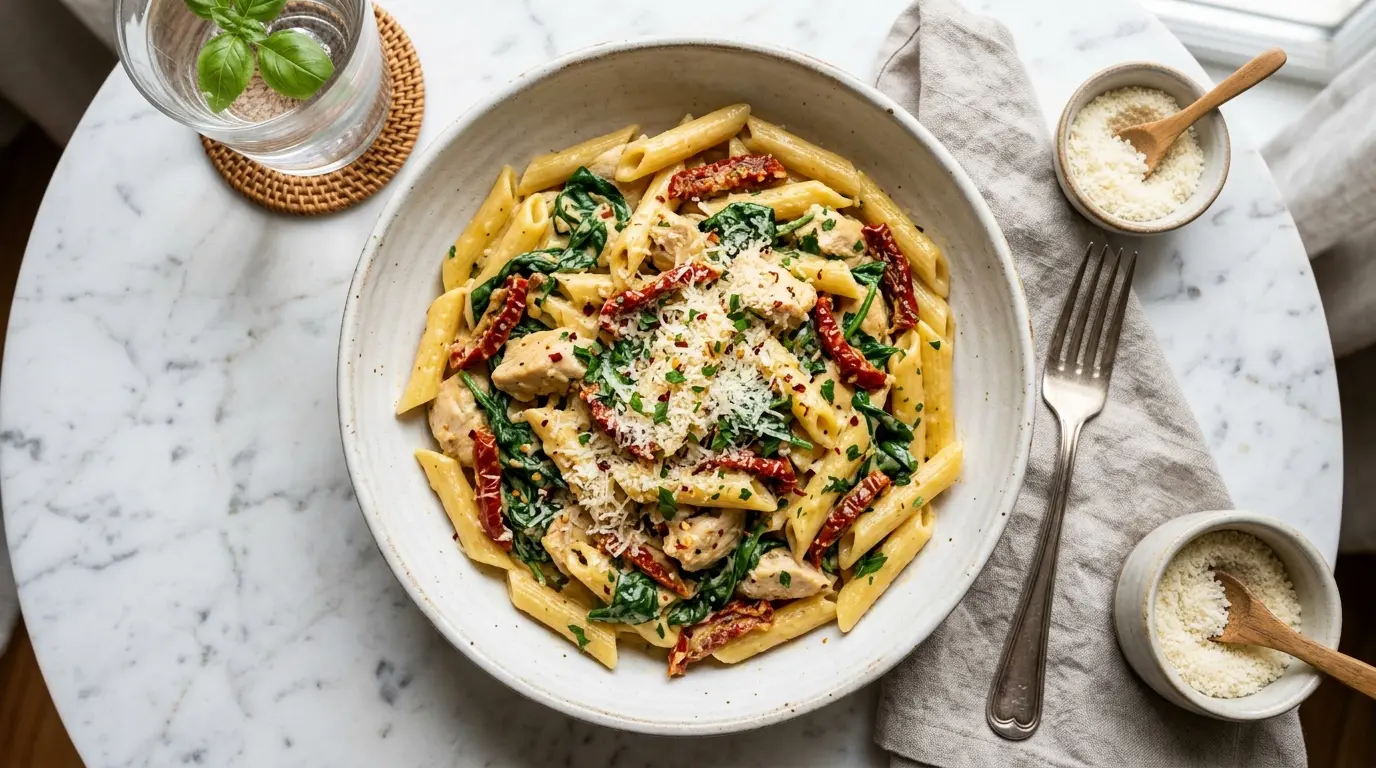
If you’ve been searching for the perfect weeknight pasta that feels like something you’d order at a cozy Italian restaurant, this Chicken Florentine Pasta Recipe is exactly what you’ve been missing.
The name “Florentine” comes from the culinary tradition of dishes prepared with spinach, a style popularized when Catherine de Medici of Florence introduced the ingredient to French cuisine centuries ago. Today, it simply signals something wonderful: tender chicken, vibrant baby spinach, and a luscious, creamy garlic-Parmesan sauce all tangled up with perfectly cooked pasta.
What makes this dish so special is the way each component builds on the last. Searing the chicken directly in the pan first creates browned, flavorful bits that infuse the sauce with depth you just can’t get any other way.
The garlic-kissed cream sauce gets richness from heavy cream and a generous shower of freshly grated Parmesan, while sun-dried tomatoes add a bright, subtly tangy note that cuts through the richness beautifully.
Sun-dried tomatoes are one of those ingredients that seem simple but do a lot of heavy lifting. They add concentrated, slightly sweet tomato flavor that makes the sauce feel more complex without any extra effort.
Best of all, this dish comes together in about 35-40 minutes from start to finish, making it just as doable on a Tuesday night as it is on a dinner party Saturday.
For more Florentine inspiration, you’ll love this Chicken Florentine as a lighter main course alternative.
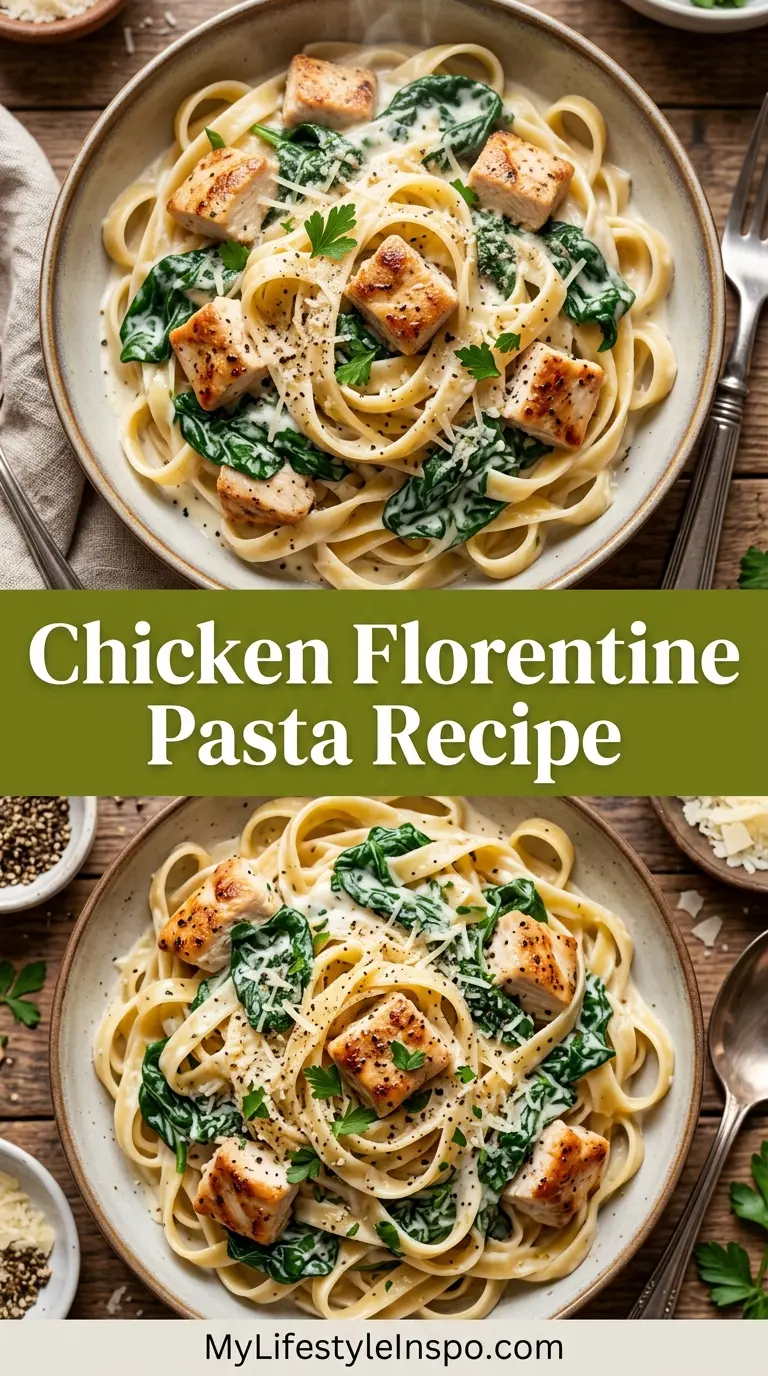
Why You’ll Love This Chicken Florentine Pasta Recipe
This recipe checks every box for a truly satisfying dinner. It’s rich without being heavy, quick without tasting rushed, and impressive without requiring any advanced cooking skills.
Here’s what makes it a keeper:
- Restaurant-worthy flavor at home. The combination of seared chicken, creamy Parmesan sauce, and sun-dried tomatoes creates a layered, complex flavor that genuinely rivals anything you’d find at an Italian trattoria.
- Ready in under 45 minutes. From prep to the table, this is a fast meal that doesn’t feel fast. Perfect for busy weeknights when you still want something that feels special.
- Uses simple, accessible ingredients. No specialty items or hard-to-find products needed. Everything in this recipe is easy to find at any grocery store.
- Customizable for your crowd. The base recipe is wonderful as written, but it’s also a flexible template. Swap out the pasta shape, add mushrooms, or adjust the heat level to suit your preferences.
- Leftovers reheat beautifully. Unlike many pasta dishes, this one stays creamy even after a night in the fridge, making it an excellent meal prep option.
- Kid-friendly and crowd-pleasing. The mild, creamy sauce appeals to picky eaters while the flavors are sophisticated enough for adults. It’s genuinely a dinner everyone can agree on.
You might also enjoy this Spinach Stuffed Chicken Breast Recipe if you love the chicken-and-spinach pairing in different form.
Ingredients
This recipe uses straightforward pantry staples alongside a few key flavor-builders. Always use freshly grated Parmesan rather than the pre-shredded variety, since fresh Parmesan melts into the sauce more smoothly and without any starchy residue.
- 1 lb (450g) penne pasta or fettuccine
- 1.5 lbs (680g) boneless, skinless chicken breasts, sliced into bite-sized pieces
- 1 teaspoon salt (plus more for pasta water)
- ½ teaspoon black pepper
- 1 teaspoon Italian seasoning
- 2 tablespoons olive oil
- 3 tablespoons unsalted butter, divided
- 6 cloves garlic, minced
- ½ cup (80g) sun-dried tomatoes, drained and roughly chopped (oil-packed preferred)
- 1½ cups (360ml) heavy cream
- 1 cup (240ml) low-sodium chicken broth
- 1 cup (100g) freshly grated Parmesan cheese, plus more for serving
- 5 oz (140g) baby spinach
- ½ teaspoon crushed red pepper flakes (optional)
- Reserved pasta water as needed (about ½ cup / 120ml)
Read Also: Chicken Florentine Soup Recipe
Kitchen Equipment Needed
Having the right tools makes this recipe run smoothly. A large, deep skillet or sauté pan is the most important piece of equipment here, as it needs to hold both the sauce and all the pasta at the end.
- Large pot for boiling pasta
- Large deep skillet or sauté pan (12-inch / 30cm) (stainless steel or cast iron preferred for best sear)
- Box grater or microplane for freshly grating Parmesan
- Colander for draining pasta
- Wooden spoon or silicone spatula
- Measuring cups and spoons
- Sharp chef’s knife and cutting board
- Ladle for reserving pasta water
Another great tool: Stainless Steel Tongs — perfect for tossing the pasta in the sauce without breaking the pieces apart.
Recommended Products for This Recipe
These are products that genuinely make a difference in the quality and ease of this Chicken Florentine Pasta. They’ve been selected based on performance and value.
1. Sun-Dried Tomatoes Packed in Olive Oil
Oil-packed sun-dried tomatoes are far more flavorful and tender than dry-packed ones. The oil they come in is infused with tomato flavor, and you can use a tablespoon of it in place of some olive oil when searing the chicken for even more depth.
2. Le Creuset Enameled Cast Iron Skillet
This skillet distributes heat evenly, which is critical for getting a perfect golden sear on the chicken without any burnt spots. The enameled interior also means the browned bits (fond) lift easily when you deglaze, going straight into your sauce where all that flavor belongs.
3. Microplane Zester/Grater for Parmesan
Freshly grated Parmesan makes a visibly better sauce. A Microplane produces a fine, fluffy grate that melts into cream sauces almost instantly, without any clumping or graininess.
4. Bronze-Cut Pasta (Penne or Fettuccine)
Bronze-cut pasta has a rougher, more porous surface texture than standard extruded pasta, which allows the cream sauce to cling to every piece rather than sliding off. It makes a real, noticeable difference in the final bite.
5. High-Quality Parmesan Cheese Block
A block of aged Parmigiano-Reggiano grated fresh into this sauce will completely transform it compared to pre-shredded grocery store Parmesan. The flavor is sharper, nuttier, and far more complex.
This Chicken Cordon Bleu Pasta Recipe uses a similarly rich, creamy sauce style and is another dinner-worthy pasta worth bookmarking.
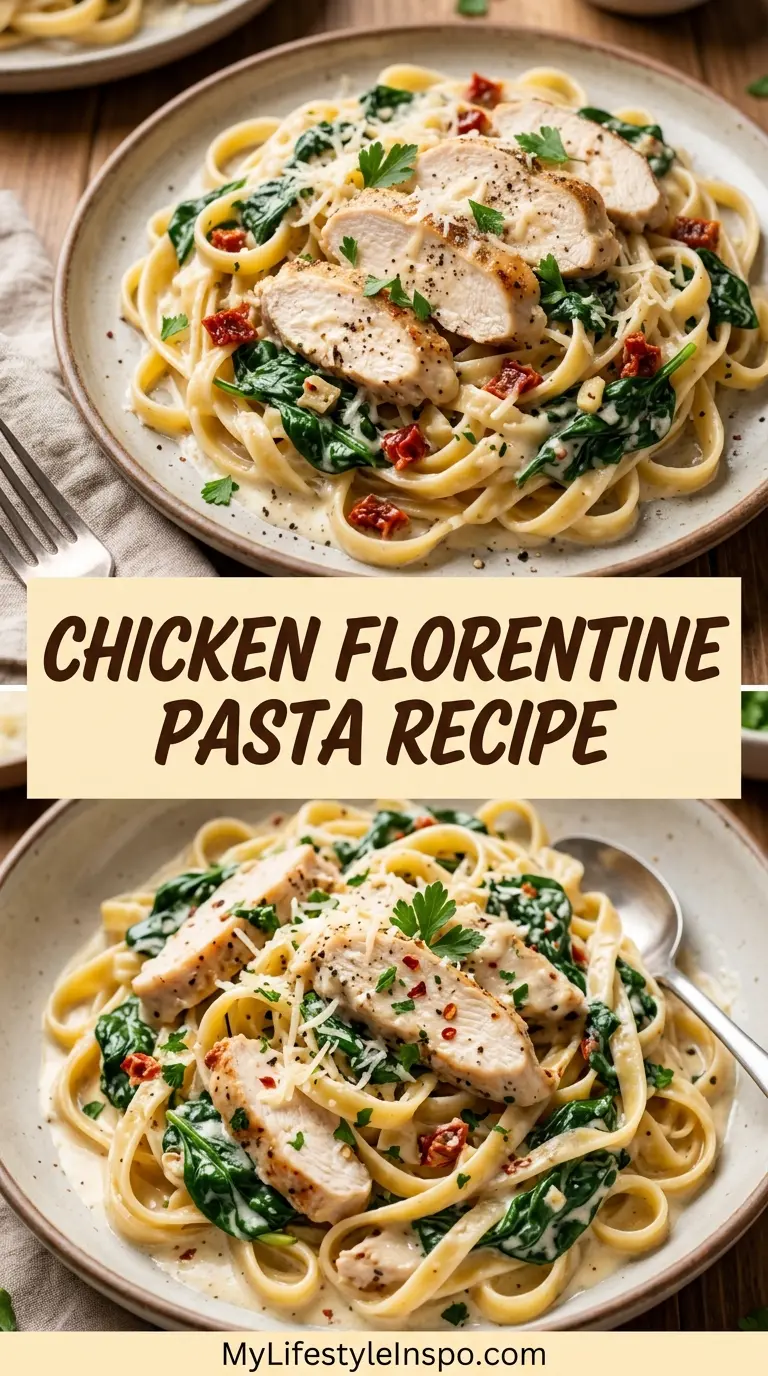
Step-by-Step Instructions
1. Cook the Pasta
- Bring a large pot of water to a rolling boil over high heat. The pot should be big enough to hold the pasta with room to move.
- Add a generous amount of salt to the boiling water, about 1-2 tablespoons. The water should taste pleasantly salty, almost like light broth. Salting the water is the only chance you have to season the pasta itself, so don’t skip this step.
- Add the pasta and cook according to the package directions, aiming for al dente (firm to the bite), which is usually 1-2 minutes less than the package suggests.
- Before draining, use a ladle or measuring cup to scoop out about 1 cup (240ml) of the cloudy pasta water. Set it aside. The starch in this water will help loosen and bind the sauce later.
- Drain the pasta into a colander and set aside. Do not rinse it, as the surface starch helps the sauce adhere.
2. Season and Sear the Chicken
- Pat the chicken pieces dry with paper towels before seasoning. Dry chicken browns properly; wet chicken steams instead of searing, which means you’ll miss out on all that golden, flavorful crust.
- In a small bowl or directly on the cutting board, season the chicken pieces evenly with 1 teaspoon salt, ½ teaspoon black pepper, and 1 teaspoon Italian seasoning. Toss to coat all sides.
- Heat the large skillet over medium-high heat. Add 2 tablespoons of olive oil and 1 tablespoon of butter. Let the oil and butter heat until the butter foam subsides, which signals the pan is hot enough. A properly hot pan ensures a good sear rather than steaming.
- Add the chicken pieces in a single layer. Do not crowd the pan; if needed, work in two batches. Crowding drops the pan temperature and causes the chicken to steam.
- Cook the chicken for 4-5 minutes without moving it, until a golden-brown crust forms on the bottom. Flip and cook for another 3-4 minutes until cooked through (internal temperature of 165°F / 74°C).
- Transfer the cooked chicken to a plate and tent loosely with foil to keep warm. Do not clean the skillet; those browned bits left behind are pure flavor.
3. Build the Flavor Base
- Reduce the heat in the same skillet to medium. Add the remaining 2 tablespoons of butter.
- Once the butter has melted and the foam settles, add the minced garlic and sun-dried tomatoes to the pan.
- Stir and sauté for about 1-2 minutes, just until the garlic turns fragrant and golden. Watch carefully here — garlic burns quickly and turns bitter at high heat. Stir constantly and keep it moving.
- If you’re using sun-dried tomatoes packed in oil, you can add 1 tablespoon of the reserved tomato oil here for extra flavor.
4. Make the Creamy Sauce
- Pour the chicken broth into the skillet and use your wooden spoon to scrape up all the browned bits from the bottom of the pan. This step, called deglazing, is important. Those caramelized bits are concentrated flavor, and they dissolve into the liquid to enrich the sauce.
- Bring the broth to a gentle simmer and let it reduce by about half, which takes roughly 2-3 minutes. Reducing concentrates the flavor before the cream goes in.
- Pour in the heavy cream and stir to combine. Bring the mixture back up to a gentle simmer over medium heat.
- Let the sauce simmer for 4-5 minutes, stirring occasionally, until it thickens slightly and coats the back of a spoon. It should look creamy and cohesive, not thin and watery.
- Reduce the heat to low. Add the freshly grated Parmesan cheese in two or three additions, stirring well after each addition to ensure it melts smoothly into the sauce. Adding it all at once can cause clumping.
- Taste the sauce and adjust seasoning with salt, pepper, and crushed red pepper flakes if using.
5. Add the Spinach
- Add the baby spinach to the sauce in large handfuls, stirring each addition gently as it wilts. It will look like an enormous amount of spinach at first, but it reduces down to almost nothing within 1-2 minutes of heat and stirring.
- Stir until all the spinach is wilted and evenly distributed throughout the sauce. The spinach should be bright green and just tender, not mushy or overcooked.
6. Combine and Finish the Dish
- Return the seared chicken pieces to the skillet, along with any resting juices that have collected on the plate. Those juices are flavor, so don’t leave them behind.
- Add the drained pasta to the skillet. Using tongs or a large spoon, toss everything together so the pasta is evenly coated in the sauce and the chicken and spinach are distributed throughout.
- If the sauce seems too thick, add reserved pasta water a splash at a time, tossing between additions, until you reach your desired consistency. If it seems too thin, let it simmer over low heat for another minute or two.
- Taste one final time and adjust salt and pepper as needed.
7. Serve
- Divide the pasta into bowls or plates immediately, while it’s hot and the sauce is at its creamiest.
- Top each serving with an extra shower of freshly grated Parmesan and a pinch of crushed red pepper flakes if desired.
- Serve right away with crusty bread on the side for scooping up any sauce left in the bowl.
Read Also: Spaghetti Alla Carbonara Recipe
Tips for Success
Following a few simple techniques makes all the difference between a good pasta and a truly great one. The most important habit is reserving pasta water before draining, since it’s the easiest and most effective way to fix a sauce that’s turned too thick.
- Dry the chicken before searing. Pat it with paper towels to remove surface moisture. This single step is what ensures a golden crust instead of gray, steamed chicken.
- Don’t skip the deglaze step. After cooking the chicken, those brown bits stuck to the pan are concentrated flavor. Adding the broth and scraping them up adds enormous depth to your sauce for zero extra effort.
- Add Parmesan off high heat. Lower the burner to the lowest setting before stirring in the Parmesan. High heat causes the proteins in the cheese to seize up, turning the sauce grainy. Low and slow keeps it smooth.
- Reserve more pasta water than you think you need. Scoop out at least 1 cup (240ml). Pasta water is the secret tool that makes sauces glossy and helps them cling to the pasta. You might not use all of it, but you’ll want it on hand.
- Use fresh Parmesan, not pre-shredded. Pre-shredded Parmesan contains anti-caking agents that prevent it from melting smoothly. A block and a grater takes 60 seconds and makes a dramatic difference.
- Taste and adjust at every stage. Season the chicken, taste the sauce before adding pasta, and taste again at the end. Pasta dishes need seasoning at multiple points.
For another creamy, comforting pasta night option, try this One Pan Orecchiette Pasta Recipe.
Serving Suggestions
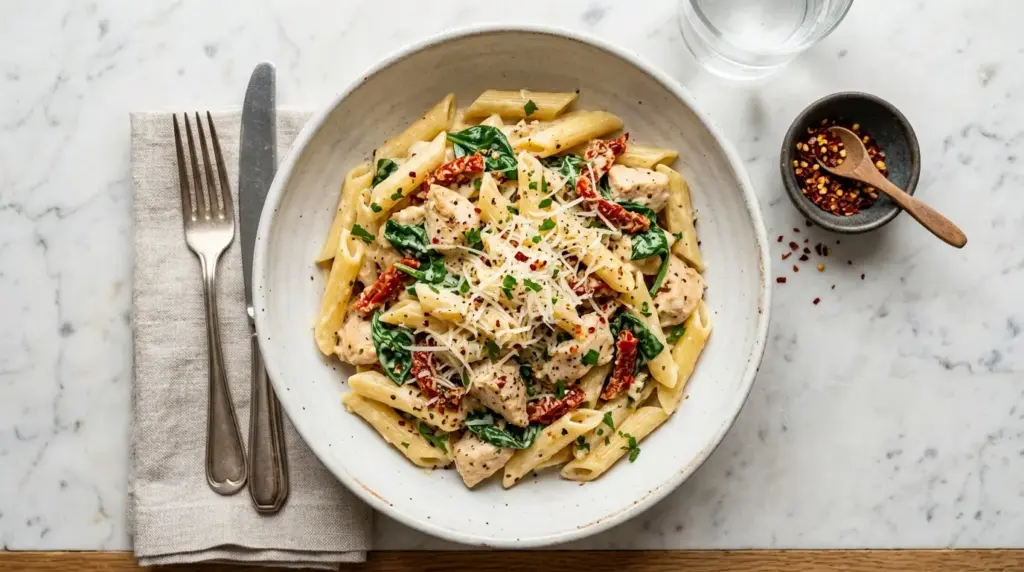
Chicken Florentine Pasta is rich and satisfying on its own, but a few simple accompaniments make it feel like a complete, restaurant-style meal.
A crisp green salad with a bright vinaigrette is the perfect counterpoint to the richness of the cream sauce. The acidity cuts through the cream and refreshes the palate between bites.
Here are some great ways to round out your meal:
- Crusty garlic bread for scooping up the extra sauce in the bowl. Try this Easy Garlic Bread as a quick and crowd-pleasing side.
- A simple green salad dressed with lemon vinaigrette or a classic Caesar.
- Roasted broccoli for an extra vegetable boost that pairs naturally with the Italian seasoning in the dish.
- Steamed asparagus lightly drizzled with olive oil and lemon.
- A glass of dry white wine, such as Pinot Grigio or Sauvignon Blanc, which echoes the savory, slightly acidic notes in the dish.
- Classic Bruschetta as a starter to keep the Italian theme going from first bite to last.
Variations to Try
Once you’ve made the base recipe, it’s easy to riff on it based on what you have on hand or how you want to change things up. The creamy garlic sauce works beautifully with many different proteins and pasta shapes.
- Shrimp Florentine Pasta: Swap the chicken for 1 lb of large shrimp, peeled and deveined. Shrimp cook in about 2-3 minutes per side, so they’re even quicker than chicken.
- Mushroom Florentine Pasta: Add 8 oz (225g) of sliced cremini mushrooms to the pan after the garlic and before the broth. They add an earthy depth that’s wonderful in the cream sauce.
- Lighter version: Replace heavy cream with half-and-half for a less rich but still creamy sauce. The sauce will be slightly thinner, but the flavor is still excellent.
- Pasta shape swaps: Fettuccine, linguine, penne, farfalle, or rigatoni all work well. Long pasta gives it a more elegant feel; short pasta is easier for kids and more casual dinners.
- Add white wine: After sautéing the garlic, add a splash of dry white wine (about ¼ cup / 60ml) and let it cook down for a minute before adding the broth. It adds a lovely brightness to the sauce.
- Spicier version: Double the crushed red pepper flakes or add a pinch of cayenne to give the sauce a gentle heat throughout.
Another related dish worth exploring: this Pesto Tortellini Bake Recipe is another Italian-inspired pasta that’s easy enough for weeknights.
Storage and Reheating
This pasta stores and reheats well, making it an excellent choice for meal prepping or enjoying leftovers the next day. The sauce may thicken up in the fridge, but it comes back to a creamy consistency easily with a small splash of liquid.
- Refrigerator: Store leftovers in an airtight container for up to 3-4 days.
- Freezer: This dish can be frozen, but cream-based sauces can separate slightly upon thawing. If freezing, store for up to 2 months and stir well while reheating to bring the sauce back together.
- Stovetop reheating (recommended): Place the pasta in a skillet over medium-low heat. Add a splash of chicken broth or heavy cream (2-3 tablespoons), and stir frequently as it heats. The added liquid loosens the sauce and brings back the original creamy consistency.
- Microwave reheating: Transfer a portion to a microwave-safe bowl. Add a small splash of broth or cream and cover loosely. Heat in 60-second intervals, stirring between each, until hot throughout.
- Do not overheat. High heat can cause the cream sauce to break and the chicken to toughen. Low and slow reheating keeps everything smooth and tender.
You might also enjoy reading about Baked Chicken with Alfredo Sauce for another creamy chicken dinner that keeps well as leftovers.
Nutritional Facts
The following values are estimates per serving, based on 4 servings. Actual values will vary depending on exact ingredient brands and portion sizes.
| Nutrient | Per Serving |
|---|---|
| Calories | ~620 kcal |
| Protein | ~42g |
| Carbohydrates | ~52g |
| Fat | ~26g |
| Saturated Fat | ~13g |
| Fiber | ~4g |
| Sodium | ~580mg |
| Calcium | ~220mg |
These values reflect the full-fat recipe using heavy cream and Parmesan. Using half-and-half in place of heavy cream will reduce the fat and calorie counts noticeably.
Read Also: Chicken Cordon Bleu Pasta Recipe
Health Benefits of Key Ingredients
While this is definitely a comfort food recipe, several of its core ingredients bring genuine nutritional value to the table. It’s not just delicious, it’s more nourishing than it might initially appear.
Here’s a breakdown of the nutritional highlights in this dish:
- Chicken breast is one of the leanest, most protein-dense foods available. A single serving provides significant protein that supports muscle repair and keeps you feeling full for hours after eating.
- Baby spinach is a nutritional powerhouse. It’s loaded with iron, vitamins A, C, and K, folate, and antioxidants, all while contributing barely any calories to the dish. Cooking it briefly, as this recipe does, helps preserve more of its vitamin content compared to long, slow cooking methods.
- Garlic has been widely studied for its potential benefits related to immune function and cardiovascular health. It also contains compounds like allicin that contribute to its distinctive, aromatic flavor.
- Olive oil provides heart-healthy monounsaturated fats and contributes to the overall richness of the sauce without as much saturated fat as butter alone.
- Parmesan cheese is a good source of calcium and protein, and because it has such an intense flavor, a little goes a long way, meaning you get a lot of taste for a modest amount.
- Sun-dried tomatoes are concentrated in lycopene, a powerful antioxidant linked to reduced inflammation, and provide a useful boost of potassium and vitamin C.
This Creamed Spinach Recipe is another simple, spinach-forward side that pairs wonderfully with chicken-based mains.
Frequently Asked Questions
1. What does “Florentine” mean in cooking?
In culinary terms, Florentine refers to any dish that is prepared or served with spinach as a key ingredient. The term traces back to Catherine de Medici of Florence, who is said to have introduced spinach to French royal kitchens in the 16th century. Today, the name appears across many cuisines to describe chicken, eggs, fish, or pasta dishes that feature spinach prominently.
2. What pasta shape works best for this recipe?
Penne, fettuccine, linguine, and farfalle all work beautifully here. Penne and other short, tube-shaped pastas hold sauce inside the hollow center, giving you saucy pasta in every single bite. Long, flat noodles like fettuccine create a more elegant presentation and coat evenly with cream sauce. If you can find bronze-cut pasta, that rough exterior texture grips the sauce even better than smooth, standard-extruded pasta.
3. Can I use chicken thighs instead of chicken breasts?
Absolutely. Boneless, skinless chicken thighs are actually a great choice for this recipe because they have slightly more fat, which keeps them moist and juicy even if you cook them a touch longer than intended. They take about the same amount of time to cook as breasts and have a slightly richer flavor. Just make sure to cut them into similar-sized pieces for even cooking.
4. How do I prevent the Parmesan from clumping in the sauce?
The key is temperature control. Always reduce the heat to low before adding the Parmesan cheese, and add it gradually, stirring constantly after each addition rather than dumping it all in at once. High heat causes the proteins in Parmesan to tighten and seize rather than melt smoothly. If the sauce does become grainy, a splash of reserved pasta water stirred in vigorously can often help bring it back together.
5. Can I make this recipe ahead of time?
You can prepare the sauce up to 2 days ahead and store it separately in the refrigerator. Cook fresh pasta the day you plan to serve it and reheat the sauce gently on the stovetop with a splash of cream or broth before tossing everything together. Combining the pasta and sauce in advance and storing them together is fine for next-day leftovers, but for the best texture and creaminess, freshly cooked pasta added to a freshly made sauce is always the gold standard.
For another make-ahead-friendly Italian dinner, this Slow Cooker Boursin Chicken and Pasta Recipe is a wonderful option.
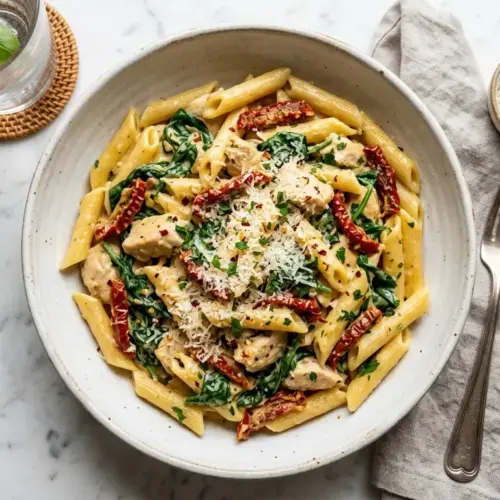
Chicken Florentine Pasta

Equipment
- Large pot - for boiling pasta
- Large Deep Skillet or Sauté Pan - 12-inch / 30cm, stainless steel or cast iron preferred
- Box grater or microplane - for freshly grating Parmesan
- Colander
- Wooden spoon or silicone spatula
- Measuring cups and spoons
- Sharp chef’s knife and cutting board
- Ladle - for reserving pasta water
- Stainless Steel Tongs - for tossing pasta (optional but recommended)
- Paper towels - for patting chicken dry
Ingredients
- 1 lb penne pasta or fettuccine - 450g
- 1.5 lbs boneless skinless chicken breasts - 680g, sliced into bite-sized pieces
- 1 teaspoon salt - plus more for pasta water
- ½ teaspoon black pepper
- 1 teaspoon Italian seasoning
- 2 tablespoons olive oil
- 3 tablespoons unsalted butter - divided
- 6 cloves garlic - minced
- ½ cup sun-dried tomatoes - 80g, drained and roughly chopped, oil-packed preferred
- 1.5 cups heavy cream - 360ml
- 1 cup low-sodium chicken broth - 240ml
- 1 cup Parmesan cheese - 100g, freshly grated, plus more for serving
- 5 oz baby spinach - 140g
- ½ teaspoon crushed red pepper flakes - optional
- reserved pasta water - about ½ cup / 120ml, as needed
Instructions
- Bring a large pot of generously salted water to a boil and cook pasta according to package directions until al dente. Reserve 1 cup of pasta water before draining. Do not rinse.
- Pat chicken pieces dry and season with salt, pepper, and Italian seasoning. Heat olive oil and 1 tablespoon butter in a large skillet over medium-high heat. Sear chicken in a single layer for 4-5 minutes per side until golden and cooked through. Transfer to a plate.
- Reduce heat to medium and add remaining 2 tablespoons butter to the skillet. Sauté garlic and sun-dried tomatoes for 1-2 minutes until fragrant, stirring constantly.
- Pour in chicken broth and scrape up browned bits from the pan. Simmer until reduced by half, about 2-3 minutes. Stir in heavy cream and simmer for 4-5 minutes until thickened. Reduce heat to low and gradually add Parmesan cheese, stirring until smooth.
- Add baby spinach in handfuls, stirring gently until wilted, about 1-2 minutes. Return chicken and any juices to the skillet.
- Add drained pasta and toss until well coated. Add reserved pasta water a splash at a time if needed to reach desired consistency. Season with salt, pepper, and red pepper flakes to taste.
- Serve immediately topped with extra Parmesan and crushed red pepper flakes. Enjoy with crusty bread on the side.
Notes
- Pasta water is essential: Always reserve at least 1 cup of starchy pasta water before draining. The starch helps the sauce cling to the pasta and loosens the sauce if it becomes too thick.
- Dry chicken for better browning: Pat chicken pieces completely dry with paper towels before seasoning. Moisture prevents browning and creates steamed, gray chicken instead of golden, flavorful pieces.
- Add Parmesan off heat: Always reduce the heat to low before stirring in Parmesan cheese. Add it gradually in small batches, stirring constantly, to prevent the sauce from becoming grainy.
- Use fresh Parmesan: Pre-shredded cheese contains anti-caking agents that prevent smooth melting. A block of Parmigiano-Reggiano grated fresh makes a dramatic difference in texture and flavor.
- Don’t skip the deglazing step: The brown bits left after searing chicken are concentrated flavor. Adding broth and scraping them up adds enormous depth to the sauce with zero extra effort.
- Pasta shape variations: Penne, fettuccine, linguine, farfalle, and rigatoni all work beautifully. Bronze-cut pasta has a rougher texture that grips sauce better.
- Substitutions: Swap chicken for shrimp (cooks in 2-3 minutes per side), use half-and-half instead of heavy cream for a lighter version, or add sliced cremini mushrooms with the garlic for earthy depth.
- Storage and reheating: Store leftovers in an airtight container for 3-4 days. Reheat gently on the stovetop with a splash of broth or cream to restore the creamy consistency. Avoid high heat which can cause the sauce to break.
- Make-ahead option: Prepare the sauce up to 2 days ahead and store separately in the refrigerator. Cook fresh pasta and reheat the sauce gently before combining for the best texture.
- Add white wine: For extra brightness, add a splash of dry white wine (about ¼ cup) after sautéing the garlic and let it cook down for 1 minute before adding the broth.
Final Thoughts
This Chicken Florentine Pasta Recipe is the kind of dish that earns a permanent spot in your weeknight dinner rotation. It’s fast enough for busy evenings, impressive enough for guests, and comforting enough that everyone goes back for seconds.
The combination of golden, juicy chicken, silky garlic-Parmesan cream sauce, bright wilted spinach, and those pops of concentrated sun-dried tomato flavor is genuinely hard to improve on. It’s a recipe that rewards you with big, restaurant-quality results for minimal effort.
Give it a try this week, and don’t be surprised when it becomes a household favorite. Drop a comment below to let us know how it turned out, or share a photo of your finished bowl on social media. Your feedback means the world!
Recommended:
- Chicken Florentine Soup Recipe
- Homemade Alfredo Sauce Recipe
- Olive Garden Alfredo Sauce Recipe
- Baked Ziti Recipe
- Italian Chicken Skillet Recipe
- Stuffed Shells Recipe
- Chicken Scampi Recipe
- Lasagna Recipe with Ricotta
- Cauliflower Alfredo Bake Recipe
- Simple Tortellini Soup Recipe