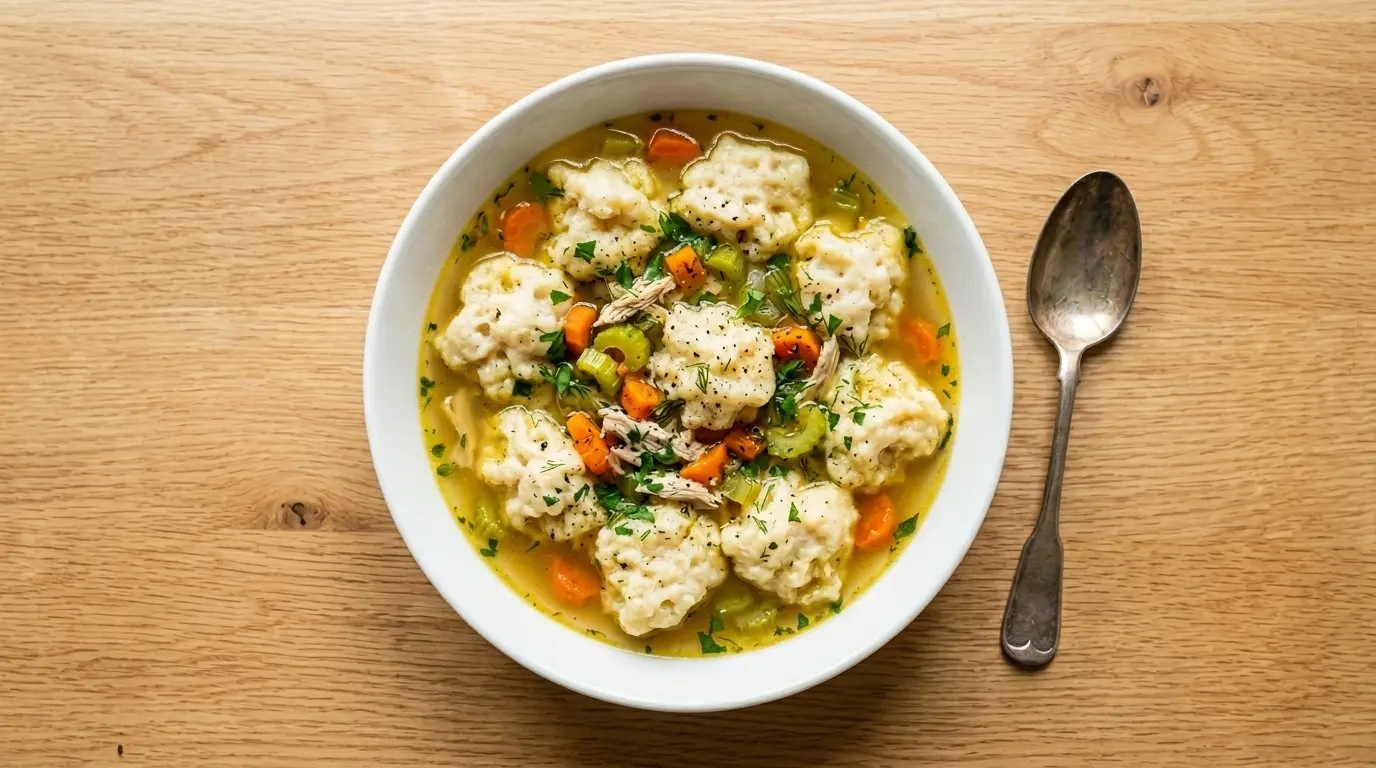
If you have a jar of sourdough discard sitting in your fridge, this sourdough discard dumplings recipe is exactly what you should make next. These pillowy, fluffy drop dumplings come together in under 15 minutes and cook directly in a simmering pot of soup or stew, making them one of the most practical and comforting things you can whip up on a weeknight.
The magic here is in the discard itself. It adds a gentle, barely-there tang to the dumplings that plain flour never could, and it gives the dough a head start on flavor without any extra effort.
These are classic American-style drop dumplings: no rolling, no cutting, no fuss. You scoop the sticky dough straight into hot broth and let the steam do all the work. The result is soft, tender dumplings with a slightly chewy exterior and a fluffy center that soaks up all the savory goodness from the pot.
Whether you are making a big pot of chicken soup or a hearty beef stew, these dumplings turn a bowl of broth into a full, satisfying meal. They are also a great zero-waste solution, using up that discard before it goes past its prime.
If you love making Chicken and Dumplings from scratch, this sourdough version will quickly become your new go-to.
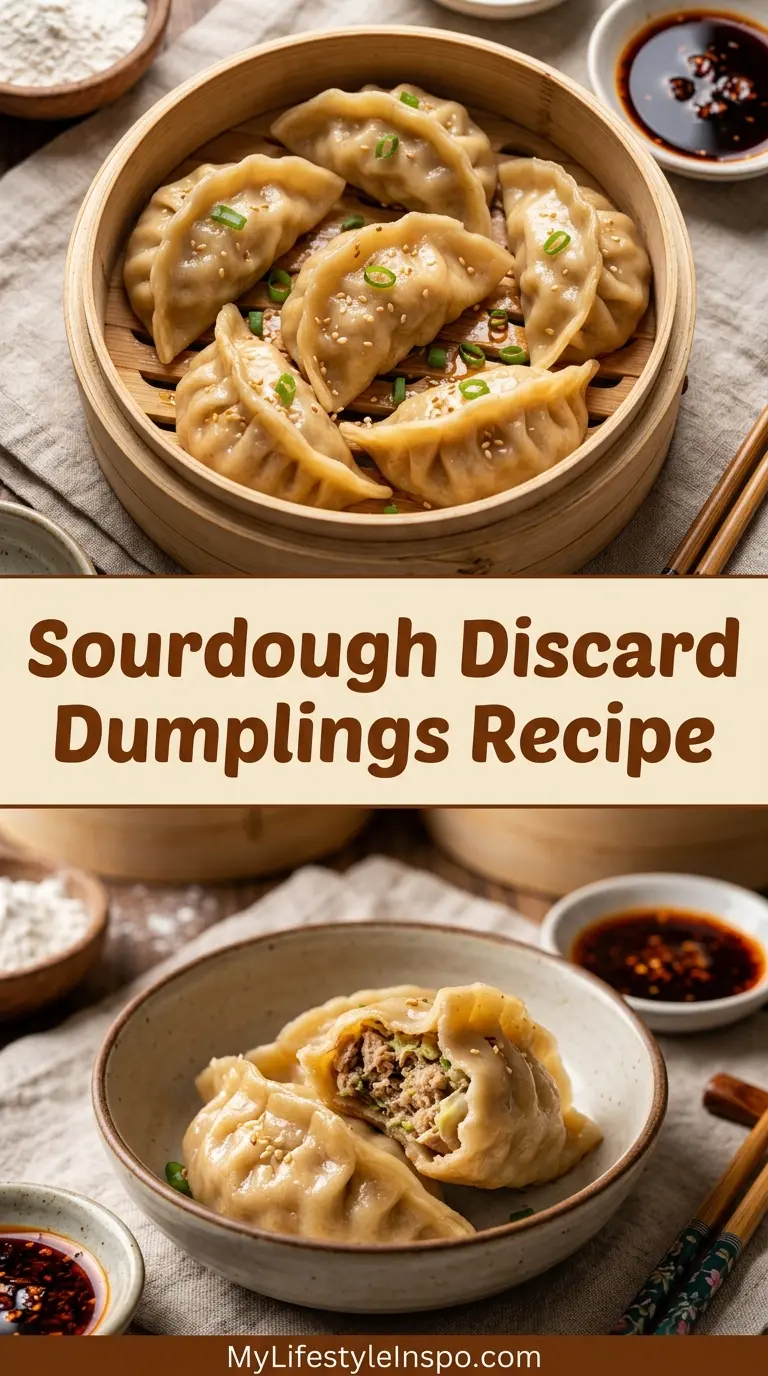
Why You’ll Love This Sourdough Discard Dumplings Recipe
These dumplings check every box for an easy, feel-good weeknight addition.
They use up sourdough discard that would otherwise go to waste, which means you are being resourceful while also cooking something genuinely delicious. That is a win on every level.
The dough comes together in one bowl with no special equipment needed. No stand mixer, no rolling pin, nothing fancy.
The subtle tang from the discard adds real depth of flavor without being overpowering. Even people who are not sourdough enthusiasts love these dumplings.
They cook entirely in the broth, which means less cleanup and more flavor absorbed from the soup or stew below.
- Quick and beginner-friendly: From bowl to pot in under 15 minutes
- Naturally leavened boost: Baking powder combined with discard creates the lightest, fluffiest texture
- Versatile: Works in chicken soup, beef stew, vegetable broth, or anything simmering on the stove
- Zero waste: A great use for discard that is a few days old but still smells good
- Family-friendly: Mild flavor that kids and adults both love
You might also enjoy: Sourdough Discard Biscuits
Ingredients
These dumplings use simple pantry staples alongside your sourdough discard. The key is not overmixing the dough so the dumplings stay light and tender rather than dense.
- 1 cup (125g) all-purpose flour
- 2 teaspoons baking powder
- 1/2 teaspoon salt
- 1/4 teaspoon garlic powder
- 1/4 teaspoon dried parsley or thyme (or a mix)
- 1/4 teaspoon black pepper
- 1/2 cup (120g) sourdough discard (unfed, straight from the fridge)
- 1/2 cup (120ml) whole milk or buttermilk
- 2 tablespoons (28g) unsalted butter, melted and slightly cooled
Read Also: Sourdough Starter Recipe
Kitchen Equipment Needed
Nothing specialized required here. A mixing bowl, a spoon, and a pot are all you need.
- Large heavy-bottomed pot or Dutch oven
- Medium mixing bowl
- Whisk
- Wooden spoon or rubber spatula
- Cookie scoop or two spoons (for portioning the dumplings)
- Tight-fitting lid for the pot (essential for steaming the dumplings evenly)
- Measuring cups and spoons
These sourdough discard dumplings pair perfectly with a pot of Sourdough Discard Flatbread if you want to serve extra bread on the side.
Recommended Products for This Recipe
These are a few products that genuinely make a difference when making sourdough discard dumplings. They are chosen for quality and practicality, not just brand recognition.
1. Le Creuset Enameled Cast Iron Dutch Oven
A Dutch oven is the single best pot for making dumplings. It holds heat evenly, traps steam efficiently, and the wide base gives the dumplings plenty of room to puff up without crowding. Le Creuset’s enameled interior also means no sticking and easy cleanup.
2. OXO Good Grips Medium Cookie Scoop
Portioning dumpling dough evenly is the difference between dumplings that cook at the same rate and a pot of half-cooked, half-overdone blobs. A medium cookie scoop gives you uniform, round dumplings every single time.
3. Bob’s Red Mill All-Purpose Unbleached Flour
The flour you use matters more than you might expect. Unbleached all-purpose flour gives these dumplings a better structure and a slightly more complex flavor compared to heavily processed bleached flour. Bob’s Red Mill is a reliable, consistent choice.
4. Kerrygold Pure Irish Butter
Butter is one of the few ingredients in this recipe, so using a quality brand like Kerrygold actually makes a noticeable difference in flavor. The higher butterfat content means richer, more flavorful dumplings.
Another great recipe to try with your discard is these Sourdough Discard Dinner Rolls, perfect for serving alongside soup.
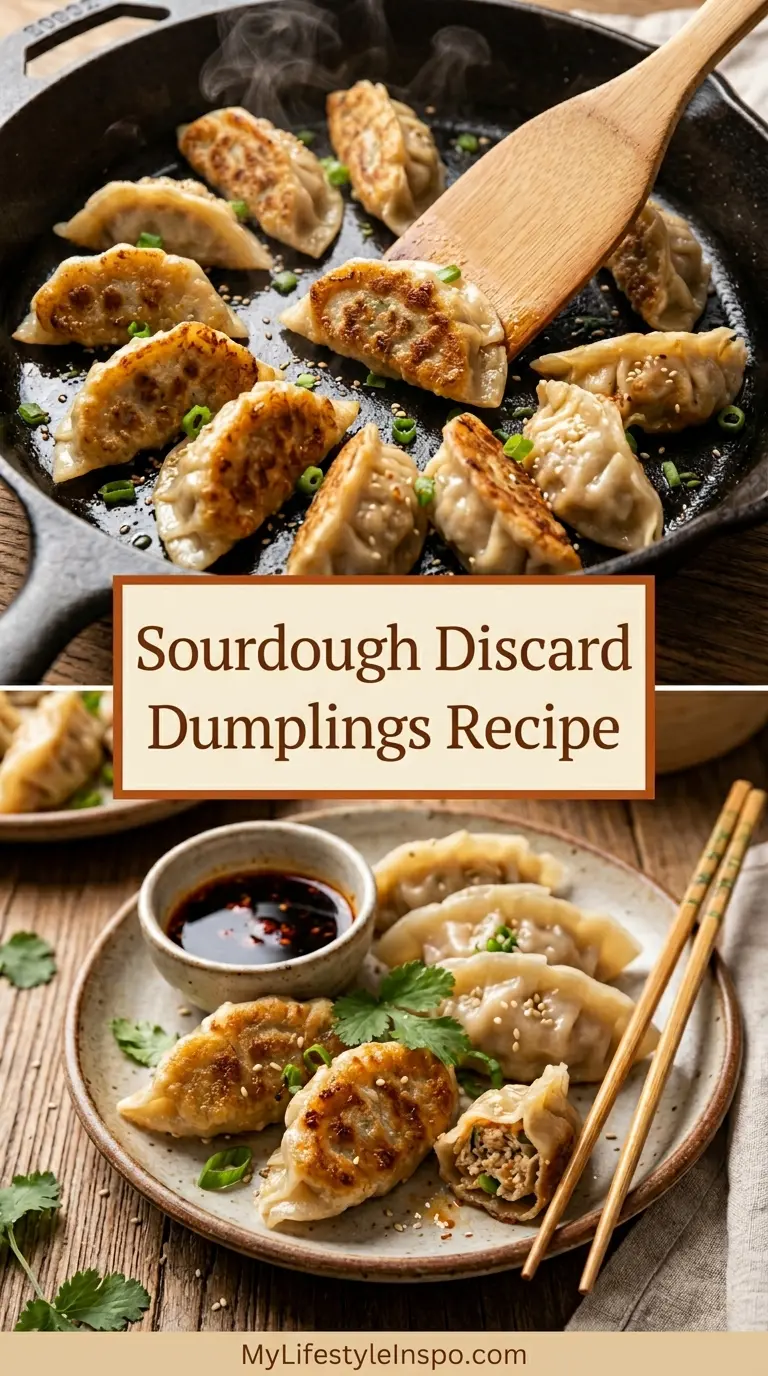
Step-by-Step Instructions
Step 1: Prepare Your Soup or Stew Base
- Make sure your soup, stew, or broth is fully cooked and simmering gently before you drop in the dumplings. The dumplings need hot, bubbling liquid to cook properly.
- The broth should be at a steady simmer, not a rolling boil. A hard boil can break the dumplings apart before they set.
- Season the broth to your liking before adding dumplings. Once they go in, it is harder to taste and adjust without disturbing them.
- Leave enough room in the pot for the dumplings to expand. They will puff up considerably, so do not overfill the pot with broth and solids.
Step 2: Mix the Dry Ingredients
- In a medium mixing bowl, add 1 cup (125g) of all-purpose flour.
- Add 2 teaspoons of baking powder. This is the primary leavening agent that makes the dumplings fluffy, so do not skip it or reduce the amount.
- Add 1/2 teaspoon of salt, 1/4 teaspoon of garlic powder, 1/4 teaspoon of dried parsley or thyme, and 1/4 teaspoon of black pepper.
- Whisk the dry ingredients together thoroughly until everything is evenly distributed. This prevents pockets of baking powder or salt in the final dumpling.
Step 3: Add the Wet Ingredients
- Add 1/2 cup (120g) of sourdough discard to the dry ingredient bowl. Use discard straight from the fridge. It does not need to be at room temperature.
- Pour in 1/2 cup (120ml) of whole milk or buttermilk. Buttermilk will give you a slightly more tender, tangy dumpling, while whole milk keeps the flavor mild and classic.
- Add 2 tablespoons (28g) of melted, slightly cooled butter. Make sure the butter is not piping hot or it may begin to cook the flour prematurely.
- Using a wooden spoon or rubber spatula, stir everything together gently until just combined. The dough should look shaggy and sticky, with no dry flour streaks.
- Stop mixing the moment the ingredients come together. Overmixing develops gluten, which makes dumplings dense and chewy rather than light and fluffy.
Step 4: Rest the Dough Briefly
- Let the dough rest for 2 to 3 minutes while your broth continues to simmer. This gives the baking powder a moment to activate and the flour to hydrate fully.
- The dough will remain quite sticky and wet-looking. This is correct. Do not add extra flour to stiffen it. A wet dough creates lighter, fluffier dumplings.
Step 5: Scoop and Drop the Dumplings
- Using a medium cookie scoop or two large spoons, portion out rounded tablespoon-sized scoops of dough (approximately 30g each).
- Drop each scoop gently onto the surface of the simmering broth. Work quickly but carefully so all the dumplings go in at roughly the same time and cook evenly.
- Space them slightly apart as they will expand. For a standard 6-quart pot, you should be able to fit 10 to 14 dumplings comfortably without crowding.
- Do not stir the pot after adding the dumplings or they may fall apart. Leave them undisturbed on the surface.
Step 6: Cover and Steam
- Immediately place a tight-fitting lid on the pot. This traps steam inside, which is what actually cooks the tops of the dumplings. Without the lid, the tops will stay raw even as the bottoms cook.
- Reduce the heat slightly to maintain a gentle but active simmer. You should hear a steady, soft bubbling sound. Too aggressive a boil can cause the dumplings to disintegrate.
- Cook for 12 to 15 minutes without lifting the lid. Resist the urge to peek. Every time you open the lid, steam escapes and the cooking time extends.
Step 7: Check for Doneness and Serve
- After 12 minutes, lift the lid and check a dumpling by inserting a toothpick or small skewer into the thickest part. It should come out clean with no wet, raw dough clinging to it.
- The dumplings should look puffed up, set on the surface, and slightly firm to the touch. They will feel springy when gently pressed.
- If the center still seems underdone, replace the lid and cook for another 2 to 3 minutes before checking again.
- Serve immediately directly from the pot, ladling broth and soup contents alongside the dumplings into each bowl.
Read Also: Chicken Noodle Soup Recipe
Tips for Success
A few small adjustments make a big difference with dumplings. Keep these in mind before you start.
- Do not overmix the dough. This is the most common mistake. Stir just until no dry flour remains, then stop. Overworked dough leads to tough, dense dumplings.
- Keep the lid on. Steaming is what cooks the dumplings through. Lifting the lid releases steam and can cause them to deflate or cook unevenly.
- Use cold discard straight from the fridge. You do not need to bring it to room temperature. Cold discard actually helps prevent the butter from melting prematurely into the dough.
- Do not use discard that smells overly sharp or funky. If your discard smells more like nail polish remover than a mild sourdough tang, it has gone too acidic and will make the dumplings taste off.
- Simmer, do not boil. A hard rolling boil will tear the dumplings apart before they set. Medium-low heat with a gentle simmer is ideal.
- Season your broth well before adding dumplings. The dumplings absorb flavor from the broth as they cook, so a well-seasoned base makes all the difference.
These same tips apply when making Sourdough Discard Naan, another great recipe to use up that jar of discard.
Serving Suggestions
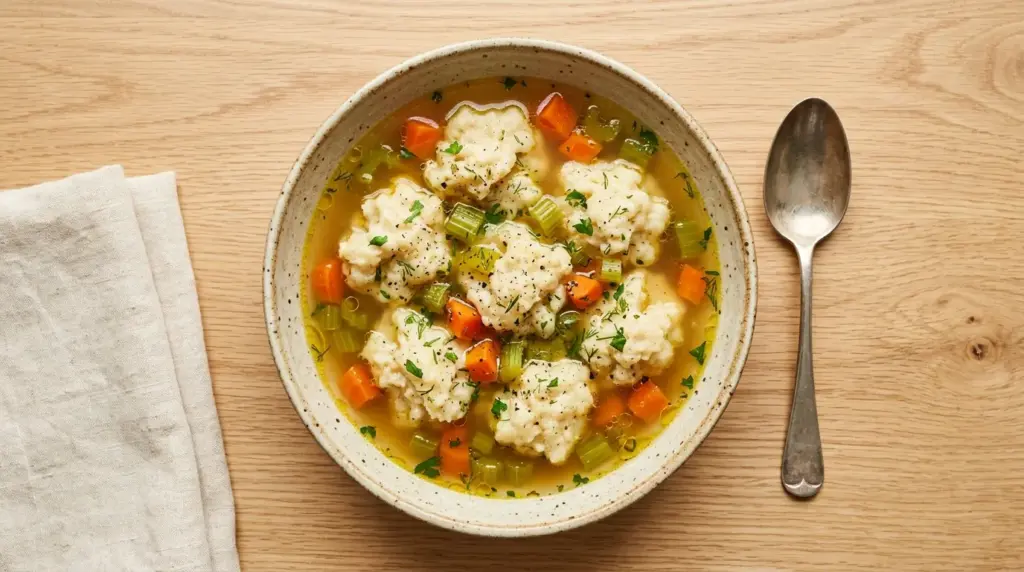
These dumplings are best served directly in the pot they cooked in, ladled into deep bowls with plenty of broth.
They shine brightest in a rich, savory environment where their mild tang can complement the surrounding flavors. Here are some of the best ways to serve them:
- Classic Chicken Soup: The most traditional pairing. A golden, vegetable-rich chicken broth with shredded chicken and sourdough dumplings is pure comfort food.
- Beef Stew: Drop the dumplings into a thick, red wine-braised Beef Stew for a hearty, cold-weather meal.
- Chicken Vegetable Soup: Load up a pot of Chicken Vegetable Soup with carrots, celery, potatoes, and these dumplings for a complete one-pot dinner.
- Turkey or Ham Broth: After the holidays, simmer leftover turkey or ham bones into a rich broth and add a batch of these dumplings.
- Vegetable Broth: For a vegetarian option, use a well-seasoned mushroom or vegetable broth. The dumplings hold up beautifully without meat.
Variations to Try
Once you have the base recipe down, there are plenty of ways to customize these dumplings to fit what you have in your pantry or fridge.
- Herb variations: Swap the parsley for rosemary, sage, or dill depending on what you are serving them in. Rosemary works beautifully in a lamb or beef stew, while dill is wonderful with chicken or potato soup.
- Cheese dumplings: Fold 1/4 cup (25g) of finely grated parmesan or sharp cheddar into the dough just before scooping. The cheese melts into pockets inside the dumpling and adds a savory, salty flavor.
- Buttermilk dumplings: Replace whole milk with full-fat buttermilk for extra tenderness and a slightly more pronounced tang that complements sourdough beautifully.
- Whole wheat dumplings: Replace up to half the all-purpose flour with whole wheat flour for a denser, earthier dumpling with more fiber.
- Spiced dumplings: Add a pinch of smoked paprika or cayenne to the dry ingredients if you are serving the dumplings in a spicy broth or stew.
- Rolled flat dumplings: For a Southern-style flat dumpling, increase the flour to 1.5 cups (190g) to make a stiffer dough, roll it out to 1/4 inch (0.6cm) thickness on a lightly floured surface, and cut into strips before dropping into the pot.
Read Also: Chinese Dumplings Recipe
Storage and Reheating
These dumplings are best eaten fresh from the pot, but they do store and reheat reasonably well.
- Refrigerator: Store leftover soup with dumplings in an airtight container for up to 3 days. Keep in mind that the dumplings will continue to absorb broth and soften over time, so the texture will be different from freshly made ones.
- Freezer (uncooked dough): Drop scoops of raw dough onto a parchment-lined baking sheet and freeze until solid, about 2 hours. Transfer to a zip-lock bag and freeze for up to 3 months. Drop frozen dumplings directly into simmering broth and add 3 to 5 extra minutes to the cooking time.
- Freezer (cooked dumplings): Cooked dumplings can be frozen in broth for up to 2 months. The texture changes slightly after freezing but remains acceptable.
- Reheating: Reheat soup with dumplings gently on the stovetop over low to medium heat, covered, until heated through. Avoid microwaving if possible as it can make the dumplings rubbery. Add a splash of broth or water if the soup has thickened too much overnight.
For more great ways to use your discard, try these Sourdough Discard Waffles for a completely different morning application.
Nutritional Facts
The following nutritional information is an estimate based on one dumpling, assuming the recipe makes approximately 12 dumplings. Actual values will vary depending on the exact size of each dumpling and the specific brands used.
| Nutrient | Per Dumpling |
|---|---|
| Calories | 75 kcal |
| Total Fat | 2.5g |
| Saturated Fat | 1.5g |
| Cholesterol | 7mg |
| Sodium | 160mg |
| Total Carbohydrates | 11g |
| Dietary Fiber | 0.4g |
| Sugars | 0.5g |
| Protein | 2g |
Note: These values are estimated for the dumplings themselves, not including the surrounding broth or stew.
Another great sourdough recipe to explore is Sourdough Discard Pancakes, which are equally simple and use a very similar base dough method.
Health Benefits of Key Ingredients
These dumplings are not just delicious. The key ingredients carry some genuine nutritional value worth noting.
Sourdough discard undergoes fermentation, which partially breaks down the phytic acid in flour. Phytic acid can interfere with mineral absorption, so fermented flours like sourdough discard may be slightly easier to digest than regular unfermented flour.
The fermentation process also introduces beneficial organic acids that can support gut health over time, though the extent of these benefits varies depending on how long and how active the fermentation was before discarding.
- All-purpose flour: Provides carbohydrates for energy and a modest amount of protein from the gluten network, which gives the dumplings their structure.
- Whole milk: Adds fat-soluble vitamins A and D, calcium for bone health, and protein. Using buttermilk instead introduces probiotics and makes the dumplings slightly easier to digest.
- Butter: A source of fat-soluble vitamins and healthy saturated fats in moderation. Butter contributes to the tender, rich crumb of the dumplings.
- Garlic powder: Even in small amounts, garlic contains allicin, a compound with antimicrobial and immune-supporting properties.
- Fresh or dried herbs (parsley, thyme): Both are rich in antioxidants and add micronutrients including vitamin K and vitamin C in small but meaningful amounts.
You might also love Sourdough Discard Breadsticks as another savory, fermented bread option to serve alongside soup.
Frequently Asked Questions
1. Can I use active sourdough starter instead of discard?
Yes, you can. Active, bubbly starter works just as well as discard in this recipe. The main difference is a slightly more pronounced tang if your starter is at peak activity. The dumplings will still rise and cook properly because the recipe also uses baking powder as the primary leavening agent.
2. Why did my dumplings turn out dense and heavy?
Dense dumplings are almost always the result of overmixing the dough. Once you stir in the wet ingredients, the gluten in the flour starts to develop. The more you mix, the tighter and tougher the dumplings become. Mix only until no dry flour streaks remain, then stop immediately.
3. How do I know when the dumplings are fully cooked?
Insert a toothpick or skewer into the thickest part of a dumpling. If it comes out clean without wet, raw dough clinging to it, the dumpling is done. The surface should look puffed and set, and the dumpling should feel springy rather than soft and squishy when gently pressed.
4. Can I make the dough ahead of time?
Yes. The mixed dough can be covered and refrigerated for up to 24 hours before using. Cold fermentation in the fridge actually enhances the sourdough flavor, so overnight dumplings taste even better than freshly mixed ones. You can also freeze the raw dough scoops on a baking sheet, then transfer to a bag and cook from frozen directly in simmering broth.
5. My dumplings are falling apart in the broth. What went wrong?
This usually happens for one of two reasons. Either the broth was at a hard, rolling boil when the dumplings were added (which agitates them too much before they set), or the lid was lifted too many times during cooking (which releases the steam they need to cook through). Make sure the broth is at a gentle, steady simmer before adding the dumplings, and keep the lid on for the full cooking time without peeking.
Read Also: Sourdough Discard Tortillas Recipe

Sourdough Discard Dumplings

Equipment
- Large heavy-bottomed pot or Dutch oven - 6-quart or larger, with tight-fitting lid
- Medium mixing bowl
- Whisk
- Wooden spoon or rubber spatula
- Cookie scoop or two spoons - Medium cookie scoop (about 1.5 tablespoon capacity) or two regular spoons for portioning
- Tight-fitting lid for the pot - Essential for steaming the dumplings evenly
- Measuring cups and spoons
Ingredients
- 1 cup all-purpose flour - 125g
- 2 teaspoons baking powder
- 1/2 teaspoon salt
- 1/4 teaspoon garlic powder
- 1/4 teaspoon dried parsley or thyme - or a mix of both
- 1/4 teaspoon black pepper
- 1/2 cup sourdough discard - 120g, unfed, straight from the fridge
- 1/2 cup whole milk or buttermilk - 120ml
- 2 tablespoons unsalted butter - 28g, melted and slightly cooled
Instructions
- Make sure your soup, stew, or broth is fully cooked and simmering gently before you drop in the dumplings. Season the broth well before adding dumplings.
- In a medium mixing bowl, whisk together the flour, baking powder, salt, garlic powder, dried herbs, and black pepper until evenly distributed.
- Add the sourdough discard, milk or buttermilk, and melted butter to the dry ingredients. Stir gently with a wooden spoon or rubber spatula until just combined and no dry flour streaks remain. The dough should be shaggy and sticky.
- Let the dough rest for 2 to 3 minutes while your broth continues to simmer. This allows the baking powder to activate and the flour to hydrate fully.
- Using a medium cookie scoop or two spoons, portion out rounded tablespoon-sized scoops of dough (approximately 30g each) and drop gently onto the surface of the simmering broth. Space them slightly apart as they will expand.
- Immediately place a tight-fitting lid on the pot and reduce the heat slightly to maintain a gentle but active simmer. Do not stir the pot. Cook for 12 to 15 minutes without lifting the lid.
- After 12 minutes, check a dumpling by inserting a toothpick into the thickest part. It should come out clean with no wet, raw dough clinging to it. The dumplings should be puffed and springy. Serve immediately directly from the pot.
Notes
- Do not overmix the dough: Stir just until no dry flour remains. Overworked dough leads to tough, dense dumplings.
- Keep the lid on: Steaming is what cooks the dumplings through. Lifting the lid releases steam and can cause them to deflate or cook unevenly.
- Use cold discard straight from the fridge: Cold discard helps prevent the butter from melting prematurely into the dough.
- Check your discard quality: Do not use discard that smells overly sharp or funky (like nail polish remover). It should have a mild, pleasant sourdough tang.
- Simmer, do not boil: A hard rolling boil will tear the dumplings apart before they set. Medium-low heat with a gentle simmer is ideal.
- Season your broth well: The dumplings absorb flavor from the broth as they cook, so a well-seasoned base makes all the difference.
- Make-ahead option: The mixed dough can be covered and refrigerated for up to 24 hours before using. The flavor will actually improve overnight.
- Freezing instructions: Drop scoops of raw dough onto a parchment-lined baking sheet, freeze until solid, then transfer to a bag. Drop frozen dumplings directly into simmering broth, adding 3-5 extra minutes to the cooking time.
Final Thoughts
Sourdough discard dumplings are one of those recipes that feel far more impressive than the effort they require.
A single bowl, a handful of pantry ingredients, and 15 minutes of prep work produce something genuinely comforting and memorable. The subtle tang from the discard elevates what could be an ordinary bowl of soup into something you will actually look forward to all week.
If you try this recipe, leave a comment below and let me know how it turned out. Did you use chicken soup, beef stew, or something else entirely? I would love to hear your favorite combination. And if you snap a photo, share it with the recipe so others can see your beautiful bowl.
Recommended:
- Sourdough Discard Crackers
- Sourdough Discard Bread
- Sourdough Discard Pizza Dough
- Sourdough Discard Muffins
- Sourdough Discard Banana Bread
- Sourdough Discard Cinnamon Rolls
- Sourdough Discard French Toast
- Easy Sourdough Bread Recipe
- Sourdough Sandwich Bread Recipe
- Chicken Soup Recipe