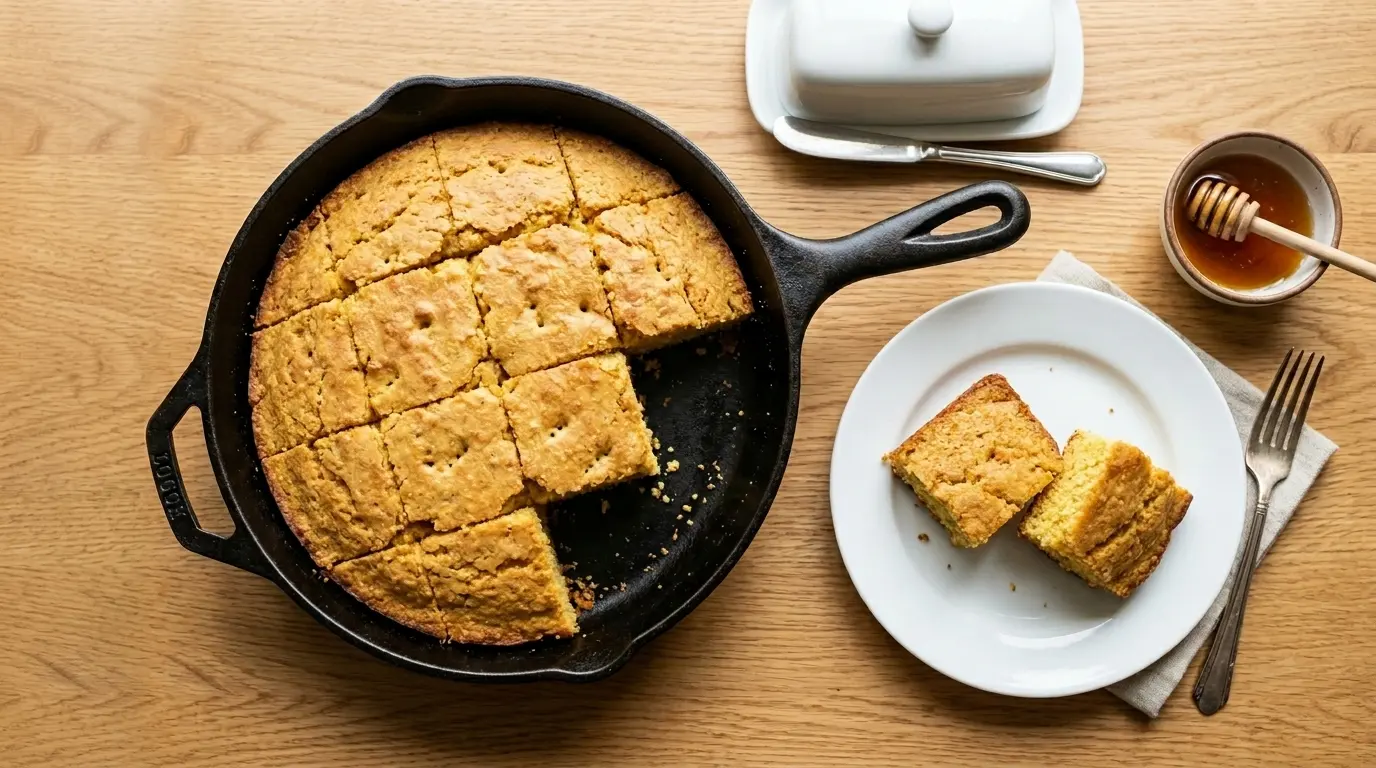
If you’ve been looking for the best sourdough discard cornbread recipe, this one is about to become your new go-to. It bakes up golden on the outside, fluffy and tender on the inside, and has just the right hint of tang from the sourdough discard that makes every bite more interesting than your average cornbread.
This recipe uses a classic combination of yellow cornmeal, all-purpose flour, butter, eggs, buttermilk, and sourdough discard. The discard adds subtle flavor and a slight tang that balances the mild sweetness perfectly. It doesn’t require yeast or any overnight fermentation; baking powder does all the heavy lifting, so you can go from pantry to table in about 35 minutes.
The sourdough discard pulls triple duty here. It adds flavor, moisture, and a touch of acidity that reacts with the baking soda to help create a tender, open crumb. Even if your discard has been sitting in the fridge for a week, it will still work beautifully in this recipe. Cold discard is totally fine.
You can bake this in an 8×8-inch (20×20 cm) square pan or a 9-inch (23 cm) cast iron skillet. Both work well, though the skillet version develops crispier, more golden edges that cornbread lovers tend to obsess over.
This is simple, satisfying, and one of the most practical ways to use up discard that might otherwise go to waste.
If you enjoy baking with sourdough discard, you might also love these Sourdough Discard Biscuits for another quick and easy side to add to your table.
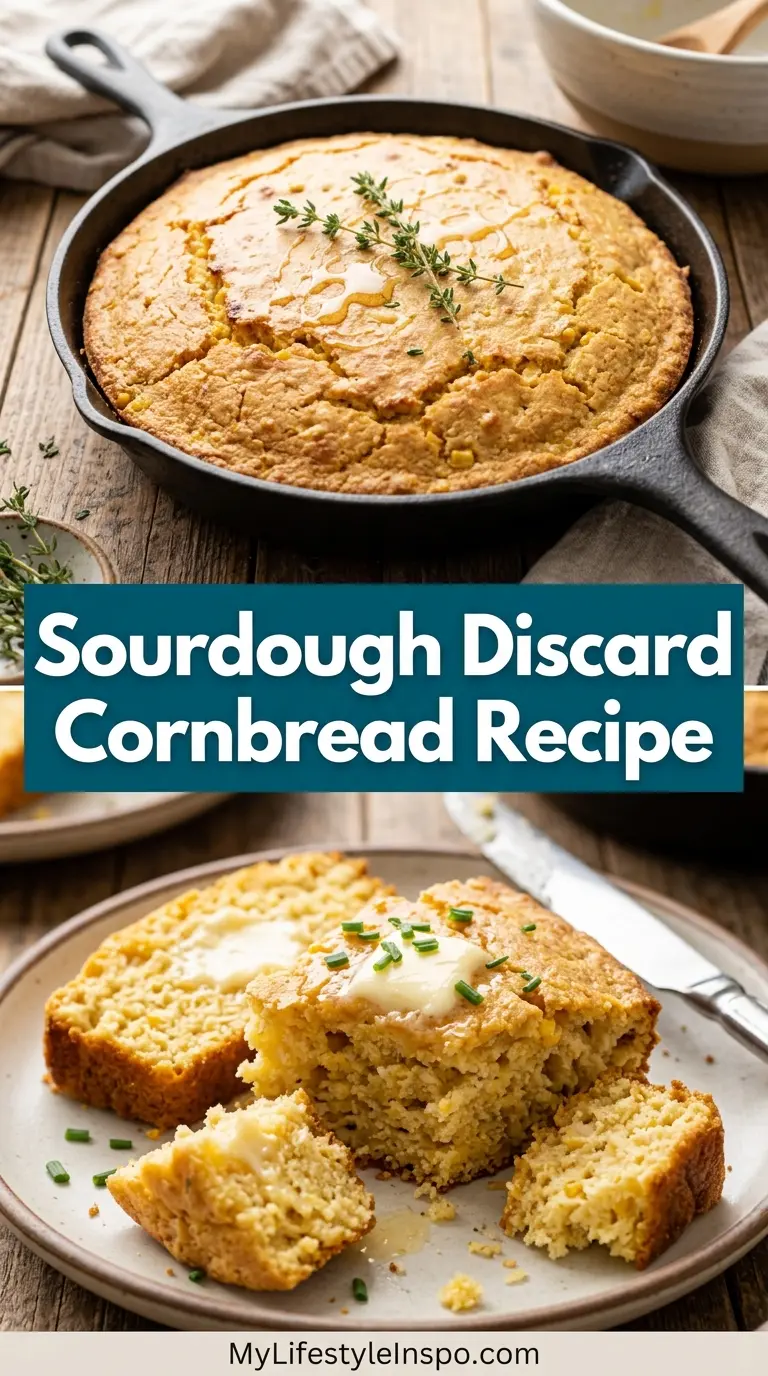
Why You’ll Love This Sourdough Discard Cornbread Recipe
This is the kind of recipe that earns a permanent spot in your rotation after the very first bake.
The sourdough discard adds a depth of flavor you simply don’t get from box mixes or standard cornbread recipes. That mild, almost buttery tang lifts the whole thing without being overpowering.
It uses pantry staples you almost certainly already have on hand. Flour, cornmeal, butter, eggs, and buttermilk are all you need alongside the discard.
The texture is genuinely excellent. Moist enough to eat on its own, with just enough crumble to feel like real cornbread, not a yellow cake.
It comes together in one bowl in under ten minutes. The baking does the rest of the work for you.
You can make it sweeter or more savory depending on what you’re serving it with. The base recipe is flexible and forgiving.
It pairs with practically everything, from chili and soups to BBQ and holiday spreads. It’s a side dish that fits any occasion.
And for days when you want warm, golden slices fresh from the oven, this recipe delivers every single time.
You might also enjoy: Sourdough Discard Waffles
Ingredients
This recipe uses a simple, reliable combination of everyday ingredients. Yellow cornmeal gives the cornbread its classic color, slight grit, and that unmistakable corn flavor. Using a 1:1 ratio of cornmeal to flour is the most common approach and results in the ideal texture, fluffy but not cakey.
- 1 cup (120 g) all-purpose flour
- 1 cup (170 g) yellow cornmeal
- 1/3 cup (65 g) granulated sugar
- 1 tablespoon baking powder
- 1/2 teaspoon baking soda
- 1 teaspoon fine sea salt
- 2 large eggs, room temperature
- 1/2 cup (120 ml) buttermilk, room temperature
- 1/2 cup (125 g) sourdough discard, room temperature
- 1/2 cup (115 g) unsalted butter, melted and slightly cooled
- 2 tablespoons honey (optional, for a touch more sweetness)
This recipe is nicely versatile. Sourdough Discard Muffins are another wonderful way to use up your discard with a similar batter.
Kitchen Equipment Needed
You don’t need anything special to make this cornbread. A few standard pieces of kitchen equipment are all it takes.
- Large mixing bowl
- Medium mixing bowl
- Whisk
- Rubber spatula or wooden spoon
- 8×8-inch (20×20 cm) baking pan or 9-inch (23 cm) cast iron skillet
- Measuring cups and spoons
- Toothpick or cake tester
- Wire cooling rack
- Pastry brush (optional, for greasing the pan)
Read Also: Sourdough Discard Pancakes Recipe
Recommended Products for This Recipe
These are products that genuinely make a difference for this recipe, chosen based on quality and performance.
1. Lodge Pre-Seasoned Cast Iron Skillet
A well-seasoned cast iron skillet creates incredible crispy edges on cornbread that a regular pan simply cannot replicate. The even heat distribution ensures the batter cooks through uniformly, giving you a golden bottom crust and a perfectly set center. It’s one of the most versatile pieces of cookware you can own.
2. Bob’s Red Mill Medium Grind Yellow Cornmeal
The quality of your cornmeal matters more than you might think. A medium-grind cornmeal like Bob’s Red Mill gives you the ideal texture, with enough grit to taste like real cornbread without being gritty or coarse. Finely ground cornmeal produces a softer, more cake-like result that can feel flat.
3. OXO Good Grips Large Glass Mixing Bowl Set
Glass mixing bowls let you see your batter clearly as you mix, making it easier to spot dry streaks or overmixing. The non-slip base keeps the bowl steady while you whisk, which is especially helpful when folding wet and dry ingredients together.
4. Redmond Real Salt Fine Sea Salt
Sea salt distributes more evenly through baked goods than table salt, and a good-quality sea salt enhances the corn flavor without making the cornbread taste salty. A small upgrade that makes a noticeable difference in the final bake.
Another favorite: Sourdough Discard Dinner Rolls
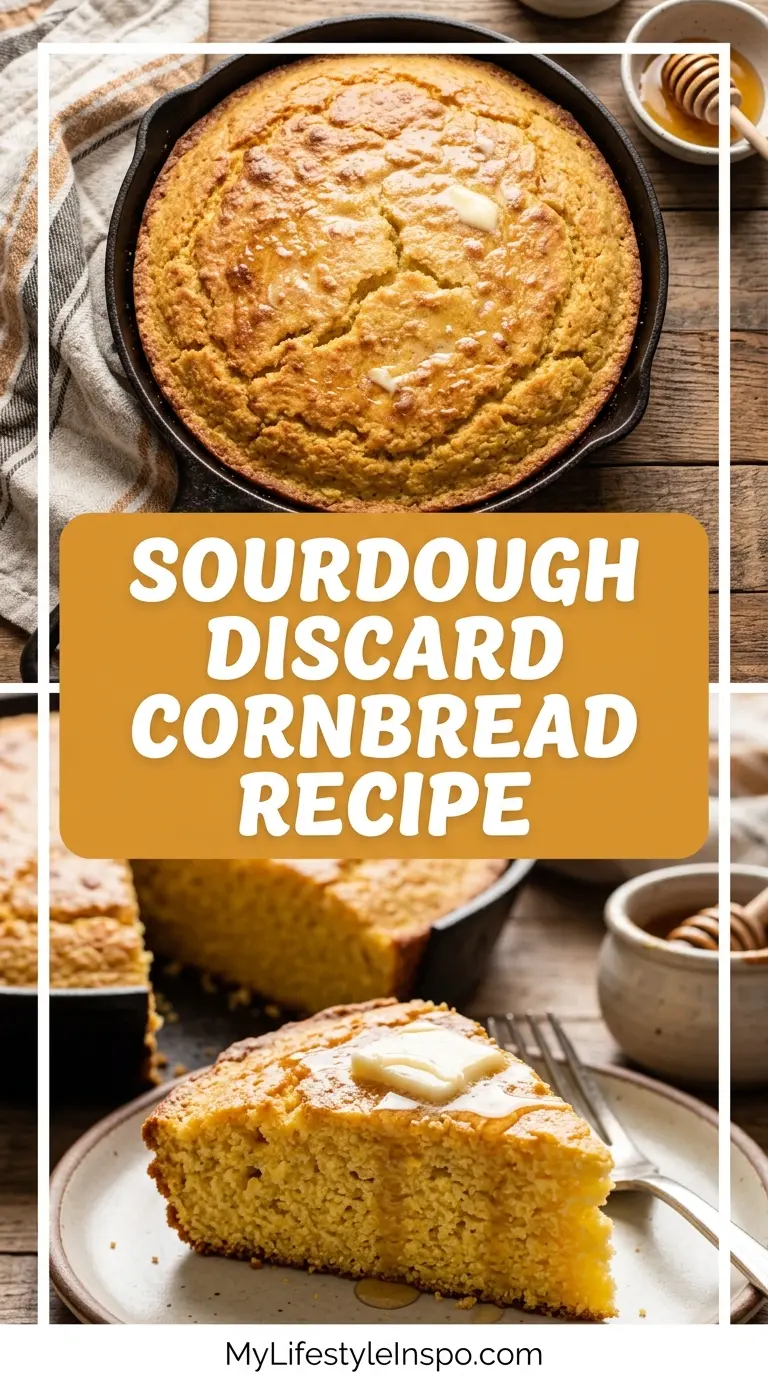
Step-by-Step Instructions
Step 1: Preheat Your Oven and Prepare the Pan
- Preheat your oven to 400°F (200°C). This higher temperature ensures the cornbread bakes quickly and develops a lightly golden top and crisp edges.
- If you’re using a cast iron skillet, place it in the oven while it preheats. A hot skillet creates the best crispy bottom crust.
- If you’re using an 8×8-inch (20×20 cm) baking pan, grease it generously with butter or nonstick spray, then dust lightly with cornmeal to prevent sticking and add texture.
- Set a wire rack near the oven so the cornbread can cool properly once it comes out.
Step 2: Mix the Dry Ingredients
- In a large mixing bowl, add 1 cup (120 g) all-purpose flour, 1 cup (170 g) yellow cornmeal, 1/3 cup (65 g) granulated sugar, 1 tablespoon baking powder, 1/2 teaspoon baking soda, and 1 teaspoon fine sea salt.
- Whisk the dry ingredients together thoroughly for about 30 seconds. This ensures the leavening agents are evenly distributed throughout the flour and cornmeal so the bread rises uniformly.
- Make a well in the center of the dry ingredient mixture and set the bowl aside. This will make it easier to add the wet ingredients without overmixing.
Step 3: Mix the Wet Ingredients
- In a medium mixing bowl, crack in 2 large eggs and lightly beat them with a whisk for about 20 seconds until the yolks and whites are fully combined.
- Add 1/2 cup (120 ml) buttermilk to the eggs and whisk together. The buttermilk adds tenderness and reacts with the baking soda to help the cornbread rise with a light, fluffy crumb.
- Add 1/2 cup (125 g) sourdough discard to the bowl. Whisk until fully incorporated. If the discard is cold from the refrigerator, it may make the batter slightly thicker, which is fine.
- Pour in 1/2 cup (115 g) melted, slightly cooled butter and whisk everything together until smooth. If you’re using the optional 2 tablespoons of honey, add it here and whisk it in.
- Make sure the butter is not too hot when you add it. Very hot butter can scramble the eggs, so let it cool for a few minutes after melting.
Step 4: Combine Wet and Dry Ingredients
- Pour the wet ingredient mixture into the well you made in the center of the dry ingredients.
- Using a rubber spatula or wooden spoon, gently fold the batter together using slow, deliberate strokes. Scrape the bottom and sides of the bowl as you go.
- Stop mixing as soon as the dry streaks disappear. A few small lumps are completely fine and actually preferred. Overmixing activates the gluten in the flour, which makes the cornbread tough and dense rather than tender and fluffy.
- The finished batter should look thick but pourable, somewhat similar to pancake batter.
Step 5: Add the Batter to the Pan and Bake
- If using a preheated cast iron skillet, carefully remove it from the oven using heavy oven mitts. Add about 1 teaspoon of butter and swirl it around the hot skillet to coat the bottom and sides. The butter will sizzle immediately, which is what you want.
- Pour the batter into the hot skillet or prepared baking pan. Use the spatula to spread it into an even layer right to the edges.
- Place the pan or skillet in the center rack of the preheated 400°F (200°C) oven.
- Bake for 20 to 25 minutes for a baking pan, or 22 to 28 minutes for a cast iron skillet. The cornbread is done when the top is deep golden brown and a toothpick inserted into the center comes out clean with no wet batter attached.
- If the top looks pale but the toothpick comes out clean, you can turn on the broiler for 1 to 2 minutes to get extra color, watching it closely the entire time.
Step 6: Cool and Serve
- Remove the cornbread from the oven and place it on a wire cooling rack.
- Allow it to cool in the pan for at least 10 minutes before cutting. This resting time lets the structure set, which makes it much easier to cut clean slices without the bread crumbling.
- Once rested, cut into squares or wedges and serve warm, preferably with a pat of butter and a drizzle of honey.
This recipe uses the same principle as the Sourdough Discard Banana Bread, where a simple batter bakes into something beautifully tender and flavorful.
Tips for Success
A few small details make a big difference when baking cornbread. Keep these in mind for the best possible result every time.
- Use room temperature ingredients. Cold eggs and cold buttermilk can cause the melted butter to resolidify into tiny lumps in the batter. Letting everything come to room temperature first helps the ingredients blend smoothly.
- Do not overmix. This is the most common cornbread mistake. Once you combine wet and dry ingredients, fold gently and stop as soon as the streaks are gone. Lumps are your friend here.
- Preheat the cast iron skillet. If you’re using a cast iron pan, preheating it in the oven and then adding a small amount of butter just before pouring in the batter is what creates those incredible crispy edges. A cold skillet won’t give you that result.
- Measure your cornmeal correctly. Scoop the cornmeal into the measuring cup and level it off with a straight edge rather than packing it in. Too much cornmeal makes the cornbread dense and gritty.
- Check doneness with a toothpick. Ovens vary, so start checking at the 20-minute mark. A clean toothpick is your best indicator.
- Let the cornbread rest before slicing. Cutting into it too soon will cause it to crumble. Ten minutes of rest is all you need.
Read Also: Sourdough Discard Cinnamon Rolls Recipe
Serving Suggestions
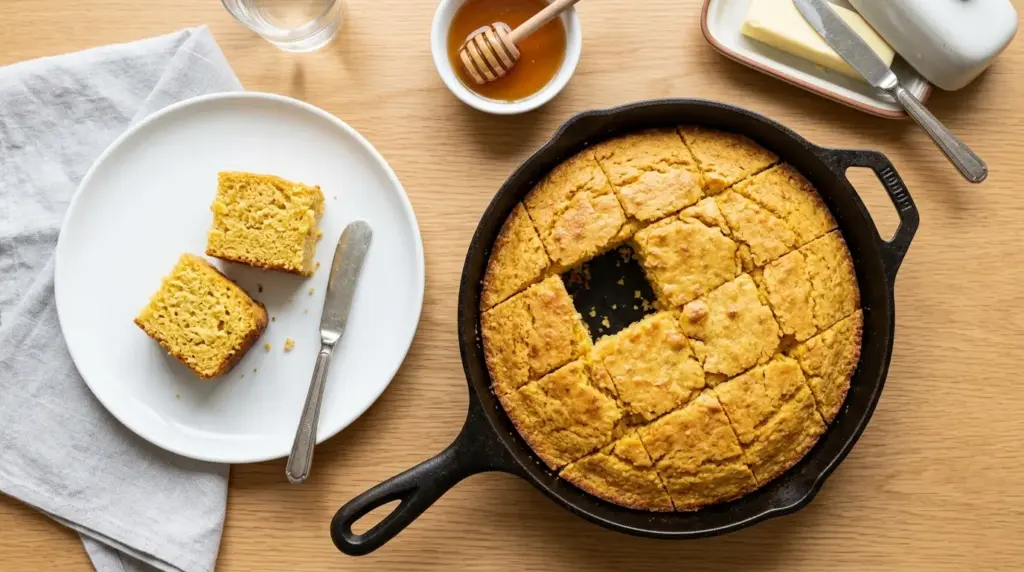
Sourdough discard cornbread is one of those sides that fits comfortably into any meal, from weeknight dinners to holiday spreads.
It’s the perfect companion for a steaming bowl of Chili. The mild sweetness of the cornbread balances the deep, smoky flavors of a hearty chili beautifully.
- Serve alongside Chicken Tortilla Soup for a complete, warming meal
- Pair with Slow Cooker Pulled Pork for a classic comfort food combination
- Slice and serve warm with a generous smear of Honey Butter and a light drizzle of extra honey
- Serve alongside Collard Greens and black-eyed peas for a proper Southern-style spread
- Crumble cooled cornbread into a bowl of cold Corn Chowder for a satisfying, textural contrast
- Use leftover slices as the base for a savory breakfast, topped with fried eggs and a drizzle of hot sauce
Sourdough Discard Dinner Rolls are another great bread option if you’re looking for something to round out a big family meal.
Variations to Try
The base recipe is simple enough that it lends itself beautifully to variations. Here are some popular ways people customize their sourdough discard cornbread.
- Cheddar and Jalapeño Cornbread: Fold in 1 cup (115 g) of shredded sharp cheddar cheese and 1 to 2 finely diced jalapeños (seeds removed for less heat) into the batter just before baking. This is a crowd-pleaser alongside any BBQ spread.
- Honey Cornbread: Increase the honey to 3 to 4 tablespoons for a noticeably sweeter cornbread that leans more dessert-like. This version is especially good with Honey Butter on top.
- Cornbread Muffins: Divide the batter evenly into a greased 12-cup muffin tin and bake at 400°F (200°C) for 15 to 18 minutes. Perfect for meal prepping or packing in lunches.
- Whole Wheat Cornbread: Substitute half of the all-purpose flour with whole wheat flour for a nuttier, heartier version with slightly more fiber.
- Vegan Cornbread: Replace the eggs with 2 flax eggs (2 tablespoons ground flaxseed mixed with 6 tablespoons water, rested for 5 minutes), use plant-based butter, and swap the buttermilk for oat milk mixed with 1 teaspoon apple cider vinegar.
- Corn Kernel Cornbread: Stir 3/4 cup (120 g) of fresh, frozen, or canned (drained) corn kernels into the batter for bursts of sweet corn flavor and extra texture in every bite.
This recipe pairs naturally with other sourdough discard baked goods, like the Sourdough Discard Flatbread, if you’re looking for a savory companion to round out your bread basket.
Storage and Reheating
Cornbread is best on the day it’s baked, but it stores and reheats well enough that leftovers are never a problem.
- Room temperature: Wrap the cooled cornbread tightly in plastic wrap or store in an airtight container at room temperature for up to 2 days.
- Refrigerator: Store in an airtight container in the refrigerator for up to 5 days. The cornbread will firm up slightly when cold, but reheating brings it back to near-fresh quality.
- Freezer: Wrap individual slices in plastic wrap, then place them in a freezer-safe bag or container. Freeze for up to 3 months. Thaw overnight in the refrigerator or at room temperature for about an hour before reheating.
- To reheat: Warm individual slices in the microwave for 20 to 30 seconds, or wrap in foil and heat in a 325°F (160°C) oven for 10 minutes. For a crispier exterior, heat unwrapped slices directly on the oven rack.
- Tip: Adding a small pat of butter on top before reheating does wonders for restoring moisture and flavor.
Read Also: Sourdough Discard Pumpkin Bread Recipe
Nutritional Facts
The following is an estimate per serving, based on 9 servings from a standard 8×8-inch pan. Exact values will vary depending on specific brands and any substitutions.
| Nutrient | Amount Per Serving |
|---|---|
| Calories | 235 kcal |
| Total Fat | 12 g |
| Saturated Fat | 7 g |
| Cholesterol | 65 mg |
| Sodium | 310 mg |
| Total Carbohydrates | 28 g |
| Dietary Fiber | 1 g |
| Total Sugars | 8 g |
| Protein | 4 g |
This nutritional estimate is for the base recipe without optional add-ins like cheddar cheese or corn kernels, which would increase calorie and fat content.
Another great sourdough discard recipe to try: Sourdough Discard Coffee Cake
Health Benefits of Key Ingredients
Beyond great flavor, several of the key ingredients in this cornbread bring meaningful nutritional value to the table.
This isn’t health food, but it’s far from empty calories either.
- Yellow cornmeal is a whole grain ingredient that provides complex carbohydrates for sustained energy, as well as small amounts of iron, magnesium, and B vitamins. The yellow color comes from carotenoids like lutein and zeaxanthin, which support eye health.
- Sourdough discard has been partially fermented, which begins the process of breaking down phytic acid in the flour. This can make certain minerals more bioavailable than they are in unfermented flour, even if the discard isn’t fully active.
- Eggs provide complete protein with all nine essential amino acids, as well as choline, which plays a role in brain health and metabolism. One egg also supplies a meaningful dose of vitamins A, D, and B12.
- Buttermilk is lower in fat than regular whole milk and contains probiotics that support gut health. Its natural acidity also helps tenderize the gluten in the batter for a softer crumb.
- Butter provides fat-soluble vitamins A, D, E, and K2. Used in moderate amounts, it contributes to flavor and helps the body absorb those fat-soluble nutrients from other ingredients.
You might also enjoy: Sourdough Discard Blueberry Muffins
Frequently Asked Questions
1. Can I use active sourdough starter instead of discard?
Yes, active bubbly starter works perfectly in this recipe. The flavor will be very similar to discard, perhaps very slightly milder, since freshly fed starter is less acidic than aged discard. The leavening in this recipe comes from baking powder and baking soda, not the starter, so the activity level of your starter doesn’t affect how the cornbread rises.
2. Do I have to use buttermilk?
Buttermilk is recommended because its acidity reacts with the baking soda and creates a tender crumb. If you don’t have buttermilk on hand, you can make a quick substitute by combining 1/2 cup (120 ml) of regular milk with 1/2 tablespoon of white vinegar or lemon juice, letting it sit for 5 minutes until it curdles slightly. Plain yogurt thinned with a splash of milk is another solid alternative.
3. Can I make this cornbread ahead of time?
Absolutely. You can bake the cornbread a day ahead, let it cool completely, wrap it tightly, and store it at room temperature overnight. Reheat individual slices in the microwave for 20 to 30 seconds before serving, or warm the whole pan in a 325°F (160°C) oven for about 10 minutes. It won’t taste quite as fresh as right out of the oven, but it’s still very good.
4. Why is my cornbread crumbly?
The most common culprit is too much cornmeal relative to flour, or overmixing the batter. Make sure you’re measuring the cornmeal by spooning it into the measuring cup rather than scooping, and stop folding the batter as soon as the dry streaks disappear. Using too little butter can also lead to crumbly cornbread, so don’t reduce the fat in the recipe unless you’re making a specific lower-fat variation.
5. Can I make this cornbread without sugar?
Yes, you can reduce the sugar significantly or leave it out entirely for a more savory cornbread, which is the traditional Southern style. The cornbread will be less tender without any sugar (sugar retains moisture and contributes to a softer texture), but it will still bake up well. If you want a savory version, skip the honey as well and consider adding cheddar cheese or diced peppers to give it more character.
Read Also: Sourdough Discard Crackers Recipe

Sourdough Discard Cornbread

Equipment
- Large mixing bowl
- Medium mixing bowl
- Whisk
- Rubber spatula
- 8×8-inch (20×20 cm) Baking Pan - or 9-inch (23 cm) cast iron skillet
- Cast iron skillet - optional, for crispier edges
- Measuring cups and spoons
- Toothpick
- Wire cooling rack
- Pastry brush - optional, for greasing the pan
Ingredients
- 1 cup all-purpose flour - 120g
- 1 cup yellow cornmeal - 170g
- 1/3 cup granulated sugar - 65g
- 1 tablespoon baking powder
- 1/2 teaspoon baking soda
- 1 teaspoon fine sea salt
- 2 large eggs - room temperature
- 1/2 cup buttermilk - 120ml, room temperature
- 1/2 cup sourdough discard - 125g, room temperature
- 1/2 cup unsalted butter - 115g, melted and slightly cooled
- 2 tablespoons honey - optional, for extra sweetness
- 1 tablespoon butter - for greasing the pan
Instructions
- Preheat oven to 400°F (200°C). Grease an 8×8-inch baking pan or place a 9-inch cast iron skillet in the oven to preheat.
- In a large bowl, whisk together the flour, cornmeal, sugar, baking powder, baking soda, and salt until well combined.
- In a medium bowl, whisk the eggs, buttermilk, sourdough discard, melted butter, and honey until smooth.
- Pour wet ingredients into the dry ingredients and fold gently with a spatula just until no dry streaks remain. Do not overmix.
- Pour batter into the prepared pan or hot skillet. Bake for 20-25 minutes (pan) or 22-28 minutes (skillet) until golden and a toothpick comes out clean.
- Cool in the pan for 10 minutes before slicing. Serve warm with butter and extra honey.
Notes
- Use room temperature ingredients for the smoothest batter. Cold eggs or buttermilk can cause melted butter to solidify into lumps.
- For the best texture, measure cornmeal by spooning it into the cup and leveling off, never packing it down.
- If using a cast iron skillet, preheating it in the oven before adding the batter creates an incredibly crispy crust.
- To make a buttermilk substitute, combine 1/2 cup of regular milk with 1/2 tablespoon of white vinegar or lemon juice and let sit for 5 minutes.
- For a savory version, reduce the sugar to 1 tablespoon, omit the honey, and fold in 1 cup of shredded cheddar and 2 diced jalapeños.
- Store cornbread wrapped tightly at room temperature for up to 2 days, or refrigerate for up to 5 days.
- Freeze individual slices wrapped in plastic wrap for up to 3 months. Thaw at room temperature before reheating.
- Reheat slices in the microwave for 20-30 seconds, or wrap in foil and warm in a 325°F oven for about 10 minutes for a just-baked texture.
- Adding a pat of butter on top before reheating helps restore moisture and brings back that fresh-from-the-oven flavor.
- If your sourdough discard has been sitting in the fridge for a week, it will still work perfectly in this recipe. Cold discard is totally fine.
Final Thoughts
Sourdough discard cornbread is one of those recipes that quietly earns its place in your regular baking lineup. It’s simple, it’s quick, and the result is genuinely better than most boxed mixes you’ll ever try.
The discard adds something you can’t quite put your finger on at first, a slight tang and depth of flavor that makes the cornbread taste more complex with very little extra effort. Once you’ve made it, it’s hard to go back to a standard recipe.
Give this sourdough discard cornbread recipe a try the next time you have discard to use up, and let us know how it turned out in the comments below. Did you go savory with jalapeños and cheddar, or keep it classic with a honey butter drizzle? Either way, we’d love to hear from you.
Recommended:
- Sourdough Discard Dumplings
- Sourdough Discard Crepes
- Sourdough Discard Lemon Loaf
- Sourdough Discard Brownies
- Sourdough Discard Focaccia
- Sourdough Discard Bagels
- Sourdough Discard Tortillas
- Sourdough Discard Pretzels
- Sweet Cornbread
- Skillet Cornbread