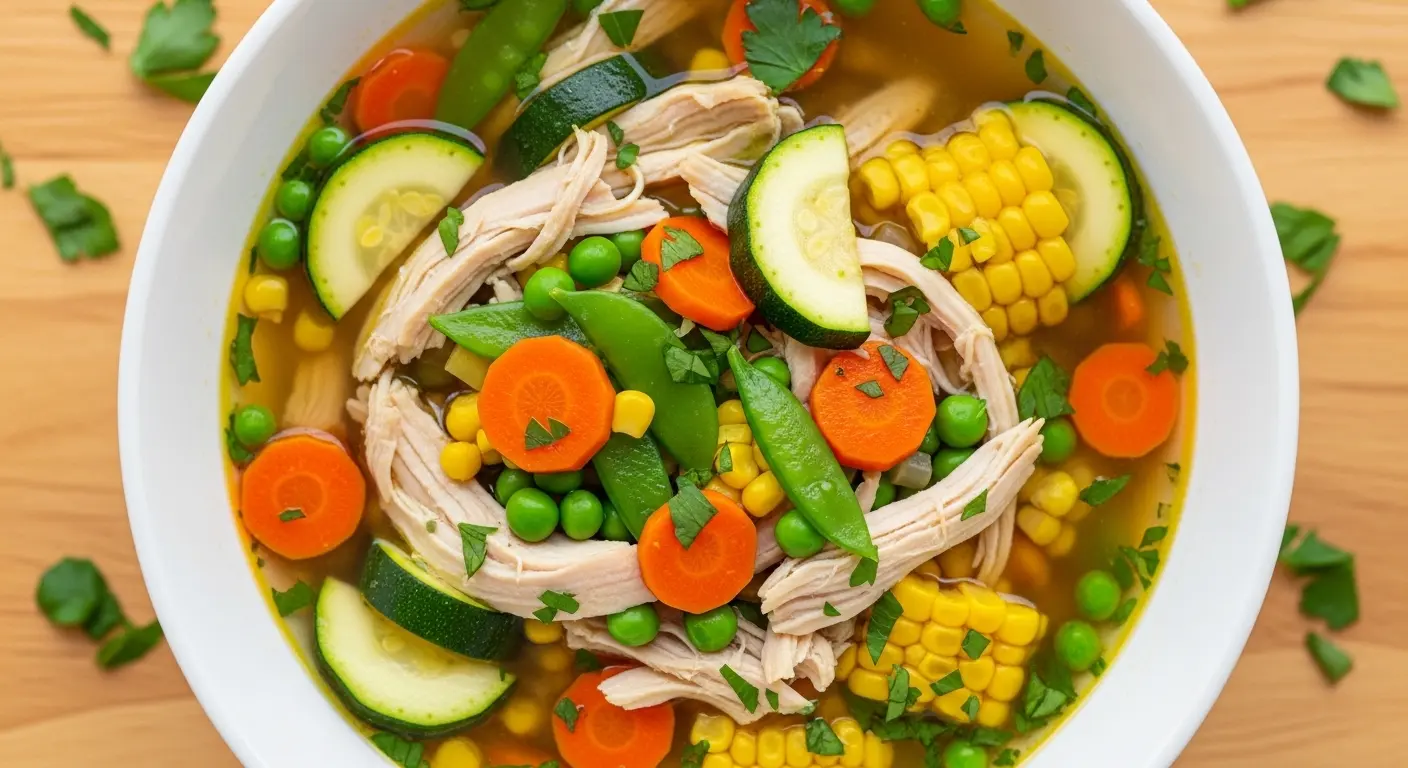
A good chicken vegetable soup recipe is one of those things that never goes out of style. It is cozy, nourishing, and endlessly satisfying, whether you are fighting off a cold or simply craving something warm and wholesome on a weeknight.
What makes this version stand out is the technique: sauteing the aromatics in butter first builds a deeply savory base, and simmering raw chicken directly in the broth keeps the meat tender and juicy while infusing every drop of liquid with rich flavor.
This is not a watered-down, bland soup. It is loaded with carrots, celery, zucchini, potatoes, peas, and corn, all swimming in a clear, golden broth that tastes like it has been cooking all day even though it comes together in well under an hour.
If you love comforting one-pot meals like this, you will also enjoy this Chicken Tortilla Soup that is equally hearty and loaded with bold flavors.
Why You’ll Love This Chicken Vegetable Soup Recipe
This soup hits all the right notes for busy home cooks who want a real, from-scratch meal without spending hours in the kitchen.
It is naturally gluten-free and dairy-free, so it is friendly for a wide range of dietary needs. You can serve it as-is or bulk it up with pasta, rice, or extra veggies depending on what you have on hand.
The soup is incredibly forgiving. You can swap vegetables in and out based on the season, use rotisserie chicken to save time, or toss in whatever produce needs to be used up before it turns.
Here is what else makes this recipe a keeper:
- Ready in under 1 hour from start to finish
- Made in a single pot for easy cleanup
- Freezes beautifully for meal prep
- Packed with protein and vegetables in every bowl
- Customizable with pasta, rice, or potatoes for extra heartiness
- Kid-friendly and crowd-pleasing
- Budget-friendly ingredients that are easy to find year-round
You might also enjoy: Chicken Rice Soup
Ingredients
This recipe uses a classic mirepoix base of onion, carrot, and celery to build a flavorful broth from the ground up. The combination of fresh vegetables and frozen vegetables gives you the best of both worlds: depth of flavor from the fresh aromatics and convenience from the frozen peas and corn that go in at the end.
- 1.5 lbs (680g) boneless, skinless chicken breasts or thighs
- 2 tablespoons olive oil
- 2 tablespoons unsalted butter
- 1 large yellow onion, diced (about 1.5 cups / 225g)
- 3 medium carrots, peeled and sliced into rounds (about 1.5 cups / 180g)
- 3 stalks celery, sliced (about 1 cup / 100g)
- 4 cloves garlic, minced
- 2 medium Yukon Gold potatoes, diced into 1/2-inch cubes (about 2 cups / 280g)
- 1 medium zucchini, halved and sliced (about 1.5 cups / 190g)
- 1 can (14.5 oz / 410g) petite diced tomatoes
- 8 cups (1.9 liters) low-sodium chicken broth
- 1 cup (130g) frozen peas
- 1 cup (140g) frozen corn
- 1 teaspoon dried thyme
- 1 teaspoon dried Italian seasoning
- 1 teaspoon garlic powder
- 1 bay leaf
- Salt and black pepper, to taste
- Fresh parsley, chopped, for garnish
Read Also: Chicken Soup Recipe
Kitchen Equipment Needed
Having the right tools makes this recipe even more seamless. A large, heavy-bottomed pot is especially important here because it distributes heat evenly so the vegetables soften without scorching.
- Large Dutch oven or heavy-bottomed soup pot (at least 6-quart capacity)
- Sharp chef’s knife
- Cutting board
- Wooden spoon or silicone spatula
- Ladle
- Measuring cups and spoons
- Two forks (for shredding chicken)
- Peeler (for carrots and potatoes)
- Instant-read meat thermometer
For a lighter option, try: Chicken Stew
Recommended Products for This Recipe
These are products I genuinely recommend based on their performance and quality. They can make a noticeable difference when making a soup like this.
1. Lodge Enameled Cast Iron Dutch Oven
A quality Dutch oven is the single best investment for soup-making. It retains heat evenly, prevents scorching, and goes beautifully from stovetop to table. The enamel coating means no reactive surfaces and easy cleanup, even with acidic tomatoes in the mix.
2. Low-Sodium Organic Chicken Bone Broth
The broth is the backbone of this soup, so quality matters. Using a rich, low-sodium bone broth gives you more control over the saltiness while adding extra collagen and depth that regular broth cannot match.
3. OXO Good Grips Stainless Steel Ladle
A sturdy, deep-cupped ladle makes serving soup clean and easy. The OXO design has a hooked handle that rests on the pot rim without sliding in, which is a small detail that makes a big difference at dinner time.
4. ThermoPro Instant-Read Meat Thermometer
Knowing exactly when your chicken hits 165 degrees F (74 degrees C) removes all the guesswork. This thermometer gives you a reading in seconds and helps ensure the chicken is perfectly cooked without being dry or overdone.
Another favorite: Chicken Mushroom Soup
Step-by-Step Instructions
1. Prepare Your Vegetables
- Peel and slice the carrots into 1/4-inch rounds. Try to keep them uniform so they cook at the same rate.
- Dice the onion into small, even pieces, about 1/2-inch cubes.
- Slice the celery stalks on a slight diagonal, about 1/4-inch thick.
- Peel and dice the Yukon Gold potatoes into 1/2-inch cubes. Place them in a bowl of cold water to prevent browning while you prep the rest.
- Halve the zucchini lengthwise, then slice into 1/4-inch half-moons.
- Mince the garlic cloves finely or press them through a garlic press.
- Pat the chicken dry with paper towels and season generously on both sides with salt and black pepper.
2. Sear the Chicken
- Heat the olive oil in your Dutch oven or large pot over medium-high heat until shimmering.
- Add the seasoned chicken breasts (or thighs) in a single layer. Do not crowd the pot; work in batches if needed.
- Sear for about 3 to 4 minutes per side until golden brown. The chicken does not need to be fully cooked through at this stage.
- Remove the chicken from the pot and set it aside on a plate. It will finish cooking in the broth.
3. Saute the Aromatics
- Reduce the heat to medium. Add the butter to the same pot, scraping up any browned bits from the bottom with a wooden spoon. Those bits are pure flavor.
- Add the diced onion, sliced carrots, and sliced celery. Stir to coat in the butter.
- Cook for 5 to 6 minutes, stirring occasionally, until the vegetables have softened and the onion has turned translucent.
- Add the minced garlic and cook for 1 minute more, stirring constantly so it does not burn.
4. Add Seasonings and Broth
- Sprinkle in the dried thyme, Italian seasoning, garlic powder, and a pinch each of salt and black pepper. Stir the seasonings into the vegetables to coat evenly.
- Pour in the entire can of petite diced tomatoes (with their juices). Stir to combine.
- Pour in all 8 cups of chicken broth. Stir everything together and bring the pot to a gentle boil over medium-high heat.
5. Simmer the Chicken and Potatoes
- Once the broth is boiling, drain the potatoes and add them to the pot.
- Nestle the seared chicken back into the pot, submerging it in the broth.
- Add the bay leaf.
- Reduce the heat to medium-low to maintain a steady simmer. Cover the pot partially with a lid.
- Simmer for 18 to 22 minutes, or until the potatoes are fork-tender and the chicken registers 165 degrees F (74 degrees C) on an instant-read thermometer.
6. Shred the Chicken
- Using tongs or a slotted spoon, carefully lift the cooked chicken out of the pot and transfer it to a cutting board.
- Use two forks to shred the chicken into bite-sized pieces, pulling along the grain of the meat for the best texture.
- Alternatively, you can dice the chicken if you prefer chunks over shredded pieces.
7. Add the Remaining Vegetables
- Return the shredded chicken to the pot and stir to combine.
- Add the sliced zucchini to the pot. Simmer for 5 minutes until tender but still slightly firm.
- Add the frozen peas and frozen corn directly to the pot from frozen. No need to thaw them first.
- Stir and simmer for another 3 to 5 minutes until the peas and corn are heated through.
8. Season, Garnish, and Serve
- Remove and discard the bay leaf.
- Taste the soup and adjust seasoning with additional salt and black pepper as needed.
- Ladle into bowls and garnish with freshly chopped parsley.
- Serve hot with crusty bread or a simple side salad.
Read Also: Lemon Chicken Orzo Soup
Tips for Success
Getting a great chicken vegetable soup comes down to a few key techniques that really elevate the final result. These are the details that separate a good bowl from a truly memorable one.
- Do not skip searing the chicken. The browned crust that forms on the chicken during searing adds a depth of savory flavor to the broth that you simply cannot get from raw chicken dropped straight into the pot.
- Scrape up the fond. Those browned bits stuck to the bottom of the pot after searing are packed with flavor. The butter and vegetables will help lift them as you saute, adding richness to the broth.
- Cut vegetables uniformly. Even-sized pieces mean everything finishes cooking at the same time, so you will not end up with mushy carrots and crunchy potatoes in the same bowl.
- Add delicate vegetables at the end. Zucchini, frozen peas, and frozen corn should only go in during the final 5 to 8 minutes of cooking. Adding them too early turns them soft and flavorless.
- Simmer gently, not aggressively. A hard boil can make the chicken tough and the broth cloudy. A steady, gentle simmer keeps the broth clear and the meat tender.
- Taste and adjust at the end. Seasoning after all the components are combined gives you the most accurate sense of where the soup needs salt or spice.
- Use bone broth if possible. It adds a richer, more complex flavor than regular carton broth and also provides extra collagen that gives the soup a slightly silkier texture.
This technique also works beautifully in a Minestrone Soup if you want to explore more hearty, vegetable-packed soups.
Serving Suggestions
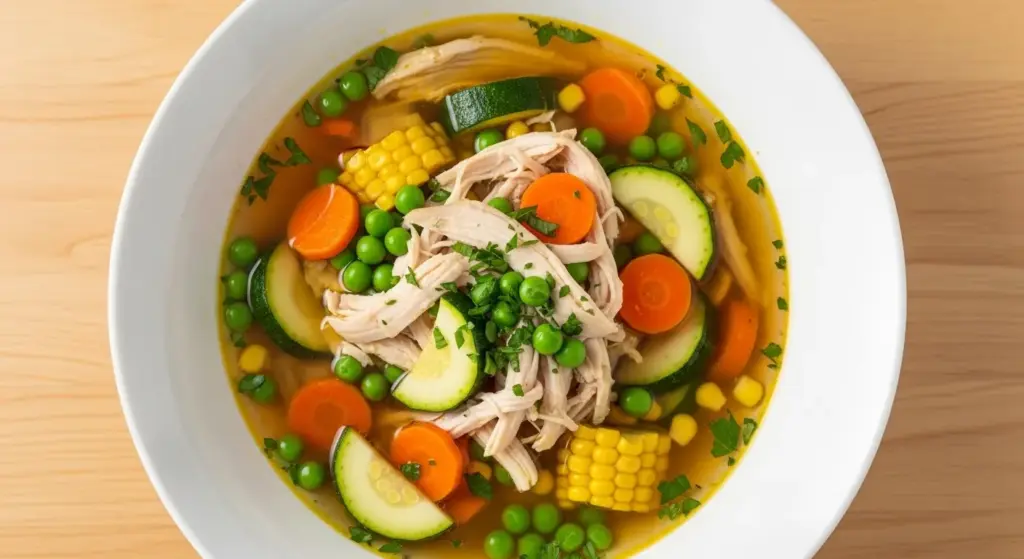
Chicken vegetable soup is hearty enough to stand on its own as a complete meal, but a few well-chosen accompaniments can make it even more satisfying.
Crusty bread is the classic pairing. It is perfect for soaking up the flavorful broth at the bottom of the bowl. A toasted slice of sourdough or a warm dinner roll alongside this soup is almost impossible to resist.
Here are more ways to round out the meal:
- Buttermilk Biscuits for a Southern-style pairing
- Garlic Mashed Potatoes served on the side for an extra-hearty meal
- A crisp Broccoli Salad for color and crunch
- Classic Deviled Eggs as a starter or side
- A slice of Skillet Cornbread for something a little sweet alongside the savory broth
Read Also: Dinner Rolls Recipe
Variations to Try
The beauty of chicken vegetable soup is how adaptable it is. Once you have the base technique down, you can spin it in many directions depending on your taste preferences or what you have on hand.
- Chicken Noodle Variation: Add 2 cups (about 200g) of egg noodles or small pasta like ditalini in the last 8 to 10 minutes of simmering. Cook pasta on the side and add to individual bowls to prevent the noodles from absorbing all the broth during storage.
- Chicken and Rice Variation: Stir in 2 cups of cooked white or brown rice during the last 5 minutes of cooking. For the same reason as pasta, keep it separate if you plan to store leftovers.
- Creamy Variation: Stir in 1/2 cup of heavy cream or full-fat coconut milk at the very end for a richer, slightly velvety broth.
- Slow Cooker Variation: Add all ingredients except the frozen vegetables and zucchini to a slow cooker. Cook on LOW for 6 to 7 hours or HIGH for 3 to 4 hours. Shred the chicken, return it to the pot, then stir in the remaining vegetables and cook on HIGH for another 20 minutes.
- Spicy Variation: Add 1/4 to 1/2 teaspoon of red pepper flakes along with the other seasonings for a gentle kick of heat.
- Kale or Spinach Addition: Stir in 2 large handfuls of chopped kale or baby spinach in the last 3 to 4 minutes. They wilt quickly and add a nutritious, earthy element.
You can apply a similar approach to a delicious Hamburger Soup for a heartier twist on the classic formula.
Storage and Reheating
This soup stores beautifully and actually tastes even better the next day as the flavors continue to develop overnight. If you plan to make it ahead, consider keeping the pasta or rice separate so it does not absorb all the broth during storage.
- Refrigerator: Store leftover soup in an airtight container in the refrigerator for up to 4 to 5 days.
- Freezer: Allow the soup to cool completely, then transfer to freezer-safe containers or resealable bags. Freeze for up to 3 months. Leave a little headspace in containers to allow for expansion.
- Thawing: Transfer frozen soup from the freezer to the refrigerator overnight to thaw gradually. You can also thaw it directly in a pot over low heat on the stovetop.
- Stovetop Reheating: Pour the soup into a pot and reheat over medium heat, stirring occasionally, until warmed through. Add a splash of extra broth or water if the soup has thickened during storage.
- Microwave Reheating: Transfer a portion to a microwave-safe bowl, cover loosely, and heat in 90-second intervals, stirring in between, until hot.
Read Also: Cabbage Soup Recipe
Nutritional Facts
The following nutritional values are estimates based on one serving of soup, assuming the recipe yields approximately 6 servings. Actual values may vary depending on specific ingredients and portion sizes.
| Nutrient | Per Serving (approx.) |
|---|---|
| Calories | 290 kcal |
| Protein | 30g |
| Total Fat | 9g |
| Saturated Fat | 3g |
| Carbohydrates | 22g |
| Dietary Fiber | 4g |
| Sugars | 6g |
| Sodium | 680mg |
| Potassium | 820mg |
| Vitamin A | 70% DV |
| Vitamin C | 35% DV |
| Iron | 15% DV |
This soup is an excellent source of lean protein and provides a wide range of vitamins and minerals from the vegetable medley. It is naturally gluten-free and can be made dairy-free by omitting the butter and substituting olive oil.
You might also enjoy: Stuffed Pepper Soup
Health Benefits of Key Ingredients
This chicken vegetable soup is not just comfort food. Every bowl delivers a meaningful dose of nutrients that support overall health and well-being.
The combination of protein-rich chicken, fiber-packed vegetables, and antioxidant-loaded broth makes this one of the most nutritionally dense meals you can make in a single pot.
Here is a closer look at what each key ingredient brings to the table:
- Chicken: An excellent source of lean protein, chicken supports muscle repair and keeps you feeling full. It also provides B vitamins like niacin and B6, which are important for energy metabolism.
- Carrots: Loaded with beta-carotene, which the body converts to vitamin A, carrots support eye health, immune function, and skin health. They also provide a natural sweetness that balances the savory broth.
- Celery: Low in calories but high in vitamin K, potassium, and folate. It also contains antioxidants that may help reduce inflammation in the body.
- Onion and Garlic: Both are members of the allium family and are rich in sulfur compounds that support heart health and immune function. Garlic in particular has well-documented antimicrobial properties.
- Zucchini: A good source of vitamin C, potassium, and antioxidants including lutein and zeaxanthin, which support eye health. It adds bulk to the soup without significantly increasing calorie content.
- Peas: Provide plant-based protein, fiber, and a range of vitamins including vitamin C, vitamin K, and folate.
- Tomatoes: Rich in lycopene, a powerful antioxidant linked to reduced risk of heart disease and certain cancers. The canned variety actually delivers more bioavailable lycopene than fresh tomatoes.
- Chicken Broth: A warm, soothing base that delivers electrolytes including sodium and potassium. Bone broth, in particular, provides collagen and gelatin that support joint and gut health.
For even more vegetable-forward comfort, this Vegetable Soup is a wonderful plant-based companion recipe.
Frequently Asked Questions
1. Can I use rotisserie chicken instead of raw chicken?
Absolutely. Using rotisserie chicken is one of the best time-saving shortcuts for this recipe. Simply skip the searing step and begin by sauteing the aromatics in butter and olive oil. Add about 3 cups of shredded rotisserie chicken during the last 5 minutes of simmering, just long enough to heat it through without drying it out.
2. Can I make this in a slow cooker?
Yes, and it works very well. Add all ingredients except the zucchini, frozen peas, and frozen corn to the slow cooker at the start. Cook on LOW for 6 to 7 hours or HIGH for 3 to 4 hours. Shred the chicken, return it to the pot, then add the remaining vegetables and cook on HIGH for 20 more minutes before serving.
3. What is the best way to thicken chicken vegetable soup?
The easiest method is to remove about 1 cup of the cooked potatoes and vegetables, mash them with a fork, then stir the mash back into the soup. This naturally thickens the broth without altering the flavor. Alternatively, you can whisk 1 tablespoon of cornstarch into 2 tablespoons of cold water and stir it into the simmering soup.
4. Can I freeze this soup?
This soup freezes exceptionally well, especially because it does not contain pasta or noodles that can turn mushy when thawed. Allow the soup to cool completely, transfer to freezer-safe containers, and freeze for up to 3 months. Thaw overnight in the refrigerator before reheating on the stovetop over medium heat.
5. What other vegetables can I add to this soup?
This recipe is very flexible. Good additions include chopped green beans, baby spinach, kale, sweet potatoes, parsnips, corn off the cob, or diced fennel. Sturdier vegetables like sweet potatoes and parsnips should go in with the potatoes. Leafy greens like spinach and kale should be added in the final 3 to 4 minutes of cooking so they do not over-wilt.
Read Also: Kale Soup Recipe
Final Thoughts
A well-made chicken vegetable soup recipe is one of those recipes that you will return to again and again through every season. It is the kind of cooking that feels effortless once you know the steps, and it never fails to deliver something deeply satisfying in the bowl.
This version is flexible enough to customize to your tastes but solid enough to stand exactly as written. Once you make it, you will understand why it has been a staple in kitchens for generations.
Give this recipe a try and let me know how it turned out in the comments below. Did you add any extra vegetables or try it in the slow cooker? Share your experience because your tips and ideas inspire others in this community.
Recommended:
- Chicken Tortilla Soup
- Lasagna Soup
- Turkey Soup
- Loaded Potato Soup
- Chicken Sopas
- Cuban Chicken Soup
- Jamaican Chicken Soup
- Ham and Bean Soup
- Spinach Soup
- Black Bean Soup