A good black bean soup recipe is one of those things that once you nail it, you’ll keep coming back to it all season long. It’s the kind of meal that comes together in a single pot, costs almost nothing to make, and delivers a depth of flavor that genuinely surprises people. The secret is in the layering: sautéing aromatics in olive oil until they’re soft and sweet, toasting your spices before adding liquid, then partially blending the finished soup to create that signature thick-yet-chunky texture everyone loves.
This version is inspired by the most popular style found across Latin American and Caribbean cooking: a cumin-forward, slightly smoky soup made with canned black beans, a classic mirepoix base of onion, carrot, and celery, and a finishing squeeze of fresh lime juice. It’s naturally vegetarian and gluten-free, it feeds a crowd, and it’s just as good (if not better) on day two.
Whether you’re meal prepping for the week or need something warm and filling on a weeknight, this is the recipe that delivers every time.
If you enjoy hearty, bean-based soups, you’ll also love this Chicken Tortilla Soup for a delicious variation with bold Mexican-inspired flavor.
Why You’ll Love This Black Bean Soup Recipe
This soup earns its place as a regular in the dinner rotation for a lot of good reasons.
It’s truly a one-pot meal, which means minimal cleanup and maximum flavor. Everything builds in a single pot, from the softened aromatics to the simmered beans, without any extra dishes to deal with.
Canned black beans are the shortcut that makes this weeknight-friendly. There’s no overnight soaking, no long cook times — just open, rinse, and go.
The texture is perfectly balanced. By blending only a portion of the soup, you get that creamy, velvety consistency without losing the bite of whole beans.
It’s endlessly customizable. The base recipe is vegetarian, but you can add smoked sausage, shredded chicken, or chorizo to make it heartier in minutes.
The flavors are layered and complex. Toasting cumin and oregano in the oil before adding any liquid unlocks their full aromatic potential and gives the soup a depth that bland, one-note versions simply can’t match.
- Rich, thick, and satisfying without any cream or heavy additions
- Budget-friendly ingredients that most people already have on hand
- Naturally vegan and gluten-free as written
- Ready in about 45 minutes from start to finish
- Stores and reheats beautifully for lunches throughout the week
Read Also: Ham And Bean Soup
Ingredients
For a soup this flavorful, the ingredient list is refreshingly short. The key players are the aromatics and spices, which do the heavy lifting on flavor so you don’t need a long list of additions.
- 2 tablespoons (30 ml) extra virgin olive oil
- 1 large yellow onion, diced (about 1½ cups / 200g)
- 2 medium carrots, peeled and diced (about 1 cup / 130g)
- 2 stalks celery, diced (about ¾ cup / 90g)
- 1 jalapeño pepper, seeded and finely diced (optional for heat)
- 4 garlic cloves, minced
- 2 teaspoons (5g) ground cumin
- 1 teaspoon (2g) dried oregano
- ½ teaspoon (1g) ground coriander
- ¼ teaspoon (0.5g) cayenne pepper (adjust to taste)
- 1 teaspoon (6g) kosher salt, plus more to taste
- 3 cans (15 oz / 425g each) black beans, drained and rinsed
- 4 cups (950 ml) low-sodium vegetable broth (or chicken broth)
- 2 tablespoons (30 ml) fresh lime juice (about 1 large lime)
- Fresh cilantro, diced avocado, sour cream, red onion, and tortilla chips for serving
For another comforting bean-based meal, check out this Classic Red Beans and Rice recipe that’s just as easy to pull together.
Kitchen Equipment Needed
You don’t need anything fancy here, just a few reliable kitchen staples that make this process smooth from start to finish.
- Large Dutch oven or heavy-bottomed soup pot (at least 5-quart / 4.7L capacity)
- Immersion blender (or a regular countertop blender)
- Cutting board and chef’s knife
- Wooden spoon or heat-resistant spatula
- Ladle for serving
- Fine-mesh strainer or colander for rinsing beans
- Measuring cups and spoons
- Citrus juicer or reamer for the lime
Read Also: Stuffed Pepper Soup
Recommended Products for This Recipe
These are products chosen based on quality and how well they actually perform in a recipe like this one. Each one makes a real difference in the finished soup.
1. Large Enameled Cast Iron Dutch Oven
A heavy Dutch oven is the best vessel for this soup. It distributes heat evenly, prevents hot spots that can scorch the bottom of the beans, and retains heat well for slow simmering. The enamel coating makes cleanup a breeze, even after a long simmer.
2. Immersion Blender
Partially blending the soup right in the pot is the easiest way to achieve that thick, creamy consistency without the mess of transferring hot liquid to a countertop blender. A good immersion blender is one of the most useful tools in a soup cook’s kitchen.
3. Chipotle Peppers in Adobo Sauce
If you want to add a smoky depth to this soup, a can of chipotles in adobo is one of the most impactful small additions you can make. One minced chipotle pepper transforms the flavor profile completely. Keep these stocked in your pantry year-round.
4. Low-Sodium Vegetable Broth
The quality of your broth directly affects the flavor of the finished soup. A good low-sodium option gives you full control over seasoning while still providing a rich, savory base that brings everything together.
You might also enjoy: Easy Taco Soup
Step-by-Step Instructions
Step 1: Prep Your Vegetables
- Dice the yellow onion into small, even pieces, roughly ¼-inch (6mm), so they soften uniformly during cooking.
- Peel and dice the carrots into pieces about the same size as the onion. This ensures they cook at the same rate.
- Dice the celery stalks to match the size of the onion and carrot.
- If using jalapeño, slice it in half lengthwise, use a spoon to scoop out the seeds and white membrane (which hold most of the heat), then dice it finely.
- Peel and mince the garlic cloves. You want the pieces very small so they distribute evenly and don’t create sharp bites in the finished soup.
Step 2: Sauté the Aromatics
- Place your Dutch oven or large pot on the stovetop over medium-high heat.
- Add the 2 tablespoons (30 ml) of olive oil and allow it to heat until it shimmers, which should take about 30 to 60 seconds.
- Add the diced onion, carrot, celery, and jalapeño (if using) to the hot oil.
- Stir occasionally and cook for 5 to 7 minutes, until the onion turns translucent and the edges begin to soften. The vegetables should look glossy and slightly reduced in size.
- The goal here is to develop a sweet, savory base. Don’t rush this step — properly softened aromatics are the foundation of a deeply flavorful soup.
Step 3: Add the Garlic and Toast the Spices
- Add the 4 minced garlic cloves to the softened vegetables and stir continuously for about 30 seconds, until fragrant. Watch this carefully — garlic burns quickly and becomes bitter.
- Add the 2 teaspoons (5g) ground cumin, 1 teaspoon (2g) dried oregano, ½ teaspoon (1g) ground coriander, ¼ teaspoon (0.5g) cayenne pepper, and 1 teaspoon (6g) kosher salt directly to the pot.
- Stir everything together and cook for 1 full minute, stirring constantly. This step is called “blooming” the spices, and it’s what unlocks the deep, aromatic flavor in the finished soup. You’ll notice the spices become very fragrant almost immediately.
Step 4: Add the Black Beans and Broth
- Drain and rinse all 3 cans (45 oz / 1.27kg total) of black beans in a fine-mesh strainer under cold running water. Rinsing removes the starchy, salty liquid they’re packed in and results in a cleaner-tasting soup.
- Add the rinsed black beans to the pot and stir to combine them with the spiced vegetable mixture.
- Pour in the 4 cups (950 ml) of vegetable broth and stir everything together.
- Increase the heat to medium-high and bring the soup to a full boil, which should take about 4 to 5 minutes.
- Once boiling, reduce the heat to low, cover the pot, and let the soup simmer gently for 20 minutes. This allows the beans to absorb the flavors of the broth and spices, and the vegetables to become completely tender.
Step 5: Partially Blend the Soup
- After the soup has simmered for 20 minutes, remove the lid and let it cool slightly for 2 to 3 minutes before blending.
- If using an immersion blender: Insert the head directly into the pot and blend in short bursts for about 20 to 30 seconds total. You’re not looking to fully puree the soup — you want roughly one-third to one-half of it blended smooth while the rest stays chunky. This creates that signature thick-yet-textured consistency.
- If using a countertop blender: Ladle about 2 cups (475 ml) of the soup into the blender. Hold the lid down firmly with a folded kitchen towel (hot liquids can cause pressure to build and push the lid off). Blend until smooth, then pour the blended portion back into the pot and stir to combine.
- After blending, bring the soup back to a gentle simmer over low heat and cook uncovered for an additional 5 minutes to allow the texture to thicken slightly.
Step 6: Season and Serve
- Squeeze the fresh lime juice (from about 1 large lime, or 2 tablespoons / 30 ml) directly into the soup and stir well. Lime juice brightens all the earthy flavors and is one of the most important finishing touches in this recipe.
- Taste the soup and adjust seasoning with more salt if needed. Bean soups can absorb a lot of salt, so don’t be shy about tasting and adjusting.
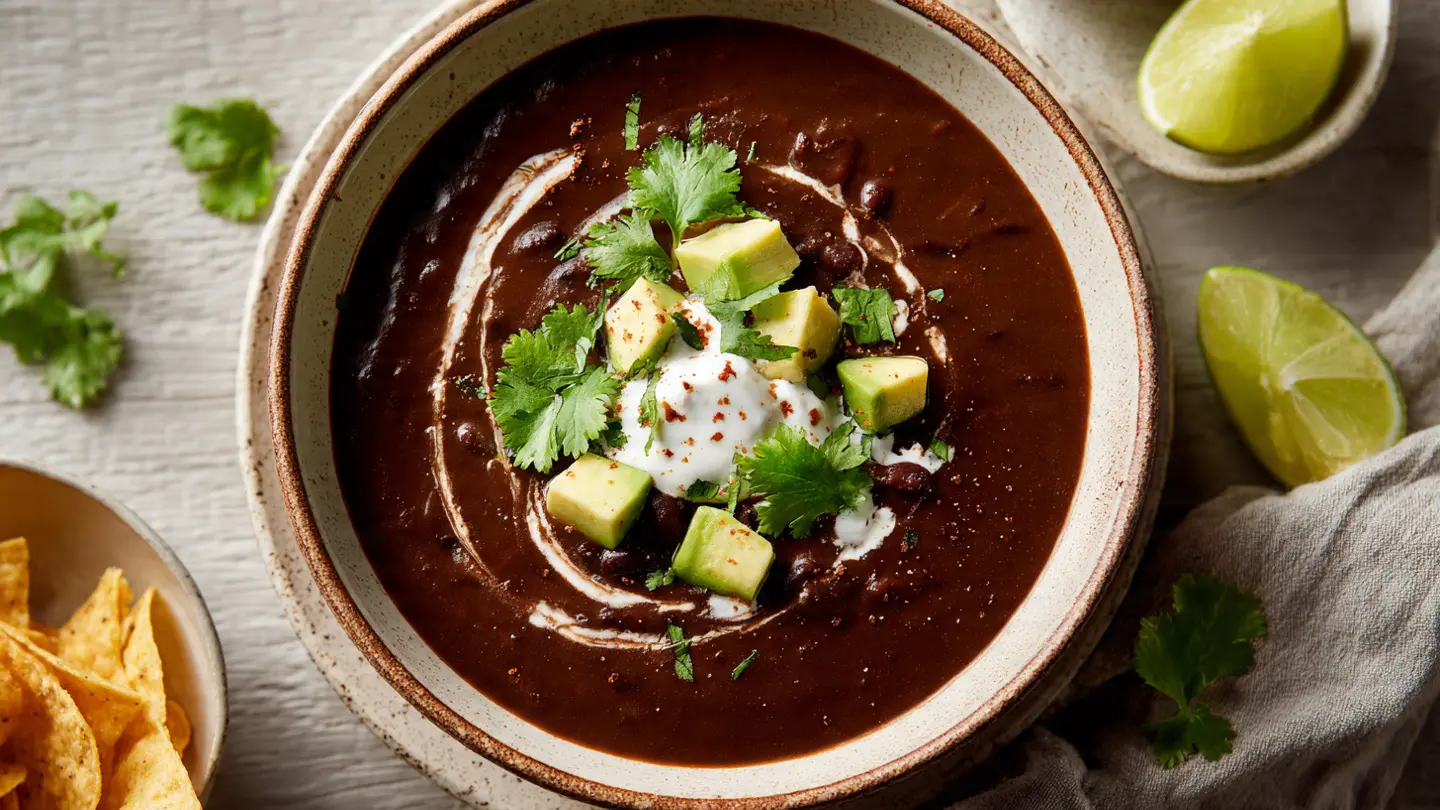
- Ladle the hot soup into bowls and top with your choice of fresh cilantro, diced avocado, a dollop of sour cream, diced red onion, and a handful of tortilla chips for crunch.
- Serve immediately with warm corn or flour tortillas on the side.
This soup pairs wonderfully with a bowl of Easy Guacamole and fresh tortilla chips on the side for a complete, satisfying meal.
Tips for Success
Small adjustments and techniques make a noticeable difference in the final result of this soup.
- Don’t skip the spice-toasting step. Cooking the cumin, oregano, and coriander in the hot oil for a full minute before adding liquid is what creates that deep, restaurant-quality flavor. Spices added directly to broth taste flat and one-dimensional by comparison.
- Rinse your canned beans. The canning liquid is starchy and salty, and rinsing the beans under cold water results in a noticeably cleaner, better-tasting soup.
- Partial blending is the key to perfect texture. Fully blending creates a thick purée that some people find too heavy. Leaving it unblended creates a brothy, inelegant soup. Blending just a portion gives you the best of both worlds.
- Add acid at the end, not the beginning. Lime juice added during cooking loses its brightness. Stirred in just before serving, it lifts the entire dish and makes all the other flavors taste more vibrant.
- Season in layers. Add a pinch of salt when the vegetables go in, and again at the end. This layered approach builds a more complex, well-rounded flavor than seasoning everything at once.
- Let it sit before serving. Like most soups and stews, this black bean soup tastes even better after resting for 10 to 15 minutes off the heat, giving the flavors time to meld and settle.
Another favorite: Slow Cooker Chili
Serving Suggestions
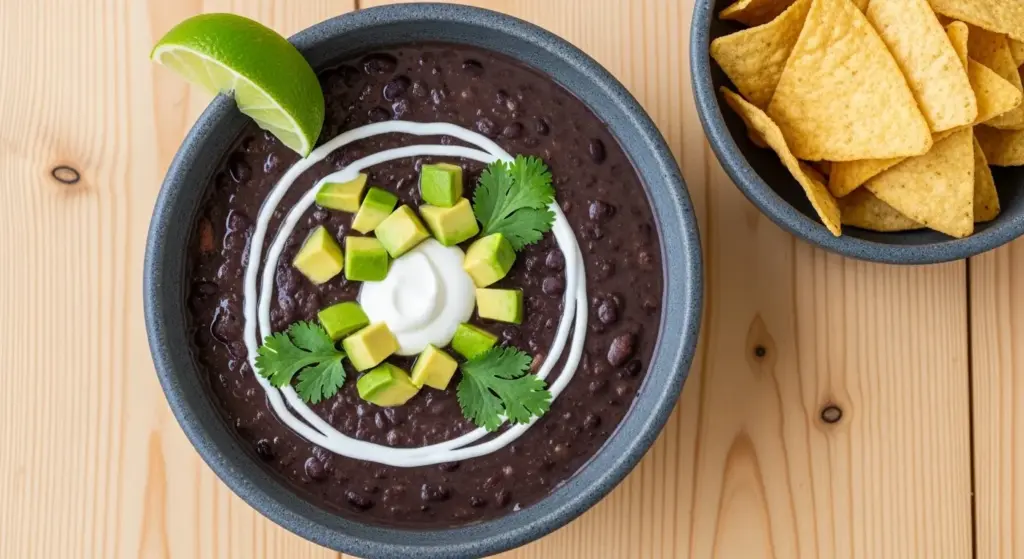
Black bean soup is incredibly versatile, and the right accompaniments take it from a simple meal to a full, satisfying spread.
Ladle the soup over a scoop of white rice for a heartier, more filling bowl that stretches the recipe even further — a classic Latin American serving tradition that works beautifully with the thick, spiced broth.
- Warm Corn Tortillas or crusty bread on the side for dipping
- A topping of Fresh Salsa or Pico de Gallo for brightness and freshness
- Diced avocado or a scoop of guacamole for creaminess
- A drizzle of sour cream or Mexican crema for richness
- Shredded Monterey Jack or cotija cheese
- Crushed tortilla chips or strips for crunch and texture
Read Also: Lentil Soup
Variations to Try
The base recipe is fantastic as written, but it also lends itself beautifully to creative adaptations.
- Smoky version: Add 1 minced chipotle pepper in adobo sauce along with the garlic in Step 3. The smokiness transforms this into something truly special.
- Slow cooker black bean soup: Sauté the aromatics and spices on the stovetop first (Steps 2 and 3), then transfer everything to a slow cooker with the beans and broth. Cook on low for 6 to 8 hours or high for 3 to 4 hours, then blend as directed.
- Loaded with protein: Brown ½ pound (225g) of chorizo or smoked sausage before adding the vegetables. Use the rendered fat to cook the aromatics for an even deeper flavor.
- Tomato-based variation: Add one 14.5-oz (410g) can of fire-roasted diced tomatoes along with the broth for a more robust, tomatoey soup with extra body.
- Creamy black bean soup: Stir in ¼ cup (60 ml) of heavy cream or full-fat coconut milk at the very end for a rich, velvety finish.
- Extra spicy: Double the jalapeño, increase the cayenne to ½ teaspoon (1g), and add a pinch of crushed red pepper flakes for a soup with serious heat.
You might also enjoy: Easy Taco Soup
Storage and Reheating
Black bean soup is an exceptional make-ahead meal that stores and reheats with ease, making it ideal for batch cooking.
- Refrigerator: Allow the soup to cool completely, then transfer to an airtight container. It will keep in the fridge for up to 4 to 5 days and the flavor actually deepens and improves overnight.
- Freezer: Pour cooled soup into freezer-safe containers or zip-top bags, leaving about 1 inch (2.5 cm) of headspace for expansion. The soup freezes well for up to 3 months. Thaw overnight in the refrigerator before reheating.
- Reheating on the stovetop: Transfer the soup to a pot over medium-low heat. Stir occasionally and heat until warmed through. Black bean soup tends to thicken as it sits, so add a splash of broth or water (a few tablespoons at a time) to loosen it to your preferred consistency.
- Reheating in the microwave: Transfer a single portion to a microwave-safe bowl. Heat on high for 90 seconds, stir, then continue in 30-second intervals until hot throughout. Stir in a small splash of water or broth if needed.
- Important note: Add fresh toppings like avocado, sour cream, and cilantro only at serving time, never before storing.
Another favorite: Cabbage Soup
Nutritional Facts
Based on a 1.5-cup (355 ml) serving size, serves 6. Values are approximate.
| Nutrient | Per Serving |
|---|---|
| Calories | ~290 kcal |
| Total Fat | 6g |
| Saturated Fat | 1g |
| Cholesterol | 0mg |
| Sodium | 580mg |
| Total Carbohydrates | 46g |
| Dietary Fiber | 16g |
| Total Sugars | 3g |
| Protein | 14g |
| Iron | 4mg |
| Potassium | 650mg |
| Vitamin C | 8mg |
Note: Nutritional values do not include optional toppings. Adding avocado, sour cream, or tortilla chips will increase calorie and fat counts.
This soup is an outstanding source of dietary fiber and plant-based protein, making it a genuinely nutritious meal that also happens to taste incredible.
Read Also: Split Pea Soup
Health Benefits of Key Ingredients
This recipe isn’t just delicious — every major ingredient brings something meaningful to the table nutritionally.
Black beans are one of the most nutritious legumes available, and they form the backbone of this soup’s impressive health profile.
- Black beans are rich in plant-based protein and dietary fiber, both of which promote satiety and support stable blood sugar levels. They also provide iron, magnesium, folate, and potassium, and their high antioxidant content (primarily from the dark pigment in the skin) has been linked to reduced inflammation.
- Onion, carrot, and celery (mirepoix base) — This classic aromatic trio adds vitamins A and C, folate, and important antioxidant compounds including quercetin (found in onions), which supports immune health.
- Garlic is widely recognized for its antimicrobial and cardiovascular benefits. Allicin, the compound that gives garlic its distinctive aroma, is formed when garlic is crushed or minced and has been studied for its potential to support heart health.
- Cumin is more than just a flavoring agent. It contains active compounds that support digestive health and has a notably high iron content for a spice.
- Olive oil provides heart-healthy monounsaturated fats, including oleic acid, and is rich in anti-inflammatory polyphenols that contribute to long-term cardiovascular health.
- Fresh lime juice provides vitamin C and citric acid, which helps the body absorb the non-heme (plant-based) iron from the black beans more efficiently.
This recipe is naturally vegan, vegetarian, gluten-free, and dairy-free as written, which makes it an inclusive option for dinner tables with varying dietary needs.
Another favorite: Minestrone Soup
Frequently Asked Questions
1. Can I use dried black beans instead of canned?
Yes, you absolutely can. For 3 cans of black beans, you’ll need approximately 1 to 1¼ cups (200 to 250g) of dried black beans. Rinse and sort them, then soak them overnight in a large bowl covered with several inches of cold water. Drain and rinse the next day, then simmer in fresh water for 1 to 1.5 hours until completely tender before using in the soup. The flavor from dried beans is slightly more complex and earthy, which many cooks prefer, but the canned version saves significant time and still produces an excellent result.
2. How do I make this soup thicker?
There are a few reliable methods for thickening black bean soup. The most common is to blend more of the soup — the more you puree, the thicker the final result. You can also simmer the soup uncovered for an additional 5 to 10 minutes after blending, which allows extra moisture to evaporate and concentrates the flavors. Another option is to mash some of the beans against the side of the pot with the back of a spoon before blending, which adds body without requiring a blender at all.
3. Is black bean soup healthy?
This soup is genuinely nutritious by almost any measure. It’s high in dietary fiber (around 16g per serving), a solid source of plant-based protein (roughly 14g per serving), and naturally low in saturated fat. The beans provide complex carbohydrates that digest slowly, supporting sustained energy levels, and the full ingredient list is dominated by whole foods like vegetables, legumes, and spices. It’s also naturally gluten-free and, as written, completely plant-based.
4. Can I make this in a slow cooker or Instant Pot?
Both work well. For the slow cooker, sauté the aromatics and toast the spices on the stovetop first (this step is worth doing even for a slow cooker recipe), then transfer everything to the slow cooker with the beans and broth. Cook on low for 6 to 8 hours or high for 3 to 4 hours, then blend as directed. For the Instant Pot, use the sauté function for Steps 2 and 3, add the beans and broth, seal the lid, and cook on Manual High Pressure for 10 minutes. Allow a natural pressure release for 10 minutes, then quick-release and blend as directed.
5. What can I substitute for vegetable broth?
Chicken broth is the most straightforward substitution and creates a slightly richer, more savory soup (the recipe will no longer be vegan, however). Water with a teaspoon of bouillon paste or powder also works in a pinch. Some recipes add a can of diced tomatoes as part of the liquid base, which changes the flavor profile slightly but adds a pleasant acidity. The broth flavor does make a meaningful impact in this recipe, so a quality low-sodium option is recommended if possible.
Read Also: Vegetable Soup
Final Thoughts
This black bean soup recipe is one of those genuinely reliable, endlessly satisfying dishes that earns a permanent spot in the recipe rotation.
It’s proof that simple ingredients, handled well, can produce something that feels far more special than the ingredient list suggests.
The combination of softened aromatics, bloomed spices, creamy blended beans, and a bright hit of lime juice at the end is a formula that works every single time.
If you give this recipe a try, please leave a comment below and let me know how it turned out — I love hearing about the tweaks and additions that readers make to personalize it.
And if you share it on social media, tag us so we can see your beautiful bowls!
Recommended:
- Chicken Tortilla Soup
- Black Eyed Pea Soup
- Corn Soup
- Pasta Fagioli
- Turkey Chili
- Collard Greens
- White Chicken Chili
- Spinach Soup
- Cheeseburger Soup
- Hamburger Soup