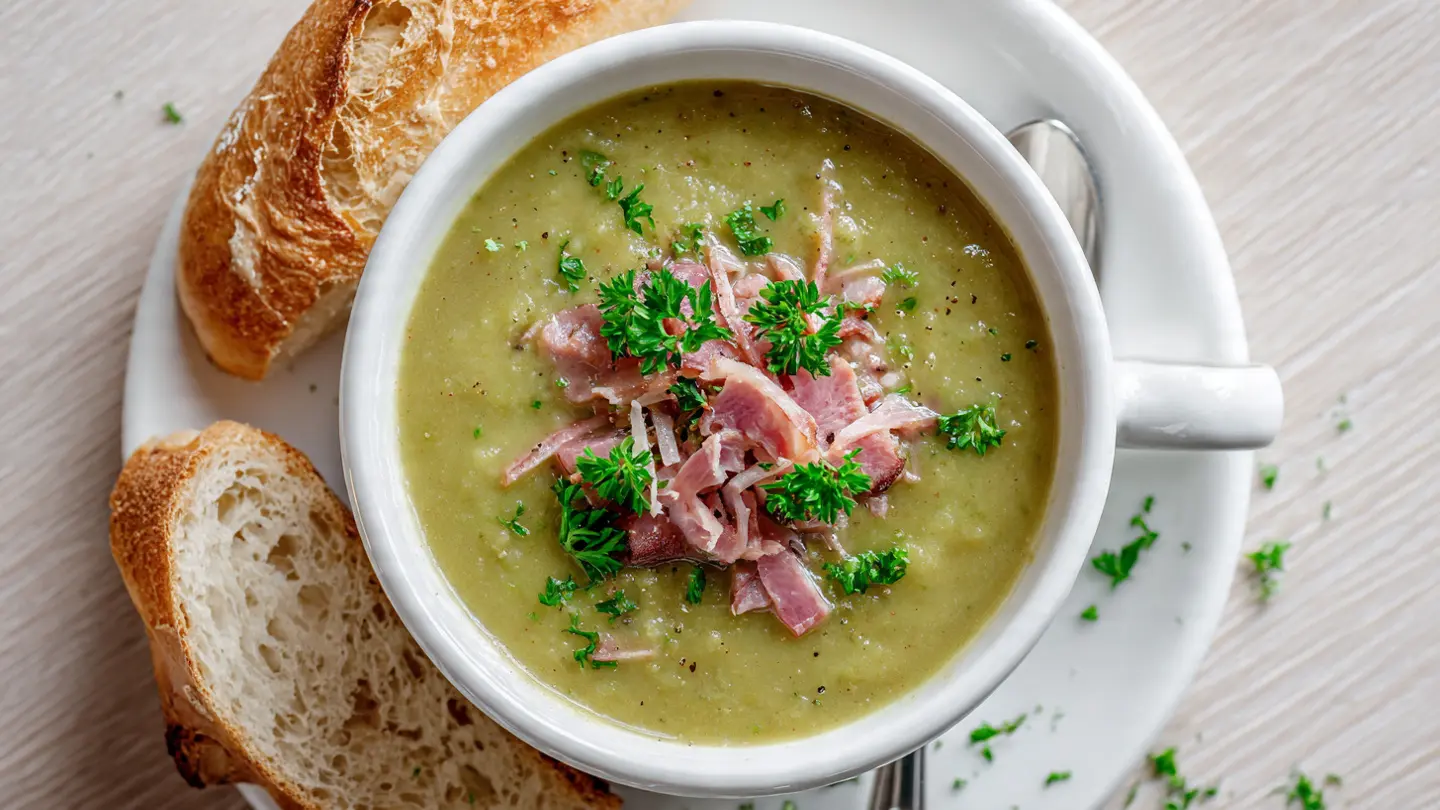
A good split pea soup recipe is the kind of thing you find yourself craving on cold afternoons when all you want is something warm, filling, and completely satisfying.
This is that soup. Made with dried green split peas, a smoky ham bone, and a handful of humble vegetables, it simmers low and slow into a thick, velvety bowl of pure comfort.
The magic here isn’t in fancy ingredients. It’s in patience and the right technique. Split peas break down naturally as they cook, thickening the broth without any added cream or starch.
Using a meaty ham bone is the real key to flavor. As it simmers, the bone releases rich, smoky depth that you simply can’t replicate with bouillon cubes or packaged broth alone.
This recipe walks you through every step so you get a deeply flavorful, perfectly textured pot of soup on your first try. And if you love cozy, warming soups, you might also want to bookmark this Ham and Bean Soup for another day.
Why You’ll Love This Split Pea Soup Recipe
This soup checks every box when it comes to easy, affordable, and genuinely delicious home cooking.
Split peas are incredibly inexpensive and shelf-stable, making this one of the most budget-friendly meals you can prepare for a family.
The texture is naturally creamy and thick without any cream, cornstarch, or blending required. The peas simply melt into the broth as they cook.
Using a leftover ham bone means nothing goes to waste. That post-holiday ham bone delivers more flavor than almost any other single ingredient.
This recipe requires very little hands-on time. After the initial prep and sauteing, the soup largely takes care of itself on the stovetop.
It freezes beautifully, making it an ideal meal-prep recipe. Make a big batch and enjoy it over the next few months.
- Budget-friendly with simple pantry-friendly ingredients
- Naturally thick and creamy with no cream or blending required
- Deeply smoky and savory thanks to the ham bone
- Mostly hands-off cooking after the initial prep
- Stores and freezes exceptionally well
Ingredients
Split peas do not need to be soaked overnight before cooking, which saves a step. Just rinse them well and pick out any debris before adding them to the pot.
- 1 lb (450g) dried green split peas, rinsed and picked over
- 1 meaty ham bone (or 2 smoked ham hocks)
- 1 tablespoon olive oil
- 1 tablespoon unsalted butter
- 1 large yellow onion, diced (about 1.5 cups / 210g)
- 3 medium carrots, peeled and sliced into ¼-inch rounds (about 1.5 cups / 180g)
- 3 stalks celery, diced (about 1 cup / 120g)
- 4 cloves garlic, minced
- 6 cups (1.4L) low-sodium chicken broth
- 3 cups (720ml) water
- 1 teaspoon dried thyme
- 2 bay leaves
- ½ teaspoon black pepper
- Salt to taste
- Fresh parsley, chopped (for garnish, optional)
For a more complete meal, you can also add 1–2 medium Yukon Gold potatoes, diced, during the last 40 minutes of cooking.
Read Also: Vegetarian Split Pea Soup Recipe
Kitchen Equipment Needed
A heavy-bottomed pot is ideal for this soup because it distributes heat evenly and prevents the thick soup from scorching on the bottom as it simmers down.
- Large Dutch oven or heavy-bottomed soup pot (at least 6-quart capacity)
- Wooden spoon or heat-safe spatula for stirring
- Sharp chef’s knife and cutting board
- Vegetable peeler (for the carrots)
- Colander or fine mesh strainer (for rinsing the peas)
- Ladle for serving
- Measuring cups and spoons
Recommended Products for This Recipe
These are products I genuinely recommend based on quality and how much they improve the cooking experience for this recipe.
1. Le Creuset Enameled Cast Iron Dutch Oven
A Le Creuset Enameled Cast Iron Dutch Oven is perfect for split pea soup because it holds heat evenly and allows the soup to simmer at a consistent, low temperature without any scorching on the bottom. The wide base gives you room to properly saute the aromatics before adding the broth. It is an investment piece that will last for decades.
2. Smoked Ham Hock (Pre-Packaged)
If you do not have a leftover ham bone, a smoked ham hock is the next best option for achieving that signature smoky depth in the broth. Look for a well-smoked hock with good meat coverage. It delivers tremendous flavor and makes the soup taste like it has been simmering all day.
3. Dried Green Split Peas (Bulk Bag)
Using a quality bag of dried green split peas makes a real difference in the final texture of the soup. Fresher, higher-quality split peas break down more evenly and give you that naturally thick, creamy consistency. Older peas can remain grainy and take much longer to soften.
4. Immersion Blender
If you prefer a smooth, fully blended soup rather than a chunky one, an immersion blender lets you blend directly in the pot without the mess of transferring hot soup to a countertop blender. It is also useful for partially blending the soup to create that perfect half-chunky, half-creamy texture that many people love.
You might also enjoy this comforting Loaded Potato Soup the next time you want a hearty, warming bowl.
Step-by-Step Instructions
1. Rinse and Prep the Split Peas
- Pour the dried split peas into a colander and spread them out with your fingers.
- Pick through the peas carefully, removing any shriveled or discolored peas, and discard any small pebbles or debris you find.
- Rinse the peas thoroughly under cold running water for about 30 seconds, turning them over with your hands to make sure all surfaces are rinsed.
- Set the colander aside and allow the peas to drain while you prep the vegetables.
2. Dice and Prep the Vegetables
- Peel and dice the yellow onion into roughly ½-inch pieces.
- Peel the carrots using a vegetable peeler, then slice them into rounds about ¼ inch thick. Try to keep them uniform so they cook evenly.
- Rinse the celery stalks and dice them into roughly ½-inch pieces, discarding the leafy tops or reserving them for garnish.
- Peel and mince the garlic cloves. Press them flat with the side of your knife first, then chop finely.
3. Saute the Aromatics
- Place your large Dutch oven or soup pot over medium heat. Add the olive oil and butter together and let the butter melt completely.
- Add the diced onion, sliced carrots, and diced celery to the pot all at once.
- Cook, stirring occasionally, for about 7 to 8 minutes until the onion is translucent and the vegetables are beginning to soften. You want them fragrant and lightly golden at the edges, not deeply browned.
- Add the minced garlic and cook for another 1 to 2 minutes, stirring constantly, until fragrant. Be careful not to let the garlic burn, as this will make the soup bitter.
4. Add the Split Peas and Seasonings
- Add the rinsed split peas to the pot with the sauteed vegetables and stir everything together well.
- Sprinkle in the dried thyme and the black pepper. Stir to distribute the seasonings throughout the vegetable and pea mixture.
- Nestle the ham bone or ham hocks into the pot. Make sure to push it down so it sits in the liquid once you add it.
- Add the bay leaves, resting them on top of the mixture.
5. Pour in the Broth and Bring to a Boil
- Pour in the 6 cups of chicken broth, followed by the 3 cups of water.
- Stir everything together gently to combine.
- Increase the heat to medium-high and bring the soup to a full boil. You will see the liquid bubbling actively across the entire surface.
- Skim off any foam or gray residue that rises to the surface during the initial boil. This comes from the ham bone and removing it keeps the broth clear and clean-tasting.
6. Reduce Heat and Simmer Low and Slow
- Once the soup reaches a boil, reduce the heat to low. You want a gentle, steady simmer where small bubbles break the surface every few seconds.
- Place the lid on the pot slightly ajar, leaving a small gap to allow some steam to escape. This helps the soup thicken gradually without building up too much pressure.
- Simmer the soup for 1 hour and 30 minutes to 2 hours, stirring every 20 to 25 minutes to prevent the split peas from sticking to the bottom of the pot.
- As the peas cook, they will begin to break apart and dissolve into the broth, naturally thickening the soup. The longer it simmers, the thicker and creamier it will become.
7. Remove the Ham Bone and Shred the Meat
- After the soup has simmered and the peas are completely tender, use tongs to carefully lift the ham bone (or ham hocks) out of the pot and transfer it to a cutting board.
- Let it rest for 5 minutes until cool enough to handle safely.
- Use two forks or your fingers to pull the meat from the bone. Discard the bone, any cartilage, and the skin.
- Chop or shred the ham into bite-sized pieces and set aside.
- Remove and discard the bay leaves from the soup at this point as well.
8. Return the Ham and Season to Taste
- Return the shredded ham pieces to the pot and stir them into the soup.
- Taste the soup and adjust the seasoning now. Add salt carefully, a pinch at a time, since the ham bone already contributes significant saltiness. Add more black pepper if desired.
- If the soup has thickened too much for your liking, stir in a splash of water or extra chicken broth, a little at a time, until you reach your preferred consistency.
- If you prefer a slightly thinner but still creamy soup, use an immersion blender to partially blend it. Blend just one or two pulses to break up some of the peas without fully pureeing the soup.
9. Garnish and Serve
- Ladle the hot soup into bowls.
- Garnish with a sprinkle of freshly chopped parsley if desired. A drizzle of good olive oil also adds a nice finishing touch.
- Serve immediately while piping hot.
Read Also: Ham and Potato Soup
Tips for Success
These practical tips will help you get the best results every single time you make this split pea soup.
- Use the meatiest ham bone you can find. The more meat left on the bone, the more flavor the broth will develop, and the more ham you’ll have to stir back in at the end. If your bone is very bare, supplement with a diced ham steak added at the beginning of cooking.
- Do not skip sauteing the vegetables. Taking those extra 8 minutes to soften the onions, carrots, and celery in butter and oil before adding the liquid builds a foundational layer of flavor that you cannot achieve by simply throwing everything in the pot raw.
- Stir the soup regularly. Split peas are starchy and they will settle and stick to the bottom of the pot if you leave the soup unattended for too long. Stir every 20 minutes or so, scraping the bottom of the pot each time.
- Go light on salt initially. Ham bones vary enormously in how salty they are depending on the curing process. Always taste and adjust salt at the very end of cooking, after the ham has simmered in the broth.
- Do not rush the simmer. The long, slow simmer is what breaks the peas down and develops that deep, layered flavor. Turning up the heat to speed things up will make the soup watery and flat-tasting.
This technique of building flavors layer by layer also works beautifully in a warming Chicken Tortilla Soup.
Serving Suggestions
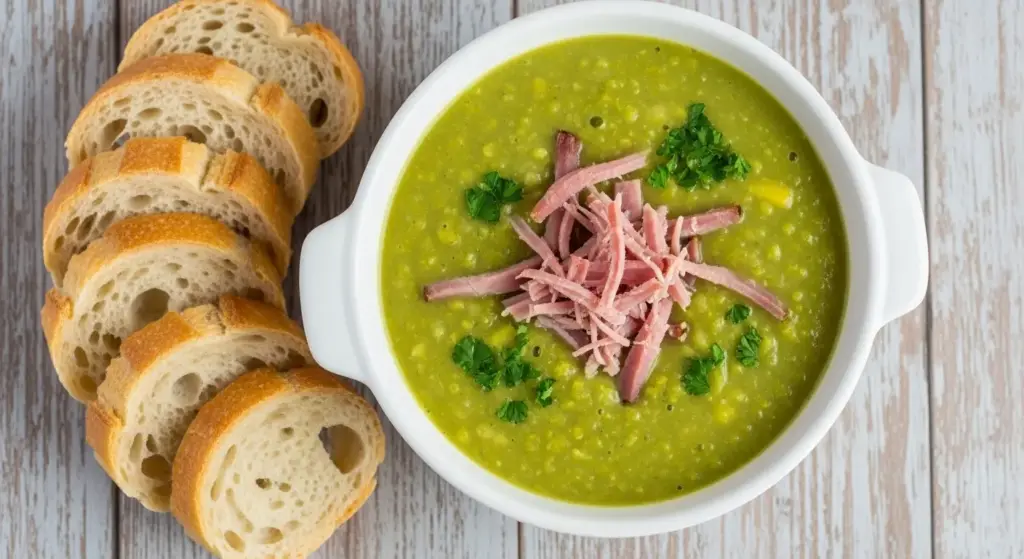
Split pea soup is a hearty, complete meal on its own, but the right accompaniments make it even more satisfying.
Thick slices of crusty bread or warm Homemade Biscuits are an ideal companion for dunking into the rich, thick broth. The bread soaks up all that smoky, savory goodness.
- Crusty sourdough or French bread slices
- Buttered dinner rolls for dipping
- A simple green salad for a lighter balance alongside the hearty soup
- Cornbread with honey butter for a cozy, Southern-inspired pairing
- Grilled cheese sandwiches cut into strips for dipping
- A drizzle of sour cream or plain Greek yogurt over the bowl for a tangy contrast
- Crispy bacon crumbles or crackling sprinkled on top for added texture
Variations to Try
This classic base recipe is endlessly adaptable. Here are some popular and delicious ways to change it up.
- Yellow Split Pea Version: Swap the green split peas for yellow split peas. Yellow peas have a slightly milder, more earthy flavor and produce a golden-colored soup that is equally creamy and delicious.
- Smoky Sausage Variation: Add 8 oz of sliced smoked kielbasa or andouille sausage to the soup during the last 30 minutes of cooking for a heartier, more robust version.
- Vegetarian Split Pea Soup: Omit the ham bone entirely. Use all vegetable broth instead of chicken broth, and add 1 teaspoon of smoked paprika to replicate some of that smoky depth. Stir in cooked white beans at the end for extra protein.
- Potato Addition: Add 2 medium Yukon Gold potatoes, diced into ½-inch cubes, about 40 minutes before the soup is done. They add creaminess and make the soup even more filling.
- Slow Cooker Method: Place all the ingredients in a 6-quart slow cooker. Cook on low for 8 hours or on high for 5 to 6 hours. Remove the ham bone, shred the meat, return it to the soup, and season to taste before serving.
- Instant Pot / Pressure Cooker Method: Saute the aromatics using the saute function. Add remaining ingredients. Cook on manual high pressure for 15 minutes, then allow natural pressure release for 15 minutes before quick-releasing any remaining pressure.
Read Also: Lentil Soup Recipe
Storage and Reheating
Split pea soup stores extremely well and actually tastes better the next day as the flavors continue to develop overnight.
- Refrigerator: Allow the soup to cool completely before transferring it to airtight containers. Store in the refrigerator for up to 5 days.
- Freezer: Ladle the cooled soup into freezer-safe containers or zip-top bags, leaving about 1 inch of space at the top for expansion. Freeze for up to 3 months.
- To Reheat from Refrigerator: Transfer the soup to a saucepan over medium-low heat. Stir frequently and add water or broth, a splash at a time, to thin it back to your preferred consistency since it will thicken significantly in the refrigerator.
- To Reheat from Frozen: Thaw overnight in the refrigerator, then reheat on the stovetop as directed above.
- Microwave Reheating: Place a single portion in a microwave-safe bowl, cover loosely, and microwave in 90-second intervals, stirring between each, until heated through. Add a splash of water if needed.
Another great soup to stock your freezer with is this cozy Chicken Vegetable Soup.
Nutritional Facts
The following nutrition information is approximate and based on one serving, assuming the recipe yields 6 servings. Actual values may vary depending on the size and meatiness of the ham bone and specific ingredient brands used.
| Nutrient | Per Serving (approx.) |
|---|---|
| Calories | 390 kcal |
| Protein | 29g |
| Carbohydrates | 52g |
| Dietary Fiber | 20g |
| Fat | 8g |
| Saturated Fat | 2.5g |
| Sodium | 720mg |
| Potassium | 1,050mg |
| Iron | 4mg |
| Vitamin A | 5,000 IU |
This nutritional information is provided as an estimate only. Split pea soup is high in protein and dietary fiber, making it one of the most nutritionally dense and satisfying soups you can make.
Another soup that delivers fantastic nutrition alongside incredible flavor is this Moroccan Lentil Soup.
Health Benefits of Key Ingredients
This soup is not just comforting and delicious. Every major ingredient in it contributes real, meaningful nutrition to your diet.
Split peas are one of the most nutrient-dense legumes available. They are exceptionally high in plant-based protein and dietary fiber, both of which support healthy digestion, steady blood sugar levels, and long-lasting fullness after eating.
- Split Peas: An outstanding source of plant-based protein, dietary fiber, folate, iron, potassium, and B vitamins. Their high fiber content supports gut health and helps regulate cholesterol levels.
- Carrots: Rich in beta-carotene, which the body converts to vitamin A. Vitamin A supports healthy vision, skin health, and immune function.
- Celery: Low in calories but rich in vitamin K and folate. Celery also contains antioxidants and anti-inflammatory compounds that support cardiovascular health.
- Garlic: Contains allicin, a compound with well-documented antimicrobial and immune-boosting properties. Regular consumption is associated with lower blood pressure and cholesterol.
- Onion: A good source of quercetin, a flavonoid antioxidant linked to reduced inflammation and improved heart health.
- Ham Bone Broth: The long simmering process leaches collagen, gelatin, and minerals from the bone into the broth, supporting joint health and providing additional protein.
Read Also: Black Bean Soup
Frequently Asked Questions
1. Do I need to soak the split peas before making this soup?
No, soaking split peas is not required for this recipe. Unlike whole dried beans, split peas have already been hulled and split in half, which means they soften during cooking without any pre-soaking. Simply rinse them thoroughly under cold water to remove any dust or debris before adding them to the pot.
2. My soup is too thick. How do I fix it?
This is very easy to fix. Split pea soup naturally thickens as it cooks, and it continues to thicken as it sits and cools. Simply stir in additional water or low-sodium chicken broth, a quarter cup at a time, until the soup reaches your preferred consistency. Heat it back through gently on the stovetop before serving.
3. Can I make this split pea soup without a ham bone?
Absolutely. If you do not have a ham bone available, the best alternatives are smoked ham hocks, which are widely available at most grocery stores, or diced ham steak added at the beginning of cooking. A smoked ham hock will give you the most similar depth of flavor. If you want to go completely pork-free, use all vegetable broth and add 1 teaspoon of smoked paprika for a smoky note.
4. Why are my split peas still hard after an hour of cooking?
There are a couple of reasons this can happen. First, if your split peas are old and have been sitting in the pantry for over a year, they may not soften properly even after extended cooking time. Always check the best-by date on your peas. Second, if you cook at high altitude, water boils at a lower temperature, which significantly extends cooking time. At high altitude, you may need to cook the soup for 4 to 5 hours on the stovetop, or use a pressure cooker for reliable results.
5. Can I make this split pea soup recipe in a slow cooker?
Yes, this recipe adapts very well to the slow cooker. Place the rinsed split peas, sauteed or raw vegetables, ham bone, garlic, thyme, bay leaves, broth, and water into a 6-quart slow cooker. Cook on the low setting for 7 to 8 hours, or on high for 5 to 6 hours. Remove the ham bone, shred the meat, return it to the soup, discard the bay leaves, and season with salt and pepper before serving. Sauteing the aromatics before adding them yields a more layered flavor, but you can skip this step and add everything raw if you prefer.
For another deeply flavorful slow-cooked soup option, try this Hamburger Soup.
Final Thoughts
This split pea soup recipe is the definition of honest, nourishing home cooking. It takes simple, affordable ingredients and turns them into something that genuinely warms you from the inside out.
The combination of creamy, tender split peas and smoky, savory ham is as timeless as comfort food gets. It is the kind of soup that gets better every time you make it.
If you have never tried making split pea soup from scratch, this recipe is a wonderful place to start. The steps are straightforward, the ingredients are easy to find, and the results are deeply rewarding.
Give this recipe a try this week and let me know how it turns out in the comments below. I would love to hear your thoughts, and feel free to share your own variations or tips with the community!
Recommended:
- Vegetarian Split Pea Soup
- Potato Leek Soup
- Pumpkin Soup
- Minestrone Soup
- Sauerkraut Soup
- Italian Wedding Soup
- Beer Cheese Soup
- Black Eyed Pea Soup
- Spinach Soup
- Cabbage Soup