

If you’ve never made a sauerkraut soup recipe from scratch, you’re in for a serious treat. This Eastern European classic is the kind of bowl that wraps you up like a warm blanket on a cold day — deeply savory, slightly tangy, and packed with smoky sausage and tender vegetables.
It’s one of those recipes that sounds humble on paper but absolutely delivers on flavor.
The base is simple: fermented cabbage (sauerkraut), kielbasa, potatoes, carrots, onion, and a rich chicken broth. Together, they create a broth that’s complex and satisfying without requiring hours at the stove.
Known as “Kapusniak” in Polish tradition and “Sauerkrautsuppe” in German kitchens, this soup has been a cold-weather staple across Central and Eastern Europe for generations. And once you try it, you’ll completely understand why.
This version focuses on the most popular preparation: sautéed aromatics, sliced kielbasa, diced potatoes, and a generous amount of well-drained sauerkraut simmered together in savory broth. It comes together in about 45 minutes and feeds a crowd beautifully.
Why You’ll Love This Sauerkraut Soup Recipe
This is one of those no-fuss soups that rewards you with incredible depth of flavor.
The sauerkraut brings a bright, tangy punch that cuts through the richness of the sausage and broth — it’s a balance that just works. Unlike a lot of soups that taste flat without a long simmer, this one develops flavor fast.
The ingredients are budget-friendly and widely available, so there’s no hunting down specialty items. Kielbasa, canned or jarred sauerkraut, potatoes, and pantry staples are really all you need.
It stores beautifully, which means leftovers taste even better the next day. In fact, many home cooks will tell you that sauerkraut soup is one of those dishes that improves overnight as the flavors meld together.
Here’s a quick summary of what makes this recipe a keeper:
- Big flavor, minimal effort: Sautéing the aromatics and sausage first builds a rich foundation without any complicated techniques.
- One pot, easy cleanup: Everything cooks in a single Dutch oven or large soup pot.
- Tangy and savory balance: The sauerkraut brings brightness that keeps the broth from feeling heavy.
- Meal prep friendly: This soup reheats perfectly and makes excellent leftovers for busy weeknights.
- Customizable: Works well with different sausages, added beans, or a swirl of sour cream at the end.
You might also enjoy this comforting Hamburger Soup as another easy one-pot weeknight winner.
Ingredients
Getting the ingredient balance right is what makes this sauerkraut soup sing. A few things worth knowing: don’t over-rinse the sauerkraut if you want real tang in the broth, and waxy potatoes (like Yukon Gold) hold up better in soups than starchy ones that tend to fall apart.
- 1 tablespoon (15 ml) olive oil or butter
- 1 lb (450g) kielbasa (smoked Polish sausage), sliced into ½-inch rounds
- 1 medium yellow onion, diced
- 3 garlic cloves, minced
- 3 medium carrots, peeled and sliced into rounds (about 1½ cups / 180g)
- 3 medium Yukon Gold potatoes, peeled and diced into ½-inch cubes (about 3 cups / 450g)
- 2 stalks celery, sliced
- 2 cups (480g) sauerkraut, drained (rinsed if you prefer milder flavor)
- 6 cups (1.4 liters) chicken broth
- 2 tablespoons (32g) tomato paste
- 1 teaspoon caraway seeds
- 1 teaspoon smoked paprika
- 1 bay leaf
- Salt and black pepper, to taste
- Sour cream, for serving (optional but highly recommended)
- Fresh dill or chopped parsley, for garnish
Read Also: Ham and Bean Soup
Kitchen Equipment Needed
You don’t need any special gear for this recipe — just a few reliable basics. A heavy-bottomed pot is the one thing worth investing in here, as it distributes heat evenly and prevents the sautéed ingredients from scorching.
- Dutch oven or large heavy-bottomed soup pot (6-quart capacity recommended)
- Chef’s knife and cutting board
- Vegetable peeler
- Wooden spoon or silicone spatula for stirring
- Ladle for serving
- Measuring cups and spoons
- Small bowl for sauerkraut draining
Another great recipe to try in your Dutch oven: Chicken Tortilla Soup.
Recommended Products for This Recipe
These are hand-picked products based on quality and how much they can elevate the final result — whether that’s a richer broth, better sauerkraut flavor, or a pot that ensures even cooking.
1. Le Creuset Enameled Cast Iron Dutch Oven
A quality Dutch oven makes a noticeable difference when it comes to sautéing the sausage and simmering the soup. The even heat distribution means you get a proper sear on the kielbasa and no hot spots that cause burning. It’s a lifetime investment that will serve you in hundreds of future soups and braises.
2. Naturally Fermented Sauerkraut (Refrigerated)
Refrigerated, naturally fermented sauerkraut tastes noticeably better than shelf-stable canned versions — it has a livelier tang and retains its probiotic benefits. Brands like Bubbies or Cleveland Kitchen are widely recommended for use in recipes like this one. The more vibrant the sauerkraut, the more flavor your broth will have.
3. Polska Kielbasa (Smoked Polish Sausage)
The sausage you choose matters enormously in this soup. A good quality Polish kielbasa will have a deeper smoky flavor that infuses into the broth as it simmers. Look for kielbasa with visible fat marbling — it renders into the broth and adds richness you can’t fake.
4. Smoked Paprika (Imported Spanish or Hungarian)
Smoked paprika does double duty in this recipe: it adds a layer of smokiness and a beautiful reddish hue to the broth. A good-quality smoked paprika (ideally from Spain or Hungary) is far more aromatic and complex than generic supermarket versions.
For another cozy soup night, check out this Borscht Recipe — a classic Eastern European staple that pairs beautifully with crusty bread.
Step-by-Step Instructions
1. Prep Your Vegetables and Sausage
- Peel and dice the Yukon Gold potatoes into ½-inch (1.25 cm) cubes. Keep them in a bowl of cold water as you prep to prevent browning.
- Peel the carrots and slice them into rounds, about ¼-inch (6mm) thick. You want pieces that will be tender but still have a bit of bite after 25 minutes of simmering.
- Dice the onion into small pieces (roughly ¼-inch). A fine dice helps it melt into the broth and build the flavor base evenly.
- Slice the celery into similarly sized pieces.
- Mince the garlic cloves finely — or use a garlic press if you prefer.
- Slice the kielbasa into rounds about ½-inch (1.25 cm) thick. Thicker slices hold up better during simmering and give you a satisfying bite.
- Drain the sauerkraut in a colander and press it gently with the back of a spoon to remove excess liquid. If your sauerkraut is especially pungent or salty, give it a quick rinse under cold water, then drain again. Set it aside.
2. Brown the Kielbasa
- Heat 1 tablespoon of olive oil (or butter) in your Dutch oven over medium-high heat.
- Once the oil shimmers and is hot, add the sliced kielbasa in a single layer.
- Cook for about 2–3 minutes per side, until the rounds are nicely browned and slightly caramelized. This step is worth it — the brown crust on the sausage adds a ton of flavor to the final soup.
- Once browned, use a slotted spoon to transfer the kielbasa to a plate and set aside. Leave the rendered fat in the pot — it’s your flavor base.
3. Sauté the Aromatics
- Reduce the heat to medium. Add the diced onion and celery to the same pot with the remaining sausage fat.
- Cook for about 5 minutes, stirring occasionally, until the onion becomes soft and translucent. You’re not looking for caramelization here — just softening.
- Add the minced garlic, caraway seeds, and smoked paprika. Stir everything together and cook for 1–2 more minutes, until the garlic is fragrant and the spices are toasted into the fat. This quick toasting step makes both the caraway and paprika bloom with flavor.
- Stir in the tomato paste and cook for another 1–2 minutes, stirring frequently. Cooking the tomato paste briefly in the fat removes any raw, sharp edge from it and gives the broth a rounder, more complex base.
4. Add Vegetables and Broth
- Drain the bowl of potatoes and add them to the pot along with the sliced carrots.
- Stir everything together to coat the vegetables in the aromatic base.
- Pour in the 6 cups (1.4 liters) of chicken broth. Stir to loosen any browned bits from the bottom of the pot — those bits are pure flavor.
- Add the bay leaf. Give the pot a good stir.
- Increase the heat to high and bring the soup to a boil. This should take about 5–7 minutes.
5. Simmer Until Potatoes Are Tender
- Once the soup reaches a boil, reduce the heat to medium-low to maintain a gentle simmer.
- Cover the pot with a lid (slightly ajar to allow some steam to escape) and cook for 15 minutes.
- After 15 minutes, test a potato cube with a fork. If it’s still firm in the center, continue simmering for another 5 minutes. You want the potatoes to be almost fork-tender before you add the sauerkraut.
6. Add the Sauerkraut and Kielbasa
- Add the drained sauerkraut to the pot, stirring it in gently to distribute it throughout the broth.
- Return the browned kielbasa slices to the pot.
- Stir and continue simmering uncovered for another 10 minutes. This final stage melds all the flavors together without overcooking the sauerkraut — you want it to still have some texture, not turn mushy.
- Remove and discard the bay leaf.
7. Season and Serve
- Taste the soup and season with salt and black pepper as needed. Keep in mind that sauerkraut and kielbasa both bring salt to the party, so always taste before adding salt.
- Ladle the soup into bowls while it’s piping hot.
- Add a dollop of sour cream on top of each bowl — it melts into the broth and creates a lovely creamy swirl.
- Garnish with fresh dill or chopped parsley for color and freshness.
- Serve immediately with crusty rye bread or sourdough on the side for dipping.
This hearty soup pairs wonderfully alongside this easy Zuppa Toscana on your next soup night rotation.
Tips for Success
A few small adjustments make a big difference between a good sauerkraut soup and a truly great one. These are the things experienced home cooks know from trial and error that don’t always make it into the main recipe.
- Brown the kielbasa properly: Don’t skip the browning step. It’s tempting to just toss everything in at once, but those caramelized edges on the sausage release rich, meaty flavor into the broth that you simply can’t get by simmering raw sausage.
- Taste before salting: Both sauerkraut and kielbasa contain significant sodium. Always taste the finished soup before adding any salt — you may need less than you think, or none at all.
- Control your sauerkraut tang: For a bolder, more sour soup, use the sauerkraut straight from the jar without rinsing. For a milder, more balanced flavor, give it a quick rinse and drain well. Both are legitimate choices — it’s purely personal preference.
- Use waxy potatoes: Yukon Golds or red potatoes hold their shape during long simmering. Russets tend to break down and turn the broth starchy, which changes the texture considerably.
- Let the spices toast: Cooking the smoked paprika and caraway seeds briefly in the fat before adding liquid makes a noticeable difference in flavor depth. Don’t rush this step.
- Add sour cream at serving, not in the pot: Sour cream can curdle if added to a boiling pot. Keep it as a garnish so each person can add their preferred amount.
Read Also: Loaded Potato Soup
Serving Suggestions
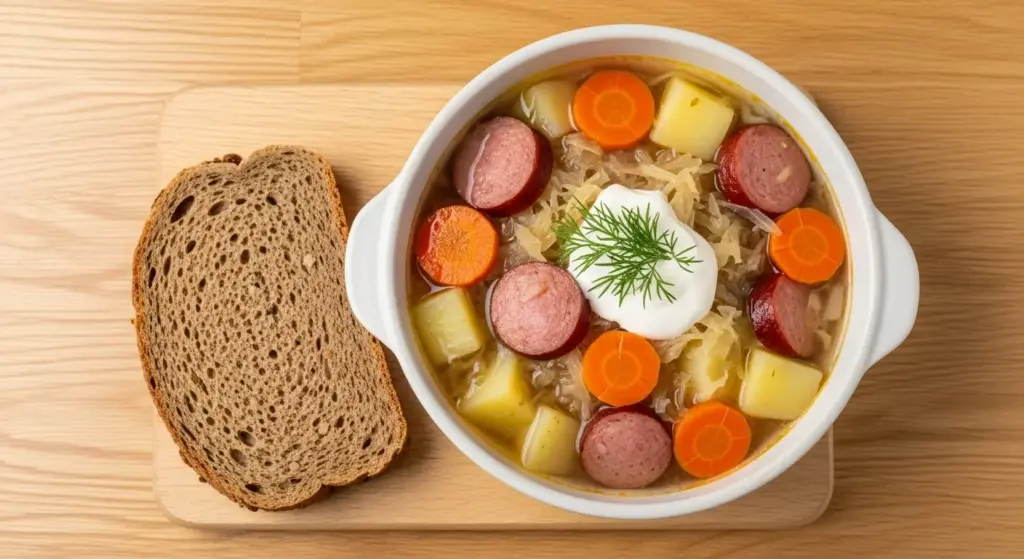
This sauerkraut soup is hearty enough to stand on its own as a complete meal, but a few well-chosen accompaniments can round it out beautifully.
Crusty bread is the traditional accompaniment — something with a firm crumb that can stand up to dunking in the tangy broth without disintegrating immediately. Rye bread is the most traditional pairing, but sourdough works just as well.
Here are some serving ideas to consider:
- Rye bread or sourdough: A thick slice alongside the bowl is all you really need for a satisfying meal.
- Sour cream garnish: A generous dollop on top is traditional and adds a lovely creaminess that balances the tang.
- Fresh dill: Scattered on top, it adds brightness and a classic Eastern European flavor note.
- Fried Cabbage: A simple side of pan-fried cabbage doubles down on the cabbage theme and makes a hearty, budget-friendly meal.
- Broccoli Salad: A crunchy, fresh salad provides textural contrast to the warming soup.
- Dinner rolls: Soft rolls are perfect for mopping up every last drop of that tangy broth.
- A simple cucumber salad: The cool, fresh crunch is a great counterpoint to the warm, savory bowl.
Variations to Try
This soup is highly adaptable, and cooks across Eastern Europe have been riffing on it for generations. These variations keep the spirit of the dish intact while giving you room to experiment with what you have or what you prefer.
Here are some popular ways to put your own spin on sauerkraut soup:
- German-style (Sauerkrautsuppe): Swap the kielbasa for smoked bacon and stir in a few tablespoons of crème fraîche or sour cream directly into the broth at the end of cooking for a richer, creamier version.
- Polish-style with pork (Kapusniak): Use smoked ham hocks or pork ribs instead of kielbasa. The pork simmers in the broth and falls apart into tender shreds, giving the soup a more rustic character.
- White bean addition: Drain and rinse a can of white beans and stir them in along with the sauerkraut. They add protein, bulk, and a creamy texture that pairs beautifully with the tangy broth.
- Vegetarian version: Omit the sausage and use vegetable broth. Increase the smoked paprika for smokiness, and add a can of chickpeas or white beans for body and protein.
- Barley version: Add ¼ cup (50g) of pearl barley along with the broth. It thickens the soup slightly and adds a lovely chewy texture. Increase the simmering time by about 10 minutes.
- Spicy kick: Add a pinch of red pepper flakes or a teaspoon of hot paprika along with the smoked paprika for a subtle heat that builds with each spoonful.
Another Eastern European-inspired recipe worth bookmarking: Hungarian Mushroom Soup.
Storage and Reheating
One of the best things about sauerkraut soup is how well it keeps — and how much better it tastes the next day. The flavors deepen significantly overnight as the sauerkraut, sausage, and broth continue to meld together.
Here’s everything you need to know about storing and reheating this soup properly:
- Refrigerator: Allow the soup to cool completely at room temperature (no more than 2 hours) before transferring it to an airtight container. It will keep in the refrigerator for up to 4 days.
- Freezer: This soup freezes beautifully. Pour cooled soup into freezer-safe containers or resealable bags, leaving about 1 inch (2.5 cm) of space at the top for expansion. It will keep for up to 3 months.
- Thawing: Transfer frozen soup to the refrigerator the night before you plan to serve it. Let it thaw overnight.
- Stovetop reheating: Reheat over medium heat in a saucepan, stirring occasionally, until piping hot throughout. This is the preferred method as it heats evenly.
- Microwave reheating: Transfer individual portions to a microwave-safe bowl. Cover loosely and heat in 90-second intervals, stirring between each, until heated through.
- Note on sour cream: If you’ve already stirred sour cream into the soup before storing, it may separate during reheating. This doesn’t affect the taste, but stir vigorously to recombine. Alternatively, keep sour cream on the side and add it fresh to each reheated bowl.
For another soup that stores and reheats brilliantly, try this Minestrone Soup.
Nutritional Facts
Per serving (based on 6 servings; does not include sour cream garnish)
| Nutrient | Amount |
|---|---|
| Calories | ~380 kcal |
| Total Fat | 22g |
| Saturated Fat | 7g |
| Cholesterol | 60mg |
| Sodium | 1,250mg |
| Total Carbohydrates | 28g |
| Dietary Fiber | 4g |
| Sugars | 5g |
| Protein | 18g |
| Vitamin C | 22mg |
| Potassium | 680mg |
Note: Nutritional values are estimates based on standard ingredient weights. Actual values may vary depending on specific brands used, particularly the sodium content of your sauerkraut and broth.
You might also be interested in this lighter Spinach Soup for a lower-calorie bowl of comfort.
Health Benefits of Key Ingredients
This soup isn’t just incredibly satisfying to eat — it’s genuinely packed with ingredients that do good things for your body.
Sauerkraut is arguably the nutritional star here. Because it’s made through lacto-fermentation, it’s rich in beneficial probiotics that support gut health and digestion. It also contains vitamin C, vitamin K, and a good dose of dietary fiber — all in a very low-calorie package.
Here’s a closer look at the key ingredients and what they bring nutritionally:
- Sauerkraut: Fermented foods are rich in live cultures (probiotics) that promote a healthy gut microbiome. Regular consumption is linked to improved digestion, better immunity, and reduced inflammation.
- Kielbasa / smoked sausage: A good source of protein and B vitamins, including B12, which supports nervous system health. Choose a leaner variety if you’re watching fat intake.
- Yukon Gold potatoes: An excellent source of potassium, vitamin C, and vitamin B6. Potatoes often get a bad reputation, but they’re nutritionally dense and provide steady, complex carbohydrates for energy.
- Carrots: Packed with beta-carotene, which the body converts to vitamin A. This fat-soluble vitamin is essential for eye health, immune function, and skin integrity.
- Garlic: Contains allicin, a compound with well-documented antimicrobial and anti-inflammatory properties. Regular consumption of garlic is associated with cardiovascular benefits and immune support.
- Chicken broth: Provides minerals like calcium and phosphorus, as well as collagen-supporting amino acids if made from bones. It forms the warming, nourishing base of the entire soup.
Read Also: Lentil Soup
Frequently Asked Questions
1. Do I need to rinse the sauerkraut before adding it to the soup?
It depends on your personal taste preference. If you like a bold, tangy soup with pronounced sourness, use the sauerkraut straight from the jar or can after just draining it.
If you’d prefer a milder, more balanced flavor — especially if you’re new to sauerkraut or serving it to picky eaters — give it a quick rinse under cold water and drain thoroughly. Rinsing removes some of the brine and tones down the acidity.
2. Can I use a different sausage instead of kielbasa?
Absolutely. Kielbasa is traditional and widely available, but smoked bratwurst, andouille, smoked turkey sausage, or even chopped ham all work well in this recipe.
The key is to choose a pre-cooked sausage with good smoky flavor. Uncooked sausage can be used, but you’ll want to make sure it’s cooked through before the soup finishes simmering.
3. Can I make this soup in a slow cooker?
Yes, and it actually works very well. Brown the kielbasa and sauté the aromatics on the stovetop first (this step is important for flavor), then transfer everything to the slow cooker.
Add the broth, potatoes, carrots, tomato paste, and spices. Cook on low for 6–7 hours or high for 3–4 hours. Stir in the sauerkraut in the last 30 minutes of cooking so it doesn’t become too soft.
4. Why does my broth taste too sour?
If the soup comes out more acidic than you’d like, the most likely culprit is the sauerkraut — either it was particularly pungent, or you used a larger amount than the recipe specifies.
A few ways to balance it out: stir in a teaspoon of sugar to counteract the acidity, add an extra cup of broth to dilute it, or stir in a generous dollop of sour cream which will mellow the tang considerably.
5. Is sauerkraut soup gluten-free?
The basic recipe as written is naturally gluten-free, as all the core ingredients (sauerkraut, kielbasa, vegetables, and broth) contain no gluten. However, always check the labels on your broth and sausage to confirm there are no added gluten-containing ingredients.
If you’re adding pearl barley (as suggested in the variations), note that barley does contain gluten. Substitute with certified gluten-free oats or rice if needed.
This Stuffed Pepper Soup is another naturally gluten-free soup the whole family will love.
Final Thoughts
A great sauerkraut soup recipe is one of those quiet kitchen victories — the kind of dish you throw together on a cold evening and end up making again and again because it just hits differently than anything else on the menu.
The combination of tangy fermented cabbage, smoky sausage, and hearty vegetables in a rich broth is genuinely hard to beat when the temperature drops.
If you’ve been on the fence about cooking with sauerkraut, this soup is the perfect starting point. The fermented flavor mellows beautifully during cooking, and the final result is bold and warming without being overpowering.
Give this recipe a try and let us know how it turned out in the comments below! If you made any fun tweaks or served it with something unexpected, we’d love to hear about it. And if you enjoyed it, don’t forget to share it with a fellow soup lover.
Recommended:
- Cabbage Soup
- Kimchi Stew
- Chicken Rice Soup
- Beef and Barley Soup
- Turkey Barley Soup
- Kale Soup
- Vegetable Soup
- Chicken Vegetable Soup
- Potato Leek Soup
- Split Pea Soup