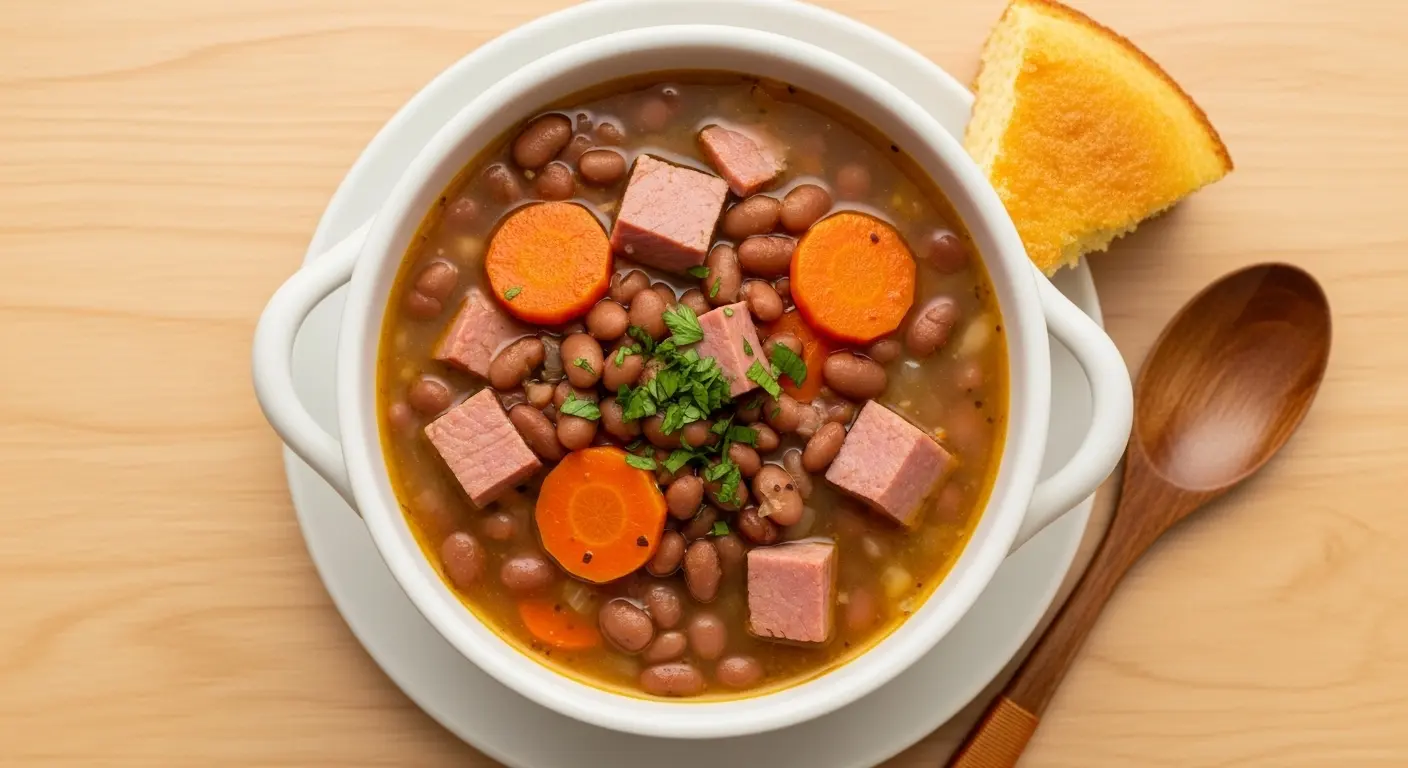
A good ham and bean soup recipe is one of those dishes that feels like a warm hug in a bowl. This classic, hearty soup has been a staple of American home cooking for generations, and for good reason. It is smoky, savory, filling, and deeply satisfying in a way that few soups can match.
The secret to the best version starts with a leftover ham bone. When you simmer that bone low and slow with dried navy beans and a handful of humble vegetables, something truly magical happens. The broth turns rich and velvety, the beans become creamy and soft, and every spoonful carries that unmistakable depth of flavor.
This is the soup you make the week after Easter or Christmas, when there is a ham bone sitting in the fridge and you refuse to let it go to waste. It is budget-friendly, requires no special skills, and feeds a crowd without fuss. If you have ever made a pot of this soup from scratch, you already know there is nothing quite like it.
This recipe walks you through the traditional stovetop version, step by step, so you can make the most authentic and satisfying bowl possible.
If you enjoy hearty, bean-based soups, you will also love this Split Pea Soup that uses a similar slow-simmered technique.
Why You’ll Love This Ham and Bean Soup Recipe
This soup earns its place on the dinner table week after week because it delivers in every department.
It uses up leftover ham in the most delicious way possible. Instead of picking at cold slices from the fridge, you transform that ham bone into a pot of deeply flavorful soup.
The recipe is incredibly budget-friendly. Dried navy beans are one of the cheapest ingredients at the grocery store, and when combined with a leftover bone, the entire pot costs almost nothing to make.
It is a true one-pot meal. Everything goes into a single Dutch oven, which means minimal cleanup and maximum flavor as the ingredients meld together during a long, gentle simmer.
The soup actually tastes better the next day. As it sits overnight, the flavors deepen and the broth thickens naturally, making leftovers something to look forward to.
It is naturally gluten-free and packed with protein and fiber, making it a nourishing option that also happens to taste indulgent.
- One pot, minimal cleanup
- Uses every bit of your leftover ham bone
- Naturally thickens as it simmers
- Budget-friendly with pantry staples
- Freezes beautifully for future meals
- Deeply satisfying and crowd-pleasing
- Easily adaptable to slow cooker or Instant Pot
For another cozy bowl that the whole family loves, check out this Chicken Tortilla Soup.
Ingredients
Keeping things simple is the key to this recipe. Each ingredient plays a specific role, and the magic comes from quality ham, good dried beans, and patience.
- 1 lb (450g) dried navy beans (or great northern beans)
- 1 large ham bone with meat, or 2 smoked ham hocks
- 2 cups (300g) cooked ham, diced
- 1 large yellow onion, diced
- 3 medium carrots, peeled and sliced into rounds
- 3 stalks celery, sliced
- 4 cloves garlic, minced
- 8 cups (2 liters) low-sodium chicken broth
- 2 cups (480ml) water
- 1 teaspoon dried thyme
- 2 bay leaves
- 1/2 teaspoon black pepper (plus more to taste)
- Salt to taste (add at the end only)
- 2 tablespoons olive oil or butter
- Fresh parsley, chopped, for garnish (optional)
A note on beans: Dried navy beans are the traditional choice and become wonderfully creamy as they simmer. Great northern beans work just as well and are slightly larger. Avoid adding salt to the soup until the very end, as the ham and bone often carry plenty of sodium on their own.
Read Also: Black Bean Soup Recipe
Kitchen Equipment Needed
You do not need any specialized gadgets to make this soup, but having the right basic equipment makes the process much smoother.
- Large Dutch oven (6 to 8 quart capacity)
- Large bowl for soaking beans
- Colander or fine mesh strainer
- Wooden spoon or silicone spatula
- Chef’s knife and cutting board
- Ladle for serving
- Immersion blender (optional, for creamier texture)
- Measuring cups and spoons
- Airtight containers for storage
Read Also: Ham and Potato Soup Recipe
Recommended Products for This Recipe
These are products chosen for their quality and performance that will genuinely improve your experience making this soup.
1. Large Enameled Cast Iron Dutch Oven
A heavy-bottomed Dutch oven distributes heat evenly, which is essential for the long, low simmer this soup requires. The enameled interior prevents sticking and makes cleanup simple even after hours of cooking. It is the single most important piece of equipment for a great pot of ham and bean soup.
2. Smoked Ham Hocks
If you do not have a leftover ham bone, high-quality smoked ham hocks are the next best thing. They provide that deep, smoky backbone the soup needs, and their collagen-rich connective tissue melts into the broth during simmering, creating a luxuriously thick consistency.
3. Dried Navy Beans
Pre-packaged dried navy beans from a quality brand ensure freshness and consistent cooking times. Old beans that have been sitting on the shelf for over a year can stay hard and chewy no matter how long you cook them, so starting with a fresh bag makes a real difference.
4. Immersion Blender
Blending a small portion of the finished soup is the trick to achieving that thick, creamy consistency without adding any cream or flour. An immersion blender lets you do this directly in the pot, which is faster and safer than transferring hot liquid to a countertop blender.
5. Airtight Soup Storage Containers
Ham and bean soup is a meal-prep dream, and having a set of sturdy, airtight containers means you can portion and freeze multiple servings at once. Look for containers that are both freezer and microwave safe for maximum convenience.
This pairs beautifully with a slice of homemade Sweet Cornbread for a complete, satisfying meal.
Step-by-Step Instructions
Step 1: Soak the Beans Overnight
- Place the dried navy beans in a large bowl and pick through them, removing any shriveled, discolored, or broken beans.
- Cover the beans with cold water by at least 2 to 3 inches, as they will expand significantly as they soak.
- Let the beans soak at room temperature for 8 to 12 hours, or overnight.
- The next day, drain and rinse the beans thoroughly through a colander under cold running water.
- Set the soaked beans aside. They should have plumped up noticeably and will be much easier to cook through evenly.
Quick soak option: If you forgot to soak overnight, place the rinsed beans in a pot, cover with water, bring to a rolling boil for 2 minutes, then remove from heat. Cover the pot and let the beans soak in the hot water for 1 hour before draining and proceeding.
Step 2: Sauté the Aromatic Vegetables
- Heat 2 tablespoons of olive oil or butter in a large Dutch oven over medium heat until shimmering.
- Add the diced onion and sliced celery to the pot.
- Cook, stirring occasionally, for about 5 to 7 minutes until the onion turns translucent and begins to soften.
- Add the minced garlic to the pot and stir continuously for 1 to 2 minutes until fragrant. Be careful not to burn the garlic, as it will turn bitter quickly.
- This step builds the aromatic foundation of your broth. Do not skip it, as adding vegetables raw to the pot produces a noticeably less flavorful result.
Step 3: Add the Ham Bone, Beans, and Broth
- Nestle the ham bone (or smoked ham hocks) into the pot, settling it in the center.
- Pour in 8 cups of low-sodium chicken broth and 2 cups of water.
- Add the drained and rinsed soaked navy beans to the pot, stirring gently to distribute everything evenly.
- Add the dried thyme and the 2 bay leaves.
- Add the diced cooked ham to the pot as well. Stir to combine.
- Do not add salt yet. The ham bone and ham carry significant sodium, and you will season to taste at the very end.
Step 4: Bring to a Boil, Then Simmer Low and Slow
- Increase the heat to medium-high and bring the contents of the pot to a full boil, watching carefully so it does not boil over.
- Once boiling, skim off any foam or grayish residue that rises to the surface using a large spoon. This step results in a cleaner, clearer broth.
- Reduce the heat to low, cover the pot with its lid slightly askew to allow a little steam to escape, and simmer gently.
- Cook for 1 hour and 30 minutes to 2 hours, stirring occasionally every 20 to 30 minutes to prevent sticking on the bottom.
- The soup is ready when the beans are completely tender and can be easily pressed between your fingers with no resistance.
Step 5: Add the Carrots
- After the first hour of simmering, add the sliced carrots to the pot.
- Stir them in and continue simmering for the remaining 30 to 45 minutes.
- Adding carrots in the last stage prevents them from becoming overcooked and mushy. You want them just tender when the soup is finished.
Step 6: Remove the Ham Bone and Bay Leaves
- Using tongs, carefully remove the ham bone (or ham hocks) from the pot and transfer it to a cutting board.
- Remove and discard the 2 bay leaves.
- Allow the bone to cool for a few minutes until it is safe to handle.
- Use your fingers or two forks to pull off any remaining meat from the bone. Shred or dice it into bite-sized pieces.
- Add all the picked meat back into the pot and stir to incorporate.
- Discard the bare bone.
Step 7: Adjust Consistency and Season
- At this point, taste the broth and evaluate the consistency.
- For a thicker, creamier soup, use an immersion blender to blend about one-quarter to one-third of the soup directly in the pot. Alternatively, scoop out about 2 cups of beans and broth, mash them with a fork, and stir the mash back in.
- Add black pepper to taste.
- Taste the soup before adding any salt, as the ham often provides enough. Add salt in small increments if needed, tasting after each addition.
- Give the soup a final stir and adjust any other seasonings.
Step 8: Serve and Garnish
- Ladle the hot soup into bowls.
- Garnish with freshly chopped parsley if desired.
- Serve immediately alongside crusty bread, cornbread, or warm dinner rolls for a complete meal.
You might also enjoy this cozy Pasta Fagioli for another hearty Italian-inspired bean soup option.
Tips for Success
A few targeted techniques make the difference between a good soup and a truly great one.
- Never skip the overnight soak. Properly soaked beans cook more evenly, absorb flavor better, and produce a creamier texture throughout. Old beans (over a year old) may stay firm no matter how long you cook them, so check the expiration date on your bag.
- Salt at the end, always. Ham bones and smoked ham hocks vary wildly in their salt content. Adding salt early can result in an overseasoned, unpleasant soup. Wait until the very end and season carefully.
- Use a smoked ham hock if you do not have a bone. The smoking process adds a depth of flavor that unsmoked pork simply cannot replicate. Look for smoked ham hocks at your grocery store butcher counter.
- Skim the foam. In the first 10 to 15 minutes of simmering, a gray foam will rise to the surface. Skim it off with a large spoon for a cleaner, better-tasting broth.
- Blend a portion for creaminess. You do not need to add cream or any dairy to get a creamy consistency. Blending a fraction of the cooked beans naturally thickens the soup and gives it a silky, velvety body.
- Add carrots late. If you add them at the beginning, they will disintegrate into the broth. Adding them in the last hour keeps them tender but intact.
- Taste before serving, not before. The full flavor of the soup develops over the long simmer. Hold off on final seasoning adjustments until the soup is fully cooked.
For more tips on making perfectly creamy soups, take a look at this Loaded Potato Soup.
Serving Suggestions

Ham and bean soup is a satisfying meal all on its own, but the right accompaniments take it to another level.
This soup was practically born to be served alongside cornbread. The slight sweetness of Skillet Cornbread complements the smoky, savory broth in a way that feels timeless and right.
A basket of warm Dinner Rolls is another classic pairing, perfect for tearing apart and dipping into the thick, hearty broth.
For a lighter contrast, serve the soup with a crisp green salad dressed simply with lemon and olive oil. The freshness balances the richness of the soup without competing with it.
A wedge of crusty sourdough bread on the side is another wonderful option, especially for mopping up the bottom of the bowl.
If you want to round out the meal for a larger gathering, consider a simple side of:
- Creamy Coleslaw for a cool, crunchy contrast
- Collard Greens for a classic Southern side
- Broccoli Salad for a fresh, hearty side
- Garlic Bread for a crowd-pleasing addition
- Homemade Biscuits for a Southern-style touch
Variations to Try
Once you know the base recipe, you can customize it in all sorts of directions.
The classic stovetop method is outlined above, but this soup also adapts beautifully to other cooking methods and flavor profiles.
- Slow cooker version: Sauté the aromatics first as directed, then transfer everything to a slow cooker. Cook on low for 8 to 10 hours or on high for 4 to 5 hours until the beans are tender. No need to adjust the liquid measurements significantly.
- Instant Pot version: Use the sauté function for the aromatics, then add all remaining ingredients. Cook on high pressure for 40 to 45 minutes with a natural pressure release. No soaking is required for this method.
- Add diced potatoes: Stir in 2 cups of diced Yukon Gold potatoes in the last 30 minutes of simmering for an even heartier, more filling soup.
- Smoky bacon addition: Render a few strips of thick-cut bacon in the pot before sautéing the vegetables. The bacon fat adds an extra layer of smokiness to the broth, and you can crumble the cooked bacon on top as a garnish.
- Spicy version: Add a pinch of cayenne pepper or a diced jalapeño along with the aromatics for a gentle, building heat that plays off the salty ham beautifully.
- Greens addition: Stir in a few handfuls of chopped kale or fresh spinach in the last 5 to 10 minutes of cooking. The greens wilt quickly and add color, nutrition, and a slightly earthy note.
- White bean and sausage: Replace the ham bone with smoked andouille sausage sliced into rounds for a different but equally delicious variation.
Read Also: Minestrone Soup Recipe
Storage and Reheating
Ham and bean soup stores exceptionally well and many people find the leftovers even better than the freshly made batch.
Allow the soup to cool to room temperature before transferring it to storage containers. Do not leave it out at room temperature for more than 2 hours.
- Refrigerator: Store in airtight containers for up to 4 days. The soup will thicken significantly as it cools, as the beans continue to absorb liquid. When reheating, add a splash of broth or water to loosen it to your preferred consistency.
- Freezer: Transfer cooled soup to freezer-safe airtight containers or heavy-duty zip-top bags. Freeze for up to 3 months. The texture of the beans may soften slightly upon reheating, but the flavor remains excellent.
- Reheating from refrigerator: Warm in a saucepan over medium-low heat, stirring occasionally and adding a little liquid as needed. It can also be microwaved in a covered bowl, stirring every minute until hot throughout.
- Reheating from frozen: Thaw overnight in the refrigerator, then reheat as directed above. Alternatively, you can reheat directly from frozen in a covered saucepan over low heat, though this takes 20 to 30 minutes longer.
For more inspiration on hearty soups that store well, try this Vegetable Soup.
Nutritional Facts
The values below are based on one serving (approximately 1.5 cups), with the recipe yielding 8 servings total. Values will vary depending on the amount of ham used and the specific broth chosen.
| Nutrient | Per Serving |
|---|---|
| Calories | approximately 420 |
| Protein | 30g |
| Carbohydrates | 42g |
| Dietary Fiber | 11g |
| Total Fat | 14g |
| Saturated Fat | 4g |
| Sodium | 900-1100mg (varies by ham) |
| Potassium | 1100mg |
| Calcium | 110mg |
| Iron | 4mg |
Note: These are approximate values. Using a lower-sodium broth and trimming visible fat from the ham will reduce the sodium and fat content. Sodium content varies significantly based on the saltiness of the ham bone used.
Read Also: Lentil Soup Recipe
Health Benefits of Key Ingredients
Beyond its comforting flavor, this soup is genuinely nourishing and packed with nutrients.
This is not just feel-good food. There is real nutritional substance in every bowl, making it a smart choice for weeknight dinners.
Navy beans are among the most nutrient-dense legumes available. They are rich in plant-based protein, dietary fiber, folate, magnesium, and potassium. The high fiber content supports digestive health, helps regulate blood sugar levels, and contributes to long-lasting satiety.
Ham contributes a significant amount of complete protein to this soup, along with B vitamins including thiamine, niacin, and B12, which support energy metabolism and nerve function. Using lean ham keeps the fat content reasonable while still delivering rich flavor.
Carrots are loaded with beta-carotene, which the body converts to vitamin A. This antioxidant supports eye health, immune function, and skin integrity.
Celery and onions are both low-calorie vegetables that add prebiotic fiber and sulfur compounds that support liver health and detoxification processes.
Garlic contains allicin, a bioactive compound with well-documented antimicrobial and cardiovascular-supportive properties. Adding garlic to soups is one of the easiest ways to boost the functional benefits of a meal.
- Navy beans: high in plant protein, fiber, folate, and magnesium
- Ham: excellent source of complete protein and B vitamins
- Carrots: rich in beta-carotene and vitamin A
- Celery: anti-inflammatory compounds and prebiotic fiber
- Garlic: allicin for immune and cardiovascular support
- Onion: quercetin antioxidant and anti-inflammatory compounds
For another protein-and-fiber-rich soup option, check out this Moroccan Lentil Soup.
Frequently Asked Questions
1. Can I use canned beans instead of dried beans?
Yes, you can use canned navy beans or great northern beans as a shortcut. Since canned beans are already fully cooked, add them in the last 30 minutes of simmering rather than at the beginning. Use 3 to 4 cans (15 oz each), drained and rinsed. Keep in mind that canned beans will be softer than dried and are less likely to hold their shape through a long cook, so adjust the timing accordingly.
2. What can I use instead of a ham bone?
If you do not have a leftover ham bone, two smoked ham hocks are an excellent substitute and can be found at most grocery stores. You can also use a ham shank, which provides similar flavor. In a pinch, a generous amount of diced smoked ham (about 3 to 4 cups) combined with a splash of liquid smoke will approximate the smoky depth, though a bone will always produce a richer, more collagen-rich broth.
3. Why did my beans stay hard even after hours of cooking?
There are two common culprits. First, the beans may be old. Dried beans that are over a year past their harvest date can develop such hard skins that they never fully soften regardless of cooking time. Always check the “best by” date on your bag. Second, adding salt or acidic ingredients (like tomatoes) too early in the cooking process can prevent beans from fully softening. For this reason, always salt at the very end of cooking.
4. How do I make the soup thicker without adding cream?
The most effective technique is to blend a portion of the finished soup. Use an immersion blender to pulse through about one-quarter to one-third of the pot directly. Alternatively, scoop out 2 cups of cooked beans and broth, mash them thoroughly with a fork or potato masher, then stir the mash back into the pot. This creates a naturally creamy, thick consistency using nothing but the beans themselves.
5. Can I make this soup without soaking the beans overnight?
Yes, with a couple of adjustments. The quick soak method works well: place rinsed dried beans in a pot with water, bring to a boil for 2 minutes, remove from heat, cover, and let sit for 1 hour before draining and proceeding. Alternatively, if using a pressure cooker or Instant Pot, you can cook unsoaked dried beans on high pressure for 45 to 50 minutes without any pre-soaking at all.
Read Also: Chicken Rice Soup Recipe
Final Thoughts
This ham and bean soup recipe is one of those dishes that reminds you why simple, honest cooking is so satisfying.
It asks for very little: a leftover bone, a bag of dried beans, and a few hours of patient simmering. What it gives back is a deeply flavorful, nourishing pot of soup that warms you from the inside out.
If you have a ham bone in the freezer, or if you are planning a holiday ham and want a plan for the leftovers, this is the recipe to make. Do not let that precious bone go to waste when it can become something this extraordinary.
Give this recipe a try and share how it turned out in the comments below. Did you make any fun additions or variations? I would love to hear about it, and your feedback might help someone else discover their new favorite version of this timeless classic.
Recommended:
- Potato Leek Soup
- Hamburger Soup
- Turkey Barley Soup
- Beef and Barley Soup
- Chicken Vegetable Soup
- Zuppa Toscana
- White Chicken Chili
- Italian Wedding Soup
- Cabbage Soup
- Crockpot Beef Stew