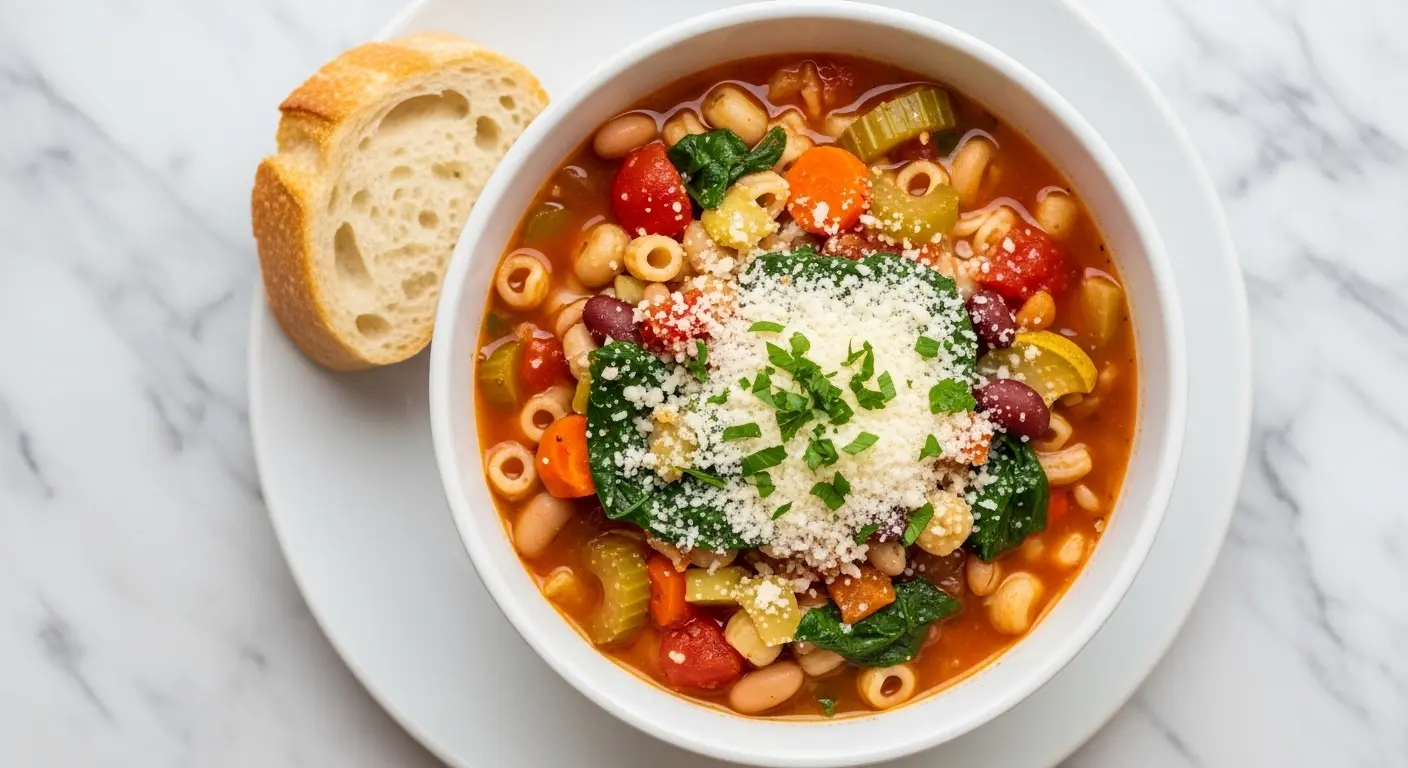
A good minestrone soup recipe is the kind of dish that earns a permanent spot in your weekly rotation. This hearty Italian classic is loaded with colorful vegetables, creamy white beans, and tender pasta swimming in a rich, herb-scented tomato broth. It’s deeply satisfying without being heavy, which is exactly why it’s been a staple in Italian households for centuries.
What makes minestrone so special is the layered building of flavor. You start by sautéing a classic soffritto, which is onion, carrot, and celery cooked low and slow in good olive oil. That aromatic base is what gives the soup its depth. Tomato paste is added next, which caramelizes slightly in the pan and creates a concentrated, savory backbone that store-bought broth alone could never deliver.
The beauty of this recipe is its forgiving nature. You can swap in whatever vegetables look good at the market, and the result will always be comforting and delicious. That said, this version sticks to the most beloved classic combination: zucchini, green beans, diced tomatoes, cannellini beans, and ditalini pasta, all finished with a shower of freshly grated Parmesan cheese.
This is the soup that tastes even better the next day. Make a big pot on a Sunday and you’ll have satisfying lunches lined up for the week.
You might also love this Lasagna Soup for another hearty Italian-inspired bowl.
Why You’ll Love This Minestrone Soup Recipe
This soup checks every box, and then some.
It comes together in one pot, which means minimal cleanup after dinner. The ingredient list is made entirely of pantry staples and fresh produce, nothing exotic or hard to find.
It’s naturally vegetarian and can easily be made vegan by skipping the Parmesan garnish. It’s also incredibly filling thanks to the combination of beans, pasta, and fiber-rich vegetables.
The leftovers are outstanding. The flavors develop and deepen overnight, making your second bowl even better than the first.
Here’s a quick summary of why this soup is worth bookmarking:
- One pot, minimal cleanup
- Packed with vegetables, fiber, and plant-based protein
- Ready in about 45 minutes
- Easily customized with whatever vegetables you have on hand
- Freezer-friendly (without the pasta)
- Naturally vegetarian and easily made vegan
- Budget-friendly using pantry staples
- The leftovers taste even better the next day
For another nourishing vegetable soup, check out this Vegetable Soup.
Ingredients
Good minestrone starts with quality ingredients, but the beauty is that most of them live in your pantry already. Here’s everything you’ll need.
- 3 tablespoons (45 ml) extra-virgin olive oil
- 1 large yellow onion, diced (about 1 1/2 cups / 225 g)
- 3 medium carrots, peeled and diced (about 1 cup / 130 g)
- 3 stalks celery, diced (about 3/4 cup / 90 g)
- 4 cloves garlic, minced
- 2 tablespoons (32 g) tomato paste
- 1 can (14.5 oz / 411 g) diced tomatoes
- 1 can (15 oz / 425 g) cannellini beans, rinsed and drained
- 6 cups (1.4 L) vegetable broth
- 1 cup (115 g) fresh or frozen green beans, cut into 1-inch (2.5 cm) pieces
- 1 medium zucchini, diced (about 1 1/2 cups / 185 g)
- 1 teaspoon dried oregano
- 1 teaspoon dried thyme
- 1/2 teaspoon dried basil
- 1/4 teaspoon red pepper flakes (optional, for a gentle kick)
- 1 cup (100 g) ditalini pasta or small pasta of choice
- 2 cups (60 g) fresh baby spinach or chopped kale
- Salt and black pepper, to taste
- Freshly grated Parmesan cheese, for serving
- Fresh parsley, roughly chopped, for serving
Read Also: Pasta Fagioli Recipe
Kitchen Equipment Needed
Nothing specialized is required here, just reliable everyday kitchen tools that make the cooking process smooth.
- Large Dutch oven or heavy-bottomed soup pot (at least 6-quart / 5.7 L capacity)
- Cutting board
- Sharp chef’s knife
- Wooden spoon or silicone spatula
- Measuring cups and spoons
- Box grater or Microplane (for Parmesan)
- Can opener
- Ladle for serving
- Soup bowls
You might also enjoy: Italian Wedding Soup
Recommended Products for This Recipe
These are a few products I genuinely recommend based on quality and how much they improve the final result.
1. Lodge Enameled Cast Iron Dutch Oven
A heavy, enameled Dutch oven distributes heat evenly so your soffritto doesn’t scorch and your soup simmers gently without hot spots. It retains heat beautifully, which means your soup stays warm at the table. This is a kitchen workhorse you’ll use for soups, stews, braises, and beyond.
2. Mutti Diced Tomatoes
The quality of your canned tomatoes matters more than people realize. Mutti is a premium Italian brand known for using ripe, carefully processed tomatoes with a naturally sweet flavor. Using a high-quality canned tomato makes a noticeable difference in the final broth.
3. De Cecco Ditalini Pasta
Ditalini is the classic pasta shape for minestrone. De Cecco is an Italian brand that holds its texture well during cooking and doesn’t turn mushy, which is especially important when reheating leftovers. The rough surface clings to the broth beautifully.
4. Parmigiano Reggiano Wedge
A real wedge of Parmigiano Reggiano is a world apart from the green canister variety. You can grate it fresh over each bowl for maximum flavor, and you can also drop the rind right into the simmering soup for an incredible boost of umami depth that transforms the broth.
For another cozy Italian classic, check out this Zuppa Toscana.
Step-by-Step Instructions
Step 1: Prep All Your Vegetables
- Dice the onion into roughly 1/2-inch (1.25 cm) pieces, keeping them uniform so they cook evenly.
- Peel the carrots and dice them to the same size as the onion, about 1/2 inch (1.25 cm).
- Slice the celery stalks and dice them to match the carrot size. Consistency here is key since you want everything to finish softening at the same time.
- Mince the garlic cloves finely. If you own a garlic press, this is the time to use it.
- Dice the zucchini into 1/2-inch (1.25 cm) cubes. Avoid going too small or it will dissolve into the broth during simmering.
- Trim the green beans and cut them into 1-inch (2.5 cm) pieces.
- Measure out the pasta, open and drain the beans, open the diced tomatoes, and measure your broth. Having everything ready before you start cooking makes the process smooth and stress-free.
Step 2: Build the Soffritto
- Place your large Dutch oven or soup pot over medium heat and add the olive oil.
- Let the oil warm up for about 30 seconds until it shimmers gently, which means it’s ready for the vegetables.
- Add the diced onion, carrots, and celery all at once along with a generous pinch of salt.
- Cook, stirring occasionally, for 8 to 10 minutes. You want the vegetables to soften and the onion to become translucent and slightly golden at the edges. Don’t rush this step. The slow softening of these aromatics is what creates the deep, savory base of the soup.
- Season with a bit more salt and a few grinds of black pepper as the vegetables cook.
Step 3: Add Garlic and Tomato Paste
- Push the softened vegetables to the edges of the pot, creating a small clearing in the center.
- Add the minced garlic to the center of the pot and cook it for about 30 seconds, stirring constantly, until it becomes fragrant. Watch it carefully at this stage since garlic burns quickly and turns bitter.
- Add the tomato paste directly to the pot and stir it in with the garlic and vegetables.
- Cook the tomato paste for 1 to 2 minutes, stirring and pressing it around the bottom of the pot. This brief caramelization step deepens the flavor significantly. The paste will darken slightly from bright red to a deeper brick color, which is exactly what you want.
Step 4: Add the Tomatoes, Broth, and Herbs
- Pour in the can of diced tomatoes along with all their juices, scraping up any browned bits from the bottom of the pot as you stir.
- Add the vegetable broth and stir everything to combine.
- Add the dried oregano, dried thyme, dried basil, and red pepper flakes if using.
- Stir well to incorporate all the herbs evenly throughout the broth.
- Raise the heat to medium-high and bring the soup to a gentle boil, then reduce it to a steady simmer over medium-low heat.
Step 5: Add the Beans and Denser Vegetables
- Add the drained cannellini beans and the cut green beans to the pot and stir them in.
- Let the soup simmer for 10 minutes with the lid partially on, stirring occasionally. The green beans will start to become tender and the broth will deepen in color and flavor.
- Taste the broth at this point and adjust the salt and pepper as needed.
Step 6: Add the Zucchini and Pasta
- Add the diced zucchini to the pot and stir to combine.
- Immediately add the ditalini pasta and stir again to make sure it doesn’t clump together at the bottom.
- Cook uncovered for 10 to 12 minutes, or according to your pasta’s package directions until it is just al dente. Stir the soup every couple of minutes to prevent the pasta from sticking to the bottom.
- Note: If you plan to store leftovers, consider cooking the pasta separately and adding it to individual bowls at serving time. Pasta continues to absorb broth as it sits, making the soup very thick by the next day.
Step 7: Stir in the Greens and Finish
- Add the fresh baby spinach or chopped kale to the pot and stir it in.
- For spinach, it only takes about 1 to 2 minutes to wilt completely. For kale, give it 3 to 4 minutes since it needs a little longer to become tender.
- Give the soup one final taste and adjust salt, pepper, and herbs as needed. If the broth tastes flat, a tiny squeeze of fresh lemon juice brightens everything up immediately.
- Remove the pot from heat.
Step 8: Serve
- Ladle the soup into warm bowls and top generously with freshly grated Parmesan cheese.
- Add a small handful of freshly chopped parsley over each bowl.
- Serve immediately with crusty bread, garlic bread, or warm focaccia on the side.
Read Also: Chicken Vegetable Soup Recipe
Tips for Success
A few thoughtful techniques will take your minestrone from good to absolutely outstanding every time.
- Don’t skip the soffritto. Those 8 to 10 minutes of slowly sautéing the onion, carrots, and celery are the single most important step in the recipe. Rushing this step means a flat-tasting broth.
- Caramelize the tomato paste. Cooking the tomato paste for a couple of minutes before adding the liquids adds a nutty, concentrated tomato flavor that makes a noticeable difference in the final soup.
- Add a Parmesan rind. If you have a rind from a block of Parmesan, drop it into the broth when you add the vegetable stock. It slowly melts and releases a rich, umami depth that elevates the entire soup. Remove it before serving.
- Cook pasta separately for leftovers. If you know you’ll have leftovers, cook and store the pasta apart from the soup. Combine them fresh at serving time to prevent the pasta from absorbing all the broth overnight.
- Season in layers. Add salt at each major stage of cooking rather than only at the end. Seasoning the vegetables as they sauté, then the broth as it builds, gives you a deeply seasoned soup rather than one that just tastes salty on top.
- Use good olive oil. The olive oil is a flavor carrier, not just a cooking fat. A quality extra-virgin olive oil makes the whole pot taste richer and more rounded.
- Taste before serving. Always do a final taste test right before ladling. Minestrone often needs a final pinch of salt or a grind of pepper once all the ingredients have come together.
Another cozy soup you’ll love: Chicken Rice Soup
Serving Suggestions
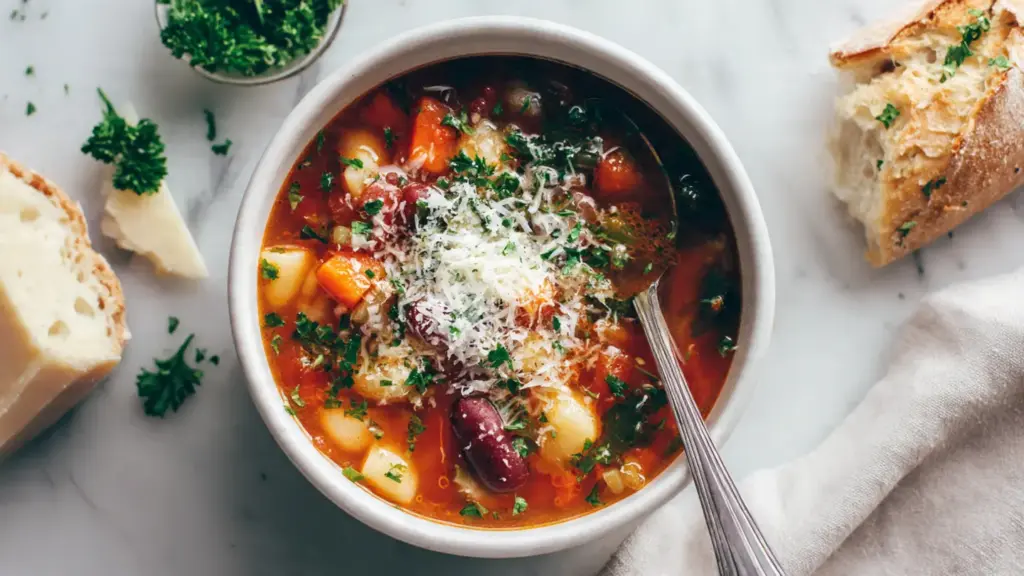
Minestrone is hearty enough to stand on its own as a complete meal, but these pairings make it feel extra special.
- Serve with warm, crusty Italian bread or a thick slice of Garlic Bread for dipping into the rich broth
- A simple green salad dressed with lemon vinaigrette adds a fresh, bright contrast to the hearty soup
- Top each bowl with a drizzle of high-quality extra-virgin olive oil for a gorgeous finishing touch
- A generous handful of freshly grated Parmigiano Reggiano is non-negotiable for maximum flavor
- Pair with a glass of light Italian red wine like Chianti or Barbera d’Asti
- Serve with warm focaccia or a slice of Cheesy Garlic Bread on the side for a satisfying weeknight dinner
- A small bowl of extra Parmesan and red pepper flakes on the table lets everyone customize their bowl
Variations to Try
One of the best things about minestrone is how easily it adapts. Here are some delicious ways to make it your own.
- Add pancetta or Italian sausage. Brown diced pancetta or crumbled Italian sausage in the pot before adding the soffritto vegetables. The rendered fat adds incredible richness and a meaty depth to the broth.
- Make it heartier with potatoes. Replace the pasta with diced Yukon Gold potatoes for a gluten-free, starchier version that’s even more filling on cold nights.
- Try different beans. Red kidney beans, borlotti beans, navy beans, or chickpeas all work beautifully in place of cannellini beans.
- Swap the pasta shape. Elbow macaroni, small shells, orzo, or even broken spaghetti pieces are all great substitutes for ditalini.
- Add butternut squash. Cubed butternut squash adds a subtly sweet flavor and beautiful orange color. Add it with the green beans since it needs extra time to soften.
- Stir in pesto. A spoonful of Easy Pesto swirled into each bowl right before serving adds a gorgeous herby brightness that transforms the soup.
- Make it slow cooker minestrone. Add everything except the pasta, zucchini, and greens to a slow cooker. Cook on LOW for 6 to 8 hours or HIGH for 3 to 4 hours, then add the remaining ingredients and cook for another 30 minutes.
Read Also: Lentil Soup Recipe
Storage and Reheating
This soup stores exceptionally well, making it one of the best recipes to batch-cook for the week.
- Refrigerator: Store cooled soup in an airtight container for up to 4 to 5 days. The flavors continue to develop, and the soup is often even tastier on day two.
- Freezer: Freeze the soup without the pasta in airtight freezer containers for up to 3 months. Thaw overnight in the refrigerator and reheat on the stovetop, adding freshly cooked pasta when you’re ready to serve.
- Reheating: Reheat on the stovetop over medium heat, stirring occasionally, until warmed through. The soup thickens as it sits, so add a splash of vegetable broth or water to loosen it back to your preferred consistency.
- Pasta tip: If the stored soup is very thick from the pasta absorbing the broth, stir in 1/2 to 1 cup (120 to 240 ml) of extra broth when reheating and season to taste before serving.
For another great make-ahead soup, try this Cabbage Soup.
Nutritional Facts
The following is an approximate nutritional breakdown per serving, based on 6 servings. Values will vary based on specific ingredients and portion sizes.
| Nutrient | Per Serving |
|---|---|
| Calories | ~280 kcal |
| Total Fat | 8 g |
| Saturated Fat | 1.5 g |
| Sodium | 680 mg |
| Total Carbohydrates | 42 g |
| Dietary Fiber | 9 g |
| Sugars | 8 g |
| Protein | 11 g |
| Vitamin A | 80% DV |
| Vitamin C | 30% DV |
| Iron | 20% DV |
Nutritional values are estimates and will vary based on exact ingredients used.
Another hearty and nutritious soup to add to your collection: Moroccan Lentil Soup
Health Benefits of Key Ingredients
Minestrone soup is not just delicious, it’s genuinely good for you.
Every bowl is packed with vitamins, minerals, fiber, and plant-based protein. The wide variety of vegetables means you’re getting a broad spectrum of nutrients in a single satisfying meal.
Here’s a look at what the key ingredients bring to the table:
- Cannellini beans are an excellent source of plant-based protein and soluble fiber, which supports healthy digestion and helps you feel full for longer. They also provide a steady source of complex carbohydrates that won’t spike blood sugar.
- Carrots are loaded with beta-carotene, the precursor to vitamin A, which supports eye health, immune function, and healthy skin. They also add natural sweetness to the broth.
- Zucchini is low in calories but high in vitamin C, potassium, and antioxidants. It adds bulk and texture to the soup without adding significant calories.
- Spinach or kale are both nutrient powerhouses. Spinach is rich in iron, folate, and vitamins K and C, while kale offers a hefty dose of vitamin K, calcium, and anti-inflammatory antioxidants.
- Celery is a good source of vitamin K and antioxidant flavonoids. It also contributes a subtle savory depth to the soffritto base that enhances the overall flavor of the soup.
- Diced tomatoes are rich in lycopene, a powerful antioxidant linked to reduced risk of certain chronic diseases. Cooking tomatoes actually increases the bioavailability of lycopene compared to eating them raw.
- Olive oil provides heart-healthy monounsaturated fats and polyphenol antioxidants. Using a quality extra-virgin olive oil ensures you’re getting the maximum nutritional and flavor benefit.
Read Also: Kale Soup Recipe
Frequently Asked Questions
1. What is minestrone soup made of?
Minestrone is a classic Italian vegetable soup made with a soffritto base of onion, carrot, and celery cooked in olive oil, combined with tomatoes, vegetable broth, beans, pasta, and a variety of seasonal vegetables. There is no single fixed recipe. The word “minestrone” translates roughly to “big soup” in Italian, and the idea has always been to use whatever fresh vegetables and pantry staples are on hand.
2. Can I make minestrone soup ahead of time?
Absolutely, and it’s actually encouraged. Minestrone tastes significantly better after the flavors have had a chance to meld together overnight. If you’re making it a day ahead, cook and store the pasta separately so it doesn’t absorb all the broth. Combine the pasta and soup when you reheat and serve.
3. Can I make minestrone gluten-free?
Yes. Simply swap the ditalini pasta for your favorite gluten-free small pasta shape, or replace it entirely with diced potatoes or a cooked grain like quinoa. All the other ingredients in this recipe are naturally gluten-free, so it’s an easy substitution.
4. What is the difference between minestrone and vegetable soup?
The key difference is heartiness. A standard vegetable soup typically contains only vegetables in a light broth. Minestrone is substantially thicker and more filling because it includes beans and pasta or rice in addition to the vegetables. The beans add protein and body, while the pasta or starchy additions make it a complete one-bowl meal.
5. Can I freeze minestrone soup?
Yes, minestrone freezes very well, with one important caveat: freeze the soup without the pasta. Cooked pasta becomes soft and mushy after freezing and thawing, which affects the texture significantly. Store the soup base in airtight freezer containers for up to 3 months, then cook fresh pasta and stir it in when you reheat and serve.
Read Also: Spinach Soup Recipe
Final Thoughts
This minestrone soup recipe is a reminder of how something simple, honest, and made with care can be completely extraordinary.
It doesn’t require fancy techniques or hard-to-find ingredients. It just needs a little time, good olive oil, and a handful of vegetables to become one of the most comforting things you can ladle into a bowl.
Give it a try this week, especially if you’ve got a fridge drawer full of random vegetables that need using up. You’ll be amazed at how much flavor comes from so little effort.
If you make this recipe, I’d love to hear how it turned out! Drop a comment below and let me know what vegetables you used, or share a photo of your bowl on social media and tag me.
Recommended:
- Italian Penicillin Soup
- Carrabbas Sausage and Lentil Soup
- Stuffed Pepper Soup
- Lemon Chicken Orzo Soup
- Chicken Gnocchi Soup
- Ham and Bean Soup
- Roasted Butternut Squash Soup
- Beef and Barley Soup
- Black Bean Soup
- Tomato Sauce Recipe