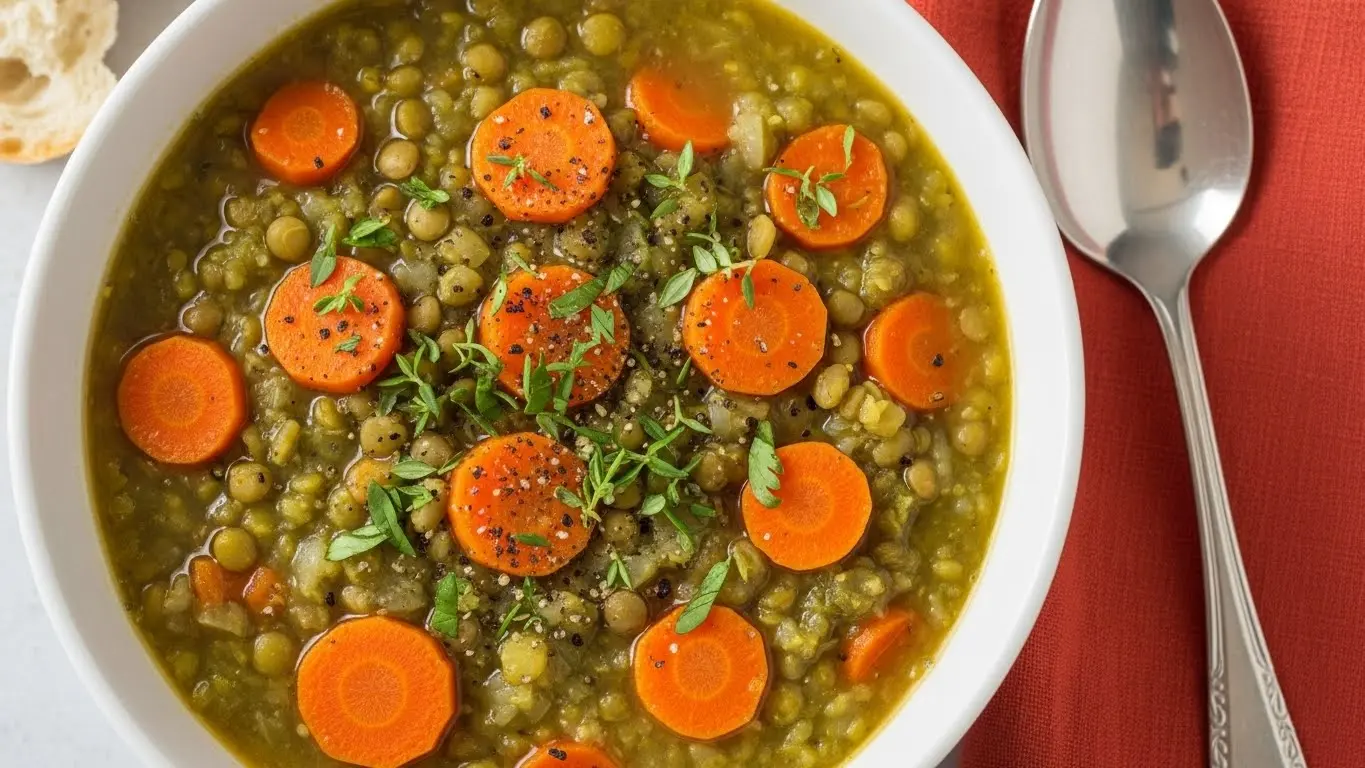
My grandmother used to make this split pea soup recipe every winter, and the smell alone could warm up our entire house. I remember coming home from school on cold days, and the aroma would hit me the moment I opened the door.
This hearty, wholesome soup has become one of my go-to comfort meals when the temperature drops. It’s surprisingly simple to make, incredibly budget-friendly, and tastes even better the next day.
The beauty of this soup lies in its simplicity. You don’t need fancy ingredients or complicated techniques. Just a handful of pantry staples, some patience while it simmers, and you’ll have a pot of thick, creamy, absolutely satisfying soup.
I’ve tweaked my grandmother’s original version over the years, adding my own touches while keeping the soul of her recipe intact. This version strikes the perfect balance between thick and creamy without being too heavy.
Why You’ll Love This Split Pea Soup Recipe
This soup practically makes itself once you get everything into the pot. The dried split peas break down naturally as they cook, creating that signature creamy texture without any cream or flour.
The smokiness from the ham hock infuses every spoonful with deep, savory flavor. It’s the kind of warmth that settles into your bones and makes you feel genuinely cared for.
Here’s what makes this recipe stand out:
- Budget-friendly ingredients that you probably already have in your pantry
- Naturally thick and creamy without any dairy or thickeners
- Freezer-friendly so you can make a big batch and save portions for later
- One-pot cooking means minimal cleanup after dinner
- Gets better with time as the flavors meld together overnight
- Packed with protein and fiber to keep you full for hours
Another favorite: Vegetable Soup Recipe
Ingredients
This soup comes together with simple, honest ingredients that transform into something truly special. I always keep split peas in my pantry because they last forever and cook up beautifully.
Here’s what you’ll need:
- 1 pound dried green split peas, rinsed and picked over
- 1 large ham hock (about 1-1.5 pounds) or 2 cups diced ham
- 2 tablespoons olive oil
- 1 large onion, diced
- 3 carrots, peeled and diced
- 3 celery stalks, diced
- 4 cloves garlic, minced
- 8 cups chicken or vegetable broth
- 2 bay leaves
- 1 teaspoon dried thyme
- 1 teaspoon smoked paprika
- 1/2 teaspoon black pepper
- 1/2 teaspoon salt (adjust to taste)
- 1/4 teaspoon red pepper flakes (optional)
Kitchen Equipment Needed
You don’t need a fully stocked kitchen to make this soup. I’ve made it with just the basics countless times.
The right equipment makes the process smoother:
- Large Dutch oven or heavy-bottomed pot (at least 6 quarts)
- Sharp chef’s knife
- Cutting board
- Wooden spoon for stirring
- Measuring cups and spoons
- Immersion blender (optional, for a smoother texture)
- Ladle for serving
Recommended Products for This Recipe
I’ve tested countless products over the years, and these are the ones that genuinely make a difference when preparing this split pea soup.
1. Le Creuset Enameled Cast Iron Dutch Oven
This Dutch oven distributes heat so evenly that you’ll never have to worry about scorching your soup. The heavy lid traps moisture perfectly, and cleanup is remarkably easy even after hours of simmering. It’s an investment that’ll serve you for decades.
2. Premium Dried Green Split Peas
Not all split peas are created equal. Higher-quality peas cook more evenly and have better flavor. I always look for peas that are uniform in size and color, which means they’ll break down consistently as they cook.
3. Smoked Ham Hocks
The quality of your ham hock directly impacts the depth of flavor in your soup. Look for hocks that are well-smoked with good meat coverage. The bone and fat render into the soup, creating that rich, smoky foundation.
4. Immersion Blender
An immersion blender gives you control over your soup’s texture without transferring hot liquid to a countertop blender. I use mine to partially blend the soup, leaving some chunks for texture while making it creamier overall.
You might also enjoy: Ham and Bean Soup Recipe
Step-by-Step Instructions
1. Prepare Your Ingredients
Start by rinsing your split peas thoroughly in a fine-mesh strainer under cold water. Pick through them carefully to remove any small stones or debris that might have made it through processing.
- Run the peas under cold water for about 30 seconds, swirling them with your hand
- Spread them on a light-colored plate or cutting board to inspect for any foreign objects
- Dice your onion, carrots, and celery into roughly equal pieces (about 1/2-inch chunks)
- Mince the garlic finely so it distributes evenly throughout the soup
- If using a whole ham hock, rinse it under cold water and pat dry
2. Sauté the Aromatics
Heat your Dutch oven or large pot over medium heat until it’s nice and warm. This step builds the flavor foundation for your entire soup.
- Add the olive oil and let it shimmer for about 30 seconds
- Toss in the diced onion and cook for 4-5 minutes until it becomes translucent and fragrant
- Add the carrots and celery, stirring occasionally for another 5 minutes until they start to soften
- Stir in the minced garlic and cook for just 60 seconds until aromatic (don’t let it brown or it’ll taste bitter)
- Season with a pinch of salt to help the vegetables release their moisture
3. Add the Ham Hock and Liquid
This is where your soup starts to come together. The ham hock will infuse the entire pot with smoky, savory goodness.
- Nestle the ham hock right into the center of your vegetables
- Pour in all 8 cups of broth, making sure the ham hock is mostly submerged
- Add the rinsed split peas, stirring them in so they’re distributed throughout the liquid
- Drop in the bay leaves, thyme, smoked paprika, black pepper, and red pepper flakes if using
- Give everything a good stir to combine
4. Bring to a Boil and Simmer
Patience is key here. The slow simmer is what transforms these simple ingredients into something magical.
- Increase the heat to high and bring the soup to a rolling boil
- Once boiling, immediately reduce the heat to low or medium-low
- You want a gentle simmer with small bubbles breaking the surface occasionally
- Partially cover the pot with the lid, leaving it slightly ajar for steam to escape
- Set a timer for 60-90 minutes, stirring every 15-20 minutes to prevent sticking
5. Monitor and Stir
As the soup cooks, the split peas will start breaking down and the liquid will thicken. This is exactly what you want.
- Scrape the bottom of the pot each time you stir to prevent the peas from sticking
- If the soup gets too thick too quickly, add 1/2 cup of water or broth and stir well
- Check the tenderness of the peas after 60 minutes by pressing one against the side of the pot with your spoon
- The peas should be completely soft and starting to dissolve into the liquid
- The soup should coat the back of your spoon but still flow easily
6. Remove and Shred the Ham
Once the soup has cooked for at least 90 minutes and the peas are completely tender, it’s time to deal with the ham hock.
- Carefully lift the ham hock out of the pot using tongs or a large slotted spoon
- Place it on a cutting board and let it cool for about 10 minutes
- Once cool enough to handle, pull all the meat off the bone with your fingers or two forks
- Discard the bone, skin, and any excess fat (though a little fat adds flavor)
- Shred or chop the meat into bite-sized pieces
- Return the shredded ham to the pot and stir it through the soup
7. Adjust Consistency and Season
This is your chance to make the soup exactly how you like it. I prefer mine thick but still spoonable.
- If the soup is too thick, add broth or water 1/4 cup at a time until you reach your desired consistency
- If it’s too thin, simmer uncovered for another 10-15 minutes to reduce it
- For a creamier texture, use an immersion blender to partially blend the soup (about 30 seconds)
- Taste and add more salt, pepper, or smoked paprika as needed
- Remove and discard the bay leaves
- Let the soup rest for 5 minutes before serving to allow flavors to settle
Read Also: Minestrone Soup Recipe
Tips for Success
Making split pea soup is forgiving, but these tips will help you nail it every time. I learned most of these through trial and error over the years.
Here’s what makes the difference:
- Don’t skip rinsing the peas – This removes excess starch and any debris
- Keep the heat low – A gentle simmer prevents scorching and allows flavors to develop properly
- Stir regularly – Split peas love to stick to the bottom of the pot as they cook down
- Add salt gradually – The ham hock is salty, so taste before adding more salt at the end
- Let it rest – The soup thickens considerably as it cools, so don’t panic if it seems thin right after cooking
- Make it ahead – This soup tastes significantly better the next day after the flavors have married
- Use quality broth – Since this is a simple soup, good broth makes a noticeable difference
- Don’t overcook the vegetables – If you like some texture, add the carrots and celery after the peas have cooked for 30 minutes
Serving Suggestions

This soup is incredibly satisfying on its own, but I love pairing it with something crunchy or tangy to balance the richness. My usual go-to is crusty bread, but there are so many delicious options.
Split pea soup pairs beautifully with these sides:
- Crusty sourdough bread – Perfect for dipping and soaking up every last drop
- Buttermilk Biscuits – Fluffy and buttery, they complement the soup’s heartiness
- Simple green salad – Dressed with lemon vinaigrette to cut through the richness
- Roasted Broccoli – Adds a nice charred, slightly bitter contrast
- Cornbread – Slightly sweet and crumbly, it’s a Southern classic with split pea soup
- Pickled vegetables – The acidity brightens up each spoonful
- Avocado Toast – For a lighter, modern pairing
Variations to Try
Once you’ve mastered the basic recipe, there are countless ways to make it your own. I rotate through these variations depending on what’s in my fridge.
Try these delicious twists:
- Vegetarian version – Skip the ham hock and add 2 tablespoons of liquid smoke plus an extra teaspoon of smoked paprika for that smoky depth
- Spicy split pea soup – Add diced jalapeños with the aromatics and a dash of hot sauce at the end
- Yellow split pea soup – Swap green peas for yellow ones, which have a slightly milder, earthier flavor
- Curry split pea soup – Stir in 2 tablespoons of curry powder and finish with coconut milk for a completely different flavor profile
- Bacon lover’s version – Replace the ham hock with 8 strips of thick-cut bacon, cooked crispy and crumbled back in
- Lemon herb version – Add fresh lemon juice and chopped fresh dill or parsley just before serving for brightness
- Root vegetable loaded – Throw in diced parsnips, turnips, or sweet potatoes along with the other vegetables
Another favorite: Cabbage Soup Recipe
Storage and Reheating
This soup is a meal prep champion. I actually prefer making a double batch because it stores so beautifully.
Follow these guidelines for best results:
- Refrigerator storage – Let the soup cool completely, then transfer to airtight containers. It’ll keep for 4-5 days in the fridge.
- Freezer storage – Portion into freezer-safe containers, leaving 1 inch of headspace for expansion. Freeze for up to 3 months.
- Thickening over time – The soup will thighten significantly when cold. This is completely normal as the starches in the split peas continue to absorb liquid.
- Reheating on the stovetop – Add 1/4 to 1/2 cup of water or broth per serving and heat over medium-low, stirring frequently until warmed through.
- Microwave reheating – Place in a microwave-safe bowl, add a splash of water, cover loosely, and heat in 1-minute intervals, stirring between each.
- Restoring texture – If the soup becomes too thick after storage, simply thin it with broth or water until you reach your preferred consistency.
Nutritional Facts
Per serving (approximately 1.5 cups):
- Calories: 285
- Protein: 22g
- Carbohydrates: 38g
- Fiber: 15g
- Fat: 5g
- Saturated Fat: 1g
- Cholesterol: 25mg
- Sodium: 850mg
- Potassium: 720mg
- Vitamin A: 85% DV
- Vitamin C: 12% DV
- Iron: 15% DV
Note: Nutritional values are approximate and will vary based on specific ingredients used and portion sizes.
Health Benefits of Key Ingredients
Split pea soup isn’t just comfort food—it’s genuinely nutritious. Every bowl delivers a serious nutritional punch that your body will thank you for.
Here’s what makes this soup so good for you:
- Split peas are protein powerhouses – One cup contains about 16 grams of plant-based protein, making this soup surprisingly filling and great for muscle maintenance.
- Incredible fiber content – With nearly 16 grams of fiber per serving, this soup supports digestive health and helps keep blood sugar stable.
- Low in fat – Despite tasting rich and creamy, this soup is naturally low in fat and contains no saturated fat if you trim the ham carefully.
- Rich in essential minerals – Split peas provide significant amounts of iron, potassium, and magnesium, all crucial for energy production and heart health.
- Carrots boost vitamin A – The carrots add a hefty dose of beta-carotene, which your body converts to vitamin A for eye health and immune function.
- Budget-friendly nutrition – You’re getting exceptional nutritional value for very little cost per serving.
Read Also: Chicken Soup Recipe
Frequently Asked Questions
1. Do I need to soak split peas before making soup?
No, you don’t need to soak split peas before cooking them. Unlike whole dried beans, split peas cook relatively quickly without soaking because they’ve already been split in half during processing. Just rinse them well and add them directly to your pot.
2. Why is my split pea soup too thin?
Split pea soup continues to thicken as it cools and as it sits. If your soup is too thin right after cooking, simply simmer it uncovered for an additional 10-15 minutes to reduce the liquid. You can also partially blend it with an immersion blender to release more starch from the peas, which will naturally thicken the soup.
3. Can I make split pea soup without ham?
Absolutely! For a vegetarian version, skip the ham hock and use vegetable broth instead of chicken broth. Add 2 tablespoons of liquid smoke and an extra teaspoon of smoked paprika to replicate that smoky depth. You can also sauté some mushrooms with the aromatics for added umami flavor.
4. How do I prevent my split pea soup from burning on the bottom?
The key is maintaining a gentle simmer rather than a rapid boil, and stirring regularly—every 15-20 minutes. Make sure you scrape the bottom of the pot each time you stir to dislodge any peas that might be sticking. Using a heavy-bottomed pot or Dutch oven also helps distribute heat evenly.
5. Can I use yellow split peas instead of green?
Yes, yellow split peas work beautifully in this recipe. They have a slightly milder, earthier flavor compared to green split peas, but the cooking method remains exactly the same. The texture will be similar, though yellow peas sometimes break down a bit more, creating an even creamier soup.
Final Thoughts
This split pea soup recipe has been a constant in my kitchen for years, and it never disappoints. The way it fills your home with warmth and comfort is just as satisfying as eating it.
I hope this becomes one of those recipes you turn to again and again, maybe tweaking it here and there to make it your own. That’s exactly how the best recipes evolve—through cooking them repeatedly and making them part of your story.
Give this split pea soup a try this week, and don’t be surprised if it becomes your new cold-weather staple. I’d love to hear how yours turns out, so drop a comment below and let me know what variations you tried or what you served it with!
Recommended:
- Pumpkin Soup Recipe
- Sauerkraut Soup Recipe
- Ham and Potato Soup Recipe
- Hot and Sour Soup Recipe
- Black Bean Soup Recipe
- Pepper Pot Soup Recipe
- Turkey Soup Recipe
- Zuppa Toscana Recipe
- Pasta Fagioli Recipe
- Tom Yum Soup Recipe