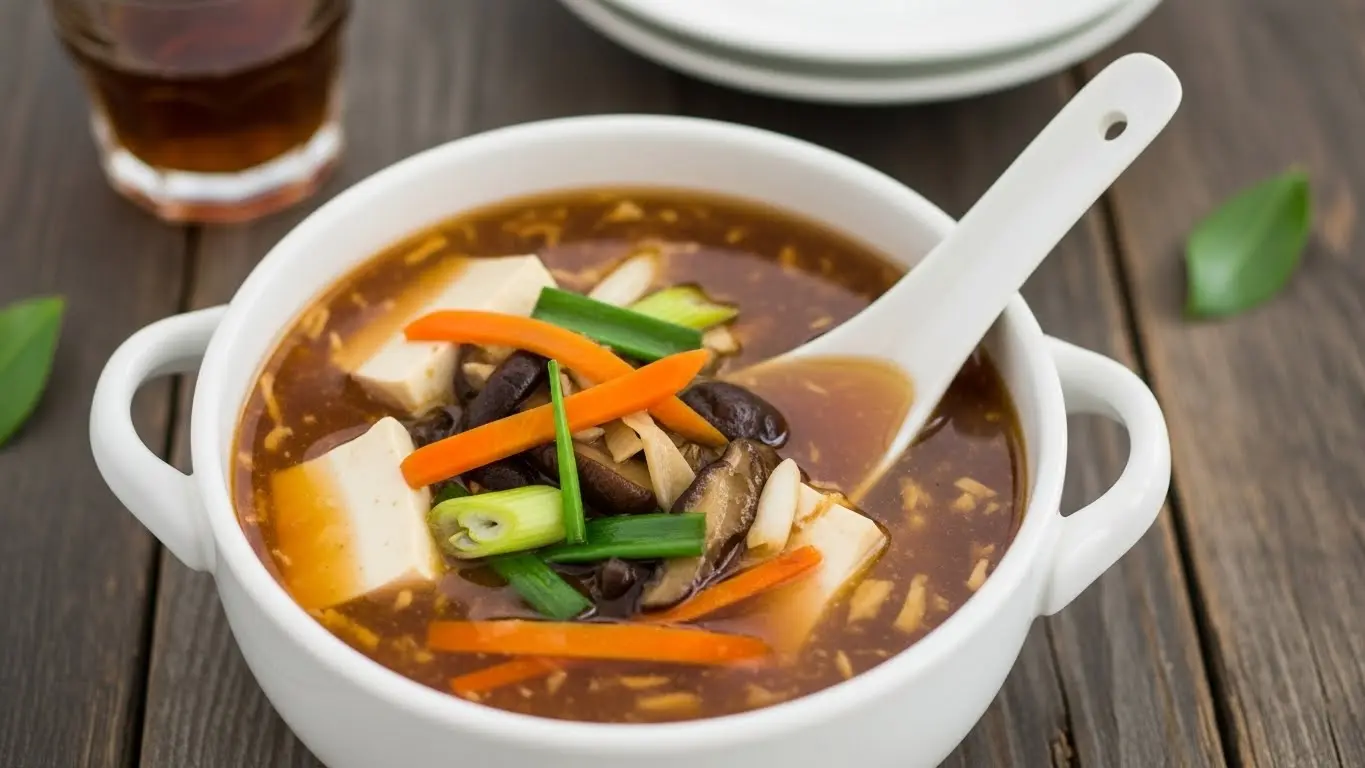
I’m absolutely obsessed with this hot and sour soup recipe, and I can’t wait to share it with you. It’s one of those dishes that hits all the right notes—tangy, spicy, and incredibly satisfying.
If you’ve ever ordered takeout and wished you could recreate that perfect balance of flavors at home, this is your moment. This soup brings restaurant-quality results right to your kitchen, and honestly, it tastes even better when you make it yourself.
The combination of vinegar’s sharpness with white pepper’s heat creates something truly special. Each spoonful warms you from the inside out while keeping your taste buds dancing.
What I love most is how this soup comes together surprisingly quickly. You’ll have a steaming bowl ready in about 30 minutes, making it perfect for busy weeknights when you’re craving something comforting yet exciting.
Why You’ll Love This Hot and Sour Soup Recipe
This soup is the ultimate comfort food with a kick. It’s packed with protein from tofu and eggs, making it hearty enough to serve as a complete meal.
The texture is absolutely incredible—silky broth with tender mushrooms, crispy bamboo shoots, and those delicate egg ribbons that form when you drizzle beaten egg into the hot soup. Every bite offers something different.
Here’s what makes this recipe a winner:
- Quick and easy to prepare in under 30 minutes
- Budget-friendly ingredients that you can find at any grocery store
- Customizable heat level so you can adjust the spice to your preference
- Restaurant-quality flavor that rivals your favorite Chinese restaurant
- Perfect for meal prep as the flavors develop even more over time
- Naturally gluten-free option when using tamari instead of soy sauce
For a different take on Asian soups, you might also enjoy my Tom Yum Soup Recipe.
Ingredients
This recipe uses simple ingredients that pack a serious flavor punch. Most of these items are pantry staples or easily found in the Asian section of your grocery store.
- 6 cups chicken or vegetable broth (homemade or store-bought)
- 8 oz shiitake mushrooms, thinly sliced
- 1 cup bamboo shoots, julienned
- 8 oz firm tofu, pressed and cut into thin strips
- ¼ cup rice vinegar (adjust to taste)
- 3 tablespoons soy sauce
- 2 tablespoons Shaoxing wine (or dry sherry)
- 1 tablespoon chili garlic sauce
- 1½ teaspoons white pepper (this is key for authentic flavor)
- 1 teaspoon sesame oil
- 3 tablespoons cornstarch
- ¼ cup cold water
- 2 large eggs, lightly beaten
- 3 green onions, thinly sliced
- ½ cup wood ear mushrooms, rehydrated and sliced (optional but traditional)
- Fresh cilantro for garnish
- Salt to taste
Kitchen Equipment Needed
Having the right tools makes cooking this soup so much easier. You don’t need anything fancy—just a few basics that you probably already have.
- Large soup pot or Dutch oven (at least 5-quart capacity)
- Sharp knife and cutting board
- Measuring cups and spoons
- Small bowl for mixing cornstarch slurry
- Whisk or fork
- Ladle
- Serving bowls
Recommended Products for This Recipe
After making this soup countless times, I’ve found a few products that really elevate the final result and make the cooking process smoother.
1. Dried Shiitake Mushrooms
Dried shiitakes have a much more concentrated, earthy flavor than fresh ones, and they’re essential for that authentic hot and sour soup taste. I always keep a bag in my pantry because they last forever and add incredible depth to any Asian soup or stir-fry.
2. Premium White Pepper
White pepper is what gives this soup its signature heat and flavor—it’s completely different from black pepper. A high-quality white pepper makes all the difference, providing that distinctive sharp, earthy spice that defines hot and sour soup.
3. Authentic Chinkiang Black Vinegar
While rice vinegar works in a pinch, Chinkiang black vinegar adds a complex, slightly sweet and smoky dimension that takes this soup to the next level. It’s the secret ingredient many Chinese restaurants use.
4. Le Creuset Enameled Cast Iron Soup Pot
This pot distributes heat evenly, which is crucial for maintaining the perfect temperature when you’re adding the egg ribbons. The heavy bottom prevents scorching, and it goes from stovetop to table beautifully for serving.
Step-by-Step Instructions
I’ve broken down each step to make this foolproof, even if you’ve never made hot and sour soup before. Take your time and follow along—you’ve got this!
1. Prepare Your Ingredients
- Slice the shiitake mushrooms thinly, removing any tough stems
- If using dried mushrooms, rehydrate them in hot water for 20 minutes, then squeeze out excess water and slice
- Press the tofu between paper towels to remove excess moisture, then cut into matchstick-sized strips
- Julienne the bamboo shoots into thin strips
- Slice green onions, keeping white and green parts separate
- Beat the eggs in a small bowl and set aside
- Mix cornstarch with cold water to create a slurry
2. Build the Soup Base
- Heat your soup pot over medium-high heat
- Add the chicken or vegetable broth and bring to a gentle boil
- Reduce heat to medium and add the mushrooms and bamboo shoots
- Let simmer for 5 minutes to allow the mushrooms to release their flavor into the broth
- This is when your kitchen will start smelling absolutely amazing
3. Add the Seasonings
- Stir in the soy sauce, rice vinegar, and Shaoxing wine
- Add the chili garlic sauce and white pepper (start with less white pepper if you’re sensitive to spice)
- Taste the broth at this point—it should be assertively sour and spicy
- Remember, the flavors will mellow slightly once you add the tofu and eggs
- Add more vinegar or white pepper according to your preference
Another fantastic Asian-inspired dish is my Miso Soup Recipe.
4. Add Tofu and Thicken the Soup
- Gently add the tofu strips to the simmering soup
- Cook for 2-3 minutes until the tofu is heated through
- Give your cornstarch slurry a quick stir (it settles)
- Slowly pour the slurry into the soup while stirring continuously
- Continue stirring for about 1 minute until the soup thickens to a silky consistency
- The soup should coat the back of a spoon but still be pourable
5. Create the Egg Ribbons
- This is the fun part—reduce heat to low so the soup is barely simmering
- Hold a fork or chopstick over the pot
- Slowly drizzle the beaten eggs in a thin stream over the fork while stirring the soup gently in a circular motion
- The fork breaks up the egg into delicate ribbons as it hits the hot soup
- Continue stirring gently for 30 seconds until the egg is fully cooked
- The eggs should form wispy, thread-like strands throughout the soup
6. Finish and Serve
- Remove the pot from heat
- Stir in the sesame oil for that final layer of nutty aroma
- Add the white parts of the green onions
- Taste and adjust seasoning with salt, more vinegar, or white pepper as needed
- Ladle into bowls and garnish with remaining green onions and fresh cilantro
- Serve immediately while piping hot
Tips for Success
These little tricks will help you nail this soup every single time. I learned most of these through trial and error, so you don’t have to!
- Temperature matters for egg ribbons: If your soup is boiling vigorously when you add the eggs, they’ll clump up instead of forming delicate strands. Keep it at a gentle simmer.
- Press your tofu well: Extra moisture in the tofu will dilute your carefully balanced broth.
- Don’t skip the white pepper: Black pepper won’t give you the same authentic flavor profile.
- Adjust the cornstarch: If you prefer a thinner soup, use only 2 tablespoons of cornstarch instead of 3.
- Make it vegetarian: Use vegetable broth and skip the eggs, or use silken tofu blended until smooth as an egg substitute.
- Control the heat: Start with less chili garlic sauce and white pepper, then add more at the table. It’s easier to add heat than remove it!
- Fresh is better: Rice vinegar loses its potency over time. If your vinegar is old, you might need to add a bit more.
Serving Suggestions
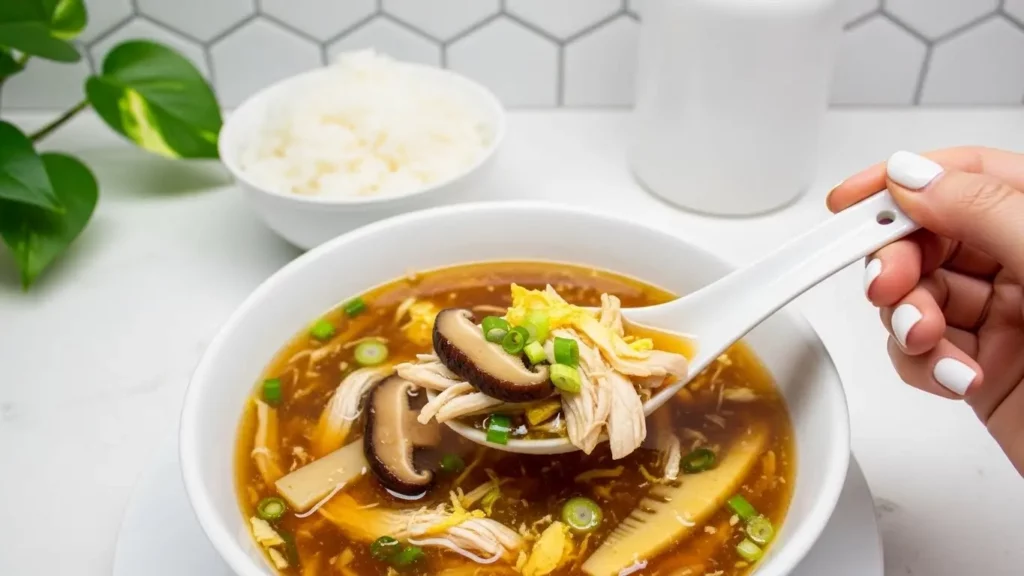
This hot and sour soup is incredibly versatile and pairs beautifully with so many dishes. Here’s how I like to serve it.
Hot and sour soup can be a starter or a main course depending on how you serve it. For a light meal, pair it with steamed rice and some Roasted Broccoli on the side.
If you’re making a full Chinese feast, serve it alongside some Chicken Lettuce Wraps, fried rice, and spring rolls. The soup’s tangy, spicy profile cuts through richer dishes perfectly.
Here are my favorite serving ideas:
- Serve as an appetizer before Chicken and Broccoli or another stir-fry
- Make it a complete meal by adding cooked noodles or serving over rice
- Pair with potstickers or dumplings for an authentic Chinese restaurant experience
- Top with crispy wonton strips for added texture
- Serve with a side of chili oil for those who want extra heat
- Add cooked shrimp or chicken to make it heartier
Variations to Try
Once you’ve mastered the basic recipe, have fun experimenting with these tasty variations. Each one brings something unique to the table.
- Seafood hot and sour soup: Add shrimp, scallops, or chunks of white fish in the last few minutes of cooking
- Extra vegetable version: Include thinly sliced carrots, baby corn, or snow peas for more veggies
- Spicy lover’s edition: Double the white pepper and add sliced fresh Thai chilies
- Mushroom-forward: Use a mix of shiitake, oyster, and wood ear mushrooms for incredible depth
- Protein-packed: Add cooked, shredded chicken or pork for a heartier meal
- Thai-inspired twist: Substitute lime juice for half the vinegar and add lemongrass for a Tom Yum-style flavor
- Sichuan-style: Add a tablespoon of Sichuan peppercorns for that distinctive numbing heat
You might also enjoy: Cabbage Soup Recipe
Storage and Reheating
Proper storage keeps this soup delicious for days. Here’s everything you need to know about storing and reheating.
This soup actually tastes even better the next day after the flavors have had time to meld. However, there are a few things to keep in mind.
- Refrigerator: Store in an airtight container for up to 4 days
- Freezer: Freeze for up to 2 months, though the tofu texture may change slightly
- Reheating on stovetop: Gently reheat over medium-low heat, stirring occasionally—don’t let it boil vigorously or the egg ribbons may break apart
- Microwave reheating: Heat in 1-minute intervals, stirring between each, until hot throughout
- Adjust after storage: You may need to add a splash of vinegar and a pinch of white pepper after reheating, as these flavors can mellow over time
- Texture tip: The soup will thicken as it sits due to the cornstarch—thin it with a bit of broth when reheating if needed
Nutritional Facts
Here’s the approximate nutritional information per serving (based on 6 servings). Keep in mind this can vary depending on the specific brands and quantities you use.
- Calories: 145
- Total Fat: 6g
- Saturated Fat: 1g
- Cholesterol: 62mg
- Sodium: 890mg
- Total Carbohydrates: 13g
- Dietary Fiber: 2g
- Sugars: 3g
- Protein: 10g
- Vitamin A: 8% DV
- Vitamin C: 6% DV
- Calcium: 8% DV
- Iron: 12% DV
Health Benefits of Key Ingredients
Beyond tasting incredible, this soup is actually packed with nutritious ingredients. Here’s what makes it good for you too.
The shiitake mushrooms are rich in B vitamins and contain compounds that may support immune function. They’re also a good source of selenium and copper, which are important for various bodily functions.
Tofu provides plant-based protein and contains all nine essential amino acids. It’s also an excellent source of iron and calcium, especially important for those following vegetarian or vegan diets.
- White pepper: Contains antioxidants and may aid digestion
- Vinegar: Can help stabilize blood sugar levels and improve insulin sensitivity
- Bamboo shoots: Low in calories but high in fiber, potassium, and various vitamins
- Eggs: Provide high-quality protein and essential nutrients like choline and vitamin D
- Garlic: Has antimicrobial properties and may support heart health
- Ginger (if added): Known for its anti-inflammatory properties and digestive benefits
Read Also: Chicken Soup Recipe
Frequently Asked Questions
1. Can I use black vinegar instead of rice vinegar?
Absolutely! Chinese black vinegar (Chinkiang vinegar) actually adds a more complex, slightly sweet and malty flavor that many consider more authentic. Start with a bit less since it’s stronger, then adjust to taste. Some recipes use a combination of both rice vinegar and black vinegar for the perfect balance.
2. Why did my soup turn out too thick or too thin?
The cornstarch slurry controls the thickness. If your soup is too thick, simply add more broth to thin it out. If it’s too thin, mix another tablespoon of cornstarch with cold water and stir it in while the soup simmers. Remember, the soup will also thicken slightly as it cools.
3. What can I substitute for Shaoxing wine?
Dry sherry is the closest substitute and works beautifully in this recipe. You can also use mirin (Japanese rice wine) or even a dry white wine in a pinch. If you want to keep it alcohol-free, use an equal amount of additional chicken broth with a teaspoon of rice vinegar.
4. How do I prevent the eggs from forming large clumps?
The key is temperature and technique. Make sure your soup is at a gentle simmer, not a rolling boil. Drizzle the eggs very slowly in a thin stream while continuously stirring the soup in one direction. Pouring the eggs through a fork or chopstick helps break them into finer ribbons.
5. Can I make this soup ahead of time?
Yes, but with one caveat—it’s best to add the eggs fresh when reheating. You can make the entire soup base up to 2 days ahead, then reheat and add freshly beaten eggs just before serving. This ensures those delicate egg ribbons stay perfect.
Final Thoughts
This hot and sour soup recipe has become one of my absolute favorite things to make when I need something warming and satisfying. The balance of sour and spicy, combined with all those wonderful textures, creates a bowl of soup that’s truly special.
I hope you’ll give this recipe a try and discover just how easy it is to make restaurant-quality hot and sour soup at home. Once you nail the technique, you’ll find yourself making it again and again.
I’d love to hear how your soup turns out! Drop a comment below with your experience, any variations you tried, or questions you might have. Happy cooking!
Recommended:
- Vegetable Soup Recipe
- Turkey Soup Recipe
- Minestrone Soup Recipe
- Black Bean Soup Recipe
- Pepper Pot Soup Recipe
- Porcupine Meatballs Tomato Soup Recipe
- Caldo de Pollo Recipe
- Jamaican Chicken Soup Recipe
- Chicken Gnocchi Soup Recipe
- Italian Wedding Soup Recipe