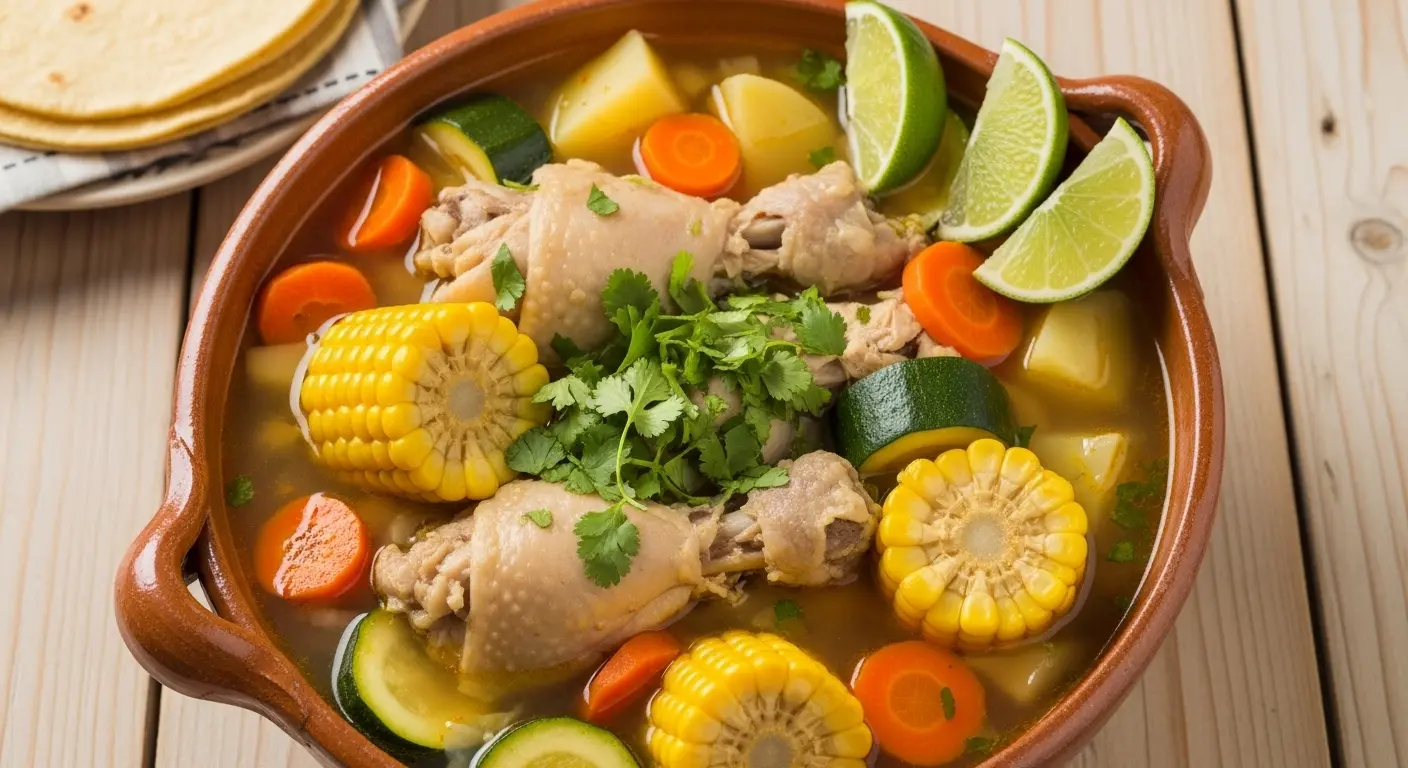
Few soups carry the same kind of soul-warming power as a classic caldo de pollo recipe. This traditional Mexican chicken soup is made with bone-in chicken pieces, an abundance of fresh vegetables, and a clear, deeply savory broth that tastes like it has been simmering for hours, because it has.
It is humble, honest, and deeply comforting food.
Unlike heavy cream-based soups, caldo de pollo relies on the natural richness of bone-in chicken and aromatics to build its flavor. The result is a clean, nourishing broth with tender chicken, vibrant vegetables, and just enough seasoning to let every ingredient shine on its own.
This is the soup that Mexican families turn to when someone is under the weather, when the temperature drops, or when dinner needs to feel like a warm embrace.
It is also one of the most forgiving recipes you will ever make. Swap the vegetables based on what you have, adjust the seasoning to your taste, and it will still come out beautifully every single time.
This soup pairs beautifully with a side of champurrado on cold evenings for a fully traditional Mexican meal experience.
Why You’ll Love This Caldo de Pollo Recipe
This soup earns a permanent spot in your rotation for good reason.
It is made almost entirely with pantry staples and fresh produce you likely already have on hand. No specialty ingredients, no complicated techniques, and no hours of prep work required.
The bone-in chicken is the real magic here. As it simmers, it releases collagen and natural gelatin into the broth, creating a richness that no store-bought stock can fully replicate. The longer it cooks low and slow, the more complex and satisfying the broth becomes.
It is also naturally gluten-free, dairy-free, and packed with protein and vegetables. Every bowl delivers real nutritional value without any sacrifice in flavor.
- Deeply flavorful broth made from scratch with bone-in chicken
- One pot, minimal cleanup
- Naturally gluten-free and dairy-free
- Customizable with whatever vegetables you have available
- Perfect for meal prep since it tastes even better the next day
- Comforting enough for sick days, hearty enough for any weeknight
You might also enjoy: Chicken Tortilla Soup
Ingredients
This recipe keeps things simple and traditional. The quality of your chicken and the freshness of your vegetables will do most of the heavy lifting here.
- 3 lbs (1.4 kg) bone-in, skin-on chicken pieces (thighs and drumsticks work best)
- 10 cups (2.4 liters) water
- 1 medium white onion, halved
- 6 garlic cloves, smashed
- 2 bay leaves
- 1 tsp (5 ml) whole black peppercorns
- 1 tbsp (15 ml) chicken bouillon powder (optional but adds depth)
- 1 tsp (5 g) salt, plus more to taste
- 1 tsp (2.5 g) ground cumin
- 3 medium carrots, peeled and cut into chunks
- 3 medium potatoes, peeled and cut into large cubes
- 2 ears of corn, cut into thirds
- 2 medium zucchini, cut into half-moons
- 3 stalks of celery, sliced
- 2 Roma tomatoes, quartered
- 1 small handful fresh cilantro, roughly chopped
- Juice of 1 lime
For serving: lime wedges, sliced jalapeños, fresh cilantro, warm corn or flour tortillas
Read Also: Caldo de Res Recipe
Kitchen Equipment Needed
You do not need anything fancy for this recipe, just a few reliable basics.
- Large stockpot or Dutch oven (at least 8-quart capacity)
- Slotted spoon or ladle (for skimming foam)
- Sharp chef’s knife
- Cutting board
- Fine-mesh skimmer
- Ladle for serving
- Tongs for handling hot chicken pieces
This is a one-pot meal from start to finish, which makes cleanup as easy as the cooking itself.
The chicken rice soup on this site uses similar equipment if you want to add a rice variation.
Recommended Products for This Recipe
These are a few products worth having on hand to get the most out of your caldo de pollo.
1. Enameled Cast Iron Dutch Oven
A heavy-bottomed pot distributes heat evenly, which prevents scorching the bottom and ensures a gentle, consistent simmer the entire way through. The wide base also makes it easy to skim foam from the surface. A quality Dutch oven will last you a lifetime and improve every soup you make.
2. Knorr Chicken Bouillon Powder
Adding a spoonful of chicken bouillon to the broth gives it an extra layer of savory depth that enhances the natural chicken flavor without overpowering it. This is a staple in Mexican kitchens and a secret that makes homemade caldo taste restaurant-quality.
3. Fine Mesh Soup Skimmer
Skimming the foam that rises to the surface during the first few minutes of cooking is what keeps your broth clear and clean-tasting. A fine mesh skimmer makes this process quick and effortless compared to using a spoon.
4. High-Quality Corn Tortillas
Caldo de pollo is traditionally served with warm corn tortillas for dipping into the broth. Having a quality brand or homemade tortillas on hand makes the experience feel authentic and complete.
This caldo also pairs well with avocado toast for a lighter lunch spread when you are serving smaller portions.
Step-by-Step Instructions
1. Prepare the Chicken and Aromatics
- Rinse the chicken pieces under cold running water and pat them completely dry with paper towels. Dry chicken browns better and produces cleaner foam when it hits the water.
- Place the chicken in your large stockpot or Dutch oven in a single layer.
- Add 10 cups (2.4 liters) of cold water to the pot. Starting with cold water (rather than boiling) draws out more gelatin and flavor from the bones gradually, which produces a richer, clearer broth.
- Add the halved white onion, smashed garlic cloves, bay leaves, and whole black peppercorns directly to the pot.
- If using chicken bouillon powder, add it now along with 1 tsp (5 g) of salt and the ground cumin.
2. Bring to a Boil and Skim the Foam
- Place the pot over medium-high heat and bring it to a boil. This will take about 10 to 15 minutes depending on your stove.
- As the water heats up, you will notice a gray-white foam forming on the surface. This foam is coagulated proteins from the chicken, and it is important to remove it for a clean, clear broth.
- Use a fine-mesh skimmer or slotted spoon to skim and discard all of the foam as it rises. Keep skimming every minute or two until the foam stops forming, usually about 5 to 8 minutes after the boil starts.
- Do not skip this step. Skimming is what separates a clear, restaurant-quality broth from a cloudy, murky one.
3. Reduce Heat and Begin Simmering
- Once the broth is clear and foam-free, reduce the heat to medium-low so the soup is at a gentle, steady simmer. You want to see small bubbles breaking the surface occasionally, not a rolling boil.
- A hard boil will make the broth cloudy and can cause the chicken to turn tough. Low and slow is the key to this recipe.
- Partially cover the pot with a lid, leaving a small gap for steam to escape.
- Simmer the chicken for 30 minutes before adding any vegetables.
4. Add the Carrots and Celery
- After 30 minutes of simmering, add the carrot chunks and sliced celery stalks to the pot. Carrots are denser and take longer to cook, so they go in first.
- Stir gently to incorporate them into the broth.
- Continue simmering, partially covered, for another 15 minutes.
5. Add the Remaining Vegetables
- After the carrots and celery have had their head start, add the potato cubes, corn pieces, zucchini half-moons, and quartered Roma tomatoes to the pot.
- Gently stir everything together, making sure the vegetables are submerged in the broth.
- The tomatoes will break down gently as the soup cooks, adding a subtle richness and gentle acidity to the broth without making it taste tomato-forward.
- Continue simmering, partially covered, for another 20 to 25 minutes, until the potatoes are fork-tender and the corn is cooked through.
6. Check the Chicken and Adjust Seasoning
- Use tongs or a slotted spoon to carefully lift out one piece of chicken and check it. The meat should be completely tender and pulling away from the bone easily.
- If the chicken needs more time, continue simmering in 5-minute increments until it is fully cooked and tender.
- Taste the broth and adjust seasoning. Add more salt if needed. If the broth feels flat, a small squeeze of lime juice brightens everything up immediately.
- Remove and discard the bay leaves and, if desired, the garlic cloves (though many people enjoy leaving the softened garlic in the soup).
7. Add Cilantro, Lime Juice, and Serve
- Turn off the heat and add the fresh cilantro and lime juice directly to the pot. Stir gently.
- Ladle the soup into large, deep bowls, making sure each serving gets a piece of chicken, a variety of vegetables, and plenty of broth.
- Serve immediately with warm corn tortillas, extra lime wedges, sliced jalapeños, and additional fresh cilantro on the side.
Read Also: Chicken Vegetable Soup Recipe
Tips for Success
A few small habits will make a big difference in the final result.
- Use bone-in chicken without fail. Boneless, skinless chicken breasts will cook faster, but they cannot produce the same rich, gelatinous broth that gives caldo de pollo its signature depth.
- Never rush the simmer. Low heat and patience are the backbone of this recipe. A hard boil results in tough chicken and cloudy broth, two things you want to avoid.
- Skim, skim, skim. Those first few minutes of foam removal are critical for a clear, clean-tasting broth.
- Cut vegetables into large chunks. Small pieces will turn mushy during the long simmer. Big, rustic cuts hold their shape and texture better.
- Season in layers. Add salt at the beginning with the chicken and then adjust again at the very end after tasting the finished broth.
- Finish with lime juice. That final squeeze of citrus at the end lifts all of the flavors and adds a brightness that makes the soup taste complete.
The same principles apply when making chicken stew, so these tips will serve you in multiple recipes.
Serving Suggestions
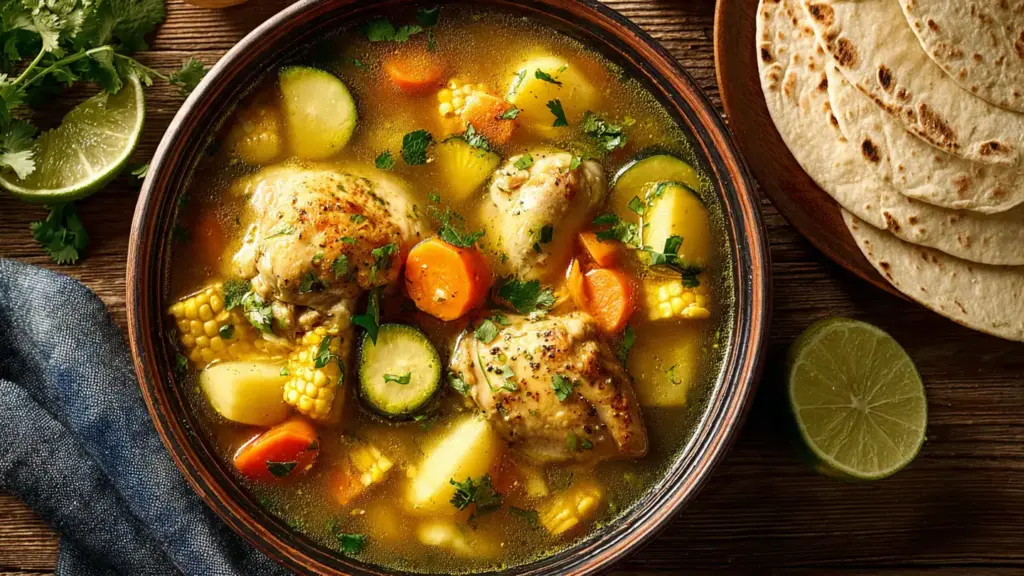
Caldo de pollo is a complete meal on its own, but these accompaniments make it even better.
Warm Corn Tortillas are the most traditional pairing. Tear them and dip them into the broth, or use them to scoop up bites of chicken and vegetables. It is the classic way to eat this soup.
- Sliced avocado or a few cubes added directly to the bowl
- Fresh Pico de Gallo spooned on top for brightness and texture
- A drizzle of hot sauce like Tapatío or Valentina for heat
- Cooked white rice stirred into the bowl for a heartier meal
- Warm Flour Tortillas as an alternative to corn
- Sliced radishes for a fresh, crunchy contrast
- A spoonful of sour cream for a creamy, cooling element
Read Also: Jamaican Chicken Soup Recipe
Variations to Try
Once you have the base recipe down, there are plenty of delicious directions to take it.
- Caldo de Pollo con Arroz: Cook white or Mexican rice separately and add it to each bowl just before serving. This is one of the most popular ways to enjoy the soup.
- Spicy Caldo de Pollo: Add 1 to 2 serrano peppers or jalapeños whole to the pot while the chicken simmers. Remove before serving or leave them in for more heat.
- Caldo de Pollo with Chayote: Replace the zucchini with chayote squash for a more traditional version. Chayote has a mild, slightly sweet flavor and a firmer texture that holds up beautifully in the broth.
- Slow Cooker Version: Place all the chicken, aromatics, and water in a slow cooker and cook on low for 7 to 8 hours or on high for 4 to 5 hours. Add the vegetables in the last 2 hours.
- Cabbage Addition: Add a wedge of green cabbage during the last 20 minutes of cooking. It turns silky and flavorful in the broth, a technique used in many regional Mexican versions.
- With Vermicelli Noodles: Add thin vermicelli pasta (fideo) to the soup during the last 10 minutes for a heartier, slightly different texture.
For fans of Mexican soups, green pozole is another recipe worth exploring using similar techniques.
Storage and Reheating
This soup stores beautifully and is one of those dishes that genuinely improves overnight as the flavors continue to meld.
- Allow the soup to cool to room temperature before transferring it to storage containers.
- Refrigerate in airtight containers for up to 4 to 5 days.
- For longer storage, freeze the soup in freezer-safe containers or heavy-duty zip-lock bags for up to 3 months.
- If planning to freeze, consider leaving out the potatoes, which can turn grainy after thawing, and add freshly cooked potatoes when reheating.
Reheating instructions:
- Stovetop (recommended): Pour the soup into a pot and heat over medium heat, stirring occasionally, until it is heated through.
- Microwave: Transfer to a microwave-safe bowl, cover loosely with a microwave-safe lid or plate, and heat in 2-minute intervals, stirring in between, until hot.
Read Also: Chicken Soup Recipe
Nutritional Facts
The following is an estimate per serving based on 6 servings from this recipe.
| Nutrient | Amount per Serving |
|---|---|
| Calories | 310 kcal |
| Protein | 32 g |
| Total Fat | 9 g |
| Saturated Fat | 2.5 g |
| Carbohydrates | 26 g |
| Dietary Fiber | 4 g |
| Sugar | 5 g |
| Sodium | 580 mg |
| Vitamin A | 85% DV |
| Vitamin C | 35% DV |
| Iron | 15% DV |
| Calcium | 6% DV |
Nutritional values are estimates only and will vary based on specific ingredients, portion sizes, and any optional additions.
The lemon chicken orzo soup on this site offers a similar calorie range if you are comparing lighter chicken soup options.
Health Benefits of Key Ingredients
This soup does more than just taste good. Every major ingredient brings something meaningful to the table.
Bone-in chicken is the cornerstone of this recipe’s health value. Simmering bones produces a collagen-rich broth that supports joint health, gut lining integrity, and skin elasticity. Chicken is also an excellent source of lean protein and B vitamins, particularly niacin and B6, which play roles in energy metabolism and immune function.
- Carrots are loaded with beta-carotene, a precursor to vitamin A that supports eye health and immune function. The cooking process actually increases the bioavailability of beta-carotene, making cooked carrots more nutritious than raw in this context.
- Garlic contains allicin, a compound with well-documented antimicrobial and anti-inflammatory properties. This is part of why chicken soup with garlic has a long history as a home remedy for colds and illness.
- Celery provides vitamin K, folate, and potassium, while contributing a subtle herbal note that rounds out the broth’s flavor.
- Zucchini is low in calories and high in water content, contributing hydration alongside vitamins C and B6.
- Corn adds natural sweetness and dietary fiber, along with antioxidants like lutein and zeaxanthin that support eye health.
- Cilantro offers a small but meaningful boost of vitamins A, C, and K, along with compounds that may support healthy digestion.
- Lime juice is rich in vitamin C and adds acidity that helps the body absorb the iron present in the chicken and vegetables more efficiently.
Another great recipe with overlapping health benefits is this vegetable soup that highlights many of these same nutrient-dense ingredients.
Frequently Asked Questions
1. What is the difference between caldo de pollo and regular chicken soup?
Caldo de pollo is a traditional Mexican-style chicken soup made with bone-in chicken, fresh vegetables, and a clear, lightly seasoned broth. It is lighter and less heavily spiced than many American-style chicken soups. The broth is the star, built entirely from scratch using the chicken bones and aromatics rather than starting with pre-made stock.
2. Can I use boneless chicken in this recipe?
You can use boneless chicken, but the broth will be noticeably lighter in body and flavor. Bone-in chicken pieces release collagen and natural gelatin as they simmer, which gives caldo de pollo its signature rich, slightly silky broth. If you only have boneless chicken breasts or thighs, shred them after cooking and return them to the pot. Consider adding an extra cup or two of good-quality chicken stock to compensate for the lost depth.
3. What vegetables are traditionally used in caldo de pollo?
The most common vegetables are carrots, potatoes, zucchini (or chayote), celery, onion, garlic, corn, and tomatoes. Beyond these classics, the recipe is quite flexible. Cabbage, green beans, and chiles are all popular regional additions. The beauty of caldo de pollo is that it adapts to whatever vegetables are fresh and available.
4. How do I keep my broth clear and not cloudy?
Three things make the biggest difference: start with cold water, skim the foam diligently during the first 10 minutes after the water comes to a boil, and maintain a gentle simmer rather than a rolling boil throughout the entire cooking time. A hard boil agitates the proteins and starches in the pot and causes them to cloud the broth. Patience and low heat are your best tools.
5. Can I make this soup in a slow cooker or Instant Pot?
Absolutely. For the slow cooker, combine the chicken, aromatics, water, and seasoning in the insert and cook on low for 7 to 8 hours. Add the vegetables in the last 2 hours. For the Instant Pot, cook the chicken with aromatics on high pressure for 25 minutes, release the pressure naturally, then add vegetables and cook on high pressure for an additional 5 minutes. The stovetop version produces the clearest broth, but both alternative methods yield delicious results.
This Cuban chicken soup follows a similar slow-cook approach if you enjoy exploring Latin chicken soup variations.
Final Thoughts
Caldo de pollo is proof that the most satisfying meals are often the simplest ones.
A handful of fresh ingredients, a big pot, and a couple of hours of patient simmering are all it takes to create something genuinely restorative.
This recipe is the kind of food that feels like care, the sort of thing you make when someone needs comfort or when you need to remind yourself that cooking does not have to be complicated to be deeply good.
Give this caldo de pollo a try this week and let the results speak for themselves. If you make it, come back and leave a comment below. Share what vegetables you used, what you served alongside it, and whether it earned a spot in your regular rotation. Nothing makes the kitchen feel more alive than hearing how a recipe lands in someone else’s home.
Recommended:
- Chicken Pozole Recipe
- Red Pozole Recipe
- Beef Pozole Recipe
- Chicken Gnocchi Soup Recipe
- Picadillo Recipe
- Enchiladas Suizas Recipe
- Birria Tacos Recipe
- Taco Seasoning Recipe
- Mexican Street Corn Recipe
- Chicken Sopas Recipe