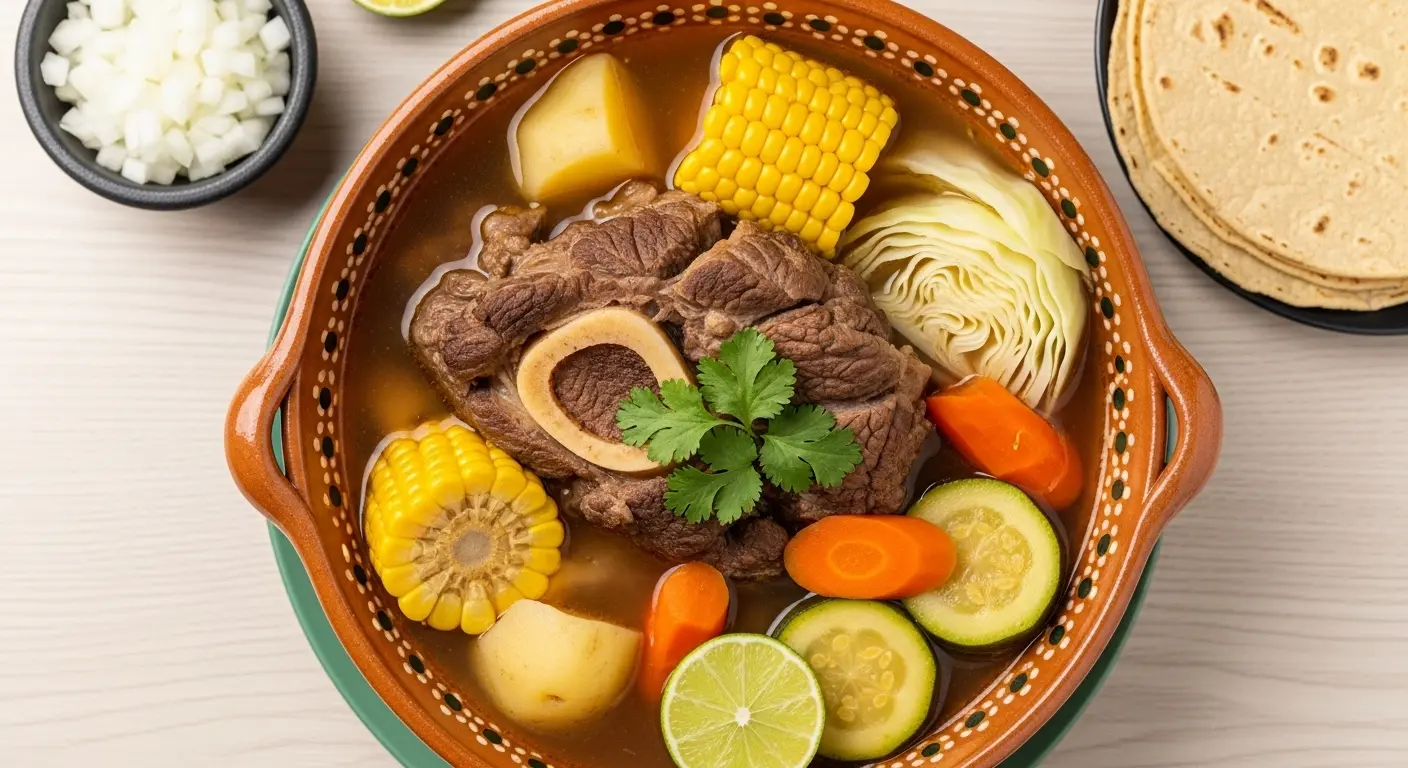
If you’ve never made a caldo de res recipe from scratch, you’re in for something really special. This traditional Mexican beef soup is the kind of dish that fills your entire home with an incredible aroma and brings everyone rushing to the kitchen before it’s even done. It’s hearty, nourishing, and deeply flavorful, built on a rich bone broth that simmers low and slow until the beef is fall-apart tender.
What makes caldo de res so satisfying is the layering of simple ingredients. Bone-in beef shank is the key, because as it simmers, the marrow melts into the broth, creating a depth of flavor that no bouillon cube could ever replicate on its own. Big, rustic chunks of corn, carrots, potatoes, zucchini, and cabbage get added at different stages so every vegetable stays perfectly cooked rather than turning mushy.
This isn’t a quick weeknight recipe, and it’s not meant to be. Caldo de res is a Sunday soup, a gather-the-family-around-the-table kind of meal. The patience you pour into it comes back to you in every single bowl.
Pair it with warm corn tortillas, a squeeze of fresh lime, and a spoonful of salsa, and you’ve got one of the most comforting meals in all of Mexican cuisine.
You might also enjoy: Caldo de Pollo Recipe
Why You’ll Love This Caldo de Res Recipe
This soup has a way of winning everyone over the moment they take their first sip of the broth. It’s one of those recipes that always gets requested again.
Here’s why it stands out:
- Deep, rich bone broth – Simmering bone-in beef shank creates a naturally rich broth with incredible body and flavor, no shortcuts needed.
- Wholesome and nourishing – Packed with lean protein, collagen from the bones, and a rainbow of vegetables full of vitamins and minerals.
- Customizable vegetables – Use whatever seasonal produce you have on hand. Chayote, green beans, or sweet potato all work beautifully.
- Feeds a crowd – This is a big-pot recipe meant to be shared. It easily feeds 6 to 8 people with generous bowls.
- Better the next day – Like most broth-based soups, caldo de res develops even more flavor overnight. Leftovers are a treat.
- Naturally gluten-free – There’s nothing to modify for those avoiding gluten. The entire soup is naturally free of it.
- Satisfying without being heavy – Despite how filling it is, the broth-forward base keeps things light enough to eat a big bowlful without regret.
This soup is also one of the most forgiving recipes you’ll find. If you add a little more of one vegetable or use a slightly different cut of beef, it’s still going to be delicious.
Read Also: Chicken Tortilla Soup Recipe
Ingredients
This ingredient list is built around the most traditional version of caldo de res, with the classic vegetables and seasonings you’ll find across Mexican kitchens. Each component plays a specific role in building flavor.
- 3 lbs (1.4 kg) bone-in beef shank, cut into 2 to 3 inch pieces
- 1 lb (450 g) beef chuck, cut into 1.5-inch chunks (optional, for heartier soup)
- 12 cups (2.8 liters) water, plus more as needed
- 1 medium white onion, halved
- 6 garlic cloves, peeled
- 3 bay leaves
- 2 teaspoons (10 g) kosher salt, plus more to taste
- 1/2 teaspoon (1 g) black pepper
- 1 teaspoon (2 g) dried Mexican oregano
- 2 ears of corn, cut into 3 to 4 rounds each
- 3 medium carrots (about 300 g), cut into 2-inch chunks
- 3 medium Yukon gold potatoes (about 400 g), cut into quarters
- 2 medium zucchini (about 300 g), cut into thick half-moons
- 1/4 head green cabbage (about 200 g), cut into large wedges
- 2 Roma tomatoes, roughly chopped
- 2 tablespoons (30 g) tomato paste
- 1 jalapeño pepper, left whole or halved (optional)
- 1 large bunch fresh cilantro, tied together with kitchen twine
- Lime wedges, for serving
- Chopped white onion and cilantro, for garnish
For an even richer broth, you can use a beef bouillon cube to boost the flavor after the initial simmer, though the bone broth on its own is already deeply flavorful.
Read Also: Mexican Fish Soup Recipe
Kitchen Equipment Needed
You don’t need any specialized tools for this recipe, but having a few good basics makes the process much easier and more enjoyable.
- Large stockpot or Dutch oven (at least 8-quart capacity) – essential for fitting all the beef, vegetables, and broth
- Fine mesh skimmer – for removing the foam that rises during the initial beef simmer, which keeps the broth clear and clean
- Sharp chef’s knife and cutting board
- Large serving ladle
- Tongs, for handling the beef shank bones
- Kitchen twine, for bundling the cilantro bunch
- Slotted spoon
Read Also: Hamburger Soup Recipe
Recommended Products for This Recipe
These are products selected for quality and performance that genuinely make a difference when you’re making caldo de res at home.
1. Le Creuset Enameled Cast Iron Dutch Oven
A heavy-bottomed pot is everything for this recipe. The Le Creuset Dutch oven distributes heat evenly across the base and up the sides, which means your broth simmers steadily without hot spots that could scorch the bottom. The tight-fitting lid traps moisture and flavor beautifully. It’s a serious investment, but it will last you decades.
2. OXO Good Grips Skimmer
Skimming the foam from the broth during the first hour is what separates a cloudy, murky caldo from a clear, beautiful one. The OXO fine mesh skimmer has a long handle and a fine enough mesh to catch even small bits of foam without removing precious broth. It makes this step quick and effortless.
3. Dried Mexican Oregano
Mexican oregano is a completely different herb from the Mediterranean oregano most people have in their spice rack. It has a more citrusy, floral flavor that pairs perfectly with beef-based broths. Using authentic dried Mexican oregano in your caldo makes a noticeable difference in the final flavor profile.
4. Kitchen Twine
Bundling your cilantro with twine before adding it to the pot lets you pull out the whole bunch at once before serving, which means all the flavor without any stringy stems floating around in your bowl. A roll of natural cotton kitchen twine is a small thing that makes a real difference.
5. Large Soup Ladle
Caldo de res is served in big, generous bowls with chunks of everything. A deep-bowl stainless steel ladle with a long handle lets you get the broth, beef, and vegetables in every single scoop without having to chase things around the pot.
This recipe also pairs wonderfully with a rich, comforting Beef and Barley Soup if you’re in the mood for another hearty beef-based bowl.
Step-by-Step Instructions
Step 1: Prepare the Beef
- Pat the beef shank pieces dry with paper towels. This helps them brown more effectively if you choose to sear them first (optional but adds extra depth of flavor).
- Season all the beef pieces generously on all sides with about half the kosher salt and the black pepper.
- If the beef chuck pieces are larger than 1.5 inches, trim or cut them down so they cook evenly alongside the shank.
- Set all the beef aside on a plate while you get your pot ready.
Step 2: Start the Broth
- Place your large stockpot or Dutch oven on the stove over high heat.
- Add 12 cups (2.8 liters) of cold water to the pot. Starting with cold water helps draw out impurities slowly, which leads to a cleaner, clearer broth.
- Add the seasoned beef shank pieces and beef chuck to the cold water. Place them in before the water heats up.
- Add the halved white onion, peeled garlic cloves, bay leaves, and the remaining salt to the pot.
- Bring the pot to a full rolling boil over high heat, which will take about 12 to 15 minutes.
Step 3: Skim the Foam
- Once the water reaches a boil, you’ll see a brownish-gray foam rising to the surface. This is coagulated protein and impurities from the beef.
- Use your fine mesh skimmer to scoop this foam off the surface and discard it. Work quickly but thoroughly.
- Keep skimming every few minutes for the first 10 to 15 minutes of boiling until the foam production slows significantly and the broth begins to run clear.
- This step is important. Skipping it leads to a murky, slightly bitter-tasting broth.
Step 4: Simmer the Beef Low and Slow
- Once the foam has been skimmed, reduce the heat to low. You want a gentle, steady simmer, with just a few small bubbles breaking the surface at a time.
- Add the dried Mexican oregano to the pot.
- Place the lid on the pot, leaving it slightly ajar to allow a little steam to escape. This prevents the liquid from reducing too quickly.
- Let the beef simmer for 2 to 2.5 hours, or until the meat on the beef shank is very tender and beginning to pull away from the bone.
- Check the pot every 30 minutes. If the liquid level drops significantly, add an additional cup of hot water to maintain the level.
- Taste the broth at the 90-minute mark and adjust salt as needed.
Step 5: Remove and Shred the Beef
- Using tongs, carefully remove the beef shank pieces from the pot and transfer them to a cutting board. They will be very hot and the meat may be starting to fall off the bone.
- Remove and discard the bay leaves, onion halves, and garlic cloves from the broth with a slotted spoon.
- Allow the beef shank to cool for about 5 to 10 minutes, until it is comfortable enough to handle.
- Pull the meat away from the bones with your fingers or two forks. The meat should separate very easily at this point.
- Discard the bones. Break any large pieces of meat into bite-sized chunks and return all the meat to the pot.
- If using beef chuck, it can remain in the pot as is since it has been simmering the whole time.
Step 6: Add the Tomato Base
- Stir the tomato paste into the broth until it fully dissolves. This adds body and a subtle sweetness to the broth.
- Add the roughly chopped Roma tomatoes to the pot.
- Add the jalapeño pepper (whole or halved depending on your heat preference). Leaving it whole adds a very mild, background heat; halving it adds more noticeable spice.
- Bring the broth back up to a gentle simmer over medium heat.
Step 7: Add the Dense Vegetables
- Add the corn rounds, carrot chunks, and potato quarters to the pot.
- These vegetables are denser and take longer to cook, so they go in first to get a head start.
- Stir gently, then bring the soup back to a steady simmer.
- Cook for 15 to 20 minutes, until the carrots begin to soften at the edges and the potatoes are starting to cook through but are not fully tender yet.
Step 8: Add the Remaining Vegetables and Cilantro
- Add the zucchini half-moons to the pot.
- Nestle the cabbage wedges into the liquid. They will be sticking up at first but will wilt and submerge as they cook.
- Add the tied bundle of fresh cilantro, pushing it down into the broth.
- Stir gently to combine everything without breaking up the potato chunks or cabbage wedges.
- Continue simmering for another 15 to 20 minutes, until the potatoes are fork-tender, the zucchini is just cooked through, and the cabbage has wilted and softened.
- Remove and discard the cilantro bundle and the jalapeño (if you prefer not to serve it).
Step 9: Final Seasoning and Serve
- Taste the broth one final time and adjust the salt and pepper as needed.
- If the broth tastes a little flat after all the vegetables have been added, squeeze in the juice of half a lime directly into the pot. This brightens everything up.
- Ladle the soup into large, deep bowls, making sure every bowl gets a generous portion of broth, beef, corn, potatoes, carrots, zucchini, and cabbage.
- Serve immediately with lime wedges, chopped white onion, fresh cilantro, and warm corn tortillas on the side.
This recipe also pairs beautifully with a batch of homemade Pico de Gallo spooned right over the top of each bowl.
Tips for Success
Following a few key techniques will make the difference between a good caldo de res and a truly great one. These are the details that matter most.
- Use bone-in beef shank without fail. The marrow and collagen inside the bone dissolve into the broth as it simmers, giving it a silky, gelatinous body that you simply cannot replicate with boneless meat. This is the most important tip in the recipe.
- Do not rush the simmering. Caldo de res that simmers for only an hour will have tough, chewy beef and a thin broth. Give it the full 2 to 2.5 hours and the difference will be dramatic.
- Skim, skim, skim. The first 15 minutes after the water boils are critical for skimming foam. A clear broth looks better, tastes cleaner, and has a more refined flavor.
- Cut vegetables into large, rustic chunks. Caldo de res is not a finely diced soup. Big pieces of corn, potato, and carrot are part of the appeal. They should look hearty and substantial in the bowl.
- Add vegetables in stages. Harder vegetables like corn, carrots, and potatoes need 15 to 20 minutes more than softer ones like zucchini and cabbage. Adding everything at once leads to some vegetables becoming mushy.
- Do not boil vigorously once the vegetables are in. A hard boil will break down the zucchini and cabbage too quickly. Keep it at a gentle simmer once the vegetables go in.
- Season throughout, not just at the end. Add a pinch of salt at each stage, tasting as you go. This builds flavor more effectively than dumping it all in at the end.
Another great tip: Chicken Vegetable Soup uses many of the same vegetable layering principles if you want to practice the technique with a quicker-cooking protein first.
Serving Suggestions
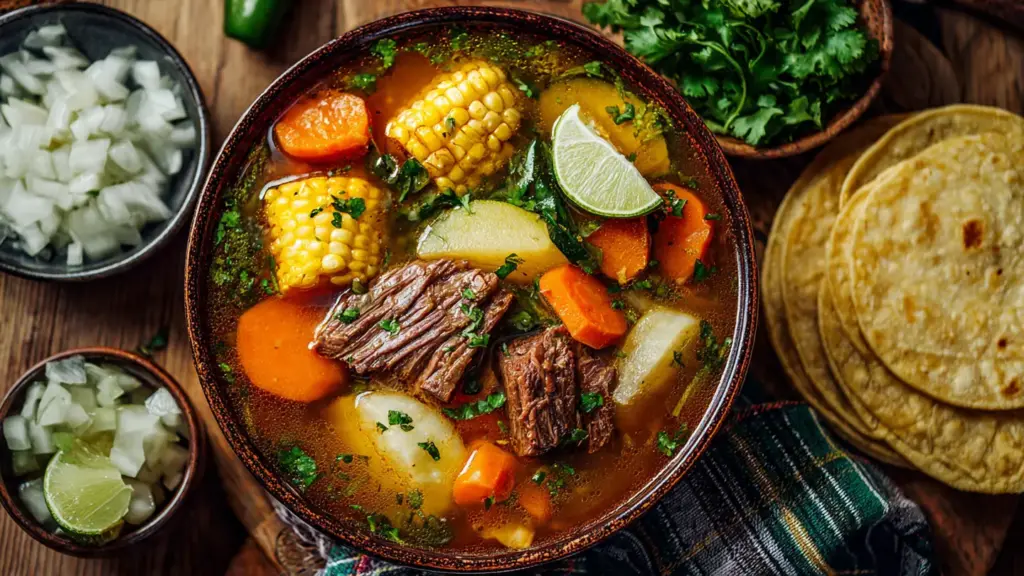
Caldo de res is truly a meal in a bowl, but the right garnishes and accompaniments take it from great to unforgettable. In Mexico, this soup is usually served with a whole spread of toppings so everyone can customize their own bowl.
Set out the following for the perfect caldo de res experience:
- Lime wedges – A big squeeze of fresh lime over each bowl is non-negotiable. The acidity cuts through the richness of the broth and wakes everything up.
- Chopped white onion and fresh cilantro – Classic garnishes that add freshness and crunch to every bite.
- Warm corn tortillas – Use them to scoop up the beef and vegetables between bites, or simply tear and dip them into the broth.
- Fresh salsa or salsa verde – Spoon a little over the top for extra heat and brightness.
- Diced jalapeño or serrano pepper – For those who want extra heat beyond what’s cooked into the soup.
- Sliced radishes – Adds a peppery crunch and a pop of color to each serving.
- Mexican rice – Serve a scoop on the side or even inside the soup bowl to make it even more filling.
- Easy Guacamole – A spoonful of creamy guacamole stirred into the hot broth is a surprisingly delicious combination.
Variations to Try
The base recipe is traditional and excellent on its own, but caldo de res is one of those soups that invites experimentation once you’ve made it a few times. These variations are all rooted in regional Mexican cooking traditions.
- Red chile version – Toast 2 dried guajillo chiles in a dry skillet, then soak them in hot water for 15 minutes. Blend with a cup of broth and strain directly into the pot before adding the vegetables for a smoky, earthy depth.
- Chayote instead of zucchini – Chayote is the more traditional squash used in parts of Mexico. It has a firmer texture and a mild, slightly nutty flavor. Peel and cut it into quarters before adding.
- Slow cooker method – Add the beef, water, onion, garlic, bay leaves, salt, pepper, and oregano to your slow cooker and cook on low for 7 to 8 hours. Add the vegetables during the final 2 hours.
- Instant Pot method – Cook the beef and aromatics on high pressure for 40 minutes with a natural pressure release. Then switch to the sauté function, add the vegetables, and simmer until tender.
- Green beans and turnips – Add a handful of trimmed green beans along with the zucchini, and substitute one potato for a cubed turnip for an earthier variation.
- Add tomato sauce – Some cooks stir in 1/4 cup (60 ml) of plain tomato sauce along with the tomato paste to give the broth more body and a slightly deeper red color.
For another deeply satisfying Mexican beef dish, the Birria Tacos Recipe is one you’ll want to bookmark next.
Storage and Reheating
Caldo de res stores exceptionally well and is one of those soups that actually improves as it sits. Storing it properly keeps it fresh and flavorful for days.
- Refrigerator: Allow the soup to cool completely to room temperature before transferring to an airtight container. It will keep in the fridge for up to 4 days.
- Freezer: Caldo de res freezes very well. Portion it into freezer-safe bags or containers, leaving an inch of headspace. Freeze for up to 3 months. Thaw overnight in the refrigerator before reheating.
- Reheating on the stovetop: Pour the soup into a pot and reheat over medium heat, stirring occasionally, until warmed through. This is the preferred method because it heats the soup evenly without breaking down the vegetables further.
- Reheating in the microwave: Transfer a portion to a microwave-safe bowl, cover loosely, and heat in 90-second intervals, stirring between each, until steaming hot.
- Note on vegetables after freezing: Potatoes and zucchini can become soft after freezing. If you plan to freeze the soup, consider leaving those vegetables out and adding freshly cooked ones when reheating.
The Crockpot Beef Stew Recipe uses similar storage tips and is another great make-ahead freezer meal to try alongside this one.
Nutritional Facts
The following values are approximate, based on one serving out of eight total, made with both beef shank and beef chuck, and all the listed vegetables.
| Nutrient | Per Serving |
|---|---|
| Calories | 340 kcal |
| Protein | 35 g |
| Total Fat | 12 g |
| Saturated Fat | 4 g |
| Carbohydrates | 24 g |
| Dietary Fiber | 5 g |
| Sugars | 6 g |
| Sodium | 580 mg |
| Potassium | 870 mg |
| Vitamin C | 35% DV |
| Iron | 20% DV |
| Calcium | 6% DV |
Note: Values will vary based on exact cuts of beef used, how much fat is trimmed, and specific vegetable quantities. This soup is naturally low in refined carbohydrates and is gluten-free.
For another nourishing, protein-rich soup option, the Beef Bone Broth Soup Recipe is well worth exploring.
Health Benefits of Key Ingredients
Beyond tasting incredible, caldo de res is genuinely good for you. The slow-simmered bone broth alone makes it one of the most nourishing soups you can make at home.
Here’s what you’re getting from the key ingredients:
- Bone broth from beef shank – Rich in collagen, gelatin, and trace minerals like phosphorus and magnesium. Collagen supports joint health, gut lining integrity, and skin elasticity. A bowl of caldo de res made with real bone broth is far more nourishing than any store-bought supplement.
- Lean beef protein – Beef shank and chuck are excellent sources of complete protein, zinc, iron (especially heme iron, which is highly absorbable), and B vitamins like B12. These nutrients are essential for energy production, immune function, and red blood cell formation.
- Carrots – A great source of beta-carotene, which converts to vitamin A in the body. Vitamin A supports vision, immune health, and skin integrity.
- Cabbage – One of the most nutrient-dense vegetables per calorie. Rich in vitamin C, vitamin K, and glucosinolates, which are compounds studied for their role in supporting cellular health.
- Zucchini – High in water content and rich in potassium, which helps regulate blood pressure and support muscle function. It also provides manganese and vitamin B6.
- Corn – Provides dietary fiber that feeds beneficial gut bacteria. It also contains lutein and zeaxanthin, antioxidants that support eye health.
- Tomatoes – A significant source of lycopene, a powerful antioxidant. Cooking tomatoes actually increases the bioavailability of lycopene compared to eating them raw.
- Garlic and cilantro – Both have well-documented antimicrobial and anti-inflammatory properties. Cilantro also supports the body’s natural detoxification processes.
Read Also: Vegetable Soup Recipe
Frequently Asked Questions
1. What cut of beef is best for caldo de res?
Bone-in beef shank is the most traditional and recommended cut for this recipe. The bone marrow dissolves into the broth during the long simmer, creating a depth of flavor and a slightly silky texture that no boneless cut can produce. If you cannot find beef shank at your regular grocery store, ask your butcher directly as many keep it in the back. You can also supplement with beef chuck for more meat volume, or use oxtail or bone-in short ribs for an even richer broth.
2. How long does it take to make caldo de res?
The total time is about 3 to 3.5 hours from start to finish, with the majority of that being mostly hands-off simmering time. The active prep work takes about 20 to 25 minutes, and then you have around 2 to 2.5 hours for the beef to simmer before adding the vegetables. The vegetables themselves take another 30 to 40 minutes. This is not a quick-meal recipe, but the effort is minimal and the result is absolutely worth the time.
3. Can I make this in an Instant Pot or slow cooker?
Yes, both methods work well. For the Instant Pot, add the beef, water, onion, garlic, salt, pepper, oregano, and bay leaves and cook on high pressure for 40 minutes followed by a 15-minute natural pressure release. Then switch to the sauté function, add the vegetables in stages, and simmer until tender. For the slow cooker, cook the beef with the aromatics on low for 7 to 8 hours, then add the vegetables during the last 2 hours of cooking so they don’t become mushy.
4. Why is the broth in my caldo de res cloudy?
The most common cause of a cloudy broth is not skimming the foam that rises to the surface during the first 10 to 15 minutes of cooking. That foam is coagulated protein and impurities from the beef. Another cause is boiling the soup too vigorously, which breaks down the proteins and fats into tiny particles that cloud the liquid. To get a clear broth, skim diligently in the early stage and keep the heat at a gentle simmer rather than a rolling boil throughout the cooking process.
5. What vegetables can I add or substitute?
Caldo de res is wonderfully flexible when it comes to vegetables. Traditional additions include chayote squash (a great substitute for zucchini), green beans, turnips, and celery. You can also add a small ear of sweet potato or some cooked chickpeas for extra heartiness. The key principle is to add denser, starchier vegetables first and softer ones later so everything finishes cooking at around the same time. Avoid watery vegetables like cucumber or iceberg lettuce, as they will fall apart and muddy the broth.
For a similar, soul-warming soup with a chicken base instead, the Chicken Soup Recipe is a wonderful complement to this one.
Final Thoughts
Making caldo de res is one of those kitchen experiences that reminds you why slow cooking exists. From the first bubble of the broth to the moment you ladle it into a bowl, everything about the process is deeply satisfying.
It’s a recipe rooted in patience and simplicity, and those two things are exactly what make it so good. The beef shank does the heavy lifting, the vegetables bring color and texture, and the broth ties everything together into something that feels like a warm hug in a bowl.
If you’ve been looking for a new soup to add to your cold-weather rotation, or just want to try something rooted in authentic Mexican tradition, this caldo de res recipe is the one. Give it a try this weekend, and we’d love to hear how it turns out. Drop a comment below, share a photo, or tag us if you make it. Your bowl of caldo is waiting.
Recommended:
- Red Pozole Recipe
- Green Pozole Recipe
- Chicken Pozole Recipe
- Beef Pozole Recipe
- Picadillo Recipe
- Minestrone Soup Recipe
- Stuffed Pepper Soup Recipe
- Cabbage Soup Recipe
- Enchiladas Suizas Recipe
- Taco Seasoning Recipe