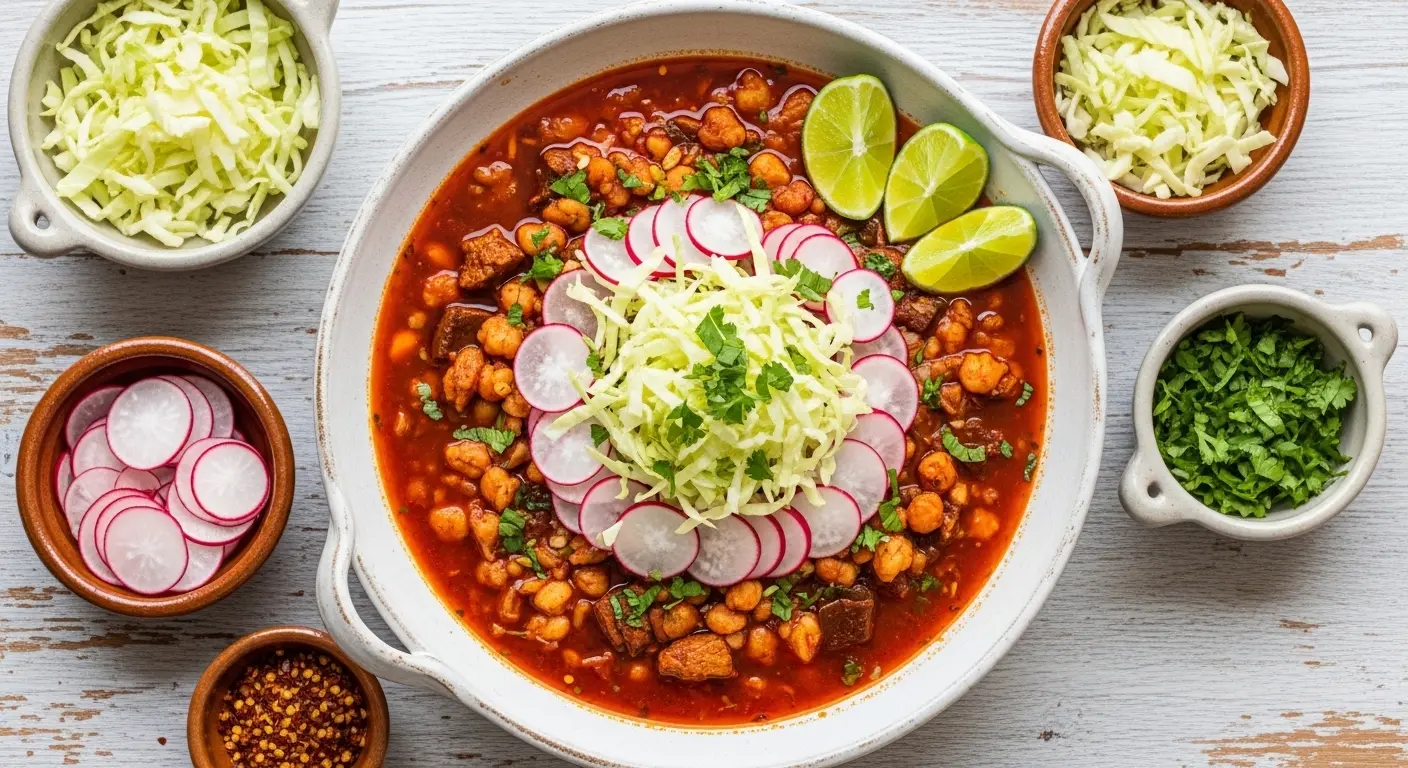
Few soups carry as much soul as a proper red pozole recipe. This iconic Mexican stew has been simmering on stovetops for generations, filling homes with the earthy aroma of dried chiles, tender pork, and that deeply savory, ruby-red broth that warms you from the inside out.
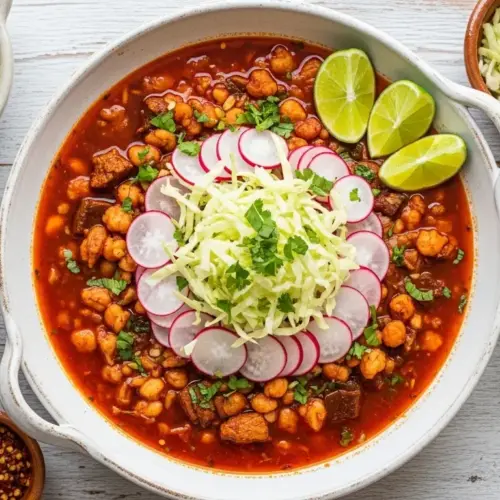
Pozole rojo is built on four essential pillars: slow-cooked pork, hominy corn, a bold red chile broth made from rehydrated dried guajillo and ancho chiles, and a table full of fresh garnishes that each person customizes to their own taste.
What makes this dish so beloved is how those simple components transform into something extraordinary when given time and care.
The chile broth is the real heart of the recipe. Guajillo chiles bring a bright, slightly fruity heat and gorgeous red color, while ancho chiles add deep, almost chocolatey richness. Together, they create a sauce that is complex and layered without being overwhelming.
Traditionally made for Christmas, New Year’s, and family celebrations, this is the kind of recipe that gets passed down through generations. Once you make it at home, you will absolutely understand why.
For more cozy, flavor-forward Mexican soups, you might also love this Caldo de Pollo, which is another soul-warming classic perfect for any occasion.

Why You’ll Love This Red Pozole Recipe
This is one of those recipes that rewards patience with incredible depth of flavor.
Every spoonful delivers tender, pull-apart pork, chewy-yet-soft hominy kernels, and that rich, smoky red chile broth that has been slowly simmered to perfection.
The garnish spread is one of the most fun parts of serving pozole. Shredded cabbage, sliced radishes, chopped onion, fresh cilantro, lime wedges, and a sprinkle of Mexican oregano allow everyone at the table to build their own bowl.
It is naturally gluten-free and can be made ahead of time, actually tasting even better the next day as the flavors continue to meld together.
Here is a quick look at why this recipe is worth every minute:
- Rich, authentic flavor from two types of dried chiles that create a deeply nuanced broth
- Tender, shreddable pork that soaks up all those bold chile flavors
- Hearty and filling thanks to the addition of hominy, which adds satisfying chew and body
- Completely customizable with a colorful spread of traditional garnishes
- Great for feeding a crowd since this recipe serves 8 to 10 people generously
- Makes incredible leftovers that taste even more developed after resting overnight
- Naturally gluten-free with no substitutions needed
You might also love this Chicken Pozole if you prefer a lighter protein version with all the same comforting flavors.
Ingredients
For the most flavorful pozole, use bone-in pork for the broth phase and dried whole chiles rather than pre-made chile powder. Dried guajillo and ancho chiles are widely available in the Mexican food aisle of most grocery stores or online. Canned hominy is a perfectly acceptable and convenient choice for home cooks and saves significant time compared to starting from dried.
For the Pork and Broth:
- 3 lbs (1.36 kg) pork shoulder, cut into large 3-inch chunks
- 1 lb (450 g) pork neck bones or spare ribs (for extra richness)
- 1 large white onion, halved
- 1 whole head of garlic, top sliced off to expose the cloves
- 3 bay leaves
- 2 tsp (10 g) kosher salt, plus more to taste
- 10 cups (2.4 liters) water
For the Red Chile Sauce:
- 6 dried guajillo chiles, stems and seeds removed
- 3 dried ancho chiles, stems and seeds removed
- 2 dried chiles de arbol (optional, for extra heat)
- 4 garlic cloves, peeled
- 1/2 white onion, roughly chopped
- 1 tsp (2 g) dried Mexican oregano
- 1/2 tsp (1 g) ground cumin
- 1 tsp (5 g) salt
- 2 cups (480 ml) reserved pork broth (from cooking the meat)
For the Hominy:
- 2 cans (29 oz / 822 g each) white hominy, drained and rinsed
For the Garnishes:
- 2 cups (180 g) shredded green cabbage
- 8 to 10 radishes, thinly sliced
- 1/2 white onion, finely diced
- 1 cup (16 g) fresh cilantro, roughly chopped
- 3 to 4 limes, cut into wedges
- 1 tbsp (3 g) dried Mexican oregano, for sprinkling
- Crushed red pepper flakes or chile de arbol powder, for serving
- Corn tostadas, for serving (optional)
Read Also: Green Pozole Recipe
Kitchen Equipment Needed
Having the right tools makes the cooking process smoother, especially for a long-simmering stew like this one.
- Large stockpot or Dutch oven (at least 8 quarts / 7.5 liters capacity)
- Blender or immersion blender (for the chile sauce)
- Fine mesh strainer or sieve
- Large mixing bowl (for soaking dried chiles)
- Cutting board and sharp knife
- Slotted spoon or tongs
- Ladle
- Measuring cups and spoons
- Small bowls, for organizing garnishes
Another classic comfort recipe worth exploring: Caldo de Res is another hearty Mexican beef and vegetable broth that deserves a spot in your rotation.
Recommended Products for This Recipe
These are products I genuinely recommend based on quality, performance, and how much of a difference they can make when making red pozole at home.
1. Dried Guajillo Chiles (Bulk Pack)
Fresh, high-quality guajillo chiles are absolutely key to achieving that deep, vibrant red broth. Buying them in bulk ensures they are fragrant and pliable rather than stale. A good-quality guajillo chile will have a rich brick-red color and a slightly leathery but still flexible texture.
2. Lodge Enameled Cast Iron Dutch Oven
This pot is ideal for slow-simmering pozole over low heat for extended periods. It distributes heat evenly and retains temperature beautifully, meaning your broth develops richer flavor without scorching. The heavy lid traps moisture so the pork stays incredibly tender and juicy.
3. Vitamix or High-Powered Blender
Blending the rehydrated chiles into a perfectly smooth, velvety sauce is the key step that separates good pozole from great pozole. A high-powered blender breaks down the chile skins completely, giving you a silky, deeply colored sauce with no fibrous bits or unpleasant texture.
4. Canned White Hominy (Large Cans)
Look for large 29-ounce cans of white hominy for this recipe. White hominy has a cleaner, more neutral flavor than yellow hominy, which is better suited to pozole’s bold red broth. Draining and rinsing it thoroughly before adding it to the soup removes any canned flavor and lets the broth shine through.
For another bold and satisfying Mexican recipe, try making Birria Tacos as a festive companion dish for your next gathering.

Step-by-Step Instructions
1. Prepare the Dried Chiles
- Remove the stems from all of the guajillo, ancho, and chile de arbol chiles by snapping them off at the base.
- Tear each chile open and shake out the seeds. Removing the seeds reduces bitterness and prevents the sauce from becoming too gritty. You do not need to remove every single seed.
- Use a dry paper towel to wipe the inside of each chile clean if needed.
- Place the cleaned chiles in a large heatproof bowl.
- Pour enough boiling water over the chiles to fully submerge them, roughly 3 to 4 cups (720 to 960 ml).
- Place a small plate or bowl on top of the chiles to keep them submerged under the water.
- Allow the chiles to soak for 20 to 25 minutes until they are very soft, pliable, and deeply darkened in color. This rehydration step is essential for a smooth, flavorful sauce.
- Once softened, drain the chiles and set them aside. Discard the soaking liquid, which can be bitter.
2. Cook the Pork and Build the Broth
- Place the pork shoulder chunks and pork neck bones (or spare ribs) into your large stockpot or Dutch oven.
- Add the halved white onion, the whole head of garlic (cut-side up), and the bay leaves.
- Pour in 10 cups (2.4 liters) of cold water. The water should fully cover the meat by at least 1 to 2 inches (2.5 to 5 cm).
- Add 2 teaspoons (10 g) of kosher salt.
- Bring the pot to a boil over medium-high heat. As the water heats up, a grayish foam will form on the surface. Use a slotted spoon to skim this foam off and discard it. This step removes impurities and keeps the broth clean and clear.
- Once you have skimmed the foam, reduce the heat to low, cover the pot partially with the lid, and simmer gently for 1.5 to 2 hours. The pork is ready when it is very tender and beginning to fall apart when prodded with a fork.
- Carefully remove the pork pieces with tongs or a slotted spoon and transfer them to a cutting board. Allow the meat to rest until cool enough to handle.
- Remove and discard the onion, garlic head, and bay leaves from the broth.
- Reserve the broth in the pot. You will need at least 2 cups (480 ml) for the chile sauce and the rest remains in the pot as the base of your soup.
3. Shred the Pork
- Once the pork is cool enough to handle, use two forks or your fingers to shred the meat into bite-sized pieces. Pozole pork should be in rustic, irregular shreds rather than perfectly uniform pieces.
- If you used neck bones or ribs, carefully pick the meat from the bones and shred it as well. Discard the bones.
- Set the shredded pork aside. At this point, you can taste a piece of the pork and season with a pinch of salt if desired.
4. Make the Red Chile Sauce
- Place the softened, drained chiles into your blender.
- Add the 4 peeled garlic cloves, the roughly chopped half onion, 1 teaspoon (2 g) of dried Mexican oregano, 1/2 teaspoon (1 g) of ground cumin, and 1 teaspoon (5 g) of salt.
- Pour in 2 cups (480 ml) of the reserved warm pork broth from the pot.
- Blend on high speed for 2 to 3 full minutes until the sauce is completely smooth and no visible chile skin or chunks remain. A powerful blender is important here. If your blender is smaller, work in batches.
- Set a fine mesh strainer over a large bowl or directly over the stockpot.
- Pour the blended chile sauce through the strainer, using the back of a spoon to press the sauce through and discard the leftover fibrous bits. This straining step makes a noticeably smoother, more restaurant-quality broth.
5. Simmer the Pozole Together
- Pour the strained chile sauce directly into the pot of reserved pork broth over medium heat.
- Stir well to fully combine the red chile sauce with the broth.
- Add the shredded pork back into the pot.
- Add the drained and rinsed canned white hominy to the pot.
- Stir everything together gently to combine.
- Bring the soup to a gentle simmer over medium heat. Once simmering, reduce heat to low and cook uncovered (or partially covered) for 30 to 45 minutes. This final simmering period allows the pork, hominy, and chile broth to fully meld together and develop a unified, deep flavor.
- After 30 minutes, taste the broth carefully. Add more salt as needed, a little at a time, until the seasoning feels balanced and the flavors are bright.
- If the broth tastes too thick, add a splash of hot water or additional chicken broth and stir to incorporate. If it tastes too thin or mild, continue simmering uncovered for another 10 to 15 minutes to concentrate the flavors.
6. Prepare the Garnishes
- While the pozole finishes simmering, prepare all of your garnishes and arrange them in individual small bowls on the table.
- Shred the green cabbage thinly using a sharp knife or mandoline.
- Slice the radishes into thin rounds.
- Finely dice the remaining half white onion.
- Roughly chop the fresh cilantro.
- Cut the limes into wedges.
- Set out dried Mexican oregano, crushed red pepper flakes, and corn tostadas if using.
7. Serve the Pozole
- Ladle the hot pozole into large, deep bowls, making sure each bowl gets a generous amount of broth, pork, and hominy.
- Serve immediately alongside all of the garnishes so each person can build their own bowl to their personal taste.
- The traditional way to enjoy pozole is to add cabbage first for crunch, then radishes, then onion and cilantro, a squeeze of lime, and a pinch of dried oregano over the top.
Read Also: Beef Pozole Recipe
Tips for Success
Taking a few extra steps makes a significant difference in the depth and quality of your final pozole.
- Do not skip the foam-skimming step when cooking the pork. Removing that gray foam in the early stages of boiling keeps your broth tasting clean and clear rather than cloudy or bitter.
- Strain the chile sauce through a fine mesh sieve before adding it to the broth. This one step alone elevates the texture of the soup from homestyle to truly restaurant-quality smooth.
- Use bone-in pork cuts whenever possible. Bones release collagen into the broth as they cook, giving the soup a richer, more full-bodied texture that you simply cannot replicate with boneless cuts alone.
- Season in stages. Salt the pork broth, the chile sauce, and then taste and adjust again once everything is combined. Flavors change significantly as the soup simmers together.
- Rinse the canned hominy well under cold running water before adding it to the pot. This removes the canned liquid, which can add an unwanted metallic or processed taste to the broth.
- Simmer, do not boil. A gentle, steady simmer over low heat produces a clearer, more flavorful broth. A vigorous boil will make the broth cloudy and can toughen the pork.
- Let it rest for 10 minutes off the heat before serving. Like most braises, pozole tastes noticeably better after a brief rest.
This pozole pairs wonderfully as a starter before a spread of Enchiladas Suizas for a fully traditional Mexican feast.
Serving Suggestions
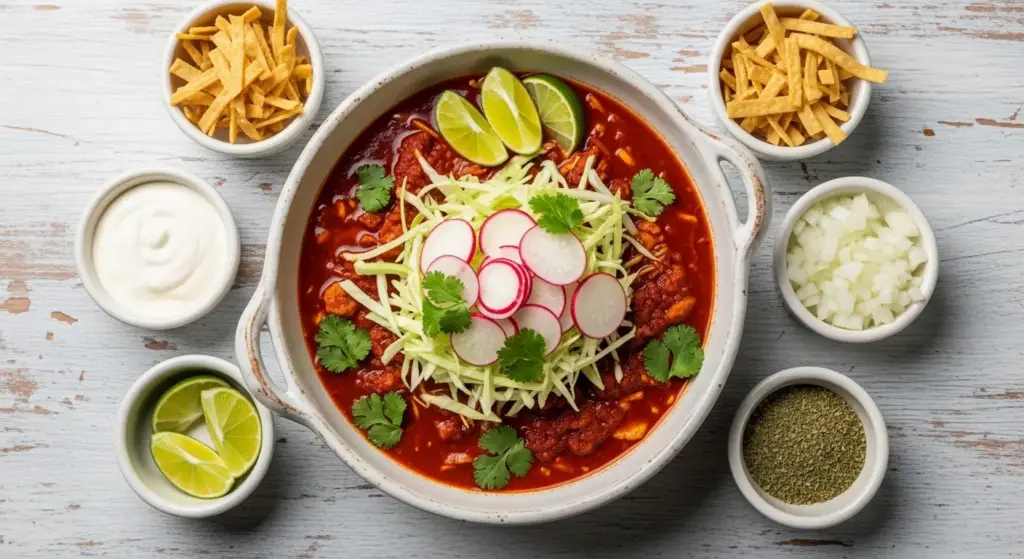
Red pozole is a complete meal in itself, but the right accompaniments make the experience even more festive and satisfying.
The garnish table is arguably the most important part of serving pozole. Be generous with your garnish spread and set everything out before ladling the soup so the heat of the broth wilts the cabbage and warms the toppings just slightly.
Here are the best ways to serve and accompany your red pozole:
- Shredded cabbage piled on top adds essential crunch and freshness that balances the richness of the broth
- Sliced radishes provide a peppery, crisp contrast that cuts through the deep flavor of the red chile
- Lime wedges are non-negotiable. A generous squeeze brightens the entire bowl and ties all the flavors together
- Corn tostadas served alongside are perfect for scooping up bites or dipping into the broth
- Fresh Pico de Gallo spooned on top adds brightness and freshness
- Easy Guacamole served on the side rounds out the meal beautifully
- Mexican Street Corn makes a delicious and colorful side dish for a celebration spread
Variations to Try
Once you have mastered the base recipe, there are many wonderful ways to put your own spin on pozole rojo.
The beauty of pozole is that it is endlessly adaptable while still holding true to its comforting, hearty roots.
- Chicken Pozole Rojo: Swap the pork for bone-in chicken thighs and drumsticks. Simmer for 45 to 60 minutes instead of the longer pork cooking time. Shred the chicken and return it to the broth just like the pork version.
- Beef Pozole Rojo: Use chuck roast cut into large chunks for an equally rich and hearty variation. Beef takes a similar amount of time to become tender as pork shoulder.
- Vegan Pozole Rojo: Skip the meat entirely and use vegetable broth as the base. Substitute the pork with extra hominy, black beans, or diced butternut squash for a filling plant-based bowl.
- Spicier Version: Add extra chiles de arbol to the sauce, or blend in one or two chipotles in adobo for a smokier, more fiery red broth.
- Instant Pot Pozole: Cook the pork and broth together in the Instant Pot on high pressure for 45 minutes, then natural release. Make the chile sauce separately on the stovetop and add everything together using the saute function.
- Smoky Version: Toast the dried chiles lightly in a dry pan for 30 to 45 seconds per side before soaking them. This brief toasting deepens the smoky, earthy flavor of the sauce significantly.
You might also enjoy: Vegan Pozole Recipe
Storage and Reheating
Pozole is an excellent make-ahead dish and actually improves in flavor overnight as the pork and chile broth continue to meld together.
Store leftovers properly to enjoy this soup all week long.
- Refrigerator: Store leftover pozole in an airtight container for up to 4 to 5 days. Store the garnishes separately in their own containers and only add them fresh when serving.
- Freezer: Pozole freezes beautifully. Transfer cooled soup to freezer-safe containers or zip-lock bags and freeze for up to 3 months. Leave about 1 inch (2.5 cm) of space at the top of the container for expansion.
- Thawing: Transfer frozen pozole to the refrigerator the night before you plan to serve it and allow it to thaw overnight.
- Reheating on the stovetop: Pour the pozole into a pot over medium-low heat. Stir occasionally and heat until fully warmed through, about 10 to 15 minutes. Add a splash of water or broth if the soup has thickened significantly during storage.
- Reheating in the microwave: Transfer a single serving to a microwave-safe bowl. Cover loosely and heat on high in 90-second intervals, stirring between each, until hot throughout.
- Do not store garnishes with the soup. The cabbage and radishes will become soggy and lose their texture. Always add fresh garnishes right before serving.
For another satisfying soup you can make ahead and freeze, check out this Chicken Tortilla Soup Recipe.
Nutritional Facts
The following estimated values are for one serving of red pozole (approximately 1.5 cups / 360 ml) without garnishes. Nutritional content will vary based on specific ingredients used and garnish additions.
| Nutrient | Amount Per Serving |
|---|---|
| Calories | 380 kcal |
| Total Fat | 14 g |
| Saturated Fat | 4.5 g |
| Cholesterol | 95 mg |
| Sodium | 720 mg |
| Total Carbohydrates | 28 g |
| Dietary Fiber | 5 g |
| Sugars | 4 g |
| Protein | 34 g |
| Vitamin C | 8% DV |
| Iron | 20% DV |
| Calcium | 6% DV |
Estimated values based on standard ingredients. Adding garnishes like avocado will increase calorie and fat content. Tostadas add approximately 60 to 90 calories per piece.
For another hearty, protein-rich Mexican soup that fits beautifully into a wholesome meal plan, try this Chicken Rice Soup Recipe.
Health Benefits of Key Ingredients
Beyond being deeply satisfying, red pozole is built on ingredients that offer genuine nutritional value.
This is comfort food that actually does your body some good.
Here is a breakdown of the key health benefits found in this recipe:
- Pork shoulder is an excellent source of complete protein, B vitamins (especially B12 and B6), zinc, and selenium, which all support immune function and energy metabolism
- Hominy (nixtamalized corn) is higher in available niacin and calcium than regular corn due to the traditional alkaline processing method, and provides a good source of fiber and complex carbohydrates
- Dried guajillo chiles are rich in capsaicin, vitamin A, vitamin C, and antioxidants that support eye health, immunity, and circulation
- Dried ancho chiles contain iron, potassium, and vitamins B2 and B3, and their deep pigment comes from powerful antioxidant compounds called carotenoids
- Garlic and onion both contain allicin and quercetin, well-studied compounds known for their anti-inflammatory and immune-supporting properties
- Lime juice (added at serving) provides a meaningful dose of vitamin C and supports iron absorption from the pork and hominy
- Cabbage garnish adds vitamin K, vitamin C, and fiber with very few calories, making it an ideal crunchy, nutrient-dense topping
Another nutrient-packed, warming soup you might enjoy: Moroccan Lentil Soup.
Frequently Asked Questions
1. What is the difference between red, green, and white pozole?
Red pozole (pozole rojo) gets its color and flavor from rehydrated dried red chiles like guajillo and ancho. Green pozole (pozole verde) uses tomatillos, green chiles, and herbs like cilantro and epazote to create a bright, tangy broth. White pozole (pozole blanco) is made with a clear pork broth and no chile sauce, relying entirely on the garnishes for flavor and color. All three versions use hominy as the foundation, but each has a distinctly different flavor profile.
2. Can I use chicken instead of pork in this red pozole recipe?
Absolutely. Bone-in chicken thighs and drumsticks work beautifully in pozole rojo. The cooking time for the chicken is significantly shorter, around 45 to 60 minutes versus 1.5 to 2 hours for pork shoulder. Shred the chicken just as you would the pork and return it to the broth before adding the hominy and chile sauce.
3. Where can I find dried guajillo and ancho chiles?
Most well-stocked grocery stores carry dried guajillo and ancho chiles in the Mexican or international food aisle, usually in small 2-ounce to 4-ounce bags. Latin grocery stores will have a wider selection and often fresher stock. You can also find them reliably online. Look for chiles that are pliable and dark in color rather than stiff, faded, or dusty, which indicates staleness.
4. Is pozole rojo spicy?
Traditional red pozole using only guajillo and ancho chiles is mildly spicy, more earthy and rich than truly fiery. Guajillo chiles rank around 2,500 to 5,000 Scoville units (similar to a mild jalapeno or poblano), and ancho chiles are even milder. If you want more heat, add 2 to 3 chiles de arbol to the sauce. If you prefer a very mild soup, simply use fewer guajillo chiles and none of the arbol chiles.
5. Can I make red pozole in a slow cooker?
Yes. After making the chile sauce separately on the stovetop, combine the raw seasoned pork, the strained chile sauce, the remaining broth, and all aromatics in your slow cooker. Cook on low for 7 to 8 hours or on high for 4 to 5 hours until the pork is very tender. Shred the pork directly in the slow cooker, add the drained hominy, and cook on high for an additional 20 to 30 minutes before serving.
For more cozy soups to add to your repertoire, you will love this Hamburger Soup.
Red Pozole (Pozole Rojo)

Equipment
- Large stockpot or Dutch oven - At least 8 quarts / 7.5 liters capacity
- Blender - Or immersion blender, high-powered for smooth sauce
- Fine-mesh strainer - Or sieve
- Large mixing bowl - For soaking dried chiles
- Cutting board and sharp knife
- Slotted spoon
- Tongs
- Ladle
- Measuring cups and spoons
- Small bowls - For organizing garnishes
Ingredients
- 3 lbs pork shoulder - 1.36kg, cut into large 3-inch chunks
- 1 lb pork neck bones or spare ribs - 450g, for extra richness
- 1 large white onion - halved
- 1 whole head of garlic - top sliced off to expose the cloves
- 3 bay leaves
- 2 tsp kosher salt - 10g, plus more to taste
- 10 cups water - 2.4 liters
For the Red Chile Sauce
- 6 dried guajillo chiles - stems and seeds removed
- 3 dried ancho chiles - stems and seeds removed
- 2 dried chiles de arbol - optional, for extra heat, stems and seeds removed
- 4 garlic cloves - peeled
- 1/2 white onion - roughly chopped
- 1 tsp dried Mexican oregano - 2g
- 1/2 tsp ground cumin - 1g
- 1 tsp salt - 5g
- 2 cups reserved pork broth - 480ml, from cooking the meat
For the Hominy
- 2 cans white hominy - 29 oz / 822 g each, drained and rinsed
For the Garnishes
- 2 cups shredded green cabbage - 180g
- 8-10 radishes - thinly sliced
- 1/2 white onion - finely diced
- 1 cup fresh cilantro - 16g, roughly chopped
- 3-4 limes - cut into wedges
- 1 tbsp dried Mexican oregano - 3g, for sprinkling
- crushed red pepper flakes - or chile de arbol powder, for serving
- corn tostadas - for serving, optional
Instructions
- Remove stems and seeds from dried chiles, wipe clean, and soak in boiling water for 20-25 minutes until soft.
- Place pork, onion, garlic, bay leaves, and water in a large pot. Bring to a boil, skim foam, reduce heat, and simmer for 1.5 to 2 hours until tender.
- Remove pork from broth, let cool, then shred into bite-sized pieces. Discard onion, garlic, and bay leaves from the broth.
- Blend softened chiles with garlic, onion, oregano, cumin, salt, and reserved pork broth until smooth. Strain the sauce into the pot of broth.
- Add the shredded pork and drained hominy to the broth. Simmer gently for 30-45 minutes to meld flavors. Season with salt to taste.
- Prepare garnishes: shred cabbage, slice radishes, dice onion, chop cilantro, and cut limes into wedges.
- Ladle hot pozole into bowls and serve immediately with all garnishes on the side for everyone to customize.
Notes
- Do not skip skimming foam from the pork broth. This keeps the broth clear and clean-tasting.
- Always strain the chile sauce through a fine-mesh sieve for a smoother, restaurant-quality texture.
- Use bone-in pork cuts when possible. The bones release collagen, enriching the broth’s body.
- Rinse canned hominy well to remove any metallic or canned flavor before adding to the soup.
- Season in stages: add salt to the pork broth, to the chile sauce, and then adjust again at the end.
- Simmer gently, do not boil vigorously, to keep the broth clear and the pork tender.
- Make-ahead tip: Pozole tastes even better the next day as flavors meld. Store broth, pork, and hominy together.
- Freezes well for up to 3 months. Thaw overnight in the refrigerator before reheating.
- Storage: Keep garnishes separate and add them fresh when serving to maintain their crunch.
- Spice level: For a milder soup, use fewer guajillo chiles and omit the chiles de arbol. For more heat, add extra arbol or chipotle in adobo.
- Chicken variation: Substitute bone-in chicken thighs and simmer for 45-60 minutes instead of pork.
- Instant Pot option: Cook pork and broth on high pressure for 45 minutes, then natural release and proceed with the chile sauce.
Final Thoughts
Red pozole is one of those recipes that feels like a true labor of love, and the reward is absolutely worth every step.
From the moment those dried chiles hit the hot water to the final ladle of that vibrant, smoky broth into a bowl, making pozole rojo from scratch is an experience as satisfying as eating it.
This recipe serves 8 to 10 people generously, making it perfect for family dinners, holiday gatherings, or a weekend project that fills your kitchen with the most incredible aromas.
Go ahead and make a big pot this weekend. Top your bowl exactly the way you like it, squeeze plenty of lime, and enjoy every single bite.
If you make this red pozole recipe, please leave a comment below and let me know how it turned out! Share your photos and tag us, we would absolutely love to see your beautiful bowls.
Recommended:
- Chicken Pozole Recipe
- Green Pozole Recipe
- Beef Pozole Recipe
- Vegan Pozole Recipe
- Chicken Tortilla Soup Recipe
- Enchilada Sauce Recipe
- Corn Tortilla Recipe
- Pico de Gallo Recipe
- Taco Seasoning Recipe
- Picadillo Recipe