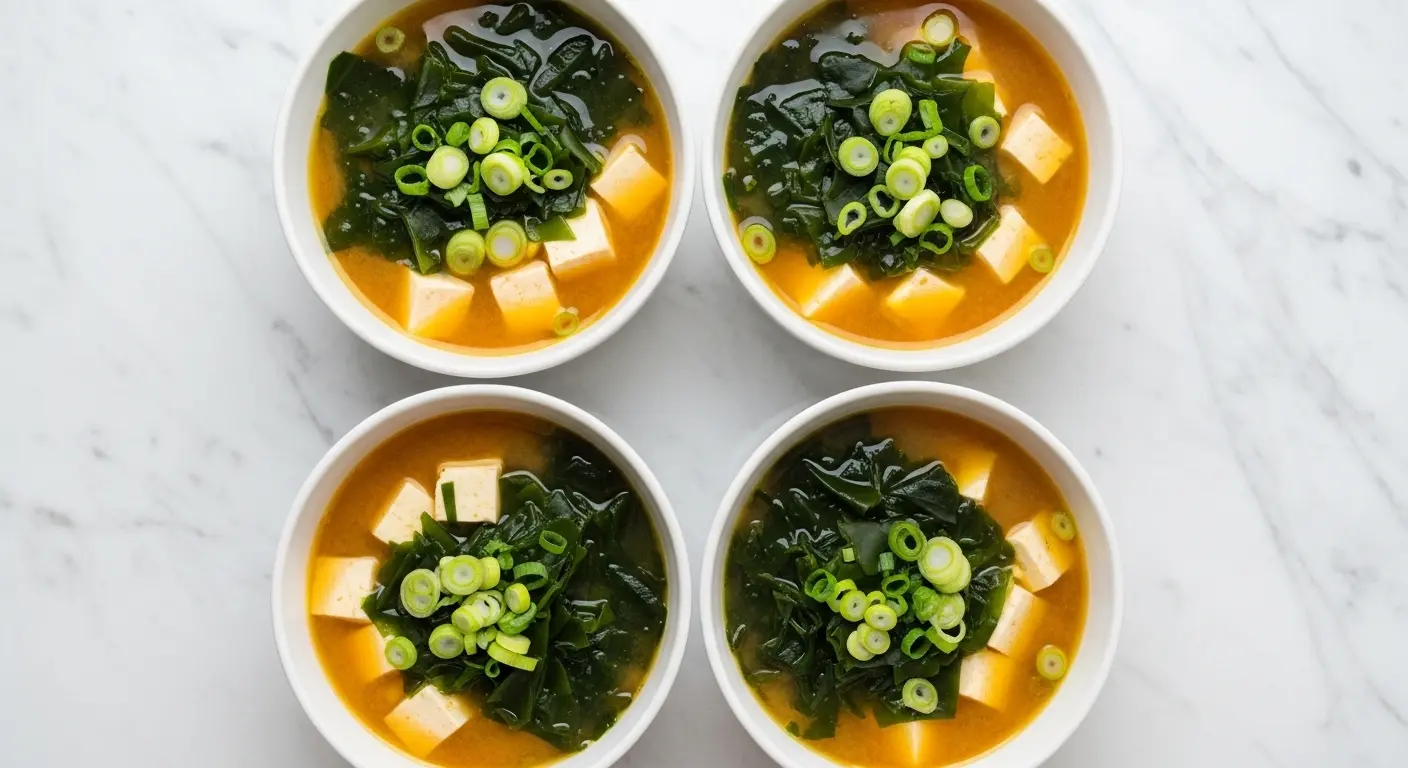
A warm bowl of miso soup recipe is one of those things that feels like a hug in a cup. It’s deeply savory, impossibly light, and comes together in under 20 minutes using just a handful of pantry staples. If you’ve ever sat down at a Japanese restaurant and found yourself wishing you could recreate that silky, umami-rich broth at home, this is the guide you’ve been waiting for.
The secret to an authentic bowl lies in two things: quality miso paste and proper dashi stock. Dashi is the backbone of Japanese cooking, a clear broth made from dried kombu kelp and bonito flakes that carries a depth of flavor you simply can’t get from plain water or store-bought stock.
This recipe walks you through making both from scratch, but don’t worry — it’s far simpler than it sounds. Once you nail the basics, you’ll understand why Japanese families make this soup for breakfast, lunch, and dinner.
This is the classic version with silken tofu, wakame seaweed, and green onions. It’s the combination most widely recognized and loved around the world, and for good reason.
For a cozy Asian-inspired starter that’s even heartier, you might also enjoy this Tom Yum Soup to round out your weeknight dinner rotation.
Why You’ll Love This Miso Soup Recipe
Miso soup is one of those rare recipes that manages to be both incredibly simple and incredibly satisfying at the same time.
It comes together in about 20 minutes, uses minimal ingredients, and produces a broth that tastes like it’s been simmering for hours.
The combination of umami-rich dashi and fermented miso paste creates a flavor that’s savory, subtly sweet, and deeply comforting.
It’s versatile enough to serve as a starter, a light lunch, or a side dish alongside rice and fish.
- Ready in under 20 minutes from start to finish
- Made with just 6 core ingredients
- Naturally gluten-free and dairy-free
- Packed with gut-healthy probiotics from fermented miso
- Endlessly customizable with whatever vegetables or proteins you have on hand
- Works as a starter, a side, or a light meal on its own
- Budget-friendly and incredibly nutritious
You might also enjoy: Egg Drop Soup
Ingredients
To keep this as authentic and approachable as possible, the ingredient list is short. The quality of your miso paste and dashi matters more than the quantity, so choose the best you can find.
- 4 cups (960 ml) cold water
- 1 piece dried kombu (about 4×4 inches / 10×10 cm)
- 1 cup (about 15–20 g) dried bonito flakes (katsuobushi)
- 3 tablespoons (54 g) white miso paste (shiro miso)
- 7 oz (200 g) silken tofu, cut into ½-inch (1.25 cm) cubes
- 2 tablespoons (6 g) dried wakame seaweed
- 2 green onions (scallions), thinly sliced
Read Also: Hot and Sour Soup Recipe
Kitchen Equipment Needed
You don’t need any special Japanese kitchen tools for this recipe. A basic pot and a fine-mesh strainer are all you really need to pull this off.
- Medium saucepan or pot (at least 2-quart / 2-liter capacity)
- Fine-mesh strainer or cheesecloth
- Small bowl (for rehydrating wakame and dissolving miso)
- Ladle
- Sharp knife and cutting board
- Chopsticks or a small whisk (for dissolving miso paste)
- Measuring cups and spoons
For a comfortable daily cooking setup, a Japanese soup bowl set makes serving feel much more authentic and special.
Another comforting Asian-inspired soup to try alongside your new miso soup skill: Chinese Fish Soup
Recommended Products for This Recipe
These are products chosen for their quality and ability to genuinely improve the final result in your bowl.
1. White Miso Paste (Shiro Miso) by Hikari
This organic slow-aged miso paste delivers a beautifully rounded, mellow flavor that works perfectly with classic miso soup. It dissolves smoothly into broth without clumping and has a natural sweetness that balances the savory dashi. It’s widely considered one of the best miso pastes available outside of Japan.
2. Dried Kombu (Kelp) for Dashi
High-quality dried kombu is the foundation of authentic dashi stock, and the difference between a mediocre broth and a transcendent one. Look for thick, dark kombu with a natural white powder on the surface (that’s flavor, not mold). This ingredient transforms plain water into something extraordinary.
3. Premium Bonito Flakes (Katsuobushi)
Thinly shaved, dried bonito flakes are the second pillar of classic awase dashi. Premium flakes produce a cleaner, smokier broth compared to budget varieties. They steeped quickly and are then discarded, but their impact on the soup’s depth is enormous.
4. Dried Cut Wakame Seaweed
Pre-cut dried wakame is far more convenient than whole wakame, and it rehydrates beautifully into silky, jade-green ribbons within minutes. A small bag goes a long way and keeps well in the pantry for months. It adds that signature oceanic note and satisfying chewy texture to every bowl.
5. Japanese Lacquer Soup Bowls
Eating miso soup from a proper lacquer bowl changes the entire experience. The bowls retain heat beautifully, and holding a warm bowl in both hands the traditional Japanese way is genuinely comforting. They also make for a beautiful presentation if you’re serving guests.
For more warming, soul-satisfying soups to add to your collection, check out this Udon Noodle Soup.
Step-by-Step Instructions
Step 1: Prepare the Wakame
- Place the dried wakame in a small bowl.
- Cover completely with warm water (not boiling) and let it soak for 5 to 10 minutes until fully rehydrated and soft.
- The wakame will expand dramatically — this is completely normal.
- Once rehydrated, drain the water from the bowl and gently squeeze out any excess liquid.
- Set the wakame aside until the soup is ready to assemble.
Step 2: Make the Dashi Stock
- Add 4 cups (960 ml) of cold water to your medium saucepan.
- Gently wipe the surface of the kombu with a barely damp cloth to remove any dust (do not rinse it, as this removes flavor).
- Place the kombu piece in the cold water.
- Allow the kombu to soak in the cold water for at least 15 to 20 minutes before applying heat. This cold soak draws out glutamates gently and gives you a more flavorful, less bitter stock.
- Place the pot on the stove over medium-low heat and slowly bring the water to a very gentle simmer. Watch carefully — you want to see small bubbles forming around the edges but the water should not reach a rolling boil.
- Right before the water reaches a full boil (around 150°F to 160°F / 65°C to 71°C), remove the kombu from the pot and discard it. Boiling the kombu will cause it to release bitter, slimy compounds, so this timing matters.
- Briefly raise the heat and bring the liquid to a full boil, then immediately turn off the heat.
- Add the dried bonito flakes to the hot water all at once.
- Let the bonito flakes steep undisturbed for 3 to 4 minutes. Do not stir.
- After steeping, pour the dashi through your fine-mesh strainer into a large bowl to remove all bonito flakes. Discard the flakes.
- Your dashi stock is now ready. It should be a clear, golden-amber color with a delicate, smoky aroma.
Step 3: Dissolve the Miso Paste
- Ladle about ½ cup (120 ml) of the warm dashi stock into a small bowl.
- Add the white miso paste to the small bowl.
- Using chopsticks or a small whisk, stir vigorously until the miso paste is completely dissolved and smooth with no lumps remaining.
- This step is critical. Adding miso paste directly to the hot pot can cause it to clump and not dissolve evenly. Dissolving it separately ensures a silky, consistent broth.
- Set the dissolved miso mixture aside.
Step 4: Heat the Dashi and Add Tofu
- Pour the strained dashi stock back into your medium saucepan.
- Place the pot over medium-low heat and warm the dashi until it is steaming hot but not boiling — you’re aiming for around 140°F to 155°F (60°C to 68°C).
- Gently lower the silken tofu cubes into the hot dashi. Use a spoon or ladle and be careful not to break the delicate tofu.
- Add the drained wakame to the pot.
- Stir gently and allow the tofu and wakame to heat through for about 1 to 2 minutes. Do not boil.
Step 5: Add the Miso and Finish the Soup
- Pour the dissolved miso mixture into the pot while gently stirring.
- Keep the heat on the lowest setting. The miso should never come to a boil after it has been added — high heat will destroy the beneficial probiotics and degrade the delicate flavors.
- Taste the broth and adjust if needed. If it tastes flat, add a little more dissolved miso. If it tastes too salty, add a small splash of warm water.
- Ladle the soup into bowls immediately.
- Garnish each bowl with thinly sliced green onions right before serving.
Read Also: Pho Recipe
Tips for Success
Even a simple recipe like this one benefits from a few key techniques. These tips make the difference between a good miso soup and a genuinely exceptional one.
- Never boil the miso paste. Add it off the heat or at the lowest simmer to preserve both the flavor and the probiotic benefits.
- Use cold water to soak the kombu before applying heat. This gentle extraction produces a cleaner, more nuanced dashi.
- Remove the kombu before the water reaches a full boil. Boiling causes bitterness.
- Don’t skip the bonito flake steeping time. A full 3 to 4 minutes is needed for the dashi to take on full flavor.
- Dissolve miso in a small bowl of broth first, not directly in the pot, for a smoother soup.
- Taste and adjust. Miso pastes vary in saltiness, so always taste before serving and add more miso or water as needed.
- Use silken tofu, not firm tofu. Its soft, creamy texture is traditional and gives the soup a much more delicate mouthfeel.
- Add delicate toppings like green onions just before serving so they stay fresh and vibrant.
You might also enjoy: Bibimbap Recipe
Serving Suggestions
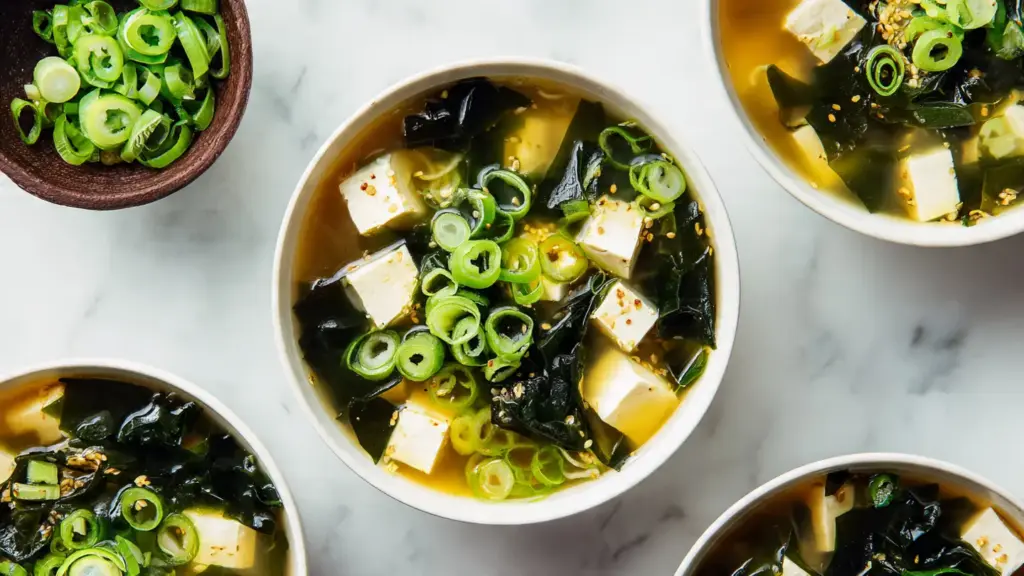
Miso soup is traditionally served as part of a Japanese meal called ichiju-sansai, meaning one soup and three side dishes alongside a bowl of steamed rice.
It pairs naturally with just about any Japanese-inspired spread, and the subtle umami broth acts as a palate cleanser between bites.
- Steamed short-grain white rice or brown rice
- Grilled or baked salmon for a complete Japanese-style dinner
- Tamagoyaki (Japanese rolled omelet) for a traditional breakfast pairing
- Edamame lightly salted as a simple side
- Pickled daikon or cucumber (tsukemono) to add a bright, tangy contrast
- Steamed or stir-fried bok choy for a vegetable-forward spread
- Onigiri (Japanese rice balls) for a light and satisfying lunch combo
- Sushi or sashimi as part of a restaurant-style dinner at home
Variations to Try
Once you’ve made the classic version, the real fun begins. Miso soup is one of the most adaptable soups in the world, and Japanese home cooks change it with the seasons.
The key is always to keep the dashi base consistent and simply swap or add the toppings.
- Mushroom Miso Soup: Add thinly sliced shiitake mushrooms along with the tofu in Step 4 for an earthy, deeply savory version.
- Daikon Miso Soup: Thinly slice peeled daikon radish and simmer it in the dashi until tender before adding the miso. It adds a delicate sweetness.
- Clam Miso Soup: Use Manila clams or littleneck clams in place of tofu. The clams open in the hot broth and release incredible natural brininess.
- Potato and Onion Miso Soup: A comforting winter variation with thinly sliced potato and onion simmered until just tender. Use a heartier red miso for colder months.
- Corn and Butter Miso Soup: Add sweet corn kernels and a tiny pat of butter right before serving for a rich, Japanese-style variation popular in Hokkaido.
- Vegan Miso Soup: Skip the bonito flakes and use kombu-only dashi (kombu dashi) or add a couple of dried shiitake mushrooms to the cold water along with the kombu.
- Tofu and Spinach Miso Soup: Add a handful of fresh baby spinach in the last minute of cooking for color and nutrition.
Read Also: Kimchi Stew Recipe
Storage and Reheating
Miso soup is best enjoyed freshly made, but leftover soup stores well for a day or two with a little care.
Because miso paste is added at the very end of cooking, it retains its best flavor and probiotic quality when consumed right away.
- Refrigeration: Allow the soup to cool completely, then store it in an airtight container in the refrigerator for up to 2 days. The tofu may become slightly firmer after refrigeration, which is normal.
- Reheating: Warm gently over low heat on the stovetop, stirring occasionally, until steaming hot. Do not bring to a boil after reheating — boiling the miso degrades its flavor.
- Freezing: Miso soup is not recommended for freezing. The silken tofu will break down and become grainy, and the delicate flavors of the miso and dashi will deteriorate significantly.
- Make-ahead dashi: You can make the dashi stock up to 3 days in advance and refrigerate it separately. Add the miso, tofu, and wakame fresh when ready to serve.
- Fresh miso tip: If you plan to store the soup, consider reserving a tablespoon of fresh miso to stir in just before serving to brighten the flavors.
Chicken Rice Soup is another comforting soup that stores and reheats beautifully for meal prep.
Nutritional Facts
The following is an approximate nutritional breakdown per serving (recipe makes 4 servings).
| Nutrient | Per Serving |
|---|---|
| Calories | 85 kcal |
| Protein | 8 g |
| Total Fat | 3 g |
| Saturated Fat | 0.5 g |
| Carbohydrates | 7 g |
| Dietary Fiber | 1.5 g |
| Sugars | 2 g |
| Sodium | 820 mg |
| Calcium | 90 mg |
| Iron | 1.2 mg |
Values are approximate and will vary based on the type and quantity of miso paste used.
You might also enjoy: Congee Recipe
Health Benefits of Key Ingredients
Miso soup isn’t just comforting — it’s genuinely good for you. The core ingredients each bring their own impressive nutritional benefits.
Each component of this soup has been a staple in the Japanese diet for centuries, and Japan’s reputation for longevity and low rates of certain diseases is often partially attributed to their regular consumption of fermented foods like miso.
- Miso paste: A fermented food rich in probiotics that support gut health and digestion. It also provides a range of B vitamins, manganese, and antioxidants. Regular miso consumption has been linked in studies to lower blood pressure and reduced risk of certain cancers.
- Silken tofu: An excellent source of plant-based protein and all essential amino acids. Tofu is also high in calcium, iron, and isoflavones, which are plant compounds that may support bone health and reduce cardiovascular risk.
- Kombu (dried kelp): One of the richest food sources of iodine on the planet, which is essential for thyroid function. Kombu also contains fucoidan, a compound studied for its potential anti-inflammatory and immune-supporting properties.
- Bonito flakes: Provide a good hit of protein and B vitamins, particularly B12, which is important for energy and neurological function.
- Wakame seaweed: Low in calories but high in iodine, folate, magnesium, and omega-3 fatty acids. It’s also a source of fucoxanthin, an antioxidant that has been studied for its potential role in metabolism.
- Green onions: Rich in vitamin K, vitamin C, and flavonoids. They add a mild dose of anti-inflammatory compounds with virtually no calories.
Read Also: Bok Choy Recipe
Frequently Asked Questions
1. Can I use instant dashi instead of making it from scratch?
Yes, instant dashi granules or dashi packets (tea bag-style) are a perfectly acceptable shortcut and are used regularly in Japanese home kitchens.
Dashi granules dissolve directly in hot water, while dashi packets are steeped like tea and then removed. The packet version generally produces a better flavor than plain granules.
2. What type of miso paste is best for miso soup?
White miso (shiro miso) is the most widely used and beginner-friendly choice. It has a mild, slightly sweet flavor that works with almost any ingredient combination.
Yellow miso (shinshu miso) is a great middle-ground option with a more earthy, rounded flavor. Red miso (aka miso) is the most intense and works best in heartier, winter-style soups.
3. Why should I never boil the miso paste?
Boiling destroys the delicate flavor compounds in miso and kills the beneficial bacteria responsible for its probiotic properties.
Always add miso paste after the soup has been removed from the heat or at the very lowest simmer, stirring it in gently just before serving.
4. Can I make miso soup vegan?
Absolutely. Simply replace the bonito-based dashi with kombu-only dashi or kombu and dried shiitake mushroom dashi.
The result is a slightly lighter but still beautifully flavorful stock, and the rest of the recipe (tofu, wakame, miso, green onions) is already completely plant-based.
5. How do I prevent the miso paste from clumping in the soup?
Always dissolve the miso paste in a small bowl with a ladle of hot broth before adding it to the pot.
This creates a smooth, lump-free mixture that blends seamlessly into the soup. Adding miso directly to the pot and trying to stir it in will almost always leave lumps.
For more light and nourishing Asian soup inspiration, try this Chinese Egg Drop Soup.
Final Thoughts
Miso soup is the kind of recipe that rewards simplicity. Once you understand the logic of dashi and miso together, you’ll find yourself making it on instinct.
It’s a recipe that scales beautifully — from a solo lunch bowl to a crowd-pleasing starter at dinner parties.
The flavor is deeply satisfying without being heavy, and the nourishing ingredients make every bowl feel like a small act of self-care.
Give this miso soup recipe a try and see just how quickly it becomes a permanent part of your cooking routine.
We’d love to know how yours turned out — leave a comment below and tell us which variation you tried, or share a photo with us on social media!
Recommended:
- Tom Yum Soup
- Udon Noodle Soup
- Chicken Pho
- Vegan Pho
- Mulligatawny Soup
- Spinach Soup
- Corn Soup
- Lentil Soup
- Celery Soup
- Vegetable Soup