If you’ve ever sat down at a Chinese restaurant and immediately ordered the hot and sour soup recipe before even glancing at the rest of the menu, you’re in good company.
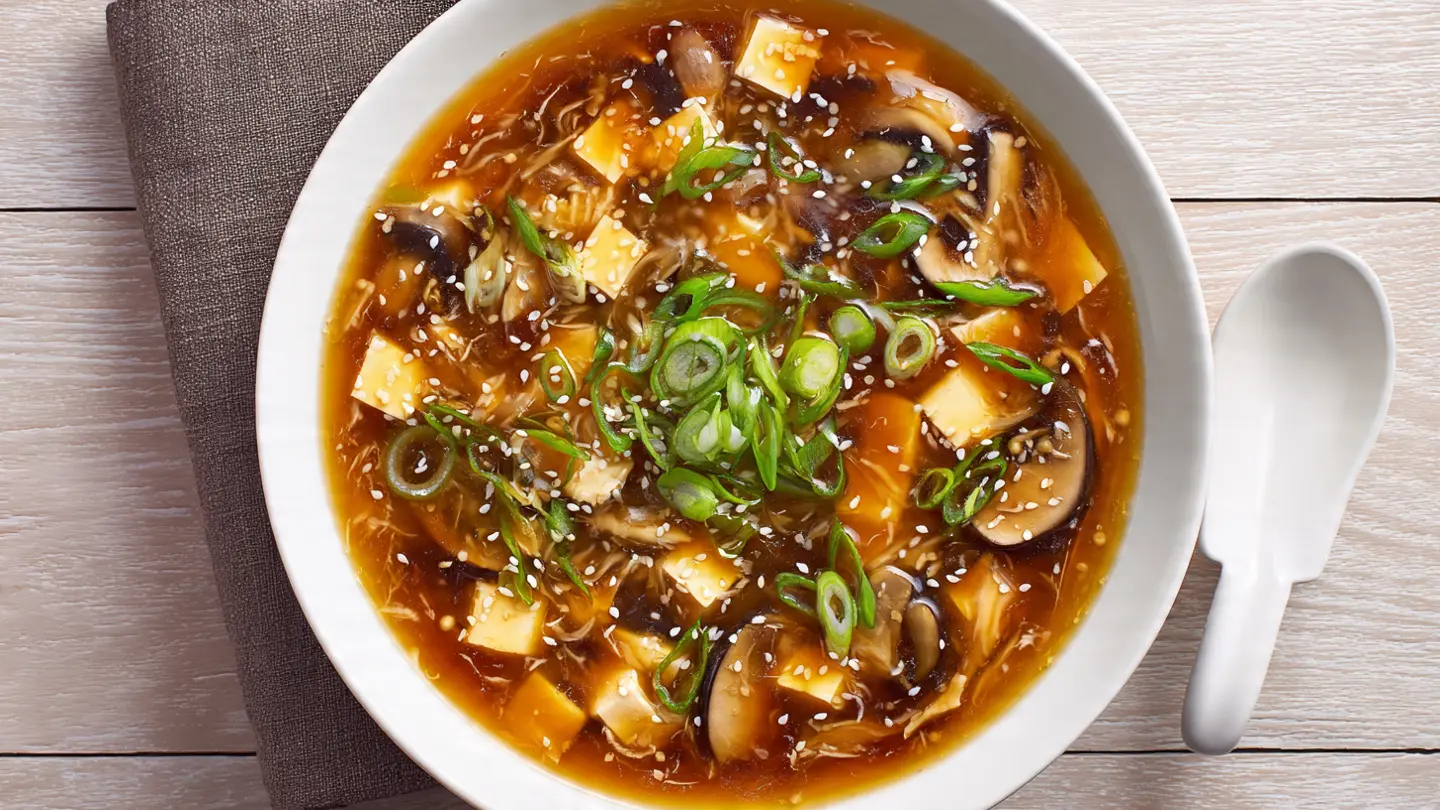
This classic Chinese-American soup is bold, comforting, and packed with a flavor combination that’s genuinely hard to stop eating. It’s tangy from rice wine vinegar, gently spicy from white pepper and chili, deeply savory from a rich broth, and loaded with silky egg ribbons, tender tofu, earthy mushrooms, and crunchy bamboo shoots.
The best part? You can have a restaurant-quality bowl on the table in about 35 minutes, and once you make it at home, ordering it out starts to feel completely unnecessary.
This version is based on the classic Chinese-American style that you’ll find at most takeout spots and Chinese buffets across the country. It uses a cornstarch-thickened broth, firm tofu, shiitake mushrooms, bamboo shoots, and that signature swirl of egg that gives the soup its distinctive texture.
Every ingredient matters here, and the technique of creating those silky egg ribbons is simpler than you’d think. Once you nail it, this will easily become one of your most-requested homemade soups.
You might also enjoy: Easy Egg Drop Soup Recipe
Why You’ll Love This Hot and Sour Soup Recipe
This soup hits every note you want in a bowl of comfort food.
It’s sour from rice wine vinegar, spicy from white pepper and chili garlic sauce, savory from soy sauce and a rich chicken broth, and satisfying from a hearty mix of mushrooms, tofu, and bamboo shoots. It all comes together in one pot with minimal prep.
You can easily control the heat and acidity to your exact preference. Like it extra tangy? Add more vinegar. Want it spicier? Increase the chili garlic sauce or white pepper.
It’s genuinely one of those recipes that tastes like it took hours but actually comes together in about 35 minutes start to finish.
The cornstarch slurry thickens the broth into that gorgeous, glossy consistency that coats every ingredient and makes each spoonful deeply satisfying.
You also don’t need any hard-to-find specialty ingredients. Everything in this recipe is available at most grocery stores or a basic Asian market.
- Ready in about 35 minutes, including prep
- One pot, minimal cleanup
- Easily customizable for heat and sourness levels
- Works as a light meal or a starter for a larger Chinese-inspired spread
- Naturally dairy-free
- Protein-rich from eggs and tofu
- Much lower in sodium than restaurant or takeout versions when made at home
Read Also: Chinese Egg Drop Soup Recipe
Ingredients
This recipe uses a handful of pantry staples alongside a few Chinese-American kitchen basics. The combination of shiitake mushrooms and bamboo shoots is what gives this soup its characteristic texture, while the interplay of soy sauce, rice wine vinegar, and white pepper creates that iconic flavor balance.
- 8 cups (1.9 liters) low-sodium chicken broth (divided: 7¾ cups for the soup, ¼ cup for the slurry)
- 4 oz (115g) firm tofu, drained and cut into ½-inch (1.25cm) cubes
- 1 cup (75g) shiitake mushrooms, stems removed and caps thinly sliced
- ½ cup (65g) canned bamboo shoots (julienned or slivered), drained
- 3 tablespoons rice wine vinegar (adjust to taste)
- 3 tablespoons low-sodium soy sauce
- 1 teaspoon dark soy sauce (optional, for color and depth)
- 1½ teaspoons chili garlic sauce (adjust to taste)
- 1 teaspoon sesame oil
- ½ teaspoon freshly grated ginger (or ¼ teaspoon ground ginger)
- ½ teaspoon white pepper (start with a pinch if you’re new to it — it’s stronger than black pepper)
- 1 teaspoon sugar
- 3 tablespoons cornstarch
- 2 large eggs, lightly beaten
- 2 green onions, thinly sliced (for garnish)
This recipe serves 4 as a starter or 2 as a light main.
This soup pairs wonderfully with other comforting Asian soups like Miso Soup — the two make a great duo for a simple, warming meal.
Kitchen Equipment Needed
You don’t need anything specialized to make this soup. Most of what you need is likely already in your kitchen.
- Large stockpot or Dutch oven (at least 4-quart capacity)
- Fine mesh strainer (for draining bamboo shoots)
- Small mixing bowl (for cornstarch slurry)
- Another small bowl (for beating eggs)
- Whisk or fork
- Wooden spoon or silicone spatula for stirring
- Sharp knife and cutting board
- Ladle for serving
- Measuring cups and spoons
Another Asian-inspired favorite that goes well with a simple set of kitchen tools is this Udon Noodle Soup — you might want to add it to your rotation too.
Recommended Products for This Recipe
These are a few products I genuinely recommend for getting the best results with this recipe, based on quality, performance, and how much of a difference they make in the final bowl.
1. Premium Shiitake Mushrooms (Dried)
Dried shiitake mushrooms have a far more intense, savory flavor than fresh, and they rehydrate beautifully in this soup. The soaking liquid itself is packed with umami and can even be strained and added to your broth for a deeper flavor base. This is one swap that makes a noticeable difference.
2. Chinkiang (Black) Vinegar
While rice wine vinegar is the most accessible option, Chinkiang vinegar (also called Chinese black vinegar) brings a more complex, slightly smoky sourness to the soup that’s closer to the version you’d get at an authentic Chinese restaurant. A small bottle goes a long way.
3. Premium Toasted Sesame Oil
A small drizzle at the end of cooking is one of the finishing touches that pulls everything together. A high-quality toasted sesame oil has a rich, nutty aroma that a generic bottle simply can’t match. The difference in the finished soup is surprisingly noticeable.
4. Chili Garlic Sauce
This is used for the heat in the soup and it’s one of the most versatile Chinese condiments to keep on hand. It adds spice with a garlic backbone that plain chili flakes can’t replicate. Look for Huy Fong or Lee Kum Kee brands for the most consistent flavor.
This recipe also uses a similar flavor profile to Wonton Egg Drop Soup — another cozy Chinese soup worth bookmarking.
Step-by-Step Instructions
Step 1: Prep All Your Ingredients Before You Start Cooking
This soup cooks quickly, so having everything ready before the heat goes on makes the process smooth and stress-free.
- Drain the canned bamboo shoots through a fine mesh strainer and rinse them briefly under cold water to remove any canning liquid flavor. Set aside.
- Remove the stems from the shiitake mushrooms (they’re tough and don’t soften well). Slice the caps thinly, about ¼-inch (0.6cm) thick.
- Drain the firm tofu and press it gently between two paper towels for a minute or two to remove excess moisture. Cut it into small ½-inch (1.25cm) cubes. Firm tofu holds its shape in the soup without falling apart — avoid silken or soft tofu here.
- Lightly beat the 2 eggs in a small bowl with a fork until the yolks and whites are just combined. You don’t need to whip them — just a gentle mix will do. Set aside.
- In a separate small bowl, whisk together 3 tablespoons of cornstarch with ¼ cup (60ml) of the chicken broth (taken from your 8-cup total). Whisk until completely smooth with no lumps. Set aside. This is your slurry.
- Slice the green onions thinly and set them aside for garnish.
- Measure out and have ready: rice wine vinegar, soy sauce, dark soy sauce, chili garlic sauce, sesame oil, grated ginger, white pepper, and sugar.
Step 2: Build the Broth
- Pour the remaining 7¾ cups (1.85 liters) of chicken broth into your large stockpot or Dutch oven.
- Add the sliced shiitake mushrooms, drained bamboo shoots, and cubed tofu to the cold broth.
- Add the rice wine vinegar, soy sauce, dark soy sauce (if using), chili garlic sauce, freshly grated ginger, white pepper, and sugar.
- Stir everything together gently to combine. The tofu is fragile, so use a light hand when stirring.
- Place the pot over medium-high heat.
Step 3: Bring to a Simmer
- Heat the soup over medium-high heat, stirring occasionally, until it reaches a gentle simmer. This will take about 8 to 10 minutes.
- You’ll know it’s at a simmer when small bubbles are consistently breaking the surface. You’re not looking for a rolling boil — that can make the broth cloudy and break up the tofu.
- While the soup is coming to a simmer, give your cornstarch slurry another quick whisk in its bowl to make sure it hasn’t settled. Cornstarch sinks to the bottom quickly, so stirring it again just before use is an important step.
Step 4: Thicken the Soup with the Cornstarch Slurry
- Once the soup has reached a simmer, reduce the heat to medium.
- Give the cornstarch slurry one more stir, then slowly pour it into the soup while stirring the pot in a continuous circular motion.
- Continue stirring gently for about 1 to 2 minutes. You’ll notice the soup beginning to take on a glossy, slightly thickened consistency. It should coat the back of a spoon lightly.
- If the soup seems too thin after 2 minutes, you can make a small additional slurry (1 teaspoon cornstarch + 1 tablespoon cold water) and add it gradually. If it’s too thick, add a splash of extra broth to loosen it.
Step 5: Create the Egg Ribbons
- This is the most iconic part of hot and sour soup, and it’s easier than it looks.
- Keep the soup at a steady, gentle simmer (not a hard boil). A vigorous boil will scramble the eggs into chunks rather than forming the delicate ribbons the soup is known for.
- Using a spoon or chopstick, begin stirring the soup in a slow, continuous circle.
- While the soup is moving in that circular current, hold your bowl of beaten eggs about 8 inches (20cm) above the pot and drizzle the eggs in a very thin, slow, steady stream into the swirling soup.
- The hot broth will cook the eggs almost instantly, setting them into delicate, feathery ribbons as they fall through the liquid.
- Once all the egg has been added, stop stirring and let the ribbons set for about 10 to 15 seconds before giving the soup one gentle final stir.
- If the soup looks cloudy after adding the eggs, it means the eggs were poured in too quickly or the broth was stirred too vigorously after they were added. The flavor won’t be affected, but for cleaner ribbons next time, drizzle even more slowly.
Step 6: Finish and Taste
- Remove the pot from the heat.
- Drizzle in 1 teaspoon of sesame oil and stir gently to incorporate. Sesame oil is a finishing oil and should be added off the heat, since its delicate aroma fades at high temperatures.
- Taste the soup and adjust the seasoning to your preference.
- For more sourness: add another teaspoon or two of rice wine vinegar.
- For more heat: stir in additional chili garlic sauce or a pinch more white pepper.
- For more savory depth: add a small splash of soy sauce.
- If the soup tastes flat: a tiny pinch of salt or a small half-teaspoon more of sugar can balance the flavors.
- Ladle into bowls immediately.
- Garnish each bowl with sliced green onions.
You might also love the bold flavors in this Tom Yum Soup — another iconic Asian hot and sour classic that’s worth exploring.
Tips for Success
These small but important details separate a good bowl from a great one. Take a few minutes to read through these before you start cooking.
- Don’t skip the cornstarch slurry pre-stir. Cornstarch settles to the bottom of the bowl as it sits. Always give it a vigorous whisk immediately before pouring it into the soup to prevent lumpy spots in the broth.
- Add the eggs slowly. This is the most important technique tip in the recipe. A thin, steady drizzle while the soup is moving in a circular direction creates those signature silky ribbons. Dumping or pouring quickly results in clumpy scrambled eggs.
- Use white pepper, not black. White pepper has a distinctly earthy, slightly floral heat that is fundamental to the authentic flavor of this soup. Black pepper will change the flavor profile significantly. Start with a small amount since it’s considerably stronger than what most home cooks are used to.
- Taste and adjust at the end. The vinegar-to-pepper balance is personal. Always taste before serving and fine-tune both the sourness and heat to exactly what you like.
- Low-sodium broth is important here. Between the soy sauce and regular chicken broth, this soup can become very salty. Starting with low-sodium broth gives you much more control over the final seasoning.
- Don’t boil the soup after adding the eggs. A hard boil will break up the ribbons and cloud the broth.
- Firm tofu is non-negotiable. Soft or silken tofu will dissolve into the broth. Firm tofu holds its cube shape throughout cooking and adds satisfying texture to every bite.
For another cozy, deeply flavored soup with minimal effort, this Chicken Tortilla Soup is a wonderful option.
Serving Suggestions
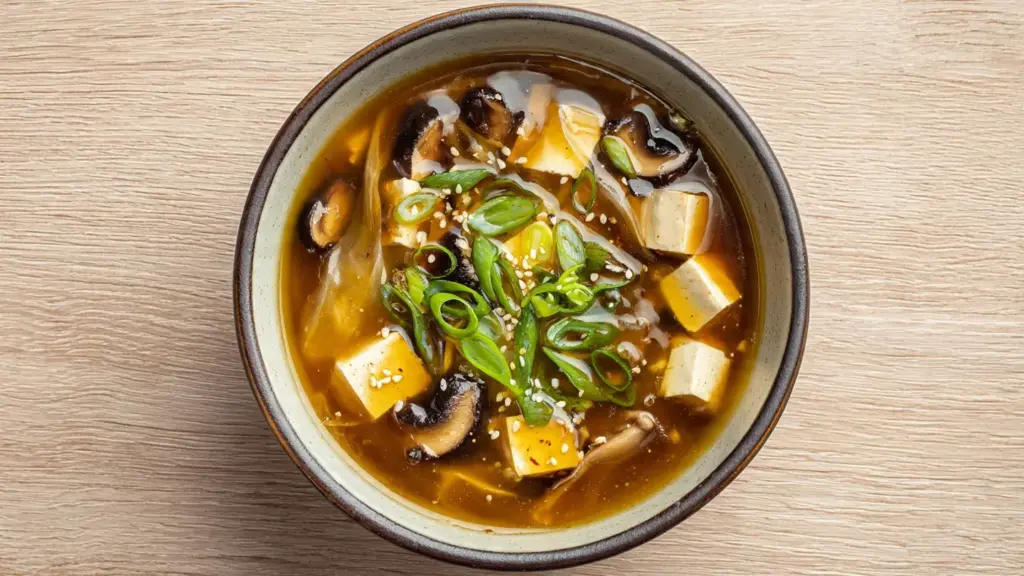
Hot and sour soup is incredibly versatile as part of a larger meal. It shines as a starter for a Chinese-inspired spread or as a light, satisfying main on its own.
Pair it with other classic dishes for a restaurant-style experience at home, or keep things simple with just a bowl of rice or noodles alongside.
- Serve with steamed jasmine rice or over thin rice noodles for a heartier bowl
- Chicken Fried Rice makes a perfect companion dish for a full Chinese takeout-style meal at home
- Chinese Dumplings are a natural pairing as a starter or side
- Easy Pad Thai alongside this soup makes for a satisfying pan-Asian spread
- Serve in small cups or ramekins as an elegant appetizer at a dinner party
- A simple Bok Choy stir-fry on the side keeps the meal light and balanced
- Garnish with extra sliced green onions, a drizzle of chili oil, or a sprinkle of sesame seeds for added texture and presentation
Variations to Try
Once you have the base recipe down, this soup is incredibly easy to customize. Here are some well-loved variations worth trying.
- Pork hot and sour soup: Add 4 oz (115g) of thinly julienned pork shoulder to the broth in Step 2. The pork will cook through in the simmering broth and adds a savory, meaty richness to the soup.
- Chicken hot and sour soup: Use shredded boneless chicken thighs in place of tofu or alongside it. Boneless thighs stay moist and tender better than breast meat in this kind of broth.
- Vegetarian or vegan version: Swap the chicken broth for vegetable broth. Every other ingredient in this base recipe is already plant-based.
- Wood ear mushroom addition: If you can find dried wood ear mushrooms (also called black fungus) at an Asian grocery store, rehydrate and add them alongside the shiitakes. They add a unique, slightly crunchy texture that’s very traditional.
- Extra spicy version: Double the chili garlic sauce and add a pinch of red chili flakes in Step 2 for a significantly hotter bowl.
- Lily bud (golden needle) version: Dried lily buds are a traditional ingredient in the most authentic versions of this soup. Soak them for 30 minutes, tie each one in a loose knot (which prevents them from unwinding), and add them with the other ingredients in Step 2.
- Shrimp hot and sour soup: Add 6 to 8 peeled and deveined shrimp in the last 3 to 4 minutes of simmering. They cook quickly and add a lovely sweetness that contrasts with the sourness of the broth.
Another Chinese soup worth adding to your repertoire is this Chinese Fish Soup — light, clean, and deeply comforting.
Storage and Reheating
This soup stores well and the flavors actually deepen a little overnight, making leftovers genuinely enjoyable.
- Refrigerator: Store in an airtight container for up to 3 days. The soup will thicken as it sits in the fridge due to the cornstarch. This is completely normal.
- Reheating: Reheat gently on the stovetop over medium-low heat, adding a splash of broth or water to loosen the consistency back to where you like it. Stir gently so the tofu and egg ribbons stay intact.
- Freezer: This soup can be frozen for up to 2 months, but the texture of the tofu and egg ribbons will change after thawing. The flavor remains excellent. Freeze in individual portions for easy weeknight meals.
- Avoid microwaving at high heat: Reheating at full microwave power can break up the tofu and egg ribbons. Use 50 to 60 percent power in short intervals if you’re reheating in the microwave, stirring between each interval.
- Do not add the sesame oil before storing. If you’re planning on making this ahead, hold the sesame oil and stir it in fresh when you reheat and serve. This keeps the aroma bright and fresh.
Read Also: Mulligatawny Soup Recipe
Nutritional Facts
The following is an approximate nutritional breakdown per serving, based on 4 servings.
| Nutrient | Per Serving |
|---|---|
| Calories | ~195 kcal |
| Protein | 12g |
| Total Fat | 7g |
| Saturated Fat | 1.5g |
| Carbohydrates | 18g |
| Dietary Fiber | 2g |
| Sugars | 3g |
| Sodium | ~820mg |
| Cholesterol | 95mg |
Note: Sodium content will vary based on the brand of broth and soy sauce used. Using low-sodium broth and low-sodium soy sauce as called for in this recipe keeps sodium at a much more manageable level than restaurant versions, which can easily exceed 1,400mg per bowl.
This soup is naturally low in saturated fat and calories, making it a satisfying option for those watching their intake without sacrificing flavor.
Another low-calorie, nutrient-dense soup to add to your rotation is this Vegetarian Egg Drop Soup — simple, light, and comforting.
Health Benefits of Key Ingredients
This hot and sour soup isn’t just delicious — it’s built around a handful of ingredients that genuinely contribute to your overall health.
The combination of mushrooms, tofu, eggs, ginger, and vinegar makes this one of the more nutritionally dense soups you can make at home.
- Shiitake mushrooms are one of the most studied functional foods in the world. They contain lentinan, a polysaccharide associated with immune support, as well as B vitamins (especially B2 and B5), zinc, and selenium. They’re low in calories and high in umami, which means they add enormous flavor without adding fat or sodium.
- Firm tofu is an excellent source of plant-based protein and contains all nine essential amino acids. It also provides calcium, iron, and manganese. For people reducing their meat intake, tofu in a broth-based soup is one of the most satisfying ways to get a protein hit without heaviness.
- Eggs bring protein, healthy fat, and a rich array of vitamins including B12, vitamin D, and choline. The egg ribbons in this soup are not just textural — they’re nutritionally meaningful, rounding out the macros in every bowl.
- Ginger has well-documented anti-inflammatory properties and has been used in traditional Chinese medicine for thousands of years to aid digestion and reduce nausea. Even a small amount in the broth adds a warm, soothing quality to the soup.
- Rice wine vinegar is mild and lightly acidic. Some research suggests that acetic acid (found in all vinegars) may support blood sugar balance and digestive health when consumed regularly in small quantities.
- Bamboo shoots are high in dietary fiber and low in calories. They add bulk to the soup and contribute a satisfying, slightly crunchy texture with minimal caloric impact.
This recipe pairs beautifully with a bowl of Mushroom Soup on a cold day — mushrooms are a recurring hero in hearty, healthy comfort cooking.
Frequently Asked Questions
1. What makes hot and sour soup “hot” and “sour”?
The heat comes primarily from white pepper, which is the traditional source of spice in Chinese hot and sour soup. White pepper has a distinctly earthy, penetrating heat that differs from chili heat. Chili garlic sauce is also used in this recipe for an additional layer of warmth. The sourness comes from rice wine vinegar, which adds a clean, mild tang to the broth. The balance between these two elements is what defines the soup’s character, and both can be adjusted to your personal preference.
2. Can I make hot and sour soup vegetarian or vegan?
Absolutely. Simply swap the chicken broth for a good-quality vegetable broth, and the rest of the recipe is already plant-based. For a vegan version, you’d also want to omit the eggs, which will change the texture but the soup will still be flavorful and satisfying. Some people like to add extra tofu or thinly sliced carrots to compensate for the volume the eggs would have provided.
3. Why did my egg ribbons turn into clumps instead of silky threads?
This almost always happens for one of two reasons. Either the eggs were poured in too quickly, or the soup was stirred too aggressively after the eggs were added. For silky ribbons, the soup needs to be moving gently in a circular direction, and the eggs should be drizzled in the thinnest possible stream from a height. Once the eggs are in, let them set for about 15 seconds before giving the soup a gentle final stir. Patience with this step is what separates a great bowl from a mediocre one.
4. Can I make this soup ahead of time?
Yes, but with a couple of caveats. The soup keeps well in the refrigerator for up to 3 days, and the flavors deepen nicely overnight. However, the cornstarch thickening will cause the soup to become noticeably thicker in the fridge. When reheating, add a splash of broth or water and stir gently to restore the original consistency. Also, hold off on adding the sesame oil until just before serving so that its aroma stays fresh and pronounced.
5. What’s the difference between Chinese-American hot and sour soup and the more traditional Chinese version?
The version in this recipe, and what most people recognize from Chinese-American restaurants, is thickened with a cornstarch slurry and typically uses chicken broth, shiitake mushrooms, bamboo shoots, and tofu. More traditional Chinese versions often include wood ear mushrooms, lily buds (golden needles), and sometimes day lily flowers. They may also use Chinkiang vinegar (black vinegar) instead of rice wine vinegar, which adds a deeper, more complex sourness. Both versions are delicious — this recipe is the approachable, widely-loved Chinese-American style, with notes in the Variations section for getting closer to the traditional version.
For more warm and comforting soups to explore, this Lentil Soup is a hearty, globally beloved option that’s endlessly satisfying.
Final Thoughts
Hot and sour soup is one of those recipes that reminds you how much you can accomplish in a single pot with a handful of pantry ingredients.
It’s bold, balanced, and deeply satisfying in a way that few soups can match. The layers of flavor — savory, tangy, spicy, and umami-rich — make every spoonful interesting from start to finish.
Once you’ve made it at home, you’ll likely find yourself adjusting the vinegar and pepper ratios until you land on the exact version that’s yours.
Give this hot and sour soup recipe a try this week, and let me know how it turns out in the comments below. Have you made any fun variations or personal tweaks? I’d love to hear about them — feel free to share this post with anyone who loves a good bowl of Chinese takeout.
Recommended:
- Tom Yum Soup Recipe
- Homemade Egg Drop Soup Recipe
- Chicken Egg Drop Soup Recipe
- Pho Recipe
- Instant Pot Pho Recipe
- Congee Recipe
- Korean Kimchi Stew Recipe
- Udon Noodle Soup Recipe
- Bibimbap Recipe
- Easy Orange Chicken Recipe