Making a deeply satisfying bowl of beef pho used to mean an entire day in the kitchen, simmering bones low and slow for six hours or more. This Instant Pot Pho Recipe changes everything. You get that same rich, spiced, umami-packed broth that Vietnamese restaurants are known for, but the pressure cooker does the heavy lifting in just about an hour.
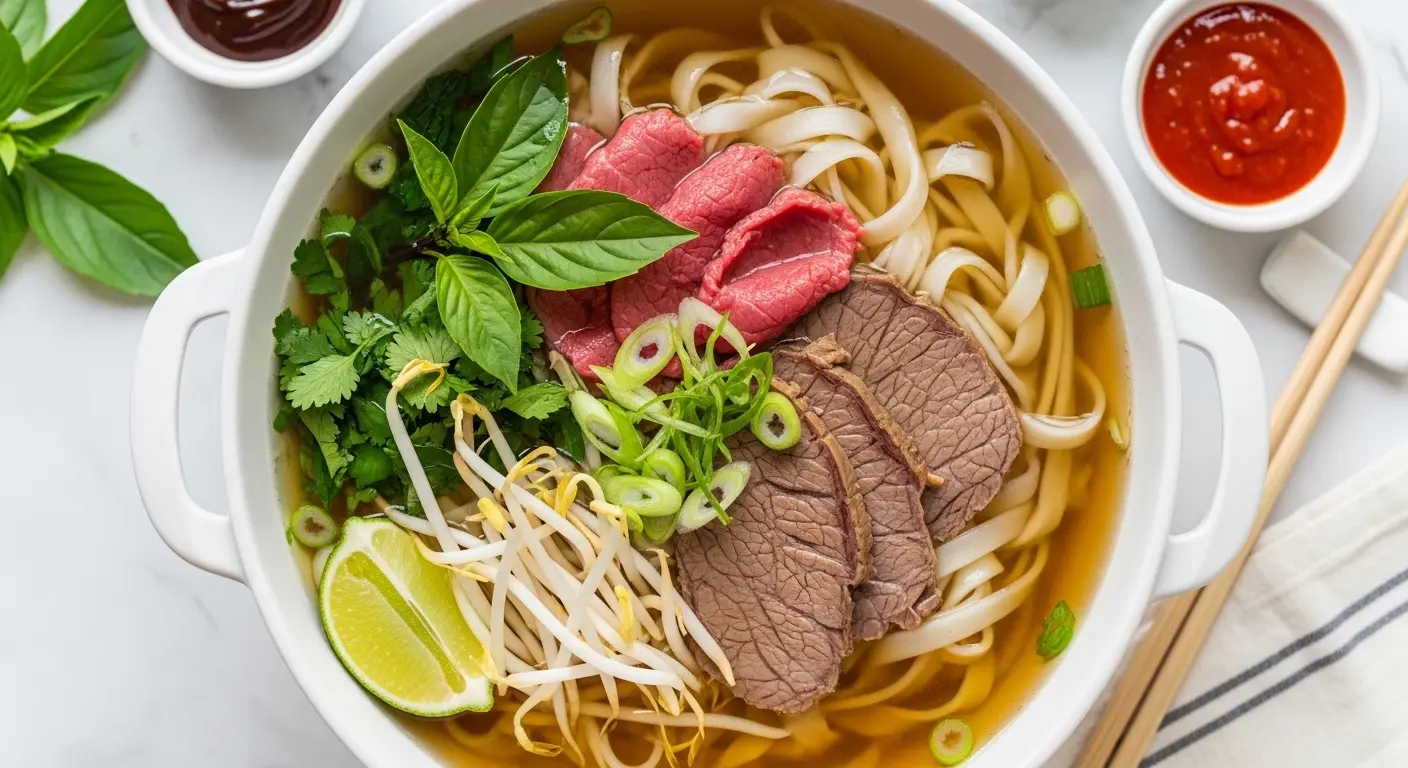
Pho (pronounced “fuh,” rhyming with “duh”) is a Vietnamese noodle soup built on three core elements: a clear, deeply flavored beef bone broth, flat rice noodles, and an assortment of toppings like thinly sliced beef, fresh herbs, bean sprouts, and lime.
What makes this recipe truly special is the charred aromatics. Toasting the onion and ginger directly over a flame before they go into the pot creates a smoky, caramelized depth that is the hallmark of authentic Vietnamese pho broth.
The spices are equally important. Star anise, cinnamon, cloves, and coriander seeds are briefly toasted in a dry pan to release their essential oils before being added to the broth, creating that signature warm and fragrant flavor you know from your favorite pho spot.
Even if you have never made pho before, this recipe walks you through every step. You will be rewarded with a bowl that tastes like it simmered for an entire day.
For another pho variation the whole family will love, check out this Chicken Pho Recipe that comes together even faster.
Why You’ll Love This Instant Pot Pho Recipe
This recipe is everything you want from a comforting bowl of pho without the all-day commitment.
The Instant Pot extracts collagen and flavor from the beef bones in a fraction of the time, producing a broth that is rich, clear, and deeply satisfying.
The charring technique, applied to the onion and ginger, adds that restaurant-quality smokiness that home cooks often skip, but it makes all the difference.
The spice blend is built around the most classic version of pho bo (beef pho), so the flavor is balanced and authentic rather than muddled or over-seasoned.
Here is what makes this recipe a keeper:
- Restaurant-quality broth at home: Pressure cooking condenses hours of simmering into about 45 minutes at high pressure.
- Deeply aromatic spice blend: Star anise, cinnamon, coriander, cloves, and black peppercorn work together for that signature pho fragrance.
- Charred aromatics for authentic flavor: Blackening the onion and ginger adds smokiness and sweetness to the broth that you simply cannot replicate any other way.
- Totally customizable toppings: Each person can build their own bowl with their preferred herbs, heat level, and garnishes.
- Better than takeout: Once you taste homemade pho broth made from real bones, it is hard to go back.
- Great for meal prep: The broth freezes beautifully and can be made days ahead.
Read Also: Vegan Pho Recipe
Ingredients
The ingredient list for Instant Pot pho is longer than most weeknight recipes, but each component plays a distinct role. The bones build body and richness, the aromatics add sweetness and smoke, and the spices deliver the unmistakable fragrance that defines this soup.
- 2 lbs (900g) beef marrow bones or knuckle bones, rinsed
- 1 lb (450g) beef brisket or chuck, left in one piece
- 1 large yellow onion, halved, skin left on
- 3-inch (7.5cm) piece of fresh ginger, halved lengthwise
- 3 whole star anise
- 1 cinnamon stick (about 3 inches/7.5cm)
- 4 whole cloves
- 1 tablespoon (10g) coriander seeds
- 1 teaspoon (3g) black peppercorns
- 1 tablespoon (15ml) fish sauce, plus more to taste
- 1 teaspoon (5g) rock sugar or brown sugar
- 1 teaspoon (6g) salt, or to taste
- 10 cups (2.4 liters) cold water
For the Bowls:
- 8 oz (225g) dried flat rice noodles (banh pho, about 3-5mm wide), cooked according to package directions
- 8 oz (225g) beef eye round or sirloin, sliced paper-thin against the grain (place in freezer 20 minutes before slicing to make this easier)
Toppings (served on the side):
- Fresh bean sprouts
- Fresh Thai basil leaves
- Fresh cilantro
- Thinly sliced green onions
- Thinly sliced white onion
- Lime wedges
- Sliced jalapeño or fresh Thai chili
- Hoisin sauce and sriracha for serving
You might also enjoy this Udon Noodle Soup Recipe if you love Asian noodle soups.
Kitchen Equipment Needed
Having the right equipment makes this process smooth and stress-free. The Instant Pot is the star here, but a few other tools make a big difference in both the quality of the broth and the ease of preparation.
- Instant Pot (6-quart or 8-quart) (electric pressure cooker): Essential for this recipe. The 6-quart works for 4 servings; use an 8-quart if doubling.
- Fine-mesh strainer: For straining the finished broth to remove bones, spices, and solids.
- Spice bag or cheesecloth: Keeps whole spices contained in the broth for easy removal.
- Large stockpot: For parboiling the bones before pressure cooking.
- Dry skillet or sauté pan: For toasting the whole spices.
- Tongs: For charring the onion and ginger over an open flame.
- Large ladle: For serving the hot broth.
- Sharp chef’s knife and cutting board: For thinly slicing the raw beef.
- Large serving bowls: Deep bowls that hold at least 24 oz (700ml) work best for pho.
Read Also: Tom Yum Soup Recipe
Recommended Products for This Recipe
These are products I genuinely recommend based on quality and performance, especially for making a traditional Instant Pot pho that delivers real depth of flavor.
1. Instant Pot Duo 7-in-1 Electric Pressure Cooker
The Instant Pot Duo is the gold standard for pressure cooking pho broth at home. Its precise high-pressure setting extracts collagen and flavor from the beef bones far more efficiently than a slow cooker. The sealing lid also traps every bit of aromatic steam inside, keeping all those spice flavors in the broth where they belong.
2. Authentic Vietnamese Fish Sauce (Three Crabs Brand)
Fish sauce is the backbone of seasoning in Vietnamese pho broth and not all brands are created equal. Three Crabs is widely considered the gold standard for authentic pho, offering a deep, savory saltiness without any harsh bitterness. A tablespoon or two during cooking and another dash at the end makes an enormous difference in flavor depth.
3. Three Ladies Brand Dried Rice Noodles (Banh Pho)
The noodle matters as much as the broth. Three Ladies is a well-loved brand among home pho cooks for its clean flavor and perfect texture after cooking. These flat rice noodles are made from rice flour and water only, and they hold up beautifully in hot broth without turning mushy.
4. OXO Good Grips Fine-Mesh Strainer
A quality fine-mesh strainer is essential for achieving that clear, restaurant-style pho broth. The OXO version has a wide, stable base and a fine enough mesh to catch all the small spice particles and bone fragments. Pouring your finished broth through it results in a beautifully clear, silky soup.
5. Whole Star Anise and Pho Spice Set
Pre-portioned pho spice kits take the guesswork out of sourcing individual spices like star anise, cinnamon, cloves, and coriander. Many kits come with a reusable spice bag, which makes cleanup significantly easier after pressure cooking.
For another comforting broth-based recipe, try this Hot and Sour Soup Recipe.
Step-by-Step Instructions
Step 1: Parboil the Beef Bones
- Place the rinsed beef marrow bones (and the brisket, if using) into a large stockpot.
- Cover completely with cold water.
- Bring to a rolling boil over high heat and let it boil hard for about 5 minutes. You will see a gray-brown foam (impurities from the bones) rise to the surface.
- Drain the pot and rinse the bones thoroughly under cool running water, scrubbing off any remaining scum or gray bits. This step is critical for a clear, clean-tasting broth. Do not skip it.
- Set the cleaned bones and brisket aside.
Step 2: Char the Onion and Ginger
- If you have a gas stove, use tongs to hold the halved onion cut-side-down directly over the flame. Turn occasionally until the surface is lightly blackened and fragrant, about 3 to 4 minutes per side.
- Do the same with the ginger halves, charring the cut sides until the edges darken and the ginger smells sweet and smoky.
- If using an electric stove, place the onion halves cut-side-down in a dry cast iron skillet over high heat and press down until deeply browned, about 4 to 5 minutes. Do the same with the ginger.
- Alternatively, you can use your Instant Pot’s high sauté setting to char the aromatics directly in the pot before adding other ingredients.
- Once charred, rinse the onion and ginger lightly to remove any very loose black bits, but keep the charred surface mostly intact as this is what creates the smoky depth in the broth.
- Set aside.
Step 3: Toast the Whole Spices
- Place a dry skillet over medium heat.
- Add the star anise, cinnamon stick, whole cloves, coriander seeds, and black peppercorns.
- Toast, stirring frequently, until the spices are fragrant and just starting to smoke lightly, about 2 to 3 minutes.
- Watch carefully so they do not burn, as burned spices will make the broth bitter.
- Transfer the toasted spices immediately to a spice bag or tie them loosely in cheesecloth. This makes it very easy to remove them from the broth after cooking without fishing for individual cloves and peppercorns.
- Set aside.
Step 4: Build and Pressure Cook the Broth
- Add the cleaned, parboiled beef bones to the Instant Pot.
- Add the whole brisket or chuck piece.
- Add the charred onion halves and ginger.
- Add the tied spice bag with all the toasted whole spices.
- Pour in the fish sauce, add the rock sugar (or brown sugar), and the salt.
- Pour in 10 cups (2.4 liters) of cold water. Do not exceed the maximum fill line of your Instant Pot.
- Secure the lid and make sure the pressure valve is set to the sealing position.
- Select the “Pressure Cook” or “Manual” function and set to HIGH pressure for 45 minutes.
- Once the cooking time is complete, allow the pressure to release naturally for at least 15 minutes before switching the valve to “Venting” for a quick release of any remaining pressure.
- This natural release period helps the broth stay clear and prevents it from going cloudy.
Step 5: Strain and Season the Broth
- Carefully open the Instant Pot lid away from your face.
- Use tongs or a slotted spoon to remove the brisket and set it aside on a cutting board to cool slightly.
- Discard the spice bag, charred onion pieces, and ginger.
- Pour the broth through a fine-mesh strainer into a large bowl or clean pot, discarding all remaining solids.
- Taste the broth carefully. Add more fish sauce, one teaspoon at a time, for more depth and saltiness. Add a pinch more sugar if the broth tastes flat. Adjust salt as needed.
- If you see a layer of fat floating on top and prefer a lighter broth, skim it off with a ladle or spoon. Some fat is traditional and adds richness, so this is a matter of personal preference.
- Return the strained, seasoned broth to the Instant Pot or a pot on the stove and keep it at a gentle simmer over low heat while you prepare the bowls.
Step 6: Prepare the Noodles and Raw Beef
- Cook the dried flat rice noodles according to the package directions. Most require soaking in hot water for 20 to 30 minutes or a brief boil for 5 minutes.
- Drain, rinse with cold water to stop cooking, and divide evenly among your serving bowls.
- Take the raw beef eye round or sirloin (which should have been in the freezer for 20 minutes) and slice it as thinly as possible against the grain, aiming for slices no thicker than 1/8 inch (3mm). The thinner you slice it, the more quickly and evenly it will cook from the hot broth.
- Slice the brisket that was cooked in the broth against the grain into thin slices and set aside.
- Slice the green onions and white onion thinly. Chop the cilantro roughly. Pick the Thai basil leaves from the stems.
- Arrange all the fresh herb toppings and garnishes on a large plate to serve at the table.
Step 7: Assemble and Serve the Pho Bowls
- If possible, warm your serving bowls by filling them with hot tap water for 3 to 4 minutes, then drain. Hot broth in a cold bowl cools down fast, and a warm bowl keeps the pho piping hot longer.
- Divide the cooked rice noodles among the warmed bowls.
- Layer on slices of the cooked brisket.
- Lay the raw thinly sliced beef directly on top of the noodles. Do not worry, the raw beef will cook instantly when the boiling broth is poured over it.
- Ladle the very hot, simmering broth over the raw beef. Use enough broth to fully cover the noodles and just submerge the meat, about 2 to 2.5 cups (475 to 600ml) per bowl.
- Top each bowl with sliced green onions and a pinch of thinly sliced white onion.
- Serve immediately with the plate of fresh herbs, bean sprouts, lime wedges, jalapeño, hoisin sauce, and sriracha on the side so everyone can season their own bowl.
You might also enjoy: Miso Soup Recipe
Tips for Success
Getting the most out of your Instant Pot pho comes down to a few key techniques that make all the difference between a good bowl and a truly great one.
- Do not skip the parboil: Blanching the bones before pressure cooking removes blood, impurities, and gaminess from the beef. This is the number one step for a clean, clear, restaurant-quality broth.
- Char the aromatics properly: You want genuine blackening on the onion and ginger surfaces, not just browning. The char creates sweetness and smoke that transforms the broth.
- Use rock sugar if you can find it: Rock sugar (or Chinese yellow rock sugar) adds a more nuanced, less sharp sweetness than granulated sugar and is traditional in Vietnamese pho broth. It can be found at most Asian grocery stores.
- Taste and season the broth at the end: Fish sauce varies in saltiness and intensity by brand, so always taste before adding more. Add fish sauce gradually, one teaspoon at a time.
- Freeze the raw beef before slicing: Even 15 to 20 minutes in the freezer firms up the meat enough to get paper-thin slices. This is the trick to raw beef that cooks perfectly from the hot broth.
- Keep the broth at a hard simmer when serving: The broth needs to be boiling hot when you ladle it over the raw beef. A lukewarm broth will not cook the meat safely or properly.
- Natural pressure release for a clearer broth: Allowing the pressure to drop naturally for at least 15 minutes keeps the broth from getting turbulent and cloudy. A quick release alone tends to muddy the broth.
Read Also: Beef Bone Broth Soup Recipe
Serving Suggestions
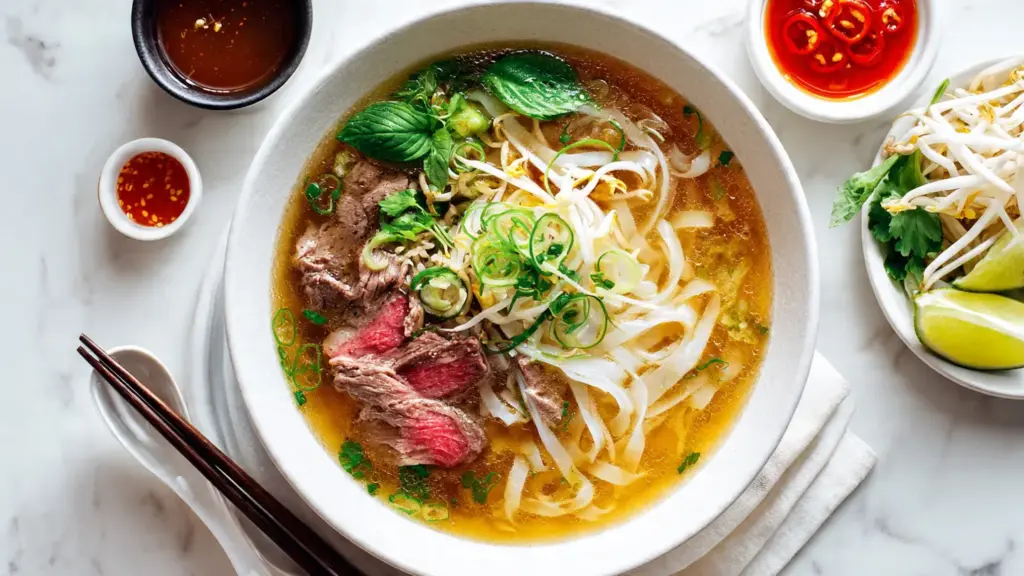
Pho is always served with a generous spread of toppings and condiments on the side, allowing everyone to customize their bowl exactly the way they like it.
The traditional accompaniments are a platter of fresh Thai basil, bean sprouts, lime wedges, sliced jalapeño, and fresh cilantro placed in the center of the table alongside individual dipping bowls of hoisin sauce and sriracha.
Beyond the classic setup, here are some ideas for rounding out your pho meal:
- Pair with fresh spring rolls: Crisp, herb-filled Air Fryer Egg Rolls make a fantastic starter alongside your pho.
- Add extra proteins: Beef meatballs (bo vien), cooked shrimp, or thin pork slices are popular additions that you can add directly to each bowl.
- Serve with Vietnamese iced coffee: The rich, sweetened condensed milk coffee is a classic Vietnamese pairing that balances the savory soup beautifully.
- Offer a chili oil drizzle: For those who want extra heat without the fresh chili, a spoonful of chili oil added to the broth creates a warming, spicy undertone throughout the whole bowl.
- Crusty bread on the side: While not traditional, a side of Cheesy Garlic Bread is perfect for soaking up every last drop of that flavorful broth.
Variations to Try
Once you have made the base recipe, there are so many delicious directions you can take it.
- Chicken pho (pho ga): Swap the beef bones and brisket for a whole chicken or chicken carcass and bone-in chicken thighs. Reduce the pressure cook time to 25 minutes. The spice blend stays the same.
- Vegan pho: Replace the beef bones with dried shiitake mushrooms, daikon radish, and vegetable broth. Use soy sauce instead of fish sauce and top with tofu or mushrooms instead of beef.
- Oxtail pho: Replace part of the marrow bones with oxtail pieces for an incredibly rich, gelatinous broth with even more body and beefy depth.
- Spicy pho: Add 2 to 3 dried arbol chiles or a split fresh Thai chili directly to the broth during pressure cooking for a broth with built-in heat.
- Brisket-forward pho: Use an extra half pound of brisket and cook it in the broth the full 45 minutes. Slice it thickly for a hearty, meaty bowl reminiscent of northern Vietnamese-style pho.
- Short rib pho: Add 1 lb of bone-in beef short ribs to the broth for extra richness and deeply flavored meat that falls right off the bone.
For another great noodle soup with a rich broth, this Lasagna Soup Recipe is a beloved comfort food crowd-pleaser.
Storage and Reheating
Pho broth is an excellent make-ahead component. The broth and the other elements are best stored separately so the noodles do not absorb all the liquid and turn mushy overnight.
- Broth: Allow the strained broth to cool to room temperature, then transfer to airtight containers. It keeps in the refrigerator for up to 4 days, or in the freezer for up to 3 months. Store it in individual portion-sized containers for easy single-serve reheating.
- Cooked brisket: Store the sliced cooked brisket in a separate airtight container with a small splash of broth to keep it moist. Refrigerate for up to 3 days.
- Raw sliced beef: Do not store raw sliced beef ahead of time for more than 1 day in the refrigerator. Slice fresh for the best texture and safety.
- Cooked noodles: Store leftover cooked noodles in a separate container tossed with a tiny drizzle of oil to prevent sticking. Refrigerate for up to 2 days.
- To reheat: Bring the broth back to a rolling boil on the stove or in a saucepan. Blanch the cold noodles briefly in boiling water to loosen them, then drain and place in the bowl. Ladle the hot broth over everything. Raw beef slices cook instantly in the reheated boiling broth just as they would fresh.
Another favorite: Chicken Rice Soup
Nutritional Facts
The following is an approximate nutritional estimate per serving (1 bowl), based on 4 servings. Values include broth, noodles, cooked brisket, and raw beef, but not the variable toppings.
- Calories: 520
- Total Fat: 18g
- Saturated Fat: 6g
- Cholesterol: 120mg
- Sodium: 980mg
- Total Carbohydrates: 48g
- Dietary Fiber: 1g
- Total Sugars: 3g
- Protein: 40g
- Iron: 5mg
- Calcium: 45mg
Note: Nutritional values are estimates and will vary based on exact cuts of beef used, amount of fat skimmed from the broth, and toppings added.
Read Also: Pho Recipe
Health Benefits of Key Ingredients
Pho is not just deeply satisfying. Its core ingredients bring genuine nutritional value to the bowl.
This recipe is naturally gluten-free (when using tamari or gluten-free fish sauce), high in protein from the beef, and loaded with anti-inflammatory compounds from the spice blend.
Here is a closer look at what makes this recipe more than just delicious:
- Beef bone broth: Simmering bones under pressure releases collagen, gelatin, and amino acids like glycine and proline. These compounds support joint health, gut lining integrity, and skin elasticity.
- Star anise: Contains anethole, an active compound with documented antifungal and anti-inflammatory properties. It also contributes to digestive comfort and is a natural source of antioxidants.
- Ginger: One of the most well-researched anti-inflammatory foods, ginger contains gingerols that have been studied for their role in reducing nausea, supporting digestion, and easing muscle soreness.
- Cinnamon: A cinnamon stick in the broth contributes cinnamaldehyde, which research links to better blood sugar regulation and has notable antibacterial properties.
- Fresh herbs (Thai basil, cilantro): Both are excellent sources of vitamins K and A. Cilantro in particular contains antioxidants that may help the body remove heavy metals, while Thai basil offers eugenol, a compound with anti-inflammatory activity.
- Bean sprouts: Low in calories and high in vitamin C, folate, and enzymes that support digestive health. They add a fresh crunch to the bowl without adding significant calories.
This recipe also uses a small amount of sugar for balance, keeping the overall glycemic load of the soup quite moderate when paired with the protein and fat from the beef.
For another soup packed with health-supportive ingredients, this Moroccan Lentil Soup Recipe is a warming, nutrient-dense option you will love.
Frequently Asked Questions
1. Can I make Instant Pot pho without beef bones?
You can, but the broth will be noticeably less rich. Beef bones release collagen during pressure cooking, which gives the broth its body and that characteristic silky texture. If you cannot find beef marrow bones, beef knuckle bones, neck bones, or even oxtail work well. As a last resort, you can use a high-quality store-bought beef broth with the spices, aromatics, and fish sauce pressure cooked for 20 minutes, though the depth of flavor will be lighter.
2. How do I get the broth as clear as restaurant pho?
The parboiling step is the most important factor. Blanching the bones and discarding the first water removes the proteins and impurities that make broth cloudy. Additionally, a natural pressure release (rather than a full quick release) keeps the broth from becoming agitated and murky. Straining through a fine-mesh strainer at the end removes any remaining particles.
3. Is the raw beef safe to eat if it’s just poured over with hot broth?
Yes, as long as the broth is at a full, rolling boil when you ladle it over the paper-thin slices. The heat of the broth cooks the thin beef almost instantly on contact. The key is slicing the beef very thin (no thicker than 1/8 inch or 3mm) and ensuring the broth is genuinely boiling, not just warm or hot. If you are concerned, you can briefly swirl the sliced beef in simmering broth for 30 seconds before adding it to the bowl.
4. Can I double this recipe?
Yes, but be mindful of the maximum fill line on your Instant Pot. Most 6-quart models should not be filled more than two-thirds full. If you want to double the recipe, an 8-quart Instant Pot is the better choice, as it has more headroom. You can also make a larger batch of broth and freeze it in individual portions to use over several weeks.
5. What is the difference between northern and southern Vietnamese pho?
Northern-style pho (pho Bac), which is the older, more traditional version, features a more savory, simpler broth with fewer toppings. The noodles are wider and the condiment options are minimal. Southern-style pho (pho Nam), most familiar to people outside of Vietnam, uses a slightly sweeter broth and is served with an abundant platter of fresh herbs, bean sprouts, lime, chili, hoisin, and sriracha. This recipe leans toward the southern-style approach with a full herb platter on the side.
Read Also: Chicken Tortilla Soup Recipe
Final Thoughts
Making a proper bowl of Vietnamese beef pho at home might feel ambitious, but the Instant Pot makes it absolutely achievable on a weekend afternoon. Every step in this recipe, from parboiling the bones to charring the aromatics to toasting the spices, is designed to build the most flavorful broth possible in a realistic amount of time.
Once you taste a bowl of homemade pho made with real beef bones and freshly toasted spices, takeout will be hard to compete with. The broth is rich and warming, the noodles are silky, and the fresh herbs on top brighten everything up beautifully.
Give this Instant Pot Pho Recipe a try and see for yourself why it has become a beloved weekend project for so many home cooks. If you make it, leave a comment below and let us know how it turned out. Tag a friend who needs a great pho recipe in their life!
Recommended:
- Pho Recipe
- Chicken Pho Recipe
- Vegan Pho Recipe
- Tom Yum Soup Recipe
- Udon Noodle Soup Recipe
- Minestrone Soup Recipe
- Beef and Barley Soup Recipe
- Matzo Ball Soup Recipe
- Lemon Chicken Orzo Soup Recipe
- Italian Wedding Soup Recipe