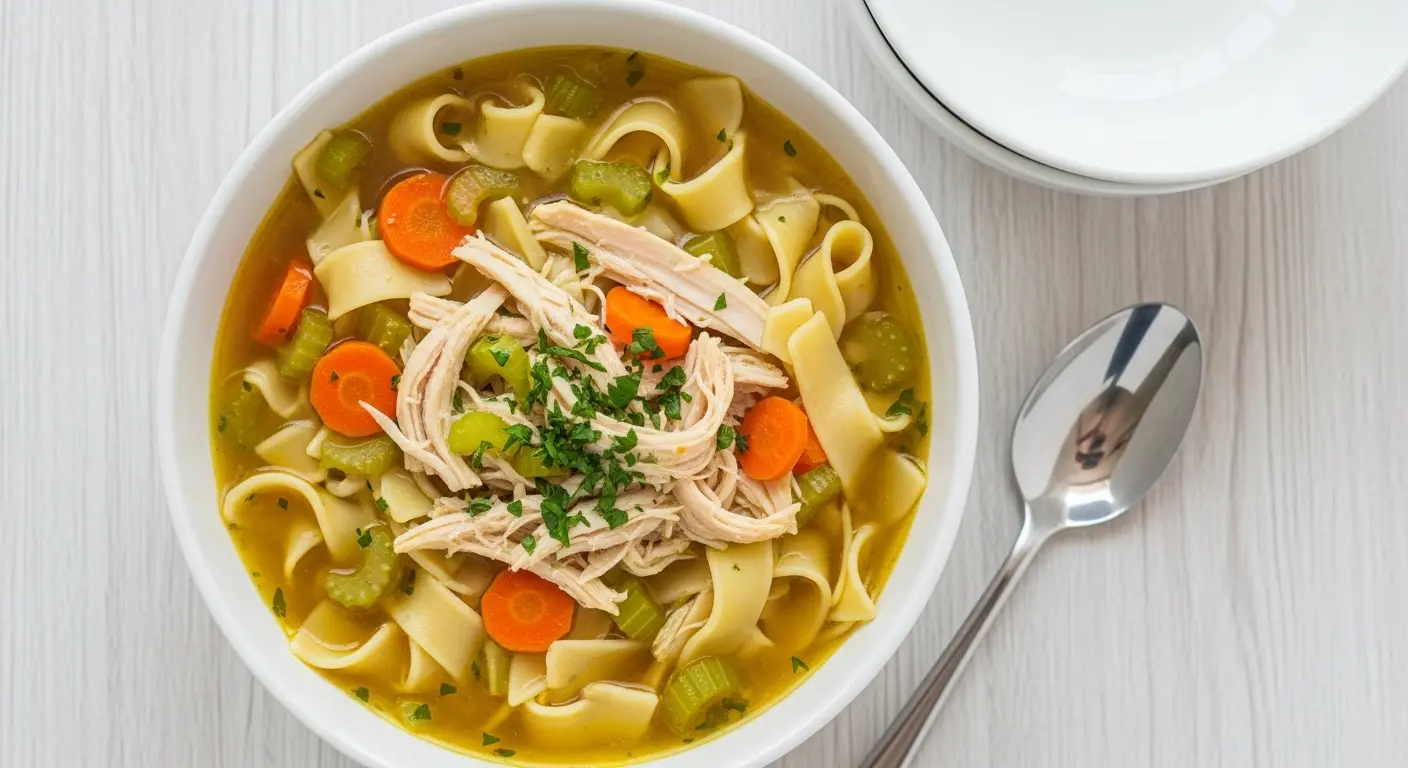
This chicken soup recipe is the kind of thing that feels like a warm hug in a bowl. Whether it’s a cold winter evening, a day when you’re feeling under the weather, or simply a Sunday when you want the whole house to smell incredible, this recipe delivers every single time.
The magic of a truly great chicken soup comes down to a few key things: a rich, golden broth made by simmering bone-in chicken low and slow, aromatics like onion and celery that build depth from the very start, and perfectly cooked egg noodles that soak up all that savory goodness.
This isn’t a shortcut version. It’s the real deal, the kind your grandmother made, built with simple ingredients and a little patience.
You’ll find that simmering the chicken on the bone rather than using pre-cooked or boneless chicken is the single biggest factor in getting that deep, flavorful broth. The collagen in the bones breaks down over time and creates a naturally silky texture that no store-bought stock can replicate.
If you’re a fan of comforting soups and stews, you’ll also love this Chicken Tortilla Soup for a spicier spin on chicken-based soups.
Why You’ll Love This Chicken Soup Recipe
This recipe is a true crowd-pleaser that works for literally any occasion.
It’s simple enough for a weeknight dinner but satisfying enough to serve when you’re cooking for family or hosting a casual gathering.
One of the best things about making chicken soup from scratch is how forgiving it is. You don’t need to be precise down to the last teaspoon for this one to turn out beautifully.
The broth is naturally rich and golden without any cream or butter, making it a lighter meal that still feels deeply nourishing.
Here’s why this recipe stands out:
- Incredibly flavorful broth made by simmering bone-in chicken, which releases natural gelatin and creates a silky, restaurant-quality base
- Simple, wholesome ingredients that you likely already have at home
- One large pot means minimal cleanup
- Freezer-friendly so you can make a big batch and save portions for busy weeknights
- Highly customizable with easy variations like adding rice, orzo, or fresh herbs at the end
- Works for meal prep since the flavor actually deepens after a day in the fridge
- Naturally gluten-free adaptable just by swapping the noodles for rice or gluten-free pasta
Ingredients
Classic chicken soup uses pantry staples and fresh vegetables that work together to build layers of flavor. The egg noodles are traditional in American-style chicken soup and cook directly in the broth to absorb flavor as they soften.
- 1 whole chicken (3.5 to 4 lbs / 1.6 to 1.8 kg), or 3 to 4 lbs / 1.4 to 1.8 kg bone-in, skin-on chicken pieces (thighs and breasts work well)
- 3 medium carrots, peeled and sliced into rounds (about 1.5 cups / 200g)
- 3 stalks celery, sliced (about 1.5 cups / 150g)
- 1 large yellow onion, roughly chopped
- 4 cloves garlic, minced
- 3 sprigs fresh thyme (or 1 teaspoon dried thyme)
- 2 bay leaves
- 10 to 12 cups (2.4 to 2.8 liters) water or low-sodium chicken broth
- 2 cups (200g) wide egg noodles
- 2 tablespoons olive oil or neutral cooking oil
- 1.5 teaspoons salt, plus more to taste
- 0.5 teaspoon black pepper
- 1 teaspoon garlic powder
- Small bunch of fresh parsley, roughly chopped (for finishing)
- Optional: 1 tablespoon lemon juice (brightens the broth beautifully at the end)
Also love a good chicken soup variation? Check out this Chicken Rice Soup Recipe for an equally comforting take.
Kitchen Equipment Needed
You don’t need much to make this soup, but a few quality pieces of equipment will make the process much smoother. A heavy-bottomed pot is especially important for even heat distribution.
- Large Dutch oven or heavy-bottomed pot (7 to 8 quart capacity)
- Sharp chef’s knife and cutting board
- Long-handled ladle
- Tongs (for removing and shredding chicken)
- Fine mesh strainer or colander (optional, for straining the broth)
- Wooden spoon or silicone spatula
- Measuring cups and spoons
- Two forks (for shredding the cooked chicken)
Read Also: Chicken and Dumplings Recipe
Recommended Products for This Recipe
These are products chosen based on quality and performance that can genuinely elevate your chicken soup-making experience.
1. Large Enameled Cast Iron Dutch Oven
A quality enameled cast iron Dutch oven distributes heat evenly and retains it beautifully, which is essential for a long, gentle simmer. It prevents hot spots that can cause uneven cooking and makes the broth clearer and more flavorful. It also doubles as a beautiful serving vessel.
2. Low-Sodium Organic Chicken Broth
Using a quality low-sodium organic chicken broth as your base liquid (instead of plain water) adds an extra layer of flavor from the very beginning of the recipe. It gives you more control over the salt level while still adding depth. Look for broth made without MSG or artificial flavors.
3. Wide Egg Noodles
Traditional American chicken soup calls for wide egg noodles, which hold up well in broth without turning mushy. They have a slightly richer, more toothsome texture than regular pasta. A good-quality brand makes a noticeable difference in the final dish.
4. Instant-Read Meat Thermometer
An instant-read meat thermometer takes the guesswork out of knowing when your chicken is fully cooked and safe to shred. It’s a useful tool for any recipe involving poultry. The chicken should read 165°F (74°C) at the thickest part before you remove it from the pot.
5. Fine Mesh Strainer
A quality fine mesh strainer lets you optionally strain the broth after cooking the chicken for an extra clear, clean-tasting result. It’s particularly helpful if you want a more refined, restaurant-style soup. Simply strain, return the broth to the pot, then add back the vegetables and chicken.
You might also enjoy: Chicken Gnocchi Soup Recipe
Step-by-Step Instructions
1. Prepare Your Vegetables
- Peel and slice the carrots into rounds about 1/4 inch (6mm) thick. Thin enough to cook through, but thick enough to hold their shape in the soup.
- Slice the celery stalks similarly, about 1/4 inch (6mm) thick, including the leafy tops if you have them. Celery leaves add great flavor.
- Roughly chop the onion. It doesn’t need to be perfect since it will cook down and become part of the broth base.
- Mince the garlic cloves finely. Minced garlic releases more flavor into the broth than roughly chopped pieces.
- Strip the fresh thyme leaves from their stems if using fresh, or measure out the dried thyme.
- Chop the fresh parsley and set it aside separately. This will be added at the very end to keep its bright flavor and color.
2. Sear the Chicken (Optional but Recommended)
- Heat 2 tablespoons of olive oil in your Dutch oven or large pot over medium-high heat.
- Pat the chicken dry with paper towels. This is important. Dry chicken browns much better than wet chicken, and that golden sear adds flavor to the broth.
- Place the chicken pieces skin-side down in the hot oil. For a whole chicken, sear the breast side down first.
- Sear for 3 to 4 minutes without moving, until golden brown. Flip and sear the other side for 2 to 3 minutes.
- Remove the chicken from the pot and set it aside on a plate. You don’t need it to be cooked through at this stage. You’re just developing color.
3. Soften the Aromatics
- Reduce the heat to medium. Using the same pot, add the chopped onion to the remaining oil.
- Sauté the onion for 4 to 5 minutes, stirring occasionally, until it turns translucent and softened.
- Add the minced garlic and cook for another 1 to 2 minutes, stirring constantly to prevent it from burning. The garlic should be fragrant and just starting to turn golden.
- Add the sliced carrots and celery. Stir everything together and cook for 2 to 3 more minutes to let the vegetables start to soften and pick up the flavors in the pan.
4. Build the Broth
- Return the seared chicken to the pot, nestling it among the vegetables.
- Pour in the water or chicken broth, enough to fully cover the chicken (10 to 12 cups / 2.4 to 2.8 liters). If your chicken is large, add a bit more liquid.
- Add the fresh thyme sprigs (or dried thyme), bay leaves, garlic powder, salt, and black pepper.
- Stir gently to distribute the seasonings.
- Bring the liquid to a boil over high heat, then immediately reduce to a low simmer. You should see gentle bubbles, not a rolling boil. A hard boil will make the broth cloudy and can toughen the chicken.
5. Simmer the Chicken Low and Slow
- Partially cover the pot with a lid (leave a small gap for steam to escape). This prevents the broth from reducing too quickly while still allowing the flavors to concentrate.
- Simmer on low heat for 45 minutes to 1 hour for bone-in pieces, or 1 to 1.5 hours if using a whole chicken.
- As the soup simmers, use a spoon to skim off any foam or grayish residue that rises to the surface, especially in the first 15 minutes. This makes for a cleaner, clearer broth.
- The soup is ready for this stage when the chicken is fully cooked and tender enough to fall off the bone. An instant-read thermometer should read 165°F (74°C) at the thickest part.
6. Remove and Shred the Chicken
- Using tongs, carefully remove the cooked chicken from the pot and place it on a cutting board or large plate. Allow it to rest and cool slightly for about 10 minutes so it’s easier to handle.
- Remove and discard the bay leaves and thyme sprigs from the pot.
- Once the chicken is cool enough to touch, use two forks or your hands to pull the meat apart into shreds. Discard the skin and any bones.
- Aim for bite-sized shreds rather than tiny pieces. Large, satisfying shreds of chicken make every spoonful more filling.
7. Cook the Egg Noodles
- Bring the broth back up to a gentle boil over medium-high heat.
- Add the 2 cups (200g) of wide egg noodles directly to the pot.
- Stir them in and cook for 6 to 8 minutes, or according to the package directions, until the noodles are just tender. Keep in mind that the noodles will continue to soften slightly once the heat is off, so pull them a minute early if you prefer more bite.
- Do not overcook the noodles at this stage. Overcooked noodles become mushy, especially if the soup sits for a while or is reheated.
8. Return the Chicken and Finish the Soup
- Add the shredded chicken back into the pot and stir to combine.
- Taste the broth carefully and adjust the seasoning. Add more salt if needed, a pinch more black pepper, or a little garlic powder.
- If using lemon juice, stir in 1 tablespoon now. This small addition lifts the flavor of the entire soup and makes it taste noticeably brighter without tasting like lemon soup.
- Add the freshly chopped parsley and stir it in just before serving. Parsley added at the end stays vibrant green and keeps its fresh, slightly peppery flavor, whereas parsley cooked into the soup loses both.
- Give the soup one final stir, ladle into bowls, and serve immediately while hot.
For another classic comfort food pairing, this soup goes beautifully alongside a Homemade Biscuit Recipe.
Tips for Success
Getting chicken soup right is mostly about technique. These tips will make the difference between a good soup and a truly great one.
- Use bone-in chicken. Boneless chicken breast will give you a flat, thin broth. Bone-in pieces, especially thighs, drumsticks, or a whole bird, release collagen and create a naturally rich, silky texture.
- Don’t skip the sear. Browning the chicken in the pot first builds a flavorful fond on the bottom of the pan that gets lifted up when you add the liquid. It adds color and depth to the finished broth.
- Simmer, don’t boil. A vigorous boil breaks up the proteins in the chicken and makes the broth cloudy and somewhat stringy. Low and slow is the way to go.
- Skim the foam. In the first 10 to 15 minutes of simmering, foam and impurities will rise to the surface. Skim them off with a ladle or large spoon for a cleaner, clearer broth.
- Add noodles last. If you cook noodles for too long in the broth, they absorb too much liquid and become mushy. Add them only when you’re about 8 minutes away from serving.
- Season in layers. Add a small amount of salt at the beginning, then taste and adjust at the end. It’s much easier to add salt than to fix an over-salted soup.
- Save the broth. If you have leftover broth, save it separately from the noodles. Noodles stored in broth continue to absorb liquid and become very soft by the next day.
Read Also: Chicken Vegetable Soup Recipe
Serving Suggestions
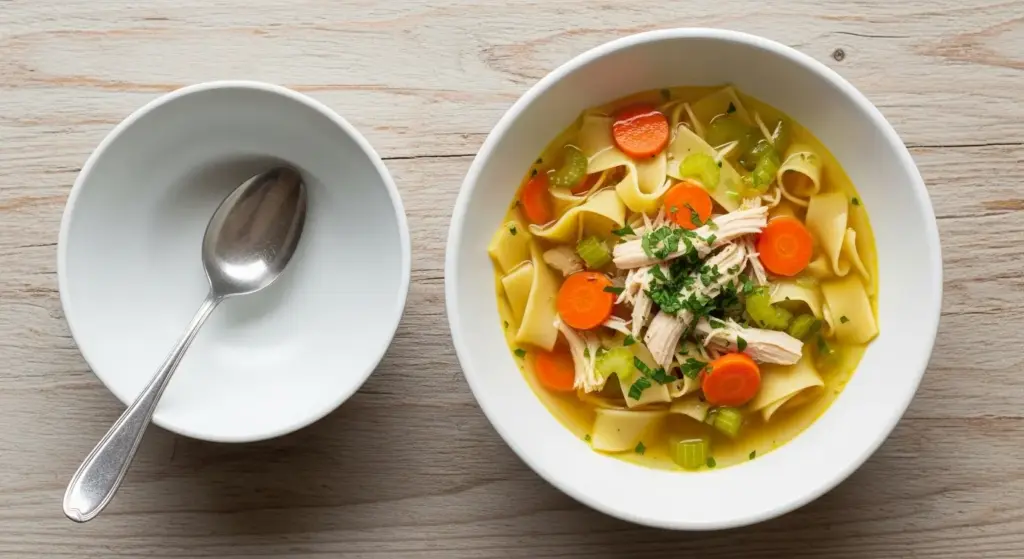
This chicken soup is a complete meal on its own, but it pairs wonderfully with a variety of sides and accompaniments.
A bowl of this soup alongside Cheesy Garlic Bread is one of the best cold-weather meals you can make. The crispy, buttery bread is perfect for dunking right into the broth.
Here are more ideas for what to serve with chicken soup:
- Crusty bread or dinner rolls for soaking up the rich broth
- A simple green salad with vinaigrette to add a fresh, crisp contrast
- Grilled cheese sandwich for the classic pairing that never gets old
- Saltine or oyster crackers floated right on top of the soup
- Cornbread which adds a slightly sweet, dense contrast to the light soup
- Avocado toast on the side for a more modern, filling accompaniment
- A wedge of lemon on the side so guests can brighten their own bowl to taste
Variations to Try
Once you’ve made the classic version a few times, it’s easy to adapt it to suit different tastes and dietary needs. These variations all use the same base method.
- Chicken and rice soup: Swap the egg noodles for 3/4 cup (140g) of long grain white rice or wild rice blend. Add the rice at the same stage you would the noodles and simmer for 18 to 20 minutes.
- Chicken orzo soup: Replace the egg noodles with 3/4 cup (140g) of dry orzo pasta for a lighter, more delicate texture.
- Lemon chicken soup (avgolemono-style): At the end, whisk together 2 eggs and 3 tablespoons of lemon juice in a bowl, then slowly ladle hot broth into the mixture while whisking to temper it, then stir it back into the pot. This gives the soup a creamy, velvety texture without any cream.
- Slow cooker version: Place all the ingredients except the noodles and parsley into a slow cooker. Cook on low for 7 to 8 hours or high for 4 to 5 hours. Remove the chicken, shred it, then cook noodles separately and stir in before serving.
- Spicy version: Add 1 teaspoon of crushed red pepper flakes and a diced jalapeño with the aromatics for a gentle heat.
- Herb-heavy version: Add fresh dill and extra parsley during the last 5 minutes of cooking for a more intensely herbaceous finish.
Another great option for similar comforting chicken soups: Lemon Chicken Orzo Soup Recipe
Storage and Reheating
Chicken soup stores and reheats beautifully, making it ideal for meal prep and leftovers throughout the week. One important note about storing: it’s always best to store the noodles separately from the broth and chicken when possible, since noodles continue to absorb liquid in the fridge.
- Refrigerator storage: Store the soup in an airtight container for up to 4 days. If you notice the broth gelling in the fridge, that’s a great sign. It means your broth is rich in natural gelatin from the chicken bones.
- Freezer storage: Freeze the soup (without noodles, if possible) in freezer-safe containers for up to 3 months. Thaw overnight in the refrigerator before reheating.
- Reheating on the stovetop: Pour the soup into a pot and warm over medium heat, stirring occasionally, until heated through. If the soup has thickened overnight due to noodle absorption, add a splash of extra broth or water to loosen it.
- Reheating in the microwave: Ladle into a microwave-safe bowl, cover loosely, and heat in 1-minute intervals, stirring between each, until steaming hot.
- Adding fresh noodles: If your leftover noodles have become very soft and mushy, you can cook a fresh handful of egg noodles in the reheated broth for 6 to 8 minutes to restore the right texture.
Also try making a big comforting batch of Turkey Soup when you want a similar recipe with a slightly different flavor profile.
Nutritional Facts
The following values are approximate and based on one serving of chicken soup (roughly 1.5 to 2 cups / 360 to 480ml), using a standard whole chicken, egg noodles, and vegetables. Exact values will vary depending on the size of your chicken and specific ingredients used.
| Nutrient | Per Serving (approx.) |
|---|---|
| Calories | 280 to 320 kcal |
| Protein | 28 to 32g |
| Total Fat | 8 to 10g |
| Saturated Fat | 2 to 3g |
| Carbohydrates | 22 to 26g |
| Dietary Fiber | 2g |
| Sugars | 3 to 4g |
| Sodium | 620 to 780mg (varies with broth) |
This recipe yields approximately 6 to 8 servings.
Read Also: Chicken Stew Recipe
Health Benefits of Key Ingredients
Chicken soup has been called “Jewish penicillin” for centuries, and there’s genuine science behind the idea that it supports the body during illness and recovery.
Research has suggested that chicken soup may help reduce upper respiratory symptoms by mildly inhibiting the movement of certain immune cells, which reduces congestion and inflammation.
Here are the key health benefits of the main ingredients:
- Chicken: An excellent source of lean protein, which supports muscle repair, immune function, and satiety. Dark meat also contains more zinc and iron than white meat.
- Carrots: Rich in beta-carotene, which the body converts to vitamin A. This supports eye health, immune function, and skin health. Carrots also add natural sweetness to the broth.
- Celery: A good source of vitamin K, which is important for blood clotting and bone health. Celery also contains antioxidants and has been linked to anti-inflammatory properties.
- Onion and garlic: Both are well-known for their immune-boosting properties. Garlic in particular contains allicin, a compound with antimicrobial and antiviral activity. Onion contains quercetin, a potent antioxidant.
- Egg noodles: Provide a source of carbohydrates for energy. They also contain B vitamins and small amounts of iron.
- Parsley: High in vitamin C and vitamin K. Adding it fresh at the end preserves the most nutritional value.
- Homemade broth: The long, slow simmer extracts minerals like calcium, magnesium, and phosphorus from the bones. This is especially pronounced if you simmer for more than an hour.
You might also enjoy: Chicken Mushroom Soup Recipe
Frequently Asked Questions
1. Can I use rotisserie chicken instead of raw chicken?
Yes, you can absolutely use rotisserie chicken if you want to cut down on cooking time. Shred the meat from the chicken and add it to the pot after you’ve built the broth using the carcass or with plain water and broth. The key difference is that you won’t get as rich a base from pre-cooked chicken, so using a quality store-bought chicken broth as your liquid will compensate. Simmer the carcass in the broth for 20 to 30 minutes for extra flavor before adding the shredded meat and noodles.
2. What can I use instead of egg noodles?
There are plenty of great alternatives to egg noodles. Long grain white rice, wild rice, orzo, ditalini pasta, or even small elbow pasta all work well. You can also use farro or barley for a heartier, nuttier texture. For a low-carb option, add riced cauliflower or sliced zucchini during the last few minutes of cooking. Keep in mind that each substitute will have a different cooking time, so check the package directions and adjust accordingly.
3. Why is my chicken soup broth not flavorful enough?
A few common causes and fixes. First, make sure you’re using bone-in chicken. Boneless chicken produces a thinner, flatter broth. Second, don’t rush the simmer. Flavor builds over time, and cutting the simmering time short means you miss out on the depth that comes from the bones and aromatics. Third, taste and adjust the seasoning at the end. Salt is often the missing factor in a bland broth. A small splash of lemon juice can also brighten and amplify all the existing flavors without adding noticeable lemon flavor.
4. Can I make chicken soup in a slow cooker?
Yes, chicken soup adapts very well to a slow cooker. Add all the ingredients except the egg noodles and parsley to the slow cooker. Cook on low for 7 to 8 hours or on high for 4 to 5 hours. Remove and shred the chicken, discard the bones and bay leaves, then cook your noodles separately on the stovetop according to package directions. Add the noodles to each bowl when serving rather than to the full pot, which makes it easier to store leftovers without soggy noodles. Stir in the parsley right before serving.
5. How do I get a clear, golden broth?
Clear broth comes down to three things: simmering at a low temperature, skimming the foam that rises early in the cooking process, and not over-stirring the soup as it cooks. A vigorous boil agitates the proteins and starch and clouds the broth. Keep it at a gentle, lazy simmer where only a few bubbles break the surface at any given time. You can also strain the finished broth through a fine mesh strainer, then return it to the pot and add back the cooked vegetables and shredded chicken for an especially clear, clean result.
Read Also: Matzo Ball Soup Recipe
Final Thoughts
This chicken soup recipe is one of those dishes that proves simple, traditional cooking techniques always win. With a little patience and a pot full of wholesome ingredients, you get something that no shortcut recipe can come close to matching.
Make it once and you’ll understand why this has been a beloved comfort food for generations. The golden broth, tender shredded chicken, sweet cooked carrots, and soft noodles just feel right in a way that’s hard to explain but impossible to forget.
If you give this recipe a try, leave a comment below telling me how it turned out. I’d love to hear if you made any tasty substitutions or added your own family twist!
Recommended:
- Chicken Rice Soup Recipe
- Lemon Chicken Orzo Soup Recipe
- Chicken and Dumplings Recipe
- Italian Wedding Soup Recipe
- Vegetable Soup Recipe
- Minestrone Soup Recipe
- Chicken Noodle Soup (Carrabba’s Style)
- Caldo de Pollo Recipe
- Chicken Sopas Recipe
- Ham and Bean Soup Recipe


