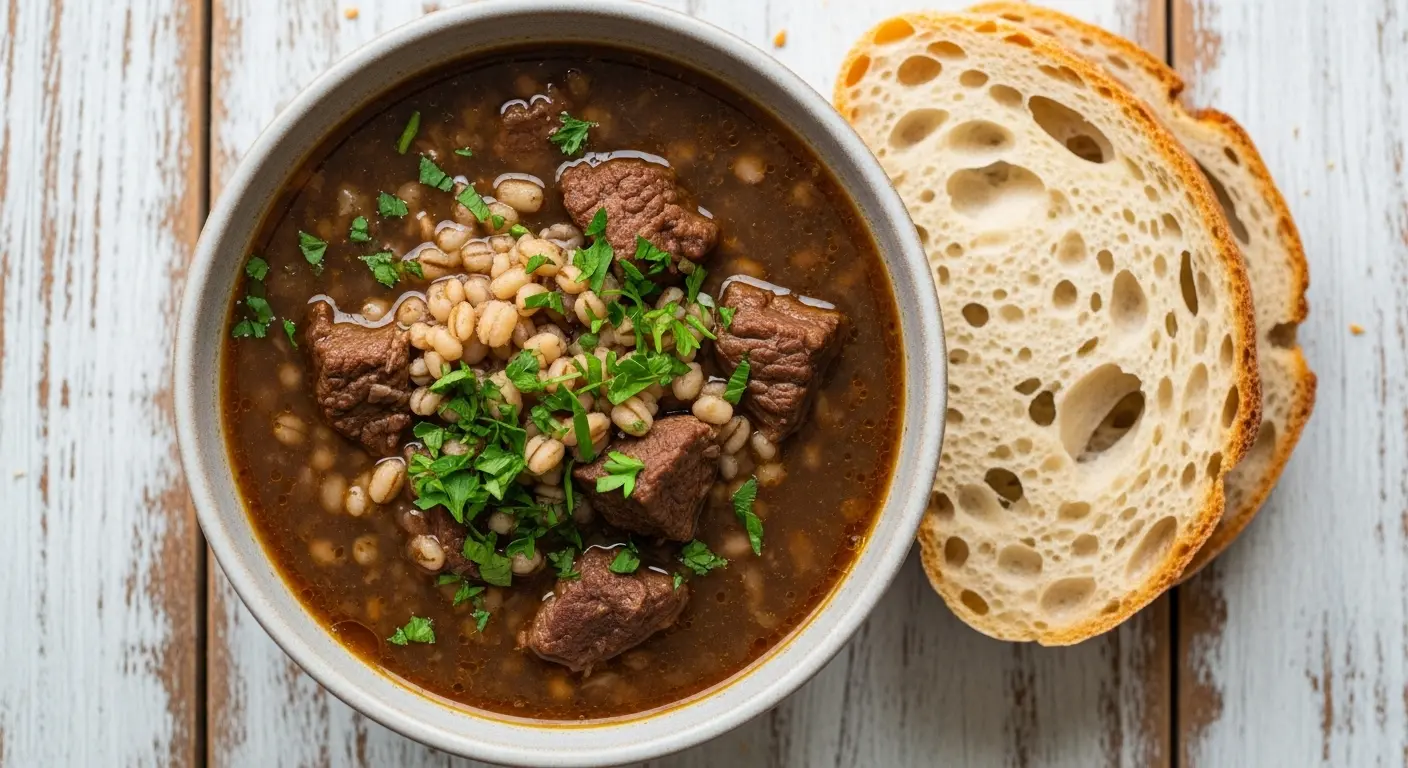
If there’s one pot of soup that feels like a warm hug on a cold day, it’s a classic beef and barley soup. This timeless recipe combines tender chunks of beef, chewy pearl barley, and a medley of hearty vegetables simmered low and slow in a rich, deeply flavored broth.
It’s the kind of soup that improves with every hour on the stove. The barley absorbs the savory beef broth and swells into something thick and satisfying that fills you up in the most comforting way.
What makes this version so reliable is the technique. Browning the beef before it hits the broth is the most important step, and many home cooks skip it. That sear creates a crust of caramelized protein that adds layers of depth to the entire pot, making the broth taste like it’s been simmering for hours even when it hasn’t.
This is the kind of meal that’s just as welcome on a busy Tuesday night as it is at a casual dinner with friends. Let’s get into everything you need to know to make it perfectly.
You might also enjoy: Hamburger Soup
Why You’ll Love This Beef and Barley Soup
This soup hits every note you want in a cold-weather meal. It’s deeply savory, loaded with vegetables, and filling enough to stand on its own as a complete dinner.
The beauty of pearl barley is that it thickens the broth naturally as it cooks. You don’t need any flour or cornstarch; the starch from the barley does all the work, creating a velvety body that’s somewhere between a soup and a stew.
It’s also incredibly forgiving. The longer it simmers, the better it tastes. If you walk away from the stove for an extra 20 minutes, this soup only benefits from it.
The leftovers are arguably even better than the first bowl. As the soup rests overnight, the barley continues to absorb the broth and the flavors meld into something truly extraordinary.
It’s also a budget-friendly recipe. Chuck beef is an inexpensive cut that transforms into something luxuriously tender when given the time and low heat it deserves.
- Rich, deeply flavored beef broth that develops incredible depth from browning the meat
- Tender chunks of slow-simmered chuck beef that practically fall apart in the spoon
- Pearl barley that naturally thickens the broth without any added starches
- Wholesome root vegetables including carrots, celery, and potatoes for substance and sweetness
- A make-ahead friendly recipe that stores and reheats beautifully all week
Read Also: Crockpot Beef Stew Recipe
Ingredients
The ingredient list for beef and barley soup is straightforward, but a few key choices make a real difference in the final bowl. Chuck roast is the gold standard cut here because its high collagen content melts down during the long simmer, enriching both the meat texture and the broth. Avoid lean cuts like sirloin, which will turn tough and stringy rather than tender.
- 2 lbs (900g) beef chuck roast, cut into 1-inch cubes
- 1 cup (200g) pearl barley (not hulled barley, which takes much longer to cook)
- 2 tablespoons olive oil or vegetable oil
- 1 large yellow onion, diced
- 3 cloves garlic, minced
- 3 medium carrots, peeled and sliced into rounds
- 3 stalks celery, sliced
- 2 medium Yukon Gold potatoes, peeled and diced into 1/2-inch cubes
- 8 oz (225g) cremini or button mushrooms, sliced
- 2 tablespoons tomato paste
- 8 cups (1.9 liters) beef broth (low-sodium preferred)
- 1 cup (240ml) water
- 2 bay leaves
- 1 teaspoon dried thyme
- 1 teaspoon dried rosemary
- 1/2 teaspoon smoked paprika
- Salt and black pepper to taste
- Fresh parsley, chopped, for garnish
- 1 tablespoon Worcestershire sauce
For a richer result, you can swap 1 cup of the broth for a dry red wine like Cabernet Sauvignon or Merlot. Add it after browning the vegetables and let it reduce for a minute before pouring in the broth.
Another favorite: Beef Bone Broth Soup
Kitchen Equipment Needed
You don’t need anything exotic to make this recipe, but a few good tools will make the process smoother and the results noticeably better. A heavy-bottomed pot is especially important here. Because this soup simmers for a long time over low heat, you want something that distributes heat evenly and doesn’t create hot spots that can scorch the barley.
- Large Dutch oven (6-quart or larger) or a heavy-bottomed stockpot
- Chef’s knife for dicing vegetables and cutting the beef
- Cutting board
- Measuring cups and measuring spoons
- Ladle for serving
- Large wooden spoon or silicone spatula for stirring
- Paper towels for patting the beef dry before browning
- Slotted spoon for skimming any foam from the broth
Read Also: Beef Bourguignon Recipe
Recommended Products for This Recipe
These are products I genuinely recommend based on quality and performance. They can make a real difference in the cooking process and the final result of your beef and barley soup.
1. Lodge Enameled Cast Iron Dutch Oven
A quality Dutch oven is the single most important piece of equipment for this recipe. The heavy cast iron base retains and distributes heat evenly, which means your soup simmers gently and consistently without hot spots that can cause the barley to scorch. The enamel interior also makes cleanup easy and doesn’t react with acidic ingredients like tomato paste.
2. Low-Sodium Beef Bone Broth
The quality of your broth is the quality of your soup. A rich, collagen-forward beef bone broth adds body and depth that regular broth simply can’t match. Low-sodium versions give you full control over the seasoning, so the soup doesn’t turn out too salty as the liquid reduces.
3. Pearl Barley
Pearl barley is the variety to use in this soup. It’s been polished to remove the outer hull, which dramatically cuts down on cooking time and gives the broth that beautifully thick, creamy texture. Hulled barley takes twice as long and doesn’t break down the same way.
4. Smoked Paprika
A small amount of smoked paprika adds a subtle, warming depth to the broth without making the soup taste smoky. It reinforces the flavor you build when browning the beef and ties all the savory components together. A high-quality Spanish smoked paprika makes a noticeable difference.
This soup pairs wonderfully with other hearty beef recipes like Beef Stroganoff if you’re planning a cozy dinner spread.
Step-by-Step Instructions
Step 1: Prepare the Beef
- Remove the chuck roast from the refrigerator about 30 minutes before cooking to allow it to come closer to room temperature, which helps it brown more evenly.
- Cut the chuck roast into 1-inch (2.5cm) cubes, trimming away any large pieces of hard fat but leaving the intramuscular fat in place, as this melts down and adds flavor.
- Place the beef cubes on a plate lined with paper towels and pat them thoroughly dry on all sides. This step is critical. Wet meat steams instead of browns, and you want a deep, caramelized sear.
- Season the beef generously on all sides with salt and black pepper.
Step 2: Brown the Beef
- Place your Dutch oven over medium-high heat and add 1 tablespoon of the oil. Allow the oil to heat until it shimmers.
- Add the beef cubes in a single layer, making sure not to crowd the pan. Work in two batches if necessary. Overcrowding drops the temperature and steams the meat rather than searing it.
- Let the beef cook undisturbed for 3 to 4 minutes until a dark brown crust forms on the bottom. Do not move it around during this time.
- Flip each piece and sear the other side for another 2 to 3 minutes.
- Use a slotted spoon to transfer the browned beef to a plate and set aside. Do not drain the pot. Those browned bits on the bottom are pure flavor.
- Add the second tablespoon of oil and repeat with the remaining beef.
Step 3: Sauté the Aromatics
- Reduce the heat to medium. Add the diced onion to the same pot with all those flavorful browned bits still in the bottom.
- Cook the onion, stirring occasionally, for 4 to 5 minutes until softened and translucent.
- Add the minced garlic and cook for another 60 seconds, stirring constantly, until fragrant. Be careful not to let the garlic burn as it can turn bitter.
- Add the sliced mushrooms and cook for 3 to 4 minutes, stirring occasionally, until they release their liquid and begin to soften.
- Push the vegetables to the side and add the tomato paste to the center of the pot. Cook the tomato paste for 1 to 2 minutes, stirring it into the vegetables, until it darkens slightly from bright red to a deep brick red. This process, called “blooming,” cooks out the raw tomato flavor and concentrates the umami.
Step 4: Deglaze and Build the Broth
- Pour in 1 cup of the beef broth (or red wine if using) and use your wooden spoon to scrape up all the browned bits from the bottom of the pot. Those bits are called the fond, and they add an enormous amount of flavor to the finished soup.
- Stir everything together until the fond is fully incorporated into the liquid.
- Add the remaining 7 cups of beef broth and 1 cup of water.
- Return the browned beef and any accumulated juices from the plate back into the pot.
- Add the Worcestershire sauce, bay leaves, dried thyme, dried rosemary, and smoked paprika.
- Stir to combine and bring the soup to a boil over high heat.
Step 5: Add the Barley and Simmer
- Once the soup reaches a full boil, stir in the pearl barley.
- Reduce the heat to low, cover the pot with a lid slightly ajar (this allows steam to escape and prevents boil-overs while keeping enough heat in to simmer properly).
- Simmer for 30 minutes, stirring occasionally to make sure the barley doesn’t stick to the bottom of the pot.
Step 6: Add the Vegetables
- After 30 minutes, add the sliced carrots, celery, and diced potatoes to the pot.
- Stir everything together to distribute the vegetables evenly.
- Replace the lid, still slightly ajar, and continue simmering over low heat for another 25 to 30 minutes, until the vegetables are fork-tender, the barley is fully cooked and slightly swollen, and the broth has thickened noticeably.
Step 7: Final Seasoning and Serve
- Remove and discard the bay leaves.
- Taste the soup and adjust seasoning with salt and black pepper as needed. Remember that the broth concentrates as it reduces, so taste before adding any extra salt.
- If the soup has thickened more than you’d like, add a splash of hot water or broth to reach your preferred consistency.
- Ladle into bowls and garnish with freshly chopped parsley.
- Serve immediately with crusty bread on the side.
You might also enjoy: Minestrone Soup
Tips for Success
Getting this soup right comes down to a few key techniques that are easy to execute once you know what to look for. The single biggest tip is patience during the browning step. It’s tempting to rush it, but a proper sear is what transforms a flat broth into one with genuine, restaurant-quality depth of flavor.
- Pat the beef completely dry before searing. Moisture creates steam, which prevents browning. Paper towels do the job perfectly.
- Don’t skip the tomato paste blooming step. Cooking it briefly in the dry pot before adding liquid caramelizes the sugars and deepens the umami flavor dramatically.
- Add the barley before the root vegetables. Barley takes longer to cook than carrots and potatoes. Adding them in stages prevents the vegetables from turning mushy while the barley finishes.
- Simmer low and slow. A vigorous boil can make the beef tough and cloud the broth. Low, gentle heat is what produces a clear, rich, deeply flavored soup and melt-in-your-mouth meat.
- Taste and season at the end, not just at the beginning. As the broth reduces, the saltiness concentrates, so your seasoning needs may change. Always do a final taste before serving.
- Add a Parmesan rind to the broth as it simmers if you have one. It dissolves slowly and adds incredible savory depth without making the soup taste cheesy.
This technique works beautifully for Lamb Stew too if you’re looking to try a similar approach with a different protein.
Serving Suggestions
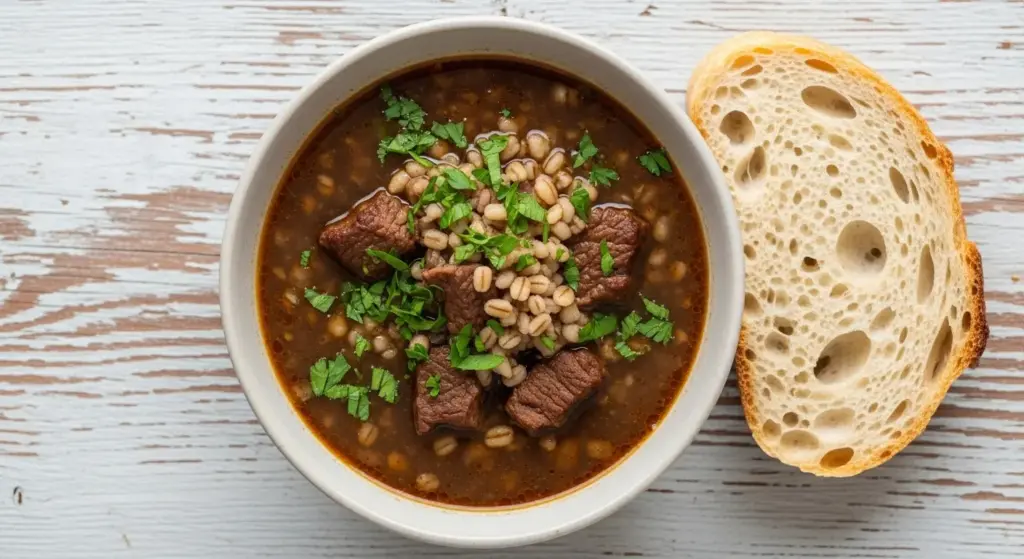
Beef and barley soup is a complete meal on its own, but pairing it with the right sides makes the experience feel even more special. Because the soup is rich and thick, it pairs best with lighter accompaniments that complement rather than compete.
A bowl of this soup alongside something crusty and bread-based is probably the most classic combination you’ll find. The bread is perfect for soaking up every last drop of that thick, savory broth.
- Crusty artisan bread or sourdough for dunking into the broth, perhaps alongside Cheesy Garlic Bread
- A light green salad with a simple vinaigrette to balance the richness of the soup
- Dinner Rolls warm from the oven for a classic pairing
- A glass of dry red wine such as Cabernet Sauvignon or Syrah, which mirrors the savory, earthy notes in the broth
- Skillet Cornbread for a slightly sweeter, Southern-style pairing that works wonderfully with this hearty soup
Variations to Try
Once you’ve made the classic version, it’s easy and fun to customize this soup based on what you have in the pantry or what flavors you’re craving. The base technique and broth remain the same; you’re really just swapping out ingredients to suit different preferences or dietary needs.
- Slow cooker version: After browning the beef and sautéing the aromatics on the stovetop (don’t skip this step), transfer everything to a slow cooker. Add the broth, barley, and seasonings. Cook on low for 7 to 8 hours or on high for 4 to 5 hours. Add the root vegetables during the last 2 hours of cooking.
- Turkey and barley variation: Swap the beef for diced turkey thigh meat or leftover roasted turkey. Use chicken or turkey broth instead of beef broth. This makes a lighter but equally satisfying version, very similar to a Turkey Barley Soup.
- Vegetarian version: Omit the beef and use vegetable broth. Add 2 cans of drained white beans or chickpeas for protein and substance. Increase the mushrooms to 1 pound (450g) for a meaty, earthy flavor.
- Add leafy greens: Stir in a large handful of fresh baby spinach or chopped kale in the last 5 minutes of cooking. The greens wilt quickly and add a nutritional boost without changing the overall flavor profile.
- Spice it up: Add 1/2 teaspoon of crushed red pepper flakes along with the other dried herbs for a gentle heat that works really well against the richness of the broth.
Read Also: Chicken Rice Soup Recipe
Storage and Reheating
One of the best things about this soup is that it stores and reheats like a dream, making it ideal for meal prep. Keep in mind that the barley will continue to absorb liquid as the soup sits, so you may need to add a bit of broth or water when reheating to reach your desired consistency.
- Refrigerator: Store cooled soup in an airtight container in the refrigerator for up to 4 to 5 days. The flavor actually improves after the first day.
- Freezer: Transfer completely cooled soup to freezer-safe bags or containers, leaving an inch of space at the top for expansion. Freeze for up to 3 months. Thaw overnight in the refrigerator before reheating.
- Reheating on the stovetop: Transfer the desired amount to a saucepan over medium-low heat. Add a splash of water or beef broth to loosen the consistency. Heat, stirring occasionally, until warmed through, about 5 to 7 minutes.
- Reheating in the microwave: Place the soup in a microwave-safe bowl and cover loosely with a paper towel to prevent splatter. Heat in 90-second intervals, stirring between each, until fully heated through.
- Do not refreeze soup that has already been frozen and thawed. Portion it out before freezing so you only thaw what you need.
This soup stores just as beautifully as a Vegetable Soup if you’re building a weekly batch-cooking plan.
Nutritional Facts
The following values are estimates per serving based on the recipe making approximately 8 servings. Actual values will vary based on specific ingredient brands and exact amounts used.
| Nutrient | Per Serving (approx.) |
|---|---|
| Calories | 320 kcal |
| Total Fat | 10g |
| Saturated Fat | 3.5g |
| Cholesterol | 70mg |
| Sodium | 680mg |
| Total Carbohydrates | 30g |
| Dietary Fiber | 5g |
| Sugars | 4g |
| Protein | 27g |
| Iron | 3.5mg |
| Potassium | 720mg |
These numbers reflect one generous bowl of soup made with lean beef chuck and low-sodium broth. Using a higher-fat cut or a regular-sodium broth will increase the fat and sodium content. The fiber numbers are particularly notable; the combination of barley and vegetables makes this a very fiber-dense meal.
For more context on how this soup fits into a balanced diet, you can compare it with something like a Chicken Vegetable Soup to see how different proteins and bases change the nutritional profile.
Health Benefits of Key Ingredients
This is the kind of recipe that tastes indulgent but is genuinely nourishing. The combination of protein, complex carbohydrates, and fiber-rich vegetables makes it a well-rounded, nutrient-dense meal that supports energy levels and satiety for hours.
Pearl barley is the nutritional star of this dish. It’s rich in beta-glucan, a soluble fiber that has been shown to support healthy cholesterol levels and stabilize blood sugar after meals. Barley is also a good source of B vitamins, magnesium, and selenium.
- Beef chuck is a rich source of complete protein, providing all essential amino acids. It’s also high in zinc, which supports immune function, and B12, which is essential for nerve health and red blood cell production.
- Pearl barley contains beta-glucan fiber, which helps regulate cholesterol and blood sugar levels. It provides slow-releasing energy that keeps you full significantly longer than refined carbohydrates.
- Carrots are packed with beta-carotene, the precursor to vitamin A, which supports eye health, immune function, and skin health.
- Celery provides vitamin K, folate, and potassium, all while being extremely low in calories. Its natural compounds also have mild anti-inflammatory properties.
- Mushrooms are one of the few non-animal food sources of vitamin D, especially when they’ve been exposed to light during growth. They also provide B vitamins and powerful antioxidants including ergothioneine.
- Garlic contains allicin, a sulfur compound with well-documented antimicrobial and anti-inflammatory properties. Regular consumption is associated with cardiovascular benefits.
- Tomato paste is a concentrated source of lycopene, a potent antioxidant that is actually more bioavailable when cooked than when consumed raw.
Another hearty and nourishing option worth exploring is the Lentil Soup Recipe if you’re looking to add more plant-based, fiber-rich soups to your repertoire.
Frequently Asked Questions
1. Can I use a different cut of beef instead of chuck?
Chuck roast is the ideal choice for this recipe because of its high collagen content, which breaks down during the long simmer and creates tender, pull-apart meat and a naturally rich broth. However, you can also use beef stew meat (which is often already cubed chuck), brisket, or short rib meat with similar results. Avoid lean cuts like round or sirloin, which will become tough and dry during the extended cooking time rather than tender.
2. Do I need to soak the barley before cooking?
Pearl barley does not need to be soaked before cooking. It will cook directly in the soup during the simmer time specified in the recipe. Hulled barley, which is a less processed variety, does benefit from soaking but takes much longer to cook and isn’t recommended for this recipe unless you increase the total simmer time significantly.
3. My soup is too thick. What should I do?
As the barley cooks, it absorbs a substantial amount of liquid and releases starch that thickens the broth. If your soup has become thicker than you’d like, simply add warm beef broth or water, about half a cup at a time, stirring after each addition until you reach your preferred consistency. This is especially common when reheating leftovers, as the barley continues to absorb liquid in the refrigerator overnight.
4. Can I make this soup in the Instant Pot?
Yes, this recipe adapts well to the Instant Pot. Use the Sauté function to brown the beef and sauté the aromatics as directed. Then add all remaining ingredients. Cook on high pressure for 25 minutes, followed by a 15-minute natural pressure release. Note that the barley may be slightly softer than the stovetop version, but the flavor is excellent.
5. How do I know when the beef is done?
The beef is done when it is completely tender and can be easily pierced with a fork or broken apart with a spoon. Because chuck roast is a tough, collagen-rich cut, it needs sustained low heat to fully tenderize. At the simmering time specified in this recipe (about 60 to 75 minutes total), the beef should be melt-in-your-mouth tender. If it still feels chewy at all, simply continue simmering with the lid on for another 15 to 20 minutes and check again.
For more soup-making tips and timing guidance, the Chicken Tortilla Soup Recipe has a helpful breakdown of building depth in soups quickly.
Final Thoughts
Beef and barley soup is one of those recipes that earns a permanent spot in your regular rotation after the very first batch. It’s deeply satisfying, incredibly nourishing, and gets better the longer it simmers and the longer it sits.
The technique here, especially the browning step, is what separates a good soup from a truly great one. Take those extra ten minutes to properly sear the beef in batches, and the broth rewards you with a richness you simply can’t achieve any other way.
Give this recipe a try the next time the weather turns cold or you want something genuinely comforting without a lot of fuss. It’s the perfect make-ahead meal that feeds a crowd and keeps the whole week feeling cozy.
If you make it, leave a comment below and let me know how it turned out! Did you add any fun twists or try any of the variations? I’d love to hear about it.
Recommended:
- Turkey Barley Soup
- Beef Bone Broth Soup
- Prime Rib Soup
- Hamburger Soup
- French Onion Beef Short Rib Soup
- Italian Wedding Soup
- Split Pea Soup
- Stuffed Pepper Soup
- Pasta Fagioli
- Chicken Gnocchi Soup