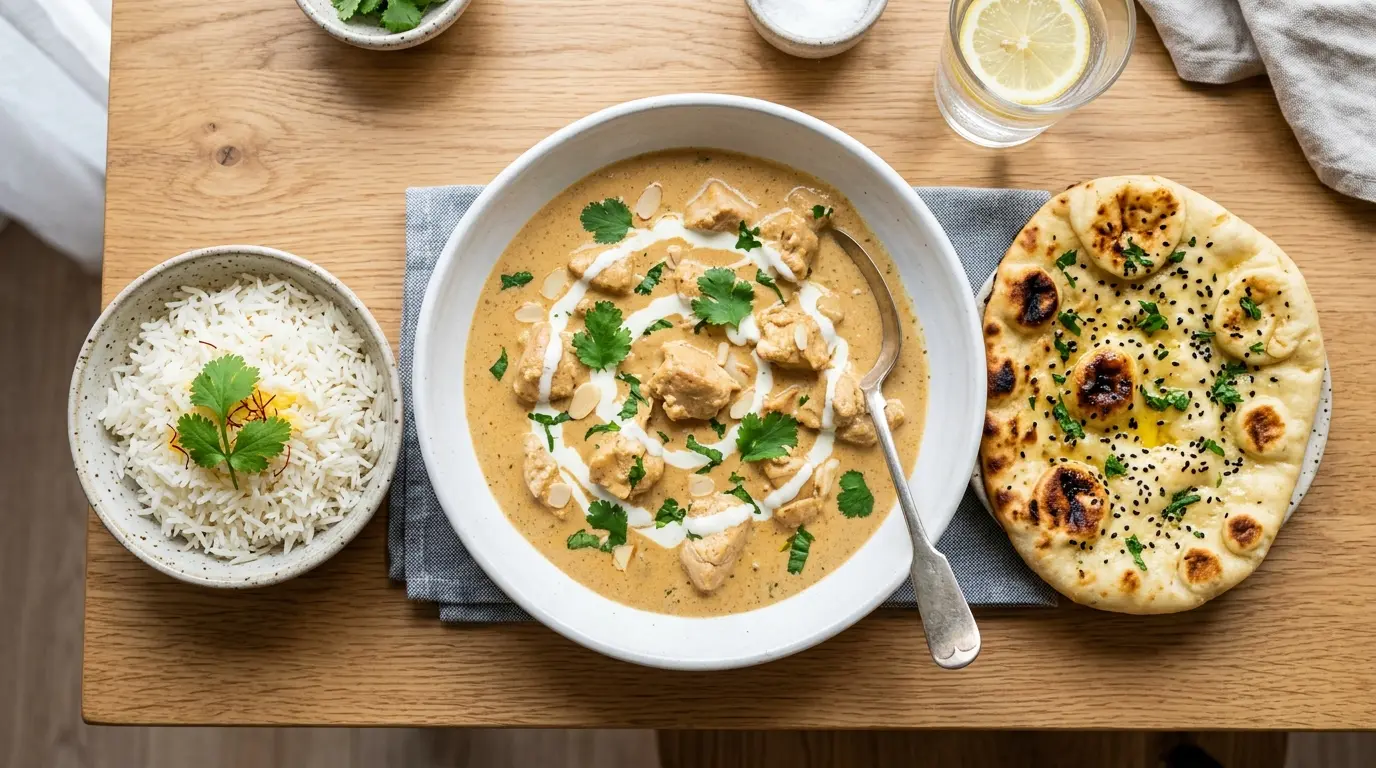
If you’ve ever been to an Indian restaurant and found yourself reaching for the mildest, most luxurious curry on the menu, chances are you ordered a Chicken Korma Recipe. This Mughlai-inspired dish is everything you want in a comfort meal: tender chicken pieces bathed in a velvety, golden sauce made with fried onions, creamy yogurt, and a blend of fragrant whole spices.
What makes korma so special is not just the flavor, but the technique behind it. The word “korma” literally means “to braise,” and that slow braising process is what gives this dish its signature depth.
Unlike tomato-heavy curries like butter chicken or tikka masala, korma gets its richness from nuts, yogurt, and onions. The result is a sauce that’s silky-smooth, warmly spiced, and absolutely unforgettable.
Whether you’re making this for a weeknight dinner or a special occasion, this guide walks you through every single step so you can nail it on the first try.
This recipe follows the North Indian (Mughlai) style, which is the most widely recognized version in restaurants worldwide. It uses bone-in chicken, fried onions, a nut paste, and whole spices for a deeply authentic result.
You might also enjoy the equally beloved Chicken Tikka Masala Recipe for another classic Indian-inspired dinner option.

Why You’ll Love This Chicken Korma Recipe
This dish checks all the boxes for a truly satisfying curry night at home.
The sauce is rich but not heavy, mildly spiced but bursting with layered flavor. Even those who are nervous around spice will love it because korma is famously gentle on the heat.
It’s also an incredibly versatile recipe. You can make it ahead of time, freeze it in portions, and it actually tastes better the next day once all the spices have melded together.
The ingredients are largely pantry staples once you’ve stocked your spice shelf. There’s nothing wildly obscure here, and every element plays a real role in building the final flavor.
The fried onion technique is where the magic really happens. Cooking onions down until they’re deep golden brown and slightly crispy creates a rich, slightly sweet base that you simply cannot replicate any other way.
It’s also a dish that genuinely impresses guests. Korma has a reputation as a celebratory recipe in South Asian households for a reason: it looks and tastes like it took far more effort than it actually did.
- Restaurant-quality results at home with simple techniques
- Mildly spiced, making it perfect for the whole family
- Rich and creamy without being overly heavy
- Works beautifully for meal prep and leftovers
- An authentic Mughlai recipe that tastes just like your favorite Indian restaurant
- Pairs perfectly with naan, basmati rice, or flatbread
Read Also: Authentic Butter Chicken Recipe
Ingredients
To make a truly great chicken korma, you need a few key players: bone-in chicken for flavor, full-fat yogurt for creaminess, a nut paste for body, and whole spices for depth. Here’s everything you’ll need.
- 2 lbs (900g) bone-in, skinless chicken pieces (thighs and drumsticks work best)
- 1 cup (240ml) plain full-fat yogurt
- 2 large red or yellow onions, thinly sliced
- 4 tablespoons (60ml) neutral oil or ghee, plus more as needed
- 1/2 cup (65g) raw cashews (soaked in warm water for 20 minutes)
- 1/4 cup (35g) raw almonds (blanched, skins removed)
- 4 garlic cloves, minced (or 1 tablespoon garlic paste)
- 1-inch (2.5cm) piece of fresh ginger, grated (or 1 tablespoon ginger paste)
- 3 green cardamom pods, lightly crushed
- 4 whole cloves
- 1 bay leaf
- 1-inch (2.5cm) cinnamon stick
- 1/2 teaspoon cumin seeds
- 1 teaspoon ground coriander
- 1/2 teaspoon ground cumin
- 1/2 teaspoon ground turmeric
- 1 teaspoon garam masala
- 1/2 teaspoon red chili powder (optional, for mild heat)
- 1 teaspoon salt, or to taste
- 1/3 cup (80ml) heavy cream
- 2 tablespoons water (for blending, as needed)
- Fresh cilantro, for garnish
Read Also: Basmati Rice Recipe
Kitchen Equipment Needed
You don’t need any specialty gadgets for this recipe, but a few key tools will make the process smooth and easy.
- Heavy-bottomed pan or Dutch oven (for even heat distribution when frying onions and braising chicken)
- High-speed blender or food processor (for making the smooth nut paste)
- Small blender or spice grinder (for grinding spices if using whole spices)
- Mixing bowls (for marinating the chicken)
- Sharp chef’s knife (for cutting chicken and slicing onions)
- Wooden spoon or silicone spatula (for stirring and scraping the bottom of the pan)
- Measuring spoons and cups
- Slotted spoon (for removing fried onions from the oil)
- Plate lined with paper towels (for draining the fried onions)
Read Also: Garlic Naan Bread Recipe
Recommended Products for This Recipe
These are products I genuinely recommend based on quality, performance, and how much of a difference they make in this specific recipe.
1. Lodge Enameled Cast Iron Dutch Oven
A quality Dutch oven is the single best investment you can make for this recipe. The heavy base distributes heat evenly, preventing hot spots that can burn your onions or cause your yogurt-based sauce to split. The tight-fitting lid traps steam during braising, keeping the chicken incredibly moist and tender.
2. MDH Garam Masala
Not all garam masala blends are created equal, and the quality of your blend will absolutely show up in the final dish. MDH is a trusted Indian spice brand used by home cooks and restaurants alike, and their garam masala has the warm, complex profile that makes korma taste truly authentic.
3. Vitamix Personal Cup Blender
Getting a silky-smooth nut paste is key to korma’s signature texture. A high-powered blender like a Vitamix pulverizes soaked cashews and almonds into a completely smooth paste, eliminating any grainy texture in the final sauce.
4. Swad Kewra Water
Kewra water is a classic finishing touch in Mughlai korma, adding a distinctly floral, perfumed note that elevates the dish from very good to extraordinary. A few drops stirred in right at the end make a noticeable difference.
5. Cuisinart Spice and Nut Grinder
If you prefer using whole spices (which always deliver superior flavor), a dedicated spice grinder makes grinding cardamom, cloves, and cinnamon effortless. It’s also perfect for grinding your soaked nuts into a paste if you don’t have a high-powered blender.
You might also love the warmth and depth of Tandoori Chicken if you’re exploring more Indian-inspired recipes.

Step-by-Step Instructions
Step 1: Marinate the Chicken
- Place the chicken pieces in a large mixing bowl.
- Add 1/2 cup (120ml) of the plain full-fat yogurt, 1/2 teaspoon of turmeric, 1/2 teaspoon of red chili powder (if using), 1/2 teaspoon of salt, and half of the minced garlic and grated ginger.
- Mix everything together thoroughly, making sure each piece of chicken is completely coated in the yogurt marinade.
- Cover the bowl with plastic wrap or a plate and refrigerate for at least 30 minutes, or up to 4 hours if time allows. The longer the chicken marinates, the more tender and flavorful it will be. The yogurt acts as a tenderizer, breaking down the muscle fibers while the spices begin to penetrate the meat.
Step 2: Prepare the Nut Paste
- Drain the soaked cashews and blanched almonds and transfer them to a blender.
- Add 2 tablespoons of water and blend on high speed until you get a completely smooth, creamy paste with no grainy bits remaining.
- If the paste seems too thick to blend smoothly, add another tablespoon of water and blend again.
- Set the nut paste aside in a small bowl. This paste is what gives the korma its distinctive creamy, velvety body without needing heavy amounts of dairy.
Step 3: Fry the Onions
- Heat 4 tablespoons of oil or ghee in your heavy-bottomed pan or Dutch oven over medium-high heat. Ghee adds a richer, more authentic flavor, but neutral oil works well too.
- Add the thinly sliced onions to the hot oil. Make sure your onions are sliced thin and evenly, as this allows them to fry uniformly and caramelize properly.
- Stir frequently and cook the onions for 20 to 25 minutes, adjusting the heat between medium and medium-high as needed. You’re looking for a deep golden-brown color, almost amber. This step is non-negotiable for authentic korma flavor, so don’t rush it.
- Once the onions are deeply caramelized and slightly crispy, use a slotted spoon to transfer them onto a plate lined with paper towels. Spread them out so they can crisp up as they cool.
- Reserve the oil left in the pan. Do not discard it.
Step 4: Make the Onion Paste
- Once the fried onions have cooled completely, transfer them to the blender or food processor.
- Add 2 tablespoons of the remaining yogurt and blend until you have a coarse, thick paste. Traditional korma paste does not need to be perfectly smooth; a slightly textured paste adds to the authentic character of the dish.
- Set the onion paste aside.
Step 5: Bloom the Whole Spices
- Return the pan with the reserved oil to medium heat.
- Add the crushed cardamom pods, whole cloves, bay leaf, cinnamon stick, and cumin seeds to the warm oil.
- Let the whole spices sizzle gently for 30 to 45 seconds, stirring once or twice. You’ll know they’re ready when the oil is fragrant and the spices are just beginning to color. This blooming step releases the fat-soluble aromatic compounds in the spices, dramatically deepening the flavor of the entire dish.
Step 6: Cook the Aromatics
- Add the remaining minced garlic and grated ginger to the bloomed spices in the pan.
- Stir and cook for 1 to 2 minutes over medium heat until the raw smell of the garlic disappears and the mixture turns fragrant. Keep stirring frequently to prevent the garlic from burning, as burnt garlic will make the sauce bitter.
Step 7: Add the Onion Paste and Ground Spices
- Add the blended fried onion paste into the pan and stir to combine with the aromatics.
- Add the ground coriander, ground cumin, and the remaining 1/2 teaspoon of garam masala. Stir everything together until well combined.
- Cook the masala (spice mixture) over medium heat for 5 to 7 minutes, stirring frequently. You’re cooking out the raw taste of the spices and building a rich, caramelized base. The masala should darken slightly and the oil should start to separate from the paste. This separation is a sign that the masala is properly cooked.
Step 8: Add the Chicken and Yogurt
- Add the marinated chicken pieces to the pan, nestling them into the masala.
- Increase the heat slightly to medium-high and cook the chicken for 5 to 7 minutes, turning the pieces occasionally, until they’re lightly browned on all sides. The browning adds another layer of flavor to the finished dish.
- Reduce the heat to medium-low. Whisk the remaining yogurt until completely smooth (this prevents it from curdling when it hits the heat). Add the smooth yogurt to the pan, stirring gently as you pour to incorporate it gradually.
- Stir everything together, making sure the chicken is coated in the sauce.
Step 9: Add the Nut Paste and Braise
- Stir in the smooth nut paste from Step 2.
- Season with the remaining salt and taste for seasoning.
- Add 1/4 cup (60ml) of water if the sauce seems very thick. You want the sauce to have a pourable consistency at this point, as it will reduce and thicken further.
- Cover the pan with a lid and let the chicken braise over low heat for 20 to 25 minutes. Check and stir every 8 to 10 minutes to prevent sticking. The chicken is done when it’s cooked through completely and the bones pull away easily from the meat.
Step 10: Finish with Cream and Garam Masala
- Uncover the pan and stir in the heavy cream, letting it warm through for 2 to 3 minutes over low heat.
- Sprinkle in the remaining 1/2 teaspoon of garam masala and stir gently.
- Taste the sauce one final time and adjust salt if needed.
- If you have kewra water, add just 2 to 3 drops and stir in right before serving. This is an optional but traditional finishing touch that adds a beautiful floral aroma.
- Garnish with freshly chopped cilantro.
Another rich, comforting chicken dish worth trying is this Chicken Stew Recipe.
Tips for Success
Getting korma right comes down to a few key techniques that make all the difference between a good curry and a great one.
- Don’t rush the onions. This is the single most important tip. Deeply caramelized, golden-brown onions are the backbone of authentic korma flavor. If they’re only lightly golden, your sauce will taste flat and one-dimensional.
- Soak your nuts. Soaking cashews and almonds in warm water for 20 to 30 minutes before blending makes a huge difference. You’ll get a much smoother paste with less effort and no gritty texture in the final sauce.
- Whisk the yogurt before adding it. Cold yogurt added directly to a hot pan can curdle and split. Always whisk it until smooth and add it gradually while stirring.
- Use bone-in chicken. While boneless thighs work in a pinch, bone-in pieces add significantly more flavor to the sauce as the chicken cooks. The marrow and collagen that release from the bones give the korma a richer, more complex body.
- Control your heat. Korma is a low-and-slow dish for the braising phase. High heat during this stage can cause the yogurt to break, leaving you with a grainy sauce instead of a silky one.
- Make the onion paste while the chicken marinates. Smart prep work means everything comes together efficiently and you’re not waiting around.
This technique for building a layered spice base is also used beautifully in this Mulligatawny Soup Recipe.
Serving Suggestions
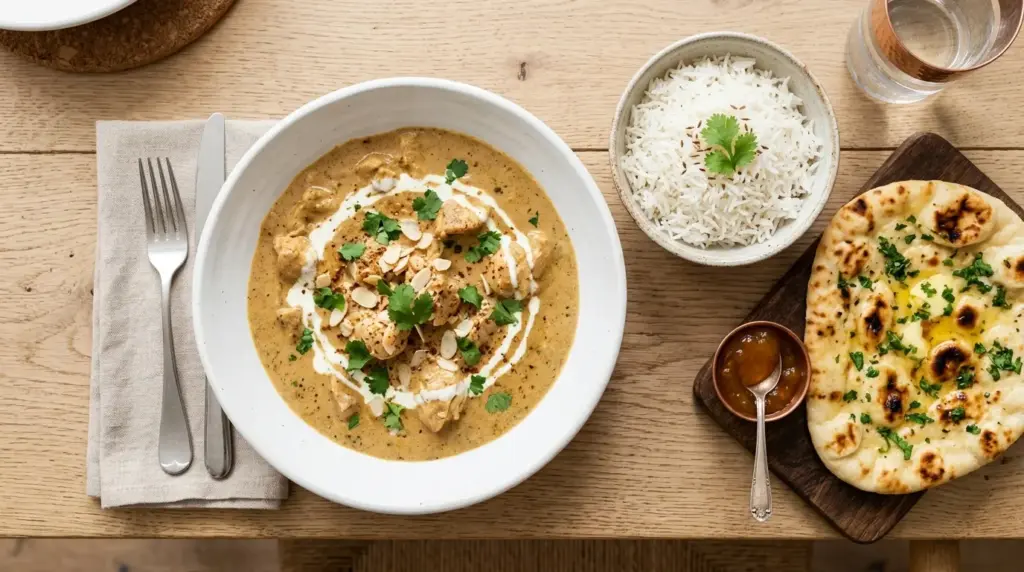
Chicken korma is traditionally served as the centerpiece of a bigger spread, and it deserves equally wonderful accompaniments.
The dish pairs most naturally with Basmati Rice or fragrant jeera rice, as the fluffy grains soak up the luxurious sauce beautifully. Naan, roti, and paratha are equally wonderful for scooping up every last bit of that golden curry.
- Garlic Naan Bread for a classic pairing
- Easy Naan Bread for a simpler homemade option
- Chicken Fried Rice for a fusion-style accompaniment
- A simple cucumber raita to cool the palate
- Sliced red onions with lemon juice and chaat masala as a quick side salad
- Fresh mango chutney for a sweet contrast
- A simple Fruit Salad for a refreshing finish to the meal
Variations to Try
Once you’ve mastered the base recipe, there are plenty of ways to customize your korma to suit different dietary needs or flavor preferences.
- Vegetarian Korma: Replace the chicken with paneer cubes, chickpeas, or a combination of vegetables like cauliflower, peas, and potatoes. The sauce recipe remains exactly the same.
- Coconut Korma: Replace the heavy cream with full-fat coconut milk or coconut cream for a dairy-free version with a subtly tropical sweetness. This is particularly popular in South Indian-style korma.
- Slow Cooker Korma: Complete Steps 1 through 8, then transfer everything to a slow cooker and cook on low for 4 to 5 hours. The chicken becomes incredibly fall-off-the-bone tender.
- Lamb Korma: Swap the chicken for bone-in lamb pieces and increase the cooking time to 45 to 60 minutes during the braising phase. Lamb absorbs the spices beautifully and creates an even richer dish.
- Nut-Free Korma: If you have nut allergies, skip the nut paste entirely and use an extra 1/3 cup of cream or full-fat coconut milk to achieve similar richness and body.
For another comforting one-pot chicken dinner, try this Easy Butter Chicken Recipe.
Storage and Reheating
Chicken korma is one of those dishes that genuinely improves with time, making it a fantastic recipe for meal prep.
- Refrigerator: Allow the korma to cool completely before transferring it to an airtight container. It keeps in the fridge for up to 3 days.
- Freezer: Korma freezes very well. Portion it into freezer-safe containers and freeze for up to 3 months. Thaw overnight in the refrigerator before reheating.
- Reheating on the stovetop: Pour the korma into a pan over medium-low heat, add a splash of water or cream to loosen the sauce, and stir gently until heated through. Avoid high heat to prevent the sauce from splitting.
- Reheating in the microwave: Transfer a portion to a microwave-safe bowl, add a teaspoon of water, cover loosely, and heat in 90-second intervals, stirring between each, until hot throughout.
- Note on yogurt-based sauces: Full-fat yogurt and cream freeze better than low-fat versions. If you used reduced-fat dairy, the sauce may become slightly grainy after freezing, but the flavor will be unaffected.
Read Also: Curry Chicken Salad Recipe
Nutritional Facts
Per serving (based on 4 servings):
| Nutrient | Amount Per Serving |
|---|---|
| Calories | ~520 kcal |
| Protein | ~36g |
| Total Fat | ~35g |
| Saturated Fat | ~10g |
| Carbohydrates | ~14g |
| Fiber | ~3g |
| Sugar | ~5g |
| Sodium | ~650mg |
| Cholesterol | ~130mg |
Nutritional values are approximate and will vary based on exact ingredients, portion sizes, and any modifications made.
You might love pairing this dish with a light and fluffy Easy Fried Rice Recipe to complete the meal.
Health Benefits of Key Ingredients
Chicken korma isn’t just delicious. Many of its key ingredients come with genuine nutritional advantages worth knowing about.
When you look at the ingredient list, you’ll find that every major component does more than just add flavor. The dish is built on whole foods with real health benefits.
- Chicken thighs are an excellent source of high-quality protein, zinc, and B vitamins, including niacin and B6, which support energy metabolism and immune function.
- Yogurt provides probiotics that support gut health, as well as calcium, phosphorus, and protein. Using full-fat yogurt also delivers fat-soluble vitamins A and D.
- Garlic and ginger have well-documented anti-inflammatory and antioxidant properties. Ginger also supports healthy digestion and may help reduce nausea.
- Cardamom is rich in antioxidants and has been studied for its role in supporting healthy blood pressure levels and digestive comfort.
- Turmeric contains curcumin, a compound with strong anti-inflammatory properties that has been widely researched for its potential role in supporting joint health and reducing oxidative stress.
- Cashews and almonds contribute heart-healthy monounsaturated and polyunsaturated fats, magnesium, and plant-based protein to the dish.
- Cinnamon has been studied for its role in supporting healthy blood sugar regulation and is a natural source of antioxidants.
- Coriander and cumin are both rich in antioxidants and have traditionally been used to support digestive health across South Asian cooking traditions.
Read Also: Chicken Rice Soup Recipe
Frequently Asked Questions
1. What is the difference between chicken korma and butter chicken?
Butter chicken has a tangy, tomato-based sauce with a slightly sweet, rich flavor from butter and cream. Chicken korma, by contrast, has a creamier sauce built from fried onions, nuts, and yogurt, with no tomatoes. Korma is generally milder and has a more delicate, aromatic flavor profile.
2. Can I use boneless chicken breasts instead of bone-in chicken?
You can use boneless thighs or breasts, but bone-in chicken is strongly recommended for the most flavorful result. The bones contribute collagen and marrow to the sauce as the chicken cooks, giving the korma a richer, fuller body. If using boneless pieces, reduce the braising time to 12 to 15 minutes to prevent drying out.
3. Why did my yogurt sauce split or become grainy?
This usually happens when yogurt is added to a pan that’s too hot, or when the heat is too high during the braising phase. Always whisk your yogurt until completely smooth before adding it, add it gradually while stirring, and keep the heat at medium-low during the braising stage.
4. Can I make chicken korma without nuts?
Absolutely. If you have a nut allergy, simply omit the cashew and almond paste entirely. Add an extra 1/3 cup of heavy cream or full-fat coconut milk in its place to maintain the richness and creamy body of the sauce.
5. How far in advance can I make chicken korma?
Korma actually tastes better the next day once all the spices have had time to develop and meld. You can make it up to 2 days in advance, refrigerate it in an airtight container, and reheat gently before serving. Many Indian home cooks specifically make korma a day ahead for gatherings.
For another crowd-pleasing meal that’s great for make-ahead prep, try this Chicken Casserole Recipe.

Chicken Korma

Equipment
- Heavy-bottomed pan or Dutch oven - For even heat distribution when frying onions and braising chicken
- High-Speed Blender or Food Processor - For making smooth nut paste and onion paste
- Small blender or spice grinder - For grinding whole spices (optional)
- Mixing bowls - For marinating the chicken
- Sharp chef's knife - For cutting chicken and slicing onions
- Wooden spoon or silicone spatula - For stirring and scraping the bottom of the pan
- Measuring spoons and cups
- Slotted spoon - For removing fried onions from the oil
- Plate lined with paper towels - For draining fried onions
Ingredients
- 2 lbs bone-in, skinless chicken pieces - 900g, thighs and drumsticks work best
- 1 cup plain full-fat yogurt - 240ml, divided for marinade and sauce
- 2 large red or yellow onions - thinly sliced
- 4 tablespoons neutral oil or ghee - 60ml, plus more as needed
- 1/2 cup raw cashews - 65g, soaked in warm water for 20 minutes
- 1/4 cup raw almonds - 35g, blanched and skins removed
- 4 garlic cloves - minced (or 1 tablespoon garlic paste), divided
- 1 inch fresh ginger - 2.5cm piece, grated (or 1 tablespoon ginger paste), divided
- 3 green cardamom pods - lightly crushed
- 4 whole cloves
- 1 bay leaf
- 1 inch cinnamon stick - 2.5cm
- 1/2 teaspoon cumin seeds
- 1 teaspoon ground coriander
- 1/2 teaspoon ground cumin
- 1/2 teaspoon ground turmeric - divided
- 1 teaspoon garam masala - divided
- 1/2 teaspoon red chili powder - optional, for mild heat
- 1 teaspoon salt - or to taste, divided
- 1/3 cup heavy cream - 80ml
- 2 tablespoons water - for blending, as needed
- fresh cilantro - for garnish
Optional Finishing Touch
- 2 drops kewra water - optional, for a floral aroma
For Serving
- Basmati rice - cooked, for serving
- Naan bread - for serving
- Cucumber raita - for serving, optional
Instructions
- Combine chicken, 1/2 cup yogurt, 1/2 teaspoon turmeric, red chili powder (if using), 1/2 teaspoon salt, and half of the minced garlic and ginger. Refrigerate for 30 minutes to 4 hours.
- Drain soaked cashews and almonds, then blend with 2 tablespoons of water until completely smooth. Set the nut paste aside.
- Heat oil or ghee over medium-high heat. Fry thinly sliced onions for 20-25 minutes, stirring frequently, until deep golden-brown and slightly crispy. Remove with a slotted spoon and drain on paper towels. Reserve the oil.
- Once cooled, transfer fried onions to a blender with 2 tablespoons of yogurt. Blend into a coarse, thick paste. Set aside.
- Return the pan with the reserved oil to medium heat. Add cardamom, cloves, bay leaf, cinnamon, and cumin seeds. Sizzle for 30-45 seconds until fragrant.
- Add the remaining minced garlic and grated ginger. Cook for 1-2 minutes until fragrant, stirring constantly to prevent burning.
- Add the onion paste, ground coriander, ground cumin, and 1/2 teaspoon of garam masala. Cook for 5-7 minutes, stirring frequently, until the masala darkens and the oil separates.
- Add marinated chicken and cook over medium-high heat for 5-7 minutes until lightly browned. Reduce heat, whisk remaining yogurt until smooth, and gradually stir it into the pan.
- Stir in the nut paste, remaining salt, and 1/4 cup water if needed for a pourable consistency. Cover and braise over low heat for 20-25 minutes until chicken is tender.
- Uncover, stir in heavy cream and remaining 1/2 teaspoon garam masala. Warm through for 2-3 minutes. Stir in kewra water if using. Garnish with cilantro and serve.
Notes
- Don’t rush the onions: Deeply caramelized, golden-brown onions are the backbone of authentic korma flavor. If they’re only lightly golden, your sauce will taste flat and one-dimensional.
- Soak your nuts: Soaking cashews and almonds in warm water for 20-30 minutes before blending makes a huge difference in achieving a smooth paste with no gritty texture.
- Whisk the yogurt before adding: Cold yogurt added directly to a hot pan can curdle and split. Always whisk until smooth and add gradually while stirring.
- Use bone-in chicken: While boneless thighs work in a pinch, bone-in pieces add significantly more flavor to the sauce as the marrow and collagen release during cooking.
- Control your heat: Korma is a low-and-slow dish for the braising phase. High heat can cause the yogurt to break, leaving a grainy sauce instead of a silky one.
- Vegetarian Korma: Replace chicken with paneer cubes, chickpeas, or vegetables like cauliflower, peas, and potatoes. The sauce recipe remains exactly the same.
- Coconut Korma: Replace the heavy cream with full-fat coconut milk or coconut cream for a dairy-free version with a subtle tropical sweetness.
- Slow Cooker Korma: Complete the steps through cooking the masala, then transfer everything to a slow cooker and cook on low for 4-5 hours until the chicken is incredibly tender.
- Storage: Korma keeps in the fridge for up to 3 days and freezes well for up to 3 months. It actually tastes better the next day once all the spices have melded.
- Nut-Free Korma: Skip the nut paste entirely and use an extra 1/3 cup of cream or full-fat coconut milk to achieve similar richness and body.
Final Thoughts
This Chicken Korma Recipe is one of those dishes that reminds you why home cooking is so rewarding. The moment the fried onions hit the pan and that golden, nutty aroma fills your kitchen, you’ll know something truly special is being made.
It takes a little patience, especially with the onions, but every minute is absolutely worth it.
The result is a restaurant-worthy curry that tastes like it came from a professional kitchen, made entirely by you in your own home.
If you try this recipe, please leave a comment below and let me know how it turned out. I’d love to hear how it came together for you, and any tweaks or variations you tried along the way. Sharing this recipe with someone who loves a good curry would mean the world too!
Recommended:
- Chicken Tikka Masala Recipe
- Tandoori Chicken Recipe
- Easy Butter Chicken Recipe
- Chicken Fajita Recipe
- Chicken and Broccoli Recipe
- Lemon Chicken Recipe
- Crack Chicken Recipe
- Chicken Marsala Recipe
- Chicken Adobo Recipe
- Chipotle Chicken Recipe