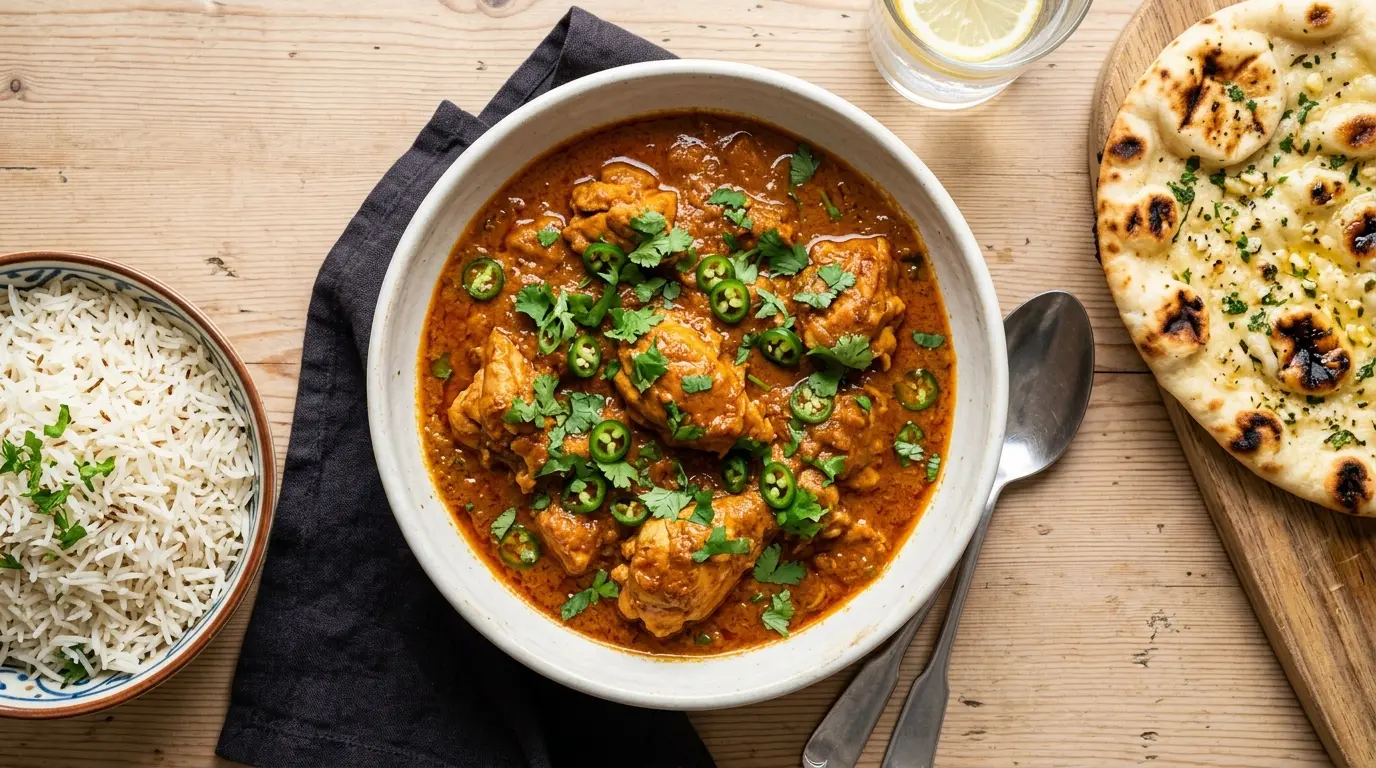
If you have been searching for the perfect Indian Curry Chicken Recipe, you have landed in the right place. This dish is a true celebration of spice, warmth, and deeply satisfying flavor. Tender bone-in chicken pieces are simmered low and slow in a rich, aromatic sauce built on golden onions, ripe tomatoes, and a carefully balanced blend of Indian spices. The result is a curry that smells incredible, tastes even better, and has you scraping every last drop from the pot.
This is not a simplified or watered-down version. It follows the traditional North Indian cooking method, where each layer of the sauce is built with patience and purpose.
Golden onions form the base because they provide sweetness and body. Fresh ginger and garlic add sharpness and depth. Tomatoes break down into a thick, brick-red gravy that coats every piece of chicken beautifully.
What sets this recipe apart is the technique of “bhunoing,” or frying the spices and paste until the oil visibly separates from the masala. This step is what transforms a collection of ingredients into a deeply flavored, restaurant-worthy curry. Skip it, and you get something good. Do it properly, and you get something unforgettable.
This recipe serves four, takes about an hour from start to finish, and uses ingredients you can find at most grocery stores or Asian food markets. Beginner-friendly instructions make it approachable for first-timers, while the authentic method will satisfy anyone who already loves Indian food.
For another comforting Indian-inspired dish to add to your weeknight rotation, you might also enjoy this Chicken Curry.

Why You’ll Love This Indian Curry Chicken Recipe
This recipe earns a permanent spot in your dinner lineup for so many reasons.
The flavor is layered and complex, built slowly from the ground up rather than coming from a jarred sauce or shortcut method. Every bite delivers warmth from the spices, richness from the tomato-onion base, and that unmistakable aroma of garam masala blooming in hot oil.
It is also incredibly versatile. Bone-in chicken gives the best depth of flavor, but boneless thighs or breasts work perfectly well on busy nights when you need a quicker cook time.
The sauce is thick enough to cling to every piece of chicken, yet fluid enough to pool beautifully over steamed basmati rice or soak into warm naan.
Here is a quick rundown of everything to love:
- Deeply authentic flavor built using the traditional bhuno method of slow-frying the masala
- One-pot recipe that means minimal cleanup after dinner
- Flexible protein options from bone-in pieces to boneless thighs or breasts
- Naturally gluten-free with no added thickening agents needed
- Better the next day as the spices continue to develop overnight in the fridge
- Customizable heat level from mild and family-friendly to seriously fiery
- Pairs with everything from steamed rice and naan to roti and quinoa
Another reader favorite that pairs wonderfully with this meal is this Coconut Curry Chicken for a creamier, coconut-forward variation.
Ingredients
Building a great Indian curry starts with high-quality, fresh ingredients. The spices do the heavy lifting here, so freshness matters. Avoid spices that have been sitting in your pantry for more than a year, as they lose their potency and aroma over time.
- 2.2 lbs (1 kg) bone-in, skinless chicken pieces (thighs, drumsticks, or a whole cut-up chicken)
- 1/3 cup (80 ml) neutral cooking oil (vegetable, sunflower, or avocado oil)
- 2 medium yellow or red onions, finely chopped (about 2 cups / 300 g)
- 1 tablespoon fresh ginger, grated or minced
- 6 cloves garlic, minced (or 1.5 tablespoons ginger garlic paste)
- 3 medium Roma tomatoes, finely chopped (about 1.5 cups / 250 g)
- 2 green chilies, slit lengthwise (adjust to your heat preference)
- 1.5 teaspoons Kashmiri red chili powder (for color and mild heat)
- 1 teaspoon ground coriander
- 1 teaspoon ground cumin
- 1/2 teaspoon ground turmeric
- 1 teaspoon salt, or to taste
- 1 cup (240 ml) water
- 1.5 teaspoons garam masala (added at the end)
- 1/2 teaspoon dried fenugreek leaves (kasuri methi), crushed (optional but recommended)
- Fresh cilantro (coriander leaves), chopped, for garnish
Read Also: Chicken Tikka Masala Recipe
Kitchen Equipment Needed
You do not need any specialty equipment to make this recipe, but having the right tools on hand makes the process smoother and more enjoyable.
- A heavy-bottomed Dutch oven or deep pot (a kadhai or wok also works great)
- A wooden spoon or heat-resistant silicone spatula for stirring
- A sharp chef’s knife and cutting board
- A fine grater or microplane for grating fresh ginger
- Measuring spoons
- A medium bowl for marinating (optional)
- A lid or splatter screen for the pot
For a lighter take on weeknight chicken, you might also enjoy: Baked Chicken Breast
Recommended Products for This Recipe
These are products that genuinely make a difference when cooking Indian cuisine at home. Each one is chosen for its quality, performance, and impact on the final dish.
1. Kashmiri Red Chili Powder
Kashmiri chili powder is not just about heat. It gives Indian curries their signature deep red color without making the dish fiery. Regular chili powder or paprika cannot replicate this same hue and subtle sweetness. It is a must-have for an authentic-looking and authentic-tasting Indian curry.
2. Premium Garam Masala Blend
Not all garam masala blends are created equal. A high-quality, aromatic blend makes the difference between a good curry and a great one. Look for brands that use whole spices and grind them fresh. The fragrance should hit you the moment you open the container.
3. Heavy-Bottomed Dutch Oven
A thick-bottomed pot distributes heat evenly, which is essential for caramelizing onions without burning and for slow-simmering the curry without scorching the bottom. A 4 to 5-quart Dutch oven is the ideal size for this recipe and works beautifully for a wide range of other dishes.
4. Kasuri Methi (Dried Fenugreek Leaves)
Kasuri methi is one of those finishing ingredients that restaurant-style Indian curries use and home cooks often skip. Just a small pinch crushed between your palms and stirred in at the end adds a distinctive, slightly bitter herbal note that takes the curry to a whole new level.
This pairs beautifully with a side of Chicken Korma for a full Indian feast spread.

Step-by-Step Instructions
Step 1: Prepare the Chicken
- Pat the chicken pieces completely dry using paper towels. Removing surface moisture is important because it helps the chicken brown and develop flavor rather than steam.
- Score the larger pieces of chicken (like thighs and drumsticks) with a sharp knife, making 2 to 3 shallow cuts through the flesh. This helps the marinade and spice sauce penetrate deeper into the meat.
- Season the chicken lightly with a pinch of salt and turmeric (about 1/4 teaspoon of each), tossing to coat. Set it aside while you prepare the base.
Step 2: Build the Onion Base
- Place your heavy-bottomed pot or Dutch oven over medium-high heat. Allow it to heat up for about 1 minute before adding the oil.
- Pour in the 1/3 cup (80 ml) of cooking oil. The generous amount of oil is intentional. It forms the cooking medium for the onions and spices, and it will eventually rise to the surface of the finished curry, which is a hallmark of authentic Indian cooking.
- Add the finely chopped onions to the hot oil. Spread them out evenly in the pot.
- Stir occasionally and cook the onions for 12 to 15 minutes over medium-high heat until they turn a deep golden brown color. Do not rush this step. Pale, undercooked onions produce a raw, sharp taste in the final curry. Dark golden onions produce a rich, sweet, complex base.
- If the onions begin to stick or catch, add a splash of water (about 2 tablespoons) to deglaze the bottom of the pot, then continue cooking.
Step 3: Add Ginger, Garlic, and Green Chilies
- Once the onions are deeply golden, add the minced garlic, grated ginger, and slit green chilies to the pot.
- Stir everything together quickly and cook for 1 to 2 minutes over medium heat. You are looking for the raw, sharp smell of the garlic and ginger to soften and mellow into something fragrant and savory.
- Again, if anything begins to stick, splash in a tablespoon or two of water and scrape the bottom of the pot clean.
Step 4: Add the Spices and Fry the Masala
- Lower the heat slightly to medium. Add the Kashmiri red chili powder, ground coriander, ground cumin, and the remaining ground turmeric to the pot.
- Stir the spices into the onion-ginger-garlic mixture immediately and keep stirring for 60 to 90 seconds. This step “blooms” the spices in the oil, which activates their fat-soluble flavor compounds and dramatically deepens their aroma.
- Watch carefully during this step. The mixture will look very dry and may start to stick. Add a tablespoon of water if needed, but keep cooking and stirring. You want the oil to separate and the masala to look almost like a thick paste.
Step 5: Cook the Tomatoes
- Add the finely chopped tomatoes to the pot and stir everything together well.
- Increase the heat to medium-high and cook the tomatoes, stirring regularly, for 8 to 10 minutes. This is the most important stage of the entire recipe. You need to cook the tomatoes until they have completely broken down, lost all of their moisture, and are no longer distinguishable as individual pieces.
- The mixture should look like a thick, brick-red, oily paste by the end of this stage. You will notice the oil beginning to separate and pool at the edges and on the surface. This is called the “bhuno” stage, and it signals that your masala is properly cooked and ready.
Step 6: Add the Chicken
- Add the seasoned chicken pieces to the pot and toss them well to coat every piece in the masala.
- Increase the heat to medium-high and cook, stirring regularly, for 5 to 7 minutes. You want the chicken to sear lightly in the masala and lose its raw, pink color on the outside.
- Stir frequently and press the chicken pieces into the masala to maximize contact and help the flavors absorb.
Step 7: Add Water and Simmer
- Pour in 1 cup (240 ml) of water and stir everything together, scraping up any masala stuck to the bottom of the pot.
- Add the remaining salt (adjust to your taste). Stir to combine.
- Bring the curry to a boil over high heat, then reduce the heat to low or medium-low.
- Cover the pot and simmer the curry for 20 to 25 minutes, stirring every 5 to 7 minutes, until the chicken is fully cooked through and the sauce has thickened to your liking. For bone-in chicken, the internal temperature should reach 165°F (74°C).
Step 8: Finish with Garam Masala and Kasuri Methi
- Once the chicken is cooked through, remove the lid and stir in the 1.5 teaspoons of garam masala.
- If using kasuri methi, crush about 1/2 teaspoon between your palms and rub it into the pot. This releases the aromatic oils from the dried leaves and is a classic restaurant trick for finishing curries.
- Give everything a final stir and let the curry simmer uncovered for 2 to 3 more minutes so the garam masala can bloom into the sauce.
- Taste and adjust salt or chili as needed.
Step 9: Garnish and Serve
- Turn off the heat and garnish generously with freshly chopped cilantro.
- Serve hot directly from the pot, with steamed basmati rice, jeera rice, or warm naan on the side.
You might also love this Chicken Biryani for another spectacular Indian rice and chicken combination.
Tips for Success
A few key techniques make all the difference between a good curry and a great one. Keep these in mind every time you make this recipe.
- Brown the onions deeply. This is the single most important step. Pale onions mean a weak, flat-tasting curry. Deep golden-brown onions create a rich, complex, and sweet base.
- Cook the tomatoes until the oil separates. This is the visual cue that your masala is properly developed. Do not rush to the next step until you can see oil pooling around the edges.
- Score the chicken. Cutting shallow slits into bone-in pieces allows the sauce to penetrate the meat and results in much more flavorful chicken.
- Use bone-in chicken if possible. Bone-in pieces release collagen and marrow during cooking, which enriches the sauce in a way boneless chicken simply cannot.
- Add garam masala only at the end. Garam masala contains delicate spices that lose their aromatic punch if cooked for too long. Adding it in the last few minutes preserves its fragrance.
- Do not skip the kasuri methi. Even if it seems like a small detail, the dried fenugreek leaves add a subtle, herbaceous bitterness that rounds out the curry beautifully.
- Adjust water to control thickness. Add less water for a drier, thicker curry perfect for scooping with bread. Add more for a saucier curry ideal for serving over rice.
Read Also: Chicken Vindaloo Recipe
Serving Suggestions
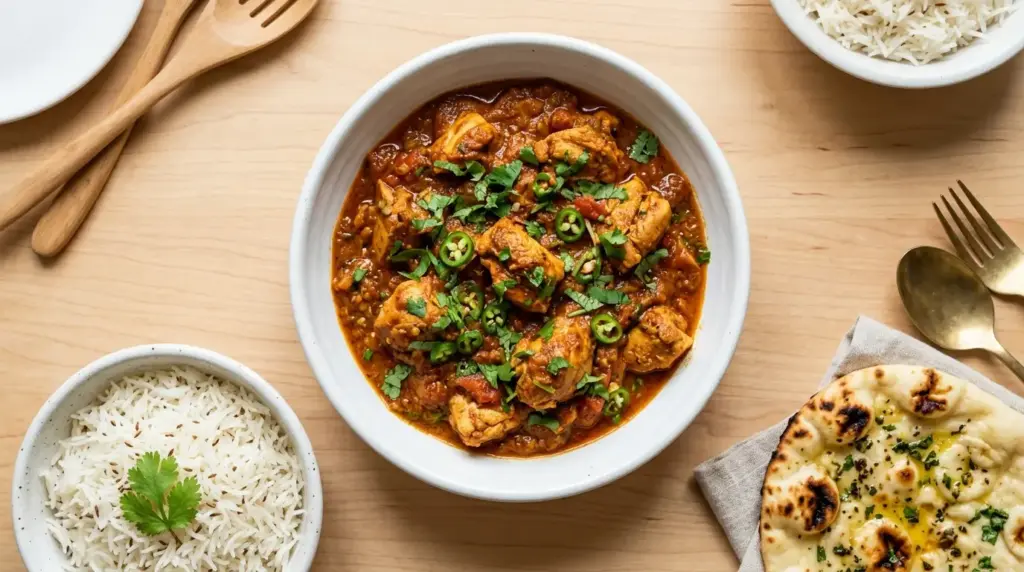
Indian curry chicken is a wonderfully versatile dish that pairs with a wide range of sides and accompaniments. Here are some of the best ways to serve it.
A mound of fluffy Basmati Rice is the most classic pairing and soaks up the rich curry sauce beautifully. For something with more fragrance, try serving it alongside Jeera Rice, which is basmati cooked with cumin seeds and a little ghee.
Warm Garlic Naan Bread is perfect for scooping every last drop of sauce from your bowl.
Here are more great ways to round out your meal:
- Cucumber Raita to cool things down and add a creamy, fresh contrast
- Mango Chutney for a sweet and tangy condiment that plays brilliantly against the spiced curry
- Indian Onion Salad as a crisp, acidic side that cuts through the richness of the sauce
- Warm roti or chapati for a more everyday, home-style serving option
- A simple green salad with sliced cucumbers, tomatoes, and a squeeze of lemon
Variations to Try
Once you have mastered the base recipe, there are so many delicious ways to riff on this classic Indian curry chicken. Each variation keeps the core technique intact while adding a distinct personality.
- Coconut Curry Chicken: Swap out the water for full-fat coconut milk to create a creamier, slightly sweet curry with a South Indian flair. For a complete guide, try this Coconut Curry Chicken Recipe.
- Creamy Chicken Curry: Stir in 3 to 4 tablespoons of plain yogurt or heavy cream at the end of cooking for a milder, restaurant-style richness.
- Boneless Chicken Curry: Use boneless, skinless chicken thighs cut into chunks. Reduce the simmering time to about 12 to 15 minutes.
- Spicier Version: Add 1 teaspoon of ground black pepper or increase the green chilies to 3 to 4 pieces for a serious kick.
- Potato Chicken Curry (Aloo Murgh): Add 2 medium potatoes, cut into 1-inch cubes, along with the water. They soak up the curry sauce and become incredibly tender and flavorful.
- Slow Cooker Version: After completing Steps 2 through 5 on the stovetop, transfer everything to a slow cooker with the chicken and water. Cook on low for 6 to 7 hours or high for 3 to 4 hours.
Another amazing Indian chicken dish worth exploring: Chicken Saag
Storage and Reheating
Indian curry chicken stores exceptionally well and arguably tastes even better the next day after the spices have had more time to meld together.
Here is how to store and reheat it properly:
- Refrigerator: Allow the curry to cool completely, then transfer to an airtight container. Store in the fridge for up to 4 days.
- Freezer: Freeze in portioned airtight containers or zip-lock bags for up to 3 months. Thaw overnight in the refrigerator before reheating.
- Stovetop reheating: Place the curry in a pot over medium-low heat. Add a splash of water (2 to 3 tablespoons) to loosen the sauce as it thickens in the fridge. Stir occasionally and heat for 5 to 7 minutes until piping hot throughout.
- Microwave reheating: Transfer a portion to a microwave-safe bowl. Cover loosely with a lid or plate (to prevent splattering). Heat in 60-second intervals, stirring between each, until fully heated through.
- Do not refreeze previously frozen and thawed curry.
For another make-ahead Indian-inspired dish you can meal-prep, check out: Chicken Biryani Recipe
Nutritional Facts
The following values are approximate and based on one serving, assuming the recipe yields 4 servings with bone-in chicken.
| Nutrient | Per Serving |
|---|---|
| Calories | ~380 kcal |
| Protein | ~28 g |
| Total Fat | ~24 g |
| Saturated Fat | ~4 g |
| Carbohydrates | ~9 g |
| Fiber | ~2 g |
| Sugar | ~4 g |
| Sodium | ~620 mg |
| Potassium | ~520 mg |
| Vitamin C | ~12 mg |
| Iron | ~2 mg |
Note: Nutritional values will vary depending on the specific cut of chicken used, the amount of oil, and serving size. For a lower-fat version, reduce the oil to 3 tablespoons and use boneless, skinless chicken breast.
Read Also: Tandoori Chicken Recipe
Health Benefits of Key Ingredients
This Indian curry chicken recipe is not just delicious. It is built from ingredients that offer real nutritional value and time-tested health benefits drawn from centuries of Ayurvedic and traditional Indian cooking.
The spice blend used in this dish is a powerhouse on its own, and each ingredient brings something meaningful to the table.
- Turmeric: Contains curcumin, a well-researched compound with anti-inflammatory and antioxidant properties. Pairing it with black pepper (as garam masala often contains) significantly increases its absorption by the body.
- Ginger: Well known for supporting digestion, reducing nausea, and providing anti-inflammatory compounds called gingerols. Fresh ginger is more potent than dried.
- Garlic: Rich in allicin, a sulfur compound associated with immune support, cardiovascular health, and antimicrobial properties.
- Tomatoes: A major source of lycopene, a powerful antioxidant linked to reduced risk of certain chronic diseases. Cooking tomatoes in oil actually increases the bioavailability of lycopene.
- Chicken (bone-in): An excellent source of lean protein and B vitamins. Bone-in chicken releases collagen and minerals during cooking, adding additional nutritional depth to the broth.
- Garam Masala (spice blend): Contains cardamom, cinnamon, cloves, and black pepper, all of which have been studied for their antioxidant and anti-inflammatory effects.
- Onions: Contain quercetin, a flavonoid with anti-inflammatory properties, as well as prebiotic fibers that support gut health.
Another nourishing Indian dish to add to your table: Palak Paneer
Frequently Asked Questions
1. Can I use boneless chicken instead of bone-in for this recipe?
Yes, boneless chicken works well in this recipe. Boneless, skinless chicken thighs are the best substitute because they remain juicy and absorb the curry sauce beautifully.
If you use boneless chicken breast, reduce the simmering time to 12 to 15 minutes to avoid overcooking and drying it out.
2. How spicy is this Indian curry chicken recipe?
This recipe as written is moderately spiced. Kashmiri red chili powder adds color and very mild heat, while two green chilies contribute a gentle warmth.
To make it milder, use just one green chili or omit them entirely. To increase the heat, add more green chilies, increase the Kashmiri chili powder, or add a pinch of regular cayenne pepper.
3. What is the difference between curry powder and garam masala?
Curry powder is a Western-adapted blend often containing turmeric, coriander, cumin, and chili. It is not a traditional Indian ingredient and has a more uniform, commercially standardized flavor profile.
Garam masala is an aromatic Indian spice blend typically made from warming spices like cardamom, cinnamon, cloves, and black pepper. It is added at the end of cooking to preserve its fragrance, while curry powder is usually cooked into the sauce.
4. Why does my curry taste bland even after following the recipe?
The most common reason for a bland curry is undercooked onions or insufficiently cooked tomatoes. If the onions are not deeply golden and the oil has not separated from the tomato-masala paste, the flavors will be flat.
Another culprit is old spices. If your garam masala or chili powder has been sitting in the pantry for over a year, they may have lost most of their potency. Fresh, fragrant spices make a noticeable difference.
5. Can I make this curry ahead of time?
Absolutely, and in fact this is one of those dishes that improves overnight. The spices continue to bloom and deepen as the curry sits in the fridge.
Cook the curry completely, allow it to cool, and store it in an airtight container in the refrigerator. Reheat gently on the stovetop with a splash of water. It keeps well for up to 4 days and freezes beautifully for up to 3 months.
Read Also: Mulligatawny Soup Recipe

Indian Curry Chicken

Equipment
- Heavy-bottomed Dutch oven or deep pot - 5-quart capacity or similar (a kadhai or wok also works great)
- Wooden spoon or heat-resistant silicone spatula
- Sharp chef's knife
- Cutting board
- Fine grater or microplane - For grating fresh ginger
- Measuring spoons
- Medium bowl - For marinating (optional)
- Lid or splatter screen - For the pot
Ingredients
- 2.2 lbs bone-in, skinless chicken pieces - 1 kg (thighs, drumsticks, or a whole cut-up chicken)
- 0.25 tsp salt - for seasoning the chicken
- 0.25 tsp turmeric - for seasoning the chicken
- 0.33 cup neutral cooking oil - 80 ml (vegetable, sunflower, or avocado oil)
- 2 medium yellow or red onions - about 2 cups or 300g, finely chopped
- 1 tbsp fresh ginger - grated or minced
- 6 cloves garlic - minced (or 1.5 tablespoons ginger garlic paste)
- 3 Roma tomatoes - about 1.5 cups or 250g, finely chopped
- 2 green chilies - slit lengthwise (adjust to your heat preference)
- 1.5 tsp Kashmiri red chili powder - for color and mild heat
- 1 tsp ground coriander
- 1 tsp ground cumin
- 0.5 tsp ground turmeric
- 1 tsp salt - or to taste
- 1 cup water - 240 ml
- 1.5 tsp garam masala - added at the end
- 0.5 tsp kasuri methi (dried fenugreek leaves) - crushed (optional but recommended)
- fresh cilantro - coriander leaves, chopped, for garnish
For Serving (Optional)
- steamed basmati rice
- naan bread
Instructions
- Pat the chicken dry with paper towels and score the larger pieces with shallow cuts. Season lightly with salt and turmeric, then set aside.
- Heat oil in a heavy-bottomed pot over medium-high heat. Add chopped onions and cook for 12-15 minutes until deeply golden brown, stirring occasionally.
- Add the minced garlic, grated ginger, and slit green chilies to the pot. Stir and cook for 1-2 minutes until fragrant.
- Reduce heat to medium. Add Kashmiri chili powder, ground coriander, ground cumin, and turmeric. Stir constantly for 60-90 seconds to bloom the spices.
- Add the chopped tomatoes and increase heat to medium-high. Cook for 8-10 minutes, stirring regularly, until tomatoes break down and oil separates from the masala.
- Add the seasoned chicken and toss to coat in the masala. Cook over medium-high heat for 5-7 minutes until the chicken loses its raw pink color.
- Pour in the water, add the remaining salt, and scrape up any masala from the bottom. Bring to a boil, then reduce heat to low, cover, and simmer for 20-25 minutes until chicken is cooked through and sauce thickens.
- Remove the lid and stir in the garam masala and crushed kasuri methi (if using). Simmer uncovered for 2-3 more minutes, then taste and adjust seasoning.
- Turn off the heat and garnish with freshly chopped cilantro. Serve hot with steamed basmati rice or warm naan.
Notes
- Brown the onions deeply: This is the most important step for a rich, complex flavor. Pale onions result in a weak, flat-tasting curry.
- Cook until oil separates: This visual cue (oil pooling around the edges) signals that your masala is properly developed. Do not rush this step.
- Use bone-in chicken: It releases collagen and marrow during cooking, enriching the sauce in a way boneless chicken cannot.
- Add garam masala at the end: Its delicate spices lose aromatic punch if cooked for too long. Adding it in the last few minutes preserves its fragrance.
- Don’t skip kasuri methi: This dried fenugreek adds a subtle, herbaceous bitterness that rounds out the curry beautifully, a classic restaurant trick.
- Adjust water for thickness: Use less water for a drier curry perfect for scooping with bread, or more for a saucier curry ideal over rice.
- Make it ahead: This curry tastes even better the next day as the spices meld. Store in the fridge for up to 4 days or freeze for up to 3 months.
- Spice level: For a milder curry, use one green chili or omit them. For more heat, add extra green chilies or a pinch of cayenne.
Final Thoughts
This Indian Curry Chicken Recipe is the kind of dish that brings people together around the table and fills the whole house with an aroma that makes everyone hungry the moment they walk through the door.
It is traditional, deeply flavorful, and built on techniques that generations of home cooks across India have relied on for centuries.
Once you try it, this curry will likely become a go-to recipe in your kitchen. The key is patience with the onions and tomatoes, and trust in the process.
Give this recipe a try this week and make it your own. Feel free to leave a comment below sharing how it turned out, what variations you tried, or any tips you discovered along the way.
Recommended:
- Jamaican Curry Chicken
- Chicken Korma
- Chicken Vindaloo
- Easy Butter Chicken
- Authentic Butter Chicken
- Samosa Recipe
- Chicken Stir Fry
- Palak Paneer
- Jeera Rice
- Curry Chicken Salad