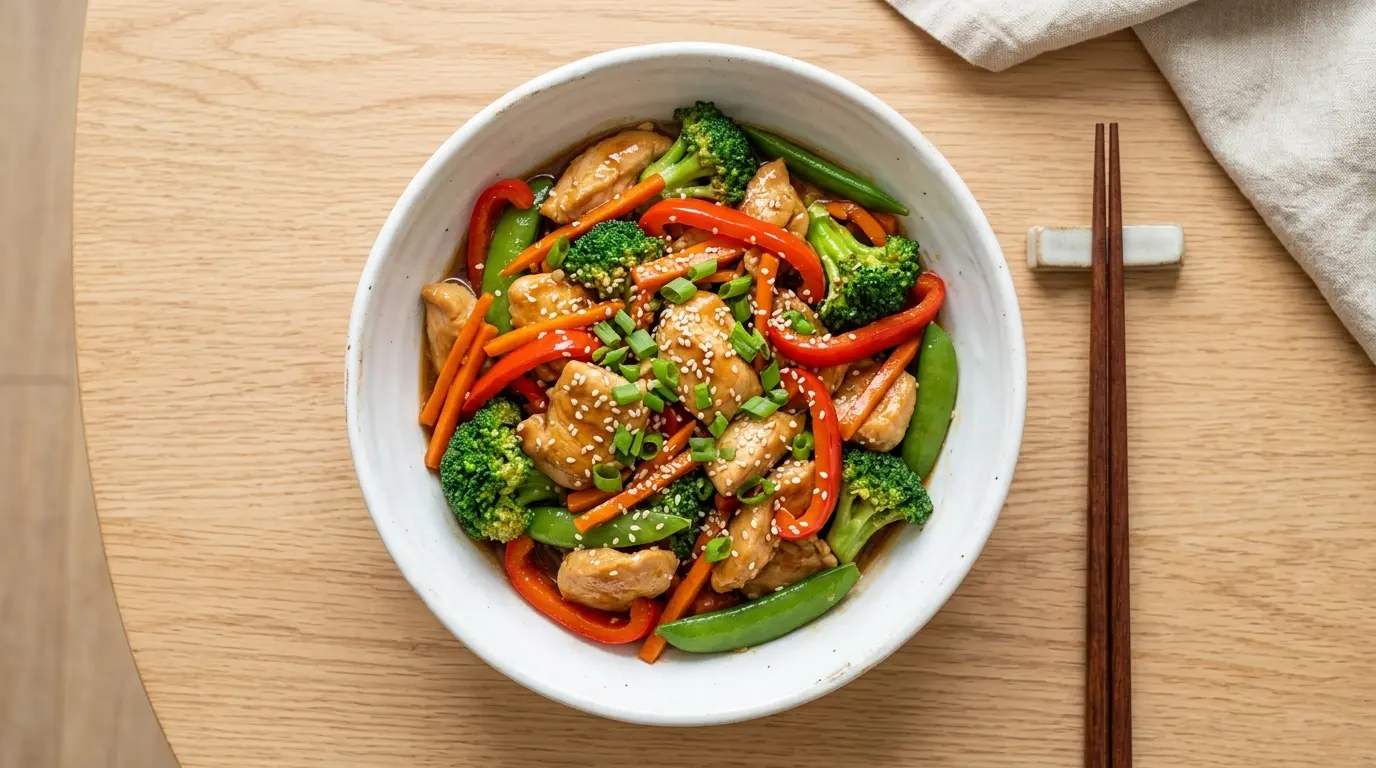
If you’ve been craving restaurant-quality food at home, this chicken stir fry recipe is exactly what you need on your dinner table tonight.
It comes together in under 30 minutes, uses simple pantry staples, and delivers those deep, savory-sweet flavors that make you wonder why you ever bother ordering takeout.
The real secret? A made-from-scratch stir fry sauce built on soy sauce, honey, sesame oil, fresh garlic, and ginger. It coats every piece of tender chicken and every crisp-tender vegetable in something deeply satisfying and totally craveable.
This isn’t a recipe you follow once and forget. It’s the kind of weeknight dinner that earns a permanent spot in your rotation.
You can tweak the vegetables based on what’s in your fridge, adjust the heat level to suit your crowd, and have it on the table faster than a delivery driver could ring your doorbell.
If you love bold Asian-inspired flavors, you’ll also want to bookmark this Chicken Lo Mein for another quick and satisfying weeknight option.

Why You’ll Love This Chicken Stir Fry Recipe
This dish checks every box for a great family meal.
It’s fast, it’s flexible, and it’s genuinely delicious without requiring any advanced cooking skills.
The combination of high heat, bite-sized pieces of chicken, and a well-balanced sauce means you get caramelized, slightly charred edges on the chicken and vegetables rather than a steamed, soggy mess.
That textural contrast is what sets a great stir fry apart from a mediocre one.
Here’s why this recipe works so well:
- Ready in under 30 minutes from start to finish, making it perfect for busy weeknights
- One pan cleanup means less mess and more time to enjoy your meal
- Completely customizable with whatever vegetables you have on hand
- Kid-friendly thanks to the slightly sweet, savory sauce that appeals to all age groups
- Healthier than takeout with lean chicken breast, fresh vegetables, and a sauce you control entirely
- Great for meal prep since leftovers reheat beautifully the next day
For another quick Asian-inspired dinner the family will love, check out this Chicken Pad Thai.
Ingredients
Getting the right balance in the sauce is the key to this dish. Low-sodium soy sauce keeps the salt level in check, while honey adds just enough sweetness to balance the umami. Fresh garlic and ginger are non-negotiable here since the dried versions simply won’t give you the same depth.
For the chicken and vegetables:
- 1.5 lbs (680g) boneless, skinless chicken breasts, cut into 1-inch (2.5cm) pieces
- 2 cups (180g) broccoli florets
- 1 large red bell pepper, sliced into thin strips
- 1 medium carrot, thinly sliced on a diagonal
- 1 cup (90g) snap peas
- 3 green onions, sliced (white and green parts separated)
- 3 tablespoons (45ml) vegetable oil, divided
For the stir fry sauce:
- ¼ cup (60ml) low-sodium soy sauce
- 2 tablespoons (30ml) toasted sesame oil
- 2 tablespoons (42g) honey
- ½ cup (120ml) low-sodium chicken broth
- 1 tablespoon (15ml) rice vinegar
- 3 cloves garlic, finely minced
- 1 teaspoon fresh ginger, grated (about a ½-inch knob)
- 2 tablespoons (16g) cornstarch
- 1 tablespoon (15ml) water
- ½ teaspoon red pepper flakes (optional, for heat)
For serving:
- Cooked white or jasmine rice
- Sesame seeds, for garnish
- Additional green onion tops, for garnish
You might also enjoy this homemade Stir Fry Sauce to keep on hand for future batches.
Kitchen Equipment Needed
Having the right pan makes a huge difference in stir fry. A large, heavy-bottomed skillet or a proper wok both work well, but the key is that the pan must be able to get very hot without scorching. Thin, lightweight pans will cause the chicken to steam instead of sear, which robs you of flavor and that beautiful golden crust.
- Large wok or 12-inch skillet
- Sharp chef’s knife
- Cutting board
- Two small mixing bowls
- Whisk
- Measuring cups and spoons
- Wooden spoon or silicone spatula
- Plate or tray for resting cooked chicken
- Rice cooker or medium saucepan for the rice
Read Also: Chicken Fried Rice Recipe
Recommended Products for This Recipe
These are products worth investing in based on quality and performance, and each one genuinely improves the outcome of this dish.
1. Carbon Steel Wok
A carbon steel wok heats up faster and more evenly than standard stainless steel, giving your chicken and vegetables that authentic, slightly smoky sear you get from restaurant stir fries. The natural non-stick surface that develops over time means your ingredients slide around easily without burning. It’s a kitchen tool that pays for itself in flavor.
2. Toasted Sesame Oil
Not all sesame oils are equal. Toasted sesame oil has a rich, nutty depth that untoasted versions simply cannot replicate, and it’s what gives this dish its signature Asian-inspired aroma. Look for 100% pure toasted sesame oil rather than blended versions for the best flavor.
3. Fresh Ginger Root
Pre-ground ginger is a poor substitute for fresh in stir fry. A fresh knob of ginger grates easily with a microplane and delivers bright, zesty heat that dried ginger simply lacks. Keep a piece in your freezer and grate it directly from frozen for even easier prep.
4. Low-Sodium Soy Sauce
Using low-sodium soy sauce gives you complete control over the salt level in this dish without sacrificing any of the deep, savory flavor. It’s particularly important when you’re also adding chicken broth to the sauce. A good quality low-sodium brand makes a noticeable difference in the final result.
This technique works just as well with beef if you want to try this Easy Mongolian Beef next time.

Step-by-Step Instructions
Step 1: Make the Stir Fry Sauce
- In a small mixing bowl, combine the low-sodium soy sauce, toasted sesame oil, honey, chicken broth, and rice vinegar.
- Add the minced garlic and freshly grated ginger directly into the bowl. Freshly minced garlic and grated ginger release their aromatics directly into the sauce, infusing it from the start.
- In a separate tiny bowl or cup, whisk together the cornstarch and 1 tablespoon of water until completely smooth, with no lumps. This is your slurry and it’s what thickens the sauce during cooking.
- Pour the cornstarch slurry into the sauce mixture and whisk everything together until fully combined.
- If using red pepper flakes for heat, add them now as well.
- Set the sauce bowl aside near your stovetop. You’ll need it within minutes once cooking starts, so having it ready to pour is essential.
Step 2: Prep the Chicken and Vegetables
- Pat the chicken breasts dry with paper towels. Removing excess surface moisture is critical because wet chicken will steam instead of sear, resulting in pale, rubbery pieces rather than golden-edged ones.
- Cut the chicken breasts into 1-inch (2.5cm) cubes, aiming for uniform pieces so they cook evenly. If a piece is noticeably thicker than others, cut it down to match.
- Set the chicken aside on a clean plate.
- Cut the broccoli into bite-sized florets. Smaller florets cook more evenly and are easier to eat.
- Slice the red bell pepper into thin strips, roughly ¼ inch (6mm) wide. Thinner slices cook quickly and stay slightly crisp, which is ideal.
- Slice the carrot thinly on a diagonal. The diagonal cut gives you more surface area on each piece, which means faster cooking and better caramelization.
- Trim the snap peas if needed and leave them whole.
- Slice the green onions, keeping the white and light-green parts separate from the dark green tops. The white parts go in early with the vegetables; the green tops go in at the end as a fresh garnish.
Step 3: Sear the Chicken
- Place your wok or large skillet over medium-high heat. Allow it to preheat for about 2 minutes, until it’s very hot. This step is non-negotiable for stir fry. A properly preheated pan creates the sear that builds flavor.
- Add 1.5 tablespoons of vegetable oil and swirl to coat the bottom and partway up the sides.
- Add the chicken pieces in a single layer. Do not overcrowd the pan. If your skillet is on the smaller side, cook the chicken in two batches rather than cramming it all in at once. Overcrowding drops the pan temperature and causes steaming.
- Cook the chicken for about 3 to 4 minutes without stirring, allowing a golden crust to develop on the bottom.
- Flip the pieces and cook for another 2 to 3 minutes until they are just barely cooked through. The internal temperature should reach 165°F (74°C). Avoid overcooking at this stage since the chicken will return to the pan later with the sauce.
- Transfer the cooked chicken to a clean plate and set aside.
Step 4: Stir Fry the Vegetables
- Return the wok or skillet to high heat and add the remaining 1.5 tablespoons of vegetable oil.
- Once the oil is shimmering, add the broccoli and carrots. These are the most dense, slow-cooking vegetables in the mix, so they go in first.
- Stir fry the broccoli and carrots for 2 minutes, tossing frequently. You want them to begin softening and getting some slight char on the edges without becoming fully soft.
- Add the sliced red bell pepper and the white parts of the green onions to the pan.
- Continue stir frying all the vegetables together for another 2 minutes, tossing frequently, until everything is crisp-tender. The broccoli should be bright green and just tender when pierced with a fork, and the peppers should be slightly softened but still have a little snap.
- Add the snap peas in the last 30 to 60 seconds of this step. Snap peas cook very quickly and only need a brief time in the pan to warm through while staying crisp.
Step 5: Combine and Add the Sauce
- Return the seared chicken pieces back to the pan with the vegetables. Toss everything together briefly to combine.
- Give the stir fry sauce a quick re-whisk directly in the bowl to reincorporate any settled cornstarch.
- Pour the sauce evenly over the chicken and vegetables.
- Toss everything together to coat and cook over medium-high heat for 2 to 3 minutes, stirring frequently.
- As the sauce heats up, the cornstarch will activate and transform the sauce from thin and liquid to a glossy, thick coating that clings to every piece of chicken and vegetable. Watch for it to visibly thicken and become shiny.
- Taste and adjust seasoning. If you want more sweetness, add a small drizzle of honey. If you want more depth, a tiny splash of soy sauce does the job.
Step 6: Finish and Serve
- Remove the pan from the heat.
- Stir in the dark green tops of the sliced green onions. Adding them off heat preserves their fresh flavor and bright color.
- Spoon the chicken stir fry over steamed white or jasmine rice in individual bowls.
- Garnish with a sprinkle of sesame seeds and additional green onion tops.
- Serve immediately for the best texture and flavor.
For another delicious one-pan chicken dinner, try this Easy Fried Rice.
Tips for Success
Getting stir fry right is all about preparation and heat management. The actual cooking goes fast, so every ingredient needs to be ready before the first piece of chicken hits the pan.
- Mise en place is mandatory. Have every ingredient prepped, measured, and positioned near the stove before you turn on the heat. Stir fry moves too quickly to stop and slice a pepper mid-cook.
- Use the highest heat your stove allows. A properly hot pan is what creates that golden sear and caramelized edges. Medium heat will just steam everything.
- Dry your chicken before cooking. Patting the chicken dry with paper towels before adding it to the pan is one of the easiest ways to guarantee a better sear.
- Don’t overcrowd the pan. If your pan can’t fit all the chicken in a single layer with space around each piece, cook it in batches. Crowding drops the temperature and turns searing into steaming.
- Cut everything to the same size. Uniform pieces of chicken and vegetables cook at the same rate, so nothing ends up over- or undercooked.
- Pre-mix the sauce. Having the sauce ready in a bowl before you start cooking means you can pour it in at exactly the right moment without scrambling.
- Add dense vegetables first. Broccoli and carrots take longer than peppers and snap peas. Staggering when you add things to the pan is what keeps every component at the right level of doneness.
You might also enjoy: Chicken and Broccoli
Serving Suggestions
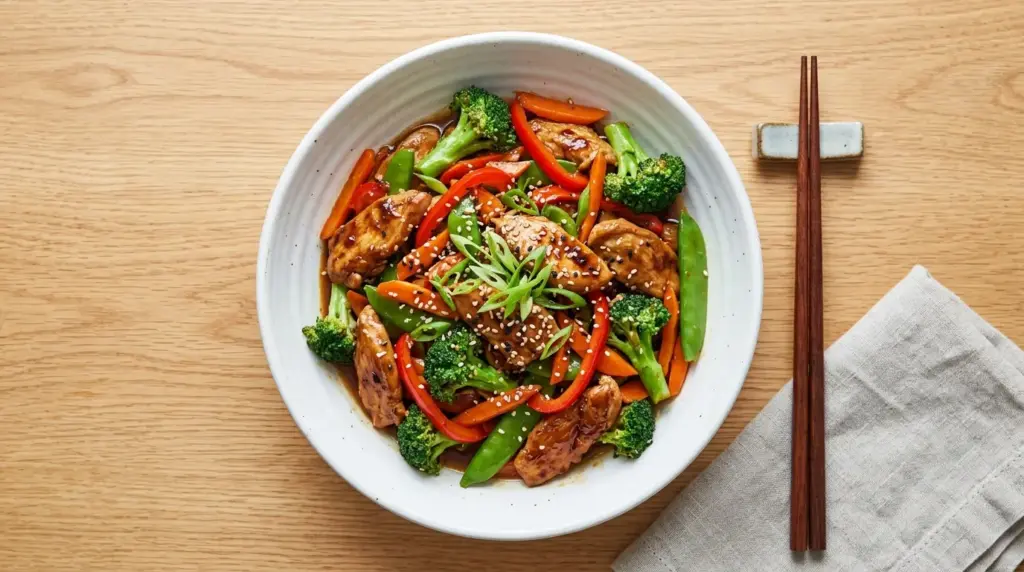
This chicken stir fry is satisfying on its own, but the right accompaniments can turn it into a full, impressive spread.
Steamed jasmine rice is the classic pairing because the fluffy, slightly sticky grains soak up the sauce beautifully. Brown rice adds a nuttier flavor and more fiber if you prefer it. For a lower-carb option, cauliflower rice works surprisingly well and soaks up the sauce just as effectively.
Here are some great ways to serve this dish:
- Over steamed jasmine or white rice with extra sauce spooned on top
- With a side of Chicken Fried Rice for a bigger spread
- Alongside Bok Choy sauteed with garlic for an extra vegetable side
- Topped with crushed roasted cashews or peanuts for texture
- With a side of Easy Egg Roll in a Bowl for an Asian-inspired dinner night
- Over noodles instead of rice for a different texture experience
- Served in lettuce cups for a fun, low-carb presentation
Variations to Try
Once you’ve made this recipe once, it’s easy to spin it in new directions based on what you have on hand or what flavors you’re craving.
Try these popular variations:
- Teriyaki Chicken Stir Fry: Swap the stir fry sauce for a homemade Teriyaki Sauce for a sweeter, more caramelized glaze.
- Spicy Szechuan Style: Add 1 to 2 teaspoons of chili garlic sauce or doubanjiang to the sauce for a boldly spicy, numbing flavor profile.
- Peanut Chicken Stir Fry: Add 2 tablespoons of natural peanut butter to the sauce along with a squeeze of lime juice for a rich, nutty variation.
- Hoisin Glazed: Replace half the soy sauce with hoisin sauce for a deeper, slightly sweet, plummy flavor that’s incredible over rice noodles.
- Cashew Chicken Stir Fry: Add a generous handful of whole roasted cashews in the last minute of cooking for extra crunch and a buttery richness.
- Low-Carb Version: Skip the rice and serve over cauliflower rice or a bed of shredded cabbage for a lighter, grain-free option.
- Vegetable-Forward: Reduce the chicken to 1 pound and double the vegetables, adding mushrooms, zucchini, and baby corn for a more produce-heavy dish.
Storage and Reheating
Chicken stir fry stores well and is a great candidate for meal prep throughout the week.
Follow these simple storage and reheating guidelines to keep leftovers tasting fresh:
- Refrigerator: Store cooled leftovers in an airtight container in the refrigerator for up to 4 days. Keep the stir fry separate from the rice if possible to prevent the rice from absorbing all the sauce.
- Freezer: Transfer the cooled stir fry to a freezer-safe container or zip-lock bag and freeze for up to 3 months. Vegetables may soften slightly after freezing and thawing, but the flavor remains excellent.
- Stovetop reheating (recommended): Add the leftover stir fry to a skillet over medium heat with a splash of chicken broth or water to loosen the sauce. Heat for 3 to 5 minutes, tossing occasionally, until warmed through.
- Microwave reheating: Place in a microwave-safe bowl, cover loosely, and heat in 60-second intervals, stirring between each, until hot throughout.
- Do not overcook on reheat. The vegetables are already cooked, so you just need to warm everything through. Extended reheating will make the broccoli mushy and the chicken dry.
Read Also: Easy Pepper Steak Recipe
Nutritional Facts
The following nutritional information is an estimate per serving (without rice), based on 4 servings.
| Nutrient | Amount Per Serving |
|---|---|
| Calories | ~310 kcal |
| Protein | 36g |
| Carbohydrates | 18g |
| Fat | 10g |
| Saturated Fat | 1.5g |
| Fiber | 3g |
| Sugar | 9g |
| Sodium | 720mg |
| Cholesterol | 95mg |
Note: Nutritional values are estimates and will vary based on exact ingredient brands, portion sizes, and any substitutions made.
Another great protein-forward stir fry option is this Easy Orange Chicken.
Health Benefits of Key Ingredients
This chicken stir fry isn’t just delicious. It’s built on a foundation of genuinely nutritious ingredients that support your health in multiple ways.
The combination of lean protein, cruciferous vegetables, and antioxidant-rich aromatics makes this one of the most well-rounded quick dinners you can put on the table.
Here’s a breakdown of the key health benefits:
- Chicken breast is one of the leanest, highest-protein animal proteins available, supporting muscle repair, satiety, and healthy metabolism.
- Broccoli is loaded with vitamin C, vitamin K, folate, and sulforaphane, a compound that research associates with anti-inflammatory and cancer-protective properties.
- Red bell pepper provides more vitamin C per serving than an orange, along with beta-carotene and antioxidants that support immune function and skin health.
- Carrots are rich in beta-carotene, which the body converts to vitamin A, supporting eye health, immune function, and cell growth.
- Snap peas offer a good source of vitamin K, vitamin C, and dietary fiber, contributing to bone health and healthy digestion.
- Ginger contains gingerols and shogaols, compounds shown to reduce inflammation and support digestive comfort.
- Garlic is a powerful source of allicin, a compound associated with immune support, cardiovascular health, and antimicrobial properties.
- Sesame oil provides heart-healthy monounsaturated and polyunsaturated fats, along with antioxidants including sesamol.
For another veggie-forward dish with similar health benefits, try: Chicken and Broccoli
Frequently Asked Questions
1. Can I use chicken thighs instead of chicken breasts?
Yes, absolutely. Boneless, skinless chicken thighs are actually a great choice for stir fry because they contain slightly more fat, which makes them more forgiving when it comes to high-heat cooking.
They’re less likely to dry out if slightly overcooked, and they deliver a richer flavor. Cut them into 1-inch pieces just as you would the breasts, and cook for roughly the same amount of time.
2. What vegetables work best in chicken stir fry?
The best vegetables for stir fry are ones that can handle high heat without falling apart. Broccoli, carrots, bell peppers, snap peas, mushrooms, zucchini, bok choy, green beans, and baby corn are all excellent options.
Avoid very delicate greens like baby spinach or arugula unless you’re adding them at the very end, off heat, since they wilt almost instantly and can make the dish watery.
3. Can I make this gluten-free?
Yes, with one simple substitution. Replace the regular soy sauce with tamari, which is a gluten-free soy sauce alternative that tastes virtually identical.
You can also use coconut aminos for a slightly milder, less salty flavor that’s both gluten-free and soy-free. All other ingredients in this recipe are naturally gluten-free.
4. Why is my stir fry sauce not thickening?
The cornstarch slurry needs heat to activate and thicken the sauce. If the sauce isn’t thickening, it’s usually because the heat is too low or the sauce was added to a pan that wasn’t hot enough.
Make sure the pan is on medium-high heat when you pour in the sauce, and keep everything moving. Within 2 to 3 minutes of stirring over heat, the sauce will become glossy and coat the back of a spoon.
5. Can I make chicken stir fry ahead of time?
Yes, you can prep most components ahead of time to make the actual cooking faster. The sauce can be made and refrigerated in a jar for up to 5 days.
The vegetables can be cut and stored in airtight containers in the fridge for up to 2 days. The chicken can be cut and refrigerated for up to 1 day before cooking. On the day of serving, the actual stir fry portion takes under 15 minutes.
Read Also: Chicken Lettuce Wraps Recipe

Chicken Stir Fry

Equipment
- Large wok or 12-inch skillet - Heavy-bottomed for even heat distribution
- Sharp chef's knife
- Cutting board
- Two small mixing bowls
- Whisk
- Measuring cups and spoons
- Wooden spoon or silicone spatula
- Plate or Tray - For resting cooked chicken
- Rice cooker or medium saucepan - For serving (optional)
Ingredients
- 1.5 lb boneless, skinless chicken breasts - 680g, cut into 1-inch (2.5cm) pieces
- 2 cups broccoli florets - 180g
- 1 large red bell pepper - sliced into thin strips
- 1 medium carrot - thinly sliced on a diagonal
- 1 cup snap peas - 90g
- 3 green onions - sliced, white and green parts separated
- 3 tablespoons vegetable oil - 45ml, divided
For the Stir Fry Sauce
- 0.25 cup low-sodium soy sauce - 60ml
- 2 tablespoons toasted sesame oil - 30ml
- 2 tablespoons honey - 42g
- 0.5 cup low-sodium chicken broth - 120ml
- 1 tablespoon rice vinegar - 15ml
- 3 cloves garlic - finely minced
- 1 teaspoon fresh ginger - grated, about a ½-inch knob
- 2 tablespoons cornstarch - 16g
- 1 tablespoon water - 15ml
- 0.5 teaspoon red pepper flakes - optional, for heat
For Serving
- cooked white or jasmine rice
- sesame seeds - for garnish
- additional green onion tops - for garnish
Instructions
- In a small mixing bowl, combine soy sauce, toasted sesame oil, honey, chicken broth, and rice vinegar. Add minced garlic and grated ginger directly into the bowl.
- In a separate tiny bowl, whisk together cornstarch and 1 tablespoon of water until completely smooth. Pour the cornstarch slurry into the sauce mixture and whisk until fully combined. Set aside near the stove.
- Pat the chicken breasts dry with paper towels and cut into 1-inch cubes. Set aside on a clean plate.
- Cut the broccoli into bite-sized florets, slice the bell pepper into thin strips, slice the carrot thinly on a diagonal, trim the snap peas, and slice the green onions (keeping white and dark green parts separate).
- Place your wok or large skillet over medium-high heat and preheat for about 2 minutes. Add 1.5 tablespoons of vegetable oil and swirl to coat.
- Add the chicken pieces in a single layer without overcrowding. Cook for 3 to 4 minutes without stirring until a golden crust develops. Flip and cook for another 2 to 3 minutes until barely cooked through. Transfer to a clean plate and set aside.
- Return the pan to high heat and add the remaining 1.5 tablespoons of oil. Once shimmering, add the broccoli and carrots. Stir fry for 2 minutes, tossing frequently.
- Add the sliced red bell pepper and white parts of the green onions. Continue stir frying for another 2 minutes until crisp-tender. Add the snap peas in the last 30 to 60 seconds.
- Return the seared chicken back to the pan. Give the sauce a quick re-whisk and pour evenly over the chicken and vegetables. Toss to coat and cook over medium-high heat for 2 to 3 minutes, stirring frequently, until the sauce thickens and turns glossy.
- Remove from heat and stir in the dark green tops of the sliced green onions. Spoon over steamed rice, garnish with sesame seeds and additional green onion tops, and serve immediately.
Notes
- Mise en place is mandatory. Have every ingredient prepped, measured, and positioned near the stove before you start cooking because stir fry moves quickly.
- Use the highest heat your stove allows to create that golden sear and caramelized edges. Medium heat will just steam everything.
- Patting the chicken dry with paper towels before cooking is one of the easiest ways to guarantee a better sear.
- Don’t overcrowd the pan. If your pan can’t fit all the chicken in a single layer, cook it in batches. Crowding drops the temperature and turns searing into steaming.
- Cut everything to the same size. Uniform pieces of chicken and vegetables cook at the same rate, so nothing ends up over- or undercooked.
- Add dense vegetables first. Broccoli and carrots take longer than peppers and snap peas. Staggering when you add things to the pan keeps every component at the right level of doneness.
- Store cooled leftovers in an airtight container in the refrigerator for up to 4 days. Keep the stir fry separate from the rice to prevent the rice from absorbing all the sauce.
- Freeze the cooled stir fry in a freezer-safe container for up to 3 months. Vegetables may soften slightly after freezing and thawing.
- For reheating, add leftovers to a skillet over medium heat with a splash of chicken broth or water. Heat for 3 to 5 minutes until warmed through.
Final Thoughts
This chicken stir fry recipe is proof that the best weeknight dinners don’t have to be complicated.
With a handful of fresh vegetables, lean chicken breast, and a boldly flavored sauce made from pantry staples, you can have a satisfying, colorful, restaurant-quality meal on the table in 30 minutes or less.
The recipe is endlessly adaptable, perfect for cleaning out the vegetable drawer, and loved by kids and adults alike.
Give it a try tonight, and don’t be surprised if it immediately becomes one of your most-made dinners. Drop a comment below and let us know which vegetables you used, or share a photo if you try it. We love seeing your kitchen creations!
Recommended:
- Chicken Lo Mein Recipe
- Chicken Pad Thai Recipe
- Easy Pad Thai Recipe
- Panda Express Orange Chicken Recipe
- Easy Mongolian Beef Recipe
- Teriyaki Sauce Recipe
- Peanut Sauce Recipe
- Basmati Rice Recipe
- Chicken Broccoli Rice Casserole Recipe
- Egg Roll in a Bowl Recipe