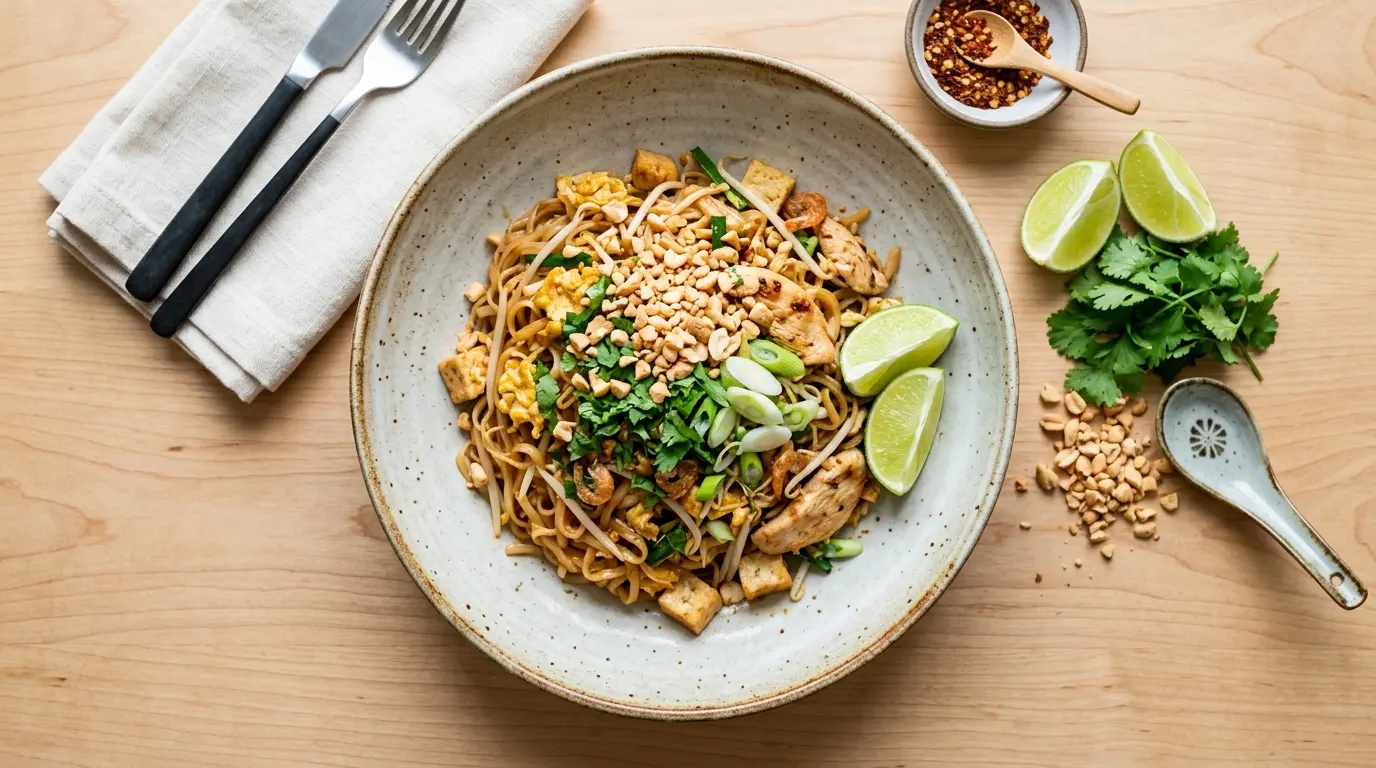
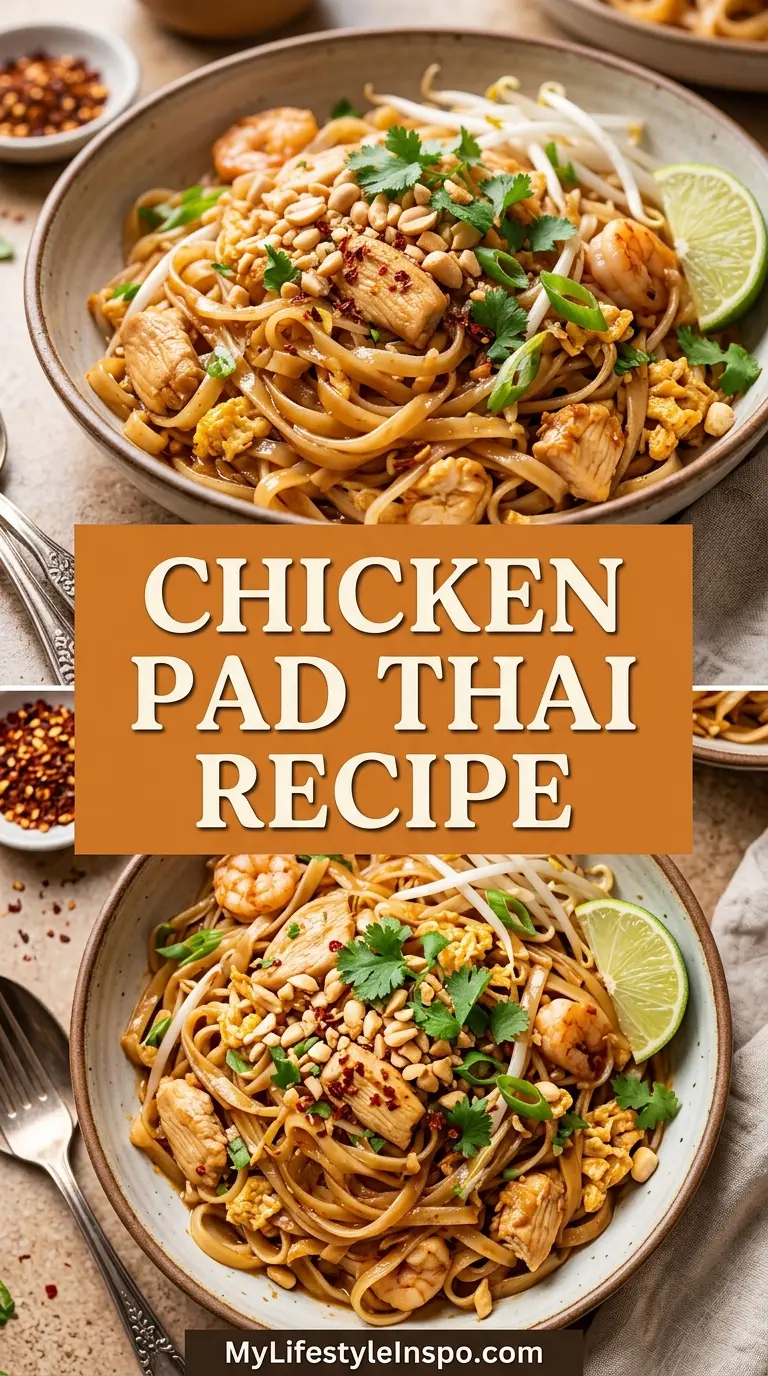
If you’ve been craving a restaurant-quality Chicken Pad Thai Recipe but assumed it was too complicated to make at home, this post is about to change everything for you.
Pad Thai is Thailand’s most iconic street food dish, a fast-cooked stir fry of silky rice noodles, tender chicken, scrambled eggs, and crunchy bean sprouts, all tossed in a deeply flavorful sweet-sour-savory sauce.
The secret to a truly great Pad Thai lies in three things: the right noodles, the right sauce, and high heat. Most home versions fall flat because they use soy sauce and lime juice alone, skipping the tamarind that gives authentic Pad Thai its signature tangy depth.
This recipe uses tamarind paste, fish sauce, and palm sugar (or brown sugar as an easy substitute) to create that balanced, complex sauce you know and love from your favorite Thai restaurant.
The best part? From prep to plate, you’re looking at about 30 minutes total. The stir-fry itself cooks in under 10 minutes, so having everything ready before you turn on the heat is the real key to success.
You might also enjoy: Easy Pad Thai Recipe
Why You’ll Love This Chicken Pad Thai Recipe
This dish hits every note, and once you make it at home, you’ll find it hard to go back to ordering takeout.
Here’s why it earns a permanent spot in the weekly dinner rotation:
- Restaurant-quality sauce made from tamarind, fish sauce, and palm sugar for authentic, balanced flavor
- Ready in 30 minutes, making it a realistic option even on busy weeknights
- One-pan meal (one wok or large skillet) that means minimal cleanup
- Highly customizable with easy swaps for different proteins, noodle thicknesses, or dietary needs
- Crowd-pleasing flavor that appeals to kids and adults alike
- More affordable than takeout and made with ingredients you can find at most grocery stores or Asian markets
- Great for meal prep, as the sauce can be made ahead and stored in the refrigerator for up to two weeks
The combination of textures is part of the magic. You have tender noodles, juicy chicken, soft scrambled egg, and crisp bean sprouts all in one bowl.
Read Also: Chicken Fried Rice Recipe
Ingredients
Getting the ingredients right is the most important step. The authentic trio of tamarind, fish sauce, and palm sugar is what separates this from bland, disappointing versions.
Here’s everything you’ll need:
For the Pad Thai Sauce:
- 3 tablespoons (45 ml) tamarind paste (not concentrate; use the loose brown liquid variety)
- 3 tablespoons (45 ml) fish sauce
- 2 tablespoons (25 g) palm sugar or light brown sugar
- 1 tablespoon (15 ml) oyster sauce (optional, adds extra depth)
For the Noodles and Protein:
- 8 oz (225 g) dried flat rice noodles (about 3 mm wide, also labeled “Pad Thai noodles”)
- 1 lb (450 g) boneless, skinless chicken breast or thigh, thinly sliced
- 1 tablespoon (15 ml) soy sauce (for marinating the chicken)
- 1 teaspoon (5 ml) sesame oil (for marinating)
For the Stir Fry:
- 3 tablespoons (45 ml) vegetable oil, divided
- 3 cloves garlic, minced
- 2 shallots, finely sliced
- 3 large eggs
- 1 1/2 cups (150 g) fresh bean sprouts
- 3 stalks green onions (scallions), cut into 1-inch (2.5 cm) pieces
- 1/2 cup (50 g) firm tofu, cut into small cubes (optional but traditional)
For Garnish:
- 1/2 cup (60 g) roasted unsalted peanuts, roughly chopped
- 2 limes, cut into wedges
- Fresh cilantro leaves
- Dried chili flakes or fresh Thai chilies, to taste
This same stir-fry approach works beautifully in a stir fry sauce recipe if you want to explore more Asian-inspired sauces.
Kitchen Equipment Needed
The right tools make this recipe much easier and help you achieve that high-heat, restaurant-style cook.
Here’s what you’ll need:
- Carbon steel wok (14-inch / 35 cm preferred) or a large, heavy-bottomed skillet
- Large bowl for soaking noodles
- Kitchen tongs or wooden chopsticks for tossing
- Small mixing bowl for the sauce
- Cutting board and sharp knife
- Measuring spoons and cups
- Spatula or wok ladle
- Colander for draining noodles
- Serving bowls and lime squeezer
Recommended Products for This Recipe
These are products chosen based on quality and their direct impact on how your Chicken Pad Thai turns out.
1. Tamarind Paste (Wet Tamarind)
This is the single most important ingredient for authentic Pad Thai flavor. Real tamarind paste from Thailand or Vietnam is a loose, brown, sour liquid. It provides the tangy backbone of the sauce that lime juice or vinegar simply cannot replicate. Look for Thai or Vietnamese-origin products for the best results.
2. Fish Sauce (Tiparos or Megachef Brand)
Fish sauce is the salty, savory foundation of the Pad Thai sauce. Premium brands like Tiparos or Megachef use higher-quality fermented fish, resulting in a rounder, less sharp flavor than budget alternatives. Using a good fish sauce makes a noticeable difference in the final dish.
3. Carbon Steel Wok (14-Inch)
A carbon steel wok conducts heat quickly and evenly, allowing you to hit the high temperatures needed for proper stir frying. Stainless steel pans hold moisture and lead to soggy noodles. This is the most impactful equipment investment you can make for any Asian stir fry recipe.
4. Palm Sugar
Palm sugar is the traditional sweetener in authentic Pad Thai. It has a caramel-like, slightly smoky sweetness that granulated white sugar can’t match. Light brown sugar is the best substitute if you can’t find it, but palm sugar elevates the sauce significantly.
For a lighter appetizer to start the meal, these chicken lettuce wraps pair beautifully with Pad Thai’s Thai-inspired flavors.
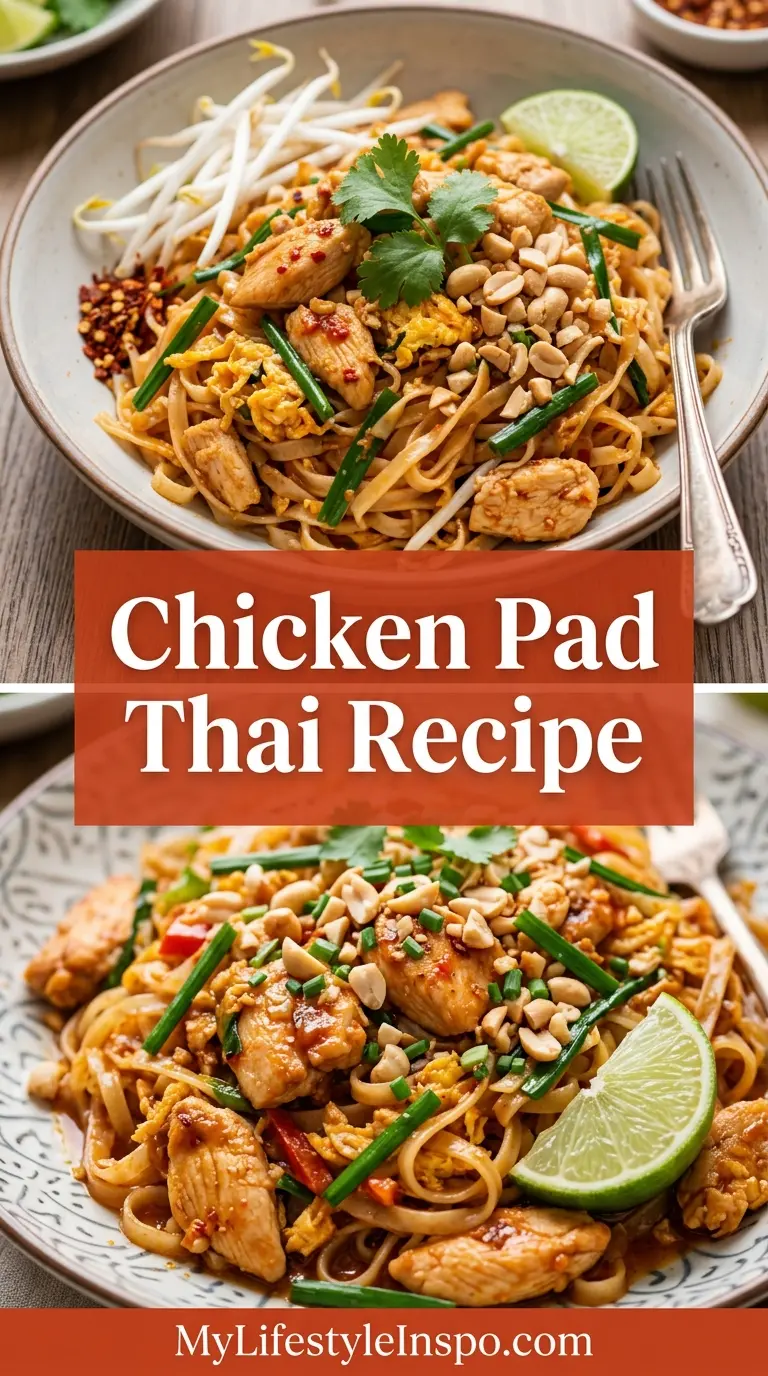
Step-by-Step Instructions
Read through every step before starting. Pad Thai is a fast-moving stir fry, so having everything prepped and within arm’s reach before the wok heats up is critical.
Step 1: Soak the Noodles
- Place the dried flat rice noodles in a large bowl.
- Pour over enough lukewarm (not boiling) water to fully submerge them.
- Soak for 20 to 25 minutes until the noodles are pliable and flexible, but still slightly firm when bent. They should not be fully soft or cooked through at this stage.
- Drain in a colander and rinse briefly under cold water to stop softening.
- Do not let the drained noodles sit for more than 10 minutes or they will stick together. Toss them lightly with a few drops of oil if you need more time.
Step 2: Make the Pad Thai Sauce
- In a small bowl, combine the tamarind paste, fish sauce, palm sugar (or light brown sugar), and oyster sauce (if using).
- Stir well until the sugar is fully dissolved.
- Taste the sauce. It should be a strong balance of sour (from tamarind), salty (from fish sauce), and sweet (from palm sugar). Adjust ratios to your preference. The sauce will mellow slightly when cooked.
- Set aside within arm’s reach of the stove.
Step 3: Marinate the Chicken
- Slice the chicken breast or thigh into thin pieces, about 1/4 inch (6 mm) thick, cutting against the grain for tenderness.
- In a bowl, combine the sliced chicken with 1 tablespoon (15 ml) soy sauce and 1 teaspoon (5 ml) sesame oil.
- Toss well to coat and let marinate for at least 10 minutes at room temperature while you prepare other ingredients.
- This short marinade seasons the chicken and helps it brown beautifully in the wok.
Step 4: Prep All Remaining Ingredients
- Mince the garlic cloves finely.
- Slice the shallots thinly.
- Cut the green onions into 1-inch (2.5 cm) pieces, separating the white bottoms from the green tops.
- If using tofu, cut into small, bite-sized cubes (about 1/2 inch / 1.25 cm).
- Crack the 3 eggs into a small bowl and lightly beat them.
- Measure out the bean sprouts.
- Roughly chop the roasted peanuts.
- Set everything out in separate bowls near the stove. This “mise en place” step is non-negotiable for stir frying.
Step 5: Cook the Chicken
- Heat your wok or large skillet over high heat until it is very hot, almost smoking.
- Add 1 1/2 tablespoons (22 ml) of vegetable oil and swirl to coat the surface.
- Add the sliced garlic and shallots. Stir fry for 30 seconds until fragrant. Do not let them burn.
- Add the marinated chicken in a single layer. Do not stir immediately; let it sear for 1 to 2 minutes on one side to develop color.
- Stir fry for another 2 to 3 minutes until the chicken is cooked through (internal temperature reaches 165°F / 74°C) and lightly golden.
- If using tofu, add it along with the chicken and allow it to sear lightly on the edges.
- Push the cooked chicken (and tofu) to one side of the wok.
Step 6: Scramble the Eggs
- Add a small splash of oil to the empty side of the wok if needed.
- Pour the beaten eggs directly into the empty space.
- Let them set for about 20 to 30 seconds without stirring, then scramble gently with your spatula until just cooked and still soft.
- Once the eggs are set but still slightly glossy, fold them into the chicken mixture and stir briefly to combine.
Step 7: Add the Noodles and Sauce
- Add the drained, soaked rice noodles to the wok on top of the chicken and egg mixture.
- Immediately pour the Pad Thai sauce evenly over the noodles.
- Using tongs or chopsticks, toss everything together quickly to coat the noodles in the sauce. Work fast, as the sauce will thicken and be absorbed rapidly on high heat.
- Stir fry for 2 to 3 minutes, tossing constantly, until the noodles are fully cooked through, tender, and have absorbed the sauce. If the noodles look too dry or are sticking, add 2 tablespoons (30 ml) of water at a time to loosen them.
Step 8: Add Bean Sprouts and Green Onions
- Add the bean sprouts and the white bottoms of the green onions to the wok.
- Toss quickly for 30 to 45 seconds. The goal is to heat them through while keeping the bean sprouts crisp. Overcooking the sprouts makes them limp and watery.
- Remove from heat immediately.
Step 9: Plate and Garnish
- Divide the Pad Thai between serving bowls or plates.
- Top generously with the chopped roasted peanuts and the green tops of the scallions.
- Add fresh cilantro leaves and a pinch of dried chili flakes or fresh Thai chilies for heat.
- Serve with lime wedges on the side for squeezing over the noodles just before eating. The fresh lime brightens the whole dish.
Read Also: Easy Fried Rice Recipe
Tips for Success
These are the details that separate a good Pad Thai from a great one.
Follow these tips for the best results:
- Use lukewarm water, not boiling, to soak noodles. Boiling water overcooks them during soaking, leaving you with mushy noodles after stir frying.
- Cook in small batches. If serving 4 or more people, cook the Pad Thai in 2 separate rounds. Overcrowding the wok drops the temperature and leads to steamed, soggy noodles instead of a proper stir fry.
- Taste the sauce before cooking. The sauce is the heart of the dish. Adjust sweetness, saltiness, and sourness before it hits the heat.
- Do not skip the high heat. The wok needs to be very hot before the oil goes in. This is what creates the subtle “wok hei” (breath of the wok) flavor that makes restaurant stir fries so distinctive.
- Have everything prepped before heating the wok. Once you start cooking, there is no time to chop, measure, or scramble for ingredients.
- Add water gradually if noodles stick. A tablespoon or two of water at a time helps the noodles cook through without burning.
- Serve immediately. Pad Thai does not hold well. The noodles continue to absorb sauce and soften even after cooking, so get it on the table right away.
Another recipe that benefits from high-heat wok cooking is this peanut sauce recipe, which makes an excellent dipping sauce alongside Pad Thai.
Serving Suggestions
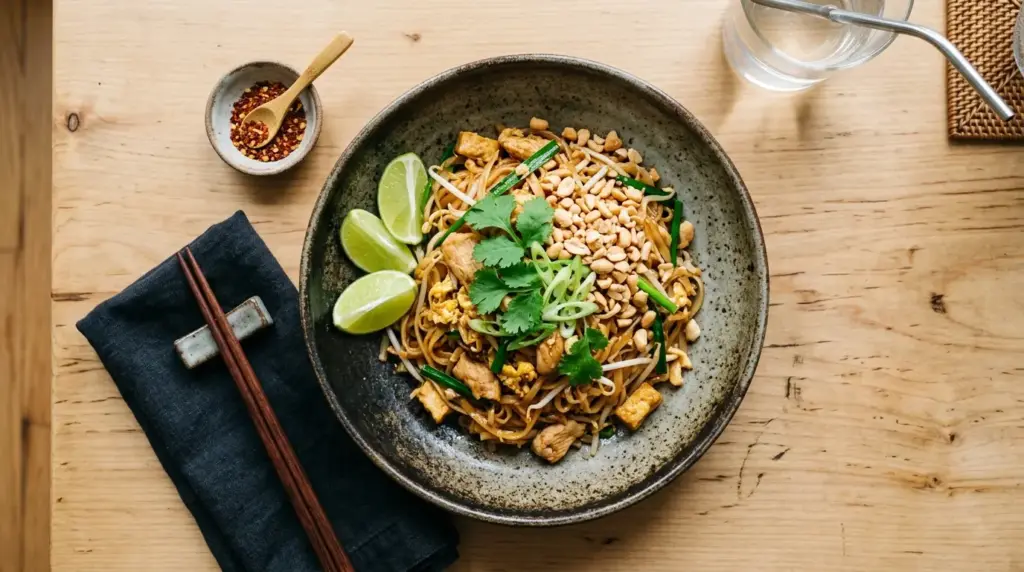
Chicken Pad Thai is a complete meal on its own, but a few well-chosen sides make it a full spread worthy of any occasion.
Consider serving it with:
- Tom Yum Soup as a warming Thai starter to kick off the meal
- Asian Chicken Salad for a light, refreshing contrast to the richness of the noodles
- Chinese Dumplings as a shareable appetizer before the main dish
- Bok Choy simply sauteed with garlic as an easy green vegetable side
- A cold Thai iced tea or a light lager beer for a classic pairing
Extra crushed peanuts, extra lime wedges, and a small dish of chili flakes on the table allow everyone to customize their own bowl.
Variations to Try
Once you’ve mastered the classic version, there are so many delicious directions to take this dish.
Try one of these twists:
- Shrimp Pad Thai: Swap the chicken for large peeled shrimp. Shrimp cooks in under 3 minutes, so add them toward the end of cooking to avoid toughening them.
- Vegetarian or Vegan Pad Thai: Skip the chicken and eggs entirely. Use extra firm tofu and replace fish sauce with soy sauce or tamari. Add extra vegetables like shredded carrots, snap peas, or mushrooms.
- Spicy Pad Thai: Add 1 to 2 teaspoons (5 to 10 ml) of sambal oelek or crushed Thai bird’s eye chilies directly into the sauce for serious heat.
- Beef Pad Thai: Use thinly sliced beef sirloin or flank steak in place of chicken. Marinate the same way and cook over very high heat.
- Peanut Butter Pad Thai: Whisk 1 tablespoon (15 g) of natural peanut butter into the sauce for an extra creamy, nutty flavor. This is a popular Western-style variation.
- Gluten-Free Pad Thai: The dish is naturally almost gluten free. Simply use gluten-free tamari in place of soy sauce and double-check your oyster sauce label.
For another beloved Asian-inspired chicken dish with equally bold flavor, the easy orange chicken recipe is worth bookmarking.
Storage and Reheating
Pad Thai is best eaten fresh, but leftovers can be stored and revived reasonably well.
Here’s how to handle leftovers:
- Refrigerator: Allow the Pad Thai to cool completely to room temperature before transferring to an airtight container. Store in the refrigerator for up to 3 days.
- Freezer: Pad Thai does not freeze particularly well. The noodles become mushy upon thawing. Freeze the sauce separately if needed, then cook fresh noodles when ready to serve.
- Reheating on the stovetop (best method): Add the leftover Pad Thai to a hot wok or skillet with a tablespoon of water or oil. Stir fry over medium-high heat for 2 to 3 minutes, tossing frequently until heated through.
- Reheating in the microwave: Transfer to a microwave-safe bowl, add a splash of water, cover loosely, and microwave in 60-second intervals until hot. Stir between intervals to heat evenly.
- Refreshing the garnishes: Always add fresh peanuts, lime, and herbs after reheating, as these lose their texture and brightness in storage.
For another great recipe that works well as a weeknight leftover, check out the chicken and broccoli recipe.
Nutritional Facts
Per serving (based on 4 servings, using chicken breast and no tofu)
| Nutrient | Amount |
|---|---|
| Calories | 530 kcal |
| Total Fat | 18 g |
| Saturated Fat | 3 g |
| Protein | 38 g |
| Total Carbohydrates | 55 g |
| Dietary Fiber | 2 g |
| Sugars | 10 g |
| Sodium | 1,050 mg |
| Cholesterol | 195 mg |
Note: Nutritional values are estimates and will vary based on specific brands, ingredient substitutions, and portion sizes.
You might also enjoy: Udon Noodle Soup Recipe
Health Benefits of Key Ingredients
Beyond the incredible flavor, this Chicken Pad Thai is built on ingredients that actually bring nutritional value to the table.
Here’s a closer look at what makes this dish nourishing:
- Chicken breast is one of the leanest sources of protein available, supporting muscle repair, satiety, and a healthy metabolism. A single serving provides over 30 grams of complete protein.
- Rice noodles are naturally gluten free and easier to digest than wheat-based pastas, making them a gentler carbohydrate option for many people.
- Eggs deliver choline, B vitamins, and high-quality protein all in one. The scrambled egg in Pad Thai adds both nutrition and that signature silky texture.
- Bean sprouts are low in calories and high in Vitamin C, Vitamin K, and folate. They also add a satisfying crunch that reduces the need for extra ingredients.
- Tamarind contains antioxidants and has been studied for its potential anti-inflammatory properties. It also provides a natural source of potassium and magnesium.
- Garlic is rich in allicin, a compound associated with supporting immune function and reducing inflammation.
- Peanuts provide heart-healthy monounsaturated fats, magnesium, and plant-based protein. Even a small handful as a garnish contributes meaningful nutrition.
Read Also: Hot and Sour Soup Recipe
Frequently Asked Questions
1. Can I use rice noodles from a regular grocery store?
Yes, absolutely. Most large grocery stores now carry dried flat rice noodles in the international or Asian foods aisle, often labeled “Pad Thai noodles” or “rice stick noodles.” Look for noodles that are about 3 mm wide for the most authentic texture. If you can only find wider noodles, those work fine too, just adjust your soaking time slightly.
2. What can I substitute for tamarind paste?
The best substitute is a mix of lime juice and a small amount of brown sugar, though the flavor profile will be noticeably different. Tamarind gives Pad Thai its distinctive tangy depth that lime juice alone cannot replicate. If you have access to an Asian grocery store or can order online, real tamarind paste is worth seeking out. Worcestershire sauce (in very small amounts) is another option some cooks use as a workaround in a pinch.
3. Is fish sauce really necessary?
Fish sauce is one of the foundational flavors of authentic Pad Thai. It provides a deep, savory saltiness that soy sauce alone cannot replicate. That said, if you are cooking for someone with a fish allergy or a vegan diet, soy sauce or tamari can be used in the same amount as a substitute. The dish will still taste delicious, just slightly different from the traditional version.
4. Why do my Pad Thai noodles always turn out clumpy or mushy?
Clumpy noodles are usually the result of over-soaking, cooking in a pan that is not hot enough, or overcrowding the pan. Make sure the noodles are soaked in lukewarm (not boiling) water until pliable but still slightly firm. Use the highest heat setting your stove allows, and if making a large batch, split it into two separate cooking rounds. Tossing the noodles quickly and adding water in small amounts as needed will also help prevent sticking.
5. Can I make Pad Thai ahead of time?
The sauce can be made up to two weeks in advance and stored in the refrigerator, which makes weeknight cooking much faster. You can also pre-soak the noodles and keep them in the refrigerator (tossed lightly with oil) for up to one day. However, the stir-frying itself is best done fresh just before serving. Pad Thai that has been fully cooked and refrigerated tends to become sticky and loses its characteristic texture when reheated.
For another Asian noodle dish worth adding to your regular lineup, the bibimbap recipe is a Korean favorite that delivers bold flavors in a similarly satisfying bowl format.
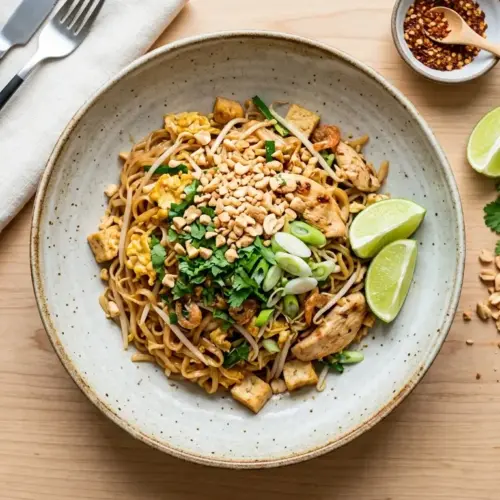
Chicken Pad Thai

Equipment
- Carbon steel wok (14-inch or larger) - or a large, heavy-bottomed skillet
- Large bowl - for soaking noodles
- Kitchen tongs - or wooden chopsticks for tossing
- Small mixing bowl - for sauce
- Cutting board
- Sharp knife
- Measuring spoons
- Measuring cups
- Spatula - or wok ladle
- Colander - for draining noodles
- Lime squeezer - optional but helpful
Ingredients
- 3 tablespoons tamarind paste - loose brown liquid variety, about 45 ml, not concentrate
- 3 tablespoons fish sauce - about 45 ml, Tiparos or Megachef brand recommended
- 2 tablespoons palm sugar - about 25 g, or light brown sugar as substitute
- 1 tablespoon oyster sauce - about 15 ml, optional, adds extra depth
- 8 oz dried flat rice noodles - about 225 g, 3 mm wide, labeled ‘Pad Thai noodles’
- 1 lb boneless skinless chicken breast or thigh - about 450 g, thinly sliced
- 1 tablespoon soy sauce - about 15 ml, for marinating the chicken
- 1 teaspoon sesame oil - about 5 ml, for marinating
- 3 tablespoons vegetable oil - about 45 ml, divided
- 3 cloves garlic - minced
- 2 shallots - finely sliced
- 3 large eggs - lightly beaten
- 1 1/2 cups fresh bean sprouts - about 150 g
- 3 stalks green onions - scallions, cut into 1-inch (2.5 cm) pieces
- 1/2 cup firm tofu - about 50 g, cut into small cubes, optional but traditional
- 1/2 cup roasted unsalted peanuts - about 60 g, roughly chopped, for garnish
- 2 limes - cut into wedges, for serving
- fresh cilantro leaves - for garnish
- dried chili flakes or fresh Thai chilies - to taste, for garnish
Instructions
- Soak the dried flat rice noodles in lukewarm water for 20 to 25 minutes until pliable but still firm. Drain, rinse briefly with cold water, and toss with a few drops of oil if not using immediately.
- In a small bowl, combine the tamarind paste, fish sauce, palm sugar, and oyster sauce. Stir until the sugar is fully dissolved and taste to adjust the balance of sour, salty, and sweet.
- Thinly slice the chicken against the grain and marinate in soy sauce and sesame oil for at least 10 minutes at room temperature.
- Mince the garlic, slice the shallots, cut the green onions, cube the tofu if using, lightly beat the eggs, and measure out the bean sprouts and peanuts for garnish.
- Heat the wok over high heat until almost smoking. Add half the oil, then stir-fry the garlic and shallots for 30 seconds until fragrant. Add the marinated chicken in a single layer, let it sear for 1-2 minutes, then stir-fry until cooked through and golden. Push to one side.
- Add a splash more oil to the empty side of the wok, pour in the beaten eggs, and let them set for 20-30 seconds before scrambling until just cooked and still soft. Fold the eggs into the chicken mixture.
- Add the drained noodles to the wok and pour the Pad Thai sauce over them. Using tongs or chopsticks, toss everything together quickly for 2-3 minutes until the noodles are tender and have absorbed the sauce. Add water in small amounts if the noodles are sticking.
- Add the bean sprouts and the white bottoms of the green onions, toss for 30-45 seconds until just heated through, then remove from heat immediately to keep the sprouts crisp.
- Divide the Pad Thai between bowls and top generously with chopped peanuts, green onion tops, fresh cilantro, and chili flakes. Serve immediately with lime wedges on the side for squeezing over the noodles.
Notes
- Use lukewarm water, not boiling, to soak the noodles to prevent them from becoming mushy during the stir-fry.
- Cook in two separate batches if serving 4 or more people to avoid overcrowding the wok and steaming the noodles instead of stir-frying them.
- Taste the sauce before cooking and adjust the sweetness, saltiness, and sourness to your preference before it hits the heat.
- Have all ingredients prepped and within arm’s reach before heating the wok, as the stir-fry cooks in under 10 minutes.
- Add water gradually (1-2 tablespoons at a time) if the noodles are sticking to the wok, which helps them cook through without burning.
- Substitute soy sauce or tamari for fish sauce to make a vegetarian or vegan version, though the flavor profile will be slightly different.
- Make the sauce up to two weeks in advance and store it in the refrigerator for quicker weeknight cooking.
- Pad Thai is best eaten immediately, as the noodles continue to absorb sauce and soften after cooking. Leftovers can be stored in the refrigerator for up to 3 days.
- For extra heat, add 1-2 teaspoons of sambal oelek or crushed Thai bird’s eye chilies directly into the sauce.
- Reheat leftovers in a hot wok or skillet with a splash of water or oil for the best texture, and always refresh the garnishes after reheating.
Final Thoughts
This Chicken Pad Thai Recipe is the kind of dish that earns a permanent spot in your cooking repertoire.
Once you understand the sauce, the noodle technique, and the high-heat stir fry method, you’ll find yourself making this on repeat, and tweaking it to perfection with every batch.
It’s bold, balanced, and deeply satisfying in a way that packaged or bottled versions simply cannot match.
Give it a try this week and see for yourself. If you make it, leave a comment below and let us know how it turned out. Tag us in your photos too, we love seeing your Pad Thai creations!
Recommended:
- Easy Pad Thai Recipe
- Stir Fry Sauce Recipe
- Hoisin Sauce Recipe
- Teriyaki Sauce Recipe
- Tom Yum Soup Recipe
- Miso Soup Recipe
- Egg Roll in a Bowl Recipe
- Easy Mongolian Beef Recipe
- Bourbon Chicken Recipe
- Chicken Shawarma Recipe