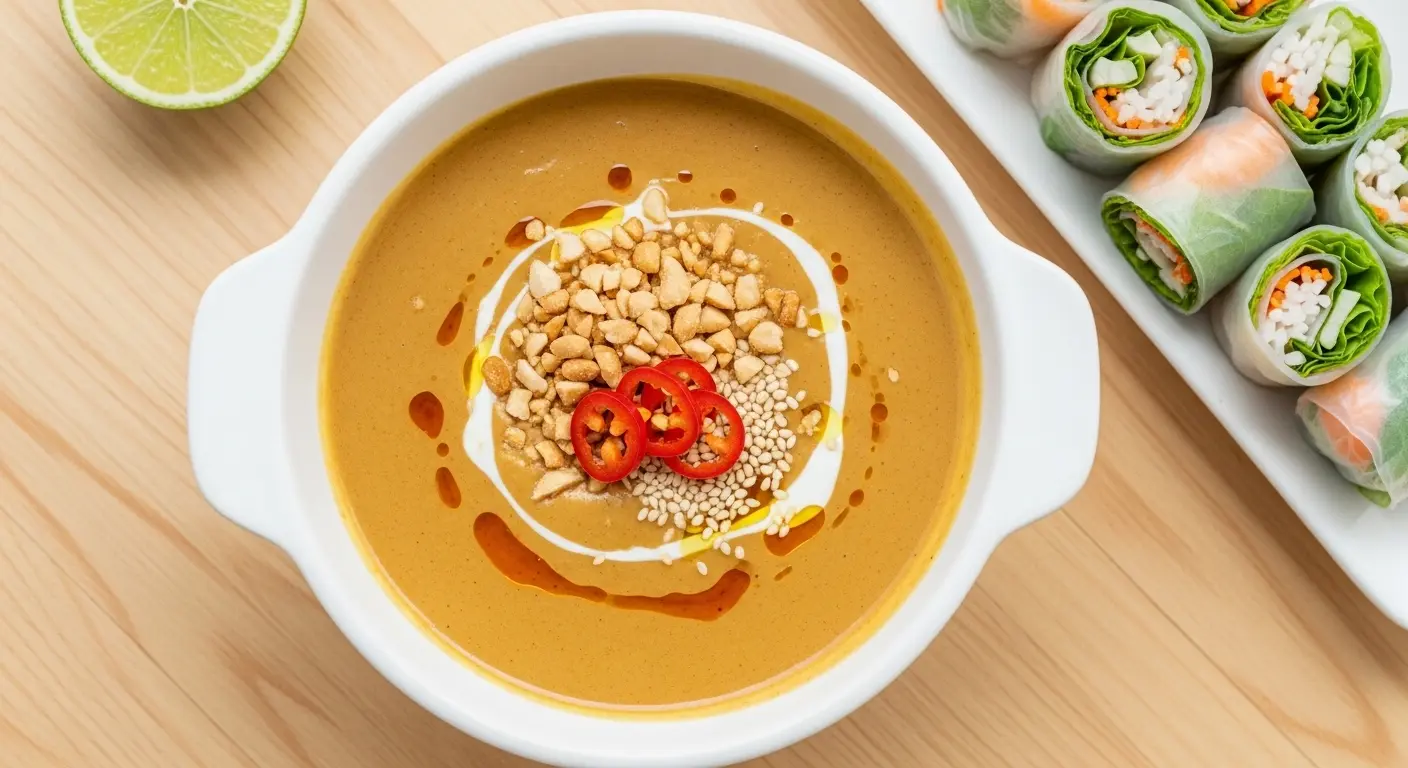
If you’ve ever been obsessed with the peanut sauce recipe from your favorite Thai or Asian-inspired restaurant, you’re about to make your kitchen dreams come true. This sauce is rich, creamy, nutty, and perfectly balanced between sweet, salty, and tangy. It takes just 5 minutes and uses pantry staples you likely already have on hand.
This is the kind of sauce that makes everything taste better. From spring rolls and satay skewers to noodle bowls and grain salads, a good homemade peanut sauce transforms an ordinary meal into something you’ll crave on repeat.
The secret to getting it just right? The combination of natural creamy peanut butter, soy sauce, fresh ginger, garlic, rice vinegar, sesame oil, and a touch of sweetness creates that irresistible savory-sweet depth. Add a splash of lime juice and a little heat from sriracha or chili garlic sauce, and you’ve got a sauce worth spooning straight from the bowl.
This recipe draws inspiration from the Thai-style peanut sauce tradition, which itself evolved from Indonesian satay sauce (known as bumbu kacang). While the most traditional versions use whole roasted peanuts, fish sauce, tamarind, and coconut milk, the widely beloved homemade version uses creamy peanut butter as the base, making it incredibly quick and accessible for everyday cooks.
This version skips the coconut milk for a brighter, more versatile sauce that works just as well as a thick dip as it does thinned into a salad dressing.
If you love Asian-inspired sauces and dips, you might also enjoy this Sunshine Sauce, which pairs beautifully with grilled proteins and fresh vegetables.
Why You’ll Love This Peanut Sauce Recipe
This sauce is one of those recipes that earns a permanent spot in your weekly rotation from the very first batch.
It takes all of 5 minutes to pull together, with no cooking, no blending required, and virtually zero cleanup.
The flavor balance is exceptional. You get rich nuttiness from the peanut butter, brightness from the lime juice, umami depth from the soy sauce, warmth from fresh ginger, and a subtle heat that you can dial up or down.
Here are all the reasons this recipe is a keeper:
- Incredibly fast: Ready in 5 minutes with just a bowl and a whisk.
- Pantry-friendly: Every ingredient is a common pantry or refrigerator staple.
- Completely versatile: Works as a dip, dressing, noodle sauce, marinade, or sandwich spread.
- Easily customizable: Adjust sweetness, heat, or thickness to suit exactly what you’re making.
- Naturally dairy-free and vegan: No substitutions needed.
- Stores beautifully: Keeps in the fridge for up to one week, making it ideal for meal prep.
- Scales easily: Double or triple the batch without any extra effort.
You might also enjoy pairing this sauce with homemade Chicken Lettuce Wraps for a complete, crowd-pleasing meal.
Ingredients
This peanut sauce recipe comes together with a short list of bold-flavored ingredients. Each one plays a specific role in building that craveable balance of savory, sweet, tangy, and nutty.
When choosing your peanut butter, go for natural creamy peanut butter with no added sugar or salt. Sweetened commercial peanut butter can make the sauce overly rich and throw off the flavor balance. If your natural peanut butter has separated, stir it thoroughly before measuring.
- ½ cup (125g) natural creamy peanut butter
- 3 tablespoons (45ml) soy sauce or tamari (use tamari for gluten-free)
- 2 tablespoons (30ml) fresh lime juice (about 1 large lime)
- 1 tablespoon (15ml) rice vinegar
- 1 tablespoon (15ml) toasted sesame oil
- 1 tablespoon (21g) honey or maple syrup
- 1 teaspoon freshly grated ginger (or ½ teaspoon ground ginger)
- 2 cloves garlic, finely grated or minced
- 1 to 2 teaspoons sriracha or chili garlic sauce (adjust to taste)
- 3 to 6 tablespoons (45 to 90ml) warm water (to adjust consistency)
Read Also: Hoisin Sauce Recipe
Kitchen Equipment Needed
This is one of the most low-equipment recipes you’ll make. You don’t need a blender, food processor, or any specialty tools. Everything comes together with simple, everyday kitchen items.
Using a whisk instead of a fork makes a real difference here. It incorporates the peanut butter much more smoothly and quickly than stirring with a spoon or fork. A jar with a tight-fitting lid also works great if you want to shake everything together and store the sauce in the same container.
- Medium mixing bowl
- Whisk
- Measuring cups and spoons
- Microplane or fine grater (for ginger and garlic)
- Citrus juicer or reamer
- Rubber spatula
- Airtight glass jar or container (for storage)
This peanut sauce pairs wonderfully with Easy Pad Thai, which uses similar pantry ingredients.
Recommended Products for This Recipe
Here are a few products that genuinely make a difference when making this peanut sauce at home. These recommendations are based on quality and performance.
1. Natural Creamy Peanut Butter (No Stir)
A high-quality natural peanut butter is the foundation of this entire sauce. Look for one with just peanuts and salt as ingredients. A no-stir variety makes this recipe even faster and produces the smoothest, most emulsified sauce.
2. Premium Toasted Sesame Oil
Toasted sesame oil adds a deeply nutty, aromatic richness that elevates the whole sauce. A good-quality, pure toasted sesame oil makes a noticeable difference in flavor compared to cheaper blended versions.
3. Chili Garlic Sauce
This ingredient adds both heat and a subtle savory garlic flavor that sriracha alone doesn’t quite achieve. A quality chili garlic sauce rounds out the sauce beautifully and keeps well in the fridge.
4. Microplane Zester and Grater
Fresh ginger and fresh garlic are non-negotiable for the best flavor in this sauce. A Microplane makes grating both incredibly fast and fine, so they fully meld into the sauce without any fibrous chunks.
5. Airtight Glass Storage Jars
This sauce stores perfectly for up to a week, and a glass jar with a tight lid keeps it fresh and makes it easy to shake the sauce back together if it separates. Wide-mouth jars are especially convenient for this recipe.
Another favorite: Stir Fry Sauce Recipe
Step-by-Step Instructions
Step 1: Measure Out All Your Ingredients
- Measure ½ cup (125g) of natural creamy peanut butter and add it to a medium-sized mixing bowl. Make sure your peanut butter is at room temperature, as cold peanut butter straight from the fridge is stiff and much harder to whisk smooth.
- Measure 3 tablespoons (45ml) of soy sauce or tamari and set aside.
- Squeeze your lime to get 2 tablespoons (30ml) of fresh juice, removing any seeds.
- Measure 1 tablespoon (15ml) of rice vinegar, 1 tablespoon (15ml) of toasted sesame oil, and 1 tablespoon (21g) of honey or maple syrup.
- Using a Microplane or fine grater, grate 1 teaspoon of fresh ginger directly over the bowl or into a small dish. Fresh ginger provides a brighter, more vibrant heat than ground ginger, so use it whenever possible.
- Finely grate or mince 2 cloves of garlic. Grating produces the smoothest result and ensures the garlic fully incorporates into the sauce.
- Measure 1 to 2 teaspoons of sriracha or chili garlic sauce depending on your preferred heat level. Start with 1 teaspoon and add more after tasting.
Step 2: Combine the Liquid Ingredients First
- Add the soy sauce, lime juice, rice vinegar, sesame oil, and honey (or maple syrup) to the bowl with the peanut butter.
- Add the grated ginger and garlic.
- Add 1 teaspoon of sriracha or chili garlic sauce.
- Starting with the liquids surrounding the peanut butter makes it far easier to bring the sauce together without lumps. The acidity and liquid loosen the peanut butter gradually.
Step 3: Whisk Everything Together
- Using a whisk, begin stirring the mixture from the center outward.
- The peanut butter will feel stiff at first. This is normal. Keep whisking consistently and it will begin to loosen within 30 to 60 seconds.
- Continue whisking until the mixture is fully smooth, creamy, and uniform in color. There should be no streaks of peanut butter or pools of liquid.
- If you find the mixture is not coming together easily, the peanut butter may be too cold. Let the bowl sit at room temperature for 5 minutes, then try again.
Step 4: Adjust the Consistency with Warm Water
- Add 3 tablespoons (45ml) of warm water to the sauce and whisk to combine.
- For a thick dipping sauce, 3 tablespoons of water is typically enough. The sauce should be smooth, creamy, and coat a spoon thickly.
- For a lighter noodle sauce or salad dressing, add up to 6 tablespoons (90ml) of warm water total, whisking between each addition, until the sauce reaches a pourable consistency.
- Use warm water rather than cold water. Cold water can cause the peanut butter to seize up, making the sauce grainy.
Step 5: Taste and Adjust the Seasoning
- Dip a small spoon or vegetable into the sauce and taste it carefully.
- If it needs more salt or savory depth, add a little more soy sauce, half a teaspoon at a time.
- If it tastes too salty or sharp, add a small drizzle more of honey or maple syrup to balance it.
- If it needs more brightness or tanginess, add another squeeze of lime juice.
- If you want more heat, stir in an additional half teaspoon of sriracha or chili garlic sauce.
- Adjusting as you go ensures the sauce is perfectly calibrated to your taste.
Step 6: Rest and Serve
- Allow the finished sauce to rest for 5 to 10 minutes before serving. This resting time allows the garlic, ginger, and lime to fully meld together, and the flavor deepens noticeably.
- Give the sauce a final stir before serving.
- If the sauce thickens as it sits, simply whisk in a teaspoon of warm water at a time until it returns to your desired consistency.
- Transfer to a serving bowl and garnish with chopped roasted peanuts, a drizzle of sesame oil, or a sprinkle of red pepper flakes for presentation if desired.
This sauce works beautifully as a dip alongside Air Fryer Bacon Wrapped Shrimp for an impressive party spread.
Tips for Success
A few small techniques make a noticeable difference in the final result of this peanut sauce recipe.
The most common issue people run into is the sauce turning grainy or not coming together smoothly. This almost always happens because the peanut butter is too cold or too dry. Room temperature peanut butter is key.
- Use room temperature peanut butter: Cold peanut butter is stiff and resistant to whisking. Let it come to room temperature for 10 to 15 minutes if needed.
- Use warm water, not cold: Cold water can cause the peanut butter to seize. Warm water helps everything emulsify smoothly.
- Grate garlic and ginger finely: Large pieces will create an uneven texture. Use a Microplane for the finest result.
- Taste as you go: Peanut butter brands vary in saltiness and sweetness. Always taste and adjust before serving.
- Don’t skip the rest time: Even 5 minutes of resting noticeably deepens the flavor as the ingredients meld together.
- Thin it for different uses: Use less water for dipping, more for dressing or noodle sauce.
- Double the batch: This sauce keeps for a full week, so making more upfront saves you time later in the week.
- Use natural peanut butter: Sweetened commercial brands will make the sauce too rich and sweet.
You might also enjoy: Bang Bang Sauce Recipe
Serving Suggestions
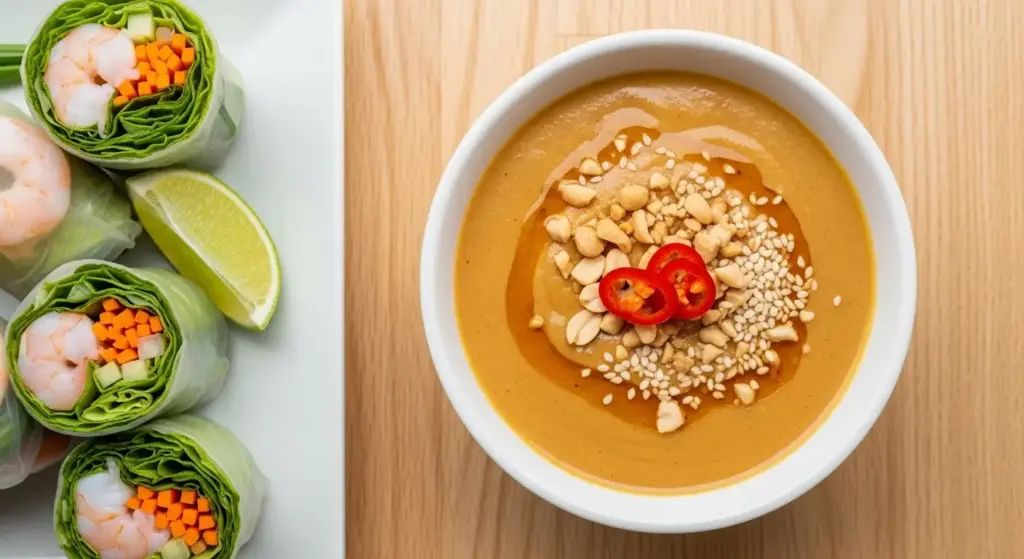
This peanut sauce is one of the most versatile condiments you can have in your fridge. It genuinely elevates just about everything it touches.
Whether you’re hosting a casual dinner or prepping for a weeknight meal, there is almost no limit to how you can use this sauce. Try it in multiple ways throughout the week to get the most out of a single batch.
Here are some of the best ways to serve and use this peanut sauce:
- Dipping sauce for spring rolls or summer rolls: The classic pairing. Serve thicker for the best coating on each roll.
- Chicken satay dipping sauce: Drizzle generously over grilled skewers and serve extra on the side.
- Tossed with noodles: Thin the sauce slightly and toss with cooked rice noodles, soba, or lo mein with sliced cucumber and carrots.
- Drizzled over grain bowls or rice bowls: Adds richness and depth to bowls topped with grilled chicken, tofu, or shrimp.
- As a salad dressing: Thin with additional water or a splash of sesame oil and toss over a shredded cabbage slaw.
- Spread on wraps or sandwiches: Use as a spread in place of mayo or hummus for a nutty, savory twist.
- As a dip for fresh vegetables: Sliced cucumbers, bell peppers, snap peas, and carrots are all fantastic with this sauce.
- Served alongside Bok Choy: A light, stir-fried or steamed bok choy with a side of peanut sauce makes an easy, flavorful side dish.
Variations to Try
Once you’ve mastered the classic version of this peanut sauce, it’s easy to riff on it in delicious ways.
Each of these variations maintains the foundational balance of this recipe while introducing new flavor dimensions that work beautifully for specific dishes.
- Coconut peanut sauce: Replace the warm water with full-fat coconut milk. This creates a richer, creamier sauce that’s especially good with satay or Thai-inspired noodle dishes.
- Spicy chili peanut sauce: Double the sriracha or swap in sambal oelek for a more intense, complex heat. Great for noodle bowls and as a dip for dumplings.
- Peanut ginger dressing: Add an extra teaspoon of fresh ginger and thin the sauce fully with water for a bright, punchy salad dressing.
- Almond butter version: Swap the peanut butter for natural almond butter for a slightly sweeter, more delicate flavor.
- Cashew peanut sauce: Use half peanut butter and half cashew butter for a richer, creamier sauce with a slightly different flavor profile.
- Lemongrass peanut sauce: Add 1 teaspoon of finely minced lemongrass or lemongrass paste for a more aromatic, Southeast Asian-inspired variation.
- Low-sodium version: Use low-sodium soy sauce or coconut aminos in place of regular soy sauce for a lighter, less salty option.
Read Also: Teriyaki Sauce Recipe
Storage and Reheating
This peanut sauce keeps extremely well and actually tastes even better the next day after the flavors have had time to meld.
Proper storage ensures the sauce stays fresh, creamy, and delicious for the whole week.
- Refrigerator: Store in an airtight glass jar or container in the refrigerator for up to 7 days.
- Freezer: Freeze in small portions (ice cube trays work great) for up to 3 months. Thaw in the refrigerator overnight.
- Before serving from the fridge: The sauce will thicken considerably when cold. Let it sit at room temperature for 10 to 15 minutes, then whisk in warm water, one teaspoon at a time, until it returns to your desired consistency.
- Reheating for warm applications: If you want to use it in a warm stir fry or noodle dish, gently warm the sauce in a small saucepan over low heat, stirring constantly and adding a splash of water as needed to loosen it.
- Do not microwave without adding water: Microwaving peanut sauce without additional liquid can cause it to seize and become grainy.
- Glass jars are best: Glass keeps the sauce fresher longer and doesn’t absorb flavors or odors.
This sauce also pairs wonderfully with Bibimbap drizzled on top for a Korean-inspired fusion twist.
Nutritional Facts
The following nutritional information is based on a serving size of 2 tablespoons (approximately 30ml), with the recipe yielding about 10 to 12 tablespoons total.
| Nutrient | Per Serving (2 tbsp) |
|---|---|
| Calories | ~120 kcal |
| Total Fat | 9g |
| Saturated Fat | 1.5g |
| Carbohydrates | 7g |
| Sugar | 4g |
| Protein | 4g |
| Sodium | 310mg |
| Fiber | 1g |
Note: Nutritional values are estimates and will vary depending on specific brands and ingredient substitutions used.
For a lighter option, try: Easy Hummus Recipe
Health Benefits of Key Ingredients
Beyond its incredible flavor, this peanut sauce is made with several ingredients that bring genuine nutritional value to your meals.
Each key ingredient was chosen not just for taste, but for what it contributes to a balanced, nourishing diet.
- Peanut butter: A rich source of plant-based protein, healthy monounsaturated fats, and dietary fiber. It also contains magnesium, potassium, and B vitamins, making it far more than just a flavor base.
- Fresh ginger: One of the most potent anti-inflammatory foods available. Ginger contains gingerols and shogaols, compounds studied for their role in reducing nausea, supporting digestion, and easing muscle soreness.
- Garlic: Rich in allicin, garlic supports immune function, has antimicrobial properties, and has been linked to cardiovascular health benefits when consumed regularly.
- Lime juice: An excellent source of vitamin C, which supports immune health and helps with iron absorption. The citric acid also aids digestion and contributes brightness to the sauce.
- Toasted sesame oil: Contains sesamol and sesamin, naturally occurring antioxidants. Sesame oil is also high in polyunsaturated and monounsaturated fats that support heart health.
- Soy sauce (or tamari): Provides umami depth and trace minerals. Using low-sodium tamari helps manage sodium intake while preserving the rich, savory flavor.
- Honey or maple syrup: Both provide natural sweetness without refined sugar. Honey contains trace antioxidants, while maple syrup provides small amounts of manganese and zinc.
You might also enjoy: Easy Pesto Recipe
Frequently Asked Questions
1. Can I make this peanut sauce ahead of time?
Yes, and it’s actually encouraged. The sauce tastes even better the following day after the garlic, ginger, and lime juice have had time to fully develop and meld together. Make it up to 3 days in advance and store it in an airtight container in the fridge. Whisk in a little warm water before serving to loosen it back up.
2. Why did my peanut sauce turn out grainy or lumpy?
This almost always happens because the peanut butter was too cold when you started whisking. Cold peanut butter resists emulsification and can clump. Let it reach room temperature first, and always use warm water rather than cold when thinning the sauce. If the sauce has already turned grainy, gently warming it in a small saucepan over very low heat while whisking constantly will usually bring it back together.
3. Can I make this recipe gluten-free?
Absolutely. Simply swap the regular soy sauce for tamari or coconut aminos. Tamari is made with little to no wheat and has a very similar flavor to soy sauce. Coconut aminos is both gluten-free and soy-free, with a slightly sweeter and milder taste, which works very well in this recipe.
4. How do I adjust the thickness of the peanut sauce?
Thickness is entirely in your control. For a thick dipping sauce, use just 3 tablespoons of warm water. For a coating consistency suitable for noodles, use 4 to 5 tablespoons. For a pourable salad dressing, thin with up to 6 tablespoons of water. Add water one tablespoon at a time and whisk after each addition until you reach your desired consistency.
5. Can I use crunchy peanut butter instead of creamy?
Yes, and some people actually prefer it. Crunchy peanut butter adds small bits of peanut texture throughout the sauce, which some find more interesting, especially for dipping. The sauce will be slightly less smooth overall, but the flavor is essentially identical. If you want the smoothest possible sauce for dressing or noodles, stick with creamy natural peanut butter.
Read Also: Comeback Sauce Recipe
Final Thoughts
This peanut sauce recipe is proof that the best things in life truly require the least effort. Five minutes, one bowl, a handful of pantry staples, and you have a sauce that makes every single meal it touches taste better.
It’s the kind of recipe you make once and then find yourself reaching for it constantly throughout the week. Over noodles on Tuesday. As a veggie dip on Wednesday. Drizzled over a grain bowl on Thursday.
If you’ve been buying peanut sauce from a bottle or settling for takeout just to get your fix, it’s time to make this at home. You’ll never look back.
Give this recipe a try and let me know how it went in the comments below! I’d love to hear what you served it with, any tweaks you made, and whether it earned a permanent spot in your weekly rotation. Don’t forget to share it with someone who could use a new favorite sauce in their life.
Recommended:
- Stir Fry Sauce Recipe
- Teriyaki Sauce Recipe
- Bang Bang Sauce Recipe
- Creole Sauce Recipe
- Tzatziki Sauce Recipe
- BBQ Sauce Recipe
- Enchilada Sauce Recipe
- Easy Pad Thai Recipe
- Tom Yum Soup Recipe
- Chicken Lettuce Wraps Recipe