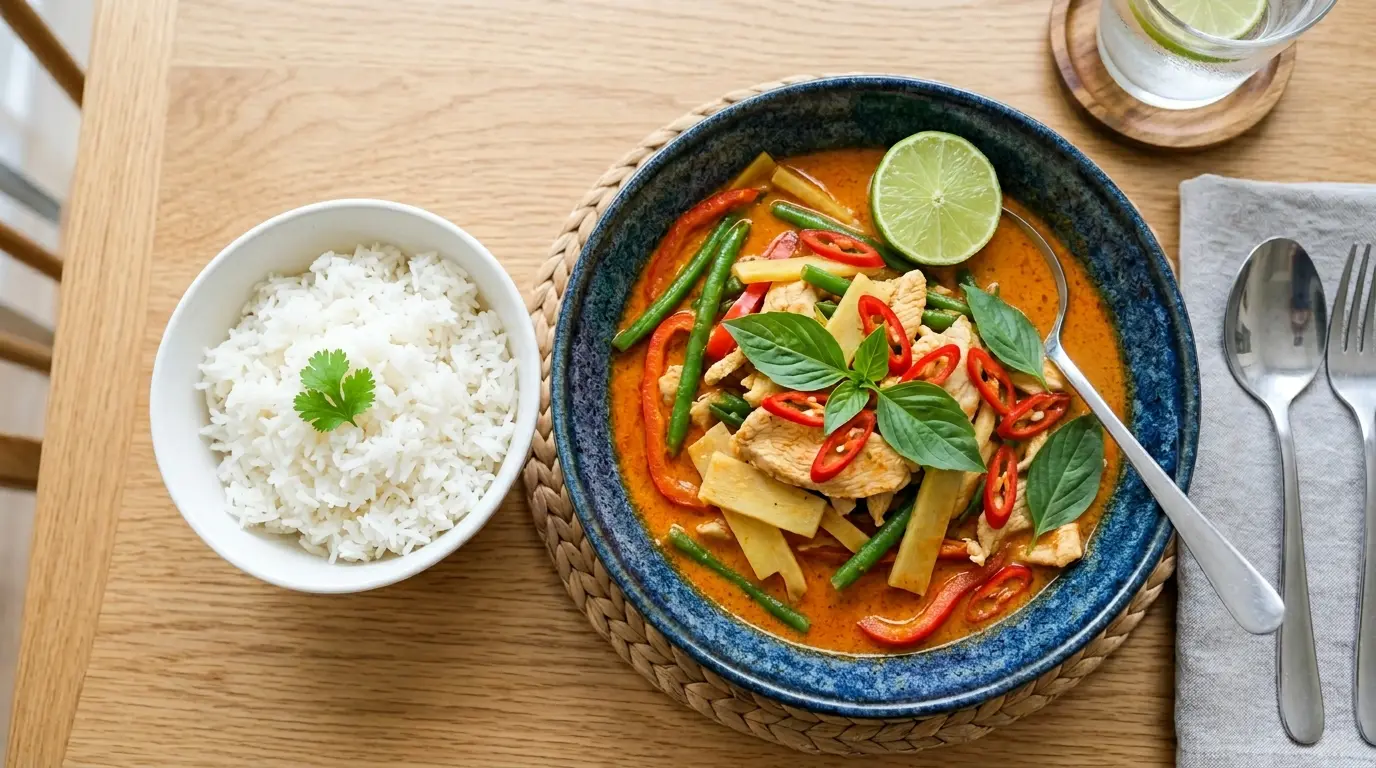
If you’ve ever craved that silky, coconut-laced Thai red curry chicken from your favorite restaurant but wondered if you could actually pull it off at home, the answer is a confident yes. This Thai red curry chicken recipe brings together tender chicken, vibrant vegetables, and a deeply aromatic red curry sauce that’s bold, creamy, and balanced with just the right amount of heat.
What makes this dish so satisfying is the interplay of flavors. The red curry paste carries complex heat from dried chilies, galangal, lemongrass, and garlic. The full-fat coconut milk softens that intensity into something luxuriously smooth. A splash of fish sauce adds salty umami depth, while a touch of sugar rounds everything out and keeps the curry from tipping too far in any one direction.
The best part? It comes together in a single pan in about 30 minutes, making it entirely doable on a weeknight.
You don’t need any hard-to-find specialty skills or complicated techniques to nail this one. The key is understanding a few core principles: bloom the curry paste in coconut milk before adding your chicken, avoid boiling the sauce too vigorously (or the coconut milk may split), and taste as you go to get the seasoning just right.
Whether you’re serving it over fluffy jasmine rice or with warm naan, this recipe delivers every single time.
For another fantastic coconut-based curry, try this Coconut Curry Chicken that uses a similar technique with a slightly milder flavor profile.

Why You’ll Love This Thai Red Curry Chicken Recipe
This is the kind of dish that earns a permanent spot in your weekly dinner rotation.
It’s faster than takeout but tastes just as good, if not better, because you control exactly what goes into the sauce.
The sauce itself is incredibly versatile. You can keep it classic with green beans and bell pepper, or load it up with whatever vegetables you have in your fridge.
It’s naturally gluten-free and dairy-free, so it works for a wide range of dietary needs without any special swaps.
Even picky eaters tend to love it because the coconut milk tempers the spice into something approachable and comforting.
Here’s a quick summary of why this recipe works so well:
- Restaurant-quality flavor at home using a quality store-bought red curry paste
- One-pan meal that minimizes cleanup
- Ready in 30 minutes from start to finish
- Easy to customize with any vegetables or protein you prefer
- Naturally gluten-free and dairy-free with no substitutions needed
- Excellent for meal prep since the flavors deepen overnight
For a similarly bold and aromatic curry dish that’s a crowd favorite, you might also love this Chicken Tikka Masala.
Ingredients
The ingredient list here is focused on what makes a great, accessible Thai red curry. Full-fat coconut milk is non-negotiable for the right texture; low-fat versions tend to make the sauce thin and less flavorful. Use a quality red curry paste like Maesri, Mae Ploy, or Maeploy for the most authentic taste, as these brands are widely available and pack significantly better flavor than generic grocery store options.
- 1.5 lbs (680g) boneless, skinless chicken thighs or breasts, sliced into thin strips
- 3-4 tablespoons Thai red curry paste (adjust to your heat preference)
- 2 cans (28 oz / 800ml total) full-fat coconut milk
- 1 cup (240ml) chicken broth, low-sodium
- 2 tablespoons fish sauce (or soy sauce for a fish-free option)
- 1 tablespoon palm sugar, light brown sugar, or granulated sugar
- 4 kaffir lime leaves, fresh or dried (optional but recommended)
- 1 stalk lemongrass, bruised and cut into 3-inch pieces (optional)
- 1 tablespoon coconut oil or vegetable oil
- 1 small onion, thinly sliced
- 4 cloves garlic, minced
- 1 tablespoon fresh ginger, minced
- 1 red bell pepper, thinly sliced
- 1 cup (100g) green beans, trimmed and cut into 2-inch pieces
- 1 cup (130g) bamboo shoots, drained and rinsed
- 1 cup (30g) fresh Thai basil leaves (regular basil works in a pinch)
- 2 tablespoons fresh lime juice
- Fresh cilantro and sliced red chilies, for garnish
- Jasmine rice, for serving
Read Also: Chicken Curry Recipe
Kitchen Equipment Needed
Having the right equipment really does make a difference here. A wide, heavy-bottomed pan (like a deep skillet or wok) gives you enough surface area to properly bloom the curry paste and evenly cook the chicken without overcrowding. A sharp knife speeds up your prep significantly, since most of the work in this recipe is in the slicing.
- Large deep skillet, wok, or Dutch oven (12-inch / 30cm recommended)
- Sharp chef’s knife and cutting board
- Measuring spoons and measuring cups
- Wooden spoon or silicone spatula for stirring
- Ladle for serving
- Citrus juicer or reamer
- Can opener
- Rice cooker or medium saucepan for the jasmine rice
Read Also: Chicken Pad Thai Recipe
Recommended Products for This Recipe
These are products that genuinely make a difference when cooking Thai red curry at home. Each one is selected based on quality, performance, and how much it improves the final dish.
1. Maesri Thai Red Curry Paste
This brand is widely considered the gold standard for store-bought Thai curry paste, offering a more complex, aromatic flavor than most mainstream options. It’s made with authentic ingredients including shrimp paste and dried red chilies for a genuinely bold result. Using a quality paste is the single biggest upgrade you can make to this recipe.
2. Full-Fat Coconut Milk (Aroy-D or Chaokoh Brand)
The quality of your coconut milk directly affects the richness of your curry sauce. Aroy-D and Chaokoh are two highly recommended brands used by Thai chefs because they have a higher fat content and creamier consistency compared to generic grocery store brands.
3. Wok (Carbon Steel, 14-Inch)
A carbon steel wok heats quickly and evenly, giving you the high heat needed to properly bloom the curry paste and develop deep, layered flavor in the sauce. It’s a versatile investment that works for everything from stir fries to soups.
4. Premium Fish Sauce (Tiparos or Megachef Brand)
Fish sauce is the backbone of seasoning in Thai cuisine, and a quality brand makes a noticeable difference in flavor. These premium brands are less pungent and more balanced than budget alternatives, giving the curry a savory depth without an overpowering fishy smell.
5. Kaffir Lime Leaves (Dried)
Kaffir lime leaves add a distinctive citrusy, floral note that is one of the most recognizable flavors in authentic Thai curries. Dried leaves work wonderfully in curries and can be stored in your pantry for months, giving you easy access to that signature Thai aroma whenever you need it.
You might also enjoy: Tom Yum Soup Recipe

Step-by-Step Instructions
1. Prep All Your Ingredients
- Slice the chicken thighs or breasts into thin strips, about 1/4 inch (0.6cm) thick. Thinner slices cook through quickly and evenly without drying out, so take your time here.
- Thinly slice the onion into half-moons.
- Mince the garlic and ginger finely so they cook through without leaving large, harsh chunks in the sauce.
- Slice the red bell pepper into thin strips.
- Trim the green beans and cut them into 2-inch (5cm) pieces.
- Open and drain the bamboo shoots through a colander, then rinse under warm water to remove any tinned smell.
- If using lemongrass, peel off the tough outer layers and bruise the stalk with the flat side of your knife to release the oils. Cut into 3-inch (7.5cm) pieces.
- Measure out the fish sauce, sugar, and lime juice so they’re ready to go. Thai cooking moves fast once it starts, so having everything prepped (what chefs call mise en place) is key to success.
2. Bloom the Curry Paste
- Heat a large deep skillet, wok, or Dutch oven over medium-high heat.
- Add 1 tablespoon of coconut oil or vegetable oil and let it heat until shimmering.
- Add the sliced onion to the pan and cook for 2-3 minutes, stirring occasionally, until softened and translucent.
- Add the minced garlic and minced ginger to the pan. Stir and cook for 1 minute until fragrant. Keep stirring so neither the garlic nor the ginger burns.
- Add the red curry paste directly to the pan. Stir it into the oil and aromatics and cook for 2 minutes, pressing and breaking up the paste against the hot pan. This step is crucial: cooking the paste in the oil “blooms” its aromatics and deepens the flavor dramatically. The paste should darken slightly and become very fragrant.
3. Build the Coconut Curry Base
- Pour in about half a can (roughly 7 oz / 200ml) of the coconut milk first. Stir it into the curry paste, scraping up any bits from the bottom of the pan.
- Add the lemongrass pieces (if using) and kaffir lime leaves (if using) to the pan. These will infuse the base with authentic Thai fragrance.
- Let this mixture cook over medium-high heat, stirring frequently, until the coconut milk reduces slightly and the mixture thickens, about 2-3 minutes. You may see the coconut oil beginning to separate and float on the surface; this is a sign the paste has fully bloomed and the flavor is well developed.
- Pour in the remaining coconut milk and the chicken broth, stirring everything together until smooth and combined.
4. Add the Chicken and Simmer
- Add the sliced chicken strips to the pan, spreading them out so they’re mostly submerged in the curry sauce.
- Reduce the heat to medium so the sauce is at a gentle simmer. Avoid letting the curry come to a hard boil, as vigorous boiling can cause the coconut milk to break and give the sauce a grainy, separated appearance.
- Stir in the fish sauce and palm sugar (or brown sugar) now.
- Simmer the chicken for 7-8 minutes, stirring occasionally, until the chicken is cooked through. The internal temperature should reach 165°F (74°C). The strips should be opaque all the way through with no pink remaining.
5. Add the Vegetables
- Once the chicken is cooked, add the sliced red bell pepper, green beans, and bamboo shoots to the pan.
- Stir everything together to combine and increase the heat slightly to bring the sauce back to a gentle simmer.
- Cook for another 4-5 minutes until the green beans are tender but still have a slight bite (you don’t want them mushy). The bell pepper should be softened but still retain some color and structure.
6. Season and Finish
- Squeeze the fresh lime juice into the curry and stir to combine. Taste the sauce. This is your moment to adjust the balance: add more fish sauce for saltiness and depth, more sugar if it tastes too sharp or spicy, or more lime juice if it needs brightness.
- Remove the lemongrass pieces and kaffir lime leaves from the pan (these are for flavor infusion only and are not meant to be eaten).
- Turn off the heat and stir in the fresh Thai basil leaves. Gently fold them into the curry until they just wilt from the residual heat. Adding the basil off the heat preserves its fresh, anise-like fragrance that’s so essential to the finished dish.
7. Serve and Garnish
- Ladle the Thai red curry chicken over individual bowls of freshly cooked jasmine rice.
- Garnish each bowl with a few fresh cilantro sprigs and, for those who like extra heat, a few slices of fresh red chili on top.
- Serve immediately while hot, with extra lime wedges on the side for squeezing over at the table.
This recipe also pairs beautifully with a bowl of Easy Fried Rice as an alternative to plain jasmine rice.
Tips for Success
Getting a great Thai red curry is mostly about understanding a few key principles that make all the difference between a flat, disappointing result and a rich, restaurant-quality dish. Here are the most important things to keep in mind:
- Always use full-fat coconut milk. Low-fat versions produce a thin, watery sauce that doesn’t have the richness or body to carry the flavors properly.
- Bloom the curry paste properly. Don’t rush this step. Cooking the paste in hot oil before adding liquid is what develops complexity and depth. Two full minutes is the minimum.
- Taste and balance as you cook. Thai cooking is all about the balance of sweet, salty, sour, and spicy. Trust your palate and adjust with fish sauce, sugar, and lime juice until it tastes just right to you.
- Keep the simmer gentle. A rolling boil will cause the coconut milk to split and the sauce to look curdled. Keep it at a calm simmer once the coconut milk is in.
- Don’t overcook the chicken. Thin strips of chicken thigh or breast cook very quickly. Pull it off the heat as soon as it’s cooked through to keep it tender and juicy.
- Add basil off the heat. Stirring the Thai basil in after turning off the burner preserves its fragrance and keeps it from turning black and bitter.
- Choose a good curry paste brand. The paste is the heart of the dish. Maesri, Mae Ploy, or Maeploy consistently deliver the best flavor from store-bought options.
Another favorite Asian chicken dish that uses similar pantry staples: Chicken Stir Fry
Serving Suggestions
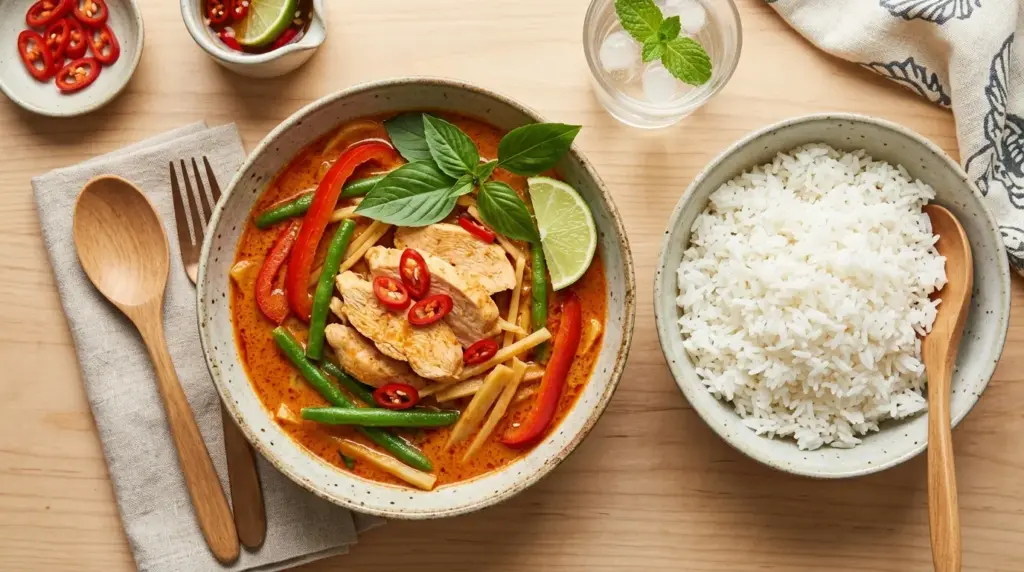
Thai red curry chicken is most traditionally served over steamed jasmine rice, which soaks up the rich coconut curry sauce beautifully and provides a neutral base that lets all those bold flavors shine.
Beyond rice, there are plenty of ways to round out the meal or change things up depending on what you’re in the mood for:
- Jasmine rice is the classic pairing and the most common way to serve this in Thailand
- Cilantro Lime Rice adds a bright, zesty contrast to the rich curry sauce
- Garlic Naan Bread is wonderful for scooping up the sauce
- Basmati Rice works great if you prefer its drier, more separated texture
- Bok Choy stir-fried on the side adds a fresh, lightly bitter counterpoint
- Chicken Fried Rice served alongside makes a heartier, more filling spread
- Fresh cucumber slices or a simple cucumber salad to cool down the palate between bites
- Lime wedges on the side for squeezing over the bowl at the table
Read Also: Easy Pad Thai Recipe
Variations to Try
One of the best things about Thai red curry is how endlessly adaptable it is. Once you understand the base technique, you can swap proteins, vegetables, and even heat levels to suit whatever you have on hand or whoever you’re cooking for.
- Green curry version: Swap the red curry paste for green curry paste. Green curry has a brighter, more herbaceous flavor and tends to be spicier than red.
- Shrimp red curry: Replace the chicken with large peeled shrimp. Shrimp only needs about 3-4 minutes to cook, so add it near the end of cooking.
- Tofu and vegetable red curry: Use firm tofu (pressed and cubed) in place of chicken for a fully vegan version. Extra vegetables like zucchini, sweet potato, or eggplant work beautifully.
- Extra vegetables: Kabocha squash, Thai eggplant, pineapple chunks, snap peas, or spinach all work wonderfully stirred into the curry base.
- Creamier version: Add an extra half can of coconut cream (not coconut milk) at the end for an even richer, thicker sauce.
- Extra spicy: Add 1-2 finely sliced fresh red Thai chilies to the pan along with the curry paste for a serious heat boost.
- Massaman-style: Add 2 tablespoons of peanut butter to the sauce along with a few whole spices (star anise, cinnamon stick) for a richer, nuttier variation closer to massaman curry.
You might also love this boldly spiced Chicken Vindaloo Recipe if you enjoy a really fiery, deeply layered curry.
Storage and Reheating
Thai red curry is a fantastic make-ahead meal because the flavors deepen and meld beautifully as it sits in the fridge. It stores well and reheats like a dream, making it ideal for meal prep or next-day lunches.
Here’s how to store and reheat it:
- Refrigerator: Transfer the cooled curry to an airtight container and refrigerate for up to 4 days. Store the rice separately to prevent it from absorbing too much sauce.
- Freezer: Freeze the curry (without rice) in airtight containers or freezer bags for up to 3 months. The coconut milk may look slightly separated after freezing, but a thorough stir while reheating will bring the sauce back together.
- Reheating on the stovetop: Transfer the curry to a saucepan over medium-low heat. Add a splash of water or chicken broth if the sauce has thickened too much. Stir gently and heat until just simmering.
- Reheating in the microwave: Place in a microwave-safe bowl, cover loosely, and heat in 90-second increments, stirring between each, until evenly heated through.
- Thaw frozen curry overnight in the refrigerator before reheating for the best texture and flavor.
Read Also: Chicken Korma Recipe
Nutritional Facts
The values below are per serving, based on the recipe divided into 4 portions, served with approximately 1 cup (190g) of cooked jasmine rice. Values are estimates and may vary based on exact ingredients and brand choices.
| Nutrient | Per Serving (with rice) |
|---|---|
| Calories | ~580 kcal |
| Protein | ~35g |
| Total Fat | ~28g |
| Saturated Fat | ~18g |
| Carbohydrates | ~48g |
| Fiber | ~4g |
| Sugar | ~6g |
| Sodium | ~820mg |
Note: Using chicken breast instead of thigh reduces the fat content by approximately 5-7g per serving. Reducing the amount of coconut milk and substituting light coconut milk will also lower calories and fat, though it will affect the creaminess of the sauce.
Another richly flavored dish worth exploring: Authentic Butter Chicken Recipe
Health Benefits of Key Ingredients
Despite its indulgent flavor, Thai red curry packs a surprising amount of nutritional value thanks to its key ingredients.
Here’s a closer look at what makes this dish genuinely good for you:
- Coconut milk contains medium-chain triglycerides (MCTs), a type of fat that the body processes differently from other fats. MCTs are rapidly absorbed and may support energy levels and metabolic health.
- Chicken is an excellent source of lean protein, supporting muscle maintenance, tissue repair, and satiety. Chicken thighs also provide iron and zinc.
- Ginger and garlic are well-documented for their anti-inflammatory and immune-supporting properties. Ginger in particular is commonly used to support digestion.
- Red bell pepper is exceptionally rich in vitamin C, providing over 150% of the recommended daily intake per cup, along with antioxidants that support immune function and skin health.
- Thai basil contains essential oils like eugenol and linalool, which have antioxidant and anti-inflammatory properties.
- Lemongrass (when used) contains compounds with known antimicrobial and antioxidant properties and has long been used in traditional Thai herbal medicine.
- Fish sauce adds sodium but also delivers iodine and trace minerals essential for thyroid health.
- Lime juice provides a dose of vitamin C and helps the body absorb iron from plant-based ingredients in the dish.
Read Also: Chicken Biryani Recipe
Frequently Asked Questions
1. What is the difference between Thai red curry and green curry?
Red curry is made from dried red chilies and tends to have a deeper, slightly earthier flavor with moderate to high heat. Green curry is made from fresh green chilies and has a brighter, more herbal, and often spicier character. Red curry is generally considered more versatile and is a great starting point for anyone new to Thai curries. Both use coconut milk as the base and share many of the same aromatics like lemongrass, galangal, and kaffir lime leaves.
2. Can I make this recipe less spicy?
Absolutely. Start with just 2 tablespoons of red curry paste instead of 3-4, and taste the sauce before adding more. The coconut milk naturally tempers the heat, so the finished dish will be milder than the paste on its own suggests. You can also stir in an extra splash of coconut milk at the end to cool down any residual spiciness.
3. Can I use chicken breast instead of chicken thighs?
Yes, chicken breast works well in this recipe because the curry sauce keeps it moist and the cooking time is short. Just be careful not to overcook it, as breast meat can dry out more quickly than thighs. Slice it thin and watch the simmering time carefully, pulling the pan off heat as soon as the chicken is cooked through.
4. What can I use instead of fish sauce?
Soy sauce or tamari (for a gluten-free option) are the most straightforward substitutes for fish sauce. Use them in a 1:1 ratio. You’ll lose a bit of the funky, briny depth that fish sauce provides, but the curry will still taste wonderful. Coconut aminos is another option with a slightly sweeter, milder flavor.
5. Can I make this curry ahead of time?
Thai red curry is an ideal make-ahead dish. In fact, many people find it tastes even better the next day as the flavors have more time to develop and meld. Make the full recipe up through Step 6, cool it completely, and store in an airtight container in the refrigerator. Reheat gently on the stovetop over medium-low heat, adding a splash of broth or water if needed to loosen the sauce. Hold off on stirring in the fresh basil until just before serving so it stays vibrant.
For another easy, flavor-packed weeknight dinner, try this Chicken Lo Mein Recipe.

Thai Red Curry Chicken

Equipment
- Large deep skillet, wok, or Dutch oven - 12-inch / 30cm recommended
- Sharp chef's knife
- Cutting board
- Measuring spoons
- Measuring cups
- Wooden spoon or silicone spatula
- Ladle
- Citrus juicer or reamer
- Can opener
- Rice cooker or medium saucepan - for the jasmine rice
Ingredients
- 1.5 lbs boneless, skinless chicken thighs or breasts - 680g, sliced into thin strips
- 3-4 tablespoons Thai red curry paste - adjust to your heat preference
- 2 cans full-fat coconut milk - 28 oz / 800ml total
- 1 cup chicken broth - 240ml, low-sodium
- 2 tablespoons fish sauce - or soy sauce for a fish-free option
- 1 tablespoon palm sugar - or light brown sugar, granulated sugar
- 4 kaffir lime leaves - fresh or dried, optional but recommended
- 1 stalk lemongrass - bruised and cut into 3-inch pieces, optional
- 1 tablespoon coconut oil - or vegetable oil
- 1 small onion - thinly sliced
- 4 cloves garlic - minced
- 1 tablespoon fresh ginger - minced
- 1 red bell pepper - thinly sliced
- 1 cup green beans - 100g, trimmed and cut into 2-inch pieces
- 1 cup bamboo shoots - 130g, drained and rinsed
- 1 cup fresh Thai basil leaves - 30g, regular basil works in a pinch
- 2 tablespoons fresh lime juice
- fresh cilantro - for garnish
- sliced red chilies - for garnish
- jasmine rice - for serving
For Serving
- Lime wedges - for squeezing over the bowl at the table
Instructions
- Prep all ingredients: slice chicken, onion, bell pepper, mince garlic and ginger, trim green beans, and drain bamboo shoots.
- Heat oil in a large skillet over medium-high heat. Cook onion until softened, then add garlic and ginger and cook until fragrant.
- Add the red curry paste and cook for 2 minutes, stirring constantly to bloom the paste and release its fragrance.
- Pour in half a can of coconut milk, add lemongrass and lime leaves, and cook until the mixture thickens and oil separates slightly.
- Add remaining coconut milk and chicken broth, stir until smooth, then add chicken strips and simmer gently for 7-8 minutes until cooked through.
- Stir in fish sauce and sugar, then add bell pepper, green beans, and bamboo shoots. Simmer for 4-5 minutes until vegetables are tender-crisp.
- Add lime juice, taste and adjust seasoning. Remove lemongrass and lime leaves, then stir in Thai basil until wilted.
- Serve over jasmine rice and garnish with cilantro and sliced red chilies. Add lime wedges on the side.
Notes
- Full-fat coconut milk is essential: Low-fat versions produce a thin, watery sauce that lacks richness and body.
- Don’t rush blooming the curry paste: Cooking the paste in hot oil before adding liquid develops complexity and depth. Two full minutes is the minimum.
- Keep the simmer gentle: A rolling boil will cause the coconut milk to split and the sauce to look curdled. Maintain a calm simmer once the coconut milk is in.
- Adjust heat to your preference: Start with 2 tablespoons of curry paste for a milder dish and add more to taste. You can also stir in extra coconut milk at the end to cool it down.
- Add basil off the heat: Stirring the Thai basil in after turning off the burner preserves its fragrance and keeps it from turning black and bitter.
- Choose a quality curry paste brand: Maesri, Mae Ploy, or Maeploy consistently deliver the best flavor from store-bought options.
- Make it ahead: This curry tastes even better the next day as flavors deepen. Store in the refrigerator for up to 4 days. Reheat gently on the stovetop with a splash of broth if needed.
- Freezer-friendly: Freeze the curry (without rice) for up to 3 months. The coconut milk may separate but a thorough stir while reheating brings it back together.
- Substitute proteins easily: Try shrimp (cook 3-4 minutes), firm tofu (add with vegetables), or extra vegetables like sweet potato, eggplant, or zucchini.
- Make it vegan: Use firm tofu instead of chicken and soy sauce instead of fish sauce. The curry remains rich and satisfying.
Final Thoughts
This Thai red curry chicken recipe is proof that truly exceptional food doesn’t have to be complicated.
With a handful of pantry staples, one good pan, and about 30 minutes, you can put a deeply flavorful, restaurant-worthy meal on the table that’ll make everyone ask for seconds.
The rich coconut curry sauce, tender chicken, and vibrant vegetables come together in a dish that’s comforting without being heavy, bold without being overwhelming, and endlessly satisfying.
Give it a try tonight, and don’t forget to come back and leave a comment below letting me know how it turned out. I’d love to hear what vegetables you added or how you made it your own!
Recommended:
- Jamaican Curry Chicken
- Chicken Teriyaki Recipe
- Chicken Saag Recipe
- Palak Paneer Recipe
- Mulligatawny Soup Recipe
- Mango Chutney Recipe
- Peanut Sauce Recipe
- Easy Butter Chicken Recipe
- Chicken Fajita Recipe
- Stir Fry Sauce Recipe