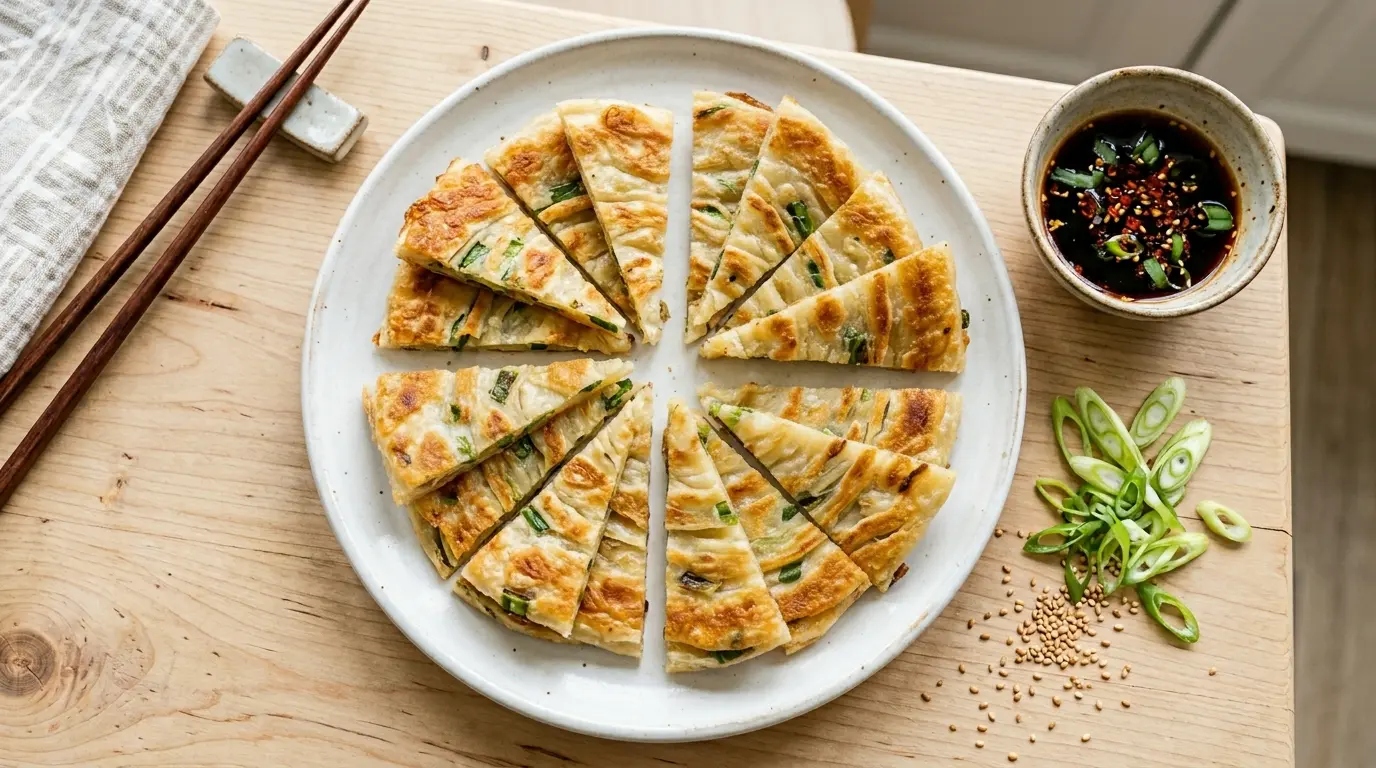
If you’ve ever walked past a street food stall in China and caught that unmistakable aroma of sizzling green onions and hot oil, you already know exactly what a scallion pancake recipe promises. Known as Cong You Bing (葱油饼), these savory flatbreads are one of China’s most beloved street foods, and for good reason. They’re made from a simple unleavened dough, layered with sesame oil and a generous amount of freshly chopped scallions, then pan-fried until the outside is golden and shatteringly crisp while the inside stays soft and pleasantly chewy.
What sets them apart from Western pancakes is the technique. Rather than pouring batter onto a griddle, you’re working with an actual dough, rolled thin, coiled, and flattened to create distinct flaky layers. It sounds like a project, but once you’ve made them a couple of times, the process becomes genuinely fun.
This recipe walks you through the classic, most popular version, the kind you’d find at a street stall in Shanghai or in your favorite Chinese restaurant. The ingredient list is short, the technique is accessible, and the results are deeply satisfying.
If you love making flatbreads at home, you might also enjoy this Easy Crepe Recipe.

Why You’ll Love This Scallion Pancake Recipe
Few recipes reward you so generously for so little effort. The ingredients are inexpensive and easy to find, and the dough comes together in under 10 minutes.
The texture combination is genuinely hard to beat: crispy on the outside, chewy in the middle, with tender layers of scallion-infused dough sandwiched in between. It’s a textural experience that’s completely different from anything you’d make with a Western batter.
They’re also incredibly versatile. Scallion pancakes work as a snack, a side dish, a party appetizer, or a satisfying light meal alongside a bowl of soup.
You don’t need any specialty equipment or hard-to-find ingredients. All-purpose flour, water, sesame oil, and scallions are all it takes.
Making them from scratch is also significantly better than frozen store-bought versions, which tend to be thicker and less flavorful than the homemade kind.
For another satisfying Asian-inspired flatbread idea to serve alongside dinner, check out this Garlic Naan Bread Recipe.
Ingredients
The ingredient list for scallion pancakes is refreshingly short, but each one plays a specific role in building that signature crispy, flaky texture. The combination of boiling and cold water is key: hot water partially gelatinizes the starches, creating a softer, more extensible dough, while the cold water adds elasticity and chew. Sesame oil in the filling layers adds that distinctive nutty aroma that makes these pancakes so addictive.
- 2 cups (240g) all-purpose flour, plus extra for dusting
- 1/2 tsp salt, divided
- 1/2 cup (120ml) boiling water
- 1/4 cup (60ml) cold water, plus a little more if needed
- 3 tbsp (45ml) toasted sesame oil, divided
- 1 tbsp (15ml) neutral vegetable oil, for the dough
- 1 bunch scallions (about 1 cup / 100g thinly sliced), green parts only or a mix of green and light green
- Vegetable oil or peanut oil for pan-frying (about 2 tbsp per pancake)
For the dipping sauce (optional but highly recommended):
- 3 tbsp soy sauce
- 1 tbsp rice vinegar
- 1 tsp sesame oil
- 1/2 tsp sugar
- 1/2 tsp chili flakes or fresh minced chili (optional)
- 1 small garlic clove, minced (optional)
Looking for more ways to use your pantry sauces? Try this Hoisin Sauce Recipe for another fantastic Asian condiment to keep on hand.
Kitchen Equipment Needed
You don’t need a lot of special equipment to make scallion pancakes, but having the right tools makes the process smoother and helps you achieve those crispy, golden results. A well-seasoned or nonstick pan is arguably the most important piece of equipment here, as it lets you fry with a thin layer of oil and get even browning without anything sticking.
- Large mixing bowl
- Measuring cups and spoons
- Kitchen scale (recommended for accuracy)
- Rolling pin
- Nonstick or cast iron skillet (10-12 inch / 25-30cm)
- Sharp knife or bench scraper
- Pastry brush or the back of a spoon (for spreading oil)
- Plastic wrap or a clean kitchen towel (for resting dough)
- Baking sheet (for keeping cooked pancakes warm in the oven)
Read Also: Easy Fried Rice Recipe
Recommended Products for This Recipe
These are a few products worth having in your kitchen if you plan to make scallion pancakes regularly. They’re chosen for their quality and how meaningfully they improve the cooking experience.
1. Kadoya Pure Sesame Oil
The sesame oil you use makes a real difference in flavor. Kadoya is one of the most trusted brands for authentic toasted sesame oil, with a rich, nutty aroma that elevates the pancake filling. A low-quality sesame oil will taste flat by comparison.
2. Lodge Cast Iron Skillet
A 10-inch cast iron skillet holds heat beautifully and creates an evenly golden crust without hot spots. It’s also extremely durable and will last for decades with minimal care. If you make pan-fried dishes often, this is one of the best investments your kitchen can have.
3. OXO Good Grips Bench Scraper
A bench scraper makes dividing the dough and keeping your work surface clean so much easier. It also helps you lift and reposition the thin pancake rounds without tearing them. Once you start using one, you’ll find yourself reaching for it constantly.
4. Digital Kitchen Scale
Measuring flour by weight produces far more consistent dough than measuring by volume. A compact digital scale takes up minimal space and is genuinely one of the most useful tools for baking and cooking from recipes. It’s particularly helpful for this recipe if you want to divide the dough evenly into portions.
You might also enjoy: Pork Chop Stir Fry Recipe

Step-by-Step Instructions
1. Make the Dough
- Place the all-purpose flour and 1/4 tsp of the salt in a large mixing bowl and stir briefly to combine.
- Pour the boiling water slowly into the flour in a thin, steady stream while stirring continuously with a pair of chopsticks or a fork. The mixture will look shaggy and uneven at this stage, which is completely normal.
- Add the cold water and the 1 tbsp vegetable oil to the bowl. Continue mixing until no dry flour patches remain and the dough starts to come together into a rough ball.
- Turn the dough out onto a lightly floured surface. Knead it by pressing the heel of your hand forward, folding the dough back, and rotating it slightly with each push. Continue kneading for 3 to 5 minutes until the dough is smooth, soft, and slightly tacky but not sticky. If the dough feels stiff, add cold water a teaspoon at a time.
- Shape the dough into a smooth ball, place it back in the bowl, and cover tightly with plastic wrap or a clean damp kitchen towel. Let it rest at room temperature for at least 30 minutes. This rest is essential: it relaxes the gluten, making the dough much easier to roll out without it springing back.
2. Prepare the Filling and Dipping Sauce
- While the dough rests, prepare the scallion filling. Trim the root ends and the darkest tips of the scallion tops. Slice the scallions thinly into rounds. You want primarily the green parts, though a little of the light green portion is fine. Set aside.
- Prepare the dipping sauce by combining the soy sauce, rice vinegar, sesame oil, and sugar in a small bowl. Stir until the sugar dissolves. Add chili flakes and minced garlic if using. Taste and adjust the balance of salt, acid, and heat to your preference. Set aside until serving.
3. Divide and Roll the Dough
- Lightly flour your work surface. Uncover the rested dough and divide it into 4 equal portions using a knife or bench scraper. Each piece should weigh approximately 90-95g (about 3.2 oz) if you’re using a scale.
- Take one portion and keep the others covered so they don’t dry out. Using a rolling pin, roll the dough portion into a thin rectangle roughly 20cm x 25cm (8 x 10 inches). The dough should be thin enough that you can see your hand shadow through it if you hold it up to light, but not so thin it tears easily.
- If the dough springs back when you roll it, let it rest for an additional 5 minutes before trying again. This is the gluten relaxing.
4. Layer with Oil and Scallions
- Using a pastry brush or the back of a spoon, spread approximately 1.5 to 2 tsp of toasted sesame oil evenly across the entire surface of the rolled dough rectangle, all the way to the edges.
- Sprinkle a generous pinch of salt (about 1/8 tsp per pancake) evenly over the oiled surface.
- Scatter about 1/4 of the sliced scallions evenly over the dough, leaving a small half-inch border along one of the short edges clear of scallions to help seal the roll.
5. Roll, Coil, and Flatten
- Starting from the long edge nearest to you, begin rolling the dough away from you into a tight log or cylinder, stretching it gently outward as you go. This gentle outward stretch creates additional layers and tension in the dough, which helps produce flakiness.
- Once you have a long rope of rolled dough, stretch it gently from both ends to lengthen it slightly. This creates even more layers.
- Starting from one end, coil the rope around itself in a tight spiral (like a snail shell), tucking the outer end underneath the coil to seal it.
- Gently press the coil down with the palm of your hand to flatten it into a rough disc. Then use a rolling pin to roll it out into a flat round pancake approximately 15-18cm (6-7 inches) in diameter and about 5mm (1/5 inch) thick. Don’t press too hard or roll too aggressively, as you want to preserve some of the layering you just created.
- Place the finished pancake round on a lightly floured surface or parchment-lined baking sheet and cover loosely. Repeat with the remaining dough portions.
6. Pan-Fry the Scallion Pancakes
- Preheat your oven to 95°C (200°F) and place an empty baking sheet inside. This will keep your finished pancakes warm as you cook the remaining ones.
- Heat your skillet over medium heat for about 2 minutes. Add approximately 2 tbsp of vegetable or peanut oil and swirl to coat the bottom. The oil should shimmer but not smoke.
- Carefully lay one pancake flat into the skillet. You’ll hear a satisfying sizzle as it makes contact with the oil. Use a spatula to gently swirl the pancake around the pan for the first few seconds to prevent it from sticking and to ensure the oil coats the underside evenly.
- Cover the pan and reduce heat slightly to medium-low. Cook for about 2 to 3 minutes until the underside is deep golden brown. Check by gently lifting an edge with a spatula.
- Flip the pancake using a wide spatula. Cover the pan again and cook the second side for another 2 to 3 minutes until equally golden.
- Remove the lid for the last minute of cooking on each side if you want maximum crispiness. Use a spatula to gently press the pancake flat for even contact with the pan.
- Once both sides are deeply golden and the edges look crisp, transfer the pancake to the warm baking sheet in the oven while you cook the remaining three.
- Repeat with the remaining pancakes, adding more oil to the pan as needed between batches.
7. Slice and Serve
- Remove the pancakes from the oven one at a time as you’re ready to serve them. For the best presentation, place the pancake on a cutting board and use a sharp knife or pizza cutter to slice it into 6 wedges.
- Serve immediately alongside the dipping sauce. If you bend the pancake slightly just before or as you slice it, it helps the layers separate and fluff up beautifully.
Read Also: Chicken Stir Fry Recipe
Tips for Success
Getting scallion pancakes right is mostly about a few key details: the dough hydration, the resting time, and the frying temperature. Pay attention to these and you’ll get crispy, flaky results every time.
- Don’t skip the rest. Allowing the dough to rest for at least 30 minutes (ideally longer) is the single most important step. Under-rested dough is springy and difficult to roll thin without tearing.
- Use boiling water. Many people make the mistake of using warm or room-temperature water only. The boiling water softens the dough and creates a more pliable, easy-to-roll texture.
- Roll the dough thin. Thick pancakes cook unevenly and can taste doughy in the center. Aim for transparent thinness when rolling the rectangle.
- Don’t crowd the pan. Cook one pancake at a time so the pan temperature stays consistent and you get even browning.
- Cover the pan while frying. The lid traps steam, which helps cook the dough through without burning the outside. Remove the lid toward the end if you want an extra crisp surface.
- Medium heat is ideal. Too high and the outside burns before the inside is cooked through. Too low and the pancakes absorb too much oil and taste greasy rather than crispy.
- Use enough oil. A thin but full coating of oil on the pan bottom is necessary for achieving an evenly golden crust. Don’t be shy with it.
Another favorite: Easy Pad Thai Recipe
Serving Suggestions
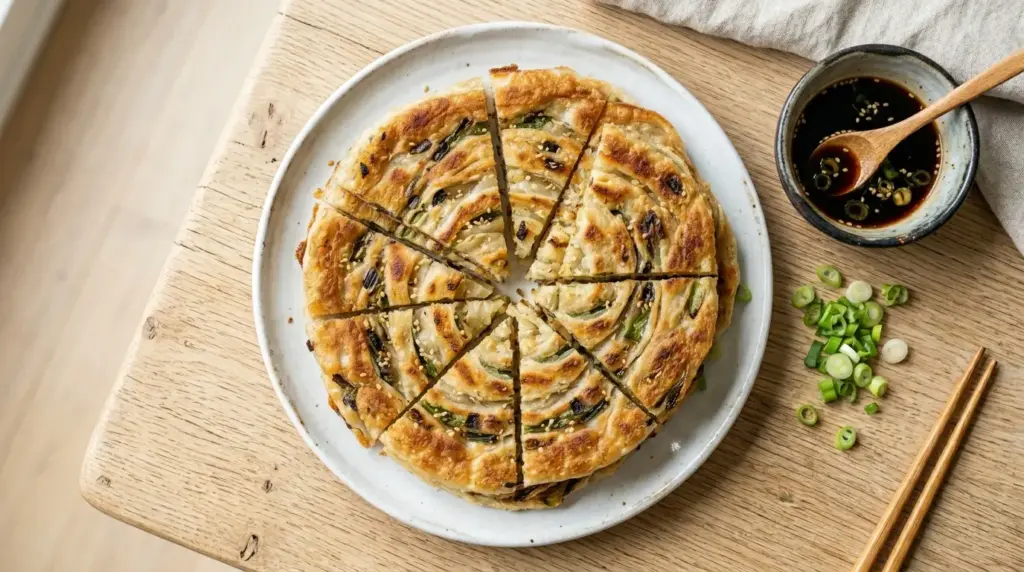
Scallion pancakes are incredibly versatile and work well both as a standalone snack and as part of a larger spread. Their savory, layered character makes them a natural pairing for soups, brothy noodle dishes, and stir-fries of all kinds.
They’re also very popular as part of a Chinese-style breakfast alongside warm soy milk or a bowl of Congee, which is a deeply comforting pairing.
Here are some of the best ways to serve them:
- With a simple soy-vinegar-sesame dipping sauce, as written in this recipe.
- As a side dish alongside a bowl of Tom Yum Soup, Hot and Sour Soup, or Miso Soup.
- Served alongside Chinese Dumplings as an appetizer course.
- Cut into wedges and served as a party appetizer with several dipping sauces.
- Alongside a simple stir-fry for a satisfying weeknight dinner.
- As a snack at any time of day, eaten warm and slightly crispy, straight from the pan.
Variations to Try
The classic version of this recipe is wonderful as written, but scallion pancakes are also a great foundation for experimenting with different flavors and add-ins. Once you’re comfortable with the basic shaping technique, these variations are easy to incorporate.
- Five-Spice Scallion Pancakes: Add 1/4 tsp of Chinese five-spice powder to the sesame oil layer before scattering the scallions. It adds a warm, slightly sweet aromatic note that complements the oniony filling perfectly.
- Sesame Seed Pancakes: Brush the outside of each shaped disc with a thin layer of sesame oil and press a generous pinch of white sesame seeds into both sides before pan-frying. The seeds toast as the pancake cooks and add incredible crunch.
- Spicy Scallion Pancakes: Add a light sprinkle of dried chili flakes or Korean gochugaru to each pancake layer along with the scallions for gentle heat throughout.
- Scallion and Ginger Pancakes: Grate a small amount of fresh ginger (about 1/2 tsp per pancake) and mix it into the chopped scallions before filling. The ginger adds a bright, warming note.
- Thicker, Fluffier Version: For a pancake that’s less crispy but softer and more bread-like, make each round slightly thicker (about 1 cm) and use a lid throughout the entire cooking time, which allows the center to steam through fully.
You might also enjoy: Skillet Chicken Bulgogi Recipe
Storage and Reheating
Scallion pancakes taste best immediately after frying, but they store and reheat quite well, making them great for meal prepping or making ahead before a gathering.
- Refrigerating cooked pancakes: Allow the pancakes to cool completely, then stack them with a sheet of parchment paper between each one and store in an airtight container or zip-top bag in the refrigerator for up to 3 days.
- Freezing cooked pancakes: Cooked pancakes can be frozen the same way, stacked with parchment between them, for up to 2 months.
- Freezing raw shaped pancakes: This is the best method for longer storage. Place the shaped, uncooked pancake rounds on a parchment-lined baking sheet and freeze until solid, then transfer to a freezer bag. Cook directly from frozen, adding 1 to 2 extra minutes per side.
- Reheating: The best way to reheat a cooked pancake is in a dry skillet or one with just a few drops of oil over medium heat for about 1 to 2 minutes per side, until it crisps back up. A toaster oven works well too. Avoid microwaving if you can, as it makes the pancake soft and slightly gummy.
Read Also: Chicken Fried Rice Recipe
Nutritional Facts
The following values are approximate and calculated per pancake (1 of 4 pancakes) including pan-frying oil. Values will vary slightly depending on the exact amount of oil used during frying.
| Nutrient | Amount per Serving |
|---|---|
| Calories | ~310 kcal |
| Total Fat | 14g |
| Saturated Fat | 2g |
| Carbohydrates | 40g |
| Fiber | 2g |
| Protein | 6g |
| Sodium | 310mg |
| Vitamin C | 4mg |
| Iron | 2.5mg |
These pancakes are naturally vegan when made with vegetable oil, and are dairy-free and egg-free. The dipping sauce adds minimal additional calories.
This Bibimbap Recipe is another nutritious and well-balanced Korean-inspired meal to explore.
Health Benefits of Key Ingredients
While scallion pancakes are certainly a treat, the core ingredients do carry some genuine nutritional value. Eating them as part of a balanced diet gives you more than just great flavor.
The key ingredients in this recipe offer a number of worthwhile health benefits:
- Scallions (Green Onions): Scallions are a solid source of vitamin K, which plays a critical role in bone health and blood clotting. They also contain quercetin, an antioxidant associated with anti-inflammatory effects, and have been used in traditional Chinese medicine for centuries as a warming, digestion-supporting food.
- Sesame Oil: Toasted sesame oil contains sesamol and sesamin, antioxidant compounds that have been studied for their potential to support heart health and reduce oxidative stress. It also provides a small amount of polyunsaturated and monounsaturated fats, which are the more favorable types of dietary fat.
- All-Purpose Flour: Flour provides carbohydrates, which are your body’s primary source of energy. While all-purpose flour is not a whole grain, it does supply a modest amount of iron and some B vitamins, particularly when enriched.
- Vegetable Oil: When used in moderation for frying, vegetable oil contributes unsaturated fats to the dish. It’s a source of vitamin E, a fat-soluble antioxidant that supports skin health and immune function.
For more Asian-inspired dishes that combine nutrition and flavor, this Chicken Lo Mein Recipe is a great option to explore.
Frequently Asked Questions
1. Why are my scallion pancakes tough or rubbery instead of flaky?
The most common cause of tough or rubbery pancakes is under-rested dough. The gluten needs time to relax before the dough will roll thin without snapping back. Make sure you rest the dough for at least 30 minutes, and if it still springs back when rolling, cover it and wait another 10 minutes before continuing. Over-kneading the dough can also contribute to toughness, so aim for a smooth dough without overworking it.
2. Can I make the dough ahead of time?
Yes, absolutely. You can make the dough up to 24 hours in advance and store it in the refrigerator, tightly wrapped in plastic wrap. Allow it to come back to room temperature for about 30 minutes before rolling, as cold dough is much harder to work with and will resist rolling out thin.
3. What oil is best for frying scallion pancakes?
Neutral oils with a high smoke point work best. Vegetable oil, canola oil, and peanut oil are all excellent choices. Peanut oil is particularly popular because it has a mild, slightly nutty flavor that complements the sesame oil in the filling without overpowering it. Avoid olive oil, as its low smoke point and strong flavor are not ideal for this preparation.
4. Can I make scallion pancakes without sesame oil?
You can substitute the sesame oil in the filling with any neutral vegetable oil, and the pancakes will still taste good. However, the toasted sesame oil does contribute a distinctive nutty, aromatic flavor that is a significant part of what makes these pancakes taste authentically like the classic version. If you have sesame oil available, it is highly worth using it here.
5. My scallions keep poking through the dough when I roll. What am I doing wrong?
This is completely normal and happens to everyone, even experienced cooks. It’s caused by the scallions being too thick or too densely packed in spots. Make sure you’re slicing the scallions as thinly as possible, and spread them in an even, single layer without clumping them together. If a few pieces poke through, just press them back in or pinch the dough closed around them. The finished pancakes will still taste wonderful.
For a satisfying soup to pair with your pancakes, this Udon Noodle Soup Recipe is a fantastic choice.

Scallion Pancakes (Cong You Bing)

Equipment
- Large mixing bowl
- Measuring cups and spoons
- Kitchen scale - Recommended for accuracy
- Rolling Pin
- Nonstick or cast iron skillet - 10-12 inch (25-30cm)
- Sharp knife
- Bench scraper - Helpful for dividing dough and lifting pancake rounds
- Pastry brush - Or back of a spoon for spreading oil
- Plastic wrap - Or clean kitchen towel for resting dough
- Baking sheet - For keeping cooked pancakes warm in the oven
Ingredients
- 2 cups all-purpose flour - 240g, plus extra for dusting
- 0.5 tsp salt - Divided
- 0.5 cup water - 120ml boiling water
- 0.25 cup cold water - 60ml, plus a little more if needed
- 3 tbsp toasted sesame oil - 45ml, divided
- 1 tbsp neutral vegetable oil - 15ml, for the dough
- 1 bunch scallions - About 1 cup or 100g, thinly sliced, green parts only or a mix of green and light green
- 2 tbsp vegetable or peanut oil - For pan-frying, about 2 tbsp per pancake
For the Dipping Sauce (Optional but Highly Recommended)
- 3 tbsp soy sauce
- 1 tbsp rice vinegar
- 1 tsp sesame oil
- 0.5 tsp sugar
- 0.5 tsp chili flakes - Or fresh minced chili (optional)
- 1 clove garlic - Minced (optional)
Instructions
- Combine flour and 1/4 tsp salt in a bowl. Add boiling water while stirring, then add cold water and 1 tbsp vegetable oil. Knead until smooth, about 3-5 minutes.
- Shape dough into a ball, place in bowl, cover with plastic wrap, and rest at room temperature for at least 30 minutes.
- While dough rests, slice scallions thinly. Make dipping sauce by combining soy sauce, rice vinegar, sesame oil, sugar, and optional chili and garlic.
- Divide rested dough into 4 equal portions. Roll one portion into a thin rectangle about 20cm x 25cm (8 x 10 inches).
- Spread 1.5-2 tsp toasted sesame oil over the dough. Sprinkle with salt and scatter 1/4 of the scallions evenly, leaving a small border.
- Roll the dough tightly into a log, stretching gently. Coil the rope into a spiral and flatten into a disc. Roll into a 15-18cm (6-7 inch) round.
- Repeat steps 4-6 with remaining dough portions.
- Heat skillet over medium heat with 2 tbsp oil. Cook each pancake for 2-3 minutes per side, covered, until deep golden and crisp.
- Keep cooked pancakes warm in a 95°C (200°F) oven while frying the remaining ones.
- Slice each pancake into 6 wedges and serve immediately with the dipping sauce.
Notes
- Don’t skip the rest: Letting the dough rest for at least 30 minutes relaxes the gluten, making it much easier to roll out thin without tearing.
- Use boiling water: The boiling water partially gelatinizes the starches, creating a softer, more pliable dough that rolls out beautifully.
- Roll the dough thin: Aim for a rectangle that’s thin enough to see light through. Thick pancakes cook unevenly and can taste doughy in the center.
- Cover the pan while frying: The lid traps steam, which helps cook the dough through without burning the outside. Remove the lid for the last minute on each side for extra crispiness.
- Use enough oil: A thin but full coating of oil on the pan is necessary for achieving an evenly golden, crispy crust.
- Make-ahead dough: You can make the dough up to 24 hours in advance. Store it tightly wrapped in plastic wrap in the refrigerator, then bring to room temperature for 30 minutes before rolling.
- Freezing raw pancakes: Place shaped uncooked pancake rounds on a parchment-lined baking sheet and freeze until solid, then transfer to a freezer bag. Cook directly from frozen, adding 1-2 extra minutes per side.
- Reheating: The best way to reheat cooked pancakes is in a dry skillet or toaster oven over medium heat for 1-2 minutes per side to crisp them back up. Avoid microwaving, which makes them soft and gummy.
Final Thoughts
Homemade scallion pancakes are one of those recipes that make you genuinely proud of yourself once you pull that first perfectly golden, crispy round out of the pan. They’re not complicated, they’re made from humble ingredients, and they taste far better than anything you’d find in a freezer bag.
If you’ve been curious about Chinese street food or just want to expand your flatbread repertoire, this scallion pancake recipe is the perfect place to start. Give it a try this weekend, and don’t worry too much about making them look perfect the first time.
Have you made scallion pancakes before? Leave a comment below and let me know how they turned out! And if you have a favorite dipping sauce variation or a filling idea I haven’t mentioned, please share it too.
Recommended:
- Pumpkin Pancake Recipe
- Easy Waffle Recipe
- Cracker Barrel Pancake Recipe
- Chinese Chicken Salad Recipe
- Chicken Lettuce Wraps Recipe
- Miso Soup Recipe
- Asian Ground Beef Noodle Bowls
- Peanut Sauce Recipe
- Chicken Pad Thai Recipe
- Basmati Rice Recipe