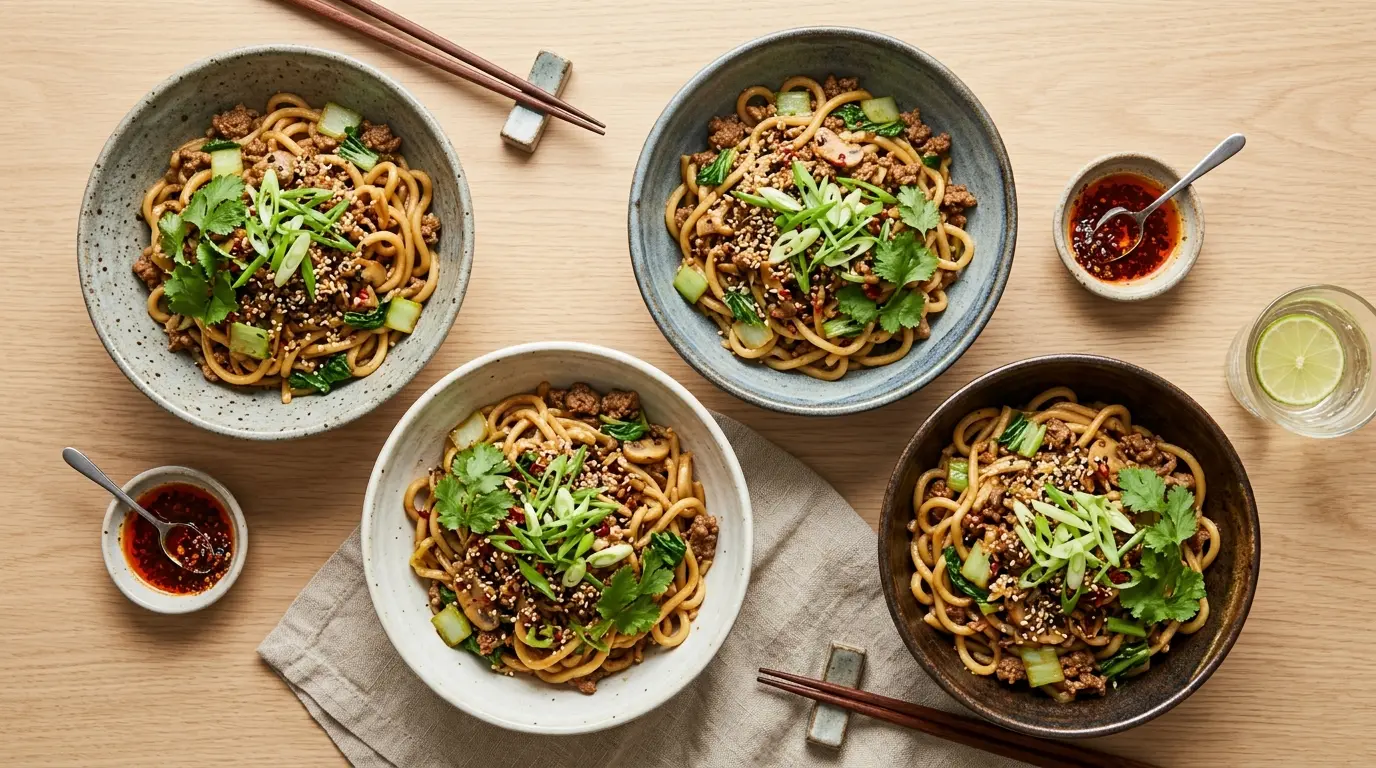
If you’re craving something bold, satisfying, and on the table in under 30 minutes, these Asian Ground Beef Noodle Bowls are exactly what you need.
This recipe brings together tender ramen noodles, savory caramelized ground beef, and a rich umami-packed sauce made with soy sauce, sesame oil, oyster sauce, and a touch of brown sugar for balance.
The magic here is in the layering of flavors. Garlic and fresh ginger create an aromatic base, while a splash of sriracha adds just enough heat without overpowering the dish.
Ground beef is the star because it browns quickly, absorbs sauce beautifully, and delivers a satisfying richness that makes this bowl feel like a real restaurant-quality meal.
For busy families, meal-preppers, or anyone who just needs something delicious fast, this one checks every box.
If you love quick Asian noodle recipes like this one, you’ll also want to try this Chicken Lo Mein for another 30-minute weeknight winner.

Why You’ll Love This Asian Ground Beef Noodle Bowls
These noodle bowls have become a staple in weeknight kitchens for good reason.
The entire dish comes together in about 20 to 25 minutes from start to finish, which means you spend less time at the stove and more time enjoying the meal.
The sauce is the kind of deeply savory, slightly sweet, just-spicy-enough combination that makes you want to lick the bowl clean.
Ground beef is one of the most budget-friendly proteins out there, and it turns into something that tastes genuinely impressive with just a handful of pantry staples.
Ramen noodles are quick-cooking and slurpy in the best way, soaking up all that sauce so every bite is coated in flavor.
This recipe is also incredibly adaptable. Swap in rice noodles, udon, or egg noodles depending on what you have on hand, and toss in whatever vegetables are sitting in your fridge.
It’s the kind of meal that gets requested again and again, and once you make it, you’ll understand why.
- Ready in under 30 minutes – perfect for busy weeknights
- One-pan simplicity – fewer dishes, faster cleanup
- Budget-friendly – uses affordable ground beef and pantry staples
- Crowd-pleasing flavor – savory, slightly sweet, with a hint of heat
- Endlessly customizable – works with different noodles and add-in vegetables
- Better than takeout – full restaurant flavor at a fraction of the cost
You might also enjoy: Chicken Stir Fry
Ingredients
The ingredient list for these noodle bowls is short but mighty. Each component plays a role in building that signature Asian-inspired flavor, so don’t skip anything.
The oyster sauce is especially important here. It adds a deep, slightly briny sweetness that you just can’t replicate with soy sauce alone. Most grocery stores carry it in the international foods aisle.
- 1 lb (450g) ground beef (80/20 blend works best for flavor)
- 3 packages (3 oz / 85g each) instant ramen noodles, seasoning packets discarded
- 4 cloves garlic, minced
- 1 tablespoon fresh ginger, grated
- 1/3 cup (80ml) low-sodium soy sauce
- 2 tablespoons oyster sauce
- 1 tablespoon sesame oil
- 1 tablespoon brown sugar
- 1 tablespoon sriracha (adjust to taste)
- 1 tablespoon cornstarch, dissolved in 2 tablespoons cold water
- 1 tablespoon vegetable oil (for cooking)
- 3 green onions, thinly sliced (whites and greens separated)
- 1 teaspoon toasted sesame seeds, for garnish
- Red pepper flakes, to taste (optional garnish)
Read Also: Easy Mongolian Beef Recipe
Kitchen Equipment Needed
You don’t need any specialty equipment for this recipe. A large skillet is your best friend here, giving the beef enough surface area to brown properly rather than steam.
If you have a wok, even better. The high, sloped sides make tossing the noodles and beef together a breeze, and the intense heat helps caramelize the beef more effectively.
- Large skillet or wok (12-inch / 30cm minimum)
- Large pot for cooking noodles
- Colander or strainer for draining noodles
- Small mixing bowl for the sauce and cornstarch slurry
- Wooden spoon or silicone spatula
- Microplane or fine grater for grating fresh ginger
- Chef’s knife and cutting board
- Measuring cups and spoons
- Tongs or chopsticks for tossing noodles
This technique works beautifully for other quick Asian-inspired recipes, too. If you love noodle dishes, check out this Udon Noodle Soup for another comforting bowl of goodness.
Recommended Products for This Recipe
Here are a few quality products that can genuinely elevate your Asian Ground Beef Noodle Bowls. These are chosen for performance and value.
1. Lee Kum Kee Premium Oyster Sauce
Oyster sauce is one of those ingredients that makes a huge difference in the final flavor. Lee Kum Kee is considered the gold standard brand in Asian cooking, delivering a rich, deep umami depth that cheap versions can’t match. A little goes a long way, and one bottle will last you through many batches of this recipe.
2. Kadoya Pure Sesame Oil
Sesame oil is non-negotiable in Asian noodle dishes, and Kadoya is widely regarded as one of the best. The toasted, nutty aroma it adds to the finished bowl is something no other oil can replicate. Always add sesame oil at the end of cooking to preserve its flavor.
3. Carbon Steel Wok
A flat-bottom carbon steel wok is the ideal pan for this recipe. It heats quickly, retains high heat beautifully, and gives the ground beef those crispy, caramelized edges that make this dish so craveable. Carbon steel is lighter than cast iron and becomes naturally non-stick with use over time.
4. Sun Noodle Fresh Ramen Noodles
If you can find fresh ramen noodles at a specialty grocery store or online, they make a noticeable difference in texture compared to instant packets. Sun Noodle is a well-respected brand used by ramen shops across the country, and their noodles have a wonderful chewiness that holds up beautifully against the rich beef sauce.
5. Microplane Premium Zester/Grater
Freshly grated ginger is one of the flavor pillars of this recipe, and a Microplane makes the job effortless. It grates ginger into a fine paste rather than stringy pieces, which distributes the flavor more evenly throughout the dish. This tool is also perfect for garlic, citrus zest, and Parmesan.
For another bold Asian-inspired weeknight dinner, try this Easy Pad Thai — it uses a similar quick-cooking technique and pantry-friendly sauce.

Step-by-Step Instructions
1. Bring a Large Pot of Water to a Boil
- Fill a large pot with water and bring it to a rolling boil over high heat.
- Add a generous pinch of salt to the water. This is the only chance you have to season the noodles themselves, and it makes a difference.
- Keep the pot on the stove but don’t add the noodles yet. You’ll cook them while the beef is finishing up.
2. Mix the Sauce
- In a small bowl, combine the soy sauce, oyster sauce, sesame oil, brown sugar, and sriracha.
- Whisk everything together until the brown sugar is completely dissolved.
- In a separate small bowl or cup, mix the cornstarch with 2 tablespoons of cold water to form a smooth slurry. Set both aside.
- Having your sauce ready before you start cooking is essential with this recipe. Once the beef hits the pan, everything moves quickly, and you won’t have time to measure and mix mid-cook.
3. Brown the Ground Beef
- Heat a large skillet or wok over medium-high heat and add the vegetable oil.
- Once the oil is shimmering and hot, add the ground beef in a single layer. Do not stir it right away.
- Let the beef cook undisturbed for about 2 minutes to develop a nice brown crust on the bottom. This caramelization is key to the flavor depth in this dish.
- Break the beef apart with a wooden spoon or spatula, then continue cooking until it’s mostly browned through, about 3 to 4 minutes total.
- Drain any excess fat from the pan if there’s a lot. A little is fine and adds flavor, but too much will make the sauce greasy.
4. Add Garlic, Ginger, and Green Onion Whites
- Push the browned beef to the sides of the pan to create a small open space in the center.
- Add the minced garlic, grated fresh ginger, and the white parts of the sliced green onions to the center of the pan.
- Cook for about 60 seconds, stirring constantly, until fragrant. You’ll smell the garlic and ginger almost immediately.
- Be careful not to burn the garlic. If your pan is very hot, you can briefly remove it from the heat while the aromatics cook.
- Once fragrant, stir everything together so the garlic, ginger, and onion whites are evenly mixed through the beef.
5. Cook the Ramen Noodles
- While the beef is finishing, add the ramen noodles (discard the seasoning packets entirely) to the boiling water.
- Cook the noodles for 2 to 3 minutes, just until they are barely tender and still have a slight chew. They will continue cooking slightly when added to the hot pan.
- Drain the noodles immediately in a colander and give them a quick rinse under cold water to stop the cooking process. Set aside.
- Do not overcook the noodles. Mushy noodles won’t hold up when tossed with the sauce and beef, and the texture will be disappointing.
6. Add the Sauce and Cornstarch Slurry
- Pour the prepared sauce over the beef mixture in the skillet.
- Stir everything together and let it come to a simmer, about 1 minute.
- Give the cornstarch slurry a quick stir (it settles quickly), then pour it into the skillet while stirring continuously.
- The sauce will thicken noticeably within about 30 to 45 seconds, turning glossy and coating the beef beautifully.
- If the sauce thickens too quickly or seems too thick, add a tablespoon or two of water and stir to loosen it.
7. Add the Noodles and Toss to Combine
- Add the drained ramen noodles directly to the skillet with the sauced beef.
- Using tongs or two large forks, toss everything together gently so the noodles are evenly coated in the sauce and mixed through the beef.
- Cook together for about 1 minute over medium heat, tossing continuously. The noodles will absorb some of the sauce and take on a gorgeous glossy coating.
- Be gentle when tossing so the noodles don’t break apart too much.
8. Taste, Adjust, and Serve
- Taste the noodle mixture and adjust as needed. Add a splash more soy sauce for saltiness, extra sriracha for heat, or a pinch more brown sugar if you prefer a slightly sweeter finish.
- Remove the pan from heat and divide the noodles and beef evenly between bowls.
- Top each bowl with the green parts of the sliced green onions, toasted sesame seeds, and a pinch of red pepper flakes if desired.
- Serve immediately while hot.
Read Also: Chicken Pad Thai Recipe
Tips for Success
A few simple techniques make the difference between a good noodle bowl and a great one. Keep these in mind before you start cooking.
- Use 80/20 ground beef. The fat content in 80/20 beef contributes significantly to the flavor and richness of this dish. Leaner beef can taste dry and less satisfying.
- Don’t overcrowd the pan. If you’re doubling the recipe, cook the beef in batches. Overcrowding causes steaming instead of browning, and you’ll lose that crucial caramelized crust.
- Prep everything before you start cooking. This is a fast-moving recipe. Have your sauce mixed, your aromatics minced, and your slurry ready before the beef hits the pan.
- Use fresh garlic and ginger. Pre-minced garlic from a jar and ground ginger from a spice bottle simply don’t deliver the same punchy, aromatic flavor. Fresh is always better here.
- Slightly undercook the noodles. They’ll finish cooking in the hot pan with the sauce. Starting with al dente noodles prevents mushiness in the final dish.
- Taste as you go. Soy sauce brands vary widely in saltiness, so always taste before adding more. This is the most reliable way to get the seasoning exactly right for your palate.
For another quick Asian sauce you can make from scratch, this Stir Fry Sauce recipe is a great pantry staple to have in your back pocket.
Serving Suggestions
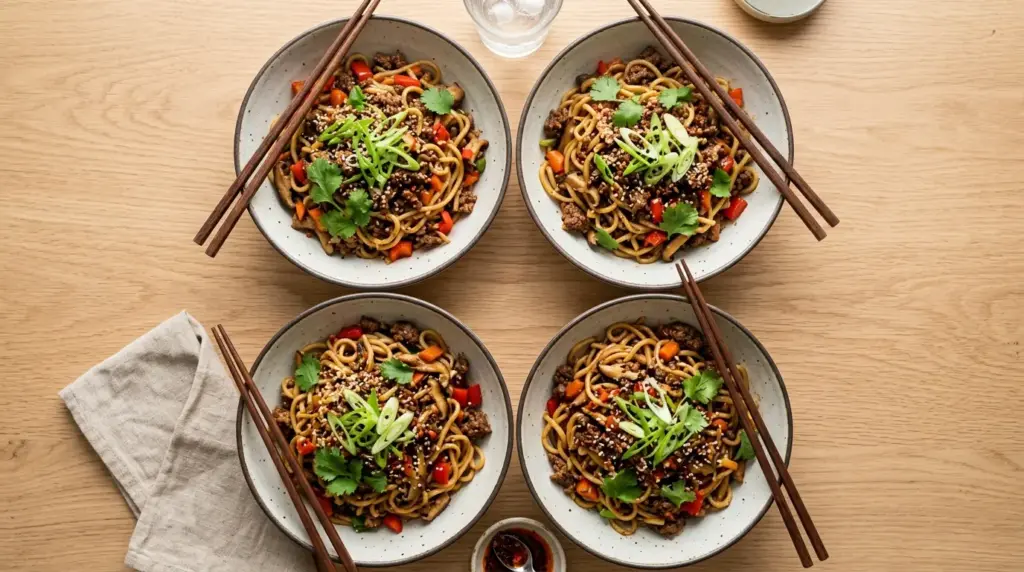
These Asian Ground Beef Noodle Bowls are a complete meal on their own, but a few simple sides can round out the dinner into something even more special.
A light soup starter like a simple Miso Soup or easy Egg Drop Soup pairs beautifully without competing with the bold flavors of the noodle bowl.
- Steamed or sautéed bok choy drizzled with a little sesame oil for a simple, fresh green
- Cucumber slices tossed in a light rice vinegar dressing for a cooling contrast
- Bok Choy simply stir-fried with garlic as a quick side
- Soft-boiled eggs sliced in half and laid on top of the bowl for extra protein
- Kimchi on the side for a spicy, fermented flavor contrast
- Spring rolls or egg rolls for a more indulgent dinner spread
- Steamed edamame sprinkled with sea salt as a simple starter
- Extra sriracha, chili oil, or soy sauce on the table for guests to adjust their own heat level
Variations to Try
Once you’ve mastered the base recipe, it’s fun to riff on it. This dish is incredibly adaptable, and the core sauce works with almost any protein or noodle type.
The recipe structure stays the same regardless of the variation. Brown your protein, add the aromatics, sauce it up, toss in the noodles.
- Ground turkey version – Swap ground beef for ground turkey for a lighter option. Add a drizzle of extra sesame oil since turkey is leaner and benefits from added fat.
- Ground pork noodle bowls – Ground pork is deeply savory and fatty in a wonderful way. It works beautifully with the same sauce and even pairs well with rice noodles.
- Spicy Korean-inspired version – Add a tablespoon of gochujang paste to the sauce along with the sriracha for a more intensely spicy, fermented heat profile.
- Vegetable add-ins – Toss in shredded cabbage, sliced mushrooms, frozen peas, or baby spinach during the last 2 minutes of cooking for extra nutrition and color.
- Rice noodle version – Swap out ramen for rice noodles for a gluten-free alternative. Soak rice noodles in hot water rather than boiling them, then add directly to the pan.
- Udon noodle version – Udon noodles add a thick, chewy texture that soaks up sauce differently than ramen. They’re especially satisfying on cold nights.
- Sesame noodle bowl – Double the sesame oil and add a tablespoon of peanut sauce to lean more heavily into the nutty sesame profile.
Another great way to enjoy bold Asian flavors on a weeknight is this Chicken Teriyaki recipe, which uses a similarly simple sauce with great results.
Storage and Reheating
These noodle bowls reheat well, making them an excellent choice for meal prep or next-day lunches.
Store any leftovers in an airtight container in the refrigerator, where they’ll keep well for up to 4 days.
- Refrigerator: Store cooled leftovers in an airtight container for up to 4 days.
- Freezer: This dish can be frozen for up to 2 months. Portion into freezer-safe containers and allow to thaw overnight in the refrigerator before reheating. Note that noodles may soften slightly after freezing.
- Reheating on the stovetop: Add the leftovers to a skillet with a splash of water or extra soy sauce and warm over medium heat, tossing frequently, until heated through. This method preserves the best texture.
- Reheating in the microwave: Add a tablespoon of water to the container, cover loosely, and microwave in 60-second intervals, stirring between each, until hot throughout.
- Meal prep tip: If you’re planning to meal prep, store the beef and sauce separately from the noodles. Toss them together when reheating to avoid the noodles absorbing too much sauce in the fridge.
Read Also: Easy Pepper Steak Recipe
Nutritional Facts
Per serving (based on 4 servings)
| Nutrient | Amount |
|---|---|
| Calories | ~520 kcal |
| Protein | 28g |
| Total Fat | 22g |
| Saturated Fat | 7g |
| Carbohydrates | 52g |
| Fiber | 2g |
| Sugar | 6g |
| Sodium | ~1,100mg |
| Cholesterol | 75mg |
| Iron | 4mg |
Note: Nutritional values are estimates based on standard ingredients and may vary depending on the specific brands and substitutions used. Sodium can be reduced significantly by using reduced-sodium soy sauce.
For another hearty, comforting Asian noodle recipe, this Pho Recipe is well worth the slightly longer cook time for a deeply rich broth experience.
Health Benefits of Key Ingredients
This recipe isn’t just delicious. Several of its core ingredients bring real nutritional value to the table.
Ground beef is a complete protein, meaning it contains all nine essential amino acids your body needs. It’s also a reliable source of iron, zinc, and B vitamins, particularly B12, which supports energy production and neurological health.
- Garlic: Contains allicin, a sulfur compound with well-documented anti-inflammatory and antimicrobial properties. Regular consumption has been linked to improved heart health and immune function.
- Fresh ginger: A powerful anti-inflammatory and digestive aid. Ginger contains gingerol, which may help reduce nausea, ease muscle pain, and support healthy digestion.
- Sesame oil: Rich in healthy monounsaturated and polyunsaturated fats, sesame oil also contains sesamol and sesamin, two antioxidants that support cardiovascular health.
- Soy sauce: Provides a significant sodium hit along with small amounts of protein and trace minerals. Using low-sodium soy sauce keeps the dish flavorful while cutting back on overall salt intake.
- Ground beef: A high-quality source of complete protein plus heme iron, which is absorbed more efficiently by the body than plant-based iron. Also rich in zinc and vitamin B12.
- Green onions: Low in calories but packed with vitamin K, vitamin C, and folate. They also contain quercetin, an antioxidant with anti-inflammatory properties.
For another Asian-inspired dish with serious nutritional value, try this Bibimbap Recipe — it’s loaded with vegetables, lean protein, and fermented goodness.
Frequently Asked Questions
1. Can I use a different type of noodle for this recipe?
Absolutely. Ramen noodles are the most popular choice because they’re quick-cooking and absorb sauce beautifully, but this recipe works with udon, rice noodles, egg noodles, soba, and even spaghetti in a pinch.
Just follow the package directions for whichever noodle you use, and slightly undercook them since they’ll finish in the hot pan.
2. Can I make this dish less spicy?
Yes, easily. Simply reduce or omit the sriracha entirely. The dish will still be deeply flavorful from the soy sauce, oyster sauce, sesame oil, and ginger.
If you want a hint of heat without the sharpness of sriracha, a tiny drizzle of chili oil stirred in at the end is a gentler alternative.
3. What’s the best way to prevent the noodles from getting mushy?
The key is to cook your noodles slightly less than the package suggests, drain them immediately, and rinse them under cold water right away to stop the cooking process.
Toss them into the pan with the beef and sauce at the very last minute, just long enough to coat and warm through. Leaving them in a hot pan for too long will over-soften them.
4. Can I make this recipe ahead of time?
You can, with a small adjustment. Cook the beef and sauce as directed, but store it separately from the cooked noodles in the refrigerator.
When you’re ready to eat, reheat the beef mixture in a skillet, add a splash of water to loosen the sauce, then toss in the noodles and warm through. This prevents the noodles from over-absorbing the sauce and becoming soft overnight.
5. What vegetables work well in this recipe?
Quite a few options work beautifully here. Shredded cabbage, thinly sliced mushrooms, frozen edamame, baby spinach, shredded carrots, snap peas, and broccoli florets all make excellent additions.
Add heartier vegetables like carrots and broccoli during the last 3 to 4 minutes of cooking the beef so they have time to soften. More delicate options like baby spinach and frozen edamame can go in at the very end and just need to be warmed through.
Read Also: Chicken Fried Rice Recipe

Asian Ground Beef Noodle Bowls

Equipment
- Large skillet or wok - 12-inch / 30cm minimum
- Large pot - for cooking noodles
- Colander or strainer
- Small mixing bowl - for the sauce and cornstarch slurry
- Wooden spoon or silicone spatula
- Microplane or fine grater - for grating fresh ginger
- Chef’s knife
- Cutting board
- Measuring cups and spoons
- Tongs or chopsticks - for tossing noodles
Ingredients
- 1 lb ground beef - 450g, 80/20 blend works best
- 3 packages instant ramen noodles - 3 oz / 85g each, seasoning packets discarded
- 4 cloves garlic - minced
- 1 tablespoon fresh ginger - grated
- 1/3 cup low-sodium soy sauce - 80ml
- 2 tablespoons oyster sauce
- 1 tablespoon sesame oil
- 1 tablespoon brown sugar
- 1 tablespoon sriracha - adjust to taste
- 1 tablespoon cornstarch - dissolved in 2 tablespoons cold water
- 1 tablespoon vegetable oil - for cooking
- 3 green onions - thinly sliced, whites and greens separated
- 1 teaspoon toasted sesame seeds - for garnish
- red pepper flakes - to taste, optional garnish
- water - for thinning sauce, as needed
Instructions
- Bring a large pot of salted water to a rolling boil for the noodles.
- In a small bowl, whisk together soy sauce, oyster sauce, sesame oil, brown sugar, and sriracha. In a separate small bowl, mix cornstarch with cold water to make a slurry. Set both aside.
- Heat vegetable oil in a large skillet or wok over medium-high heat. Add ground beef in a single layer and cook undisturbed for 2 minutes to develop a brown crust. Break apart and continue cooking until mostly browned, about 3-4 minutes total. Drain excess fat if needed.
- Push beef to the sides of the pan. Add garlic, ginger, and green onion whites to the center. Cook for 60 seconds, stirring constantly, until fragrant. Stir into the beef.
- Cook ramen noodles in the boiling water for 2-3 minutes until barely tender and still chewy. Drain immediately and rinse with cold water to stop cooking. Set aside.
- Pour the sauce over the beef mixture and bring to a simmer. Stir in the cornstarch slurry and cook for 30-45 seconds until the sauce thickens and turns glossy.
- Add the drained noodles to the skillet and toss gently with tongs until evenly coated. Cook for 1 minute over medium heat, tossing continuously.
- Taste and adjust seasoning with more soy sauce, sriracha, or brown sugar if desired. Divide between bowls and top with green onion tops, sesame seeds, and red pepper flakes. Serve immediately.
Notes
- Noodle Substitutions: This recipe works beautifully with udon, rice noodles, egg noodles, soba, or even spaghetti. Cook according to package directions and slightly undercook them.
- Spice Level: Reduce or omit the sriracha for a milder version. For gentle warmth, stir in a drizzle of chili oil at the end.
- Avoid Mushy Noodles: Cook noodles slightly less than package suggests, drain immediately, and rinse with cold water. Toss them in at the very last minute just to coat and warm through.
- Make-Ahead Tip: Store the cooked beef and sauce separately from the noodles in the refrigerator. Reheat the beef mixture in a skillet with a splash of water, then toss in noodles and warm through.
- Vegetable Add-ins: Add shredded cabbage, mushrooms, baby spinach, shredded carrots, snap peas, or broccoli. Add hearty vegetables during the last 3-4 minutes of cooking beef; add delicate greens at the very end.
- Protein Swaps: Ground turkey or ground pork are excellent alternatives. Add a little extra sesame oil to ground turkey since it’s leaner.
- Storage: Leftovers keep in an airtight container in the refrigerator for up to 4 days. Reheat on the stovetop with a splash of water or in the microwave covered with a damp paper towel.
- Freezing: This dish can be frozen for up to 2 months. Thaw overnight in the refrigerator before reheating. Noodles may soften after freezing.
- Fresh vs. Jarred: Use fresh garlic and ginger for the best flavor. Pre-minced garlic and ground ginger don’t deliver the same punch.
- Oyster Sauce: This ingredient is crucial for depth. Look for Lee Kum Kee brand in the international aisle. Do not substitute with soy sauce alone.
Final Thoughts
These Asian Ground Beef Noodle Bowls prove that a truly satisfying, flavor-packed dinner doesn’t have to take hours or require a long grocery list.
With a handful of pantry staples, a pound of ground beef, and about 25 minutes, you can put something on the table that tastes genuinely impressive.
The sauce alone is worth memorizing. That combination of soy, oyster sauce, sesame, ginger, and garlic is the kind of thing you’ll want to use on everything.
Give this recipe a try on your next busy weeknight, and don’t be surprised when it earns a permanent spot in your dinner rotation.
Drop a comment below to let us know how it turned out, what noodles you used, or any fun tweaks you made. We’d love to hear from you!
Recommended:
- Chinese Chicken Salad Recipe
- Easy Fried Rice Recipe
- Hoisin Sauce Recipe
- Teriyaki Sauce Recipe
- Peanut Sauce Recipe
- Asian Turkey Meatball Recipe
- Easy Orange Chicken Recipe
- Chicken Lettuce Wraps Recipe
- Asian Chicken Salad Recipe
- Tom Yum Soup Recipe