If you’ve ever made a potato pancake recipe that turned out soggy or fell apart in the pan, you already know how much little details matter with this dish. Getting it right means understanding the starch, the moisture, and the heat, and once you do, these crispy golden rounds become one of the most satisfying things you’ll ever cook on the stovetop.
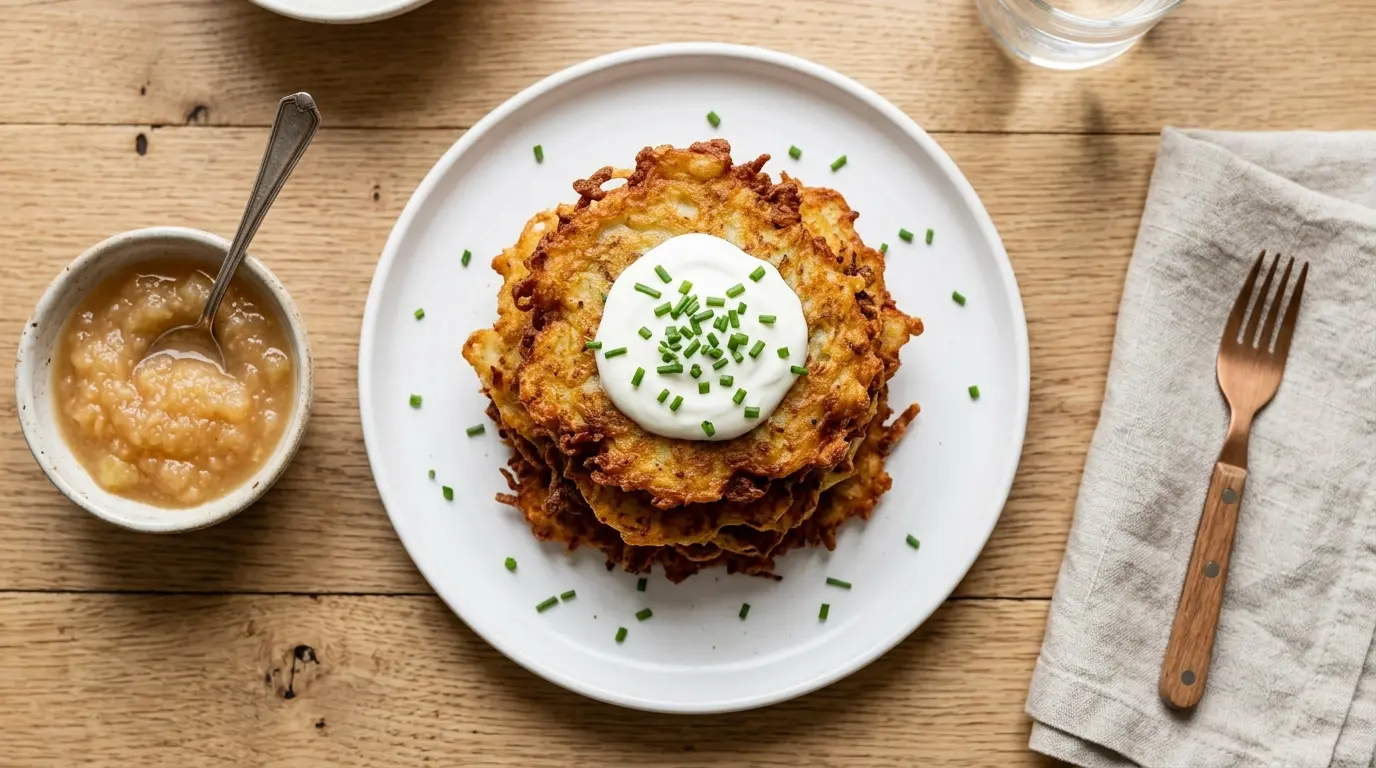
Potato pancakes, also widely known as latkes, are a traditional dish with deep roots in Eastern European Jewish cuisine. The classic version uses raw, grated potatoes mixed with egg, onion, a little flour or matzo meal, and seasoning, then pan-fried in oil until crispy on the outside and tender inside.
They’re deceptively simple but surprisingly easy to get wrong, which is why this post walks you through every step with precision.
You might also enjoy: Pumpkin Pancake Recipe
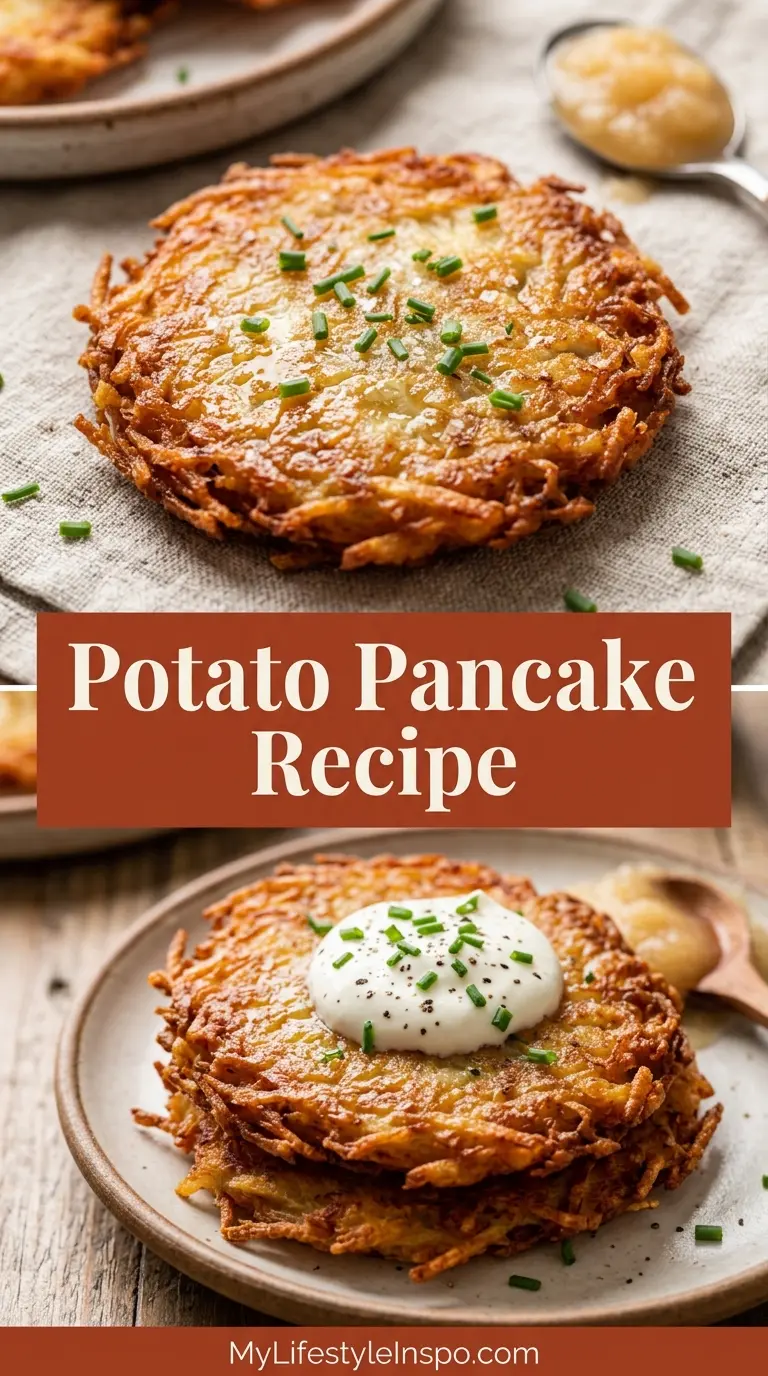
Why You’ll Love This Potato Pancake Recipe
This potato pancake recipe delivers a shatteringly crispy exterior with a soft, flavorful center, and it comes together with just a handful of pantry staples.
It’s one of those recipes that works for practically any occasion. Serve them as a cozy weeknight side, a festive holiday dish, or a weekend brunch treat, and they’ll disappear fast.
The technique here is foolproof. Even if you’ve failed at potato pancakes before, the steps in this guide will show you exactly how to get that perfect golden crust every single time.
They’re also naturally gluten-adaptable, budget-friendly, and completely customizable with your choice of toppings.
- Crispy, golden edges and a tender, savory center
- Made with simple, everyday ingredients
- Ready in about 40 minutes from start to finish
- Easy to adapt for gluten-free diets
- Perfect as a side dish, appetizer, or main course
- Crowd-pleasing for brunches, holidays, and weeknight dinners
- Pairs beautifully with both sweet and savory toppings
- Leftovers reheat wonderfully in a skillet or oven
Read Also: Breakfast Potatoes Recipe
Ingredients
You’ll need just a few basic ingredients to make this potato pancake recipe, and most of them are probably already in your kitchen. The key is using starchy potatoes like Russets, which give you the best texture and crispiness.
- 2 lbs (900g) Russet potatoes, peeled
- 1 medium yellow onion
- 2 large eggs, lightly beaten
- 3 tablespoons (24g) all-purpose flour (or matzo meal for a more traditional version)
- 1 teaspoon (6g) salt
- 1/4 teaspoon (0.5g) black pepper
- 1/4 teaspoon (0.5g) garlic powder (optional but recommended)
- Vegetable oil or neutral frying oil, for frying (about 1/2 cup / 120ml total)
For serving (optional):
- Sour cream
- Applesauce
- Fresh chives or green onions
For a similar potato-forward comfort dish, you might also love this Scalloped Potatoes Recipe.
Kitchen Equipment Needed
Having the right tools makes this potato pancake recipe much easier to pull off. A box grater or food processor gets the job done quickly for grating, and a large heavy-bottomed skillet gives you the even heat you need for a consistent crust.
- Box grater or food processor with grating disc
- Large mixing bowl
- Fine-mesh strainer or cheesecloth (for squeezing out moisture)
- Large cast iron skillet or heavy-bottomed frying pan
- Fish spatula or wide flat spatula
- Paper towels and a baking sheet (for draining)
- Measuring cups and spoons
- Kitchen towel or clean dish towel (for wringing out potatoes)
Another great potato dish to try next is the Hashbrown Casserole Recipe.
Recommended Products for This Recipe
These are hand-picked products based on quality and performance that will genuinely make your potato pancake recipe easier and more delicious.
1. Lodge Cast Iron Skillet
A cast iron skillet is the single best tool for making potato pancakes. It holds heat evenly and consistently, which means every pancake gets the same golden crust without hot spots. It also retains heat between batches so you’re not constantly waiting for the pan to recover.
2. OXO Good Grips Box Grater
This sturdy, ergonomic grater makes short work of two pounds of Russet potatoes. The large holes produce the right-sized shreds for classic potato pancakes, and the non-slip base keeps it steady while you work.
3. Cheesecloth for Straining
Squeezing excess moisture from grated potatoes is the most important step in this recipe, and cheesecloth makes it effortless. A kitchen towel works too, but cheesecloth gives you more control and gets more liquid out.
4. Neutral Frying Oil (Avocado or Refined Coconut Oil)
The oil you fry in matters more than most people think. A neutral, high-smoke-point oil like avocado oil keeps the flavor clean and lets the potato shine, without any bitter or burnt taste even at high heat.
Read Also: Roasted Potatoes Recipe
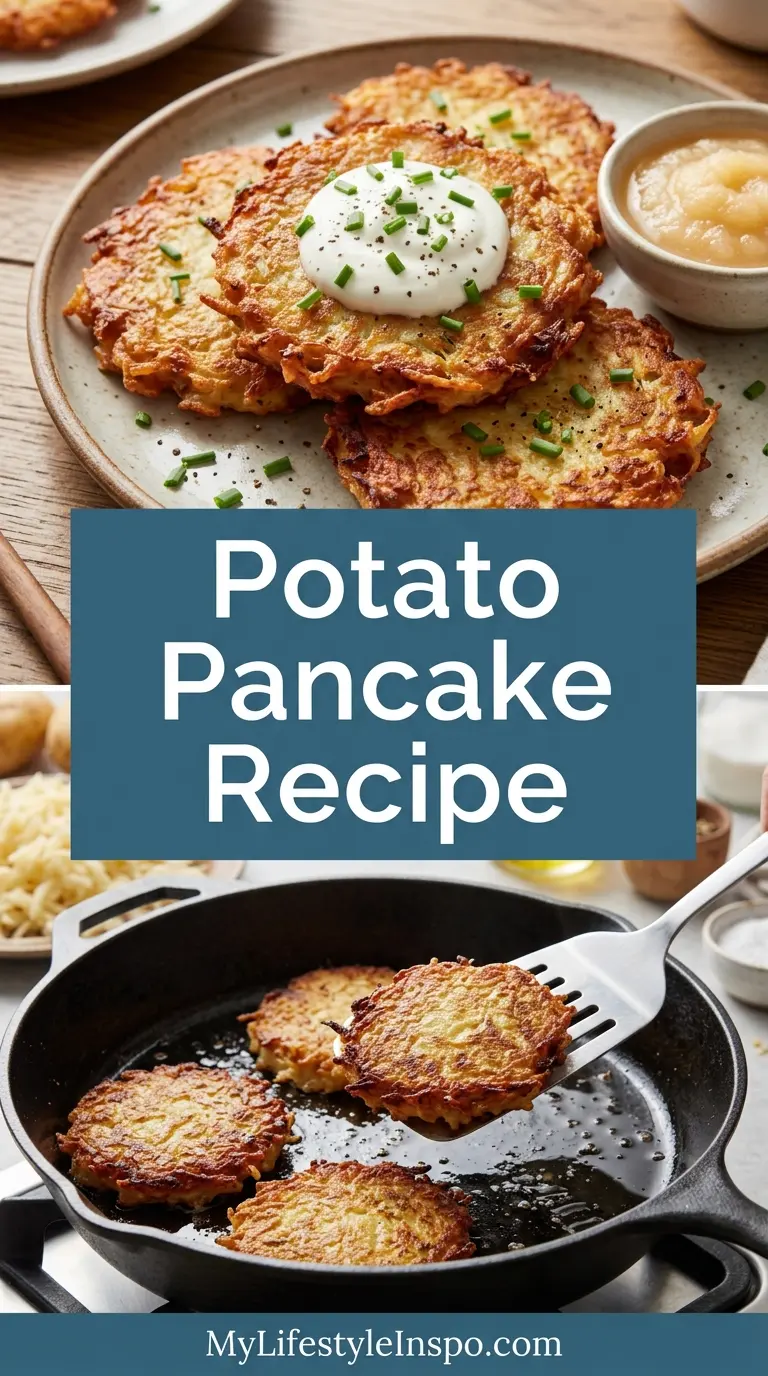
Step-by-Step Instructions
Step 1: Peel and Grate the Potatoes
- Peel 2 lbs (900g) of Russet potatoes using a vegetable peeler, removing all the skin.
- Use the large holes of a box grater (or the grating disc of a food processor) to grate the potatoes into long, thin shreds.
- Work quickly once the potatoes are peeled, as they will begin to oxidize and turn brown when exposed to air. This is normal and doesn’t affect flavor, but working fast helps.
- Place the grated potatoes immediately into a large mixing bowl filled with cold water to slow oxidation while you grate the remaining potatoes.
Step 2: Grate the Onion
- Peel the yellow onion and grate it on the large holes of the same box grater directly into a separate small bowl or over the potato mixture.
- Alternatively, you can finely mince the onion if you prefer a slightly different texture.
- The onion adds savory depth and natural sweetness to the potato pancakes, and mixing it in with the potato helps everything hold together better.
Step 3: Drain and Squeeze Out the Moisture
- This step is the most critical part of the entire recipe. Excess moisture is what causes soggy, falling-apart potato pancakes.
- Drain the grated potatoes from the cold water and transfer them onto a clean kitchen towel or several layers of cheesecloth.
- Gather the edges of the towel and twist firmly, squeezing out as much liquid as possible over the sink.
- Continue squeezing until almost no more liquid drips out. This may take 1-2 minutes of firm pressure.
- Let the squeezed potato shreds sit for another 30 seconds, then squeeze one final time.
- Add the grated onion to the squeezed potatoes and give one more gentle squeeze together.
Step 4: Mix the Batter
- Transfer the squeezed potato and onion mixture into a clean large mixing bowl.
- Add 2 lightly beaten eggs and toss to coat the potato shreds evenly.
- Sprinkle in 3 tablespoons (24g) of all-purpose flour, 1 teaspoon (6g) of salt, 1/4 teaspoon (0.5g) of black pepper, and 1/4 teaspoon (0.5g) of garlic powder if using.
- Mix everything together gently with a fork or your hands until just combined. The mixture should be cohesive but still loose and shredded, not a smooth paste.
- Do not over-mix or compact the shreds too much, as you want some texture to come through in the finished pancakes.
Step 5: Heat the Oil
- Add about 3-4 tablespoons (45-60ml) of neutral vegetable oil to a large cast iron skillet or heavy-bottomed frying pan.
- Heat the oil over medium-high heat until shimmering but not smoking. You can test the oil by dropping a tiny piece of potato into it. If it sizzles immediately, the oil is ready.
- The oil should be deep enough to come about 1/4 inch (6mm) up the sides of the pancakes as they cook. This helps the edges get crispy without burning.
- Do not rush this step. Starting with oil that is not hot enough will result in greasy, soft pancakes instead of crispy ones.
Step 6: Form and Fry the Pancakes
- Scoop about 1/4 cup (60ml) of the potato mixture and place it into the hot oil.
- Using the back of a spatula or a fork, gently press the mound down to flatten it into a round disk about 1/2 inch (1.25cm) thick and 3-4 inches (7.5-10cm) in diameter.
- Work in batches of 3-4 pancakes at a time, depending on the size of your pan. Do not overcrowd the pan, as this will lower the oil temperature and prevent crisping.
- Fry undisturbed for 4-5 minutes on the first side, until the edges turn golden brown and the bottoms are deeply crispy. Resist the urge to flip too early.
- The pancake is ready to flip when the edges look set and the bottom releases easily from the pan without sticking.
Step 7: Flip and Finish Cooking
- Using a wide spatula, carefully flip each potato pancake in one confident motion.
- Press down gently again with the spatula to ensure even contact with the pan surface.
- Cook for another 3-4 minutes on the second side, until it is equally golden and crispy.
- If the pancakes are browning too quickly, reduce the heat slightly to medium. If they’re taking longer than 5 minutes per side, increase the heat a bit.
- Add more oil between batches as needed, allowing the oil to come back up to temperature before adding the next batch.
Step 8: Drain and Keep Warm
- Transfer the finished potato pancakes to a baking sheet lined with paper towels to absorb excess oil.
- Sprinkle lightly with a pinch of flaky salt while still hot.
- To keep early batches warm while you finish cooking, place the baking sheet in an oven set to 200°F (93°C). This keeps them warm and helps them stay crispy.
- Continue cooking in batches until all the potato mixture has been used.
This recipe pairs wonderfully as a side next to Creamy Mashed Potatoes for a potato lover’s dream dinner spread.
Tips for Success
Getting this potato pancake recipe perfect every time comes down to a few key habits. Follow these tips and your results will be consistently golden, crispy, and delicious.
- Squeeze, squeeze, squeeze. The number one mistake is not removing enough moisture from the grated potatoes. The drier the potato, the crispier the pancake. If after squeezing you can still get liquid out, keep going.
- Use Russet potatoes. Their high starch content binds the shreds together and creates that signature crispiness. Waxy potatoes like red or Yukon Gold have more water and less starch, resulting in softer, less cohesive pancakes.
- Don’t crowd the pan. Frying too many pancakes at once drops the oil temperature and creates steam instead of sear. Give each pancake room to get golden.
- Keep the oil hot but not smoking. Medium-high heat is ideal. If the oil starts to smoke, lower the heat slightly and let it settle before adding the next batch.
- Let the oil recover between batches. After removing a batch, allow 30-60 seconds for the oil to return to full temperature before adding the next round.
- Flatten them evenly. Thinner pancakes (about 1/2 inch / 1.25cm) cook more evenly and get crispier. Thick mounds tend to stay soft in the middle.
- Season generously. Potatoes need more salt than you think. Taste the mixture before frying and adjust if needed.
Read Also: Smashed Potatoes Recipe
Serving Suggestions
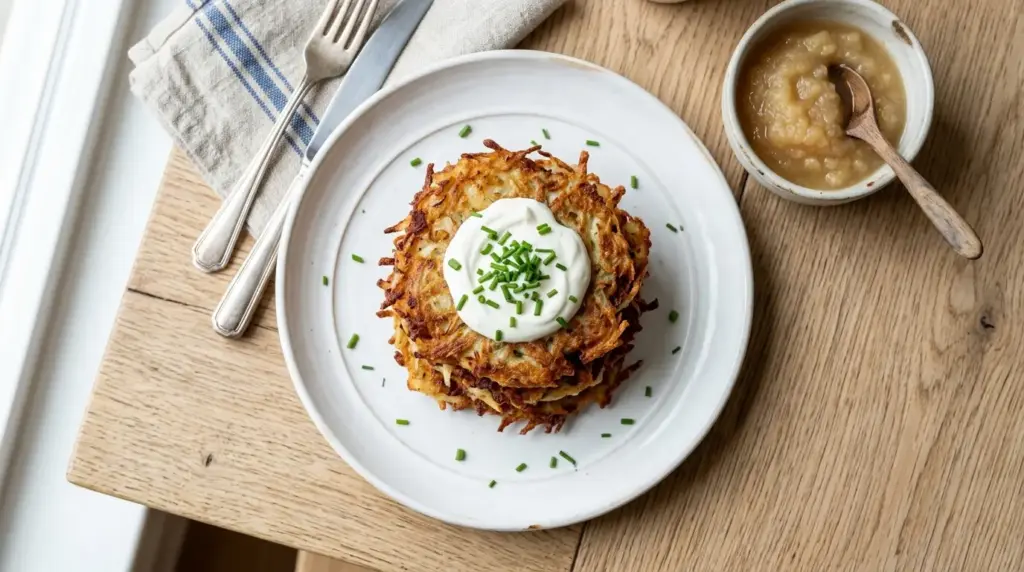
Potato pancakes are incredibly versatile and work just as well as a side dish, appetizer, or centerpiece of a meal. The toppings you choose can completely transform the experience.
Traditionally, potato pancakes are served with either sour cream or applesauce, and both options are delicious in their own way. The cool creaminess of sour cream balances the savory crispiness perfectly, while the sweet-tart flavor of applesauce provides a contrast that feels almost magical.
- Top with a dollop of cool sour cream and a sprinkle of fresh chives
- Serve with homemade or store-bought applesauce on the side
- Pair alongside Scrambled Eggs for a hearty brunch plate
- Serve as a side to baked salmon or pan-seared chicken
- Top with smoked salmon, capers, and a squeeze of lemon for an elegant appetizer
- Layer with a fried egg on top and a drizzle of hot sauce for a satisfying dinner
- Serve alongside a simple green salad for a lighter meal
- Use as a base for a loaded brunch stack with bacon and avocado
The same crispy technique works beautifully with Air Fryer Mashed Potato Cakes if you want a lower-oil alternative.
Variations to Try
Once you’ve mastered the classic potato pancake recipe, there are plenty of fun directions you can take it. These variations keep the fundamentals intact while adding new flavors and textures.
- Cheesy Potato Pancakes: Fold in 1/2 cup (50g) of shredded sharp cheddar or Gruyere cheese to the batter before frying. The cheese melts and creates little pockets of gooey richness.
- Zucchini Potato Pancakes: Replace half the grated potato with grated zucchini (squeezed very dry). The result is lighter and slightly sweeter.
- Sweet Potato Pancakes: Use grated sweet potatoes instead of Russets for a naturally sweeter, vibrant orange version. These pair particularly well with cinnamon sour cream.
- Herb Potato Pancakes: Add 2 tablespoons of finely chopped fresh dill, chives, or parsley to the batter for a fresh, fragrant finish.
- Gluten-Free Version: Swap the all-purpose flour for matzo meal, almond flour, or a gluten-free all-purpose blend in equal amounts.
- Spiced Potato Pancakes: Add a pinch of smoked paprika and cumin to the batter for a slightly smoky, earthy flavor that pairs well with yogurt dipping sauce.
- Loaded Potato Pancakes: Stir in crumbled cooked bacon and sliced green onions for a loaded baked potato-inspired variation.
For a sweet morning twist, try the German Pancake Recipe as a contrast to this savory classic.
Storage and Reheating
Potato pancakes store and reheat well, making them a great make-ahead option. A few simple steps ensure they stay crispy and delicious the next day.
- Refrigerator: Allow the cooked potato pancakes to cool completely to room temperature before storing. Place them in a single layer in an airtight container, or layer them with parchment paper in between to prevent sticking. They will keep in the refrigerator for up to 3 days.
- Freezer: Freeze cooked potato pancakes by laying them flat on a parchment-lined baking sheet. Once solid, transfer to a zip-top freezer bag. They’ll keep for up to 2 months.
- Reheating in the oven: Preheat your oven to 375°F (190°C). Place pancakes on a wire rack set over a baking sheet and heat for 10-12 minutes, flipping halfway through. This is the best method for restoring crispiness.
- Reheating in a skillet: Heat a small amount of oil in a non-stick or cast iron skillet over medium heat. Add the pancakes and reheat for 2-3 minutes per side until warmed through and crispy again.
- Avoid the microwave for reheating. It makes the pancakes soft and steamy rather than crispy.
For another great potato dish that stores beautifully, check out this Potato Casserole Recipe.
Nutritional Facts
The following nutritional information is estimated per serving of 2 potato pancakes (based on 8 total, using about 2 tablespoons of oil absorbed during frying).
| Nutrient | Amount Per Serving |
|---|---|
| Calories | 185 kcal |
| Carbohydrates | 24g |
| Protein | 4g |
| Total Fat | 8g |
| Saturated Fat | 1g |
| Fiber | 2g |
| Sodium | 310mg |
| Sugar | 1g |
| Potassium | 480mg |
| Vitamin C | 12mg |
| Iron | 1.2mg |
Values are approximate and will vary based on exact ingredient quantities, oil absorption, and serving size.
Another comfort dish worth checking out for its simple nutrition profile is the Breakfast Casserole Recipe.
Health Benefits of Key Ingredients
This potato pancake recipe is more nutritious than it might seem at first glance. The core ingredients each bring their own set of genuine benefits to the table.
Don’t underestimate the humble potato. It’s a solid source of potassium, vitamin C, and vitamin B6, all of which support heart health, immune function, and energy metabolism.
- Russet Potatoes: Rich in potassium, which supports healthy blood pressure and muscle function. They also provide resistant starch when cooked and cooled, which acts as a prebiotic for gut health.
- Eggs: A complete protein source containing all essential amino acids. Eggs also provide choline, which is critical for brain health and liver function, as well as fat-soluble vitamins like A, D, E, and K.
- Yellow Onion: Packed with quercetin, a powerful antioxidant and anti-inflammatory compound. Onions also contain prebiotics that support a healthy gut microbiome.
- Olive or Avocado Oil (for frying): When you use a high-quality neutral oil with a high smoke point, you get the added benefit of heart-healthy monounsaturated fats without burning or oxidizing the oil during cooking.
- Garlic Powder: Even in small amounts, garlic contributes allicin, an organosulfur compound with well-documented antimicrobial and immune-supporting properties.
For a dish that features another nutritional powerhouse, try this Roasted Broccoli Recipe as a pairing side.
Frequently Asked Questions
1. Why are my potato pancakes falling apart?
The two most common reasons are not squeezing out enough moisture and not using enough binder. Make sure you remove as much water as possible from the grated potatoes, and ensure your eggs and flour are fully incorporated. If the mixture still seems too loose, add one more tablespoon of flour and let the mixture rest for 5 minutes before frying. The starch released from the potatoes helps bind everything together as it sits.
2. Can I make potato pancakes ahead of time?
Yes, you have two options. You can prepare the raw potato mixture up to 2 hours in advance if you keep it tightly covered in the refrigerator to prevent browning. Alternatively, you can fully cook the pancakes and reheat them in a 375°F (190°C) oven on a wire rack for best results. Fully cooked and refrigerated pancakes will keep for up to 3 days.
3. What type of potato works best for this recipe?
Russet potatoes are the top choice for this potato pancake recipe. Their high starch and low moisture content produces the crispiest texture. Yukon Gold potatoes will also work and produce a slightly creamier, more buttery result, though they are harder to crisp. Avoid waxy potatoes like red-skinned varieties, as they contain too much water and too little starch for a proper crispy pancake.
4. Can I bake potato pancakes instead of frying them?
You can bake them, though the results will differ from the classic fried version. Brush a baking sheet generously with oil, preheat it in the oven at 425°F (220°C), and place the shaped potato pancakes on the hot pan. Bake for 15-18 minutes, flip, and bake another 10-12 minutes. They will be less crispy than pan-fried but still quite good and significantly lighter.
5. How do I keep potato pancakes warm and crispy while cooking in batches?
The best method is to place a wire rack on a baking sheet and keep it in the oven at 200°F (93°C). As each batch finishes frying, transfer the pancakes to the rack in a single layer. The elevated rack lets air circulate underneath, preventing steam from softening the bottoms. Avoid stacking them or covering them with foil, as this traps moisture and kills the crispiness.
You might also like: Loaded Potato Soup for another creative use of Russet potatoes.
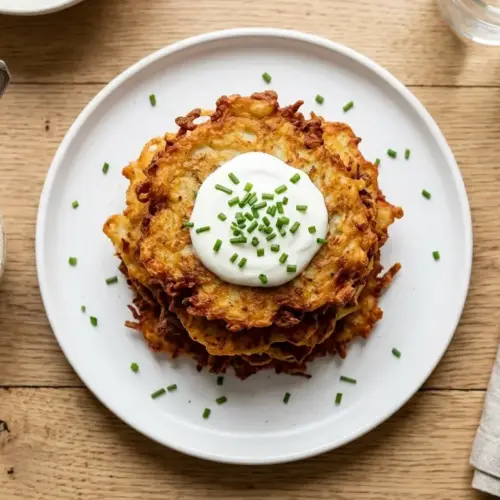
Classic Potato Pancakes (Latkes)

Equipment
- Box grater - Large holes
- Food processor - With grating disc (optional)
- Large mixing bowl
- Fine-mesh strainer
- Cheesecloth - Or clean kitchen towel for squeezing
- Cast iron skillet - Large, heavy-bottomed
- Fish Spatula - Or wide flat spatula
- Baking sheet - For draining and keeping warm
- Paper towels
- Measuring cups and spoons
Ingredients
- 2 lbs Russet potatoes - 900g, peeled
- 1 Yellow onion - medium
- 2 Large eggs - lightly beaten
- 3 tbsp All-purpose flour - 24g, or matzo meal
- 1 tsp Salt - 6g
- 1/4 tsp Black pepper - 0.5g
- 1/4 tsp Garlic powder - 0.5g, optional
- 1/2 cup Vegetable oil - 120ml, or other neutral frying oil
For Serving (optional)
- Sour cream
- Applesauce
- Fresh chives - or green onions, for garnish
Instructions
- Peel the potatoes and grate them using the large holes of a box grater or a food processor. Immediately place the shreds into a bowl of cold water to prevent browning.
- Grate the onion on the large holes of the grater, directly into the potato mixture or a separate bowl.
- Drain the grated potatoes and transfer them to a clean kitchen towel or cheesecloth. Twist and squeeze firmly over the sink until almost no more liquid drips out.
- Combine the squeezed potatoes and onion in a clean bowl. Add the beaten eggs, flour, salt, pepper, and garlic powder, then mix gently until just combined.
- Heat about 1/4 inch of oil in a large cast iron skillet over medium-high heat until shimmering. The oil is ready when a small piece of potato sizzles immediately.
- Scoop a 1/4 cup of the potato mixture and place it into the hot oil, then flatten gently into a disk about 1/2 inch thick. Fry in batches of 3-4 for 4-5 minutes per side.
- Carefully flip each pancake with a wide spatula and cook for another 3-4 minutes until the second side is equally golden and crispy.
- Transfer the cooked pancakes to a paper towel-lined baking sheet and sprinkle with salt. Keep warm in a 200°F oven while cooking the remaining batches.
Notes
- Moisture is the key: Squeeze the grated potatoes as dry as possible. This is the most important step for achieving crispy pancakes and preventing them from falling apart.
- Potato choice matters: Russet potatoes are the best choice for their high starch and low moisture content, which yields the crispiest texture.
- Oil temperature: Maintain a steady medium-high heat. If the oil is not hot enough, pancakes will absorb oil and become greasy. If it’s too hot, they will burn before cooking through.
- Avoid crowding: Fry in batches of 3-4 pancakes at a time. Overcrowding the pan lowers the oil temperature and leads to soggy results.
- Make-ahead instructions: The raw potato mixture can be prepared and refrigerated for up to 2 hours before frying. Cooked pancakes can be refrigerated for up to 3 days or frozen for up to 2 months.
- Reheating for crispiness: Reheat in a 375°F oven on a wire rack for 10-12 minutes, flipping halfway. Avoid using the microwave as it makes them soft.
- Gluten-free variation: Replace the flour with matzo meal, almond flour, or a gluten-free all-purpose blend in equal amounts.
- Variations: Try adding shredded cheese, fresh herbs, or using sweet potatoes for a different twist on this classic dish.
Final Thoughts
This potato pancake recipe is a timeless classic for a reason. It takes a basic, affordable ingredient and transforms it into something crispy, golden, and deeply satisfying.
The keys are simple: squeeze out the moisture thoroughly, keep your oil hot, and don’t rush the frying process. Once you nail those three things, perfect potato pancakes become almost effortless.
Give this recipe a try for your next breakfast, brunch, or dinner, and don’t be surprised when everyone asks for seconds. If you make these, I’d love to hear how they turned out. Drop a comment below or share your photos, and let me know what toppings you used!
Recommended:
- Cracker Barrel Pancake Recipe
- Funeral Potatoes
- Cheesy Potatoes
- Au Gratin Potatoes
- Twice Baked Potato
- Baked Potato Soup
- Ham and Potato Soup
- Potato Salad
- Garlic Mashed Potatoes
- Kielbasa with Peppers and Potatoes