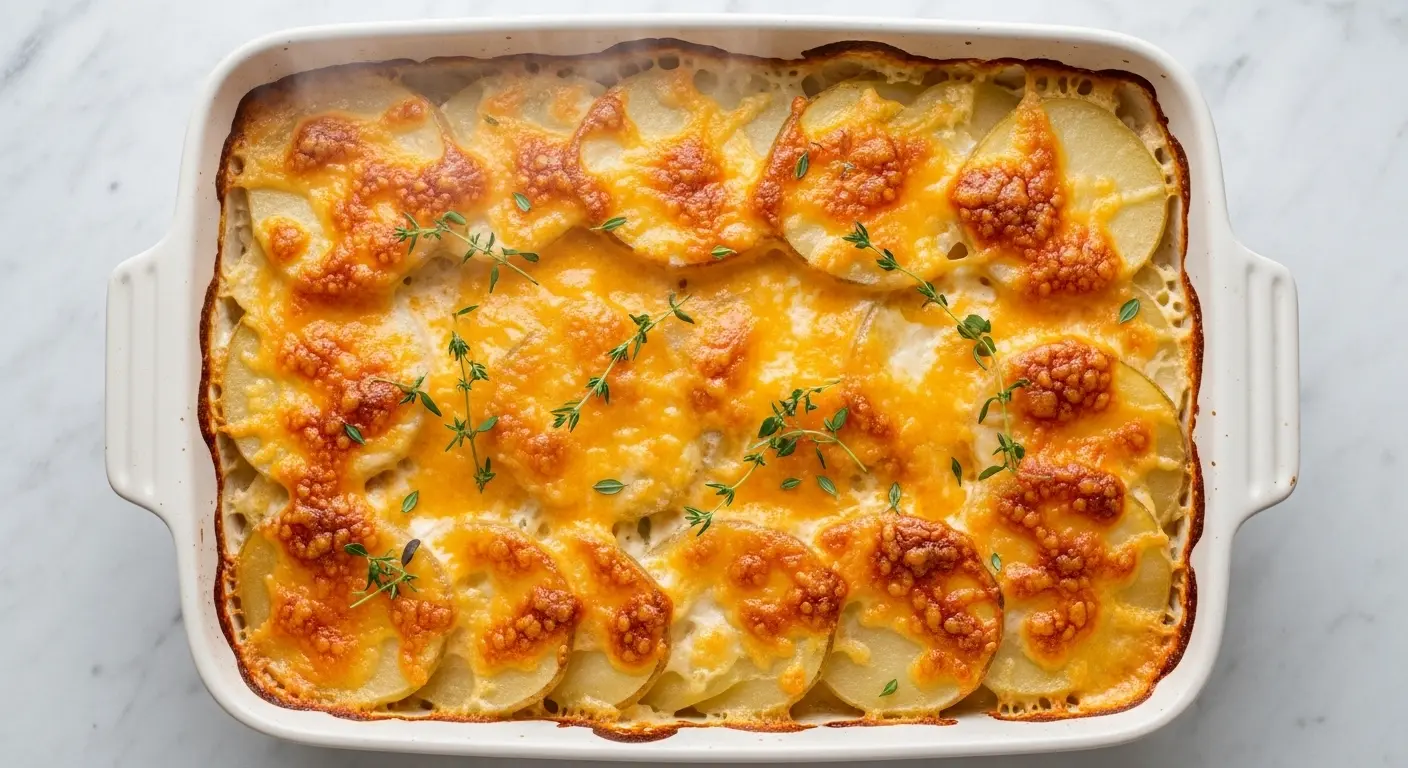
A great scalloped potatoes recipe is one of those things that feels like a warm hug on a plate. Layers of thinly sliced potatoes, bathed in a rich, velvety cream sauce made from a classic roux, all baked until bubbling, golden, and gloriously tender. This is the dish that shows up at holiday tables, Sunday suppers, and potlucks because it never fails to impress.
What makes this version stand out is the combination of Yukon Gold potatoes (which hold their shape beautifully and have a natural buttery flavor), a properly seasoned white sauce built with real butter, flour, whole milk, and a touch of garlic and onion, plus a generous layer of sharp cheddar melted right in. It is unapologetically comforting and deeply satisfying.
Whether you are pulling this together for Easter dinner, a cozy weeknight at home, or a holiday spread, this recipe delivers consistent, crowd-pleasing results every single time.
If you love classic potato dishes, you will also want to check out this Au Gratin Potatoes Recipe for another creamy, cheesy take on a beloved classic.
Why You’ll Love This Scalloped Potatoes Recipe
This recipe checks every box for a reliable, go-to side dish. It uses straightforward pantry staples that most home cooks already have on hand, so you do not need to make a special grocery run.
The layering technique ensures every bite has that perfect ratio of potato to creamy sauce. No dry spots, no bland layers.
It also makes ahead beautifully, which is a lifesaver when you are juggling a big holiday meal and oven real estate is precious. You can bake it the day before and reheat it with no loss of quality.
The sauce is thick enough to cling to every potato slice without being heavy or gluey. The trick is building your roux properly and slicing your potatoes uniformly thin.
Finally, it is an incredibly versatile recipe. You can keep it classic and let the creamy sauce shine, or add cheese, herbs, and other mix-ins to customize it to your crowd’s preferences.
- Creamy, rich sauce that coats every layer
- Uses simple, everyday ingredients
- Perfect for make-ahead holiday cooking
- Crowd-pleasing and endlessly customizable
- Bakes to golden, bubbly perfection
You might also enjoy: Cheesy Potatoes Recipe
Ingredients
This recipe relies on just a handful of key ingredients, so the quality of each one genuinely matters. Use good butter, full-fat milk, and a sharp, flavorful cheddar for the best results.
- 3 lbs (1.36 kg) Yukon Gold potatoes, peeled and thinly sliced (about 1/8 inch / 3 mm thick)
- 3 tablespoons unsalted butter
- 1 small yellow onion, finely diced
- 3 cloves garlic, minced
- 3 tablespoons all-purpose flour
- 2 cups (480 ml) whole milk
- 1 cup (240 ml) chicken or vegetable broth
- 1 teaspoon salt, plus more for layering
- 1/2 teaspoon black pepper
- 1/2 teaspoon garlic powder
- 1/4 teaspoon onion powder
- 1/4 teaspoon dried thyme (or 1 teaspoon fresh thyme leaves)
- 1/4 teaspoon paprika
- 1 1/2 cups (170 g) shredded sharp cheddar cheese, divided (plus extra for topping if desired)
- Cooking spray or additional butter, for greasing the baking dish
Read Also: Potato Casserole Recipe
Kitchen Equipment Needed
You do not need anything fancy to pull this recipe off, but having the right tools will make the process faster and more precise. A mandoline slicer is especially helpful here because even, thin potato slices are the single most important factor in this dish coming out perfectly.
- 9×13-inch baking dish (a 3-quart casserole dish also works well)
- Mandoline slicer (or a sharp chef’s knife and a steady hand)
- Large saucepan or deep skillet (for building the cream sauce)
- Whisk
- Cutting board
- Vegetable peeler
- Wooden spoon or silicone spatula
- Aluminum foil
- Measuring cups and spoons
Another favorite: Funeral Potatoes Recipe
Recommended Products for This Recipe
These are products I genuinely recommend based on quality, performance, and how much of a difference they make in the final result.
1. Adjustable Mandoline Slicer
Getting your potato slices to a consistent 1/8-inch thickness is the single most important factor in this recipe coming out perfectly. A good mandoline slicer makes this effortless and produces beautifully uniform slices every time. It is one of those kitchen tools that pays for itself the moment you use it for a dish like this.
2. Ceramic 9×13 Baking Dish with Lid
A deep ceramic baking dish distributes heat evenly, which is exactly what you want when baking multiple layers of potatoes. A dish that comes with a lid is especially useful for the covered baking phase and for storing leftovers directly in the fridge. The heavy ceramic material also keeps the dish hot longer, so your scalloped potatoes stay warm at the table.
3. Le Creuset Enameled Cast Iron Baking Dish
If you want even browning and that beautiful, deeply golden crust on top of your scalloped potatoes, a high-quality enameled cast iron baking dish is worth every penny. The even heat distribution means no scorched edges and no underdone center. It also goes straight from oven to table with style.
4. Microplane Box Grater
Pre-shredded cheese contains anti-caking agents that prevent it from melting as smoothly. Freshly grating your own sharp cheddar with a box grater makes a noticeable difference in the creaminess of your sauce and the way the cheese melts across the top. This is one of those small steps that separates a great scalloped potatoes recipe from an average one.
Read Also: Twice Baked Potato Recipe
Step-by-Step Instructions
Step 1: Preheat the Oven and Prep Your Baking Dish
- Preheat your oven to 375°F (190°C) and set the rack to the center position. This temperature allows the potatoes to cook through fully while the top gets that gorgeous golden-brown color.
- Grease your 9×13-inch baking dish generously with butter or cooking spray. Getting into the corners is important so nothing sticks.
- Set the prepared dish aside while you work on the potatoes and sauce.
Step 2: Slice the Potatoes
- Peel all of your Yukon Gold potatoes using a vegetable peeler. Rinse them under cold water after peeling.
- Using a mandoline slicer (or a very sharp chef’s knife), slice each potato into rounds approximately 1/8 inch (3 mm) thick. Consistency is key here. Uneven slices will cook at different rates, leaving some potatoes overdone and others underdone.
- As you slice, transfer the potato rounds directly into a large bowl of cold water. This step prevents them from browning and also rinses off excess surface starch, which would otherwise make the sauce gluey.
- Once all potatoes are sliced, drain them in a colander. Then spread them out on a clean kitchen towel and pat them very dry. Wet potatoes will water down your sauce, so take your time here.
Step 3: Build the Cream Sauce
- In a large saucepan, melt 3 tablespoons of unsalted butter over medium heat. Do not let it brown.
- Add the finely diced onion to the melted butter. Cook, stirring occasionally, for 3 to 4 minutes until the onion has softened and becomes slightly translucent. You are not trying to brown it, just soften it and draw out its sweetness.
- Add the minced garlic to the pan and cook for another 60 seconds, stirring constantly. Garlic cooks fast, so keep it moving to avoid burning it.
- Sprinkle 3 tablespoons of all-purpose flour over the butter, onion, and garlic mixture. Stir constantly for about 2 minutes using a wooden spoon or whisk. You are cooking out the raw flour taste and building the roux that will thicken your sauce. The mixture will look pasty and thick, which is exactly right.
- Begin adding the whole milk slowly, just a splash at a time at first, whisking constantly after each addition. This gradual approach prevents lumps from forming. Once about half the milk is incorporated and the mixture looks smooth, you can add the rest in a slow, steady stream while continuing to whisk.
- Pour in the broth and continue whisking until everything is fully incorporated and smooth.
- Add the salt, black pepper, garlic powder, onion powder, dried thyme, and paprika. Stir to combine.
- Cook the sauce over medium heat, stirring frequently, for about 3 to 5 minutes until it thickens slightly. It should coat the back of a spoon. Do not bring it to a rolling boil or it may separate. Remove it from the heat.
- Stir in 1 cup (about 115 g) of the shredded sharp cheddar cheese into the warm sauce until it melts fully and the sauce turns smooth and glossy. Reserve the remaining 1/2 cup (about 55 g) of cheese for the top.
Step 4: Layer the Potatoes and Sauce
- Take your dried potato slices and arrange roughly one-third of them in the bottom of your prepared baking dish. Overlap the slices slightly in a shingle pattern. This creates those beautiful, defined layers.
- Sprinkle a small pinch of salt over this potato layer if you prefer a more seasoned dish (optional, as the sauce is already seasoned).
- Ladle or pour about one-third of the cream sauce evenly over the first potato layer, using the back of a spoon to spread it all the way to the edges.
- Repeat with a second layer of potatoes, another pinch of salt if desired, and another one-third of the sauce.
- Add the final layer of potatoes, then pour the remaining sauce over the top. Press the potatoes down gently with the back of a spatula so they are mostly submerged in the sauce. A few potato edges poking through the surface is fine and will crisp up nicely.
- Scatter the remaining 1/2 cup of shredded sharp cheddar evenly over the top.
Step 5: Cover and Bake
- Tear off a sheet of aluminum foil and tent it loosely over the baking dish, leaving a small gap so steam can escape. Do not press the foil directly onto the cheese.
- Place the baking dish on the center rack of your preheated oven.
- Bake covered at 375°F (190°C) for 45 minutes. The covered baking phase steams the potatoes so they cook through gently and evenly without drying out.
Step 6: Uncover and Brown the Top
- After 45 minutes, carefully remove the foil. The sauce should be bubbling around the edges.
- Return the dish to the oven uncovered and bake for an additional 25 to 30 minutes, until the top is deeply golden brown and bubbling vigorously. The potatoes should be completely fork-tender when pierced in the thickest spot.
- If the cheese is browning too quickly before the potatoes are fully tender, loosely re-tent the foil for the remaining bake time.
Step 7: Rest Before Serving
- Remove the baking dish from the oven. This is the hardest part: resist the urge to serve immediately.
- Allow the scalloped potatoes to rest on the counter for at least 10 to 15 minutes before cutting in. This resting time allows the sauce to set up slightly so it does not run everywhere the moment you serve it. The dish will still be very hot and perfectly creamy after resting.
- Garnish with a few fresh thyme leaves or a light sprinkle of paprika if desired, and serve.
This pairs wonderfully with the creamy, comforting flavors in a Loaded Potato Soup Recipe if you are planning a potato-themed spread.
Tips for Success
Small adjustments during prep and baking can make a significant difference in the final result. These are the tips that consistently elevate a good batch of scalloped potatoes into a truly great one.
- Dry your potatoes thoroughly after soaking. Excess moisture dilutes the sauce and can result in a watery casserole.
- Slice evenly and thin. Uneven potato slices are the number-one cause of undercooked or mushy spots. Aim for 1/8 inch (3 mm) every time, and a mandoline makes this foolproof.
- Build your roux properly. Cook the butter and flour together for a full 2 minutes before adding liquid. This step removes the raw flour taste, which can otherwise come through in the finished dish.
- Add liquid to the roux slowly. Rushing this step creates lumps. A slow, gradual pour with constant whisking gives you a silky, smooth sauce.
- Grate your own cheese. Pre-shredded cheese is coated in anti-caking agents that affect how smoothly it melts. Freshly grated sharp cheddar melts into a much creamier, glossier sauce.
- Do not skip the rest period. Letting the dish rest for 10 to 15 minutes after baking helps the sauce tighten up so it scoops cleanly rather than running across the plate.
- Tent the foil loosely. Pressing foil directly onto the cheese causes it to tear off when you remove the foil, leaving an uneven, messy top layer.
Read Also: Smashed Potatoes Recipe
Serving Suggestions
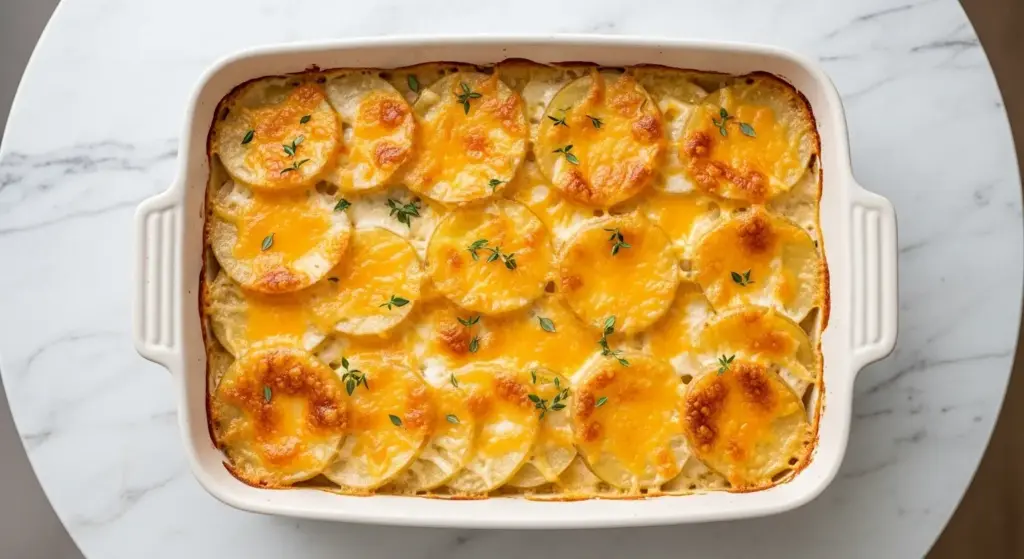
Scalloped potatoes are rich and creamy on their own, which makes them the perfect foil for simply prepared proteins and fresh sides. Think about pairing them with dishes that offer some brightness or a contrasting texture.
They are a natural partner for glazed ham, roasted pork tenderloin, or a beautifully seared Filet Mignon for a special occasion dinner.
For holiday meals, round out the spread with a few lighter sides so the scalloped potatoes can really shine as the star comfort dish.
- Roasted or glazed ham
- Baked or grilled chicken breasts
- Roasted asparagus or green beans
- A crisp green salad with a tangy vinaigrette
- Green Bean Casserole for a classic holiday combination
- Classic Deviled Eggs as a starter
- Roasted Broccoli for a quick, easy green side
- Cornbread or dinner rolls to soak up the creamy sauce
Read Also: Hashbrown Casserole Recipe
Variations to Try
Once you have the base recipe down, there are so many easy ways to put your own spin on it. These variations stay true to the spirit of the dish while offering something a little different.
- Ham and scalloped potatoes: Tuck thin slices of diced cooked ham between the potato layers before pouring on the sauce. This is a classic weeknight combination and one of the most popular ways to serve this dish.
- Extra cheesy version: Swap out some of the cheddar for Gruyere, Fontina, or a smoky Gouda. A combination of sharp cheddar and Gruyere is especially luxurious.
- Herb-forward version: Add a tablespoon of fresh chopped rosemary or fresh chives to the cream sauce for a more aromatic, fragrant dish.
- Spicy kick: Stir a pinch of cayenne pepper or a couple of dashes of hot sauce into the cream sauce. It adds a subtle warmth that plays beautifully against the rich, creamy base.
- Lighter version: Replace the whole milk with 2% milk and use a low-sodium broth. The sauce will be slightly thinner but still delicious.
- Slow cooker version: Layer everything in a greased slow cooker in the same order and cook on LOW for 7 to 8 hours. The top will not brown, but the potatoes will be perfectly tender and creamy.
- Sweet potato variation: Replace half the Yukon Gold potatoes with thinly sliced sweet potatoes for a beautiful, naturally sweet contrast.
For a similar baked potato dish with a different flavor profile, try this Tartiflette Recipe.
Storage and Reheating
Scalloped potatoes store wonderfully and may even taste better the next day as the sauce fully absorbs into the potato layers. Proper storage keeps them tasting fresh and creamy.
- Refrigerator: Cover the baking dish tightly with plastic wrap or foil and refrigerate for up to 4 days. Alternatively, transfer leftovers to an airtight container.
- Freezer: Scalloped potatoes can be frozen, though the texture of the sauce may change slightly once thawed. Cool completely, wrap tightly in plastic wrap then foil, and freeze for up to 2 months.
- Reheating in the oven: This is the best method for preserving the texture. Cover the dish with foil and bake at 350°F (175°C) for 20 to 30 minutes, or until heated through. Remove the foil for the last 5 to 10 minutes to re-crisp the top.
- Reheating individual portions: Transfer a portion to an oven-safe dish, add a small splash of milk to keep it moist, cover with foil, and reheat at 350°F (175°C) for 15 to 20 minutes.
- Microwave: For a quick reheat, microwave individual portions in 60-second bursts on medium power, stirring in between, until heated through. Add a small splash of milk if needed to loosen the sauce.
Read Also: Baked Potato Recipe
Nutritional Facts
The following values are approximate, based on one serving (1/8 of the recipe) and will vary depending on the specific brands and fat content of your ingredients.
| Nutrient | Amount Per Serving |
|---|---|
| Calories | 295 kcal |
| Total Fat | 13 g |
| Saturated Fat | 8 g |
| Cholesterol | 38 mg |
| Sodium | 420 mg |
| Total Carbohydrates | 35 g |
| Dietary Fiber | 3 g |
| Total Sugars | 4 g |
| Protein | 9 g |
| Calcium | 210 mg |
| Potassium | 740 mg |
| Vitamin C | 18 mg |
Nutritional values are estimates only. For precise nutritional information, use a nutrition calculator with your specific ingredients and portion sizes.
You might also enjoy: Roasted Potatoes Recipe
Health Benefits of Key Ingredients
While scalloped potatoes are undeniably an indulgent comfort food, several of the main ingredients offer genuine nutritional value that is worth noting.
Potatoes often get an unfair reputation, but Yukon Golds are actually a solid source of vitamins and minerals, particularly when eaten with the skin on. They deliver a good dose of potassium, vitamin C, and vitamin B6 per serving.
The whole milk in the cream sauce contributes calcium, vitamin D, and a meaningful amount of high-quality protein per cup, supporting bone health and overall nutritional intake.
Sharp cheddar cheese provides additional calcium and protein, and despite its fat content, a moderate amount of full-fat dairy has been linked to improved satiety, meaning you feel more satisfied with a smaller portion.
- Yukon Gold potatoes: Excellent source of potassium, which supports heart health and blood pressure regulation. Also rich in vitamin C and a good source of B vitamins.
- Garlic: Contains allicin, a sulfur compound with well-documented antioxidant and anti-inflammatory properties.
- Onion: Provides quercetin, a flavonoid antioxidant, along with prebiotic fibers that support gut health.
- Whole milk: A good source of calcium, phosphorus, vitamin D (in fortified milk), and high-quality protein.
- Sharp cheddar cheese: Rich in calcium and protein; a natural source of vitamin K2, which plays a role in bone and cardiovascular health.
- Thyme: Contains thymol, a natural compound with antioxidant properties, as well as vitamins A and C.
For more comforting potato-based recipes, check out this Garlic Mashed Potatoes Recipe.
Frequently Asked Questions
1. What is the difference between scalloped potatoes and au gratin potatoes?
The classic distinction is cheese. Traditional scalloped potatoes are baked in a milk or cream-based white sauce with no cheese, while potatoes au gratin always include cheese layered between the potato slices and melted on top.
In modern home cooking, the lines between these two dishes have blurred considerably, and many popular scalloped potato recipes now include cheese. This recipe takes the most popular approach, incorporating cheese into the cream sauce and on top for a richer, more satisfying result.
2. What type of potato works best for scalloped potatoes?
Yukon Gold potatoes are widely considered the best choice for this dish. They have a naturally buttery flavor, a smooth creamy texture, and they hold their shape well during the long bake time rather than falling apart.
Russet potatoes also work and are the traditional choice in many classic American recipes. They are starchier, which helps thicken the sauce, but they can become more crumbly once fully baked. Avoid waxy potatoes like red potatoes, as they do not absorb the sauce as well and can remain too firm.
3. Why are my scalloped potatoes still hard after baking?
The two most common reasons are sliced potatoes that are too thick and an oven temperature that is too low. Make sure your slices are no thicker than 1/8 inch (3 mm), and verify your oven temperature with an oven thermometer, as many home ovens run cooler than the dial indicates.
Another factor is the acidity in some sauces. If you added any acidic ingredients, such as tomatoes or a lot of wine, these can inhibit the potatoes from softening. Stick to the cream-based sauce in this recipe for guaranteed tender results.
4. Can I make scalloped potatoes ahead of time?
Absolutely. This is one of the best make-ahead side dishes for holiday cooking. You can assemble the entire dish, including sauce and cheese topping, cover it tightly, and refrigerate it for up to 48 hours before baking.
When ready to bake, remove the dish from the fridge at least 30 minutes before going into the oven to take the chill off. You may need to add an extra 10 to 15 minutes to the covered baking phase to account for the dish starting cold. Alternatively, you can bake it the day before and reheat it as directed in the storage section above.
5. How do I prevent my scalloped potatoes from curdling or separating?
A sauce that separates is almost always caused by overheating. Do not let your cream sauce come to a full rolling boil at any point during preparation.
Cook it over medium to medium-low heat, stirring frequently, until just thickened. The same applies during baking. The sauce will bubble gently in the oven, which is perfectly fine, but you do not want it at a vigorous boil throughout the baking time. Keeping the dish covered for the first 45 minutes also helps regulate the internal temperature and prevents the sauce from separating.
Read Also: Ham and Potato Soup Recipe
Final Thoughts
This scalloped potatoes recipe is the kind of dish that earns a permanent spot in your cooking rotation. It is simple enough for a regular weeknight but impressive enough to serve at your most special gatherings.
Once you master the cream sauce and the layering technique, you will find yourself reaching for this recipe again and again, tweaking and customizing it to match the seasons and your mood.
Go ahead and try it this week. Preheat that oven, get out your mandoline, and treat yourself and your family to one of the most satisfying comfort food classics out there.
If you give this recipe a try, we would love to hear about it in the comments below. Tell us what you paired it with, any variations you tried, or just share how it turned out for your table!
Recommended:
- Breakfast Potatoes Recipe
- Air Fryer Baked Potato Recipe
- Creamy Mashed Potatoes Recipe
- Potato Salad Recipe
- Sweet Potato Casserole Recipe
- Tater Tot Casserole Recipe
- Squash Casserole Recipe
- Corn Casserole Recipe
- Chicken Casserole Recipe
- Potato Leek Soup Recipe