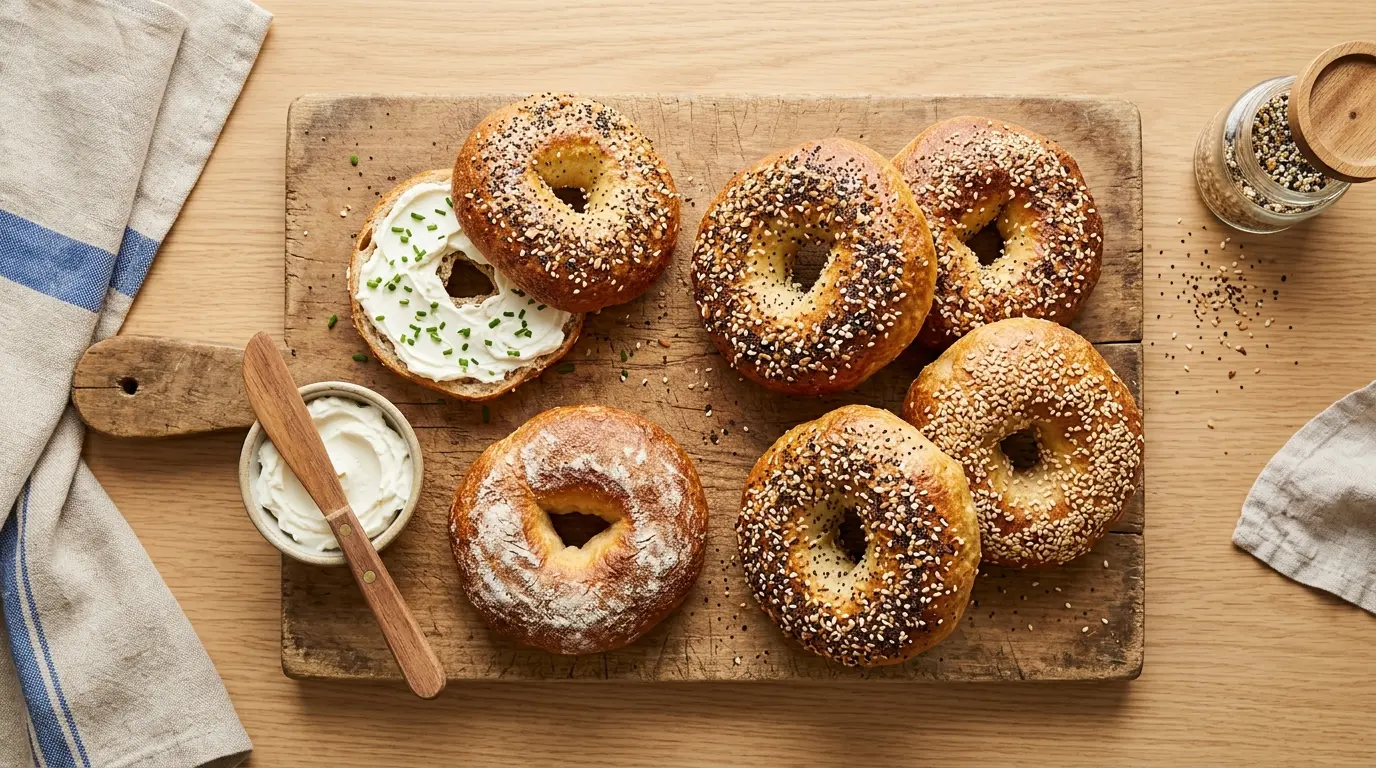
Making a sourdough bagel recipe at home might sound intimidating, but it’s one of those deeply satisfying baking projects that pays off with every single bite. These bagels have that signature chew you’d expect from a proper New York-style bagel, a glossy golden crust, and a subtle tangy flavor that comes from real sourdough fermentation. No commercial yeast shortcuts here.
The secret is in two things: a well-fed, active sourdough starter and the classic boil-before-bake method that gives bagels their unmistakable texture. Boiling the shaped dough in a honey-water bath gelatinizes the outer starch, creating that shiny, chewy shell that you simply can’t get any other way.
This recipe uses bread flour rather than all-purpose, because the higher protein content (around 12-14%) develops the strong gluten network that makes bagels chewy rather than fluffy and bread-like. The dough is also stiffer than typical sourdough bread dough, which is intentional.
Whether you top them with everything bagel seasoning, sesame seeds, or leave them plain, these homemade sourdough bagels will rival anything from a bakery.
You might also enjoy: Sourdough Discard Bagels
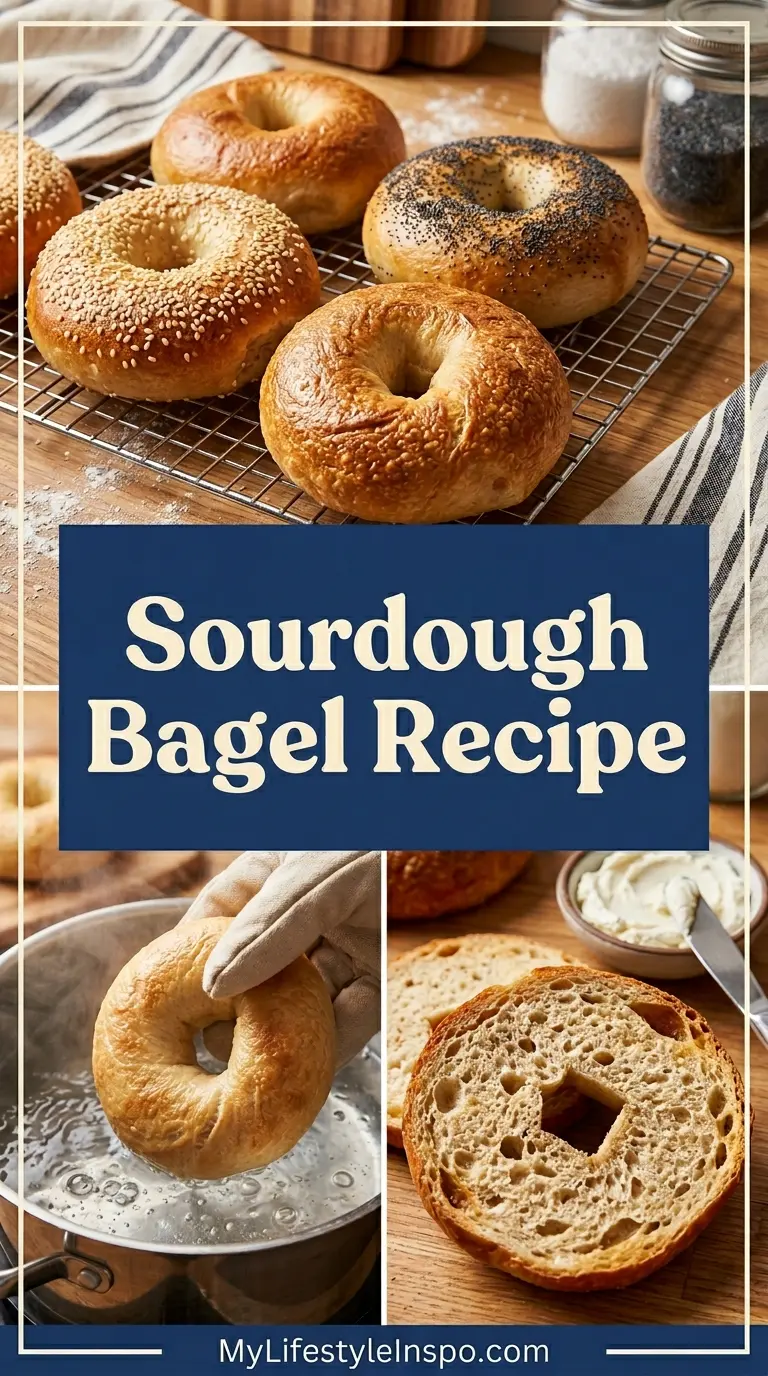
Why You’ll Love This Sourdough Bagel Recipe
These bagels check every box for a truly great homemade bake.
First, the flavor is on another level. Long fermentation from the sourdough starter develops a complex, slightly tangy taste that commercial yeast just can’t replicate.
Second, the texture is exactly right. Properly boiled and baked, these have that satisfying chew with a thin, crisp crust, not dense and heavy, not soft and fluffy.
Third, you control every ingredient. No preservatives, no additives, just flour, water, salt, starter, and a touch of sweetener.
Fourth, the recipe is flexible. You can do a same-day bake, or let the shaped bagels cold-proof overnight in the fridge for even better flavor and a more relaxed baking schedule.
Fifth, they freeze beautifully. Bake a batch on the weekend and have bakery-quality breakfast ready to go all week.
- Complex sourdough flavor with a satisfying tang
- Chewy, glossy crust from the honey boil bath
- Made with simple, wholesome ingredients
- Flexible timeline: same-day or overnight cold proof
- Freezer-friendly for easy weekday breakfasts
- Customizable with any toppings you love
Another favorite to try next: Sourdough English Muffin Recipe
Ingredients
You only need a handful of pantry staples for this recipe. The key is starting with an active, bubbly sourdough starter that has been fed 4 to 12 hours before mixing the dough.
- 100g (3.5 oz / about 1/2 cup) active sourdough starter (100% hydration, fed and bubbly)
- 500g (17.6 oz / 4 cups) bread flour, plus extra for dusting
- 240ml (8 fl oz / 1 cup) warm water (around 80°F/27°C)
- 10g (2 tsp) fine sea salt
- 15g (1 tbsp) barley malt syrup or honey (for the dough)
- 2 tbsp honey or barley malt syrup (for the boiling water)
- 1 large egg (for egg wash, optional but recommended)
- Toppings of choice: everything bagel seasoning, sesame seeds, poppy seeds, or coarse salt
Read Also: Everything Bagel Recipe
Kitchen Equipment Needed
None of this equipment is unusual, but having the right tools makes the process go smoothly.
- Stand mixer with dough hook (or strong hands for kneading)
- Digital kitchen scale (strongly recommended for accuracy)
- Large mixing bowl
- Plastic wrap or damp kitchen towel
- Large wide pot (for boiling)
- Slotted spoon or spider strainer
- Two large baking sheets
- Parchment paper
- Pastry brush (for egg wash)
- Wire cooling rack
Read Also: Sourdough Sandwich Bread Recipe
Recommended Products for This Recipe
These are products that genuinely make a difference in how your bagels turn out. Each one solves a common pain point in the process.
1. Barley Malt Syrup
Traditional New York bagels are made with barley malt syrup, not honey. Adding it to both the dough and the boiling water gives these bagels a deeper, slightly caramel flavor and a darker golden crust. It’s worth tracking down if you want the most authentic result.
2. Bread Flour (High Protein)
All-purpose flour will produce softer, fluffier bagels. For that proper chewy texture, you need high-protein bread flour (at least 12% protein). King Arthur Bread Flour is a reliable, widely available choice that consistently produces excellent results.
3. Everything Bagel Seasoning Blend
A good pre-made everything bagel topping saves you from measuring out individual seeds every time. Look for a blend that includes sesame seeds, poppy seeds, dried garlic, dried onion, and coarse salt. It’s the most popular topping for a reason.
4. Baking Steel or Heavy Baking Sheet
Bagels benefit from a hot, even baking surface. A thick baking steel or heavy-duty aluminum baking sheet conducts heat well and helps produce an evenly browned bottom, which matters for that satisfying bite.
This recipe pairs well with a batch of Sourdough Focaccia if you’re in a sourdough baking mood.
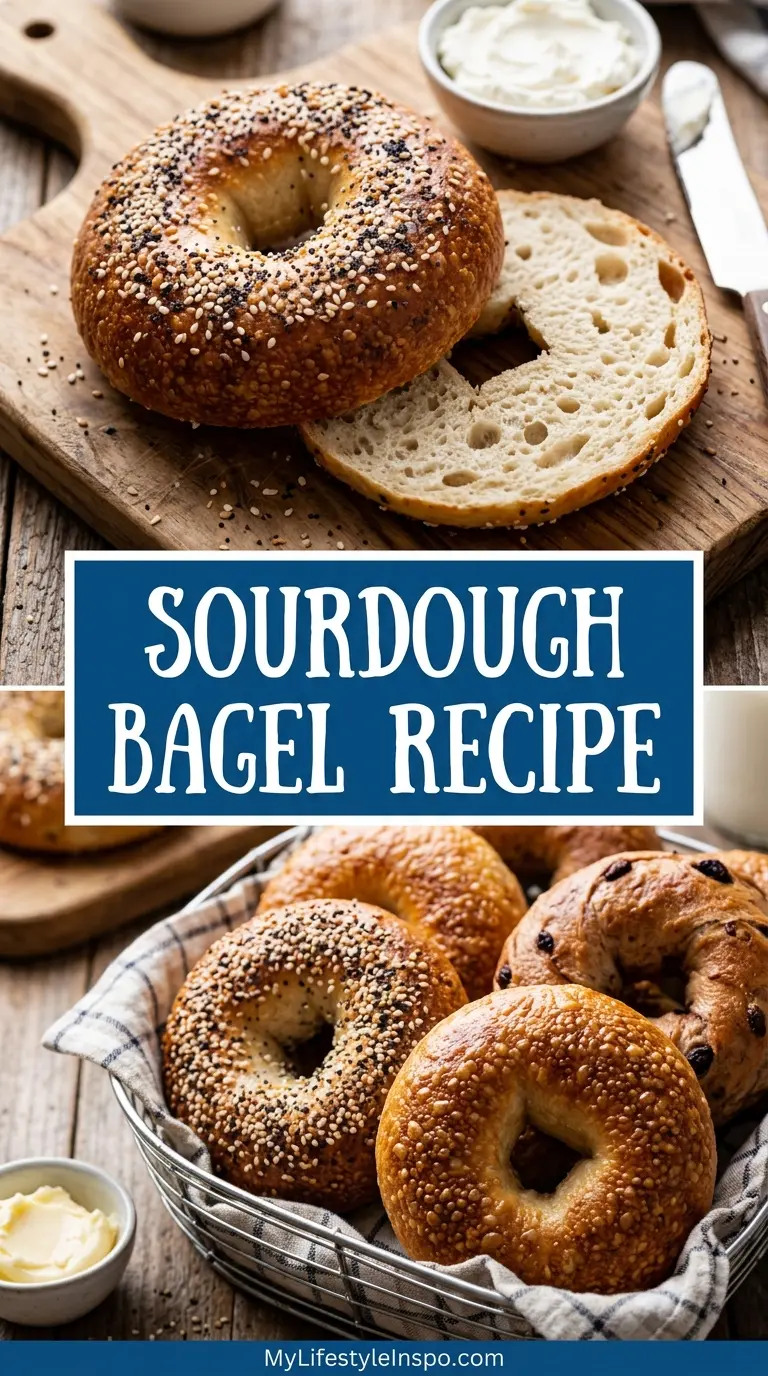
Step-by-Step Instructions
1. Feed Your Sourdough Starter
- Feed your starter 4 to 12 hours before you plan to mix the dough.
- Use equal weights of starter, flour, and water (for example, 20g starter + 20g flour + 20g water).
- Let it sit at room temperature until it is visibly bubbly, doubled in size, and smells pleasantly sour and yeasty.
- To test readiness, drop a small spoonful into a glass of water. If it floats, it’s ready. If it sinks, give it more time.
2. Mix the Dough
- In a large mixing bowl (or the bowl of your stand mixer), combine the 100g active sourdough starter, 240ml warm water, and 15g barley malt syrup or honey.
- Mix briefly until the starter and sweetener are dissolved into the water.
- Add the 500g bread flour and 10g salt on top.
- Mix until a shaggy dough forms, then either knead by hand for 10-12 minutes or use the stand mixer with a dough hook on medium-low speed for 6-8 minutes.
- The dough should be smooth, stiff, and slightly tacky but not sticky. It will feel much firmer than a regular sourdough bread dough. This is correct.
- If the dough feels too sticky to hold its shape, add flour one tablespoon at a time.
3. Bulk Ferment the Dough
- Shape the dough into a ball and place it back in the bowl.
- Cover with plastic wrap or a damp towel.
- Let the dough bulk ferment at room temperature (68-75°F / 20-24°C) for 4 to 8 hours, or until noticeably puffier and risen by about 50-75%.
- Sourdough ferments slowly, so don’t expect a dramatic overnight-yeast-bread style double. The dough should look and feel alive but may not double completely.
- In a warmer kitchen (above 75°F/24°C), check at 4 hours. In a cooler kitchen, it may need closer to 8 hours.
4. Divide and Shape the Bagels
- Turn the fermented dough out onto a lightly floured surface.
- Using a kitchen scale, divide it into 8 equal pieces (around 105-110g / 3.7-3.9 oz each).
- To shape: take one piece of dough and flatten it into a rough rectangle with your hands.
- Roll it into a tight log, then roll the log out to about 10 inches long.
- Wrap the log around your hand so the ends overlap by about 1 inch on your palm. Roll your palm back and forth on the counter to seal the joint firmly together, forming a ring.
- Alternatively, poke a hole through the center of the dough ball with your thumb and gently stretch the hole to about 1.5 inches wide (it will shrink slightly during proofing and baking).
- Place each shaped bagel on a parchment-lined baking sheet lightly dusted with cornmeal or flour to prevent sticking.
5. Proof the Shaped Bagels
- Once all 8 bagels are shaped and on the baking sheet(s), cover loosely with plastic wrap.
- Option A (same day): Let the bagels proof at room temperature for 2-3 hours until they look slightly puffed and feel a little airy when gently poked.
- Option B (overnight cold proof, recommended): Place the covered baking sheet directly in the refrigerator and cold proof for 8-16 hours. This builds more flavor and makes the bagels easier to handle when boiling. Remove from the fridge and go straight to boiling the next morning.
- To test if the bagels are proofed enough, drop one carefully into a bowl of cold water. If it floats within 10 seconds, they are ready to boil. If it sinks, allow more proofing time.
6. Preheat the Oven and Prepare the Boiling Water
- Preheat your oven to 450°F (232°C) at least 30-45 minutes before baking. A hot oven is critical for a good crust.
- Fill your large, wide pot with water (about 3-4 inches deep) and bring it to a rolling boil.
- Add 2 tablespoons of honey or barley malt syrup to the boiling water and stir to dissolve. The sweetener helps the bagels brown beautifully in the oven.
7. Boil the Bagels
- Working with 2-3 bagels at a time (don’t overcrowd the pot), carefully lower each bagel into the boiling water using the slotted spoon.
- Boil for 1 minute on the first side, then flip and boil for another 1 minute on the second side.
- For a chewier crust, extend the boil to 90 seconds per side.
- Remove the bagels from the water with the slotted spoon and let the excess water drip off briefly.
- Return boiled bagels to the parchment-lined baking sheet.
8. Add Egg Wash and Toppings
- If using an egg wash (highly recommended for shine and color), whisk 1 large egg with 1 tablespoon of water.
- Using a pastry brush, brush the top and sides of each boiled bagel with egg wash.
- Immediately sprinkle your desired toppings over the wet egg wash: everything bagel seasoning, sesame seeds, poppy seeds, coarse salt, or any combination.
- Press toppings gently with your fingers to help them adhere.
9. Bake the Bagels
- Place the baking sheet on the center rack of your preheated 450°F (232°C) oven.
- Bake for 20-25 minutes, until the bagels are deep golden brown on top and the bottoms look evenly browned.
- For very even baking, rotate the pan 180 degrees halfway through.
- If you want to check doneness, the internal temperature should read 205°F (96°C) on an instant-read thermometer.
- Transfer to a wire cooling rack and allow to cool for at least 15 minutes before slicing. The interior continues to set as it cools.
You might also enjoy: Easy Sourdough Bread Recipe
Tips for Success
A few small adjustments can make a big difference between good bagels and truly great ones.
- Use a scale. Bread baking is much more reliable when you weigh ingredients rather than using volume measurements, especially for flour.
- Don’t skip the boil. Boiling is what creates the characteristic chewy texture and shiny crust. Skipping it will give you a bread roll, not a bagel.
- Make sure your starter is active. A sluggish starter means a sluggish ferment. If your starter didn’t pass the float test before you made the dough, your bagels will be dense.
- Keep the dough stiff. Resist the urge to add more water if the dough feels tight. A stiff, slightly dry dough is correct for bagels.
- Cold proof for better flavor. If you have time, the overnight cold proof step is worth it. The low-and-slow fermentation in the fridge builds deeper flavor and makes the bagels easier to handle.
- Float-test before boiling. Always test one bagel in cold water before boiling the batch. If it sinks, the bagels need more proofing time.
Read Also: Sourdough Starter Recipe
Serving Suggestions
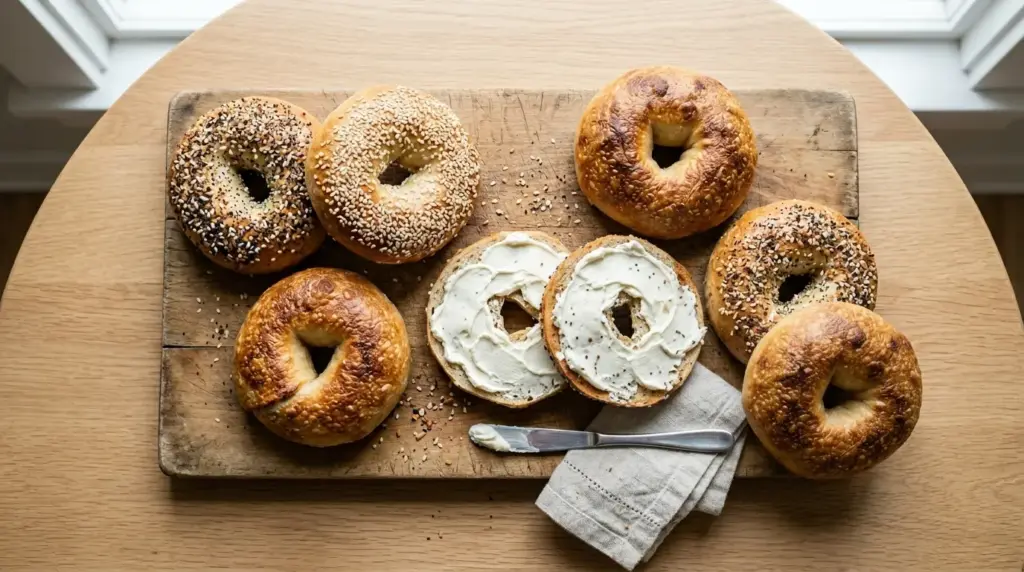
Sourdough bagels are a complete breakfast on their own, but here are some serving ideas that really make them shine.
Classic cream cheese is always the right answer. Spread it generously on a toasted, sliced bagel for a simple, satisfying breakfast that never goes out of style.
For a more elevated spread, try an avocado toast inspired topping: mashed avocado, a squeeze of lemon, flaky sea salt, and red pepper flakes on a warm bagel half.
For a heartier option, layer sliced smoked salmon (lox), cream cheese, thinly sliced red onion, capers, and fresh dill.
Toasted with honey butter is a surprisingly wonderful option, especially for plain or sesame bagels.
Serve alongside a breakfast skillet for a full, satisfying brunch spread.
- Classic cream cheese and lox with capers and red onion
- Avocado, lemon, and everything seasoning
- Fried egg, cheddar, and sausage for a breakfast sandwich
- Honey butter with a drizzle of hot honey
- Whipped cream cheese with fresh herbs and cucumber slices
- Sliced turkey, provolone, and mustard for a deli-style lunch
Variations to Try
Once you’ve mastered the base recipe, these variations are worth exploring.
- Everything Bagels: Use a generous coat of everything bagel seasoning on top before baking. The blend of sesame, poppy seeds, garlic, onion, and salt is the most popular bagel topping for good reason.
- Sesame Bagels: Dip the egg-washed tops into a bowl of sesame seeds for a classic New York deli-style look.
- Cinnamon Raisin Bagels: Knead 80g of raisins and 1.5 tsp of cinnamon into the dough at the end of mixing. These are wonderful with plain cream cheese.
- Blueberry Bagels: Fold 80g of dried blueberries into the dough after the initial mix. Fresh blueberries can be used but will make the dough slightly wetter.
- Whole Wheat Sourdough Bagels: Replace 100g of bread flour with 100g whole wheat flour for a heartier, nuttier flavor. The texture will be slightly denser.
- Asiago or Cheddar Bagels: Press shredded cheese onto the egg-washed top before baking. Asiago is especially delicious and gets golden and crispy in the oven.
For another sourdough baking project, try these Sourdough Discard Pretzels made with sourdough discard.
Storage and Reheating
Sourdough bagels taste best the day they are baked, but they store well if you take the right approach.
- Room temperature: Store completely cooled bagels in a sealed zip-lock bag or airtight container at room temperature for up to 2 days.
- Freezing: These bagels freeze exceptionally well. Slice them in half before freezing so you can pop them straight into the toaster from frozen. Wrap individual bagels in plastic wrap, then store them in a freezer bag. They will keep for up to 3 months.
- Avoid the refrigerator: Storing bagels in the fridge makes them stale and dry faster than room temperature storage.
- Reheating: For the best texture from room-temperature storage, slice and toast them in a toaster or toaster oven. For frozen bagels, toast directly from frozen for 3-5 minutes until warmed through with a crispy crust.
- Whole bagel reheat: If you want to reheat a whole unsliced bagel, wrap it in aluminum foil and warm it in a 350°F (175°C) oven for 10-12 minutes.
Another sourdough bread to add to your rotation: Same Day Sourdough Bread Recipe
Nutritional Facts
The following is an estimate per plain bagel (1 of 8, without toppings or spreads):
| Nutrient | Amount |
|---|---|
| Calories | ~270 kcal |
| Carbohydrates | ~53g |
| Protein | ~9g |
| Fat | ~1.5g |
| Fiber | ~2g |
| Sodium | ~310mg |
| Sugar | ~2g |
Note: Values will vary based on exact flour used, hydration of your starter, and any toppings or spreads added.
Read Also: Sourdough Discard Bread Recipe
Health Benefits of Key Ingredients
Sourdough bagels offer a few nutritional advantages over their commercial yeast-leavened counterparts.
The fermentation process in sourdough bread partially breaks down phytic acid, an antinutrient found in wheat that can block the absorption of minerals like iron, zinc, and magnesium. This means your body can actually absorb more of the nutrients from sourdough than from standard white bread bagels.
The long fermentation also partially pre-digests some of the gluten and starches, which may make sourdough products easier on digestion for people who are sensitive to gluten (though this is not a solution for those with celiac disease).
- Bread flour: High in protein, which supports muscle repair and satiety
- Sourdough starter: Provides naturally occurring beneficial bacteria from fermentation
- Fermentation process: Lowers the glycemic index compared to standard white bread, meaning a steadier blood sugar response
- Barley malt syrup: Contains small amounts of B vitamins and minerals compared to refined sugar
- Sesame seeds (topping): Good source of calcium, healthy fats, and vitamin E
- Poppy seeds (topping): Contain dietary fiber, calcium, and iron
For another fermented baking project, check out this Sourdough Discard Flatbread Recipe.
Frequently Asked Questions
1. Can I make sourdough bagels without a stand mixer?
Yes, absolutely. The dough is stiff, so kneading by hand takes more effort, but it’s completely doable. Knead on a lightly floured surface for 10-12 minutes until the dough is smooth and passes the windowpane test. You’ll feel a real workout in your arms, but the result is the same.
2. Why did my bagels come out dense?
Dense bagels are almost always the result of under-proofed dough or an under-active starter. Make sure your starter passes the float test before you use it, and give your shaped bagels enough time to proof fully. The cold water float test for the shaped bagels is a reliable way to confirm they’re ready to boil.
3. Why do sourdough bagels take so long compared to regular bagels?
Sourdough relies entirely on wild yeast from the starter rather than commercial instant yeast. Wild yeast ferments more slowly, which is what gives sourdough its deeper flavor and more complex texture. The wait is built into the process by design. The overnight cold proof option helps you break the work over two days so it’s more manageable.
4. Can I use whole wheat flour instead of bread flour?
You can replace up to 20-30% of the bread flour with whole wheat flour without dramatically changing the texture. Using 100% whole wheat will produce noticeably denser, heavier bagels. If you want a fully whole wheat bagel, look for white whole wheat flour, which has a milder flavor and produces a lighter result than standard whole wheat.
5. What toppings work best for sourdough bagels?
Everything bagel seasoning is the crowd-pleaser. Sesame seeds, poppy seeds, and coarse salt are all classic choices. For something different, try shredded Asiago cheese (it gets beautifully crispy in the oven), or a mix of sunflower and pumpkin seeds. Add toppings immediately after the egg wash while the surface is still wet so they stick well.
Read Also: Homemade Bagel Recipe

Sourdough Bagels

Equipment
- Stand mixer with dough hook - or strong hands for kneading
- Digital kitchen scale - strongly recommended for accuracy
- Large mixing bowl
- Plastic wrap - or damp kitchen towel
- Large wide pot - for boiling
- Slotted spoon - or spider strainer
- Two large baking sheets
- Parchment paper
- Pastry brush - for egg wash
- Wire cooling rack
Ingredients
- 100 g active sourdough starter - 3.5 oz / about 1/2 cup, 100% hydration, fed and bubbly
- 500 g bread flour - 17.6 oz / 4 cups, plus extra for dusting
- 240 ml warm water - 8 fl oz / 1 cup, around 80°F/27°C
- 10 g fine sea salt - 2 tsp
- 15 g barley malt syrup - 1 tbsp, for the dough; or honey
- 2 tbsp honey - or barley malt syrup, for the boiling water
- 1 large egg - for egg wash, optional but recommended
- everything bagel seasoning - for topping
- sesame seeds - for topping
- poppy seeds - for topping
- coarse salt - for topping
Classic Cream Cheese Spread
- 8 oz cream cheese - softened
Smoked Salmon Topping
- 4 oz smoked salmon - lox-style
- 1/4 red onion - thinly sliced
- 2 tbsp capers - drained
- 1 sprig fresh dill - for garnish
Avocado Toast Style
- 1/2 avocado - mashed
- 1/2 tsp lemon juice - freshly squeezed
- flaky sea salt - to taste
- red pepper flakes - to taste, optional
Instructions
- Feed your sourdough starter 4-12 hours before mixing. Mix equal weights of starter, flour, and water and let sit at room temperature until bubbly and doubled. Test readiness by dropping a small spoonful in water—if it floats, it’s ready.
- In your mixing bowl, combine 100g active starter, 240ml warm water, and 15g barley malt syrup or honey until dissolved. Add 500g bread flour and 10g salt, then knead with a dough hook for 6-8 minutes or by hand for 10-12 minutes until smooth, stiff, and slightly tacky.
- Shape the dough into a ball, place in the bowl, and cover with plastic wrap. Let ferment at room temperature for 4-8 hours until puffed and risen by 50-75%. The dough should feel alive but may not double completely.
- Turn the dough onto a floured surface and divide into 8 equal pieces (about 105-110g each). Shape each piece into a ring by rolling it into a log, wrapping around your hand, and sealing the ends firmly together on the counter.
- Place shaped bagels on a parchment-lined baking sheet and cover loosely with plastic wrap. For same-day baking, proof for 2-3 hours at room temperature. For best flavor, cold proof in the fridge for 8-16 hours.
- Preheat your oven to 450°F (232°C) at least 30 minutes before baking. Bring a large pot of water to a rolling boil and add 2 tablespoons of honey or barley malt syrup.
- Boil 2-3 bagels at a time for 1 minute per side. For a chewier crust, boil for 90 seconds per side. Remove with a slotted spoon and place back on the baking sheet.
- Whisk the egg with 1 tablespoon of water and brush over the boiled bagels. Immediately sprinkle your desired toppings (everything seasoning, sesame seeds, poppy seeds, or coarse salt) and press gently to adhere.
- Bake at 450°F (232°C) for 20-25 minutes until deep golden brown. Rotate the pan halfway through for even baking. Transfer to a wire rack and cool for at least 15 minutes before slicing.
Notes
- Use a scale: Bread baking is much more reliable when you weigh ingredients rather than using volume measurements, especially for flour.
- Don’t skip the boil: Boiling is what creates the characteristic chewy texture and shiny crust. Skipping it will give you a bread roll, not a bagel.
- Test your starter: A sluggish starter means a sluggish ferment. If your starter didn’t pass the float test before you made the dough, your bagels will be dense.
- Keep the dough stiff: Resist the urge to add more water if the dough feels tight. A stiff, slightly dry dough is correct for bagels.
- Cold proof for better flavor: The overnight cold proof step builds deeper flavor and makes the bagels easier to handle.
- Float-test before boiling: Drop one bagel in cold water before boiling the batch. If it sinks, the bagels need more proofing time.
- Storage: Store at room temperature in a sealed bag for up to 2 days. Slice and freeze for up to 3 months—pop directly in the toaster from frozen.
- Topping tips: Add toppings immediately after the egg wash while the surface is still wet so they stick well.
- Barley malt syrup: Traditional New York bagels use barley malt syrup—it gives a deeper caramel flavor. Honey works well as a substitute.
Final Thoughts
Making sourdough bagels at home is one of those bakes that feels genuinely rewarding from start to finish. You get to use your starter for something beyond bread, and the process of shaping and boiling bagels is strangely meditative.
The first time you pull a tray of golden, shiny bagels from the oven, you’ll understand why people get obsessed with this recipe. The smell alone is worth the effort.
Give this sourdough bagel recipe a try this weekend. Once you slice into one warm from the oven, slather on some cream cheese, and take that first bite, you’ll be hooked.
Drop a comment below to let me know how yours turned out, and feel free to share a photo. I love seeing your bakes!
Recommended:
- New York Style Bagel Recipe
- Sourdough Discard Cinnamon Rolls
- Sourdough Discard Waffles
- Sourdough Discard Pancakes
- Sourdough Discard Naan
- Sourdough Discard Pizza Dough
- Sourdough Discard Focaccia
- Sourdough Discard Pita Bread
- Sourdough Discard Breadsticks
- Sweet Sourdough Bread Recipe