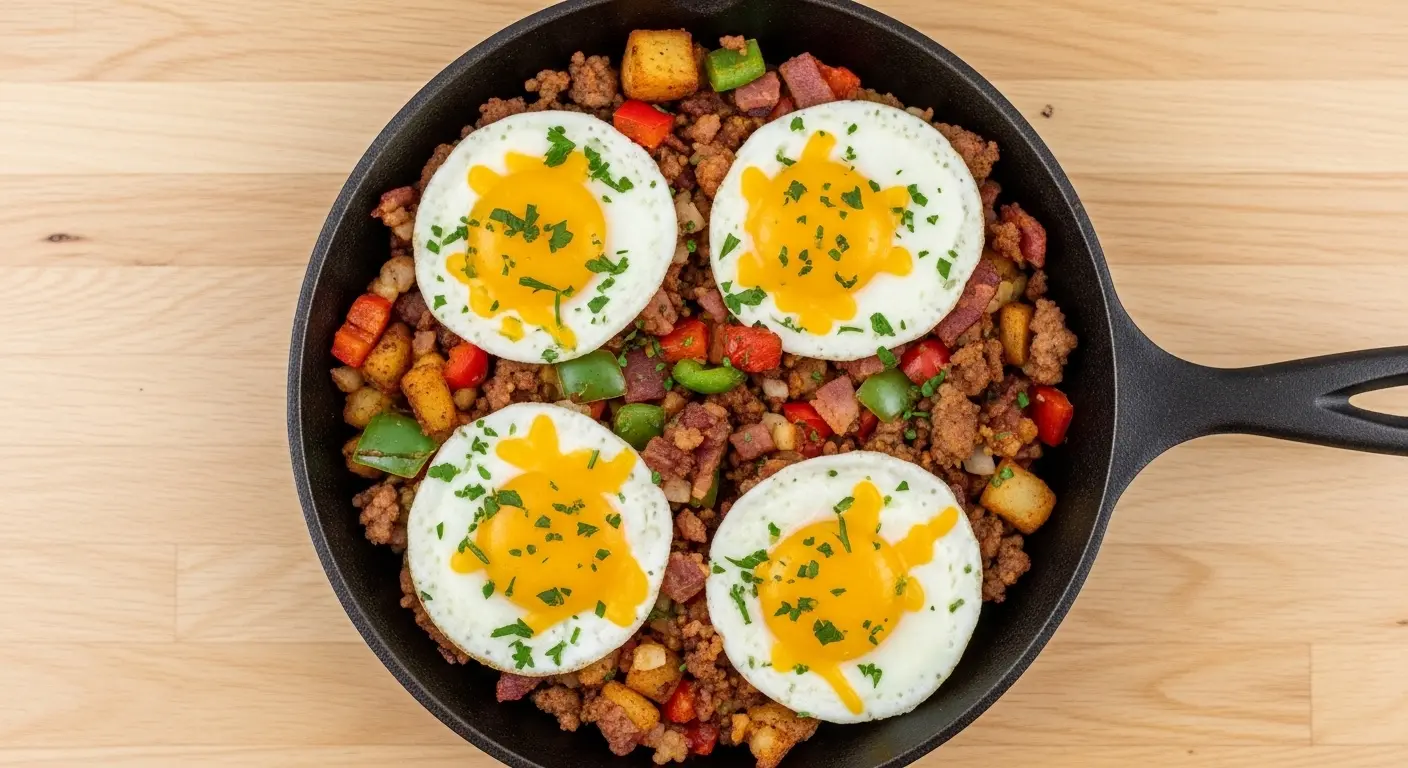
If you’ve been searching for the ultimate morning meal that ticks all the boxes, this breakfast skillet recipe is exactly what you need. It’s hearty, packed with classic breakfast flavors, and comes together in just one pan. We’re talking crispy potatoes, savory sausage and bacon, tender bell peppers and onions, perfectly cooked eggs, and a generous blanket of melted cheddar cheese — all made in a single skillet in about 30 minutes.
The magic of this recipe is in how the ingredients layer and cook together. Rendering the bacon first means you cook everything else in the leftover drippings, which adds a depth of smoky flavor to every bite. The potatoes absorb those drippings as they crisp up, and by the time the eggs are nestled in and cooked to your liking, every component has had a chance to pick up flavor from the others.
This is the kind of breakfast that works just as well on a lazy Sunday as it does on a busy weekday. It scales easily for a crowd, reheats beautifully, and can be customized in so many ways with whatever you have in the fridge.
Keep reading — the full recipe, tips, and variations are all below.
For another comforting one-pan morning meal, you might also love this Loaded Breakfast Skillet that piles on even more toppings.
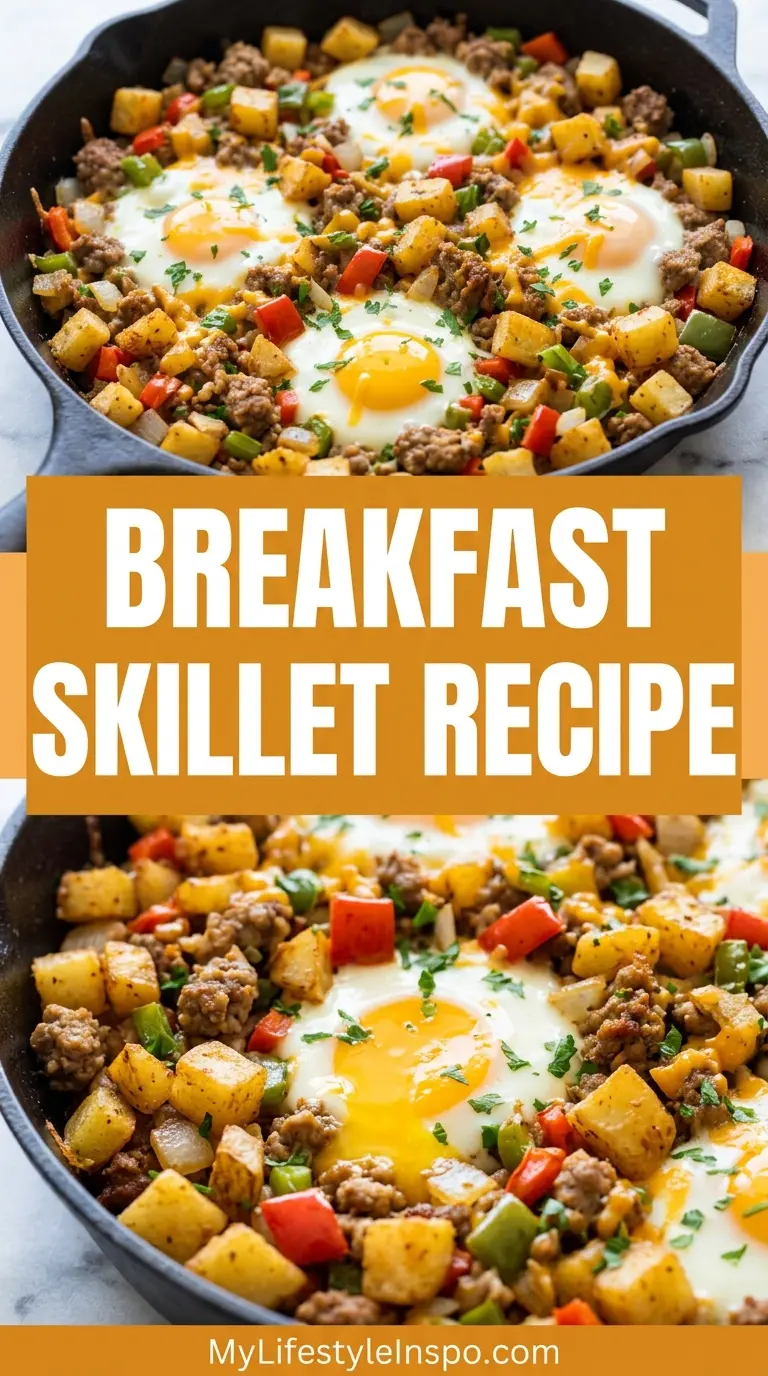
Why You’ll Love This Breakfast Skillet Recipe
This recipe has become a staple in countless households for good reason — it delivers maximum flavor with minimal cleanup.
Everything cooks in a single pan, which means fewer dishes and a faster kitchen reset after breakfast. The combination of crispy potatoes, smoky bacon, savory sausage, and runny eggs is a classic for a reason: it’s deeply satisfying and fills you up for hours.
It’s also incredibly forgiving and flexible. You can swap proteins, use different cheeses, add extra vegetables, or adjust the spice level based on what you have and who you’re feeding.
The cooking method here builds real flavor at every step. Cooking the bacon and sausage first, then using those rendered fats to cook the potatoes and vegetables, means nothing goes to waste and everything tastes richer.
Here’s a quick look at why this recipe stands out:
- One pan, minimal cleanup: Everything from meat to eggs cooks in a single 12-inch skillet.
- Ready in 30 minutes: A filling, restaurant-quality breakfast without spending your whole morning cooking.
- Customizable: Works with whatever proteins, vegetables, or cheeses you have on hand.
- Great for any meal: Breakfast, brunch, or a satisfying breakfast-for-dinner option.
- Crowd-friendly: Easily doubled in a larger skillet or cast iron pan to feed more people.
- Naturally gluten-free: No flour or breading needed — just real, whole ingredients.
Another crowd-pleasing skillet favorite to bookmark: the Egg Skillet Recipe is a simple, egg-forward version perfect for lighter mornings.
Ingredients
This recipe uses classic breakfast ingredients that work together seamlessly. Russet potatoes are ideal here because they get perfectly crispy on the outside while staying fluffy inside — much better than waxy potatoes for hash-style cooking. A mix of mild pork sausage and bacon gives you both smoky and savory notes without either one overpowering the dish.
Here’s everything you’ll need:
- 3 strips (85 g) thick-cut bacon, cut into 1-inch pieces
- 6 oz (170 g) breakfast sausage (links or bulk), crumbled or sliced
- 2 medium russet potatoes (about 1 lb / 450 g), peeled and cut into ½-inch dice
- 1 small yellow onion, diced (about ½ cup / 75 g)
- 1 medium red bell pepper, diced (about ¾ cup / 90 g)
- 1 medium green bell pepper, diced (about ¾ cup / 90 g)
- 2 cloves garlic, minced
- ½ teaspoon (2.5 g) garlic powder
- ½ teaspoon (2.5 g) onion powder
- ½ teaspoon (2.5 g) smoked paprika
- ¼ teaspoon (1.25 g) black pepper
- ½ teaspoon (2.5 g) salt (adjust to taste)
- 4 large eggs
- 1 cup (115 g) shredded cheddar cheese (or Colby Jack)
- 1 tablespoon (15 ml) olive oil or butter (if needed)
- Fresh parsley or chives, chopped, for garnish (optional)
- Hot sauce or sour cream for serving (optional)
You might also love the classic flavors in this Breakfast Casserole Recipe if you’re feeding a bigger crowd and want a make-ahead option.
Kitchen Equipment Needed
The right pan makes all the difference here. A large cast iron skillet is the top choice for this recipe because it retains heat evenly, creates an incredible crust on the potatoes, and goes from stovetop to oven seamlessly if you prefer to finish the eggs that way. A 12-inch skillet is ideal; anything smaller and it can get crowded.
Here’s what you’ll need:
- 12-inch cast iron skillet (or large oven-safe non-stick skillet)
- Sharp chef’s knife
- Cutting board
- Wooden spoon or heat-resistant silicone spatula
- Paper towels (for draining meat)
- Measuring spoons
- Plate or bowl for holding cooked meat
- Lid for the skillet (or a large baking sheet to use as a cover)
Read Also: Hashbrown Casserole Recipe
Recommended Products for This Recipe
These are hand-picked products based on quality and how much they genuinely improve the outcome of this breakfast skillet recipe.
1. Lodge 12-Inch Cast Iron Skillet
A high-quality cast iron skillet is the single best tool you can have for this recipe. The Lodge 12-inch is pre-seasoned, retains heat like no other pan, and develops a beautiful crust on the potatoes that you simply cannot replicate in a thin non-stick pan. It also moves seamlessly from stovetop to oven, giving you flexibility in how you finish the eggs.
2. Smoked Paprika (Premium Quality)
Regular paprika and smoked paprika are not the same thing, and this recipe specifically benefits from the smoky, slightly earthy depth that smoked paprika brings. A high-quality smoked paprika can elevate the whole flavor profile of the skillet, complementing the bacon and sausage beautifully.
3. OXO Good Grips Silicone Spatula
Turning crispy potatoes and pushing sausage around a hot skillet calls for a spatula that can handle real heat. The OXO Good Grips silicone spatula is heat-resistant, flexible, and wide enough to flip and stir without breaking up your potato pieces.
4. Colby Jack Shredded Cheese Blend
Freshly shredded cheese melts far more smoothly than pre-shredded bags, which are often coated with anti-caking agents. That said, if you want the convenience of a bag, a quality Colby Jack blend gives you a great melt and a slightly milder, creamier flavor than straight cheddar.
5. Thick-Cut Bacon
Thick-cut bacon renders more fat and stays meatier after cooking, which means better flavor in the drippings and more satisfying bacon pieces in each bite of the skillet. It’s a small upgrade that makes a noticeable difference.
You might also enjoy: Cowboy Skillet Recipe
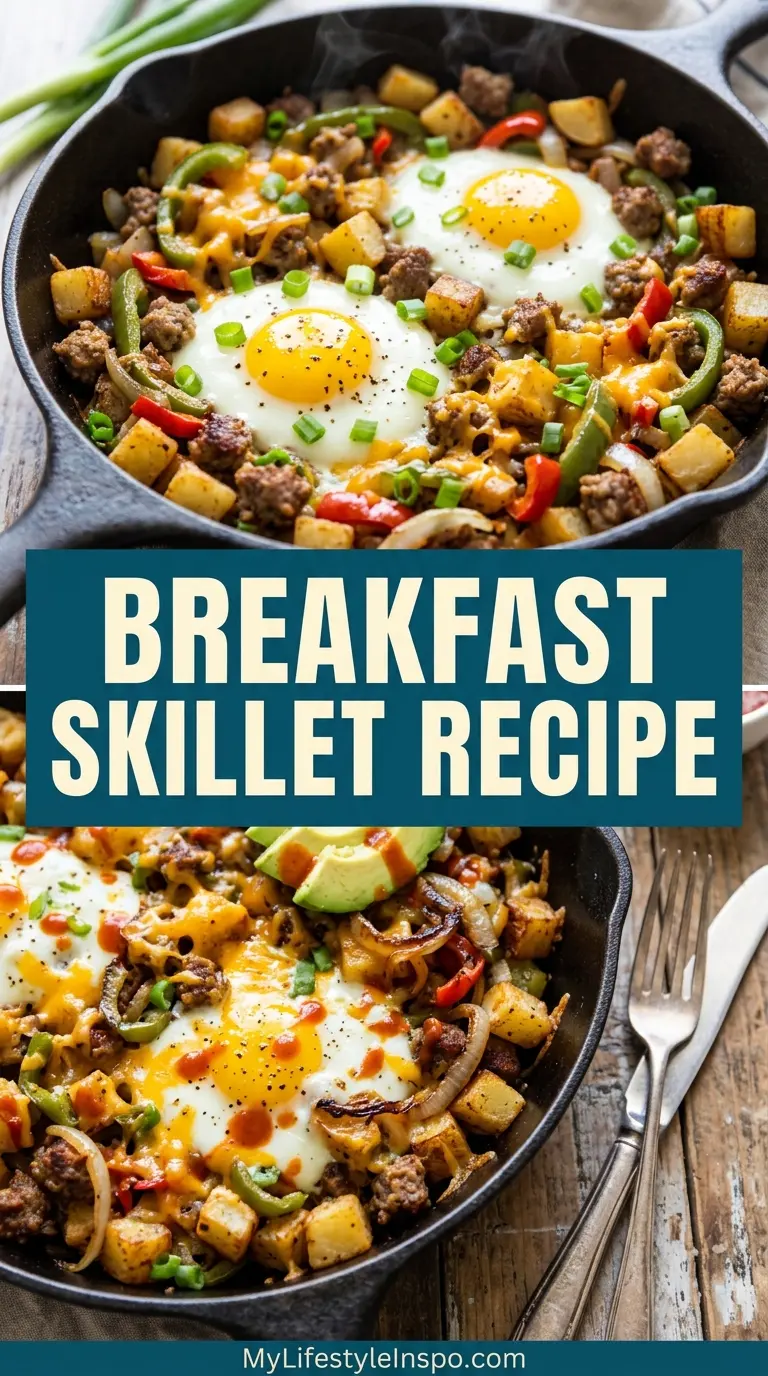
Step-by-Step Instructions
Step 1: Prep All Your Ingredients
- Peel and cut your russet potatoes into ½-inch (1.25 cm) dice. Try to keep the pieces as uniform as possible so they cook evenly. Place them in a bowl of cold water as you work to prevent browning, then drain and pat completely dry with paper towels before cooking — moisture is the enemy of a good crisp.
- Dice the yellow onion into small, even pieces, about ¼ inch (0.6 cm).
- Dice both bell peppers into pieces roughly the same size as the onion.
- Mince the garlic cloves finely and set aside separately, as garlic burns quickly and will be added later.
- If using sausage links, slice them into ½-inch rounds. If using bulk sausage, break it into crumbles with your hands.
- Cut the bacon strips crosswise into 1-inch (2.5 cm) pieces.
- Measure out all your spices into a small bowl — garlic powder, onion powder, smoked paprika, salt, and black pepper — so they’re ready to add all at once.
Step 2: Cook the Bacon
- Place your 12-inch cast iron skillet over medium heat and allow it to preheat for about 2 minutes before adding anything.
- Add the bacon pieces to the dry skillet (no oil needed — bacon has plenty of its own fat). Spread them out in a single layer so each piece has contact with the pan.
- Cook the bacon for 5 to 6 minutes, stirring occasionally, until the pieces are crispy and the fat has fully rendered out.
- Use a slotted spoon to transfer the bacon to a paper towel-lined plate. Leave the rendered bacon fat in the skillet — this is liquid gold that will flavor everything else.
Step 3: Brown the Sausage
- Return the skillet (with bacon drippings) to medium heat.
- Add the breakfast sausage pieces or crumbles in a single layer. Avoid stirring too quickly — let the sausage sit undisturbed for about 2 minutes to develop a golden-brown crust on the bottom.
- Stir and continue cooking for another 3 to 4 minutes, breaking up bulk sausage as you go, until the sausage is fully cooked through with no pink remaining.
- Remove the sausage with a slotted spoon to the same plate as the bacon. You should have a generous amount of fat left in the pan. If it looks excessive (more than 3 to 4 tablespoons), carefully drain some off, leaving enough to coat the bottom of the skillet.
Step 4: Crisp the Potatoes
- If the pan looks a little dry after removing the sausage, add 1 tablespoon (15 ml) of olive oil or butter.
- Add the dried, diced potatoes to the skillet in an even layer. Do not stir them immediately — let them sit undisturbed for 3 to 4 minutes over medium heat so the bottoms can develop a golden-brown crust.
- Once the bottoms are golden, stir and flip the potatoes, then repeat — cook undisturbed for another 3 minutes, then stir again.
- Continue cooking and stirring every few minutes for a total of about 12 to 15 minutes, until the potatoes are golden and crispy on the outside and fork-tender when pierced in the center.
- Sprinkle the combined spices (garlic powder, onion powder, smoked paprika, salt, black pepper) evenly over the potatoes and stir to coat every piece. Cook for 1 more minute so the spices toast slightly and bloom in the fat.
Step 5: Sauté the Vegetables
- Push the potatoes to the edges of the skillet, creating a clearing in the center.
- Add the diced onion and both bell peppers to the center of the pan. If the pan looks dry, add a small drizzle of oil.
- Cook the vegetables for 4 to 5 minutes, stirring occasionally, until the onions are translucent and the peppers have softened and picked up a little color at the edges.
- Add the minced garlic and stir it into the vegetables. Cook for 30 to 60 seconds, stirring constantly, until fragrant. Be careful not to let the garlic brown too much or it will turn bitter.
- Stir the vegetables into the potatoes until everything is evenly combined.
Step 6: Return the Meat and Add the Eggs
- Add the cooked bacon and sausage back into the skillet, distributing them evenly throughout the potato and vegetable mixture. Stir gently to combine.
- Use the back of a spoon to create 4 small wells or depressions in the potato mixture, spacing them evenly around the skillet.
- Crack one egg into a small bowl first (this prevents shell pieces from ending up in the skillet and gives you control), then carefully slide it into one of the wells. Repeat with the remaining 3 eggs.
- Season the eggs lightly with a pinch of salt and black pepper.
Step 7: Add the Cheese and Cook the Eggs
- Sprinkle the shredded cheddar or Colby Jack cheese evenly over the entire surface of the skillet — over the potatoes, meat, and around (but not directly covering) the egg yolks if you want them visible.
- Cover the skillet with a lid or a large baking sheet placed on top.
- Cook over medium-low heat for 3 to 5 minutes, or until the egg whites are fully set but the yolks are still slightly runny (or cook longer if you prefer fully set yolks). Check at the 3-minute mark to avoid overcooking.
- If you prefer firmer eggs and have an oven-safe skillet, you can alternatively transfer the covered skillet to a 400°F (200°C) oven for 8 to 10 minutes to finish.
Step 8: Garnish and Serve
- Remove the skillet from heat. Let it rest for 1 minute before serving — this helps the eggs set just a little more and makes it easier to scoop.
- Sprinkle freshly chopped parsley or chives over the top for color and a fresh herby note.
- Serve directly from the skillet at the table for a rustic, family-style presentation.
- Offer hot sauce, sour cream, or salsa on the side for those who like extra toppings.
This recipe pairs beautifully with the classic flavors in the Taco Skillet Recipe if you love one-pan cooking and want to add another skillet meal to your regular rotation.
Tips for Success
Small adjustments make a big difference when it comes to getting this breakfast skillet exactly right. The most important one: always dry your potatoes thoroughly before they hit the pan.
Here are the key tips to keep in mind:
- Dry your potatoes well: Any moisture on the potato surface will create steam in the pan instead of a crust. Pat them thoroughly with paper towels after rinsing, or leave them out on a clean kitchen towel for a few minutes.
- Don’t crowd the pan: If you’re scaling the recipe up for more people, use a larger skillet or cook the potatoes in batches. A crowded pan steams instead of crisps.
- Let things sit: Resist the urge to constantly stir the potatoes and meat. Letting them sit undisturbed for a few minutes at a time is what creates those golden, caramelized surfaces.
- Use freshly shredded cheese: Pre-shredded cheese is coated in starches to prevent clumping, which can make it melt less smoothly. Shredding your own from a block gives you a silkier, creamier melt.
- Control your egg cook: If you love runny yolks, keep the heat low once the eggs go in and check early. The residual heat from the potatoes and pan will keep cooking the eggs even after you remove the skillet from the heat.
- Season in layers: Adding salt and spices to the potatoes while they cook, rather than all at the end, builds more flavor throughout the dish.
- Preheat your cast iron: A properly preheated cast iron skillet distributes heat more evenly and helps prevent sticking.
Another favorite: Chicken Skillet Recipe
Serving Suggestions
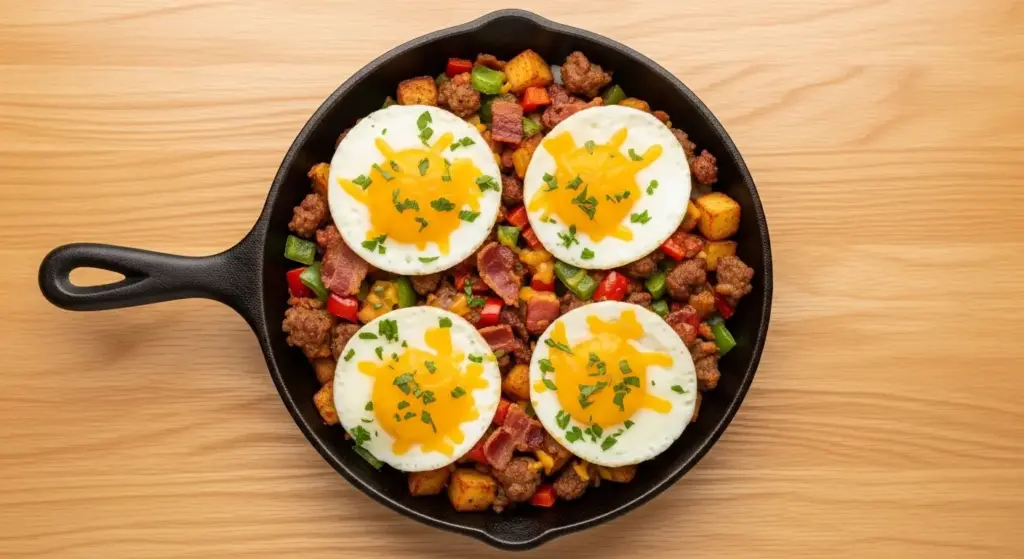
This breakfast skillet is a complete meal all on its own, but it’s also wonderful as part of a larger spread for brunch or a weekend family breakfast.
For a classic diner-style morning spread, pair this skillet with a stack of pancakes, a bowl of fresh fruit, or some biscuits with butter and jam. The contrast of sweet and savory makes the meal feel extra special.
Here are some serving ideas to round it out:
- Warm Skillet Cornbread on the side for a heartier, Southern-style breakfast
- A side of Scrambled Eggs for guests who prefer their eggs soft and mixed rather than baked into the skillet
- Buttermilk Biscuits served alongside for scooping up any extra cheesy potato bits
- A drizzle of Hollandaise Sauce over the eggs for a brunch-worthy, restaurant-style upgrade
- Fresh fruit salad to balance the savory richness of the skillet
- Sour cream, sliced avocado, or Fresh Salsa as optional toppings that guests can add themselves
- Hot sauce or sriracha for those who like heat
Read Also: Breakfast Burrito Recipe
Variations to Try
Once you’ve made the base recipe, it’s easy to riff on it in so many directions. The one-pan format is incredibly versatile — swap proteins, change the vegetables, or adjust the seasonings to create a totally different flavor profile.
Here are some popular variations worth trying:
- Cowboy Breakfast Skillet: Omit the bell peppers and use diced Potatoes O’Brien (which come with peppers and onions already mixed in), and top with a drizzle of sriracha and shredded Monterey Jack cheese for a Western-style version.
- Vegetarian Breakfast Skillet: Skip the bacon and sausage entirely and bulk up with extra vegetables — mushrooms, spinach, zucchini, and cherry tomatoes all work wonderfully. Add a pinch of red pepper flakes for a little heat.
- Southwest Breakfast Skillet: Add a can of drained black beans, a handful of frozen corn, diced jalapeño, and swap the cheddar for pepper jack cheese. Serve with salsa and avocado.
- Ham and Cheese Skillet: Replace the sausage with diced Canadian bacon or cubed ham. The flavors are slightly lighter and less smoky but equally satisfying.
- Loaded Breakfast Skillet: Add sliced mushrooms, sun-dried tomatoes, and top with crumbled feta cheese alongside the cheddar for a more complex, bistro-style version.
- Spicy Chorizo Skillet: Swap the pork sausage for Mexican chorizo, which releases bright red oil and bold spice as it cooks, adding a completely different — and delicious — flavor to the potatoes.
- Sweet Potato Version: Replace russet potatoes with an equal amount of diced sweet potatoes for a slightly sweeter, more nutritious base that pairs especially well with bacon.
You might also enjoy: Mexican Beef and Rice Skillet Recipe
Storage and Reheating
This breakfast skillet stores and reheats well, making it a practical make-ahead option for busy mornings during the week. The eggs are best eaten fresh, but the potato and meat base can be made ahead and eggs added when reheating.
Here are the storage guidelines to follow:
- Refrigerator: Store cooled leftovers in an airtight container for up to 3 days. The eggs will continue to firm up as they sit, so plan accordingly.
- Freezer: The potato and meat portion (without eggs) can be frozen in a zip-top freezer bag or airtight container for up to 2 months. Thaw overnight in the refrigerator before reheating.
- Stovetop reheating: Warm a skillet over medium heat with a small drizzle of oil or butter. Add the leftovers and cook, stirring occasionally, for 4 to 5 minutes until heated through. This method restores some of the crispiness to the potatoes.
- Microwave reheating: Place leftovers in a microwave-safe dish, cover loosely, and heat in 60-second intervals, stirring between each, until heated through. The texture will be softer but the flavors are still great.
- Repurpose leftovers: The leftover potato and meat mixture makes excellent breakfast burritos — just warm it up and stuff it into a flour tortilla with cheese and sour cream.
Read Also: Egg Bake Recipe
Nutritional Facts
The following nutritional information is per serving, based on 4 equal servings from this recipe. These values are estimates and will vary based on specific ingredient brands and any modifications made.
| Nutrient | Per Serving |
|---|---|
| Calories | ~490 kcal |
| Total Fat | 28 g |
| Saturated Fat | 11 g |
| Cholesterol | 265 mg |
| Sodium | 720 mg |
| Total Carbohydrates | 34 g |
| Dietary Fiber | 4 g |
| Sugars | 4 g |
| Protein | 25 g |
| Vitamin A | 1,400 IU |
| Vitamin C | 55 mg |
| Calcium | 250 mg |
| Iron | 3 mg |
This is a calorie-dense, protein-rich meal designed to keep you full and energized for several hours. If you’re looking to lighten it up, reducing or eliminating the bacon and using egg whites instead of whole eggs can significantly reduce the fat and calorie content without sacrificing the heartiness of the dish.
Another recipe to bookmark: Baked Oatmeal Recipe
Health Benefits of Key Ingredients
This breakfast skillet isn’t just satisfying — several of its key ingredients bring real nutritional value to the table.
Eggs are one of the most complete protein sources available, providing all nine essential amino acids. They’re also rich in choline, which supports brain health and cognitive function, and lutein and zeaxanthin, two antioxidants that support eye health.
Here’s a closer look at some of the standout nutritional contributors in this recipe:
- Eggs: Packed with high-quality protein, healthy fats, B vitamins, and essential minerals like selenium and phosphorus. One egg delivers roughly 6 grams of protein for only 70 to 80 calories.
- Bell peppers: Among the highest plant-based sources of vitamin C, with red bell peppers containing nearly three times the vitamin C of an orange. They’re also rich in vitamin A and antioxidants that fight inflammation.
- Russet potatoes: A good source of potassium (more than a banana), vitamin B6, and resistant starch, which feeds healthy gut bacteria when potatoes are cooked and cooled.
- Garlic: Contains allicin, a compound studied for its antimicrobial and heart health-supporting properties. Minced garlic releases more allicin than whole or sliced.
- Smoked paprika: Provides capsaicin and carotenoids, plant pigments with antioxidant activity that may support heart health and reduce inflammation.
- Onion: A source of quercetin, a flavonoid with anti-inflammatory properties, as well as prebiotics that support gut microbiome health.
- Bacon and sausage (in moderation): While higher in sodium and saturated fat, they provide protein and iron. Choosing quality, minimally processed options and keeping portions reasonable makes them a reasonable part of a balanced diet.
This is also a naturally gluten-free meal, making it a great option for anyone with gluten sensitivities who wants a hearty, filling breakfast without needing to make substitutions.
Sausage Gravy Recipe is another great way to put breakfast sausage to delicious use if you’re a fan of classic morning flavors.
Frequently Asked Questions
1. Can I use frozen hash browns instead of fresh potatoes?
Yes, frozen hash browns work very well and actually save a lot of prep time. Whether you use shredded or diced frozen potatoes, the key is to not thaw them before cooking — adding them straight from frozen prevents them from getting mushy and helps them crisp up better in the skillet. Add them to the pan with the drippings and cook over medium to medium-high heat, pressing them down lightly and resisting the urge to stir constantly so they develop a golden crust.
2. Can I make this recipe ahead of time?
You can absolutely prep the components in advance to make morning assembly faster. Cook the bacon and sausage, dice the vegetables, and par-cook the potatoes the night before, then store everything separately in airtight containers in the refrigerator. In the morning, combine and reheat everything in the skillet for 5 to 7 minutes before adding the eggs and cheese. For full make-ahead convenience, the cooked potato and meat mixture (without eggs) can be stored for up to 3 days.
3. What is the best pan to use for this recipe?
A 12-inch cast iron skillet is the ideal choice for this recipe. Cast iron retains and distributes heat evenly, which creates a superior crust on the potatoes and allows the eggs to cook gently from the residual heat. It’s also oven-safe if you prefer to finish the eggs in the oven. A large stainless steel skillet is a good second option. A non-stick pan works but won’t give you the same level of caramelization on the potatoes.
4. How do I get crispy potatoes instead of soggy ones?
The two most important factors are dryness and patience. Make sure your potato pieces are completely dry before they hit the pan — any surface moisture will steam the potatoes rather than brown them. Second, avoid the temptation to stir constantly. Let the potatoes sit undisturbed for 3 to 4 minutes at a time so a proper crust can develop before you flip them. Cooking over medium heat (not high) also helps because it gives the interior time to become tender while the outside crisps.
5. Can I make this dairy-free?
Yes, with one easy swap. Simply omit the shredded cheese or replace it with your favorite dairy-free cheese alternative. Most plant-based shredded cheese blends melt reasonably well when covered in a hot skillet. Everything else in the recipe — the potatoes, eggs, meat, and vegetables — is naturally dairy-free, so no other adjustments are needed. The skillet will still be hearty, flavorful, and satisfying without the cheese.
For more easy egg-based breakfast ideas, take a look at the Egg Bites Recipe — a great option for meal prepping individual breakfast portions for the week.
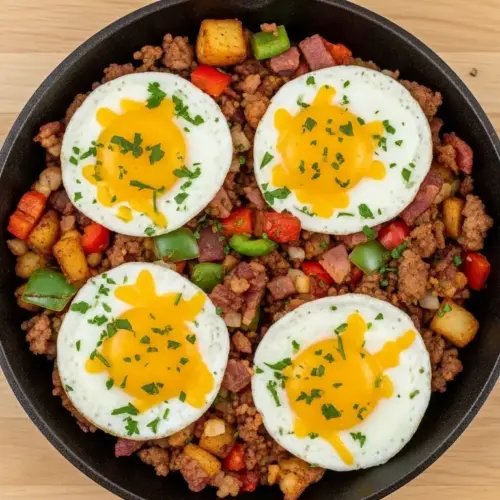
Breakfast Skillet

Equipment
- 12-inch cast iron skillet - or large oven-safe non-stick skillet
- Sharp chef's knife
- Cutting board
- Wooden spoon - or heat-resistant silicone spatula
- Paper towels - for draining meat
- Measuring spoons
- Plate - or bowl for holding cooked meat
- Skillet lid - or large baking sheet to use as a cover
Ingredients
- 3 strips thick-cut bacon - 85g, cut into 1-inch pieces
- 6 oz breakfast sausage - 170g, links or bulk, crumbled or sliced
- 2 medium russet potatoes - about 1 lb or 450g, peeled and cut into ½-inch dice
- 1 small yellow onion - diced, about ½ cup or 75g
- 1 medium red bell pepper - diced, about ¾ cup or 90g
- 1 medium green bell pepper - diced, about ¾ cup or 90g
- 2 cloves garlic - minced
- ½ tsp garlic powder - 2.5g
- ½ tsp onion powder - 2.5g
- ½ tsp smoked paprika - 2.5g
- ¼ tsp black pepper - 1.25g
- ½ tsp salt - 2.5g, adjust to taste
- 4 large eggs
- 1 cup shredded cheddar cheese - 115g, or Colby Jack
- 1 tbsp olive oil - 15ml, or butter, if needed
For Garnish (Optional)
- fresh parsley - or chives, chopped, for garnish
- hot sauce - for serving
- sour cream - for serving
Instructions
- Prep all ingredients: peel and dice potatoes, dice onion and peppers, mince garlic, slice sausage and bacon, and measure spices into a small bowl.
- Cook bacon in a dry 12-inch cast iron skillet over medium heat for 5-6 minutes until crispy. Transfer to a paper towel-lined plate, leaving rendered fat in the skillet.
- Brown sausage in the bacon drippings over medium heat for 5-6 minutes until fully cooked. Remove with a slotted spoon to the plate with bacon.
- Add dried diced potatoes to the skillet and cook undisturbed for 3-4 minutes to develop a crust. Continue cooking, stirring occasionally, for 12-15 minutes until golden and fork-tender.
- Add garlic powder, onion powder, smoked paprika, salt, and pepper to the potatoes and cook 1 minute more to toast the spices.
- Push potatoes to the edges, add onion and peppers to the center, and cook 4-5 minutes until softened. Add garlic and cook 30-60 seconds until fragrant.
- Return bacon and sausage to the skillet and stir to combine. Create 4 wells and crack an egg into each. Season eggs with salt and pepper.
- Sprinkle cheese evenly over the skillet, cover, and cook over medium-low heat for 3-5 minutes until egg whites are set and yolks are cooked to your liking.
- Garnish with fresh parsley or chives and serve directly from the skillet with hot sauce or sour cream on the side.
Notes
- Dry potatoes well: Pat diced potatoes thoroughly with paper towels before cooking to ensure crispy, not soggy, results.
- Don’t crowd the pan: If scaling up, use a larger skillet or cook potatoes in batches to achieve proper browning.
- Let things sit: Allow potatoes and meat to cook undisturbed for a few minutes to develop a golden crust.
- Use freshly shredded cheese: Shred from a block for a silkier melt than pre-shredded cheeses with anti-caking agents.
- Control egg doneness: Check eggs at the 3-minute mark to avoid overcooking if you prefer runny yolks.
- Oven finish option: Transfer covered skillet to a 400°F oven for 8-10 minutes for firmer eggs.
- Make ahead: Cook bacon, sausage, and potatoes the night before, then combine and reheat in the morning before adding eggs and cheese.
- Vegetarian variation: Omit bacon and sausage and add mushrooms, spinach, zucchini, and cherry tomatoes with red pepper flakes.
- Southwest version: Add black beans, corn, and jalapeño, and swap cheddar for pepper jack cheese.
- Storage: Store leftovers in an airtight container for up to 3 days. Reheat in a skillet to restore crispiness.
Final Thoughts
This breakfast skillet recipe is one of those dishes that earns its place in your regular rotation fast.
It’s filling without being fussy, customizable without being complicated, and satisfying in a way that few breakfasts can match. From the crispy potatoes and smoky bacon to the runny eggs and melted cheese, every component pulls its weight and the whole thing comes together in 30 minutes in a single pan.
Once you make it once, you’ll start seeing it as a template rather than a fixed recipe. Add mushrooms, swap in chorizo, throw in some leftover roasted vegetables — it’s that kind of forgiving, adaptable meal that works with what you have.
Give this breakfast skillet recipe a try this weekend and let us know how it goes in the comments below! We’d love to hear what variations you tried or what ingredients you added to make it your own.
Recommended:
- Loaded Breakfast Skillet Recipe
- Cowboy Casserole Recipe
- French Toast Casserole Recipe
- Shakshuka Recipe
- Quiche Lorraine Recipe
- Avocado Toast Recipe
- Cloud Eggs Recipe
- Dutch Baby Recipe
- Baked Potato Recipe
- Breakfast Potatoes Recipe