If you have been craving a rich, velvety cheesecake but thought lactose intolerance meant giving it up forever, this lactose free cheesecake recipe is about to change everything.
This is the kind of dessert that surprises people. You set a slice in front of them, they take one bite, and the first thing out of their mouth is, “Wait, is this actually dairy free?”
The secret is in the swap. Lactose free cream cheese and lactose free sour cream behave almost identically to their regular counterparts. They give you that classic tang, that impossibly smooth texture, and that rich, creamy filling you expect from a proper baked cheesecake.
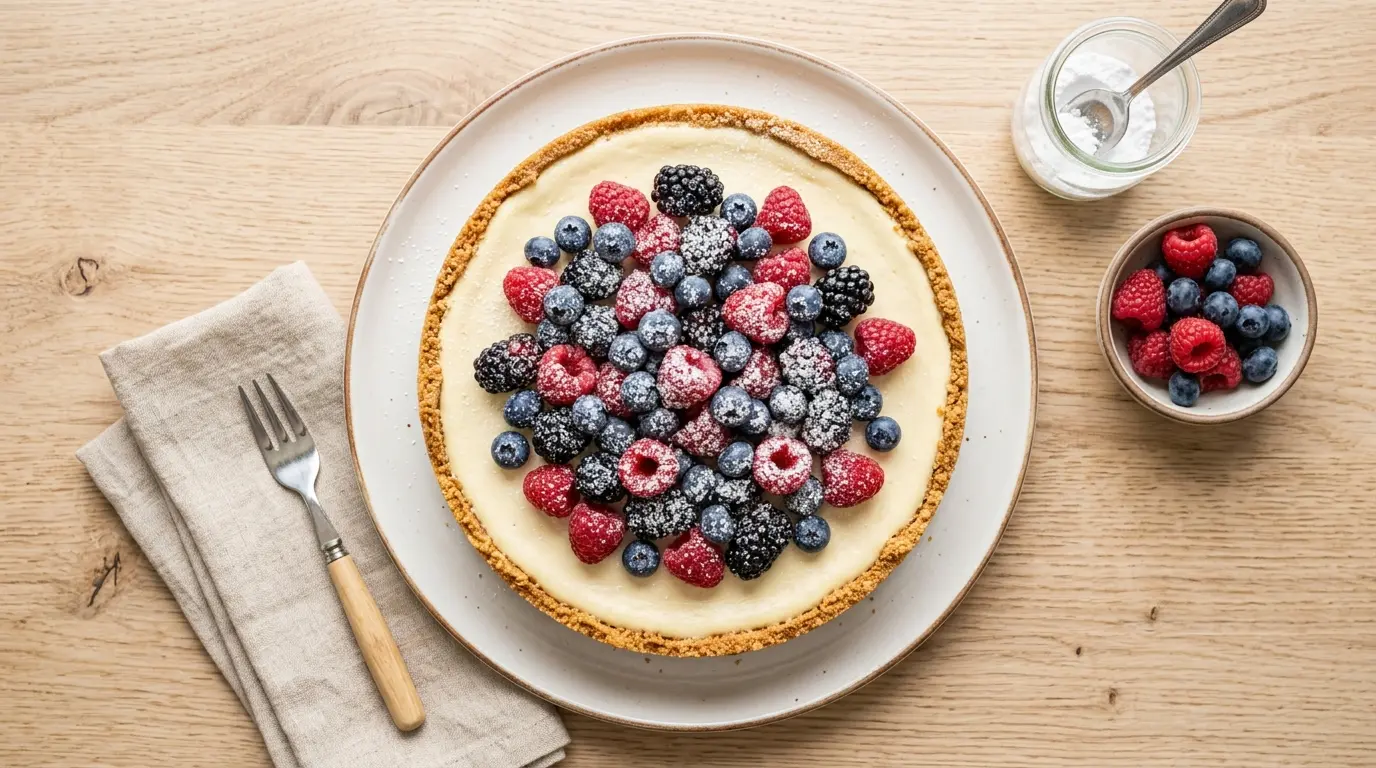
This version is baked in a 9-inch springform pan with a buttery graham cracker crust and a classic vanilla filling. It sets beautifully in the oven, chills overnight for the best texture, and slices like an absolute dream.
If you love cheesecake variations, you might also want to check out this Gluten Free Cheesecake Recipe for another dietary-friendly option that is just as satisfying.
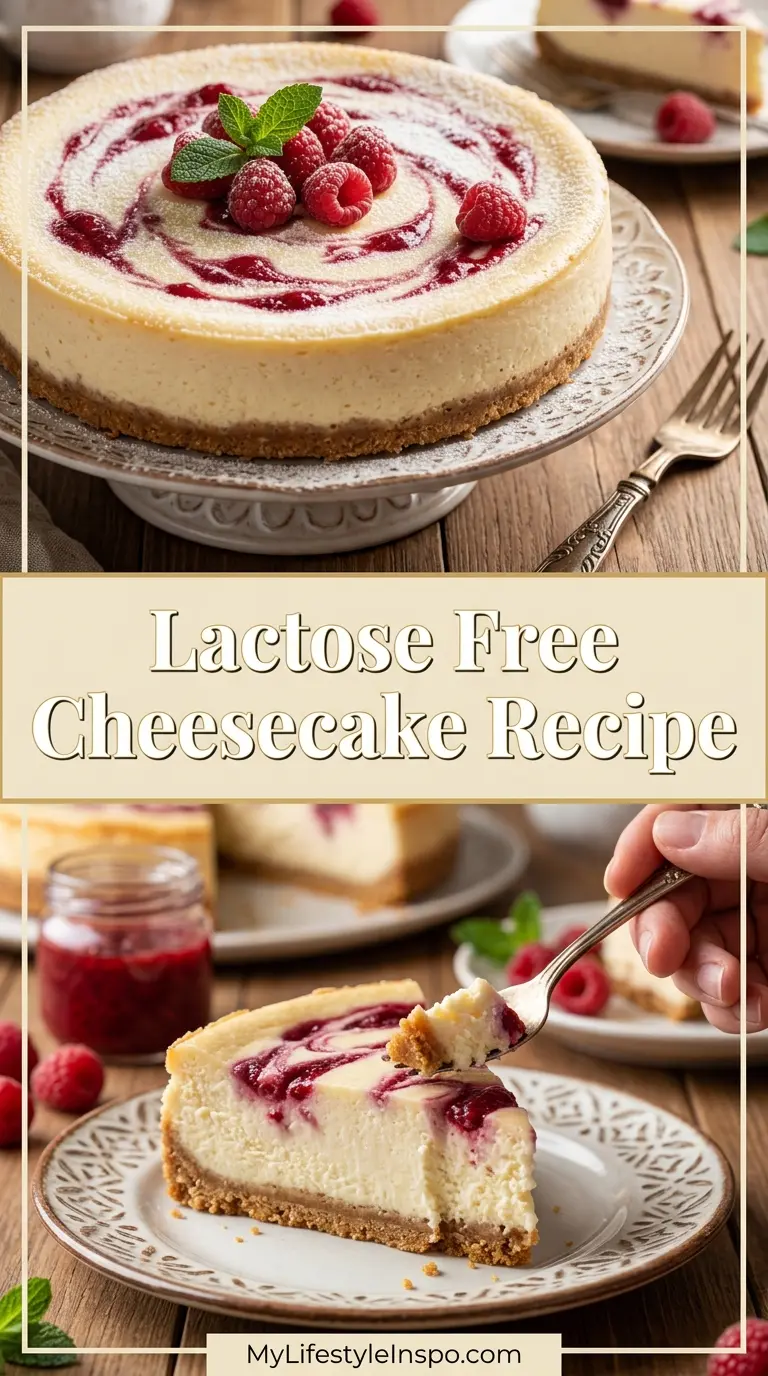
Why You’ll Love This Lactose Free Cheesecake Recipe
This recipe delivers everything you want from a classic cheesecake, minus the lactose.
The filling is luxuriously creamy, with a beautiful balance of sweetness and tang. The graham cracker crust adds a buttery crunch that contrasts perfectly with the silky smooth filling.
It is surprisingly simple to make. Even if you have never attempted a baked cheesecake before, the steps are straightforward and beginner-friendly.
It is also incredibly versatile. You can top it with fresh fruit, a berry compote, a drizzle of chocolate, or simply enjoy it plain.
- Lactose friendly without sacrificing flavor. Lactose free dairy products contain all the same proteins and fats as regular dairy, so the taste and texture are nearly identical.
- Perfect texture every time. Baking in a water bath prevents cracking and keeps the filling ultra-smooth.
- Crowd pleaser. Most people cannot tell the difference from a traditional cheesecake.
- Make-ahead friendly. It actually tastes better the next day after a full night in the fridge.
- Customizable toppings. Fresh strawberries, blueberries, lemon curd, or caramel all work beautifully on top.
You might also enjoy this No Bake Cheesecake Recipe if you want an even simpler option that skips the oven entirely.
Ingredients
This recipe uses simple, readily available lactose free products that you can find in most major supermarkets. Most specialty grocery stores carry lactose free cream cheese and sour cream in their dairy section right alongside the regular versions.
- 900g (32 oz / 4 blocks) lactose free cream cheese, at room temperature
- 200g (1 cup) granulated white sugar
- 120g (1/2 cup) lactose free sour cream, at room temperature
- 3 large eggs, at room temperature
- 2 teaspoons pure vanilla extract
- 1 tablespoon fresh lemon juice
- 1 tablespoon cornstarch
For the Graham Cracker Crust:
- 210g (1 and 3/4 cups) graham cracker crumbs
- 50g (1/4 cup) granulated white sugar
- 113g (1/2 cup or 1 stick) lactose free butter, melted (or plant-based butter for fully lactose free)
You might also want to bookmark the Baked Cheesecake Recipe for a classic version you can reference side-by-side.
Kitchen Equipment Needed
Having the right equipment makes the process smooth and ensures the best possible result. A springform pan in particular is non-negotiable for clean, professional-looking slices.
- 9-inch springform pan (essential for easy release)
- Electric hand mixer or stand mixer
- Large mixing bowl
- Medium mixing bowl (for the crust)
- Large roasting pan (for the water bath)
- Rubber spatula
- Measuring cups and spoons
- Kitchen scale (recommended for accuracy)
- Aluminum foil (to wrap the springform pan)
- Offset spatula (optional, for smoothing the top)
- Wire cooling rack
Read Also: Sugar Free Cheesecake Recipe
Recommended Products for This Recipe
These are a few products that genuinely make a difference when baking this cheesecake. They are chosen based on quality and performance, not just convenience.
1. Fat Daddio’s 9-Inch Springform Pan
A high-quality springform pan with even heat distribution ensures your cheesecake bakes consistently without hot spots. The removable bottom also makes releasing the cheesecake completely stress free. This is one of the most important investments you can make for cheesecake baking.
2. Kite Hill Lactose Free Cream Cheese Style Spread
This cream cheese alternative is made from almonds and has an incredibly smooth, tangy profile that works beautifully in baked cheesecakes. If you want to go fully dairy free while still achieving a creamy, rich filling, this is the brand to reach for.
3. Nielsen-Massey Pure Vanilla Extract
The vanilla in this cheesecake is not just background flavor. It is front and center. Using a high-quality pure vanilla extract like Nielsen-Massey, with its complex, floral depth, makes a noticeable difference in the final flavor profile.
4. KitchenAid 5-Quart Stand Mixer
Mixing your cheesecake filling properly, without overbeating, is one of the keys to a crack-free result. A stand mixer gives you consistent, controlled mixing so you can stop at exactly the right moment. It also makes whipping the cream cheese to room temperature smoothness much easier.
Another favorite in this category: Keto Cheesecake Recipe
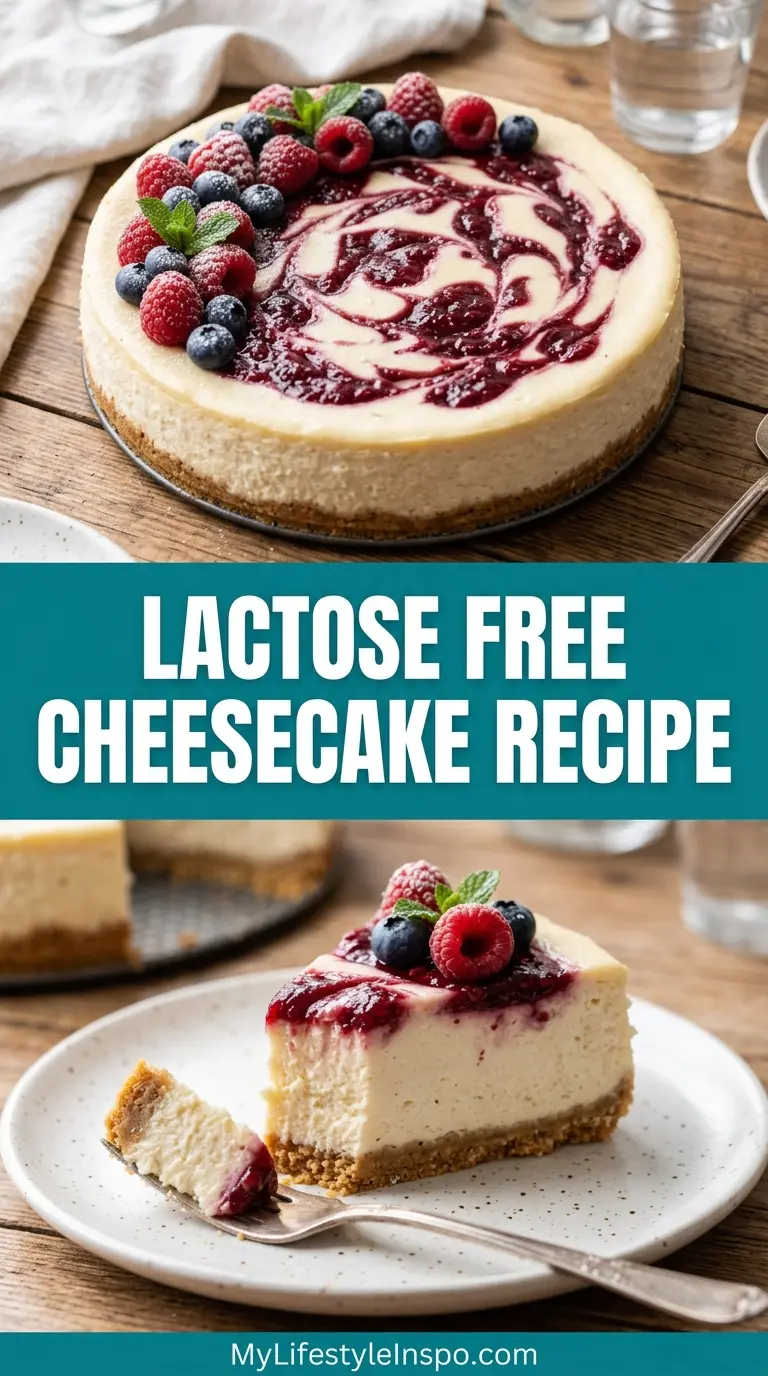
Step-by-Step Instructions
1. Bring Ingredients to Room Temperature
- Remove your lactose free cream cheese, lactose free sour cream, and eggs from the fridge at least 60 minutes before you plan to start mixing.
- Room temperature cream cheese blends much more smoothly than cold cream cheese. Cold cream cheese will create lumps in your batter that are very difficult to get rid of, even with vigorous mixing.
- Set them on your counter away from any heat source. They should feel just barely cool to the touch, not cold, before you begin.
2. Prepare Your Oven and Equipment
- Position one oven rack in the center of the oven and one rack on the lowest position.
- Preheat your oven to 160°C (325°F).
- Wrap the outside of your 9-inch springform pan tightly with two to three layers of heavy-duty aluminum foil. This prevents any water from the water bath from seeping into the pan and making your crust soggy.
- Make sure the foil goes all the way up the sides of the pan with no gaps.
3. Make the Graham Cracker Crust
- In a medium bowl, combine 210g (1 and 3/4 cups) of graham cracker crumbs and 50g (1/4 cup) of granulated sugar. Stir them together with a fork until well mixed.
- Pour in 113g (1/2 cup) of melted lactose free butter and mix again until every crumb is evenly coated. The mixture should resemble wet sand and hold its shape when you press a small handful together.
- Pour the crumb mixture into your foil-wrapped springform pan.
- Use the bottom of a flat measuring cup or a glass to press the crumbs firmly and evenly across the bottom of the pan. Press about 2cm (3/4 inch) up the sides as well for a classic cheesecake crust with defined edges.
- Place the pan in the preheated oven and bake the crust for 10 minutes, until it smells lightly toasty and feels set to the touch.
- Remove from the oven and set aside on a wire rack to cool while you prepare the filling.
4. Make the Cheesecake Filling
- In a large mixing bowl, beat 900g (32 oz) of room temperature lactose free cream cheese on medium speed for about 2 minutes, until it is completely smooth and fluffy. Scrape down the sides and bottom of the bowl with a rubber spatula several times during this step.
- Add 200g (1 cup) of granulated sugar and continue beating on medium speed for another 1 to 2 minutes, until the sugar is fully incorporated and the mixture looks light and creamy.
- Add 120g (1/2 cup) of lactose free sour cream, 2 teaspoons of vanilla extract, 1 tablespoon of lemon juice, and 1 tablespoon of cornstarch. Mix on low speed until fully combined. Scrape down the bowl again.
- Add the 3 eggs one at a time, mixing on the lowest speed after each addition just until the yolk disappears into the batter. Overmixing after adding the eggs is one of the leading causes of cheesecake cracks, so keep the speed low and stop as soon as each egg is incorporated.
- Give the entire batter one final scrape and stir with your spatula to make sure everything is evenly mixed from the bottom of the bowl.
5. Assemble the Cheesecake
- Pour the cream cheese filling over the cooled graham cracker crust in the springform pan.
- Use an offset spatula or the back of a large spoon to smooth the top of the filling into an even, level layer. A smooth top means a prettier final result after baking.
- Tap the pan gently on the counter three to four times to release any air bubbles trapped in the batter.
6. Set Up the Water Bath and Bake
- Place the foil-wrapped cheesecake pan into the center of your large roasting pan.
- Carefully pour hot water into the roasting pan until it reaches about 2.5cm (1 inch) up the sides of the springform pan. Use very hot tap water or just-boiled water for best results. The steam from the water bath creates a gentle, humid baking environment that prevents the top of the cheesecake from cracking.
- Carefully transfer the roasting pan with the cheesecake inside to your preheated oven.
- Bake for 55 to 65 minutes. The cheesecake is done when the edges are fully set and the center still has a slight wobble, like gelatin, when you gently shake the pan. It should not look liquid, but it should not look completely firm either.
7. Cool the Cheesecake Slowly
- When the cheesecake is done, turn the oven off and crack the oven door open slightly, about 5cm (2 inches). Leave the cheesecake inside the oven to cool slowly for 1 hour. This gradual cooling prevents the dramatic temperature change that causes cheesecakes to crack.
- After 1 hour, carefully remove the roasting pan from the oven. Lift the springform pan out of the water bath and remove the foil wrapping.
- Run a thin, sharp knife gently around the very edge of the cheesecake to loosen it from the sides of the pan. This also helps prevent cracking as it continues to cool and contract.
- Let the cheesecake cool completely at room temperature, which will take another 1 to 2 hours.
8. Chill and Serve
- Once fully cooled to room temperature, cover the top of the pan loosely with plastic wrap and transfer the cheesecake to the refrigerator.
- Chill for a minimum of 4 hours, but overnight (8 to 12 hours) is highly recommended for the best texture and flavor. Cheesecake needs time to set fully in the fridge before it slices cleanly.
- When ready to serve, release the springform latch and carefully remove the outer ring. Slide an offset spatula under the crust to detach the cheesecake from the base if desired, and transfer to a serving platter.
- Slice with a sharp knife, wiping the blade clean between each cut for perfect slices.
Read Also: Philadelphia Cheesecake Recipe
Tips for Success
Getting a perfectly smooth, crack-free cheesecake is all about technique. These tips address the most common points where home bakers run into trouble, so read through before you start.
- Use full-fat lactose free cream cheese. Low-fat versions have more water content and will produce a less creamy, sometimes grainy texture. Full-fat is the way to go.
- Do not skip the room temperature step. Cold cream cheese will not blend smoothly, and lumpy batter is very hard to rescue.
- Mix low and slow after adding eggs. Overmixing incorporates too much air, which leads to cracking during baking.
- Do not open the oven door during baking. Sudden temperature drops cause the filling to contract quickly and crack.
- Use the water bath. It feels like an extra step, but it is the single most effective technique for achieving a smooth, evenly baked cheesecake without cracks.
- Cool gradually. The slow oven cool followed by room temperature rest followed by refrigerator chill is the correct sequence. Rushing any of these steps affects both texture and appearance.
- Chill overnight for best results. The flavor deepens and the texture firms up beautifully with a full overnight rest in the fridge.
You might also enjoy: New York Cheesecake Recipe
Serving Suggestions
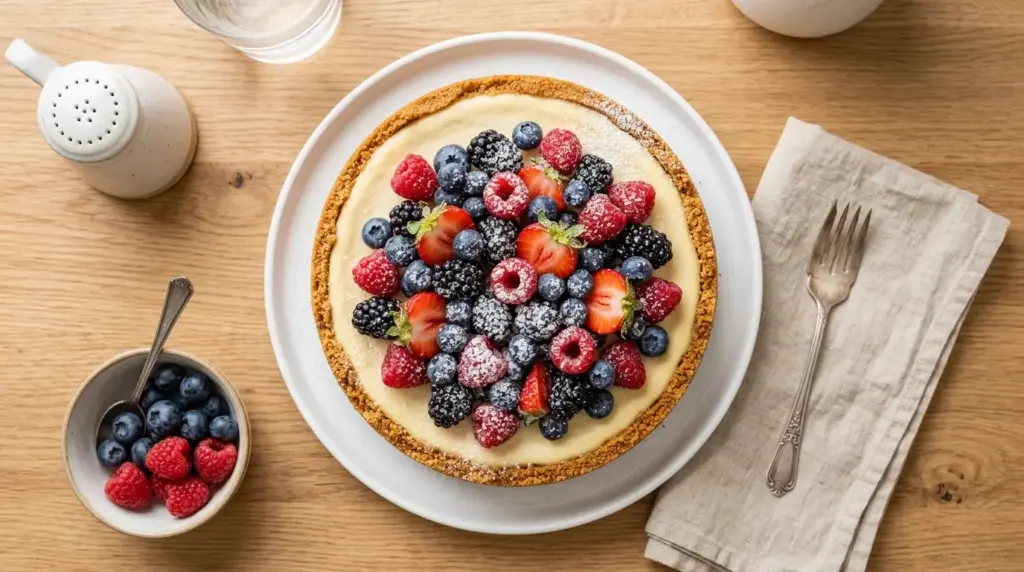
This lactose free cheesecake is stunning served simply, but a topping can really elevate it for special occasions. The tang of the filling pairs well with both sweet and slightly tart toppings.
Fresh berries are a classic pairing. The brightness of strawberries, raspberries, or blueberries cuts through the richness of the filling in the best possible way.
A warm fruit compote or sauce spooned over each slice just before serving adds a restaurant-quality finish without much extra effort.
- Fresh sliced strawberries or a quick Fresh Strawberry Sauce drizzled on top
- Lemon Curd spread over the top for a bright, citrusy contrast
- Fresh blueberries and a light dusting of powdered sugar
- A drizzle of lactose free caramel sauce and a sprinkle of sea salt
- Mixed fresh berries with a sprig of fresh mint for a beautiful presentation
- Sliced fresh peaches or mango in summer months for a tropical twist
- A dollop of lactose free whipped cream on each slice
- Serve alongside a scoop of Vanilla Bean Ice Cream for an indulgent dessert plate
Variations to Try
Once you have the base recipe mastered, there are so many ways to customize it. These variations all use the same core technique and simply swap or add ingredients to change the flavor profile.
- Blueberry Lactose Free Cheesecake. Fold 150g (1 cup) of fresh blueberries into the batter before pouring over the crust, and top with a blueberry compote after baking. Alternatively, browse the Blueberry Cheesecake Recipe for a dedicated version.
- Lemon Lactose Free Cheesecake. Add the zest of 2 lemons and increase the lemon juice to 3 tablespoons for a bright, citrusy filling. Top with lemon curd.
- Strawberry Lactose Free Cheesecake. Swirl a few tablespoons of lactose free strawberry jam into the top of the batter before baking for a marbled effect.
- Chocolate Lactose Free Cheesecake. Melt 100g (3.5 oz) of dairy free dark chocolate and fold it into the batter after the eggs are added for a rich chocolate variation.
- Oreo Crust Version. Swap the graham cracker crust for a crust made from crushed Oreo cookies mixed with melted lactose free butter. This pairs especially well with the chocolate filling variation.
- Mini Cheesecakes. Divide the filling among a lined muffin tin for individual portions. Bake at 160°C (325°F) for 18 to 22 minutes. Check out the Mini Cheesecake Recipe for more guidance on the smaller format.
- Pumpkin Lactose Free Cheesecake. Add 120g (1/2 cup) of pure pumpkin puree and 1 teaspoon of pumpkin pie spice to the batter for a warm, seasonal variation.
Read Also: Vegan Cheesecake Recipe
Storage and Reheating
Cheesecake keeps beautifully when stored properly, which makes it an ideal make-ahead dessert for gatherings and dinner parties.
- In the refrigerator: Cover the cheesecake tightly with plastic wrap or store individual slices in an airtight container. It will keep fresh for up to 5 days.
- In the freezer: Cheesecake freezes exceptionally well. Wrap the whole cheesecake or individual slices tightly in plastic wrap, then in a layer of aluminum foil, and freeze for up to 2 months.
- Thawing from frozen: Transfer the frozen cheesecake to the refrigerator and let it thaw slowly overnight. Do not thaw at room temperature, as this can make the texture watery.
- Serving from cold: Cheesecake is best served cold or at cool room temperature. Remove it from the fridge about 20 to 30 minutes before serving to let it soften slightly, which brings out the creaminess.
- Reheating: Cheesecake is not typically reheated. It is meant to be enjoyed cold. If you prefer it slightly warmer, a brief 15-second microwave on very low power is the maximum you should attempt, and only for a single slice.
Another great option to try: Philadelphia No Bake Cheesecake Recipe
Nutritional Facts
The values below are based on a standard 12-slice yield for the full 9-inch cheesecake. Actual values may vary slightly depending on the specific lactose free brands you use.
| Nutrient | Per Slice (1/12 of cheesecake) |
|---|---|
| Calories | approximately 395 kcal |
| Total Fat | 28g |
| Saturated Fat | 16g |
| Cholesterol | 110mg |
| Sodium | 300mg |
| Total Carbohydrates | 30g |
| Sugars | 22g |
| Protein | 7g |
| Calcium | 90mg |
These figures are estimates and will vary based on ingredient brands and exact quantities used.
You might also enjoy: Lemon Cheesecake Recipe
Health Benefits of Key Ingredients
This recipe is not just about indulgence. Several of the key ingredients bring genuine nutritional value to the table.
Lactose free dairy products provide the same macronutrients as regular dairy, just without the lactose. That means your body still gets the protein, calcium, and essential fats, without the digestive discomfort that comes with standard dairy products for those who are intolerant.
Eggs are one of the most nutritionally complete foods available. They contribute high-quality complete protein, fat-soluble vitamins like A, D, and E, and choline, which plays an important role in brain health and liver function.
- Lactose free cream cheese. Provides fat-soluble vitamins A and D, along with calcium and phosphorus for bone health. Using lactose free versions means people with lactose intolerance can enjoy these benefits without the discomfort.
- Eggs. Each egg contains around 6g of complete protein with all essential amino acids. They also provide B12, selenium, and riboflavin.
- Lemon juice. A small amount of lemon juice provides vitamin C and acts as a natural preservative. The acidity also brightens the flavor of the filling and balances the richness of the cream cheese.
- Vanilla extract. Pure vanilla extract contains trace amounts of antioxidants, specifically vanillin, which has been studied for its anti-inflammatory properties.
- Cornstarch. Acts as a stabilizer in the filling. A small amount helps the cheesecake set more firmly and reduces the likelihood of cracking without adding much to the calorie count.
Read Also: Strawberry Cheesecake Recipe
Frequently Asked Questions
1. What is the difference between lactose free cheesecake and dairy free cheesecake?
Lactose free cheesecake uses real dairy products, specifically cream cheese and sour cream, that have had the lactose enzyme removed or broken down. Dairy free cheesecake uses non-dairy alternatives like cashew cream or coconut cream in place of all dairy. Lactose free cheesecake tastes much closer to a traditional cheesecake because it still uses real cream cheese.
2. Can I use dairy free cream cheese instead of lactose free cream cheese?
Yes, you can substitute dairy free cream cheese such as Kite Hill or Violife brands. The texture may be slightly different, less dense and occasionally a bit softer, but the cheesecake will still set and taste delicious. Make sure the dairy free cream cheese you choose is a firm, block-style version rather than a soft spread for the best results.
3. Why did my cheesecake crack on top?
Cracking is most commonly caused by one of three things: overmixing the batter after adding the eggs, baking at too high a temperature, or cooling too quickly. Make sure you are mixing eggs on the lowest possible speed just until incorporated, using the water bath, and cooling the cheesecake gradually in the oven with the door cracked before bringing it to room temperature.
4. Can I make this cheesecake without a water bath?
You can, but the water bath is strongly recommended for this recipe. Without it, the edges of the cheesecake tend to set much faster than the center, leading to an uneven bake and a much higher likelihood of cracking. If you skip the water bath, reduce the oven temperature to 150°C (300°F) and watch closely. Place a separate pan of hot water on the rack below the cheesecake as a compromise.
5. Can I make this lactose free cheesecake ahead of time?
Absolutely, and in fact it is better when made a day ahead. The cheesecake firms up and the flavors deepen significantly after a full night in the refrigerator. Make it the day before your event, cover it well with plastic wrap, and refrigerate until ready to serve. It will be in perfect condition and ready to slice.
This recipe pairs beautifully with the Cheesecake Ice Cream Cake Recipe if you want to create an impressive dessert spread.
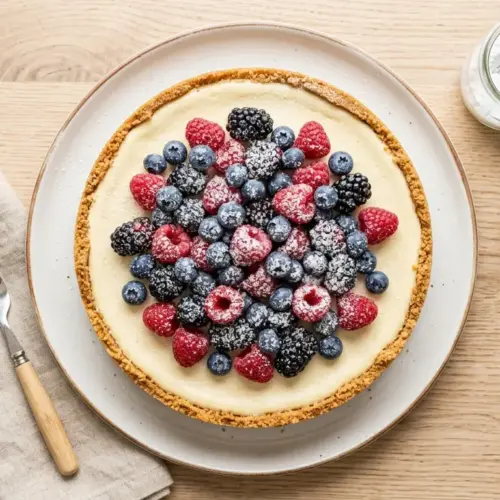
Lactose Free Cheesecake

Equipment
- 9-inch springform pan - essential for easy release
- Electric hand mixer - or stand mixer
- Large mixing bowl
- Medium mixing bowl - for the crust
- Large roasting pan - for the water bath
- Rubber spatula
- Measuring cups and spoons
- Kitchen scale - recommended for accuracy
- Aluminum foil - heavy-duty, to wrap the springform pan
- Offset spatula - optional, for smoothing the top
- Wire cooling rack
Ingredients
- For the Graham Cracker Crust:
- 210 g graham cracker crumbs - 1 and 3/4 cups
- 50 g granulated white sugar - 1/4 cup
- 113 g lactose free butter - 1/2 cup or 1 stick, melted (or plant-based butter)
- For the Cheesecake Filling:
- 900 g lactose free cream cheese - 32 oz / 4 blocks, at room temperature
- 200 g granulated white sugar - 1 cup
- 120 g lactose free sour cream - 1/2 cup, at room temperature
- 3 large eggs - at room temperature
- 2 teaspoons pure vanilla extract
- 1 tablespoon fresh lemon juice
- 1 tablespoon cornstarch
Instructions
- Bring lactose free cream cheese, sour cream, and eggs to room temperature for at least 60 minutes before mixing.
- Position oven racks in the center and lowest positions. Preheat oven to 160°C (325°F). Wrap the outside of a 9-inch springform pan tightly with 2-3 layers of heavy-duty aluminum foil to prevent water from seeping in.
- Combine graham cracker crumbs and sugar in a medium bowl. Pour in melted lactose free butter and mix until every crumb is evenly coated. Press firmly into the bottom and 2cm up the sides of the foil-wrapped pan.
- Bake crust for 10 minutes until lightly toasty. Remove and set aside on a wire rack to cool while preparing the filling.
- In a large bowl, beat room temperature lactose free cream cheese on medium speed for 2 minutes until completely smooth. Scrape down the sides and bottom frequently.
- Add granulated sugar and continue beating on medium speed for 1-2 minutes until light and creamy.
- Add lactose free sour cream, vanilla extract, lemon juice, and cornstarch. Mix on low speed until fully combined, scraping down the bowl.
- Add eggs one at a time, mixing on the lowest speed after each addition just until the yolk disappears. Stop immediately to avoid overmixing.
- Pour the filling over the cooled crust and smooth the top with an offset spatula. Tap the pan gently on the counter 3-4 times to release air bubbles.
- Place the foil-wrapped cheesecake pan into a large roasting pan. Carefully pour hot water into the roasting pan until it reaches about 2.5cm (1 inch) up the sides of the springform pan.
- Bake for 55-65 minutes until the edges are set and the center still has a slight wobble when gently shaken.
- Turn off the oven and crack the door open about 5cm (2 inches). Leave the cheesecake inside to cool slowly for 1 hour.
- Remove the pan from the water bath and remove the foil. Run a thin knife around the edge of the cheesecake to loosen it from the sides. Let cool completely at room temperature for 1-2 hours.
- Cover loosely with plastic wrap and refrigerate for a minimum of 4 hours, but ideally overnight (8-12 hours) for the best texture and flavor.
- Release the springform latch and carefully remove the outer ring. Slice with a sharp knife, wiping the blade clean between each cut for perfect slices. Serve cold or at cool room temperature.
Notes
- Room temperature is essential: Cold cream cheese will not blend smoothly and will leave lumps in your batter. Remove dairy and eggs from the fridge at least 60 minutes before starting.
- Do not overmix after adding eggs: Overmixing incorporates too much air, which leads to cracking during baking. Mix on the lowest speed and stop as soon as each egg is incorporated.
- Water bath is non-negotiable: The steam creates a gentle, humid baking environment that prevents cracking and ensures even baking. Double-wrap your springform pan with heavy-duty foil to prevent leaks.
- Cool gradually: The slow oven cool, followed by a room temperature rest, followed by refrigeration is the correct sequence. Rushing any of these steps will cause cracks.
- Make-ahead friendly: This cheesecake actually tastes better the next day. Make it up to 2 days ahead and store covered in the refrigerator for the best flavor and texture.
- Freezing instructions: Wrap the whole cheesecake or individual slices tightly in plastic wrap, then in foil, and freeze for up to 2 months. Thaw overnight in the refrigerator.
- No water bath alternative: If you skip the water bath, reduce oven temperature to 150°C (300°F) and place a separate pan of hot water on the rack below the cheesecake as a compromise.
- Topping ideas: Fresh berries, warm fruit compote, lemon curd, or lactose free caramel sauce all pair beautifully with the tangy filling. Add toppings just before serving.
- Dairy free substitute: For a fully dairy free version, use a firm block-style dairy free cream cheese alternative like Kite Hill. The texture may be slightly softer but still delicious.
- Slicing tip: For clean, picture-perfect slices, use a sharp knife dipped in hot water and wiped clean between each cut. This prevents the filling from sticking to the blade.
Final Thoughts
Lactose intolerance does not mean missing out on the desserts you love most. This lactose free cheesecake recipe proves that with the right swaps, you can have all of the creaminess, richness, and satisfaction of a classic baked cheesecake without a single moment of discomfort afterward.
The texture is smooth, the flavor is beautifully balanced between sweet and tangy, and the graham cracker crust holds it all together with a satisfying crunch.
Give this recipe a try for your next gathering, holiday table, or whenever you need a dessert that truly impresses. If you make it, leave a comment below to share how it turned out, and feel free to share your favorite topping ideas too!
Recommended:
- Best Cheesecake Recipe
- Oreo Cheesecake Recipe
- Japanese Cheesecake Recipe
- Churro Cheesecake Recipe
- Pumpkin Cheesecake Recipe
- Basque Cheesecake Recipe
- Cream Cheese Frosting Recipe
- Carrot Cake with Cream Cheese Frosting Recipe
- Easy Tiramisu Recipe
- Best Carrot Cake Recipe