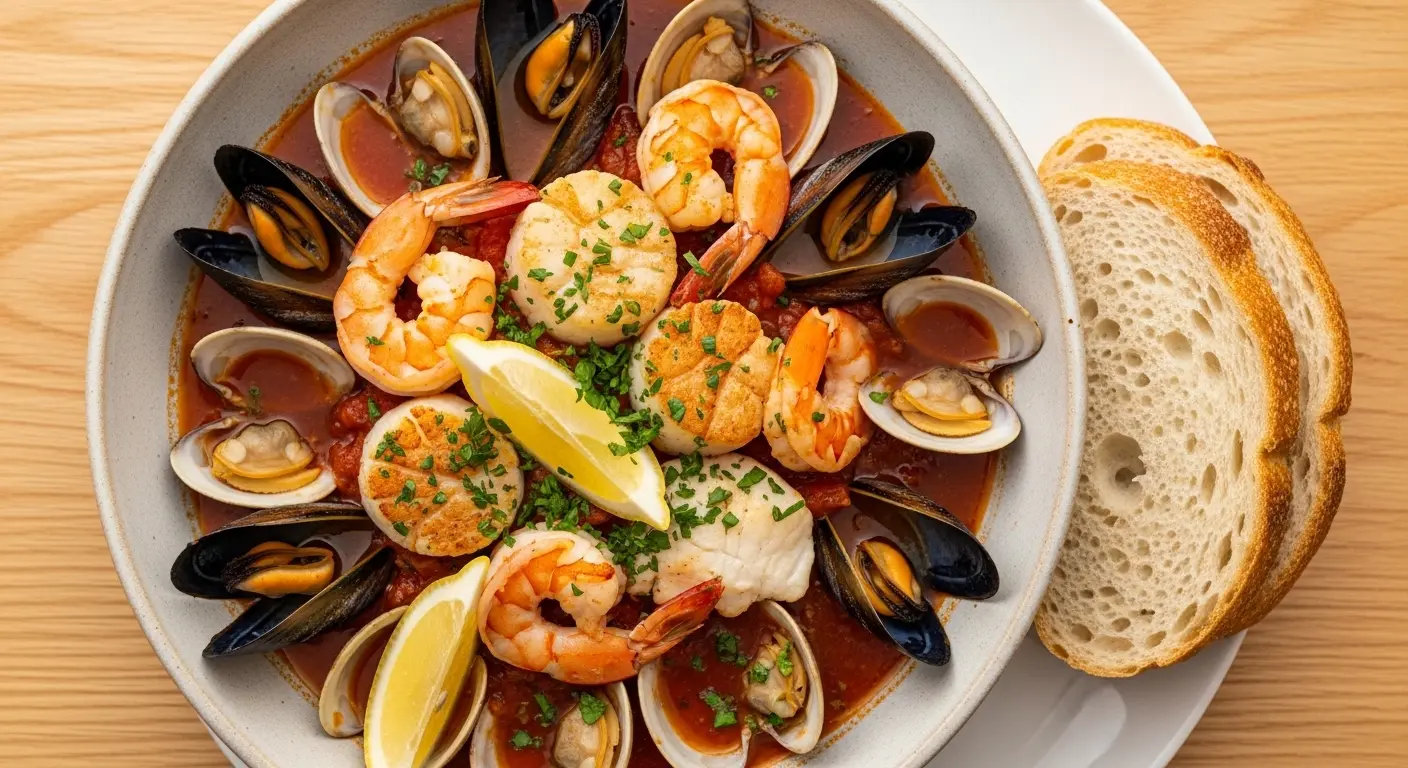
A great seafood stew recipe is one of those dishes that feels like it took all day to make but actually comes together in under an hour. This classic tomato-based stew is loaded with tender shrimp, flaky cod, briny clams, mussels, and buttery scallops, all simmered in a rich, garlicky broth spiked with white wine and herbs.
It’s the kind of meal that warms you from the inside out.
The secret to a deeply flavorful stew is building your base slowly, starting with aromatics like onion, fennel, and garlic before layering in tomatoes, clam juice, and wine. Each ingredient adds something essential, and once the seafood goes in at the very end, it cooks gently in just minutes without going rubbery.
If you love a bowl of Lobster Bisque on a cold night, you are going to absolutely love this stew.
This recipe is the American-Italian Cioppino-style version, the most widely recognized and beloved seafood stew in home kitchens and restaurants across the country. One pot, simple pantry ingredients, and a gorgeous spread of fresh seafood is all you need.
Why You’ll Love This Seafood Stew Recipe
This stew checks every box for a satisfying dinner that feels both special and totally doable.
It comes together in one pot with minimal cleanup, making it realistic for a weeknight without sacrificing any of that slow-simmered flavor.
The tomato-wine broth is absolutely irresistible. Once your family smells it simmering on the stove, they will be hovering around the kitchen in minutes.
You can easily customize the seafood based on what is fresh and available near you. Crab, lobster, scallops, salmon, any white fish, and any shellfish all work beautifully here.
It is naturally gluten-free, making it a great option for guests with dietary restrictions.
Here is a quick summary of why readers keep coming back to this recipe:
- Big, restaurant-quality flavor with everyday effort
- One pot means fewer dishes
- Flexible seafood choices based on availability and budget
- Ready in under an hour from start to finish
- Freezer-friendly (broth portion) for easy meal prep
- Impressive enough to serve for dinner parties or holidays
Read Also: Seafood Chowder Recipe
Ingredients
This recipe uses a combination of fresh aromatics, pantry staples, and quality seafood to build maximum flavor without any complicated techniques. The clam juice is a key ingredient you do not want to skip since it adds that signature briny ocean depth that makes seafood stews taste authentic.
- 3 tablespoons (45 ml) olive oil
- 1 medium yellow onion, finely diced
- 1 small fennel bulb, thinly sliced (about 1 cup / 90g)
- 4 cloves garlic, minced
- 1 teaspoon (5g) crushed red pepper flakes
- 1 teaspoon (3g) dried oregano
- 1 teaspoon (3g) dried thyme
- 2 bay leaves
- 1 cup (240 ml) dry white wine (Pinot Grigio or Sauvignon Blanc)
- 1 can (28 oz / 800g) crushed tomatoes
- 2 cups (480 ml) seafood stock or low-sodium chicken broth
- 1 bottle (8 oz / 240 ml) clam juice
- 1 lb (450g) littleneck clams, scrubbed
- 1 lb (450g) mussels, scrubbed and debearded
- 1 lb (450g) large shrimp, peeled and deveined
- 1 lb (450g) cod or halibut fillets, cut into 1-inch (2.5 cm) chunks
- 1/2 lb (225g) sea scallops, patted dry
- 2 tablespoons (28g) unsalted butter
- 1/4 cup (15g) fresh flat-leaf parsley, roughly chopped
- Juice of 1 lemon (about 3 tablespoons / 45 ml)
- Salt and black pepper to taste
You might also enjoy: Shrimp Chowder Recipe
Kitchen Equipment Needed
Having the right tools on hand makes this recipe significantly easier to manage, especially when you are working with multiple types of seafood that need to be added in stages.
- Large Dutch oven or heavy-bottomed pot (6-quart or larger)
- Sharp chef’s knife and cutting board
- Wooden spoon or silicone spatula
- Ladle for serving
- Fine mesh strainer (for rinsing clams and mussels)
- Measuring cups and spoons
- Citrus juicer or fork for lemon
- Shallow serving bowls
Read Also: Clam Chowder Recipe
Recommended Products for This Recipe
These are products I genuinely recommend based on quality and performance. Using the right tools and ingredients really does make a difference in the final dish.
1. Lodge Enameled Cast Iron Dutch Oven
A heavy-bottomed Dutch oven distributes heat evenly across the entire base, which is essential when building a layered stew like this. The enamel interior is non-reactive, so it will not affect the flavor of the acidic tomato broth. It is also easy to clean and beautiful enough to serve straight from the stovetop to the table.
2. Bar Harbor All-Natural Clam Juice
Clam juice is what separates a good seafood stew from a truly great one. Bar Harbor clam juice is made from all-natural clam broth with no artificial additives. It adds a clean, briny depth of flavor that seafood stock alone cannot quite replicate.
3. Kitchen Basics Seafood Stock
A quality seafood stock forms the liquid backbone of this dish. Kitchen Basics makes a clean, well-seasoned seafood stock that pairs perfectly with the clam juice and white wine without overpowering the delicate seafood flavors.
4. Microplane Premium Zester/Grater
A Microplane makes quick work of zesting lemon for extra brightness at the end of cooking. You can also use it to grate fresh garlic directly into the pot if you prefer a more intense garlic flavor. It is a small tool that punches well above its weight in the kitchen.
5. Wild-Caught Frozen Seafood Mix
If fresh seafood is hard to find in your area, a high-quality frozen wild-caught seafood mix is a fantastic alternative. Look for blends that include shrimp, scallops, and white fish. Thaw overnight in the refrigerator before using for the best texture.
Another great seafood dish to try: Salmon Skillet Recipe
Step-by-Step Instructions
1. Prep Your Seafood
- Rinse the littleneck clams under cold running water and scrub the shells with a stiff brush to remove any grit. Discard any clams with cracked shells or ones that remain open when tapped.
- Rinse the mussels under cold water and scrub the shells. Remove the beards by firmly pulling the fibrous threads toward the hinge of the mussel and discarding. Discard any mussels that are cracked or open and do not close when tapped.
- Pat the shrimp dry with paper towels and set aside in a bowl.
- Cut the cod or halibut into roughly 1-inch (2.5 cm) chunks. Pat dry and season lightly with salt and black pepper.
- Pat the scallops completely dry on both sides with paper towels. Moisture is the enemy of browning, so this step is important. Season lightly with salt.
2. Build the Aromatic Base
- In your large Dutch oven, heat 3 tablespoons (45 ml) of olive oil over medium heat until shimmering but not smoking.
- Add the diced onion and sliced fennel to the pot. Season generously with salt and pepper.
- Cook, stirring occasionally, for about 8 to 10 minutes, until the onion is translucent and the fennel has softened and started to turn golden at the edges. This slow sauté is what builds sweetness and depth in the base.
- Add the minced garlic, crushed red pepper flakes, dried oregano, dried thyme, and bay leaves. Stir everything together and cook for 1 to 2 minutes until the garlic is fragrant.
3. Deglaze with White Wine
- Pour in the 1 cup (240 ml) of dry white wine and use your wooden spoon to scrape up any browned bits stuck to the bottom of the pot. Those caramelized bits are pure flavor.
- Raise the heat to medium-high and let the wine cook and reduce for about 3 to 4 minutes. You want most of the wine to cook off so you are left with concentrated flavor rather than a boozy taste.
4. Add the Tomatoes, Stock, and Clam Juice
- Pour in the crushed tomatoes, seafood stock, and clam juice. Stir everything together until well combined.
- Bring the mixture to a boil, then reduce the heat to medium-low.
- Let the broth simmer uncovered for 15 minutes, stirring occasionally. This allows the flavors to meld and the broth to deepen in color and taste. Taste and adjust seasoning with salt and pepper as needed. Remove and discard the bay leaves.
5. Add the Clams and Mussels
- Increase the heat to medium and add the scrubbed clams to the simmering broth first, as they take the longest to open.
- Cover the pot with a tight-fitting lid and cook for 3 minutes.
- Add the mussels, replace the lid, and cook for another 3 to 4 minutes until both the clams and mussels have opened. Discard any shells that remain closed after cooking, as this indicates they were not alive and are not safe to eat.
6. Add the Fish, Shrimp, and Scallops
- Add the cod or halibut chunks directly to the broth and nestle them gently into the liquid.
- Add the shrimp and scallops at the same time.
- Stir gently just once to distribute, then cover and cook for 3 to 4 minutes, just until the shrimp are pink and opaque, the fish flakes easily when pressed, and the scallops are firm and cooked through. Do not overcook at this stage, as the residual heat in the pot will continue to gently finish cooking the seafood after you remove it from the heat.
7. Finish with Butter, Lemon, and Parsley
- Remove the pot from the heat and add the 2 tablespoons (28g) of unsalted butter. Swirl it in gently until melted. The butter adds a beautiful silky richness and rounds out the acidity of the tomatoes and wine.
- Squeeze the juice of one lemon over the stew and stir lightly to incorporate.
- Taste one final time and adjust salt, pepper, or lemon juice as needed.
- Ladle the stew into shallow bowls, making sure each serving gets a generous mix of all the different seafood.
- Scatter the chopped fresh parsley over the top and serve immediately with plenty of crusty bread for soaking up the broth.
This pairs beautifully with the rich, layered flavors of a Manhattan Clam Chowder Recipe if you are planning a full seafood dinner spread.
Tips for Success
Getting this stew right comes down to a few key techniques that professional cooks rely on every time.
- Use the freshest seafood you can find. Fresh seafood has a clean, ocean-like smell. If it smells overly fishy or pungent, skip it. Freshness is the single biggest factor in the final flavor of this dish.
- Do not overcook the seafood. Seafood goes from perfect to rubbery very quickly. Add it at the very end, cook just until done, and pull the pot off the heat immediately.
- Build the base slowly. Taking the full 8 to 10 minutes to properly soften the onions and fennel makes a noticeable difference in the sweetness and depth of the final broth. Do not rush this step.
- Use a good dry white wine. Since the wine reduces and concentrates in the broth, use something you would happily drink. Pinot Grigio and Sauvignon Blanc are both excellent here.
- Pat the scallops and fish completely dry before adding them to the pot. Excess moisture creates steam instead of allowing the seafood to heat properly in the broth.
- Taste and season throughout. Season at each stage: when you sauté the aromatics, after the broth has simmered, and once more right before serving. Layers of seasoning make all the difference.
- Bread is not optional. Crusty sourdough, garlic bread, or a classic baguette is essentially a required companion to this stew. You need something to mop up that incredible broth.
For another cozy seafood dish to add to your rotation, try: Fish Chowder Recipe
Serving Suggestions
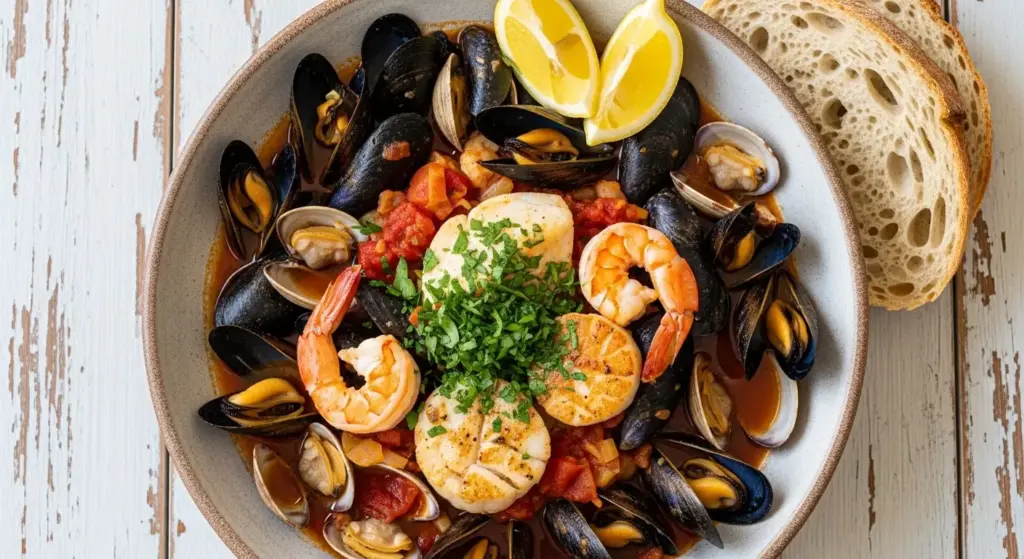
This seafood stew is hearty enough to serve as a complete meal all on its own, but a few well-chosen accompaniments make it truly feel like a restaurant-quality spread.
Serve in wide, shallow bowls that show off all the gorgeous seafood, and always bring plenty of napkins to the table since eating mussels and clams is a hands-on affair. A chilled glass of dry white wine, the same kind you used in the recipe, is the perfect pairing.
Here are some great serving ideas:
- Thick slices of toasted sourdough bread for dipping
- Classic Bruschetta as a simple starter
- A light green salad with lemon vinaigrette to balance the richness
- Garlic Mashed Potatoes for an extra hearty meal
- Easy Garlic Bread on the side
- Classic Deviled Eggs as an appetizer for a dinner party spread
You might also enjoy: Oyster Stew Recipe
Variations to Try
Once you have made the base recipe, it is easy to put your own spin on it based on regional traditions or personal preferences.
- Bouillabaisse-style: Swap the crushed tomatoes for fresh chopped tomatoes, use a fish stock base instead of clam juice, and add a generous pinch of saffron and a splash of Pernod for the classic Provençal version.
- Spicy Cajun Seafood Stew: Replace the Italian herbs with Cajun seasoning and add sliced andouille sausage to the aromatics for a Southern-style twist that is deeply smoky and bold.
- Creamy Seafood Stew: Stir in 1/2 cup (120 ml) of heavy cream at the very end for a richer, more velvety broth. This version is especially comforting in the colder months.
- Portuguese-style: Add smoked paprika, a splash of sherry, and a handful of chopped chorizo along with the aromatics for a deeply savory, slightly smoky version.
- Slow cooker seafood stew: Build the broth base in your slow cooker and cook on low for 4 to 6 hours. Add the seafood in the last 20 to 30 minutes with the lid on high to gently cook through without overdoing it.
- Simplified weeknight version: Use a bag of frozen mixed seafood (thawed overnight in the fridge) and swap the clam juice for additional chicken broth. This cuts prep time significantly without sacrificing too much flavor.
Read Also: Kimchi Stew Recipe
Storage and Reheating
Seafood stew is best enjoyed fresh, but the broth base stores beautifully if you plan ahead.
- Refrigerator: Store leftovers in an airtight container for up to 2 days. Seafood tends to get rubbery when stored in liquid, so consume within 48 hours for the best texture.
- Freezer (broth only): The tomato-wine broth without seafood freezes well for up to 3 months. Store it in a freezer-safe container, and when ready to serve, thaw overnight in the refrigerator, reheat gently on the stovetop, then add fresh seafood to finish.
- Reheating: Never microwave this stew. Reheat gently in a pot over low heat, stirring carefully, just until warmed through. The seafood only needs 1 to 2 minutes. High heat will overcook the shrimp, fish, and scallops and make them tough.
- Make-ahead tip: You can make the entire tomato broth base up to 2 days in advance and store it in the refrigerator. When ready to serve, bring it back to a simmer and add the fresh seafood to finish.
For another great make-ahead soup idea: Minestrone Soup Recipe
Nutritional Facts
Per serving (based on 6 servings). Values are estimates.
| Nutrient | Amount Per Serving |
|---|---|
| Calories | 410 kcal |
| Protein | 48g |
| Total Fat | 14g |
| Saturated Fat | 4g |
| Carbohydrates | 16g |
| Fiber | 3g |
| Sugar | 7g |
| Sodium | 980mg |
| Cholesterol | 240mg |
| Omega-3 Fatty Acids | ~1.5g |
Note: Nutritional values will vary based on the specific types and quantities of seafood used, as well as specific brands of canned tomatoes and stock. The values above use a mix of shrimp, cod, clams, mussels, and scallops.
Read Also: New England Clam Chowder Recipe
Health Benefits of Key Ingredients
This seafood stew is not just delicious, it is also genuinely nutritious, packed with lean protein, heart-healthy fats, and an impressive range of vitamins and minerals.
Eating seafood regularly is one of the most impactful dietary choices you can make for long-term heart health, brain function, and inflammation reduction. Here is a breakdown of what the key ingredients bring to the table:
- Shrimp: An excellent source of lean protein and iodine, which supports thyroid function. Shrimp is also surprisingly low in calories relative to how filling it is.
- Cod and halibut: These lean white fish are rich in B vitamins, especially B12, which supports energy metabolism and neurological health. They also provide high-quality complete protein with very little fat.
- Clams and mussels: Both are nutritional powerhouses, loaded with iron, zinc, selenium, and B12. Clams in particular contain some of the highest concentrations of vitamin B12 of any food on the planet.
- Scallops: High in magnesium and potassium, which support heart function and blood pressure regulation. Scallops are also very low in fat and high in protein.
- Tomatoes: Rich in lycopene, a powerful antioxidant that has been linked to reduced risk of heart disease and certain cancers. Cooking tomatoes actually increases lycopene availability.
- Fennel: Contains vitamin C, potassium, and powerful plant compounds called phytonutrients that have anti-inflammatory effects.
- Garlic: Has well-documented antimicrobial and anti-inflammatory properties. Regular garlic consumption is associated with improved cardiovascular health.
- Olive oil: Provides monounsaturated fats and polyphenols that protect against oxidative stress and inflammation.
This seafood stew makes a wonderful wholesome meal that your body will thank you for just as much as your taste buds will. It is particularly well-suited for anyone following a Mediterranean-style diet.
For another hearty and wholesome soup idea: Chicken Rice Soup Recipe
Frequently Asked Questions
1. What types of seafood work best in seafood stew?
The most common combination is shrimp, white fish (cod, halibut, or snapper), clams, mussels, and scallops. That said, this recipe is extremely flexible. Crab legs, lobster chunks, squid, salmon, and even oysters can all be used. The key is to choose seafood that cooks at roughly the same rate so nothing gets over or undercooked. Firm fish fillets and shellfish are the most forgiving options for beginners.
2. Can I use frozen seafood instead of fresh?
Frozen seafood works well in this recipe, and it is often more affordable and available than fresh. Thaw the seafood completely in the refrigerator overnight before cooking. Pat it dry thoroughly before adding it to the broth to avoid watering down the stew. For convenience, a bag of frozen mixed seafood from your grocery store is a perfectly good option.
3. What can I use instead of clam juice?
If you cannot find bottled clam juice, the best substitutes are additional seafood stock, low-sodium chicken broth, or even a splash of fish sauce diluted in extra broth. Clam juice adds a specific briny ocean flavor that is hard to fully replicate, but the stew will still taste excellent with these swaps. Some cooks also use a small portion of mashed anchovies stirred into the broth early in cooking for a similar depth.
4. How do I know when the seafood is done?
Shrimp is cooked through when it turns pink and curls into a loose “C” shape. Fish is done when it flakes easily when pressed gently with a fork. Scallops are cooked through when they are firm and no longer translucent in the center. Clams and mussels signal that they are done when their shells open up. Any shellfish that does not open after cooking should be discarded.
5. Can I make this seafood stew in advance?
The broth base can absolutely be made up to 2 days ahead and stored in the refrigerator or frozen for up to 3 months. However, the seafood should always be added fresh on the day of serving. Pre-cooked seafood stored in broth becomes rubbery and loses its texture quickly. When ready to serve, simply reheat the broth to a gentle simmer and add the seafood for the final 5 to 8 minutes.
Read Also: Salmon Chowder Recipe
Final Thoughts
This seafood stew recipe is one of those dishes that genuinely earns its place in your regular rotation.
It is warm, deeply flavorful, endlessly customizable, and ready in under an hour. From the first bubble of sautéed garlic and fennel to the moment the butter melts into the glossy tomato broth, it is a complete sensory experience from start to finish.
If you have been waiting for the right moment to try making a seafood stew at home, this is it.
Give it a try this week and let us know how it turns out! Drop a comment below with what seafood you used, share any variations you tried, or tag us in your photos. We love seeing your creations.
Recommended:
- Lobster Bisque Recipe
- Mexican Fish Soup Recipe
- Thai Fish Soup Recipe
- Mediterranean Fish Soup Recipe
- Caribbean Fish Soup Recipe
- Chinese Fish Soup Recipe
- Cowboy Stew Recipe
- Lamb Stew Recipe
- Irish Stew Recipe
- Venison Stew Recipe