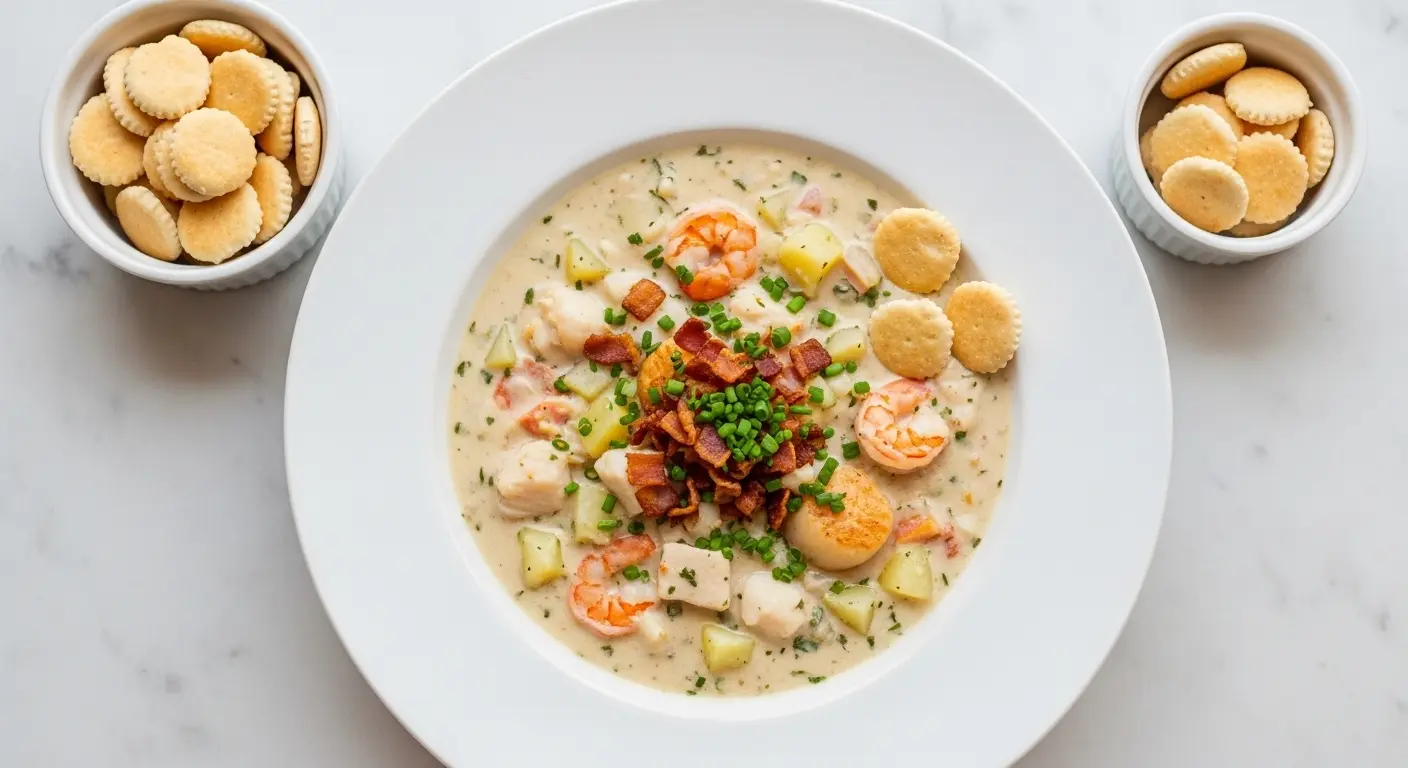
If you have ever craved a bowl of thick, creamy, utterly satisfying soup that tastes like it came straight from a seaside restaurant, this seafood chowder recipe is exactly what you need.
This is the kind of dish that warms you from the inside out on a cold evening. It’s loaded with tender shrimp, flaky white fish, and sweet scallops, all simmered in a rich, buttery broth with chunks of potato, smoky bacon, and a silky pour of heavy cream.
The secret to making this recipe so irresistibly good starts with how you build the base. Cooking the bacon first renders out the fat, which is then used to sauté the aromatics and create the roux. That single technique gives the chowder a depth of smoky, savory flavor that you simply cannot get from butter alone.
Old Bay seasoning is another non-negotiable ingredient here. This classic blend of celery salt, paprika, and spices was practically made for seafood, and just a tablespoon lifts the whole pot to another level.
Whether you are cooking for a quiet weeknight dinner or feeding a hungry crowd, this chowder delivers restaurant-quality results with very approachable effort.
For another comforting seafood dinner idea, the Lobster Bisque on this site is absolutely worth bookmarking next.
Why You’ll Love This Seafood Chowder Recipe
This chowder checks every box you could want in a hearty, homemade soup.
It is rich and deeply flavorful without being overly complicated. The ingredient list is straightforward, and the cooking method walks you through every step clearly.
It comes together in about 45 minutes from start to finish, making it realistic even on a busy weeknight. Most of that time is hands-off simmering anyway.
The combination of multiple seafood types means you get a beautiful variety of textures and flavors in every single spoonful. Tender shrimp, flaky cod, and sweet scallops all cook to perfection together.
It is also incredibly versatile. You can swap out the seafood based on what’s fresh and available, adjust the thickness to your liking, and dial up the seasoning to match your taste.
- Rich, creamy broth made with bacon fat, a flour roux, and heavy cream
- Three types of seafood for maximum flavor and texture variety
- Perfectly seasoned with Old Bay, thyme, garlic, and bay leaves
- Hearty potato chunks that make it a true one-bowl meal
- Ready in under an hour with simple pantry-friendly ingredients
- Tastes even better the next day as the flavors continue to develop
You might also enjoy: New England Clam Chowder
Ingredients
This recipe uses classic chowder staples, with a focus on fresh seafood and a properly built creamy base. Using seafood stock instead of chicken broth makes a noticeable difference in the depth of flavor, so seek it out if you can.
- 4 slices bacon, diced into ¼-inch (6mm) pieces
- 1 medium yellow onion, diced (about 1 cup / 150g)
- 3 celery stalks, diced (about ¾ cup / 90g)
- 2 medium carrots, diced (about ¾ cup / 90g)
- 4 garlic cloves, minced
- 3 tablespoons (24g) all-purpose flour
- 1 tablespoon Old Bay Seasoning
- 1 teaspoon dried thyme
- 2 bay leaves
- ½ cup (120ml) dry white wine (such as Pinot Grigio)
- 3 cups (720ml) seafood stock (or clam juice plus chicken broth, combined)
- 1 lb (450g) Yukon Gold potatoes, peeled and diced into ½-inch (1.2cm) cubes
- ½ lb (225g) raw shrimp, peeled and deveined (medium or large)
- ½ lb (225g) cod fillets (or halibut or haddock), cut into 1-inch (2.5cm) chunks
- ½ lb (225g) sea scallops, patted dry and halved if large
- 1 cup (240ml) heavy cream
- 1 cup (240ml) whole milk
- Salt and freshly ground black pepper, to taste
- 2 tablespoons fresh parsley, chopped (for garnish)
- 2 tablespoons fresh chives, chopped (for garnish)
- Oyster crackers or crusty bread, for serving
Read Also: Corn Chowder Recipe
Kitchen Equipment Needed
You do not need any fancy tools for this recipe, but a heavy-bottomed pot is important. It distributes heat evenly, which prevents the cream from scorching and ensures a smooth, velvety broth.
- Large heavy-bottomed pot or Dutch oven (at least 6-quart / 5.7L capacity)
- Sharp chef’s knife and cutting board
- Wooden spoon or silicone spatula
- Ladle for serving
- Measuring cups and spoons
- Immersion blender (optional, for partially blending if you prefer a thicker base)
- Paper towels (for draining bacon)
- Small bowl or plate lined with paper towels
This chowder pairs beautifully with the crispy, golden results you can get from an air fryer bacon wrapped shrimp appetizer before the meal.
Recommended Products for This Recipe
These are products chosen for their quality and how directly they impact the final result of this seafood chowder.
1. Seafood Stock by Bar Harbor
A high-quality, deep-flavored seafood stock is the single biggest upgrade you can make to this recipe. Bar Harbor uses real seafood to create a rich, clean broth that forms the backbone of the entire chowder without any artificial aftertaste.
2. Le Creuset Enameled Cast Iron Dutch Oven
Even heat distribution is critical when making a cream-based chowder, and Le Creuset is the gold standard for that. The heavy enameled interior means no hot spots, no scorching, and easy cleanup even with a dairy-rich broth.
3. Old Bay Seasoning
Old Bay is the backbone seasoning for any serious seafood chowder. This iconic blend of celery salt, paprika, and warming spices was developed specifically to complement shellfish and fish, and it is irreplaceable in this recipe.
4. KitchenAid Immersion Blender
If you like a slightly thicker, more velvety chowder base, a quality immersion blender lets you partially blend the soup right in the pot. The KitchenAid version is powerful, easy to clean, and handles hot liquids without any splashing risk.
5. Frozen Wild-Caught Sea Scallops
If fresh scallops are not available in your area, wild-caught frozen scallops are an excellent alternative. Look for dry-packed scallops with no added water or preservatives for the best sear and sweetest flavor.
Read Also: Seafood Stew Recipe
Step-by-Step Instructions
Step 1: Cook the Bacon
- Place your large Dutch oven or heavy-bottomed pot over medium heat.
- Add the diced bacon in a single layer.
- Cook the bacon, stirring occasionally, for about 6 to 8 minutes until it is crispy and deeply browned.
- Using a slotted spoon, transfer the cooked bacon to a plate lined with paper towels.
- Leave all the rendered bacon fat in the pot — do not drain it. This fat is the flavor foundation of your chowder’s roux.
Step 2: Sauté the Aromatics
- Reduce the heat to medium if needed. The drippings in the pot should be shimmering but not smoking.
- Add the diced onion, diced celery, and diced carrots to the pot.
- Cook, stirring occasionally, for about 5 to 7 minutes until the vegetables are softened and the onion is translucent.
- Add the minced garlic and stir it into the vegetables.
- Continue cooking for 1 to 2 minutes until the garlic is fragrant. Watch it carefully — garlic burns quickly and will turn bitter if overcooked.
Step 3: Build the Roux
- Sprinkle the all-purpose flour evenly over the softened vegetables.
- Stir constantly for about 2 minutes to cook out the raw flour taste. The mixture will look thick and paste-like — that is exactly what you want.
- Add the Old Bay Seasoning and dried thyme, and stir them in well to coat everything.
- Stir in the bay leaves.
Step 4: Deglaze with White Wine
- Pour the dry white wine into the pot.
- Using your wooden spoon or spatula, scrape up any browned bits stuck to the bottom of the pot. These caramelized bits are packed with flavor.
- Let the wine cook for about 2 minutes until it reduces slightly and the alcohol burns off.
Step 5: Add the Stock and Potatoes
- Slowly pour in the seafood stock, stirring constantly as you add it to prevent lumps from forming in the roux.
- Add the diced Yukon Gold potatoes and stir to combine.
- Increase the heat to bring the soup to a gentle boil.
- Once boiling, reduce the heat to medium-low, partially cover the pot, and simmer for 15 to 20 minutes until the potatoes are fork-tender.
- Stir the pot every 5 minutes or so to make sure nothing sticks to the bottom.
Step 6: Add the Cream and Milk
- Once the potatoes are tender, reduce the heat to low.
- Pour in the heavy cream and the whole milk slowly, stirring gently as you add them.
- Let the chowder warm through over low heat for about 3 to 4 minutes. Do not let it boil once the dairy has been added — a rapid boil can cause the cream to curdle and break the smooth texture.
Step 7: Add the Seafood
- Add the chunks of cod (or your white fish of choice) to the pot first. White fish needs slightly longer to cook through.
- Gently stir it in and cook over low heat for 3 to 4 minutes until the fish is just starting to turn opaque.
- Next, add the raw shrimp, pressing them gently into the liquid.
- Add the halved sea scallops at the same time as the shrimp.
- Cook for another 3 to 5 minutes, stirring very gently, until the shrimp are pink and curled, the scallops are opaque throughout, and the fish flakes easily when pressed with a spoon.
- Remove and discard the bay leaves.
Step 8: Season and Finish
- Taste the chowder and season generously with salt and freshly ground black pepper.
- If you prefer a thicker consistency, use an immersion blender to pulse just a few times along one side of the pot, blending some of the potatoes into the broth without over-processing the seafood.
- Ladle the chowder into warm bowls.
- Top each bowl with a portion of the reserved crispy bacon, fresh chopped parsley, and fresh chives.
- Serve immediately with oyster crackers or a thick slice of crusty bread on the side.
For a lighter but equally satisfying weeknight dinner idea, try this Baked Cod Recipe as well.
Tips for Success
Getting a few key details right makes the difference between a good chowder and an unforgettable one. These are the most important things to keep in mind as you cook.
- Don’t rush the roux. Cooking the flour for a full 2 minutes is essential to remove the raw, starchy taste. The mixture should smell slightly nutty before you add any liquid.
- Add liquid slowly. Pour the stock in gradually while stirring constantly to create a smooth, lump-free base. Dumping it in all at once makes lumps nearly impossible to whisk out.
- Don’t boil after adding cream. Keep the heat on low once the dairy goes in. A boiling dairy-based soup will break and separate.
- Pat your scallops dry. Moisture on scallops prevents them from cooking properly. A quick pat with paper towels before adding them helps them cook up evenly rather than steaming in their own liquid.
- Add seafood in stages. Fish goes in first, followed by shrimp and scallops. Each type has a slightly different cooking time, and adding them in order prevents overcooking any one piece.
- Taste and season at the end. The saltiness of your bacon and stock will vary, so always wait until the chowder is fully cooked before making your final seasoning adjustments.
Another creamy, crowd-pleasing soup to bookmark: Loaded Potato Soup
Serving Suggestions

This seafood chowder is hearty enough to serve as a complete meal on its own, but the right accompaniments make it even better.
A thick slice of toasted sourdough or warm crusty bread is the classic pairing — the kind you can tear apart and drag along the bottom of the bowl. Oyster crackers are the traditional chowder topping and add a satisfying crunch with every spoonful.
- Buttermilk Biscuits — fluffy, buttery biscuits are the ideal vehicle for scooping up chowder
- Cheesy Garlic Bread — deeply savory and perfect for dunking
- Creamy Coleslaw — the cool, crisp contrast cuts through the richness of the broth beautifully
- A simple green salad with a bright lemon vinaigrette — the acidity balances the creamy base
- Chilled dry white wine such as Sauvignon Blanc or Pinot Grigio — a classic seafood pairing that works beautifully here
For a full seafood spread, the Baked Salmon Recipe is an excellent main course to serve alongside individual cups of this chowder as a starter.
Variations to Try
Once you have the base recipe down, there are so many delicious ways to put your own spin on it. The chowder formula is forgiving and adapts beautifully.
- Clam and Shrimp Chowder: Skip the fish and scallops and double up on shrimp plus two cans of drained baby clams for a more traditional style.
- Salmon Chowder: Replace the white fish with cubed salmon fillets for a richer, more buttery flavor profile.
- Corn Seafood Chowder: Add 1 cup (150g) of sweet corn kernels along with the potatoes for natural sweetness and color.
- Spicy Gulf Chowder: Add ½ teaspoon of cayenne pepper and a splash of hot sauce along with the Old Bay for a Southern-inspired kick.
- Dairy-Free Version: Swap the cream and milk for full-fat coconut cream and unsweetened oat milk. The flavor changes slightly but remains rich and satisfying.
- New England-Style (Thicker): Increase the flour to 4 tablespoons and use heavy cream only, no milk, for a very thick, steakhouse-style chowder.
For a related bowl of seafood comfort, the Fish Chowder Recipe and the Salmon Chowder Recipe are both worth exploring next.
Storage and Reheating
Seafood chowder stores very well and is arguably even better on day two after the flavors have had time to meld. The cream base does require a little care when reheating, though.
- Refrigerator: Transfer cooled chowder to an airtight container and refrigerate for up to 3 days. The chowder will thicken considerably once cold, which is normal.
- Freezer: Technically possible, but not ideal. Dairy-based soups can separate when frozen and thawed. If you want to freeze it, do so before adding the cream and milk, and stir them in fresh after reheating.
- Reheating on the stovetop: Pour the chowder into a pot and warm over low to medium-low heat, stirring frequently, until heated through. Do not let it boil.
- Reheating in the microwave: Heat in a microwave-safe bowl in 60-second intervals, stirring between each interval, until warmed through.
- Add a splash of milk or broth if needed: The chowder thickens significantly in the fridge. A couple of tablespoons of milk or stock stirred in while reheating will bring it back to the right consistency.
Read Also: Shrimp Chowder Recipe
Nutritional Facts
Per serving, based on 6 servings. Values are approximate.
| Nutrient | Amount Per Serving |
|---|---|
| Calories | 520 kcal |
| Total Fat | 32g |
| Saturated Fat | 16g |
| Cholesterol | 195mg |
| Sodium | 980mg |
| Total Carbohydrates | 26g |
| Dietary Fiber | 2g |
| Total Sugars | 4g |
| Protein | 32g |
| Calcium | 180mg |
| Iron | 3.2mg |
| Potassium | 710mg |
Note: Nutritional values will vary based on the specific seafood used, brands of ingredients, and any substitutions made.
For a lighter alternative with a similar coastal flavor profile, consider the Manhattan Clam Chowder Recipe, which uses a tomato-based broth instead of cream.
Health Benefits of Key Ingredients
This chowder is a deeply satisfying comfort food that also happens to be packed with genuinely nourishing ingredients.
Seafood is one of the most nutritionally complete protein sources available, and this recipe brings together three excellent varieties in a single bowl.
- Shrimp: Low in calories but high in protein, shrimp also provides iodine, selenium, and phosphorus — all minerals that support thyroid function and bone health.
- Cod (white fish): Cod is an outstanding lean protein. It is rich in B12, phosphorus, and niacin, and its mild flavor makes it accessible even for people who do not typically enjoy fish.
- Scallops: Scallops are exceptionally high in magnesium and potassium, both of which are critical for heart health and muscle function. They are also very low in fat.
- Potatoes: Yukon Gold potatoes deliver potassium, vitamin C, and resistant starch, which acts as a prebiotic to support gut health.
- Carrots and celery: These aromatics contribute beta-carotene, vitamin K, and folate. Celery, in particular, has natural anti-inflammatory properties.
- Garlic: One of nature’s most well-researched functional foods, garlic contains allicin, which supports immune function and cardiovascular health.
- Heavy cream: While it is a rich ingredient, full-fat cream provides fat-soluble vitamins A, D, E, and K along with calcium.
For another bowl of soup that delivers great nutrition alongside great taste, the Chicken Corn Chowder Recipe is a wonderful option.
Frequently Asked Questions
1. Can I use frozen seafood for this recipe?
Yes, absolutely. Frozen shrimp, fish fillets, and scallops all work well in this chowder. The key is to thaw them fully in the refrigerator overnight before cooking. Pat them dry with paper towels before adding to the pot — excess moisture from frozen seafood can thin the broth and prevent the seafood from cooking evenly. Do not try to cook them from frozen as the rapid temperature change will cause them to become rubbery.
2. What can I use instead of seafood stock?
Clam juice is the best substitute and is widely available near the canned seafood section in most grocery stores. You can use one 8-oz bottle of clam juice combined with the rest chicken broth to make up the total volume of stock the recipe calls for. This gives you a clean, briny seafood flavor that closely approximates a proper seafood stock. Chicken broth alone also works in a pinch, though the seafood flavor of the finished chowder will be more subtle.
3. How do I prevent the cream from curdling?
The two main culprits for curdling in cream-based soups are high heat and acid. Keep the heat on low once the dairy has been added, and never let the chowder come to a full boil after that point. Adding the cream and milk while the soup is still hot (but not at a rolling boil) also helps temper it in gently. If the cream does break slightly, an immersion blender pulsed briefly through the soup will often bring it back together smoothly.
4. Can I make this seafood chowder ahead of time?
Yes, and it actually tastes better the next day. You have two good options. First, you can make the full chowder ahead and refrigerate it. Reheat it gently on the stovetop over low heat, stirring often. Second, you can make the chowder base (through the potato-simmering step) up to 24 hours ahead, then add the cream and seafood only when you are ready to serve. This method gives you the freshest-tasting seafood in the final bowl.
5. My chowder is too thin. How do I thicken it?
There are a few easy fixes. The simplest is to let the chowder simmer uncovered for an additional 10 to 15 minutes over low heat, which will reduce and concentrate the broth naturally. Alternatively, mix 2 tablespoons of cornstarch with 2 tablespoons of cold water until smooth, then stir this slurry into the simmering chowder. Another option is to use an immersion blender to partially blend some of the potatoes into the broth — this adds body and thickness without altering the overall flavor.
For another creamy, thick potato-based soup, the Baked Potato Soup Recipe is a reader favorite worth checking out.
Final Thoughts
This seafood chowder recipe is the kind of dish that earns a permanent place in your dinner rotation.
It is rich without being heavy, satisfying without being complicated, and flexible enough to work with whatever fresh or frozen seafood you have on hand.
The combination of smoky bacon, sweet scallops, tender shrimp, and flaky fish in a velvety cream broth creates a depth of flavor that genuinely rivals what you’d find at a seaside restaurant.
Once you make it the first time, you will understand why it’s the kind of recipe people keep in their back pocket for cold nights, dinner parties, and any moment that calls for genuine comfort.
Give this seafood chowder recipe a try and let me know how it turned out in the comments below. Your questions and variations are always welcome here.
Recommended:
- Fish Chowder Recipe
- Clam Chowder Recipe
- Salmon Chowder Recipe
- Corn Chowder Recipe
- Chicken Chowder Recipe
- Lobster Bisque Recipe
- Potato Leek Soup Recipe
- Corn Soup Recipe
- Seafood Stew Recipe
- Chicken Corn Chowder Recipe