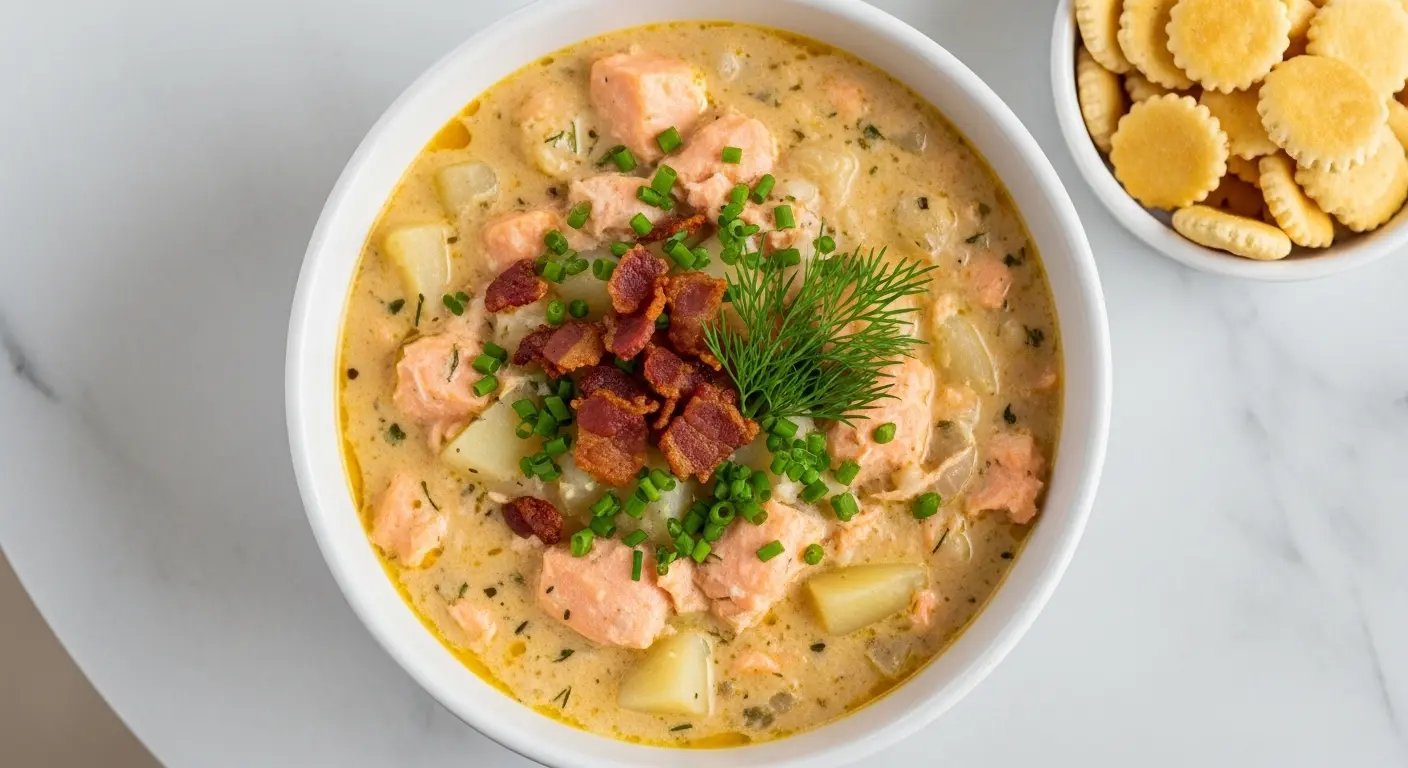
If you’ve been searching for the ultimate salmon chowder recipe, you’ve landed in the right place. This thick, creamy, and deeply satisfying chowder is everything a bowl of comfort food should be: loaded with tender chunks of fresh salmon, hearty potatoes, sweet corn, crispy bacon, and a rich cream broth fragrant with fresh dill.
It’s the kind of soup that warms you from the inside out, and the best part is that it comes together in a single pot without any complicated techniques.
Unlike clam chowder, which requires steaming shellfish and dealing with all of those stubborn little shells, salmon chowder is far more approachable. The salmon goes in toward the very end of cooking, meaning there’s zero risk of overcooking it by accident.
The base flavor comes from rendering bacon in your pot first, then building on that smoky depth with sauteed aromatics. That layering of flavor is what separates a truly memorable chowder from a bland, forgettable soup.
This recipe follows the most popular, widely loved version of the dish, inspired by Pacific Northwest-style chowder traditions. It keeps things classic but delivers maximum flavor every single time.
For another delicious seafood soup, you’ll also love this Seafood Chowder for when you want a heartier mix of ocean flavors.
Why You’ll Love This Salmon Chowder Recipe
This is the kind of recipe you’ll keep coming back to again and again, and for very good reason.
It is a complete one-pot meal, which means minimal cleanup after dinner.
The flavor is rich and layered, thanks to bacon, aromatics, and a combination of chicken broth and heavy cream that creates a velvety, indulgent base.
Fresh dill is the secret weapon here. It pairs naturally with salmon and adds a brightness that cuts through the richness of the cream.
You can use fresh, frozen, or even canned salmon, making this incredibly flexible and budget-friendly depending on what you have on hand.
It reheats beautifully the next day, and many people argue it tastes even better as leftovers once the flavors have had time to deepen.
It feeds a crowd without requiring a ton of effort, making it perfect for cozy weeknight dinners and casual gatherings alike.
- Rich and creamy texture without being overly heavy
- One pot, easy cleanup
- Uses simple, everyday ingredients
- Flexible with fresh, frozen, or canned salmon
- Great for meal prep, tastes even better the next day
- Kid-friendly and crowd-pleasing
- Packed with protein and vegetables
You might also enjoy: Fish Chowder Recipe
Ingredients
For this classic salmon chowder, you’ll need ingredients that create a balanced base of smoky, savory, creamy, and herbaceous flavors. Using Yukon Gold potatoes is strongly recommended here because they hold their shape beautifully without turning mushy, and their naturally buttery texture blends seamlessly into the broth.
- 4 strips thick-cut bacon, chopped
- 1 tablespoon unsalted butter
- 1 medium yellow onion, diced (about 1 cup / 150g)
- 2 celery stalks, diced
- 2 medium carrots, peeled and diced
- 4 cloves garlic, minced
- 3 tablespoons all-purpose flour
- 3 cups (720ml) chicken broth or seafood stock
- 1 cup (240ml) clam juice (bottled)
- 1.5 lbs (680g) Yukon Gold potatoes, peeled and cut into ¾-inch cubes
- 1 bay leaf
- 1 teaspoon kosher salt, plus more to taste
- ½ teaspoon black pepper
- 1 cup (150g) corn kernels, fresh or frozen
- 1.5 lbs (680g) fresh wild-caught salmon fillet, skin removed, cut into 1.5-inch chunks
- 1 cup (240ml) heavy cream
- 2 tablespoons fresh dill, chopped (or 1 teaspoon dried dill)
- 2 tablespoons fresh chives, chopped, for garnish
- Oyster crackers or crusty bread, for serving
This pairs wonderfully with creamy homemade bread on the side, such as this Buttermilk Biscuit Recipe.
Kitchen Equipment Needed
Having the right equipment makes all the difference when making a thick chowder like this. A heavy-bottomed pot is essential for even heat distribution and to prevent the bottom from scorching once you add the cream.
- Large Dutch oven or heavy-bottomed soup pot (6-quart / 5.7-liter capacity recommended)
- Sharp chef’s knife
- Cutting board
- Wooden spoon or silicone spatula
- Ladle
- Measuring cups and spoons
- Liquid measuring cup (at least 2-cup capacity)
- Peeler (for potatoes and carrots)
- Paper towel-lined plate (for draining bacon)
Read Also: Shrimp Chowder Recipe
Recommended Products for This Recipe
These are hand-picked products based on quality and performance that will genuinely improve your results with this chowder.
1. Wild Caught Alaskan Sockeye Salmon
Using high-quality wild-caught salmon makes a noticeable difference in flavor, offering a deeper, more robust taste than farmed varieties. Wild salmon also contains higher concentrations of Omega-3 fatty acids, making your chowder more nutritious as well as more delicious.
2. Le Creuset Enameled Cast Iron Dutch Oven
This pot distributes heat with incredible evenness, which is critical for a chowder that needs to simmer gently without scorching on the bottom. The wide, deep interior gives you plenty of room to work, and the enamel surface means nothing sticks.
3. Bottled Clam Juice
Adding a cup of clam juice alongside your chicken broth deepens the seafood flavor of the chowder dramatically. It’s an inexpensive secret ingredient that makes this taste like it came from a seaside restaurant.
4. Fresh Dill Seasoning Blend
If you can’t source fresh dill, a high-quality dried dill seasoning blend is the best substitute. Look for one that is bright green and fragrant, not faded or dusty, which indicates freshness.
5. OXO Good Grips Ladle
A sturdy, deep-cupped ladle makes serving this thick chowder much easier without spilling or dripping. This one is ergonomic, dishwasher-safe, and holds up to daily use beautifully.
Another favorite: Corn Chowder Recipe
Step-by-Step Instructions
Step 1: Prepare Your Ingredients
Before you turn on the heat, take a few minutes to prep everything. This makes the cooking process much smoother and ensures nothing burns while you’re still chopping.
- Chop the 4 strips of thick-cut bacon into roughly ½-inch pieces using a sharp knife.
- Dice the yellow onion into small, even pieces, about ¼-inch in size.
- Dice both celery stalks and both carrots into similar small pieces so everything cooks at the same rate.
- Mince the 4 garlic cloves finely.
- Peel and cut the Yukon Gold potatoes into ¾-inch cubes. Keep them roughly even so they cook uniformly. Place them in a bowl of cold water to prevent browning while you continue prepping.
- Remove the skin from the salmon fillet if it hasn’t already been removed. Cut the salmon into 1.5-inch chunks, trying to keep the pieces uniform. Place in the refrigerator until you’re ready to add them.
- Measure out the chicken broth, clam juice, heavy cream, and corn so they’re ready to add when needed.
- Chop the fresh dill and set aside.
Step 2: Render the Bacon
- Place your Dutch oven or heavy-bottomed pot over medium heat.
- Add the chopped bacon pieces in a single layer.
- Cook, stirring occasionally, until the bacon is browned and crispy, about 8 to 10 minutes. The fat should be fully rendered out and the bacon should have a golden-brown color and crispy texture.
- Using a slotted spoon, transfer the cooked bacon to a paper towel-lined plate. Leave all the rendered bacon fat in the pot. This fat is your flavor foundation, so do not drain it.
Step 3: Sauté the Aromatics
- Add 1 tablespoon of unsalted butter to the pot with the bacon fat, keeping the heat at medium.
- Add the diced onion, celery, and carrots to the pot.
- Stir to coat the vegetables in the fat.
- Cook, stirring occasionally, until the vegetables are softened and the onion is translucent, about 6 to 8 minutes. Do not rush this step. Properly softened aromatics create a much more flavorful base.
- Add the minced garlic and stir for about 60 seconds, just until fragrant. Garlic can burn quickly, so don’t walk away during this step.
Step 4: Build the Roux and Broth Base
- Sprinkle the 3 tablespoons of all-purpose flour evenly over the softened vegetables.
- Stir constantly for about 1 to 2 minutes. This step cooks out the raw flour taste and begins to create the thickening agent for your chowder. The mixture will look a bit dry and pasty, which is normal.
- Slowly pour in the 3 cups of chicken broth, adding a little at a time and stirring continuously to prevent lumps from forming.
- Pour in the 1 cup of clam juice and stir to combine.
- Scrape the bottom of the pot with your spoon to lift any browned bits. Those bits of fond are packed with flavor and should be incorporated into the broth.
Step 5: Cook the Potatoes
- Drain the potatoes from their cold water bath and add them to the pot.
- Add the bay leaf, 1 teaspoon of kosher salt, and ½ teaspoon of black pepper.
- Increase the heat to medium-high and bring the chowder to a gentle boil, stirring occasionally.
- Once boiling, reduce the heat to medium-low, cover partially with a lid, and simmer for 15 to 20 minutes until the potatoes are just barely fork-tender. You want them to be nearly cooked through but not fully soft yet, as they’ll continue cooking when you add the salmon.
Step 6: Add the Corn, Cream, and Salmon
- Remove the bay leaf from the pot and discard it.
- Stir in the 1 cup of corn kernels.
- Pour in the 1 cup of heavy cream, stirring gently to combine.
- Add the salmon chunks to the chowder, distributing them evenly throughout the pot.
- Do not stir vigorously after the salmon is added, as it will break apart. Use a gentle fold or just leave it to cook undisturbed.
- Reduce the heat to low, cover the pot, and simmer gently for 8 to 12 minutes, or until the salmon is cooked through. The salmon should flake easily when pressed with a fork and have an opaque, light pink color throughout.
Step 7: Add Fresh Dill, Season, and Serve
- Remove the pot from the heat.
- Stir in 2 tablespoons of fresh chopped dill. Adding the dill off the heat preserves its vibrant green color and fresh herbal aroma.
- Add most of the reserved crispy bacon back into the chowder (save a small amount for garnishing).
- Taste the chowder carefully and adjust seasoning with additional salt and pepper as needed. Keep in mind that the clam juice and bacon are both salty, so add extra salt gradually.
- Ladle into wide, deep bowls.
- Garnish each serving with a small sprinkle of reserved crispy bacon and fresh chopped chives.
- Serve immediately with oyster crackers, crusty sourdough, or warm biscuits on the side.
This recipe uses a similar technique to what makes a great Clam Chowder Recipe.
Tips for Success
Getting this recipe right the first time is easy as long as you follow a few key principles. The most common mistake people make is adding the salmon too early, which leads to overcooked, crumbly fish rather than tender, flaky chunks.
- Use Yukon Gold potatoes: They hold their shape better than russets and add a naturally creamy texture to the broth as they cook.
- Don’t skip the bacon fat: Draining the fat after cooking the bacon will rob your chowder of much of its depth. Embrace it.
- Add salmon at the end: Salmon cooks in about 8 to 12 minutes. Adding it too early guarantees it will be overcooked and fall apart into tiny flakes.
- Don’t boil after adding cream: Once the heavy cream goes in, keep the heat on low or medium-low. High heat can cause cream to break or curdle.
- Use clam juice: If you’ve never tried this trick, it’s a revelation. A cup of bottled clam juice added alongside the broth amplifies the seafood flavor significantly without making the chowder taste fishy.
- Add dill off the heat: This preserves both the bright color and the fresh flavor. If dill sits in simmering liquid too long, it loses its punch.
- Season gradually: Bacon, clam juice, and broth all contribute salt. Taste before adding extra salt to avoid an overly salty result.
Read Also: New England Clam Chowder Recipe
Serving Suggestions
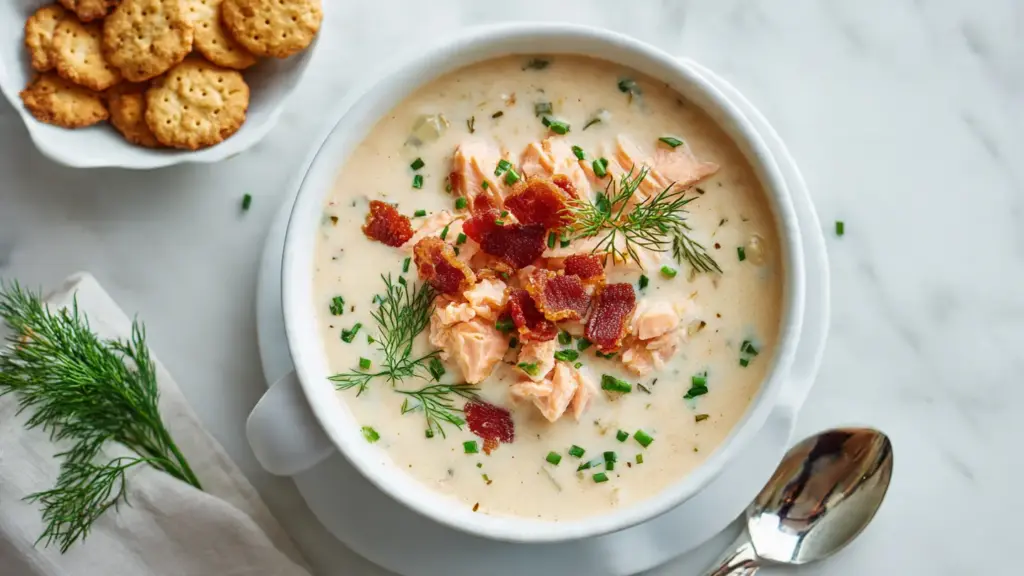
Salmon chowder is a hearty, complete meal on its own, but the right accompaniments elevate it from great to outstanding.
A thick slice of crusty sourdough bread or warm homemade biscuits is perhaps the most classic pairing, perfect for soaking up every last drop of the creamy broth.
- Oyster crackers crumbled directly into the bowl for a classic chowder experience
- Warm Homemade Biscuits on the side for dunking
- A simple green salad with a lemony vinaigrette to cut through the richness
- Cheesy Garlic Bread for a more indulgent pairing
- A chilled glass of dry white wine such as Chardonnay or Pinot Grigio
- Garnish with a lemon wedge for a bright squeeze of citrus at the table
For a lighter option, try: Baked Salmon Recipe
Variations to Try
Once you’ve mastered the base recipe, there are so many wonderful directions you can take this chowder depending on your preferences or what you have on hand.
- Smoked salmon chowder: Replace up to half of the fresh salmon with hot-smoked salmon for a deeper, woodsy flavor profile.
- Canned salmon chowder: Use two standard cans of pink or sockeye salmon, including the liquid, if fresh isn’t available. It’s economical and works beautifully.
- Dairy-free version: Replace heavy cream with full-fat coconut milk. It adds a subtle sweetness and a silky texture that’s surprisingly complementary.
- Lower-carb version: Reduce the potatoes by half and increase the amount of salmon and corn to maintain heartiness with fewer carbs.
- Spiced-up version: Add a pinch of smoked paprika and half a teaspoon of Old Bay seasoning along with the aromatics for a bolder, Southern-inspired flavor.
- Pacific Northwest style: Add half a cup of dry white wine after the aromatics and reduce before adding the broth, for a more complex, restaurant-worthy base.
You might also enjoy making a Chicken Chowder Recipe for a variation with a different protein.
Storage and Reheating
Salmon chowder stores well and is one of those dishes that genuinely improves overnight as the flavors meld together in the refrigerator.
- Refrigerate: Allow the chowder to cool completely at room temperature, then transfer to an airtight container. Store in the refrigerator for up to 3 days.
- Freeze: This chowder can be frozen for up to 2 months. For best results, freeze before adding the heavy cream and stir in the cream fresh when reheating. Cream-based chowders can sometimes separate after thawing.
- Reheat on the stovetop: Transfer to a saucepan and warm over low to medium-low heat, stirring gently and frequently. Do not let it boil, as high heat can cause the cream to separate and the salmon to become rubbery.
- Reheat in the microwave: Heat in 60-second increments at 70% power, stirring between each interval. Avoid full power to keep the texture intact.
- Do not over-stir when reheating: Leftover salmon will continue to break apart if stirred too aggressively. Use a gentle hand to keep the chunks intact.
Read Also: Seafood Stew Recipe
Nutritional Facts
The following nutritional information is approximate, based on one serving of this recipe (assuming 6 servings total). Actual values may vary based on specific ingredient brands and portion sizes.
| Nutrient | Amount Per Serving |
|---|---|
| Calories | ~380 kcal |
| Protein | ~26g |
| Total Fat | ~20g |
| Saturated Fat | ~9g |
| Carbohydrates | ~22g |
| Fiber | ~2.5g |
| Sugar | ~4g |
| Sodium | ~780mg |
| Cholesterol | ~90mg |
| Omega-3 Fatty Acids | ~1,500mg |
This recipe is a good source of high-quality protein, healthy fats, and several key vitamins including B12, D, and potassium.
For another satisfying, protein-rich soup option, check out the Chicken Rice Soup Recipe.
Health Benefits of Key Ingredients
Beyond being delicious, this salmon chowder delivers a genuinely impressive nutritional profile, thanks to some standout ingredients.
Each component brings something meaningful to the table, making this one of the more nutritionally balanced comfort food recipes you can make.
- Salmon: One of the richest dietary sources of Omega-3 fatty acids, which support heart health, brain function, and inflammation reduction. It is also an excellent source of high-quality protein, B vitamins, selenium, and vitamin D.
- Potatoes: Rich in potassium, vitamin C, and vitamin B6. When cooked correctly and not fried, they are a good source of complex carbohydrates and dietary fiber.
- Carrots: High in beta-carotene, which the body converts to vitamin A. They also provide fiber and antioxidants that support eye health and immune function.
- Celery: Low in calories but a useful source of vitamin K and folate. It also contains phthalides, compounds that may help reduce blood pressure.
- Garlic: Contains allicin, a bioactive compound with well-documented antibacterial and immune-supporting properties.
- Dill: Rich in flavonoids and monoterpenes that have anti-inflammatory properties. It also contains trace minerals like calcium and manganese.
- Corn: Provides fiber, B vitamins, and antioxidants including lutein and zeaxanthin, which support eye health.
This recipe is Loaded Potato Soup level hearty, but with the added nutritional bonus of salmon.
Frequently Asked Questions
1. Can I use canned salmon instead of fresh?
Yes, absolutely. Canned salmon is a perfectly acceptable substitute in this recipe and is a great budget-friendly option.
Use two standard 14.75-oz (418g) cans of pink or sockeye salmon. Drain the liquid first, or include it for extra salmon flavor. Add canned salmon in the last 5 minutes of cooking since it’s already cooked and just needs to be warmed through.
2. What type of salmon is best for chowder?
Wild-caught sockeye or king salmon are ideal because of their rich flavor and firm, meaty texture that holds up well in soups.
Farmed Atlantic salmon also works well and is widely available. Avoid very delicate species that may fall apart too quickly, and skip anything with a strong fishy smell at the fish counter.
3. Can I make this salmon chowder without bacon?
Yes, you can omit the bacon entirely and replace the rendered fat with 2 tablespoons of olive oil or butter.
The chowder will be slightly less smoky in flavor, but it will still be rich and delicious. You can add a small pinch of smoked paprika to compensate for some of that lost smokiness.
4. Can I make this recipe ahead of time?
This chowder is actually ideal for making ahead. The flavors deepen noticeably overnight, making day-two leftovers arguably even better than fresh.
For best results, make the chowder up through the potato-cooking step, refrigerate, and then add the salmon, cream, and dill when reheating. This prevents the salmon from overcooking during reheating.
5. Why did my chowder become grainy or curdled?
This typically happens when the cream is added to a very hot pot or when the chowder is allowed to boil after the cream goes in.
Always reduce the heat to low before adding the heavy cream, and never let the chowder reach a rolling boil after that point. Gentle, slow heat is the key to keeping a cream-based chowder smooth and velvety.
Read Also: Manhattan Clam Chowder Recipe
Final Thoughts
This salmon chowder recipe truly delivers on every level: creamy, comforting, and loaded with satisfying flavors that come together in a way that feels far more special than the effort it requires.
The combination of smoky bacon, tender salmon, earthy potatoes, and sweet corn in a rich, dill-scented cream broth is hard to beat on a cold evening.
Whether you’re making it for a weeknight family dinner or serving it to guests at a casual gathering, it never fails to impress.
Give this recipe a try and see for yourself just how quickly it becomes a regular in your dinner rotation.
If you do make it, drop a comment below and let us know how it turned out! Share your chowder photos and tag us. Hearing from you truly makes our day.
Recommended:
- Lobster Bisque Recipe
- Chicken Corn Chowder Recipe
- Beer Cheese Soup Recipe
- Baked Cod Recipe
- Salmon Skillet Recipe
- Air Fryer Salmon Recipe
- Salmon Croquettes Soul Food Recipe
- Old Fashioned Salmon Patties Recipe
- Potato Leek Soup Recipe
- Ham and Potato Soup Recipe