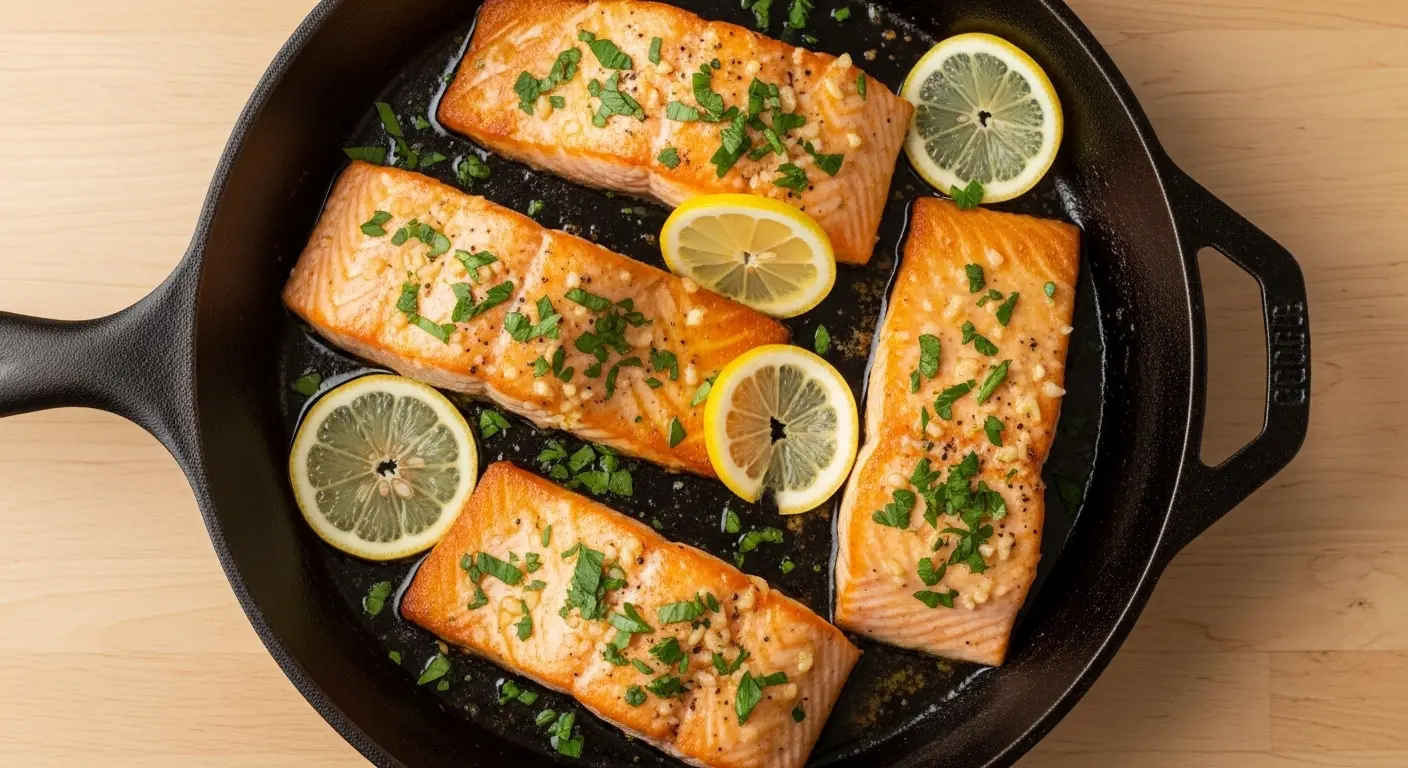
If you’re craving a weeknight dinner that’s fast, healthy, and genuinely impressive, this salmon skillet recipe is exactly what you need.
Pan-searing salmon in a hot skillet is one of the most rewarding cooking techniques you can master. The high heat creates a beautifully golden, crispy crust on the outside while keeping the inside moist, flaky, and tender.
This recipe relies on a handful of pantry staples: olive oil, butter, garlic, fresh lemon juice, and a few simple seasonings. The garlic butter sauce that forms in the pan is what really makes this dish sing.
It’s the kind of meal that looks like it came from a restaurant but comes together in under 20 minutes on your stovetop.
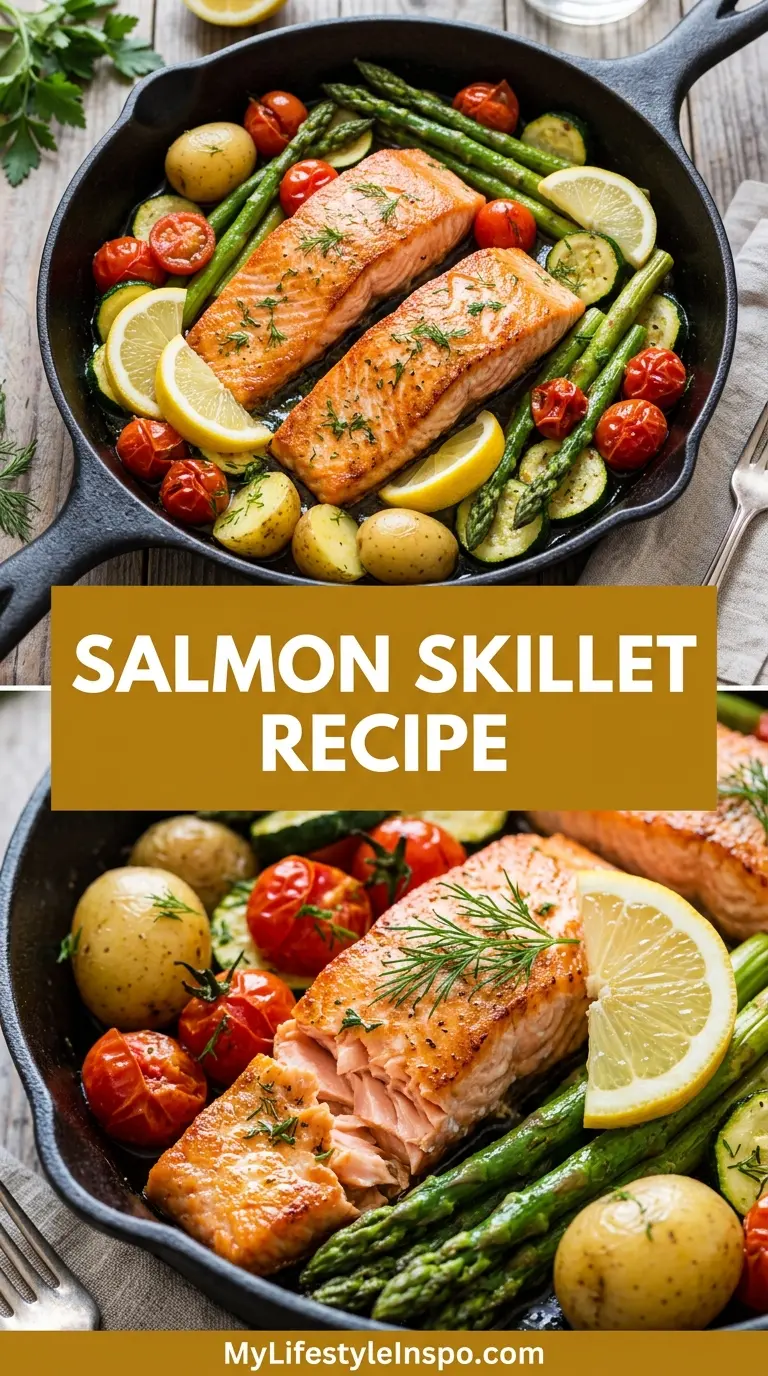
Why You’ll Love This Salmon Skillet Recipe
This is one of those recipes that consistently delivers, no matter how many times you make it.
The sear is what sets this dish apart. A screaming hot pan creates that gorgeous golden crust that adds flavor and texture you just can’t replicate in the oven.
Salmon is also one of the fastest proteins to cook. You’re looking at about 10 minutes of actual cook time, which makes it perfect for busy weeknights.
The garlic butter sauce is practically effortless. You make it right in the same pan using the flavorful drippings left behind after the salmon cooks.
Cleanup is minimal because everything happens in one skillet. Fewer dishes means more time to enjoy your meal.
Here’s a quick summary of why this recipe works so well:
- Fast cook time: From pan to plate in about 20 minutes total
- Restaurant-quality sear: High heat creates a golden, crispy crust on every fillet
- One-pan cleanup: The sauce is made right in the same skillet
- Deeply flavorful: Garlic, butter, and lemon work together to create a rich, bright finish
- Beginner-friendly: Simple techniques with clear steps make this approachable for any skill level
- Nutritious: Salmon is packed with protein, omega-3 fatty acids, and essential vitamins
If you love skillet dinners with bold flavor, you’ll also want to check out this Chicken Skillet Recipe for another quick weeknight favorite.
Ingredients
The beauty of a great salmon skillet recipe lies in how few ingredients you actually need. Each one plays a specific role in building flavor and achieving the perfect sear.
- 4 salmon fillets (about 6 oz / 170g each, skin-on preferred for best crispiness)
- 1 tablespoon olive oil (15ml)
- 3 tablespoons unsalted butter (42g), divided
- 4 garlic cloves, minced
- 1 teaspoon smoked paprika (2g)
- 1 teaspoon kosher salt (5g), or to taste
- 1/2 teaspoon black pepper (1g), freshly ground
- 2 tablespoons fresh lemon juice (about 1 lemon)
- 1 teaspoon lemon zest
- 2 tablespoons fresh parsley, finely chopped (for garnish)
- Lemon wedges, for serving
A note on the salmon: Skin-on fillets are highly recommended here. The skin acts as a natural barrier between the hot pan and the delicate flesh, protecting it from drying out. It also gets deliciously crispy when seared properly. Look for center-cut fillets when possible, as they’re uniform in thickness and cook more evenly. Wild-caught salmon such as sockeye or king salmon will have a richer, more pronounced flavor than farmed Atlantic varieties.
A note on the garlic: Fresh minced garlic is important here. Pre-minced jarred garlic tends to burn quickly and doesn’t develop the same sweet, mellow flavor that fresh garlic does when it hits warm butter.
You might also enjoy this Baked Salmon Recipe if you’d like a hands-off oven method using similar ingredients.
Kitchen Equipment Needed
You don’t need a lot of specialty gear to make this recipe, but a few key tools will make a noticeable difference.
- 12-inch cast iron skillet or large stainless steel skillet (a cast iron skillet retains heat exceptionally well, which is key to a consistent sear across all fillets)
- Fish spatula (its thin, angled blade slides under delicate fillets without breaking them)
- Paper towels (for patting the salmon dry, which is the single most important step for a crispy crust)
- Instant-read thermometer (takes the guesswork out of doneness)
- Cutting board and sharp knife (for mincing garlic and chopping parsley)
- Microplane or zester (for getting lemon zest without the bitter pith)
- Tongs (optional, but helpful for handling fillets safely)
Read Also: Air Fryer Salmon Recipe
Recommended Products for This Recipe
These are products I genuinely recommend based on quality and how much of a difference they make when cooking salmon at home.
1. Lodge 12-Inch Cast Iron Skillet
Cast iron is the gold standard for searing fish. It gets ripping hot, holds that heat evenly across the entire surface, and creates a crust on salmon that a nonstick pan simply cannot match. The Lodge 12-inch is a trusted, affordable option that will last a lifetime with proper care.
2. OXO Good Grips Fish Spatula
A flexible fish spatula is non-negotiable when cooking fillets. The thin, slotted blade glides cleanly beneath the salmon without tearing the flesh or breaking through that crispy crust you worked so hard to build. It’s one of those tools that immediately makes you a better cook.
3. ThermoWorks Thermapen Instant-Read Thermometer
Guessing doneness by touch is risky with salmon. An instant-read thermometer removes all the uncertainty. Pull your salmon at 125°F (52°C) for a silky medium center, or 145°F (63°C) for fully cooked. The Thermapen reads in about one second and is worth every penny.
4. Wild-Caught Sockeye Salmon Fillets
The quality of your salmon makes a significant difference in the final flavor. Wild-caught sockeye salmon has a deeper, richer flavor than farmed Atlantic salmon, and it’s higher in omega-3 fatty acids. If fresh wild-caught salmon isn’t available at your local market, frozen wild-caught fillets are an excellent alternative.
Another favorite: Air Fryer Salmon Bites Recipe
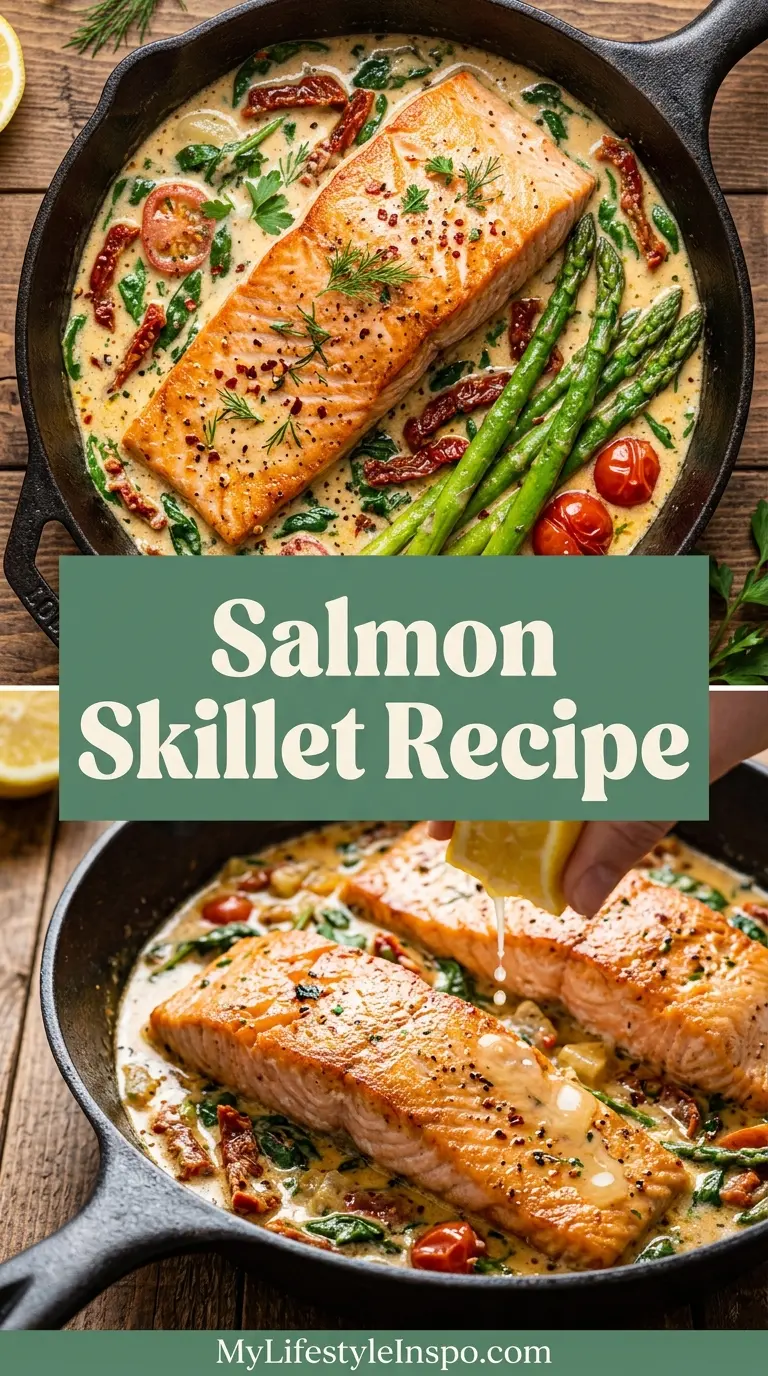
Step-by-Step Instructions
1. Prep the Salmon Fillets
- Remove the salmon fillets from the refrigerator 15 to 20 minutes before cooking. Bringing the fish closer to room temperature ensures more even cooking, so the center is not still cold when the outside is done.
- Place the fillets on a cutting board or plate lined with paper towels. Press additional paper towels firmly against the top surface of each fillet and hold for several seconds.
- Repeat on all sides of each fillet. This step is critical. Moisture on the surface of the fish creates steam when it hits the hot pan, which prevents a proper sear. Dry fish = crispy crust.
- Season both sides of each fillet generously with kosher salt, freshly ground black pepper, and smoked paprika. Press the seasoning gently into the flesh with your fingertips to help it adhere.
2. Heat the Skillet
- Place your cast iron or stainless steel skillet over medium-high heat. Allow it to heat for 2 to 3 minutes before adding any fat.
- A properly preheated pan is what separates a good sear from a great one. To test readiness, hold your hand a few inches above the surface. It should radiate intense heat. You can also flick a drop of water into the pan; it should evaporate almost instantly.
- Add the 1 tablespoon of olive oil to the hot pan. Swirl to coat. Watch for the oil to start shimmering. It should move fluidly across the pan, almost like water. This shimmer signals the oil is hot enough. Do not let it start smoking, which means it has gotten too hot.
3. Sear the Salmon Skin-Side Up First
- Carefully place the salmon fillets in the hot skillet, skin-side UP. The flesh side goes in first. This might seem counterintuitive, but it builds a beautiful golden crust on the presentation side of the fillet.
- Place the fillets gently and away from you to avoid oil splatter. Do not crowd the pan. If your fillets are large, cook them in two batches.
- Do not move the fillets. This is the most important step. Let them cook completely undisturbed for 4 to 5 minutes. Moving the fish interrupts the searing process and prevents that crust from forming. The salmon will naturally release from the pan when it’s ready to flip. If it resists, give it another minute.
- You’ll know it’s time to flip when the golden color has crept about two-thirds of the way up the sides of each fillet.
4. Flip and Finish Cooking
- Using your fish spatula, carefully slide it beneath each fillet and flip them over so the skin side is now facing down.
- Reduce the heat to medium. This prevents the garlic from burning in the next step and allows the interior of the salmon to finish cooking gently.
- Continue cooking for 2 to 4 more minutes, depending on the thickness of your fillets and your preferred doneness. For a silky, slightly translucent center, pull the fillets at around 125°F (52°C). For fully cooked salmon, aim for 145°F (63°C) at the thickest part.
- The skin should be golden and crispy at this point. If you want it even crispier, press the fillet down gently with the spatula for the last 30 seconds.
5. Make the Garlic Butter Sauce
- Transfer the cooked salmon fillets to a warm plate and tent loosely with foil to rest while you make the sauce.
- Add the remaining 3 tablespoons of butter directly to the same hot skillet. Let it melt over medium heat, swirling the pan occasionally.
- Add the minced garlic to the melted butter. Cook, stirring constantly, for about 30 to 45 seconds. Watch closely. Garlic goes from perfectly golden to burnt very quickly. It should smell fragrant and look lightly toasted, not brown.
- Add the fresh lemon juice and lemon zest to the garlic butter. Stir to combine. The sauce will sizzle. Scrape up any browned bits from the bottom of the pan with a wooden spoon or spatula. Those bits are pure flavor.
- Taste the sauce and add a pinch of salt and pepper if needed.
6. Plate and Serve
- Return the salmon fillets to the skillet, skin side down, and spoon the garlic butter sauce generously over each fillet. Let them sit in the sauce for about 30 seconds to absorb the flavors.
- Transfer the fillets to serving plates. Spoon any remaining sauce from the pan over the top of each piece.
- Sprinkle freshly chopped parsley over the salmon.
- Add lemon wedges alongside each fillet. Encourage everyone to squeeze fresh lemon juice over their salmon just before eating. The brightness of fresh lemon transforms the dish.
This pairs beautifully with Garlic Mashed Potatoes for an easy, satisfying dinner the whole family will love.
Tips for Success
A few small details make a big difference in how this recipe turns out. Keep these in mind every time you make it.
- Pat the salmon completely dry. This is the number one rule for crispy salmon. Even a little surface moisture will cause the fillet to steam rather than sear.
- Don’t skip preheating the pan. Adding salmon to a cold or lukewarm skillet leads to sticking and uneven cooking.
- Use skin-on fillets. The skin protects the delicate flesh from the direct heat and crisps up beautifully in the process.
- Choose center-cut pieces. Tail-end pieces taper thin and overcook quickly. Center-cut fillets are thicker and more uniform.
- Don’t move the salmon. Trust the process and let it cook undisturbed. The fillet will release cleanly on its own when the crust has formed.
- Use a thermometer. Internal temperature is the most reliable way to hit your preferred doneness without slicing into the fish repeatedly.
- Fresh lemon only. Bottled lemon juice doesn’t have the brightness or aroma of freshly squeezed lemon.
- Season generously. Fish can handle more salt than you think. Under-seasoning is the most common reason a perfectly seared fillet tastes flat.
Read Also: Old Fashioned Salmon Patties Recipe
Serving Suggestions
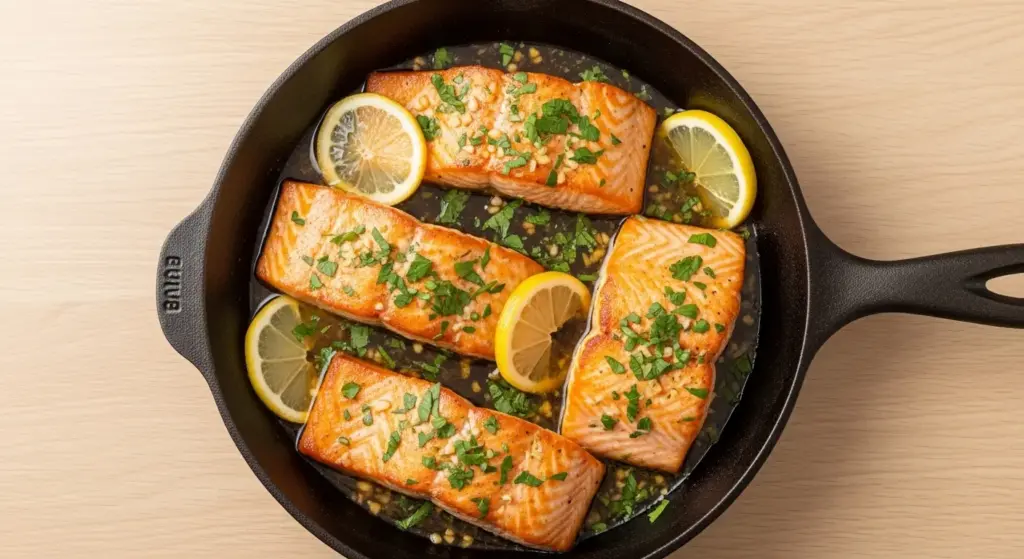
Salmon skillet pairs well with a wide variety of sides, from simple grains to roasted vegetables. The garlic butter sauce is rich enough to stand up to heartier pairings and bright enough to complement lighter ones.
Think of the salmon as the centerpiece and build your plate around complementary textures and flavors. Here are some of the best ways to serve it:
- Roasted Broccoli: The slightly charred, nutty flavor of roasted broccoli is a classic pairing with seared salmon. Toss florets in olive oil and roast at 425°F until the edges are crispy.
- Roasted Potatoes: Crispy on the outside and fluffy inside, roasted potatoes soak up the garlic butter sauce beautifully.
- Garlic Mashed Potatoes: Creamy and rich, mashed potatoes make the perfect bed for a saucy salmon fillet.
- Rice or quinoa: Both are excellent for soaking up every drop of the garlic butter sauce. Cook them in broth for extra flavor.
- Creamed Spinach: The creamy, slightly rich flavor of creamed spinach contrasts nicely with the bright lemon in the salmon.
- Simple green salad: Arugula dressed with lemon vinaigrette is a perfect light side that echoes the citrus notes in the dish.
- Steamed asparagus: Quick to cook and elegant on the plate, asparagus is a natural partner for salmon.
Variations to Try
Once you’ve mastered the basic salmon skillet recipe, there are so many ways to put your own spin on it. These variations use the same technique with different flavor profiles.
- Cajun Salmon Skillet: Replace the smoked paprika with a generous amount of Cajun seasoning. Add a pinch of cayenne for heat. Finish with a squeeze of lime instead of lemon.
- Honey Garlic Salmon: Add 2 tablespoons of honey to the garlic butter sauce along with a splash of soy sauce. The result is a sweet and savory glaze that coats the salmon beautifully.
- Creamy Tuscan Salmon: After removing the salmon, sauté sun-dried tomatoes and baby spinach in the garlic butter. Add a splash of heavy cream and let it reduce into a sauce. Return the salmon to the pan.
- Herb-Crusted Salmon: Mix chopped fresh dill, chives, and parsley with a teaspoon of Dijon mustard. Press the herb mixture onto the flesh side of the salmon before searing.
- Teriyaki Salmon Skillet: Skip the lemon and brush the fillets with teriyaki sauce after flipping. Serve over steamed rice with sesame seeds and sliced green onions.
- Lemon Pepper Salmon: Use lemon pepper seasoning in place of smoked paprika and black pepper for a lighter, citrus-forward flavor profile.
You might also enjoy: Air Fryer Frozen Salmon Recipe
Storage and Reheating
Leftover salmon skillet stores well and can be repurposed in several creative ways throughout the week.
Here are the storage guidelines and best reheating methods to keep your salmon tasting great:
- Refrigerator: Store cooked salmon in an airtight container for up to 3 days. Keep the garlic butter sauce in a separate small container if possible to prevent the salmon from becoming soggy.
- Freezer: Place completely cooled salmon fillets on a baking sheet lined with parchment and freeze for 1 hour. Transfer to a freezer-safe bag or container and freeze for up to 2 months. Thaw overnight in the refrigerator before reheating.
- Reheating in a skillet: This is the best method. Heat a small amount of butter in a skillet over medium-low heat. Add the salmon skin-side down and warm gently for 2 to 3 minutes. Do not use high heat or the fish will dry out.
- Reheating in the oven: Place the salmon on a foil-lined baking sheet and cover loosely with foil. Warm at 275°F (135°C) for 10 to 15 minutes. This gentle, low-heat method preserves moisture better than a hot oven.
- Avoid the microwave: Microwaving salmon tends to make it rubbery and causes the garlic butter sauce to separate. It also intensifies the fishy aroma.
- Repurposing leftovers: Flaked leftover salmon is incredible in grain bowls, pasta, scrambled eggs, or on top of an arugula salad with lemon vinaigrette.
Read Also: Salmon Croquettes Soul Food Recipe
Nutritional Facts
The following nutritional information is an estimate per serving, based on one 6-oz (170g) salmon fillet with garlic butter sauce. Actual values may vary depending on the specific type of salmon used and exact quantities of each ingredient.
| Nutrient | Per Serving |
|---|---|
| Calories | ~420 kcal |
| Protein | 35g |
| Total Fat | 28g |
| Saturated Fat | 9g |
| Cholesterol | 120mg |
| Sodium | 480mg |
| Carbohydrates | 2g |
| Fiber | 0g |
| Sugar | 0g |
| Omega-3 Fatty Acids | ~2,000mg |
| Vitamin D | ~580 IU |
Nutritional values are estimates only and calculated using standard nutritional databases. Individual results will vary.
Another favorite: Air Fryer Salmon Patties Recipe
Health Benefits of Key Ingredients
This salmon skillet recipe isn’t just delicious. Each of the core ingredients brings meaningful nutritional value to your plate.
It’s one of those meals that genuinely earns the label of “good for you” without sacrificing any flavor.
Here’s a closer look at what makes each key ingredient worth eating:
- Salmon: One of the richest dietary sources of omega-3 fatty acids, which support heart health, brain function, and reduced inflammation. A single serving also provides a significant amount of vitamin D, vitamin B12, selenium, and high-quality complete protein.
- Olive oil: A cornerstone of the Mediterranean diet, olive oil is high in monounsaturated fats and contains powerful antioxidants including oleocanthal, which has anti-inflammatory properties similar to ibuprofen.
- Garlic: Contains allicin, a sulfur compound with well-documented antibacterial and immune-supporting properties. Regular garlic consumption has also been linked to lower blood pressure and improved cholesterol levels.
- Lemon juice: A great source of vitamin C, which supports immune function and enhances the absorption of non-heme iron from plant-based foods eaten alongside the meal. The acidity also helps balance the richness of the butter sauce.
- Smoked paprika: Contains capsaicin and carotenoids, including beta-carotene, which the body converts to vitamin A. These compounds support eye health and have antioxidant activity.
- Butter: When used in moderate amounts, butter provides fat-soluble vitamins A, D, E, and K2. Grass-fed butter also contains small amounts of conjugated linoleic acid (CLA), which has been studied for its potential metabolic benefits.
- Fresh parsley: Rich in vitamin K, vitamin C, and flavonoids. It also acts as a natural breath freshener and adds a bright, clean flavor that balances the richness of the garlic butter.
Read Also: Lobster Bisque Recipe
Frequently Asked Questions
1. Do I need to remove the skin before cooking the salmon?
No, and in most cases you should leave it on.
The skin acts as a protective layer between the hot pan and the delicate flesh, helping the salmon cook more evenly without drying out. When seared properly, the skin also becomes deliciously crispy and is perfectly edible. If you genuinely prefer not to eat the skin, simply slide it off after plating. It separates easily from cooked salmon.
2. How do I know when the salmon is done?
The most reliable method is an instant-read thermometer.
Insert it into the thickest part of the fillet. For medium, look for 125°F to 135°F (52°C to 57°C). For fully cooked salmon per USDA guidelines, aim for 145°F (63°C). Visually, fully cooked salmon will be opaque throughout and flake easily when pressed with a fork. A fillet that is still slightly translucent in the center is medium and very moist.
3. Can I use frozen salmon for this recipe?
Yes, but it needs to be fully thawed first.
Cooking salmon directly from frozen will cause uneven cooking, with the outside overdone before the center is safe to eat. The safest method is to thaw the fillets overnight in the refrigerator. If you’re short on time, place the sealed fillets in a bowl of cold water and change the water every 30 minutes until thawed. Pat thoroughly dry before cooking.
4. Why is my salmon sticking to the pan?
The two most common reasons are a pan that isn’t hot enough, or fish that wasn’t patted completely dry.
Make sure the skillet is fully preheated before adding the oil and that the oil is shimmering before the fish goes in. Also, resist the urge to move the salmon once it hits the pan. The fillet will stick initially as the crust forms, but it will release cleanly on its own when it’s ready to flip. If it resists, give it another 60 to 90 seconds.
5. Can I make this recipe without butter?
Yes. If you prefer to keep the dish dairy-free, you can substitute the butter with extra virgin olive oil or a high-quality dairy-free butter alternative.
The sauce won’t have quite the same richness, but it will still be delicious. A drizzle of good olive oil with fresh garlic, lemon juice, and herbs makes a lighter but equally flavorful pan sauce. Coconut oil also works well as a dairy-free substitute and adds a subtle sweetness that pairs nicely with the salmon.
This recipe pairs wonderfully with Skillet Cornbread for a comforting, complete meal.
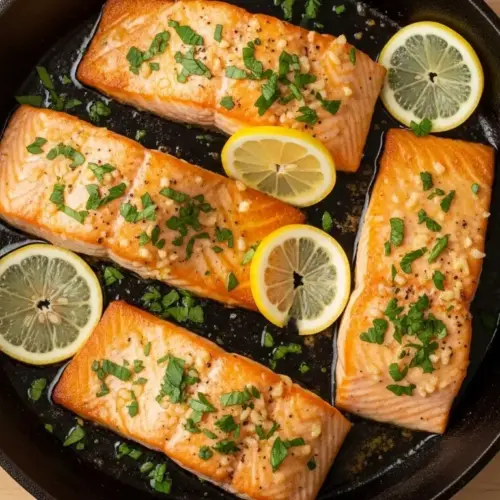
Salmon Skillet with Garlic Butter Sauce

Equipment
- 12-inch cast iron or large stainless steel skillet - Retains heat exceptionally well for a consistent sear
- Fish Spatula - Thin, angled blade slides under delicate fillets without breaking them
- Paper towels - For patting the salmon dry, essential for a crispy crust
- Instant-read thermometer - Takes the guesswork out of doneness
- Cutting board and sharp knife - For mincing garlic and chopping parsley
- Microplane or zester - For getting lemon zest without the bitter pith
- Tongs - Optional but helpful for handling fillets safely
Ingredients
- 4 salmon fillets - about 6 oz or 170g each, skin-on preferred
- 1 tablespoon olive oil - 15ml
- 3 tablespoons unsalted butter - 42g, divided
- 4 cloves garlic - minced
- 1 teaspoon smoked paprika - 2g
- 1 teaspoon kosher salt - 5g, or to taste
- 1/2 teaspoon black pepper - 1g, freshly ground
- 2 tablespoons fresh lemon juice - about 1 lemon
- 1 teaspoon lemon zest - about 1 lemon
- 2 tablespoons fresh parsley - finely chopped, for garnish
- lemon wedges - for serving
Instructions
- Pat the salmon fillets completely dry with paper towels. Season both sides generously with salt, pepper, and smoked paprika. Let sit at room temperature for 15-20 minutes.
- Heat a cast iron or stainless steel skillet over medium-high heat for 2-3 minutes. Add olive oil and swirl to coat. The oil should be shimmering but not smoking.
- Place fillets in the hot skillet, skin-side UP. Cook completely undisturbed for 4-5 minutes until a golden crust forms and releases easily from the pan.
- Flip fillets over so skin is down. Reduce heat to medium and cook 2-4 minutes more until internal temperature reaches 125°F (52°C) for medium or 145°F (63°C) for well done.
- Transfer salmon to a warm plate. Add remaining butter to the skillet over medium heat. Add minced garlic and cook 30-45 seconds until fragrant. Stir in lemon juice and zest, scraping up browned bits.
- Return salmon to the skillet and spoon sauce over the top. Garnish with parsley and serve immediately with lemon wedges on the side.
Notes
- Pat completely dry: Surface moisture is the enemy of a crispy crust. Pat fillets with paper towels until completely dry before seasoning.
- Don’t move the salmon: Let it cook undisturbed for 4-5 minutes. It will naturally release from the pan when the crust has formed.
- Skin-on is best: The skin protects the delicate flesh from direct heat and crisps up beautifully. Remove after cooking if preferred.
- Use an instant-read thermometer: 125°F (52°C) for medium, 145°F (63°C) for fully cooked. This removes all guesswork.
- Storage: Store leftovers in an airtight container in the refrigerator for up to 3 days. Keep sauce separate if possible.
- Reheating: Warm gently in a skillet over medium-low heat with a little butter. Avoid the microwave which can make the salmon rubbery.
- Fresh ingredients matter: Use fresh garlic and fresh lemon juice for the best flavor. Bottled juice lacks brightness.
- Try variations: Add honey and soy sauce for a sweet glaze, or substitute Cajun seasoning for a spicier version.
- Repurpose leftovers: Flaked salmon is excellent in grain bowls, salads, pasta, or scrambled eggs.
- Frozen salmon: Thaw completely in the refrigerator overnight and pat dry before cooking.
Final Thoughts
This salmon skillet recipe is one of those dishes that proves weeknight cooking doesn’t have to mean sacrificing flavor or quality.
With a hot pan, a few simple ingredients, and a little patience, you can put a restaurant-worthy dinner on the table in under 20 minutes.
The crispy sear, the buttery garlic sauce, the brightness of fresh lemon, it all comes together in the most satisfying way.
Give it a try this week and see for yourself. Once you nail the technique, you’ll find yourself reaching for it again and again.
If you make this recipe, leave a comment below and let me know how it turned out! I’d love to hear your variations, your sides, and any tips you discovered along the way.
Recommended:
- Taco Skillet Recipe
- Turkey Skillet Recipe
- Chicken Skillet Recipe
- Stuffed Pepper Skillet Recipe
- Cheeseburger Skillet Recipe
- Mexican Beef and Rice Skillet Recipe
- Enchilada Skillet Recipe
- Cowboy Skillet Recipe
- Baked Cod Recipe
- Salmon Chowder Recipe