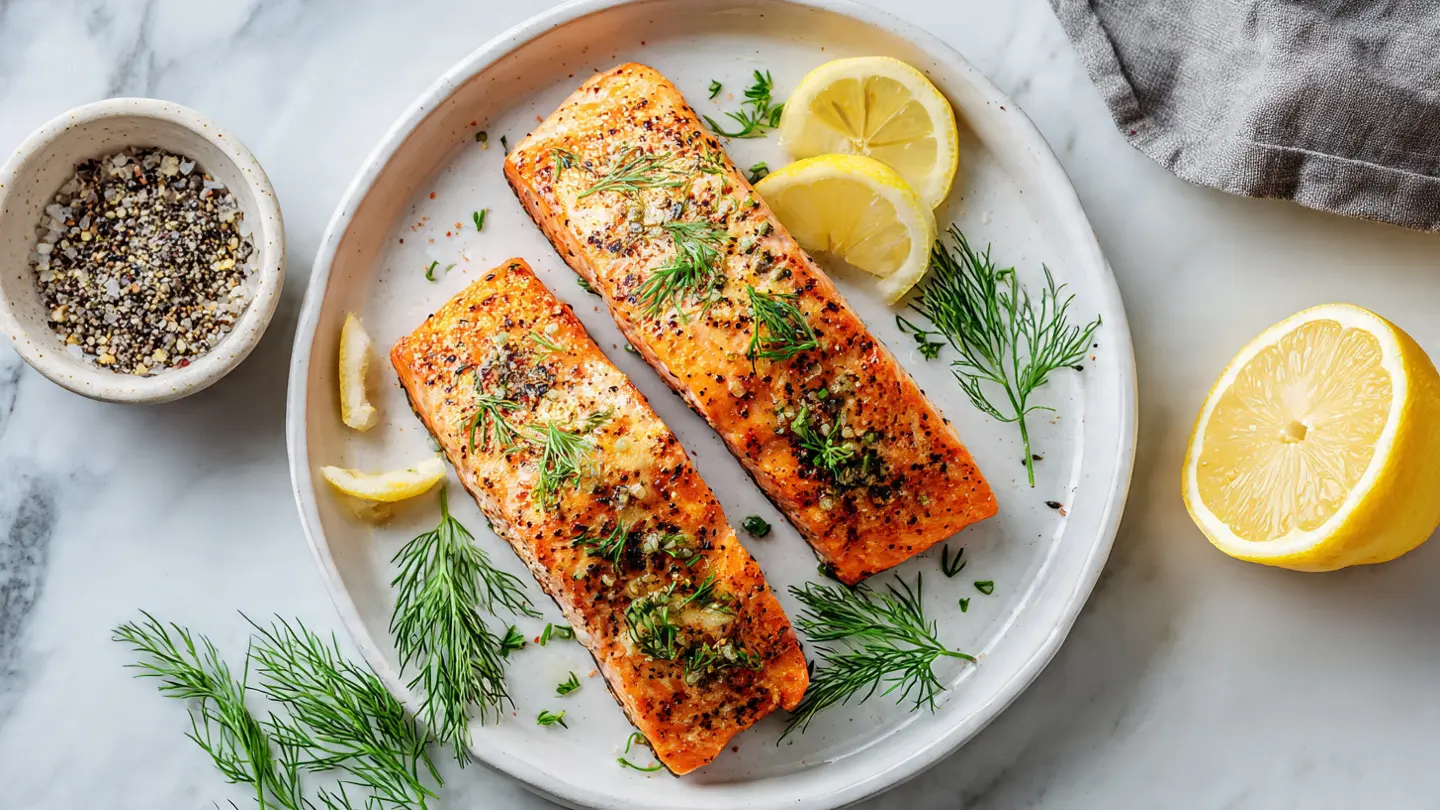
If you’ve ever opened your fridge at 5 PM only to realize your salmon is still rock-solid in the freezer, this air fryer frozen salmon recipe is about to become your new best friend. The air fryer’s powerful circulating heat does something almost magical — it defrost and cooks those fillets at the same time, delivering flaky, tender salmon in about 15 to 20 minutes with zero thawing required.
What makes this method so reliable is the two-stage cooking technique. You start the salmon plain and frozen to let it thaw in the basket, then season it halfway through once the surface is dry enough for the spices to actually stick. That little trick makes all the difference between seasoning that slides right off and a beautifully coated fillet with gorgeous color and flavor all the way through.
This recipe uses a simple, crowd-pleasing blend of olive oil, garlic powder, onion powder, paprika, salt, pepper, and fresh lemon — no fancy ingredients, no marinades to prep in advance. It is the kind of weeknight dinner that feels effortless but looks and tastes like you put in real effort.
If you love a good air fryer salmon dish, you might also enjoy this Air Fryer Salmon Recipe for fresh fillets on nights when you do have time to plan ahead.

Why You’ll Love This Air Fryer Frozen Salmon Recipe
This is one of those recipes that genuinely earns a permanent spot in your weeknight rotation.
It requires zero prep time — you go straight from the freezer bag to the air fryer basket without a single extra step. No marinade, no overnight planning, no last-minute grocery runs.
The two-stage cooking method means your seasoning goes on after the salmon has had a few minutes to thaw, so it actually adheres to the fish instead of steaming off.
Even beginners get perfect results because you rely on internal temperature rather than guessing by appearance alone. A quick read with an instant-read thermometer tells you exactly when it’s done.
The cleanup is minimal, and the whole meal is on the table in under 25 minutes from start to finish.
Here is a quick rundown of what makes this recipe a standout:
- No thawing required — cook directly from frozen
- Ready in under 20 minutes — faster than most takeout
- Only a handful of pantry spices needed — no specialty ingredients
- Flaky, moist interior with lightly crisped edges — excellent texture every time
- Naturally gluten-free and high in protein — a genuinely nutritious dinner
- Scales easily — cook two fillets or four with the same method
Another salmon favorite worth bookmarking: Air Fryer Salmon Bites — they are crispy, snackable, and just as quick to make.
Ingredients
You only need a few simple ingredients to pull this recipe together. The seasoning mix is intentionally straightforward so the natural flavor of the salmon still shines through. If you prefer a richer flavor, a drizzle of soy sauce or a sprinkle of smoked paprika in place of regular paprika makes a great upgrade.
- 2 frozen salmon fillets (about 6 oz / 170 g each, skin-on or skinless, approximately 1 to 1.5 inches thick)
- 1 tablespoon olive oil (or olive oil spray)
- 1/2 teaspoon garlic powder
- 1/2 teaspoon onion powder
- 1/2 teaspoon paprika (smoked or sweet)
- 1/2 teaspoon coarse sea salt (or to taste)
- 1/4 teaspoon freshly ground black pepper
- 1/2 lemon, cut into wedges (for serving)
- Fresh dill or parsley, for garnish (optional)
For a slightly bolder flavor profile, you can also add 1/4 teaspoon of cayenne pepper to the seasoning blend or stir in 1 teaspoon of Dijon mustard with the olive oil before brushing it on.
Pair this dish with a classic Salmon Skillet if you want a second salmon option using a stovetop method for variety throughout the week.
Kitchen Equipment Needed
The beauty of this recipe is that you need very little equipment to pull it off. The air fryer does almost all of the work, and everything else is basic kitchen staple gear. A proper instant-read meat thermometer is the one tool worth investing in if you do not already own one — it takes the guesswork out of knowing when the salmon is perfectly done.
- Air fryer (basket-style or oven-style, at least 4-quart capacity recommended)
- Instant-read meat thermometer
- Small mixing bowl
- Pastry brush or spoon (for applying oil and seasoning)
- Tongs or a flat spatula
- Cutting board
- Sharp knife (for slicing lemon)
- Plate or serving dish
Read Also: Air Fryer French Fries Recipe
Recommended Products for This Recipe
These are products I genuinely recommend based on quality, performance, and how much they improve the final result of this recipe.
1. COSORI Pro Air Fryer 5.8-Quart
This basket-style air fryer is one of the best options for cooking salmon fillets because the wide basket gives each fillet enough room for proper hot air circulation. Even heat distribution means no cold spots, which is especially important when cooking from frozen. It also has a preheat function that makes the two-stage cooking method even easier.
2. ThermoPro Instant-Read Meat Thermometer
Checking the internal temperature of frozen salmon is the single most reliable way to know it is done. This thermometer reads in about two seconds and is accurate to within 1 degree, which means you catch your salmon at exactly 125°F for medium or 145°F for fully cooked — whichever you prefer.
3. Wild-Caught Frozen Salmon Fillets
The quality of your frozen salmon matters enormously. Wild-caught salmon tends to have firmer flesh, richer flavor, and more beneficial omega-3 fatty acids than farmed varieties. Individually vacuum-sealed fillets are ideal because they cook more evenly and have less freezer burn.
4. Olive Oil Spray
A good olive oil spray makes it easy to lightly and evenly coat the salmon before adding seasoning, without overdoing the oil. Avocado oil spray is another excellent option since it has a high smoke point that handles the air fryer’s heat without any off flavors.
5. Smoked Paprika
Smoked paprika adds a subtle depth and a beautiful reddish color to the salmon that regular paprika just can’t match. A little goes a long way, and it pairs perfectly with garlic and lemon in this recipe.
You might also enjoy: Air Fryer Bacon Wrapped Shrimp Recipe

Step-by-Step Instructions
Step 1: Preheat the Air Fryer
- Set your air fryer to 390°F (199°C).
- Allow it to preheat for 3 to 5 minutes according to your machine’s instructions. Preheating ensures the salmon starts cooking immediately when it hits the basket, which helps the exterior set up properly rather than steaming.
- If your air fryer has a crisper plate or basket insert, place it in now so it heats up too.
- Lightly spray the basket or crisper plate with olive oil spray to prevent sticking.
Step 2: Place the Frozen Salmon in the Basket
- Remove the frozen salmon fillets directly from the freezer. Do not rinse or attempt to thaw them at this stage.
- Place the fillets in the air fryer basket skin-side down, leaving at least half an inch of space between each fillet. Spacing is crucial — if the fillets are touching, the hot air cannot circulate freely and you risk uneven cooking.
- Do not season the salmon yet. Because the fillets are frozen solid, any oil or seasoning applied now would slide off or steam away during the first cooking phase.
Step 3: Cook the Salmon for the First Round (7 Minutes)
- Slide the basket into the preheated air fryer and cook at 390°F (199°C) for 7 minutes.
- This first round is specifically to defrost and partially cook the outer layer of the salmon. The surface will be thawed and slightly cooked after this stage, making it ready to accept the seasoning.
- Do not open the air fryer during this initial 7-minute cook. Let the heat work uninterrupted.
Step 4: Season the Salmon
- Carefully pull out the basket using the handle. The salmon will be partially cooked and the surface will look opaque and slightly firm.
- In a small bowl, mix together 1 tablespoon olive oil, 1/2 teaspoon garlic powder, 1/2 teaspoon onion powder, 1/2 teaspoon paprika, 1/2 teaspoon coarse sea salt, and 1/4 teaspoon black pepper. Stir until it forms a loose paste.
- Use a pastry brush or the back of a spoon to coat the tops and sides of each salmon fillet with the seasoning mixture. Work quickly but thoroughly — you want an even coat across the entire exposed surface of each fillet.
- If your salmon has skin, you do not need to season the underside. Focus on the flesh side and the exposed sides.
Step 5: Cook for the Second Round (6 to 9 Minutes)
- Slide the basket back into the air fryer. Cook at 390°F (199°C) for an additional 6 to 9 minutes, depending on the thickness of your fillets.
- As a general guide: thin fillets (under 1 inch / 2.5 cm thick) will be done closer to the 6-minute mark, while thicker fillets (1.5 inches / 3.8 cm thick) will need the full 9 minutes.
- Begin checking for doneness at the 6-minute mark to avoid overcooking. Every air fryer runs slightly differently, so your machine may run a little hotter or cooler than the listed temperature.
Step 6: Check the Internal Temperature
- Insert your instant-read thermometer into the thickest part of the fillet, avoiding the skin.
- For medium salmon (moist and slightly translucent in the very center): aim for 125°F to 130°F (52°C to 54°C).
- For fully cooked salmon per FDA food safety guidelines: the internal temperature should reach 145°F (63°C).
- If the salmon has not yet reached your target temperature, return it to the air fryer for 1 to 2 additional minutes at a time and check again. Avoid cooking in long increments at this stage, as overcooked salmon dries out quickly.
Step 7: Rest and Serve
- Once the salmon reaches your desired internal temperature, remove it from the air fryer using a flat spatula or tongs.
- Let the fillets rest on a plate for 2 to 3 minutes before serving. Resting allows the internal juices to redistribute, which keeps the salmon moist throughout.
- Squeeze fresh lemon juice over the fillets, add a sprig of fresh dill or chopped parsley if desired, and serve immediately with your choice of sides.
Read Also: Air Fryer Salmon Patties Recipe
Tips for Success
A few small adjustments make a big difference between good salmon and absolutely great salmon. Following these tips ensures you get consistent, delicious results every single time, regardless of your air fryer model or the thickness of your specific fillets.
- Do not skip the preheat. Starting with a cold basket leads to uneven cooking. A preheated air fryer ensures the salmon starts crisping from the moment it goes in.
- Season only after the first cook phase. Adding seasoning to frozen salmon means it will steam off rather than adhere. Waiting until the surface is thawed and tacky produces a well-seasoned, properly coated fillet.
- Use an instant-read thermometer every time. Cooking times in any recipe are estimates. The only reliable way to know your salmon is done is to check the internal temperature.
- Do not overcrowd the basket. Each fillet needs space for the hot air to circulate around it. Cook in batches if you are making more than two or three fillets at once.
- Pat the salmon surface dry between stages if needed. If there is visible moisture or liquid on the surface after the first 7-minute cook, dab it gently with a paper towel before applying seasoning. A dry surface holds seasoning much better.
- Adjust timing for your specific air fryer. All air fryers differ slightly. If you know yours runs hot, reduce the second cooking phase to 5 or 6 minutes. If yours tends to run cool, add 1 or 2 extra minutes.
This technique works equally well if you want to try Air Fryer Bacon Wrapped Scallops — another quick seafood dinner using the same two-stage cook approach.
Serving Suggestions
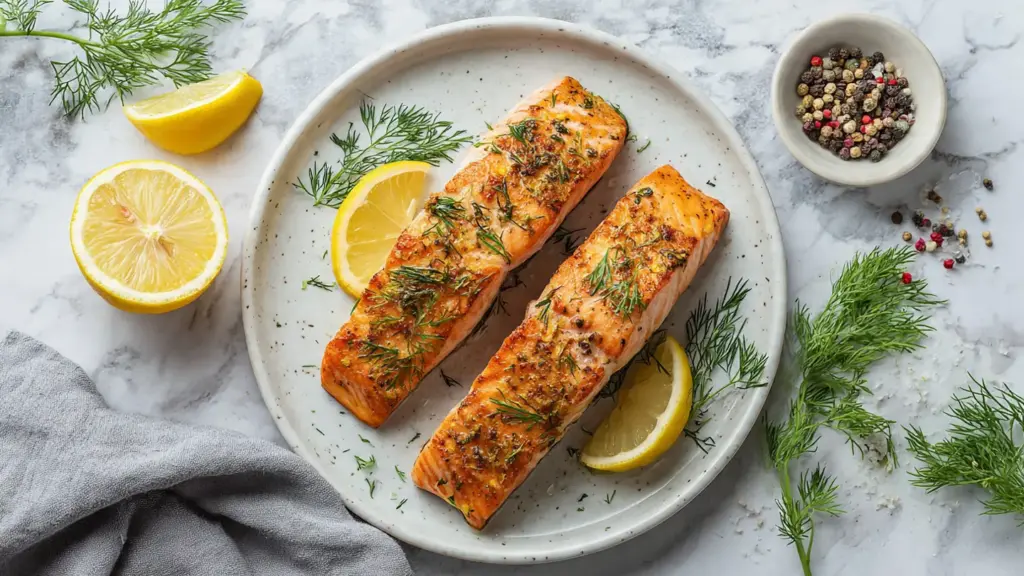
Air fryer frozen salmon is wonderfully versatile and pairs beautifully with everything from simple weeknight sides to more elaborate accompaniments. The lemon-paprika seasoning has a mild, crowd-pleasing flavor that does not overpower other dishes on the plate.
A few tried-and-true combinations to consider: roasted asparagus, garlic mashed potatoes, steamed white rice, a green salad with lemon vinaigrette, or simple roasted broccoli. Each of these makes the salmon feel like a complete, balanced meal with very little extra effort.
- Serve over a bed of steamed white or brown rice for an easy grain bowl — add sliced avocado and a drizzle of soy sauce for a salmon rice bowl inspired by Japanese flavors
- Pair with Roasted Broccoli — it goes in the oven while the salmon is in the air fryer, so both finish around the same time
- Flake the leftover salmon and toss it into a simple green salad with cucumber, cherry tomatoes, and a lemon-tahini dressing
- Serve alongside Garlic Mashed Potatoes for a classic, comforting combination that feels like a proper sit-down dinner
- Make a quick salmon taco by flaking the cooked fillet into warm corn tortillas with shredded cabbage, lime crema, and pickled jalapeños
- Add the salmon to a grain bowl with quinoa, roasted sweet potato, and a lemon-herb dressing for a nutritious and filling meal prep lunch
For another easy seafood dinner option, try these Air Fryer Bacon Wrapped Asparagus as a complementary side.
Variations to Try
Once you have the basic method down, it is easy to riff on the seasoning and sauces to keep things interesting. The two-stage cooking process stays the same — what changes is what you brush on in Step 4 and what you serve alongside.
Here are some easy ways to shake up the flavor profile of this recipe:
- Teriyaki salmon: Instead of the spice blend, brush the thawed fillets with a mixture of 2 tablespoons soy sauce, 1 tablespoon honey, 1 teaspoon sesame oil, and 1 teaspoon minced garlic. Serve over white rice and garnish with sesame seeds and sliced green onions.
- Cajun-style salmon: Replace the paprika with Cajun seasoning and add a pinch of cayenne pepper to the mix. Serve with coleslaw and corn for a Southern-inspired plate.
- Dijon and herb salmon: Mix 1 tablespoon Dijon mustard with the olive oil before brushing it on, then top with a sprinkle of dried dill or fresh chopped parsley. The mustard adds a pleasant tang and helps the seasoning cling even better.
- Lemon garlic butter salmon: After removing the salmon from the air fryer, top each fillet with a small pat of garlic herb butter and let it melt over the hot fish. This adds richness and an irresistible aroma.
- Asian-inspired glaze: Brush the fillets with a combination of hoisin sauce, a few drops of rice vinegar, and a touch of ginger powder. Serve with bok choy sauteed in sesame oil.
- Skinless frozen fillets: The same recipe works perfectly without the skin. Just be extra careful when removing the fillets from the basket, as skinless salmon is more delicate and can break apart more easily.
Read Also: Baked Salmon Recipe
Storage and Reheating
Cooked salmon stores well in the fridge and makes a fantastic lunch the next day — flaked into salads, tucked into wraps, or reheated for a quick protein-packed meal. Proper storage keeps the texture from drying out and extends the life of your leftovers significantly.
Here is how to store and reheat your air fryer frozen salmon:
- Refrigerator: Transfer cooled salmon fillets to an airtight container and refrigerate for up to 3 days. Make sure the salmon has cooled completely before sealing to prevent condensation inside the container.
- Freezer: You can freeze already-cooked salmon for up to 2 months. Wrap each fillet tightly in plastic wrap and place in a freezer-safe zip-lock bag. Thaw overnight in the refrigerator before reheating.
- Reheating in the air fryer: Set the air fryer to 350°F (177°C) and heat the salmon for 3 to 4 minutes. This method preserves the most texture and keeps the exterior from becoming rubbery. Check after 3 minutes to avoid drying it out.
- Reheating in the microwave: Place the salmon on a microwave-safe plate, cover loosely with a damp paper towel, and heat in 30-second intervals at 50% power. The damp towel creates a little steam that helps keep the fish moist.
- Avoid overheating: Salmon is delicate and dries out quickly when reheated at high heat. Always use lower temperatures and shorter intervals when warming leftovers.
Another great way to use leftover salmon is in a Salmon Chowder — just flake the cooked fish into the soup in the final few minutes of cooking.
Nutritional Facts
The following estimates are based on two 6-ounce (170 g) salmon fillets prepared with 1 tablespoon of olive oil and the seasoning blend listed in this recipe. Exact values will vary depending on the specific type of salmon (wild-caught vs. farmed, Atlantic vs. sockeye), the thickness of the fillets, and any additional sauces or sides served alongside.
| Nutrient | Per Serving (1 fillet) |
|---|---|
| Calories | ~350 kcal |
| Protein | ~34 g |
| Total Fat | ~22 g |
| Saturated Fat | ~4 g |
| Omega-3 Fatty Acids | ~2,000 mg |
| Carbohydrates | ~1 g |
| Fiber | ~0.3 g |
| Sugar | ~0 g |
| Sodium | ~480 mg |
| Cholesterol | ~95 mg |
| Vitamin D | ~447 IU |
| Vitamin B12 | ~3.2 mcg |
| Potassium | ~600 mg |
Salmon is one of the most nutrient-dense proteins available, and this air fryer preparation keeps added fats minimal while preserving all of the fish’s natural nutritional value.
For another high-protein air fryer option, this Air Fryer Chicken Breast Recipe is a great complement to your weeknight lineup.
Health Benefits of Key Ingredients
This is the kind of recipe that makes eating healthily feel completely effortless. Every major ingredient contributes meaningful nutritional benefits, and the air fryer cooking method keeps things light without sacrificing flavor.
Salmon is one of the richest food sources of omega-3 fatty acids (EPA and DHA), which have been extensively studied for their role in heart health, brain function, and reducing systemic inflammation. A single 6-ounce serving of salmon provides roughly 2,000 mg of omega-3s, nearly double the daily amount recommended by most health authorities.
Here is a closer look at what each ingredient brings to the table:
- Salmon: An exceptional source of high-quality protein, omega-3 fatty acids, vitamin D, vitamin B12, selenium, and potassium. Regular consumption is linked to improved cardiovascular health, better cognitive function, and reduced risk of chronic disease.
- Olive oil: Rich in monounsaturated fats and polyphenols, olive oil has well-documented anti-inflammatory properties. It also supports heart health by improving cholesterol ratios when used in place of saturated fats.
- Garlic powder: Contains allicin and other organosulfur compounds that have antioxidant and antimicrobial properties. Garlic has also been linked to modest blood pressure-lowering effects in several clinical studies.
- Paprika: Provides beta-carotene and capsaicin, both of which act as antioxidants. Paprika also adds iron and vitamin A in modest amounts.
- Lemon juice: An excellent source of vitamin C, lemon juice also enhances the absorption of non-heme iron from plant-based foods when consumed alongside them. Its acidity brightens flavors without adding calories.
Read Also: Lobster Bisque Recipe
Frequently Asked Questions
1. Do I really need to thaw the salmon before putting it in the air fryer?
No, you do not. That is the biggest advantage of this recipe — the frozen fillets go straight from the freezer into the preheated air fryer basket. The first 7-minute cooking phase gently defrosts the exterior, and then the second phase cooks the salmon through completely. Thawing ahead of time is unnecessary, though if you have defrosted fillets, the total cooking time will be shorter (closer to 8 to 10 minutes total at 390°F).
2. What is the correct internal temperature for air fryer frozen salmon?
The FDA recommends cooking salmon to an internal temperature of 145°F (63°C) for food safety. However, many cooks and chefs prefer to pull salmon at 125°F to 130°F (52°C to 54°C) for medium doneness, which results in a more moist and slightly translucent center. Use an instant-read thermometer inserted into the thickest part of the fillet to check. Both temperatures are valid — it is a matter of personal preference.
3. Can I cook more than two salmon fillets at once?
Yes, as long as you have enough space in the basket. The key rule is that the fillets should not overlap or touch one another — proper air circulation is what gives you even cooking and lightly crisped edges. If your air fryer basket is smaller, cook in batches rather than cramming the fillets together. Most 5 to 6 quart basket-style air fryers can comfortably fit two to three standard-sized fillets at once.
4. Why does my salmon come out dry or overcooked?
Overcooked salmon is usually the result of running the second cooking phase too long. Because frozen fillets vary in thickness, the timing ranges in this recipe (6 to 9 minutes for the second phase) are intentionally broad. Always start checking the internal temperature at the 6-minute mark of the second phase. If your salmon is consistently coming out dry, try targeting an internal temp of 125°F to 130°F rather than the full 145°F — the lower temperature yields a noticeably juicier result.
5. Can I use this recipe with skinless frozen salmon fillets?
Absolutely. The two-stage cooking method works just as well with skinless fillets. The only difference is that skinless salmon is slightly more delicate and can flake apart more easily when you are removing it from the basket. Use a wide, flat spatula and slide it gently underneath the fillet rather than using tongs, which can break the fillet. Skinless fillets may also cook slightly faster, so start checking the internal temperature a minute earlier during the second phase.
This same quick air fryer technique pairs well with other seafood — check out this Air Fryer Bacon Wrapped Chicken Breast Recipe for another impressive main that comes together in under 30 minutes.

Air Fryer Frozen Salmon

Equipment
- Air fryer - Basket-style or oven-style, at least 4-quart capacity recommended
- Instant-read meat thermometer - Essential for checking doneness
- Small mixing bowl
- Pastry brush or spoon - For applying oil and seasoning
- Tongs or flat spatula
- Cutting board
- Sharp knife - For slicing lemon
- Plate or Serving Dish
Ingredients
- 2 frozen salmon fillets - about 6 oz or 170 g each, skin-on or skinless, approximately 1 to 1.5 inches or 2.5 to 3.8 cm thick
- 1 tablespoon olive oil - or olive oil spray
- 1/2 teaspoon garlic powder
- 1/2 teaspoon onion powder
- 1/2 teaspoon paprika - smoked or sweet
- 1/2 teaspoon coarse sea salt - or to taste
- 1/4 teaspoon black pepper - freshly ground
- 1/2 lemon - cut into wedges, for serving
- fresh dill or parsley - optional, for garnish
Optional Additions
- 1/4 teaspoon cayenne pepper - for a bolder flavor
- 1 teaspoon Dijon mustard - mixed with olive oil for a tangy flavor
- 1 teaspoon smoked paprika - in place of regular paprika for deeper flavor
Instructions
- Preheat air fryer to 390°F (199°C) for 3-5 minutes. Lightly spray the basket with olive oil spray.
- Place frozen salmon fillets directly in the basket skin-side down, leaving at least half an inch between each. Do not season yet.
- Cook at 390°F (199°C) for 7 minutes to defrost the exterior. Do not open the air fryer during this phase.
- Mix olive oil, garlic powder, onion powder, paprika, salt, and pepper in a small bowl. Brush or spoon the seasoning mixture evenly over the tops and sides of each fillet.
- Cook at 390°F (199°C) for an additional 6 to 9 minutes, depending on thickness. Begin checking at the 6-minute mark.
- Insert an instant-read thermometer into the thickest part. For medium, aim for 125°F to 130°F (52°C to 54°C). For fully cooked, aim for 145°F (63°C).
- Remove from the air fryer and let rest on a plate for 2-3 minutes. Squeeze fresh lemon juice over top, garnish with dill or parsley, and serve.
Notes
- Don’t skip the preheat: Starting with a cold basket leads to uneven cooking. A preheated air fryer ensures the salmon starts crisping from the moment it goes in.
- Season only after the first cook phase: Adding seasoning to frozen salmon means it will steam off rather than adhere. Waiting until the surface is thawed and tacky produces a well-seasoned, properly coated fillet.
- Use an instant-read thermometer every time: Cooking times are estimates. The only reliable way to know your salmon is done is to check the internal temperature.
- Do not overcrowd the basket: Each fillet needs space for the hot air to circulate. Cook in batches if making more than two or three fillets at once.
- Adjust timing for your specific air fryer: All air fryers differ slightly. If yours runs hot, reduce the second cooking phase to 5 or 6 minutes. If it runs cool, add 1 or 2 extra minutes.
- For skinless fillets: They cook slightly faster and are more delicate. Use a wide, flat spatula to remove them, and start checking the temperature a minute earlier during the second phase.
- Storage: Refrigerate cooled salmon in an airtight container for up to 3 days. Freeze cooked salmon for up to 2 months wrapped tightly in plastic wrap.
- Reheating: Reheat in the air fryer at 350°F (177°C) for 3-4 minutes, or in the microwave at 50% power in 30-second intervals with a damp paper towel to retain moisture.
- Flavor variations: Try brushing with teriyaki sauce, Cajun seasoning, or Dijon mustard and herbs for a completely different flavor profile.
- Pairing ideas: Serve with roasted asparagus, garlic mashed potatoes, steamed rice, or a green salad with lemon vinaigrette for a complete meal.
Final Thoughts
This air fryer frozen salmon recipe is proof that a genuinely delicious, healthy dinner does not have to require hours of planning or complicated technique. With a couple of fillets pulled straight from the freezer and a handful of pantry spices, you can have perfectly cooked, flaky salmon on the table in under 25 minutes.
The two-stage method is the secret that makes it work every time — defrost first, season second, and always trust the thermometer over the clock. Once you cook salmon this way, it becomes the kind of recipe you find yourself making on repeat all week long.
Give this recipe a try the next time you need a quick, nutritious dinner and let me know how it turns out! I would love to hear your favorite seasoning variations or the sides you paired it with — leave a comment below and share your experience!
Recommended:
- Air Fryer Salmon Recipe
- Air Fryer Salmon Patties Recipe
- Air Fryer Salmon Bites Recipe
- Baked Salmon Recipe
- Salmon Chowder Recipe
- Air Fryer Chicken Thighs Recipe
- Air Fryer Zucchini Boats Recipe
- Air Fryer Beef Tips Recipe
- Seafood Chowder Recipe
- Air Fryer Turkey Tenderloin Recipe