If you have been looking for a shrimp chowder recipe that feels like a warm hug in a bowl, you have landed in exactly the right place.
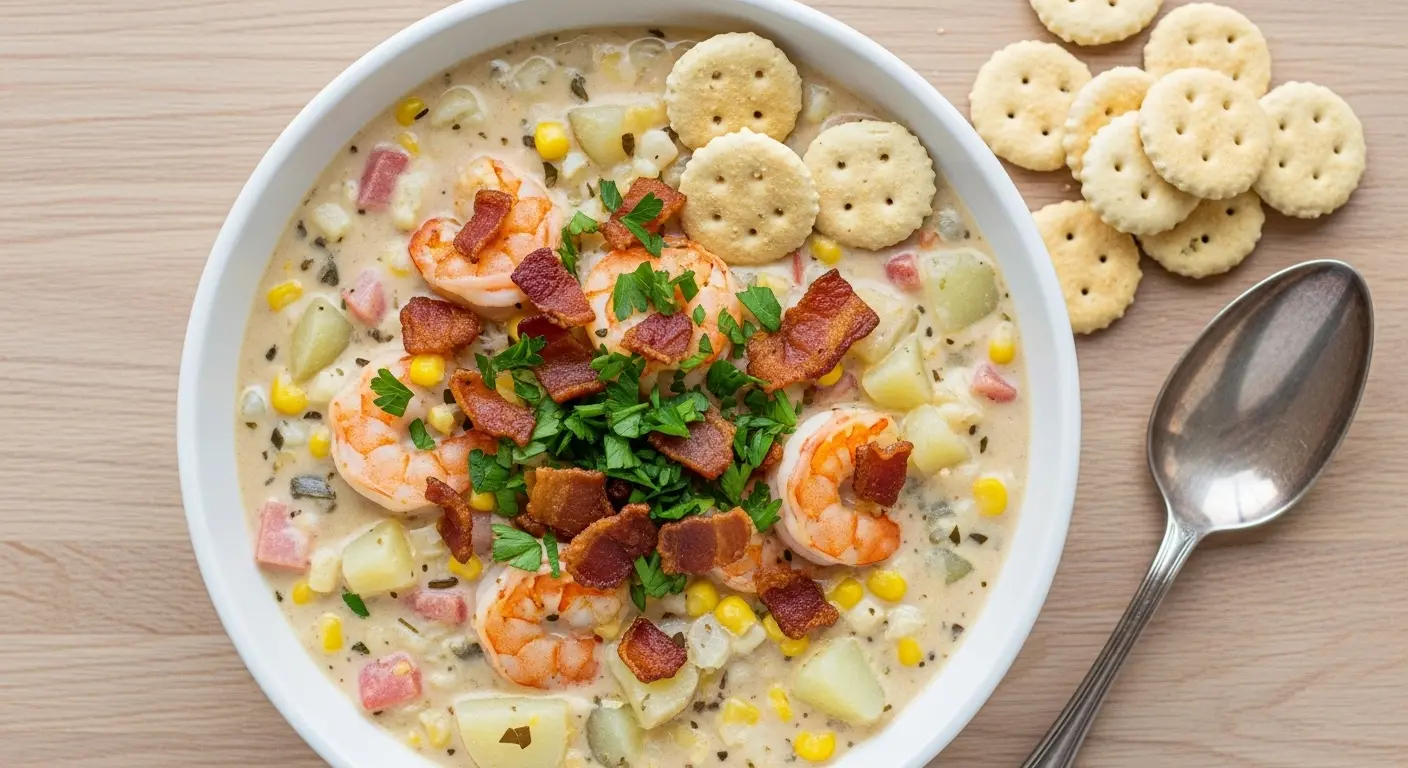
This classic shrimp chowder is loaded with plump, juicy shrimp, tender chunks of potato, sweet corn, smoky bacon, and a rich, creamy broth that is seasoned just right. It comes together in under 45 minutes, making it ideal for a weeknight dinner but impressive enough for a dinner party or holiday meal.
What makes this recipe work so beautifully is the layering of flavors. The bacon builds a smoky, savory base. The vegetables soften and sweeten in that rendered fat. A simple flour roux thickens the broth naturally, and the shrimp go in at the very end so they stay perfectly tender and never rubbery.
This is the kind of soup that disappears fast. Make a big pot.
Craving more seafood soups? You will love this Seafood Chowder for when you want to mix it up with a variety of shellfish and fish in one bowl.
Why You’ll Love This Shrimp Chowder Recipe
This shrimp chowder recipe checks every box: comforting, flavorful, and genuinely easy to pull off even on a busy evening.
Here is why readers keep coming back to it:
- It is ready in under 45 minutes. From start to finish, this chowder is on the table faster than most takeout options.
- The flavor is deeply layered. Bacon fat, aromatics, Old Bay, and a flour-thickened creamy base build complexity at every step.
- It uses pantry-friendly ingredients. Frozen shrimp, canned or frozen corn, and basic produce are all you need.
- It is endlessly customizable. Add jalapeño for heat, swap in scallops, or go dairy-free with coconut cream.
- It reheats beautifully. The flavors deepen overnight, making leftovers arguably even better than day one.
- It is crowd-pleasing. Kids love it, guests are impressed by it, and even picky eaters tend to go back for seconds.
For another creamy, hearty classic to add to your rotation, check out this New England Clam Chowder.
Ingredients
Every ingredient in this shrimp chowder has a purpose, and together they create a broth that is rich, savory, and perfectly balanced. Here is everything you will need:
- 4 strips bacon, diced
- 1 tablespoon unsalted butter
- 1 medium yellow onion, finely diced
- 3 stalks celery, sliced
- 4 cloves garlic, minced
- 3 tablespoons all-purpose flour
- 2 cups (480 ml) chicken broth or seafood broth
- 1 cup (240 ml) clam juice
- 1 lb (450 g) Yukon Gold or red potatoes, cut into ½-inch (1.25 cm) cubes
- 1½ teaspoons Old Bay seasoning
- ½ teaspoon smoked paprika
- ½ teaspoon dried thyme
- Salt and black pepper, to taste
- 1½ lbs (680 g) raw large shrimp, peeled and deveined
- 1½ cups (360 ml) half-and-half
- 1½ cups (225 g) frozen or canned sweet corn kernels, drained if canned
- 2 tablespoons fresh parsley, chopped (for garnish)
- Oyster crackers, for serving
Read Also: Corn Chowder Recipe
Kitchen Equipment Needed
The right equipment makes this recipe even smoother to execute. Here is what you will need before you start:
- Large Dutch oven or heavy-bottomed pot (at least 5–6 quarts / 4.7–5.7 liters)
- Cutting board
- Chef’s knife
- Wooden spoon or silicone spatula
- Ladle
- Measuring cups and measuring spoons
- Immersion blender (optional, for partially blending the base)
A Dutch oven is the best vessel for this recipe because it distributes heat evenly and prevents the dairy-based broth from scorching on the bottom of the pot.
You might also enjoy: Salmon Chowder Recipe
Recommended Products for This Recipe
These are products I genuinely recommend based on quality and how much of a difference they make in the final bowl.
1. Le Creuset Enameled Cast Iron Dutch Oven
A heavy Dutch oven is the single most important piece of equipment for a great chowder. The Le Creuset distributes heat evenly across the bottom and sides, which means your roux thickens without burning and your dairy broth never scorches. It is a lifelong kitchen investment that will serve this recipe and hundreds of others.
2. Old Bay Seasoning
Old Bay is the classic seasoning for all things seafood on the East Coast of the United States. Its blend of celery salt, paprika, and spices is perfectly calibrated for chowder. While you can make your own blend, using the real thing produces a depth of flavor that is hard to replicate.
3. Clam Juice Bottles
Clam juice adds a briny, oceanic depth to the chowder broth that chicken or vegetable stock simply cannot replicate. Keep a few bottles stocked in your pantry. Brands like Bar Harbor or Snow’s are widely trusted and easy to find.
4. KitchenAid Immersion Blender
Partially blending the chowder after the potatoes are tender creates an incredibly silky, thick base without adding extra cream. An immersion blender lets you do this right in the pot. It is also perfect for soups, sauces, and smoothies year-round.
5. Frozen Wild-Caught Raw Shrimp
Using raw shrimp rather than pre-cooked shrimp is the single most important tip in this recipe. Raw shrimp cook gently in the hot broth and stay plump, sweet, and tender. Pre-cooked shrimp reheat to a rubbery texture. Look for wild-caught for the best flavor.
This recipe pairs beautifully with a bowl of Lobster Bisque if you want to offer a full seafood spread at your next gathering.
Step-by-Step Instructions
Step 1: Cook the Bacon
- Place your Dutch oven or large pot on the stove and set the heat to medium.
- Add the diced bacon strips to the cold pot. Starting with a cold pot helps the fat render slowly, giving you crispier bacon and more flavorful drippings.
- Cook the bacon, stirring occasionally, for about 6–8 minutes until the pieces are golden, crispy, and have released most of their fat.
- Use a slotted spoon to transfer the cooked bacon to a paper-towel-lined plate. Set aside for garnishing later.
- Leave the bacon fat in the pot. You should have about 2 tablespoons of fat. If there is significantly more, drain some off, but keep at least 2 tablespoons for flavor.
Step 2: Sauté the Aromatics
- Add the tablespoon of butter to the bacon fat in the pot. The butter adds richness and helps prevent the vegetables from sticking or browning too quickly.
- Add the finely diced yellow onion and sliced celery stalks to the pot.
- Sauté over medium heat, stirring frequently, for about 4–5 minutes until the onion becomes soft and translucent. It should look glossy, not browned.
- Add the minced garlic to the pot and stir continuously for about 1 minute. Garlic burns easily and turns bitter, so keep it moving and do not let it brown.
Step 3: Build the Roux
- Sprinkle the 3 tablespoons of all-purpose flour evenly over the softened vegetables in the pot.
- Stir constantly with a wooden spoon or spatula for 1–2 minutes, coating all the vegetables with the flour mixture. This step cooks out the raw flour taste and creates the thickening agent for your chowder.
- The mixture will look dry and pasty at first. That is exactly right. Keep stirring and let it cook for the full 2 minutes to avoid a floury taste in the finished soup.
Step 4: Add the Broth and Potatoes
- Pour in the chicken broth (or seafood broth) and the clam juice slowly, stirring as you go to prevent lumps from forming.
- Once all the liquid is incorporated, use a whisk or the back of your wooden spoon to press out any remaining lumps of flour against the side of the pot.
- Add the diced potatoes to the pot. Make sure they are cut uniformly into approximately ½-inch (1.25 cm) cubes so they cook at the same rate.
- Season the broth with Old Bay seasoning, smoked paprika, dried thyme, salt, and black pepper. Stir everything together.
- Increase the heat to medium-high and bring the broth to a gentle boil.
Step 5: Simmer Until Potatoes Are Tender
- Once the broth reaches a boil, reduce the heat to medium-low.
- Cover the pot with a lid and simmer for 12–15 minutes, stirring once or twice during that time.
- Check the potatoes for doneness by inserting the tip of a knife or a fork into one cube. It should slide in easily and the potato should feel tender but still hold its shape.
- If you would like a creamier, thicker base, now is the time to use your immersion blender: blend just 2–3 seconds in a small section of the broth to break down some of the potato starch. Do not blend the entire pot. This optional step creates a thicker, silkier texture without adding more flour or cream.
Step 6: Add the Shrimp, Corn, and Half-and-Half
- Reduce the heat to medium-low. This is important: you never want the broth to boil once the half-and-half is added, as it can cause the dairy to curdle and separate.
- Pour in the half-and-half slowly, stirring gently as you add it.
- Add the sweet corn kernels to the pot and stir to combine.
- Add the raw shrimp in a single layer as much as possible. If using large shrimp, give them a rough chop into 1-inch pieces so they distribute evenly throughout the bowl.
- Stir gently and cook for 4–5 minutes over medium-low heat, just until the shrimp have turned pink and opaque throughout. Do not overcook. Shrimp are done the moment they curl into a “C” shape and turn bright pink.
Step 7: Taste, Adjust, and Serve
- Taste the chowder and adjust the seasoning. You may want a pinch more salt, an extra dash of Old Bay, or a crack of fresh black pepper.
- Ladle the hot chowder into bowls.
- Top each bowl with the reserved crispy bacon bits and a sprinkle of freshly chopped parsley.
- Serve immediately with oyster crackers on the side, or alongside warm crusty bread or biscuits.
The flavor of this chowder rivals what you will find in any seafood restaurant, and it is just as satisfying paired with a bowl of Fish Chowder for a full chowder tasting night at home.
Tips for Success
A few focused tips will take your shrimp chowder from good to genuinely great. Here is what makes the biggest difference:
- Use raw shrimp, not pre-cooked. Raw shrimp that cook gently in the hot broth stay tender and sweet. Pre-cooked shrimp reheated in hot liquid almost always turn rubbery and tough.
- Do not skip the clam juice. It adds a subtle briny, oceanic depth that chicken broth alone cannot provide. Most grocery stores carry it in the canned fish aisle.
- Keep the heat low after adding dairy. Once the half-and-half goes in, never let the chowder return to a full boil. A gentle simmer keeps the base silky and prevents curdling.
- Season in layers. Salt the aromatics, season the broth, and then taste and adjust again at the end. This builds flavor throughout the entire cooking process rather than dumping it all in at once.
- Cut potatoes uniformly. Uneven cuts lead to some pieces turning mushy while others remain underdone. A consistent ½-inch (1.25 cm) cube is the sweet spot for this recipe.
- Cook the roux for the full 2 minutes. If you rush this step, the flour will not lose its raw taste and your chowder will have a slightly gummy, starchy flavor.
Read Also: Chicken Corn Chowder Recipe
Serving Suggestions
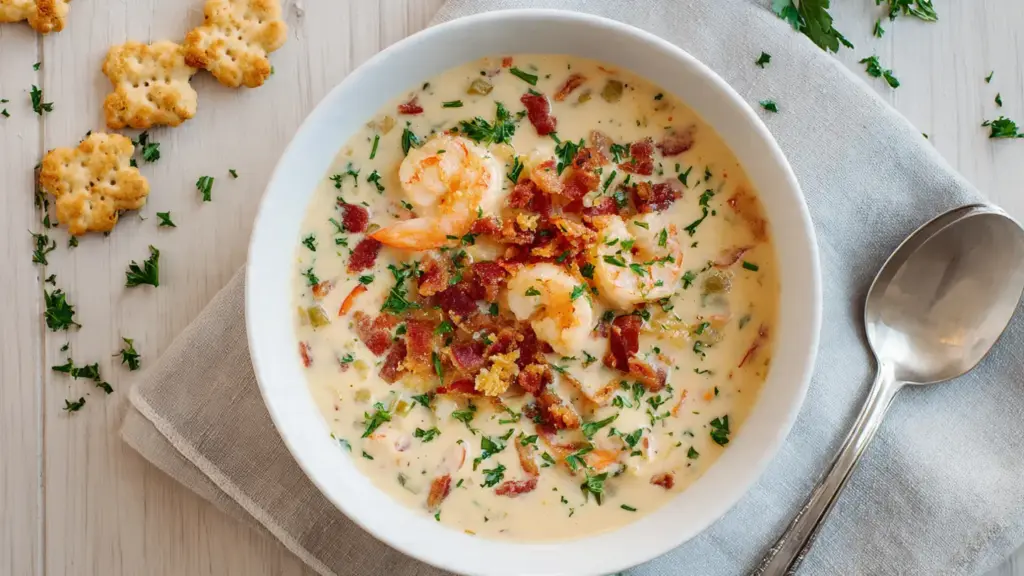
This shrimp chowder is a complete, satisfying meal on its own, but the right sides and accompaniments can elevate the whole experience.
A bowl of shrimp chowder is perfectly at home next to warm, crusty bread for dipping and soaking up every drop of that creamy broth.
- Warm Buttermilk Biscuits for classic comfort pairing
- Cheesy Garlic Bread for a richer, more indulgent side
- Creamy Coleslaw for a cool, crunchy contrast to the hot, rich chowder
- Broccoli Salad for a fresh, slightly sweet counterpoint
- Crab Cakes for an elevated full seafood dinner spread
- Oyster crackers stirred directly into the bowl for texture
- A light green salad with lemon vinaigrette to cut through the richness
Variations to Try
One of the best things about this recipe is how adaptable it is. The base technique and core ingredients work beautifully with dozens of flavor profiles and ingredient swaps. Here are some of the best variations to explore:
- Spicy Shrimp Chowder: Add ½ teaspoon of cayenne pepper or a generous dash of hot sauce when you season the broth. A finely diced jalapeño sautéed with the onion also adds a lovely, building heat.
- Bacon-Free Version: Skip the bacon entirely and sauté your aromatics in 2 tablespoons of butter or olive oil. Add a touch of smoked paprika to compensate for the smokiness you are leaving out.
- Shrimp and Potato Chowder (Corn-Free): Simply omit the corn and increase the potato quantity by ½ pound (225 g). The result is a more purely savory, potato-forward bowl.
- Loaded Shrimp Chowder: Stir in shredded sharp cheddar cheese after the half-and-half and top with sour cream, chives, and extra bacon for a fully loaded, baked-potato-inspired version.
- Coconut Milk Shrimp Chowder: Replace the half-and-half with full-fat coconut milk and add a teaspoon of curry powder or red curry paste for a Thai-inspired spin on the classic.
- Shrimp and Clam Chowder: Add one 6.5 oz (185 g) can of chopped clams (with juice) along with the shrimp for a heartier, more complex seafood flavor that bridges the gap between this recipe and the classic New England version.
You might also enjoy: Clam Chowder Recipe
Storage and Reheating
This shrimp chowder stores and reheats well with a few simple precautions to preserve the texture of the shrimp and the creaminess of the broth. Here is everything you need to know:
- Transfer cooled chowder to an airtight container and refrigerate for up to 3–4 days. The flavors actually deepen on day two, making leftovers worth looking forward to.
- Do not freeze this chowder. The dairy base tends to separate and become grainy after freezing and thawing, and the cooked shrimp will turn rubbery after a second round of heating.
- To reheat on the stovetop, pour the desired portion into a small saucepan over medium-low heat. Stir gently and frequently. Add a splash of broth or milk to loosen the consistency if it has thickened in the fridge.
- Never let the chowder boil during reheating. A gentle, low simmer keeps the dairy smooth and prevents the shrimp from overcooking a second time.
- To reheat in the microwave, place the chowder in a microwave-safe bowl, cover loosely, and heat in 60-second intervals on medium power, stirring between each interval until evenly warmed through.
This recipe pairs well with Seafood Stew if you want to plan a whole week of hearty, warming seafood meals.
Nutritional Facts
The following nutritional values are estimates based on one serving, with the recipe making approximately 6 servings.
| Nutrient | Per Serving (approx.) |
|---|---|
| Calories | 380 kcal |
| Total Fat | 18 g |
| Saturated Fat | 8 g |
| Cholesterol | 185 mg |
| Sodium | 890 mg |
| Total Carbohydrates | 28 g |
| Dietary Fiber | 3 g |
| Sugars | 5 g |
| Protein | 28 g |
These values are approximations and will vary depending on the exact brands of ingredients used, particularly the broth, clam juice, and the size of the shrimp. Using low-sodium broth and clam juice can significantly reduce the sodium content.
Read Also: Chicken Chowder Recipe
Health Benefits of Key Ingredients
This shrimp chowder is not just delicious. Many of its core ingredients come with real nutritional advantages.
The combination of high-protein shrimp, fiber-rich potatoes, and antioxidant-loaded corn and celery makes this chowder a more nutrient-dense meal than its indulgent flavor might suggest.
- Shrimp: An excellent lean protein source, shrimp delivers about 20 grams of protein per 3-ounce (85 g) serving with minimal fat. It is also rich in iodine, selenium, and B12, all of which support thyroid function, immune health, and energy metabolism.
- Potatoes: Despite their reputation, potatoes are genuinely nutritious. They are a good source of vitamin C, potassium, and vitamin B6. Leaving the skin on increases the fiber content meaningfully.
- Celery: Low in calories but high in antioxidants, celery contains compounds like apigenin and luteolin that have anti-inflammatory properties. It also contributes to hydration thanks to its high water content.
- Garlic: Beyond its flavor, garlic contains allicin, a compound associated with reduced blood pressure, improved immune function, and anti-inflammatory effects. The more you eat garlic regularly, the more consistently these benefits accumulate.
- Corn: Sweet corn provides fiber, folate, and a range of B vitamins. It also contains lutein and zeaxanthin, two carotenoids that support eye health.
- Smoked Paprika: Rich in capsaicin and antioxidants, paprika has been associated with anti-inflammatory effects and may support healthy circulation.
The Shrimp and Grits recipe is another fantastic way to enjoy shrimp in a hearty, nutrient-packed Southern dish.
Frequently Asked Questions
1. Can I use frozen shrimp for this recipe?
Absolutely, and frozen shrimp is actually recommended for this type of recipe. Make sure to thaw the shrimp completely before adding it to the pot. The easiest way is to place the bag in the refrigerator overnight. If you are short on time, place the shrimp in a colander under cold running water for 10–15 minutes, then pat them dry with paper towels before adding them to the chowder.
2. Can I make this recipe without clam juice?
Yes. If you cannot find clam juice, substitute it with seafood stock, fish stock, or even an extra cup of chicken broth. The clam juice adds a subtle oceanic brininess that enhances the seafood flavor, but the chowder is still delicious without it. If you want to replicate some of that oceanic depth without clam juice, a small dash of Worcestershire sauce can help.
3. Why did my chowder curdle?
Curdling almost always happens when the dairy (half-and-half or milk) is added to broth that is too hot, or when the chowder is brought to a full boil after the dairy is in the pot. To prevent this, reduce the heat to medium-low before adding the half-and-half and never let the chowder return to a boil after that point. A gentle, steady simmer is all you need to cook the shrimp through.
4. How do I know when the shrimp are done cooking?
Shrimp are cooked through when they turn from translucent grey to bright pink and opaque, and they curl into a loose “C” shape. This typically takes 4–5 minutes in a gently simmering broth for large shrimp. If the shrimp curl tightly into a full “O” shape, they are overcooked. Pull them off the heat the moment they reach that pink, curled “C” stage.
5. Can I make this ahead of time?
You can make the chowder base (everything up to but not including the shrimp and half-and-half) one day ahead and refrigerate it. When you are ready to serve, gently reheat the base over medium-low heat, then add the half-and-half and raw shrimp and finish cooking according to the recipe. Adding the shrimp fresh right before serving gives you the best texture. Fully made chowder with shrimp can be refrigerated for up to 3–4 days, though the shrimp texture is best on day one.
Read Also: Manhattan Clam Chowder Recipe
Final Thoughts
This shrimp chowder recipe is the kind of dish that becomes a staple in your kitchen after the very first time you make it.
It is rich without being heavy, impressive without being complicated, and flexible enough to adapt to whatever you have on hand or whoever you are cooking for.
If you try this recipe, I would love to hear how it turned out for you. Drop a comment below and let me know if you made any fun tweaks or served it with something unexpected. And if a friend or family member is a seafood lover, share this post with them. Happy cooking!
Recommended:
- Seafood Stew Recipe
- Fish Chowder Recipe
- Lobster Bisque
- Shrimp and Grits
- Air Fryer Bacon Wrapped Shrimp
- Classic Shrimp Scampi
- Baked Salmon
- Baked Cod
- Loaded Potato Soup
- Easy Tomato Soup