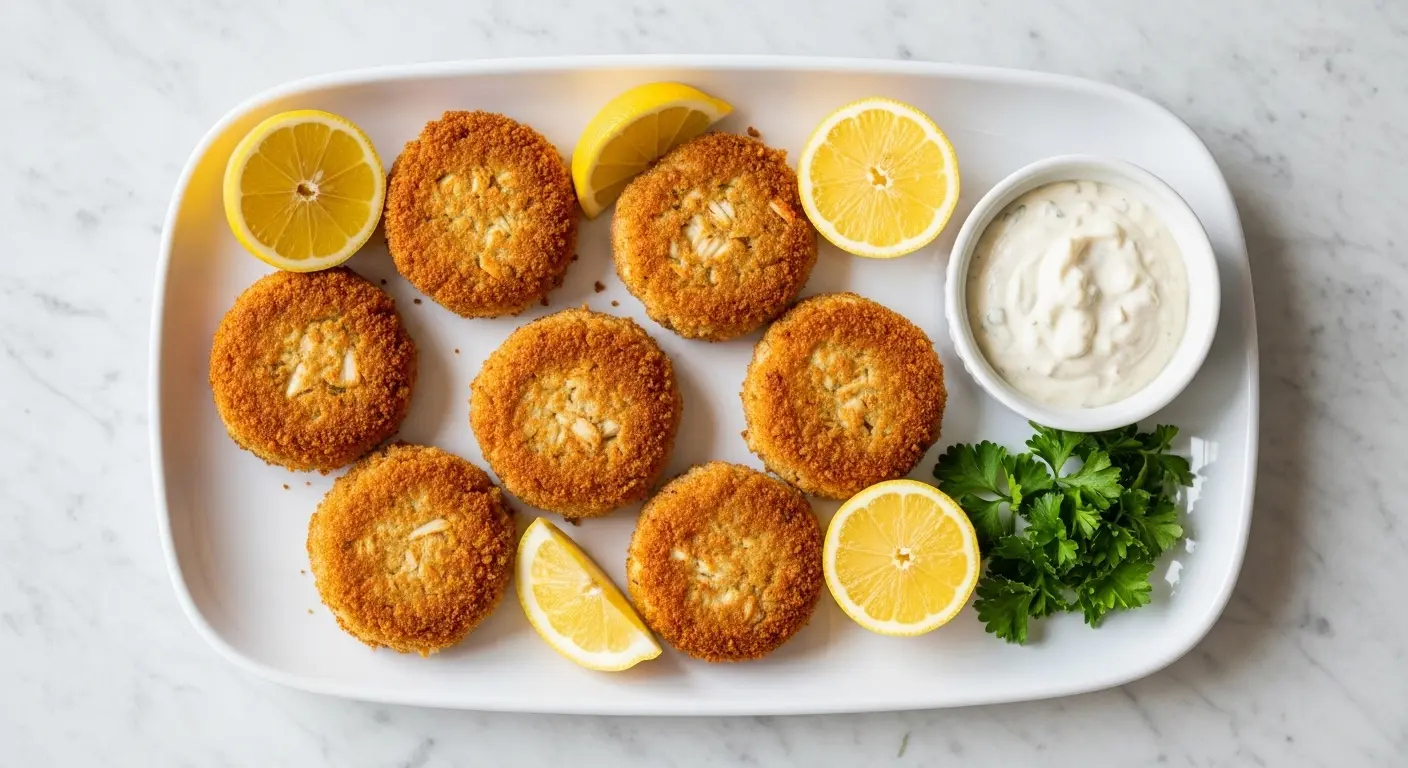
If you’ve ever bitten into a truly great crab cake recipe, you know it right away. The outside is golden and lightly crisp, the inside is tender and moist, and the whole thing is packed with sweet, delicate crab meat that practically melts on your tongue.
That’s what this recipe delivers every single time.
This is the classic Maryland-style version, made with jumbo lump crab meat, very little filler, and just the right blend of seasonings to let the crab shine. No heavy breading, no mystery fillers — just honest, delicious crab cakes the way they were meant to be made.
The real secret? Using high-quality lump crab meat, keeping the binders minimal, chilling the mixture before forming, and baking or pan-frying to golden perfection. It sounds simple because it is, and that simplicity is exactly what makes these so good.
You might also enjoy this Chicken Chesapeake Recipe — a Maryland coastal classic that pairs beautifully with the same coastal flavors.
Why You’ll Love This Crab Cake Recipe
This crab cake recipe is about as crowd-pleasing as it gets.
It works equally well as a starter, a main course, or stuffed into a toasted bun for a spectacular crab cake sandwich.
The ingredient list is short and purposeful — every single thing earns its place.
Because there’s so little filler, you get massive crab flavor in every single bite rather than a mouthful of breadcrumbs with a hint of seafood.
The mix comes together in under 15 minutes, and the chilling time does most of the work for you.
Even if you’ve never cooked seafood at home, this recipe is approachable and beginner-friendly.
The cakes hold together beautifully when formed properly, so you won’t end up with a crumbly mess in the pan.
They also reheat well, making leftovers just as enjoyable as day one.
Here’s a quick summary of why this recipe stands out:
- Made with jumbo lump crab meat for big, beautiful bites of real crab
- Very little filler so the crab flavor is front and center
- Classic Old Bay seasoning for authentic Maryland taste
- Easy to make in under 30 minutes of active prep time
- Baked or pan-fried options so you can cook them however you prefer
- Impressive enough for guests but simple enough for a weeknight
- Works as an appetizer, main dish, or crab cake sandwich
Another favorite for your seafood table: Shrimp and Grits — a Southern classic that’s just as comforting and impressive.
Ingredients
The ingredient lineup here is intentionally lean. Great crab cakes aren’t about what you add; they’re about not getting in the crab’s way. Use the best quality crab meat you can find, and the rest falls into place naturally.
Here’s everything you’ll need to make 6 generous crab cakes:
- 1 lb (453 g) jumbo lump crab meat, fresh or refrigerated (not shelf-stable canned)
- 1 large egg, lightly beaten
- 6 tablespoons (85 g) mayonnaise
- 1 teaspoon Dijon mustard
- 1 teaspoon Worcestershire sauce
- 1 teaspoon fresh lemon juice
- 1 teaspoon Old Bay seasoning
- 1½ tablespoons fresh flat-leaf parsley, finely minced
- ¼ teaspoon fine sea salt
- ¼ teaspoon freshly ground black pepper
- ½ cup (40 g) plain panko breadcrumbs (or crushed saltine crackers)
- 2 tablespoons unsalted butter (for pan-frying or brushing before baking)
Read Also: Salmon Croquettes Soul Food Recipe
Kitchen Equipment Needed
You don’t need any fancy gear for this recipe. A handful of basic kitchen tools will get the job done. A good mixing bowl and a reliable nonstick skillet are really all that stand between you and perfect crab cakes.
- Large mixing bowl
- Medium mixing bowl
- Whisk
- Rubber spatula
- ½-cup measuring cup or large cookie scoop (for portioning)
- Rimmed baking sheet (lined with foil if baking)
- Large nonstick skillet (for pan-frying)
- Spatula or fish spatula (for flipping)
- Paper towels
- Plastic wrap (for chilling)
- Instant-read thermometer (optional but helpful)
This pairs wonderfully with a side of Air Fryer Bacon Wrapped Shrimp for a full seafood spread.
Recommended Products for This Recipe
These are products that genuinely make a difference when making crab cakes at home — selected for quality, practicality, and the results they deliver.
1. Jumbo Lump Crab Meat (Wild-Caught)
The single most important ingredient in this recipe is the crab. Premium wild-caught jumbo lump crab meat has larger, more intact pieces that give your crab cakes that restaurant-quality texture and sweet, clean flavor. It makes a noticeable difference over lower-grade varieties.
2. Old Bay Seasoning (6 oz)
You simply cannot make a Maryland-style crab cake without Old Bay. This iconic spice blend — a mix of celery salt, paprika, black pepper, and red pepper — is the backbone of coastal Maryland seafood cooking. Keep a canister in your pantry at all times.
3. OXO Good Grips Fish Spatula
A thin, flexible fish spatula makes flipping crab cakes in the pan so much easier. Its angled, slotted design slides cleanly under the cakes without breaking them apart, which is especially important given how delicate they are.
4. OXO Large Cookie Scoop (½ Cup)
Portioning the crab cake mixture consistently is key to even cooking. A large cookie scoop makes this effortless and ensures all your cakes are the same size, so they all finish cooking at the same time.
5. Nielsen-Massey Pure Lemon Extract (or Fresh Lemon Juicer)
Fresh lemon juice brightens the entire flavor of the crab cake mixture. A simple handheld lemon juicer is all you need to keep this step quick and mess-free.
For more easy seafood inspiration, check out this Baked Salmon Recipe — a weeknight staple that’s just as simple and satisfying.
Step-by-Step Instructions
Step 1: Prepare the Crab Meat
- Spread the crab meat out on a clean plate or tray lined with paper towels.
- Gently pat the crab meat dry with additional paper towels. Excess moisture will prevent the cakes from binding properly.
- Pick through the crab meat carefully with your fingers, feeling for any small pieces of shell or cartilage. Discard anything that doesn’t feel like pure, soft meat.
- Try to keep the lumps as intact as possible — large pieces of crab are what make these cakes special.
- Set the cleaned, dried crab meat aside while you prepare the binding mixture.
Step 2: Mix the Wet Binding Ingredients
- Crack the egg into a large mixing bowl and beat it lightly with a fork until the yolk and white are just combined.
- Add the mayonnaise (6 tablespoons / 85 g), Dijon mustard (1 teaspoon), Worcestershire sauce (1 teaspoon), fresh lemon juice (1 teaspoon), Old Bay seasoning (1 teaspoon), fine sea salt (¼ teaspoon), and freshly ground black pepper (¼ teaspoon) to the bowl.
- Add the finely minced fresh parsley (1½ tablespoons) to the bowl.
- Whisk everything together vigorously until the mixture is smooth and fully combined. There should be no streaks of egg yolk remaining.
- Taste the mixture at this stage — it should smell bright and savory. Adjust salt or lemon if needed.
Step 3: Add the Crab Meat and Panko
- Add the prepared crab meat and the panko breadcrumbs (½ cup / 40 g) directly on top of the wet mixture in the bowl.
- Using a rubber spatula, gently fold everything together using a slow, careful folding motion — think of folding whipped cream into a batter.
- The goal is to coat all the crab meat with the binding mixture without breaking up the lumps. Take your time here; overmixing is the most common crab cake mistake.
- Stop folding as soon as there are no dry pockets of panko remaining. The mixture will look slightly wet and barely holding together at this stage — that’s perfectly normal.
Step 4: Refrigerate the Mixture
- Place the bowl of crab cake mixture in the refrigerator and cover it loosely with plastic wrap.
- Chill for at least 30 minutes, and up to overnight. This step is non-negotiable — it allows the panko to absorb moisture and the mixture to firm up enough to hold its shape when formed.
- Don’t skip this step, even if you’re in a hurry. Crab cakes formed from unchilled mixture will fall apart during cooking.
Step 5: Form the Crab Cakes
- Remove the chilled mixture from the refrigerator.
- Use a ½-cup (120 ml) measuring cup or a large cookie scoop to portion the mixture. This recipe makes approximately 6 generous crab cakes.
- Gently press each portion between your palms to compact it into a round patty about 1 inch (2.5 cm) thick. Do not flatten them — a tall, domed shape is traditional for Maryland-style cakes.
- Place the formed crab cakes on a foil-lined baking sheet.
- If the mixture feels too sticky to handle, dampen your hands slightly with cold water. This helps prevent the mixture from sticking to your palms.
Step 6A: Bake the Crab Cakes (Recommended Method)
- Preheat your oven to 425°F (220°C).
- Brush the top of each formed crab cake lightly with melted butter using a pastry brush.
- Place the baking sheet in the center rack of the preheated oven.
- Bake for 12 to 14 minutes, until the tops are golden brown and the edges are slightly caramelized.
- The internal temperature should read 165°F (74°C) on an instant-read thermometer when done.
- Remove from the oven and let rest for 2 to 3 minutes before serving.
Step 6B: Pan-Fry the Crab Cakes (Alternative Method)
- Heat 2 tablespoons of butter in a large nonstick skillet over medium heat.
- Wait until the butter has melted completely and is beginning to foam slightly before adding the crab cakes.
- Carefully place 3 to 4 crab cakes in the pan at a time — do not crowd the pan, as overcrowding causes steaming rather than browning.
- Cook undisturbed for 3 to 4 minutes per side, until each side is a deep golden brown.
- Use a thin fish spatula to flip the cakes. Slide it gently under the cake before lifting to avoid breaking the crust.
- Transfer cooked cakes to a paper towel-lined plate while you cook the remaining batch.
Step 7: Serve
- Transfer the finished crab cakes to a serving platter.
- Squeeze fresh lemon juice over the top immediately before serving.
- Serve with tartar sauce, cocktail sauce, or a simple aioli on the side.
- Garnish with additional fresh parsley and lemon wedges for a clean, restaurant-style presentation.
You might also enjoy making Easy Tartar Sauce from scratch to pair with these — it takes 5 minutes and tastes infinitely better than anything from a bottle.
Tips for Success
A few simple adjustments separate good crab cakes from truly excellent ones. These tips come straight from making this recipe repeatedly and figuring out exactly where things can go wrong.
- Always dry the crab meat. Excess moisture is the number one enemy of a crab cake that holds together. Pat the meat thoroughly before adding it to the mixture.
- Don’t skip the chill time. 30 minutes minimum, but longer is better. Overnight chilling produces the most cohesive, easy-to-handle cakes.
- Fold gently and sparingly. As soon as the wet ingredients and panko are incorporated, stop mixing. Every extra fold risks breaking down those beautiful lump pieces.
- Use fresh herbs. Fresh parsley delivers a brightness that dried parsley simply cannot match. It’s worth the small extra effort.
- Check your crab for shells. Even pre-picked crab meat occasionally contains small fragments. Run your fingers through it carefully — a shell in your finished cake is an unpleasant surprise.
Here are the key tips at a glance:
- Pat the crab meat dry before use
- Refrigerate the mixture for at least 30 minutes before forming
- Use a ½-cup scoop for even sizing
- Fold, never stir — protect those crab lumps
- Fresh parsley over dried, always
- Don’t skip Old Bay — it’s non-negotiable for authentic flavor
- Let the pan heat fully before adding crab cakes for a golden crust
Read Also: Cocktail Sauce Recipe
Serving Suggestions
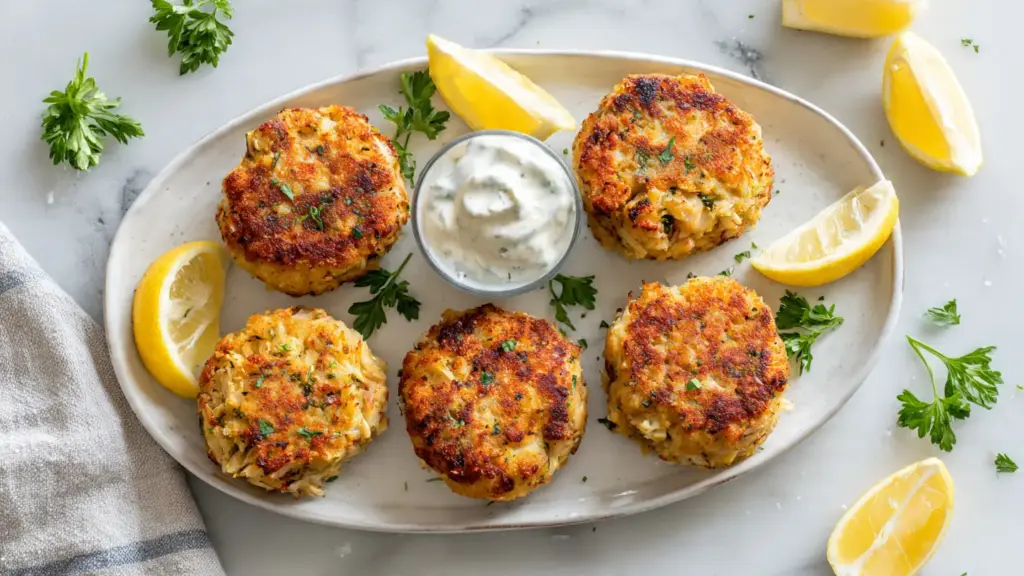
Crab cakes are versatile enough to anchor an entire meal or serve as a sophisticated starter. The key is keeping the sides fairly simple and light so the crab stays front and center on the plate.
A squeeze of fresh lemon and a dollop of homemade tartar sauce is all you truly need, but these sides and accompaniments all work beautifully alongside:
- Creamy Coleslaw — the cool creaminess balances the richness of the crab cakes perfectly
- Corn on the cob — a natural pairing for any coastal or summer meal
- Classic Deviled Eggs — makes a beautiful spread if you’re serving these as party appetizers
- Simple green salad with lemon vinaigrette
- Toasted brioche buns for crab cake sandwiches
- Lemon wedges and tartar sauce (always)
- Roasted asparagus or steamed broccoli for a lighter plate
- Cold glass of dry white wine or light lager
Variations to Try
Once you’ve mastered the base recipe, there are plenty of fun directions to take these crab cakes. Each variation stays true to the spirit of the original while adding a new layer of flavor or technique.
Here are some popular and delicious ways to switch things up:
- Air fryer crab cakes: Place formed, chilled crab cakes in the air fryer basket and cook at 375°F (190°C) for 10 to 12 minutes, flipping halfway through. The result is crisp all over with zero added oil.
- Mini crab cakes: Use a 2-tablespoon scoop to form bite-sized crab cakes. Reduce bake time to 8 to 10 minutes. These are perfect as party appetizers or finger food.
- Spicy crab cakes: Add ½ teaspoon of cayenne pepper and a dash of hot sauce to the wet mixture for a kick of heat that plays beautifully against the sweet crab.
- Crab cake sandwich: Stack a finished crab cake on a toasted brioche bun with shredded lettuce, sliced tomato, and a generous smear of tartar sauce or comeback sauce.
- Jumbo single-serve crab cakes: Portion the mixture into 3 large cakes using a full cup of mixture each. These make a dramatic and impressive plated main course.
- Herb-forward crab cakes: Add fresh chopped dill alongside or in place of the parsley for a more delicate, Scandinavian-style flavor profile.
- Gluten-free crab cakes: Swap the panko for gluten-free panko breadcrumbs or crushed gluten-free crackers. The texture and binding behavior are nearly identical.
For a similar coastal flavor in a lighter format, try these Air Fryer Salmon Patties — they use the same general technique with salmon as the star.
Storage and Reheating
Crab cakes store and reheat surprisingly well, which makes them ideal for meal prepping or cooking ahead for a dinner party. Just follow these guidelines to keep them tasting fresh.
Here’s how to store and reheat:
- Refrigerate cooked crab cakes: Store in an airtight container in the refrigerator for up to 3 days. Place a sheet of parchment between stacked cakes to prevent sticking.
- Freeze uncooked crab cakes: Form the cakes and place them on a parchment-lined baking sheet. Freeze until solid (about 2 hours), then transfer to a zip-top freezer bag. Freeze for up to 3 months.
- Freeze cooked crab cakes: Let them cool completely, then wrap individually in plastic wrap before placing in a freezer bag. Freeze for up to 2 months.
- Reheat in the oven: Place refrigerated or thawed crab cakes on a baking sheet and bake at 350°F (175°C) for 10 to 12 minutes. This method preserves the crust best.
- Reheat in the skillet: Warm a small amount of butter over medium-low heat and reheat crab cakes for 2 to 3 minutes per side. Watch carefully to avoid burning.
- Avoid microwaving: The microwave makes crab cakes soggy and rubbery. It’s worth the extra few minutes to use the oven or skillet instead.
Read Also: Old Fashioned Salmon Patties Recipe
Nutritional Facts
The following nutritional estimates are based on one crab cake (recipe makes 6), baked with butter brushed on top. Values will vary slightly based on crab meat brand, exact ingredient measurements, and cooking method.
| Nutrient | Per Crab Cake |
|---|---|
| Calories | ~215 kcal |
| Total Fat | 12 g |
| Saturated Fat | 3 g |
| Cholesterol | 95 mg |
| Sodium | 620 mg |
| Total Carbohydrates | 8 g |
| Dietary Fiber | 0.5 g |
| Total Sugars | 1 g |
| Protein | 18 g |
| Omega-3 Fatty Acids | ~400 mg |
Note: These are estimates. For precise dietary tracking, input your specific ingredients into a nutrition calculator.
For a lighter seafood option to round out your weekly menu, try this Baked Cod Recipe — lean, mild, and incredibly easy.
Health Benefits of Key Ingredients
This crab cake recipe isn’t just delicious — the main ingredients bring real nutritional value to the plate. Here’s a closer look at what’s working for you with every bite.
Crab meat, eggs, and parsley each pull more than their weight from a health perspective:
- Crab meat is an excellent source of lean protein, delivering roughly 15 to 20 grams per serving. It’s also naturally rich in vitamin B12, zinc, selenium, and omega-3 fatty acids, which support brain health, immune function, and cardiovascular wellness.
- Eggs provide complete protein with all nine essential amino acids, along with choline for brain and liver health, and fat-soluble vitamins A, D, E, and K.
- Lemon juice contributes a meaningful dose of vitamin C, which supports immune function and enhances the absorption of non-heme iron from other foods in the meal.
- Fresh parsley is a surprisingly nutrient-dense herb. A small amount delivers vitamin K, vitamin C, and folate, plus antioxidants that support cellular health.
- Old Bay seasoning contains celery salt, paprika, and black pepper — all of which bring anti-inflammatory compounds and antioxidants in small but cumulative doses.
- Dijon mustard adds flavor with virtually no calories and contains small amounts of selenium, a key antioxidant mineral.
Read Also: Seafood Chowder Recipe
Frequently Asked Questions
1. What is the best type of crab meat to use for crab cakes?
Jumbo lump crab meat is the gold standard for Maryland-style crab cakes. It consists of large, intact pieces from the swimming muscles of blue crabs, giving you the biggest bites of pure crab flavor. Lump or backfin crab meat also works well if jumbo lump is unavailable or outside your budget. Avoid shelf-stable canned crab meat if possible — fresh or refrigerated crab meat from the seafood section will always produce a superior result.
2. Can I make crab cakes ahead of time?
Absolutely, and in fact, making them ahead is encouraged. You can prepare the crab cake mixture up to 24 hours in advance and keep it covered in the refrigerator. You can also form the cakes and refrigerate them (covered) for up to 24 hours before cooking. For even longer make-ahead prep, freeze the formed, uncooked cakes and thaw them in the refrigerator overnight before cooking.
3. Why do my crab cakes fall apart when cooking?
The most common reason is skipping or shortening the chill time. Without adequate refrigeration, the panko doesn’t absorb enough moisture to bind the mixture, and the cakes crumble when handled. Another culprit is overmixing, which breaks down the crab into smaller pieces that don’t hold together as well. Make sure to fold gently and chill for at least 30 minutes — these two steps solve almost every falling-apart problem.
4. Can I use imitation crab meat?
Imitation crab (surimi) is made from processed white fish and has a very different texture and flavor than real crab meat. It will technically bind and hold together in a patty, but the result won’t taste anything like a traditional crab cake. For authentic flavor and texture, real lump crab meat is the only way to go. If cost is a concern, lump or backfin crab meat is a more affordable option than jumbo lump while still delivering genuine crab flavor.
5. Should I bake or pan-fry crab cakes?
Both methods produce excellent results, and the choice really comes down to personal preference. Baking is lower-maintenance, uses less added fat, and produces a more evenly cooked, moist interior. Pan-frying creates a darker, crispier crust on both sides and has a more indulgent, restaurant-style result. Many home cooks prefer baking for ease, while restaurants often pan-fry for the visual appeal of that deep golden crust. Either way, chilling the mixture beforehand is what makes both methods work.
For another comforting seafood dish with a similar ease of preparation, check out this Lobster Bisque Recipe — rich, creamy, and surprisingly approachable.
Final Thoughts
A great crab cake recipe is one of those dishes that rewards you simply for using good ingredients and treating them with care.
There’s no complex technique here — just a handful of quality components and a little patience while the mixture chills.
Whether you’re making these for a summer gathering, a special dinner at home, or just because you’re craving something from the sea, this classic Maryland version is one you’ll come back to again and again.
The sweet, buttery crab flavor does all the work, and your job is simply to not get in its way.
Give this recipe a try, and don’t be surprised when it becomes a regular in your kitchen rotation.
If you make it, leave a comment below to share how it turned out — and tag us if you post it. Happy cooking!
Recommended:
- Seafood Stew Recipe
- Salmon Skillet Recipe
- Fish Chowder Recipe
- Shrimp Chowder Recipe
- Clam Chowder Recipe
- New England Clam Chowder Recipe
- Air Fryer Salmon Bites Recipe
- Air Fryer Bacon Wrapped Scallops Recipe
- Oyster Stew Recipe
- Homemade Tartar Sauce Recipe