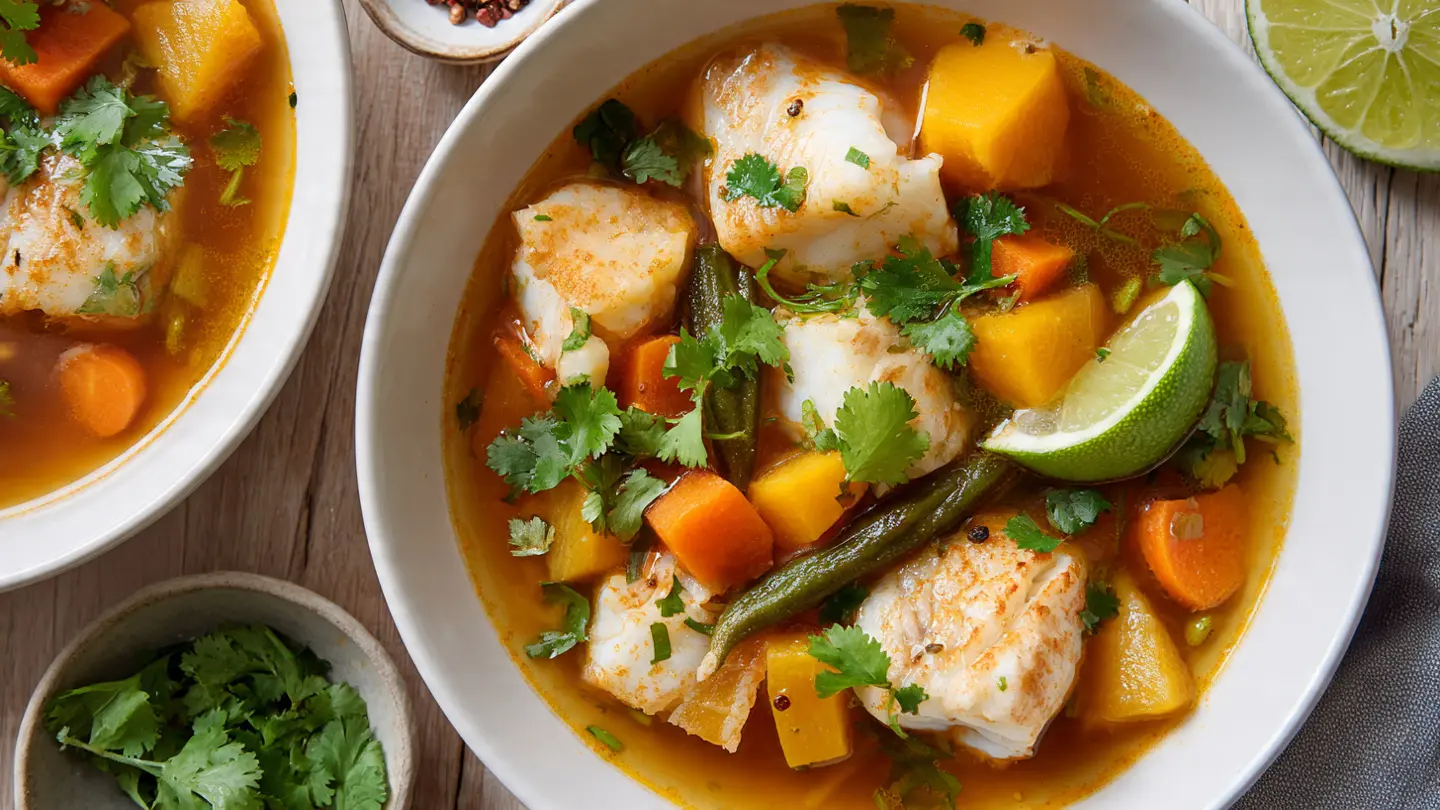
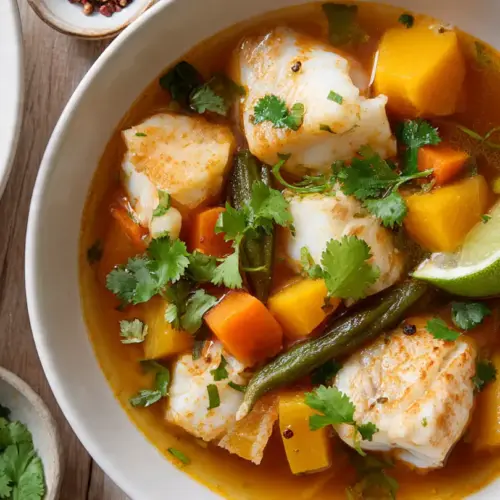
If you have ever craved something that wraps you in warmth from the inside out, this Caribbean Fish Soup Recipe is exactly what you need.
Known throughout the islands as “fish tea” or “fish broff,” this soup is a celebration of everything that makes Caribbean cooking so special: bold aromatics, hearty root vegetables, flaky fish, and just enough heat to make every spoonful exciting.
This is not your average weeknight soup. It is the kind of dish that fills your kitchen with the scent of fresh thyme, scotch bonnet pepper, and lime, and has your whole family asking what smells so good before dinner is even served.
What makes Caribbean fish soup stand apart from other fish soups is the layering of flavors. You build a deeply aromatic broth first, add starchy root vegetables like potatoes and pumpkin for body, and only then do you gently simmer the fish so it stays tender and never rubbery.
Once you make it this way, you will not want to go back.
If you love bold, broth-based soups with a seafood twist, you will also enjoy this Mediterranean Fish Soup for another take on fish soups from around the world.
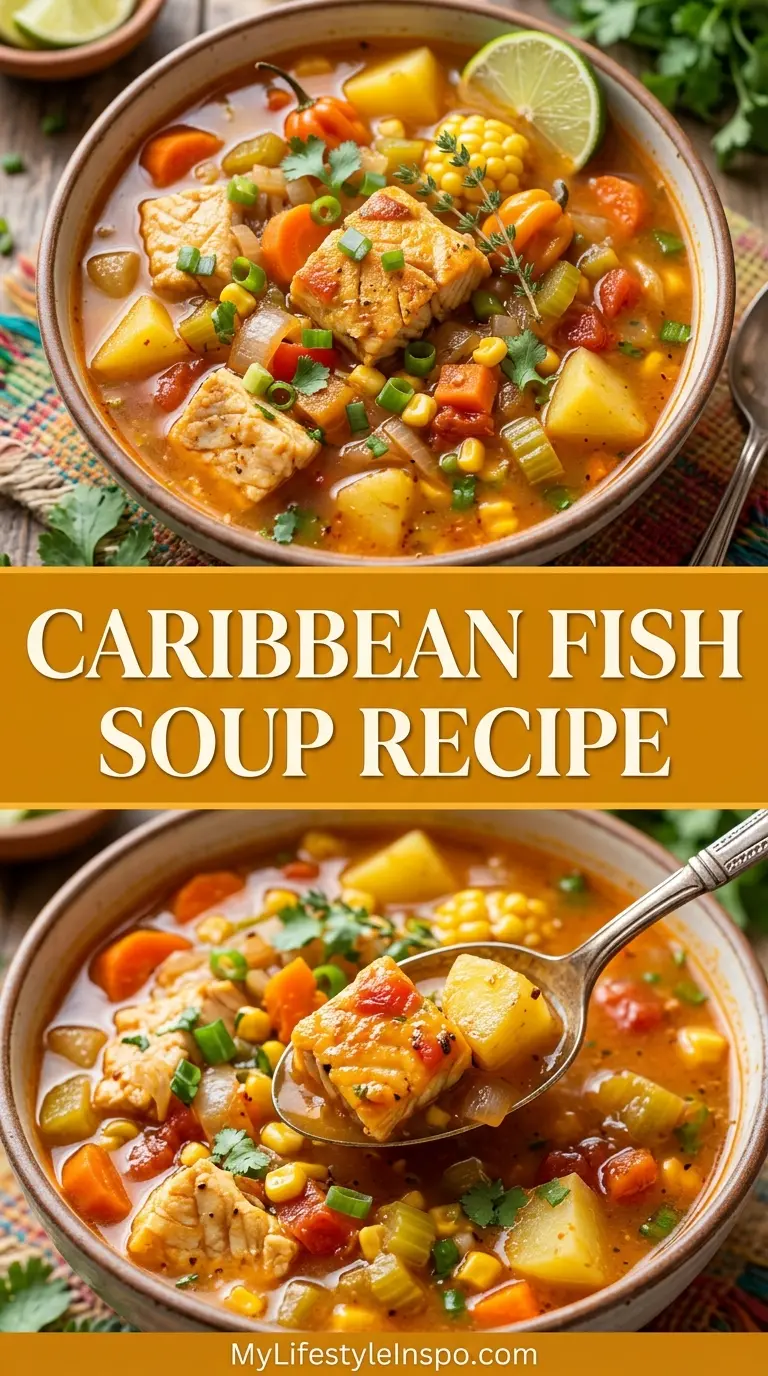
Why You’ll Love This Caribbean Fish Soup Recipe
This soup genuinely checks every box.
It is hearty enough to be a complete meal on its own, yet light enough that you do not feel weighed down after eating it. The broth is deeply flavorful thanks to a combination of fresh thyme, garlic, scallions, and allspice berries.
The scotch bonnet pepper adds that signature Caribbean warmth without overwhelming the dish. You control the heat by leaving the pepper whole, which gives flavor without raw fire, or by piercing it if you want more kick.
Fresh lime juice stirred in at the end brightens everything up beautifully. It cuts through the richness of the broth and makes the flavors pop in the best way possible.
This soup is also naturally gluten-free and packed with protein and vegetables. It is a genuinely nourishing bowl of food.
Here is why this recipe works so well:
- Big, bold flavor from aromatics simmered low and slow before the fish ever touches the pot
- Hearty and filling thanks to potatoes, pumpkin, and carrots that cook down into the broth
- Customizable heat with the scotch bonnet pepper technique that keeps things approachable
- Ready in about an hour with straightforward steps even beginners can follow
- Uses affordable, accessible ingredients that are easy to find at most grocery stores
- Naturally gluten-free and packed with lean protein and nutrients
You might also enjoy: Mexican Fish Soup Recipe
Ingredients
This recipe uses traditional Caribbean pantry staples alongside fresh fish and vegetables. Every ingredient has a purpose, so try not to skip anything, especially the allspice berries and scotch bonnet pepper, which are the soul of authentic Caribbean fish soup.
Here is what you will need:
- 2 lbs (900g) firm white fish fillets (red snapper, tilapia, cod, or halibut), cut into large chunks
- 6 cups (1.4L) fish stock (or water with 2 fish bouillon cubes dissolved in it)
- 2 cups (480ml) water
- 1 lb (450g) calabaza pumpkin or butternut squash, peeled and cut into 1-inch cubes
- 2 medium potatoes (about 1 lb / 450g), peeled and cut into 1-inch cubes
- 2 medium carrots (about 6 oz / 170g), cut into 1/2-inch rounds
- 1/2 cup (60g) okra, sliced into rounds (fresh or frozen)
- 1 large yellow onion, diced
- 4 scallions (green onions), roughly chopped
- 5 cloves garlic, smashed and minced
- 1 whole scotch bonnet pepper (do not pierce it for milder heat)
- 6 sprigs fresh thyme
- 6 allspice (pimento) berries
- 2 tablespoons (30ml) coconut oil or vegetable oil
- Juice of 1 lime (about 2 tablespoons / 30ml)
- 1 teaspoon (5g) salt, or to taste
- 1/2 teaspoon (1g) black pepper
- Fresh cilantro or parsley, for garnish
Read Also: Thai Fish Soup Recipe
Kitchen Equipment Needed
You do not need any fancy equipment for this recipe. A good heavy-bottomed pot is the most important tool because it holds heat evenly and prevents the broth from scorching while the vegetables cook down.
Here is what to have ready:
- Large Dutch oven or heavy-bottomed soup pot (at least 6-quart capacity)
- Sharp chef’s knife and cutting board
- Ladle for serving
- Fine mesh strainer (optional, for skimming the broth)
- Measuring cups and spoons
- Tongs for handling fish
- Wooden spoon or silicone spatula for stirring
- Citrus juicer or reamer for the lime
Read Also: Chinese Fish Soup Recipe
Recommended Products for This Recipe
These are products I genuinely recommend based on quality and how much of a difference they make when preparing this soup.
1. Lodge Enameled Cast Iron Dutch Oven
A quality Dutch oven is the single most important tool for making a great Caribbean fish soup. It distributes heat evenly so your broth simmers gently without hot spots that can overcook the fish. The enamel interior makes cleanup effortless and does not react with the acidic lime juice in the recipe.
2. Whole Allspice Berries (Pimento)
Authentic Caribbean fish soup depends on whole allspice berries, also called pimento. They release a complex, clove-like warmth into the broth that ground allspice simply cannot replicate. Having a jar of quality whole allspice berries on hand will transform the depth of your soup.
3. Scotch Bonnet Pepper Hot Sauce
If you cannot find fresh scotch bonnet peppers in your local store, a quality scotch bonnet hot sauce is an excellent substitute. Look for one with minimal ingredients so you get that authentic fruity Caribbean heat without artificial additives. Add it to taste at the end of cooking.
4. Fish Bouillon Cubes
Using fish bouillon cubes alongside water is a great shortcut that still delivers a rich, savory fish broth base. They are a staple in Caribbean cooking and give the soup its deep, oceanic backbone when homemade fish stock is not available.
5. Calabaza Pumpkin (Caribbean Pumpkin)
If you can find fresh calabaza pumpkin at a Caribbean or Latin grocery store, it is absolutely worth seeking out. Its sweet, dense flesh breaks down slightly into the broth, adding body and that signature golden color you see in traditional Caribbean fish soup. Butternut squash is a fine substitute, but calabaza is the real thing.
For a beautiful seafood dish to pair with this soup, check out this Lobster Bisque Recipe for a special occasion meal.
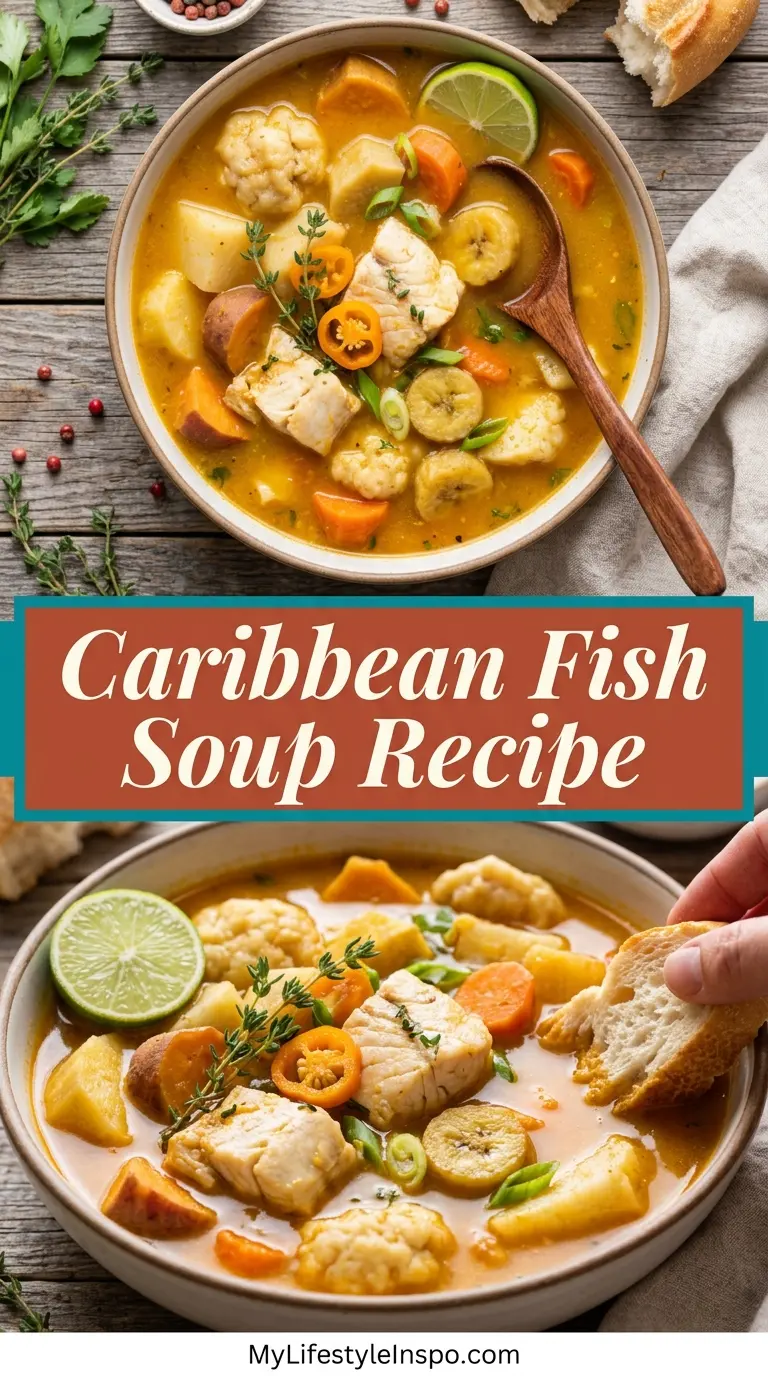
Step-by-Step Instructions
1. Prepare the Fish
- Pat the fish fillets dry with paper towels to remove excess moisture.
- Cut the fish into large, even chunks, roughly 2 to 3 inches (5 to 7.5 cm) each. Keeping the pieces large prevents them from breaking apart during cooking.
- Place the fish in a bowl and squeeze the juice of half a lime over it.
- Season the fish with a pinch of salt and black pepper, then toss gently to coat.
- Set the seasoned fish aside while you prepare the rest of the ingredients. This brief marinating step seasons the fish from the inside and the lime juice helps firm up the flesh slightly so it holds together in the soup.
2. Chop and Prep All Vegetables
- Peel and dice the yellow onion into medium pieces, about 1/2 inch (1.25 cm).
- Roughly chop the scallions into 1-inch (2.5 cm) pieces, using both the white and green parts.
- Smash the garlic cloves with the flat of your knife, then mince them finely.
- Peel the pumpkin (or butternut squash) and cut it into 1-inch (2.5 cm) cubes. Try to keep the pieces uniform so they cook evenly.
- Peel the potatoes and cut them into 1-inch (2.5 cm) cubes as well.
- Cut the carrots into 1/2-inch (1.25 cm) rounds.
- Slice the okra into 1/2-inch (1.25 cm) rounds. If using frozen okra, thaw it slightly and pat it dry.
- Strip the thyme leaves from 3 of the sprigs; leave the other 3 whole for adding to the broth.
- Have the whole scotch bonnet pepper, allspice berries, and lime juice ready and within reach.
3. Build the Aromatic Base
- Place your large Dutch oven or heavy-bottomed pot over medium heat.
- Add the coconut oil and let it melt and heat for about 1 minute until it shimmers.
- Add the diced onion and chopped scallions to the pot. Stir to coat them in the oil.
- Cook the onion and scallions, stirring occasionally, for about 5 to 7 minutes until they are softened and turning slightly golden at the edges.
- Add the minced garlic and the thyme (both stripped leaves and whole sprigs) to the pot.
- Stir everything together and cook for another 1 to 2 minutes until the garlic is fragrant and golden. Be careful not to let the garlic burn, as it will turn bitter.
- Add the allspice berries and stir to combine with the aromatics.
4. Add the Stock and Root Vegetables
- Pour in the fish stock and the water, stirring everything together.
- Add the cubed pumpkin, cubed potatoes, and carrot rounds to the pot.
- Gently nestle the whole scotch bonnet pepper into the broth. Do not pierce or cut it at this stage. The intact pepper will release gentle fruity heat and Caribbean flavor without raw fire.
- Season the broth with 1 teaspoon of salt and 1/2 teaspoon of black pepper. Stir gently.
- Increase the heat to medium-high and bring the broth to a boil, which should take about 5 to 7 minutes.
- Once boiling, reduce the heat to medium-low and let the soup simmer steadily for 15 to 20 minutes, until the potatoes and pumpkin are just barely fork-tender. The pumpkin will begin to break down slightly and thicken the broth beautifully.
5. Add the Okra
- Once the potatoes are nearly tender, add the sliced okra to the pot.
- Stir gently to incorporate the okra into the broth.
- Continue simmering for another 5 minutes. The okra will soften and release some of its natural thickening agents into the broth, giving the soup a slightly silkier texture. This is a signature characteristic of many traditional Caribbean fish soups.
6. Gently Add and Cook the Fish
- Carefully add the seasoned fish chunks to the pot, nestling them into the broth between the vegetables.
- Do not stir vigorously or the fish will break apart. Use a spoon to gently press the fish pieces under the surface of the broth.
- Bring the soup back to a gentle simmer over medium heat.
- Cover the pot partially with a lid and cook for 8 to 10 minutes. The fish is done when it is opaque all the way through and flakes easily when pressed with a fork. Do not overcook the fish, or it will become rubbery and dry.
- At this point, taste the broth and check for seasoning. Add more salt if needed.
7. Finish with Lime and Adjust Heat
- Remove the whole scotch bonnet pepper from the pot. At this point, you have a choice: discard it for a milder soup, or pierce it open and stir the seeds and juice into the broth for extra heat. Be careful when handling it, as the oils can irritate your skin.
- Squeeze the remaining lime juice into the soup and stir very gently. The lime juice brightens the entire dish and balances the richness of the broth.
- Remove the whole thyme sprigs from the soup and discard them.
- Taste once more and adjust seasoning as needed.
8. Serve and Garnish
- Ladle the Caribbean fish soup into deep bowls, making sure each serving gets a generous portion of fish, vegetables, and broth.
- Garnish each bowl with freshly chopped cilantro or parsley.
- Serve immediately with crusty bread, rice, or hard dough bread on the side for soaking up the broth.
This vibrant, aromatic Seafood Stew is another wonderful option if you enjoy hearty seafood one-pot meals.
Tips for Success
Follow these tips and your Caribbean fish soup will come out perfectly every single time.
- Choose the right fish: Firm white fish like red snapper, cod, tilapia, or halibut work best because they hold their shape during cooking. Avoid delicate fish like sole or flounder, which will disintegrate in the broth.
- Do not rush the aromatics: Taking the time to properly saute the onion, scallions, and garlic before adding liquid is what gives this soup its deep, layered flavor. Skipping this step results in a flat-tasting broth.
- Keep the scotch bonnet whole: For most home cooks, leaving the scotch bonnet pepper intact throughout cooking gives you that beautiful fruity Caribbean flavor without overwhelming heat. Only pierce or burst it if your household genuinely loves fiery food.
- Cut vegetables uniformly: Cutting the pumpkin, potatoes, and carrots into similar-sized pieces ensures they all finish cooking at the same time. Uneven pieces mean some will be mushy while others are still hard.
- Add fish last: Always add the fish toward the end of cooking. Fish cooks very quickly, and adding it too early leads to tough, overcooked pieces. Eight to ten minutes of gentle simmering is all it needs.
- Use fish stock if possible: Fish stock gives the broth a richer, deeper seafood flavor compared to plain water. If using water instead, fish bouillon cubes are a great addition.
- Taste and adjust at the end: Caribbean fish soup relies on balance. Always taste the broth after adding the lime juice and adjust the salt, pepper, or lime to your liking before serving.
You might also enjoy: Seafood Chowder Recipe
Serving Suggestions
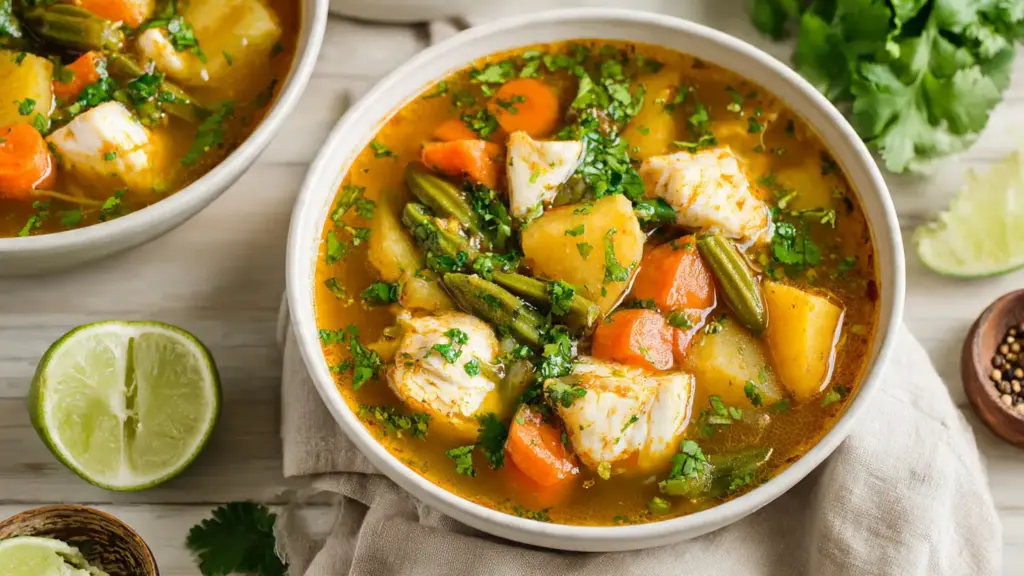
Caribbean fish soup is a complete meal on its own, but a few simple additions make it feel like a full island spread.
Serve it alongside warm, crusty bread for dunking into the broth, hard dough bread for an authentic Caribbean touch, or steamed white rice to soak up every drop of that flavorful liquid. A simple green salad dressed with lime vinaigrette is a refreshing complement to the boldness of the soup.
Great ways to serve this soup:
- With warm Cheesy Garlic Bread for a satisfying, hearty pairing
- Alongside steamed white rice or brown rice to bulk up the meal
- With a squeeze of extra lime and a drizzle of Creole Sauce for a bold finishing touch
- Topped with sliced avocado for creaminess and freshness
- With a cold glass of lemonade or ginger beer to balance the heat
- As a starter before a larger Caribbean-themed dinner
Variations to Try
Once you have mastered the base recipe, this soup is incredibly easy to customize based on what you have on hand or your personal preferences.
- Coconut milk version: Replace 1 to 2 cups of the fish stock with full-fat coconut milk added in the last 10 minutes of cooking. This creates a rich, creamy broth with a sweeter, tropical flavor that is especially popular in Jamaican rundown-style soups.
- Shrimp and fish combo: Use 1 pound of white fish fillets and 1/2 pound of raw peeled shrimp. Add the shrimp in the last 3 to 4 minutes of cooking, as they cook much faster than fish.
- Green banana addition: Add 2 peeled, chopped green bananas along with the potatoes for a more traditional Jamaican-style fish tea. Green bananas add starchy body and an earthy sweetness to the broth.
- Dumplings (spinners): Make a simple dough of flour and water, roll into small thin dumplings, and drop them directly into the simmering broth in the last 10 minutes of cooking. This is a beloved addition in many Caribbean homes.
- Extra veggie version: Add diced celery, sweet bell peppers, corn cut from the cob, or diced tomatoes along with the other vegetables for an even heartier, more colorful soup.
- Milder version without scotch bonnet: If scotch bonnet peppers are not available or the heat is too much, substitute a mild cubanelle pepper or a pinch of cayenne pepper added to taste.
Read Also: Fish Chowder Recipe
Storage and Reheating
Caribbean fish soup stores well, making it a great option for meal prepping or enjoying leftovers the next day.
Here is how to store and reheat it properly:
- Refrigerator: Store leftover soup in an airtight container in the refrigerator for up to 2 days. The fish will continue to absorb the broth and the flavors will deepen overnight, which many people actually prefer.
- Freezer: It is not recommended to freeze this soup if it already contains cooked fish, as the fish texture becomes very mushy once thawed. If you want to freeze it, freeze the broth and vegetables only, then add fresh fish when reheating.
- Reheating: Reheat gently in a saucepan over low to medium-low heat, stirring occasionally. Do not bring it to a vigorous boil, as this will cause the fish to overcook and fall apart completely. Heat just until the soup is steaming throughout, about 5 to 8 minutes.
- Add a splash of water or stock: If the soup has thickened significantly in the refrigerator, add a splash of fish stock or water when reheating to bring it back to the right consistency.
For another satisfying, hearty soup to add to your rotation, try this Chicken Vegetable Soup.
Nutritional Facts
The following estimates are based on a single serving out of 6 total servings. Actual values will vary depending on the specific fish and vegetables used.
| Nutrient | Per Serving (Approx.) |
|---|---|
| Calories | 290 kcal |
| Protein | 30g |
| Carbohydrates | 24g |
| Fiber | 4g |
| Total Fat | 8g |
| Saturated Fat | 4g |
| Sodium | 620mg |
| Vitamin C | 35% DV |
| Potassium | 850mg |
| Iron | 15% DV |
Note: Nutritional values are approximate and calculated using red snapper, butternut squash, and fish stock. Using coconut milk will increase the fat and calorie content.
For another nutrient-dense soup, you might love this Corn Soup Recipe.
Health Benefits of Key Ingredients
Beyond its incredible flavor, Caribbean fish soup is genuinely nourishing. It is the kind of meal that feels like it is doing your body good as you eat it.
This is a high-protein, low-fat meal that supports muscle health, keeps you full for longer, and delivers a wide range of vitamins and minerals from its vegetable-rich broth.
Here are the standout health benefits of the key ingredients:
- White fish (snapper, cod, tilapia): An excellent source of lean protein with almost no saturated fat. Fish is also rich in B vitamins, particularly B12, which supports nerve function and energy production.
- Pumpkin (calabaza): Packed with beta-carotene, which the body converts to vitamin A. Vitamin A is essential for immune health, vision, and skin integrity. Pumpkin is also very low in calories while being quite filling.
- Potatoes: A great source of potassium, which helps regulate blood pressure. They also provide vitamin C and fiber, particularly when cooked with the skin on.
- Carrots: Another outstanding source of beta-carotene and antioxidants. Carrots contribute natural sweetness to the broth while supporting eye health.
- Okra: Rich in vitamin K, folate, and magnesium. Okra also contains a natural soluble fiber called mucilage, which helps support digestive health and gives the broth its slight silkiness.
- Garlic and thyme: Both have well-documented antimicrobial and anti-inflammatory properties. Thyme is also a rich source of vitamin C and is traditionally used throughout the Caribbean to support respiratory health.
- Lime juice: High in vitamin C, which supports immune function and helps the body absorb the iron from the fish and vegetables more efficiently.
- Scotch bonnet pepper: Contains capsaicin, the compound responsible for its heat. Capsaicin has been studied for its anti-inflammatory effects and its potential to support metabolism.
Read Also: Spinach Soup Recipe
Frequently Asked Questions
1. What is the difference between Caribbean fish soup and fish tea?
They are essentially the same dish with different names used across different islands. “Fish tea” is the term most commonly used in Jamaica, while “fish broff” or “fish broth” is more common in Trinidad and Tobago and other southern Caribbean islands. The base recipe is very similar across all versions: fish simmered in a well-seasoned broth with root vegetables, thyme, scotch bonnet pepper, and allspice.
2. Can I use frozen fish for this recipe?
Yes, frozen fish works very well in this soup. Thaw it completely in the refrigerator overnight before using, and pat it dry with paper towels before adding it to the broth. Properly thawed and dried fish will hold its shape and absorb the flavors of the broth just as well as fresh fish.
3. How spicy is Caribbean fish soup supposed to be?
It varies depending on the island and the cook. Traditionally, Caribbean fish soup does have a noticeable heat from the scotch bonnet pepper. However, by keeping the pepper whole and intact during cooking, you get the fruity, aromatic flavor with only a mild to moderate heat level. If you want a spicier soup, pierce the pepper or burst it open toward the end of cooking. If you want very mild heat, you can omit the scotch bonnet entirely and add a small pinch of cayenne instead.
4. What is the best type of fish to use for Caribbean fish soup?
Firm white fish is always the best choice. Red snapper is the most traditional option and is widely used across the Caribbean. Cod, tilapia, halibut, mahi-mahi, and grouper are all excellent alternatives. The key is to choose a fish that is firm enough to hold together during simmering. Avoid very delicate, thin fish like sole or flounder, as they will dissolve into the broth.
5. Can I make Caribbean fish soup ahead of time?
You can absolutely make the broth and vegetable base ahead of time and store it in the refrigerator for up to 2 days. When ready to serve, bring the broth back to a gentle simmer and then add the fresh fish during the last 8 to 10 minutes of cooking. This method actually produces an even more flavorful soup because the broth has had extra time to develop. Avoid adding the fish to the soup if you plan to store it, as reheated fish loses its texture quickly.
This fragrant Tom Yum Soup is another bold, aromatic seafood-forward soup worth exploring if you love the flavor profile of Caribbean fish soup.
Caribbean Fish Soup

Equipment
- Large Dutch oven or heavy-bottomed soup pot - At least 6-quart capacity
- Sharp chef's knife
- Cutting board
- Ladle - For serving
- Fine-mesh strainer - Optional, for skimming the broth
- Measuring cups and spoons
- Tongs - For handling fish
- Wooden spoon or silicone spatula - For stirring
- Citrus juicer or reamer - For the lime
Ingredients
- 2 lbs firm white fish fillets - 900g, red snapper, tilapia, cod, or halibut, cut into large chunks
- 6 cups fish stock - 1.4L (or water with 2 fish bouillon cubes dissolved in it)
- 2 cups water - 480ml
- 1 lb calabaza pumpkin or butternut squash - 450g, peeled and cut into 1-inch cubes
- 2 medium potatoes - about 1 lb / 450g, peeled and cut into 1-inch cubes
- 2 medium carrots - about 6 oz / 170g, cut into 1/2-inch rounds
- 1/2 cup okra - 60g, sliced into rounds (fresh or frozen)
- 1 large yellow onion - diced
- 4 scallions (green onions) - roughly chopped
- 5 cloves garlic - smashed and minced
- 1 whole scotch bonnet pepper - do not pierce it for milder heat
- 6 sprigs fresh thyme
- 6 whole allspice (pimento) berries
- 2 tablespoons coconut oil or vegetable oil - 30ml
- lime - juice of 1 lime (about 2 tablespoons / 30ml)
- 1 teaspoon salt - 5g, or to taste
- 1/2 teaspoon black pepper - 1g
- fresh cilantro or parsley - for garnish
For Serving
- crusty bread - for soaking up the broth
- hard dough bread - for an authentic Caribbean touch
- steamed white rice - to serve alongside the soup
Instructions
- Pat the fish dry, cut into 2-3 inch chunks, season with lime juice, salt, and pepper, and set aside.
- Dice the onion, chop the scallions, mince the garlic, and cut the pumpkin, potatoes, carrots, and okra into uniform pieces.
- Heat the coconut oil in a large Dutch oven over medium heat. Sauté the onion and scallions for 5-7 minutes until softened. Add the garlic, thyme, and allspice and cook for 1-2 minutes until fragrant.
- Pour in the fish stock and water. Add the pumpkin, potatoes, and carrots. Nestle the whole scotch bonnet pepper into the broth, season with salt and pepper, and bring to a boil. Reduce heat and simmer for 15-20 minutes until vegetables are just fork-tender.
- Add the sliced okra to the pot and continue simmering for 5 more minutes to slightly thicken the broth.
- Gently add the seasoned fish chunks to the pot, nestling them into the broth. Cover partially and simmer for 8-10 minutes until the fish is opaque and flakes easily.
- Remove the scotch bonnet pepper, and either discard it for a milder soup or pierce it for extra heat. Stir in the lime juice and discard the whole thyme sprigs. Adjust seasoning to taste.
- Ladle the soup into deep bowls, garnish with fresh cilantro or parsley, and serve immediately with crusty bread or rice on the side.
Notes
- Choosing the right fish: Firm white fish like red snapper, cod, or halibut hold their shape during cooking. Avoid delicate fish like sole or flounder.
- Scotch bonnet heat control: Keep the pepper whole for a mild heat that infuses flavor without raw fire. Pierce or burst it at the end if you prefer more spice.
- Fish stock substitute: If you don’t have fish stock, water with 2 dissolved fish bouillon cubes works perfectly and is a common Caribbean shortcut.
- Don’t overcook the fish: Add the fish in the last 8-10 minutes of cooking to ensure it stays tender and flaky, not rubbery.
- Uniform vegetable cuts: Cut the pumpkin, potatoes, and carrots into similar sizes so they cook evenly and finish at the same time.
- Make-ahead tip: Prepare the broth and vegetables up to 2 days ahead, then add the fresh fish just before serving for the best texture.
- Coconut milk variation: For a richer, creamier soup, replace 1-2 cups of fish stock with full-fat coconut milk in the last 10 minutes of cooking.
- Storage: Store leftovers in the refrigerator for up to 2 days. Reheat gently on the stove, adding a splash of water or stock if needed. Freezing is not recommended once the fish is added.
- Authentic additions: For a more traditional Jamaican fish tea, add peeled green bananas or small flour dumplings (spinners) along with the potatoes.
- Lime is essential: The fresh lime juice at the end brightens the entire dish and cuts through the richness of the broth. Don’t skip it.
Final Thoughts
Caribbean Fish Soup is one of those recipes that reminds you how much joy a single bowl of food can bring.
It is humble, honest, and built on the kind of simple, brilliant ingredient combinations that have sustained generations of families across the islands.
The bright lime, the fragrant thyme, the slow-cooked pumpkin, and the tender fish all come together in a way that is deeply comforting without being heavy.
Give this recipe a try, and you will see why fish soup is taken so seriously throughout the Caribbean.
If you make it, share your bowl in the comments below. I would love to hear about any tweaks you made, what fish you used, and how spicy you went with the scotch bonnet.
Recommended:
- Mediterranean Fish Soup
- Seafood Chowder
- Fish Chowder
- Baked Cod
- Baked Salmon
- Shrimp and Grits
- Pepper Pot Soup
- Chicken Rice Soup
- Jamaican Chicken Soup
- Caldo de Res