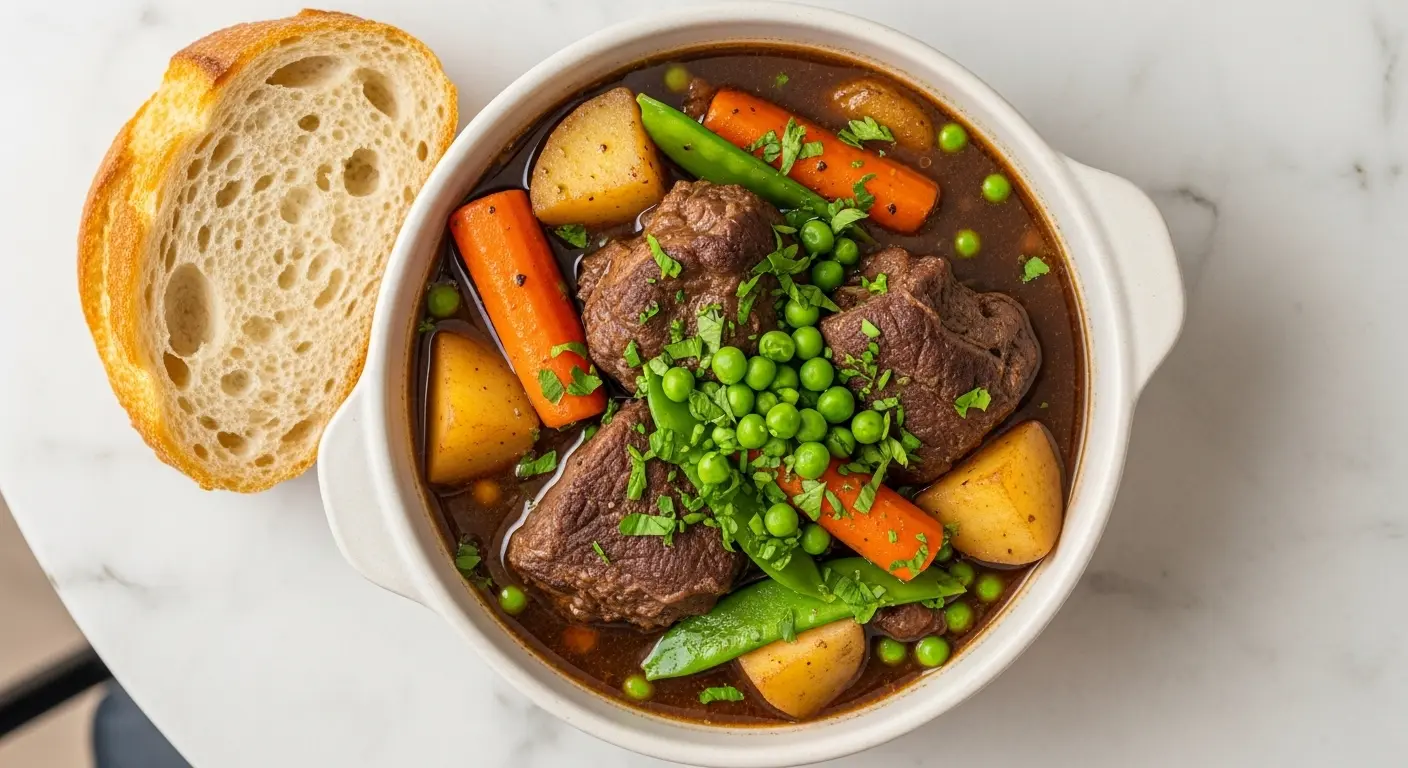
If you have been looking for the perfect venison stew recipe, this is the one to bookmark. Rich with tender chunks of deer meat, earthy root vegetables, and a deeply savory broth built on red wine and herbs, this stew is the kind of meal that makes a cold evening feel like a gift.
Venison has a reputation for being tricky to cook, but slow braising is its best friend. When you give it time, the lean meat transforms from chewy to melt-in-your-mouth tender.
The secret is not just patience, it’s also technique. Searing the meat first builds an irresistible depth of flavor that forms the backbone of the entire dish.
This stew follows the most traditional, widely loved approach: browning the venison in batches, building a flavorful base with aromatics and tomato paste, deglazing with red wine, and slow-simmering everything until the broth is thick, glossy, and absolutely irresistible.
You will find every detail you need right here, from ingredient prep to storage tips. This is comfort food at its finest.
If you enjoy hearty braised dishes, you’ll also love this Beef Bourguignon Recipe for another deeply flavored slow-cooked classic.
Why You’ll Love This Venison Stew Recipe
This venison stew recipe checks every box for a satisfying, crowd-pleasing dinner.
It is completely made from scratch using simple, familiar ingredients that come together to create something truly special.
- Deep, complex flavor – Searing the venison and building with red wine, tomato paste, and Worcestershire sauce creates layers of rich, savory flavor you won’t get from a shortcut recipe.
- Fall-apart tender meat – The low-and-slow cooking method breaks down the connective tissues in venison, leaving the meat so tender it practically dissolves on your fork.
- Packed with vegetables – Carrots, potatoes, celery, and peas make this a complete one-pot meal that is both filling and nutritious.
- Beginner-friendly – Despite its impressive results, the steps are straightforward and easy to follow, even if you have never cooked venison before.
- Perfect for meal prep – This stew tastes even better the next day as the flavors continue to meld overnight.
- Feeds a crowd – This recipe yields 6 generous servings, making it ideal for family dinners or casual entertaining.
- Versatile cooking methods – Can be made on the stovetop, in the oven, or adapted for a slow cooker.
For another comforting one-pot dinner idea, check out this Chicken Stew Recipe.
Ingredients
This venison stew uses a combination of hearty proteins, aromatic vegetables, and rich pantry staples to create a deeply satisfying bowl. Always source the freshest vegetables you can find, and choose a red wine you would enjoy drinking, since it makes a noticeable difference in the final flavor.
- 2 lbs (900g) venison stew meat, cut into 1.5-inch (4cm) cubes
- 3 tablespoons olive oil, divided
- 1 large yellow onion, diced
- 4 cloves garlic, minced
- 3 medium carrots, peeled and cut into 1-inch (2.5cm) rounds
- 3 stalks celery, sliced into 1-inch (2.5cm) pieces
- 2 tablespoons tomato paste
- 3 tablespoons all-purpose flour
- 1 cup (240ml) dry red wine (such as Pinot Noir or Côtes du Rhône)
- 3 cups (720ml) beef broth
- 1 tablespoon Worcestershire sauce
- 1 teaspoon dried thyme
- 1 teaspoon dried oregano
- 2 bay leaves
- 1.5 lbs (680g) baby potatoes (or Yukon gold), halved
- 1 cup (150g) frozen peas
- Salt and black pepper to taste
- Fresh parsley, chopped, for garnish
Read Also: Crockpot Beef Stew Recipe
Kitchen Equipment Needed
Having the right equipment makes this recipe seamless from start to finish. A heavy-bottomed pot is especially important here because it distributes heat evenly, preventing hot spots that could scorch the broth during the long simmer.
- Dutch oven or large heavy-bottomed pot (at least 5.5-quart / 5.2L capacity)
- Sharp chef’s knife and cutting board
- Wooden spoon or heat-safe spatula
- Meat thermometer
- Measuring cups and spoons
- Ladle for serving
- Paper towels (for drying the venison before searing)
- Large mixing bowl
You might also enjoy: Lamb Stew Recipe
Recommended Products for This Recipe
These are products I recommend based on quality and performance, chosen to help you get the best possible results from this venison stew.
1. Enameled Cast Iron Dutch Oven
An enameled cast iron Dutch oven is hands-down the best vessel for this stew. It retains and distributes heat evenly, ensuring a steady simmer throughout the long cooking time without burning the bottom. The tight-fitting lid traps moisture, keeping the broth rich and the venison incredibly tender.
2. Premium Beef Bone Broth
Using a high-quality bone broth instead of regular beef stock adds noticeable body and richness to the stew. The collagen in bone broth gives the finished stew a silky, thick consistency that is hard to replicate otherwise.
3. Worcestershire Sauce (Large Bottle)
Worcestershire sauce is one of those non-negotiable ingredients in a great venison stew. Keeping a large, high-quality bottle on hand means you always have it ready for stews, marinades, and gravies. Even a small amount makes a dramatic difference in the umami depth of the broth.
4. Instant-Read Meat Thermometer
Venison is a very lean meat, which means checking internal temperatures during the searing phase helps you avoid overcooking. An instant-read thermometer is also invaluable for other dishes in your repertoire and is a worthwhile kitchen investment.
For another hearty braised dish that benefits from the same equipment, check out this Beef and Barley Soup Recipe.
Step-by-Step Instructions
1. Prepare the Venison
- Remove the venison from the refrigerator about 30 minutes before cooking to allow it to come closer to room temperature. This promotes even searing.
- Use a sharp knife to trim away any silver skin (the shiny, whitish membrane) from the meat. Silver skin does not break down during cooking and will make the meat tough and chewy.
- Cut the venison into uniform 1.5-inch (4cm) cubes. Uniform pieces cook at the same rate, ensuring no piece is undercooked or overcooked.
- Pat all the venison cubes thoroughly dry with paper towels. This is one of the most important steps: moisture on the surface of the meat will cause it to steam rather than sear, preventing the development of that crucial golden-brown crust.
- Season all sides of the venison generously with salt and freshly ground black pepper.
2. Sear the Venison
- Place your Dutch oven or heavy pot over medium-high heat and allow it to heat for about 2 minutes until it is very hot.
- Add 1 tablespoon of olive oil and swirl to coat the bottom of the pot. The oil should shimmer and look almost like it’s about to smoke.
- Add only half of the venison cubes to the pot in a single layer. Do not crowd the pan. Overcrowding drops the pan temperature and causes steaming instead of searing.
- Let the venison cook undisturbed for 3 to 4 minutes until a deep golden-brown crust forms on the bottom. Resist the urge to move the meat around.
- Flip each piece and sear the opposite side for another 3 to 4 minutes.
- Transfer the seared venison to a bowl and set aside. Repeat with another tablespoon of olive oil and the remaining venison cubes.
- Once all the venison is seared and set aside, you will notice browned bits stuck to the bottom of the pot. These are called fond and they are pure flavor.
3. Sauté the Aromatics
- Reduce the heat to medium. Add the remaining tablespoon of olive oil to the same pot.
- Add the diced onion and celery. Cook, stirring occasionally, for about 5 to 6 minutes until the vegetables have softened and the onion has become translucent.
- Add the minced garlic and cook for another 30 seconds to 1 minute, stirring constantly, until fragrant. Do not let the garlic brown or burn, as it will turn bitter.
- Add the tomato paste directly to the pot. Stir it into the vegetables and cook for 2 minutes, allowing the tomato paste to caramelize slightly. This step deepens its flavor from raw and acidic to sweet and rich.
4. Dust with Flour and Deglaze
- Sprinkle the flour evenly over the vegetables and tomato paste mixture. Stir well and cook for about 2 minutes, stirring continuously. This cooks out the raw flour taste and begins forming the base of your thickened broth.
- Pour the red wine into the pot. Use your wooden spoon to vigorously scrape up all the browned bits stuck to the bottom of the pot. This step, called deglazing, incorporates all that concentrated flavor back into the stew.
- Let the wine simmer for 2 to 3 minutes, allowing it to reduce slightly and cook off the sharp alcohol edge.
5. Build the Broth and Add the Venison Back
- Pour in the beef broth and add the Worcestershire sauce, dried thyme, dried oregano, and bay leaves.
- Stir everything together well to combine.
- Return all the seared venison and any juices that have collected in the bowl back into the pot. The meat should be mostly submerged in the liquid. Add a splash more broth or water if needed.
- Bring the stew to a boil over medium-high heat, then immediately reduce the heat to low.
6. Add the Carrots and Simmer
- Add the sliced carrots to the pot now. Carrots are hardy enough to handle the long cooking time.
- Place the lid on the pot and let the stew simmer gently over low heat for 1 hour and 30 minutes, stirring occasionally. The liquid should be gently bubbling, not at a rolling boil. A vigorous boil will make the venison tough.
- Check periodically to make sure the liquid has not reduced too much. If needed, add a small splash of beef broth or water to maintain the level.
7. Add the Potatoes
- After the initial 1 hour 30 minutes of simmering, add the halved baby potatoes to the pot.
- Stir gently to submerge the potatoes in the broth as much as possible.
- Replace the lid and continue to simmer for another 20 to 25 minutes, until the potatoes are fork-tender and the venison is fall-apart soft.
- To test the potatoes, pierce one with a fork or knife tip. It should slide through with no resistance.
8. Finish and Serve
- Remove the bay leaves from the stew and discard them.
- Add the frozen peas to the pot and stir gently. The peas only need 2 to 3 minutes to warm through. Do not overcook them, or they will lose their bright color and fresh flavor.
- Taste the stew and adjust the seasoning with additional salt and pepper as needed.
- Ladle the stew into bowls and top with freshly chopped parsley for a pop of color and freshness.
- Serve immediately with crusty bread on the side for dipping.
For another impressive braised main course you can try alongside this, this Irish Stew Recipe is a wonderful companion recipe.
Tips for Success
These practical tips make a real difference in how your venison stew turns out, especially if this is your first time working with deer meat.
- Dry the meat thoroughly before searing. This bears repeating because it is so important. Even a little surface moisture prevents proper browning. Pat every piece dry with paper towels just before adding them to the hot pan.
- Sear in batches. Never crowd the pan. The venison needs direct contact with the hot surface. Cook in two or even three batches if necessary to ensure proper browning on all sides.
- Do not rush the simmer. Low and slow is the law with venison. High heat makes the lean meat tough and dry. A gentle, patient simmer lets the collagen in the connective tissues break down into gelatin, which gives the stew a rich, glossy body.
- Soak venison in milk to reduce gaminess. If you or your guests are sensitive to the gamey flavor of wild venison, place the cubed meat in a bowl of whole milk for up to 2 hours before cooking. Rinse and pat dry before searing.
- Add potatoes later in the cooking process. Potatoes become mushy and fall apart if added at the beginning. Adding them in the last 25 minutes ensures they are perfectly cooked but still hold their shape.
- Taste before serving. Always adjust seasoning at the end. The broth can reduce and concentrate during cooking, which may mean you need less added salt than you think.
- Use a good-quality red wine. You do not need an expensive bottle, but avoid anything labeled “cooking wine.” A bottle you would enjoy drinking gives far better results.
Read Also: Cowboy Stew Recipe
Serving Suggestions
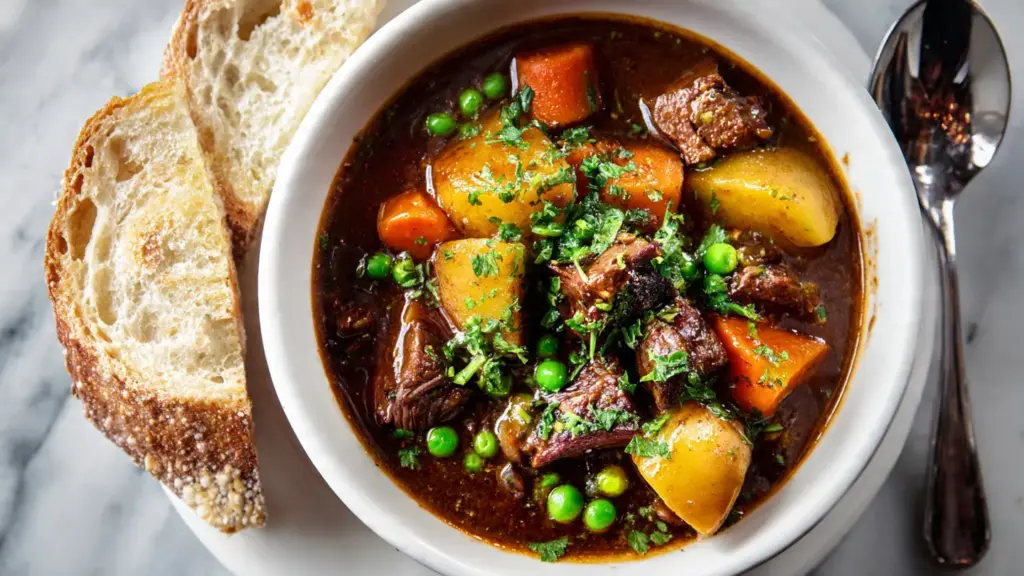
This venison stew is a complete, satisfying meal on its own, but the right accompaniments elevate it from dinner to a memorable feast. The rich, thick broth practically begs to be soaked up by something hearty on the side.
Think of the bread and sides as supporting players, there to complement the bold flavors of the stew without overwhelming them.
- Crusty bread – A thick slice of homemade bread is the classic partner for this stew. Try it alongside this Garlic Naan Bread for a fun twist.
- Mashed potatoes – Serving the stew over a bowl of Creamy Mashed Potatoes makes it even more indulgent.
- Buttered egg noodles – Wide egg noodles tossed in butter make a simple, comforting base for ladling the stew over.
- Steamed green beans or roasted broccoli – A simple green vegetable lightens the richness of the meal and adds color to the plate.
- A simple green salad – A peppery arugula salad with lemon vinaigrette cuts through the richness of the stew beautifully.
- Yorkshire pudding – Pair the stew with this classic British side dish for a proper, old-fashioned dinner. Try this Yorkshire Pudding for the perfect complement.
- Cornbread – A square of Skillet Cornbread alongside the stew is a popular American pairing that works incredibly well.
Variations to Try
Once you have mastered the base recipe, these variations let you customize the stew to suit different tastes, dietary needs, and what you have on hand.
- Slow Cooker Venison Stew – Sear the venison and sauté the aromatics on the stovetop first for maximum flavor, then transfer everything to a slow cooker. Cook on low for 8 hours or high for 4 to 5 hours.
- Mushroom Venison Stew – Add 8 oz (225g) of sliced cremini or baby bella mushrooms with the onions and celery for an earthy, meaty depth that pairs beautifully with the venison.
- Herb de Provence twist – Swap the thyme and oregano for 1.5 teaspoons of herbes de Provence for a French-inspired flavor profile that is fragrant and complex.
- Root vegetable variation – Add parsnips, turnips, or sweet potatoes alongside or instead of the regular potatoes for added sweetness and nutrition.
- Tomato-forward version – Stir in a 14 oz (400g) can of diced tomatoes along with the broth for a heartier, more robust tomato flavor in the base.
- Elk or moose stew – This recipe works beautifully with elk or moose meat. The cooking time may need to extend slightly for moose, which can be tougher.
- Gluten-free version – Substitute the all-purpose flour with a gluten-free flour blend or skip it entirely and thicken the stew at the end with a cornstarch slurry (2 tablespoons cornstarch mixed with 2 tablespoons cold water).
You might also enjoy: Seafood Stew Recipe
Storage and Reheating
One of the great joys of this stew is how well it keeps. The flavors deepen overnight, making leftovers genuinely better than the original.
- Refrigerator storage: Allow the stew to cool completely to room temperature before transferring to airtight containers. Store in the refrigerator for up to 4 days.
- Freezer storage: This stew freezes very well. For best results when freezing, omit the potatoes during cooking (or remove them before freezing), as potatoes become grainy and watery after thawing. Freeze in airtight freezer-safe containers or resealable freezer bags for up to 3 months. Label with the date.
- Thawing: Thaw frozen stew overnight in the refrigerator before reheating. Do not thaw at room temperature.
- Stovetop reheating: Transfer the stew to a saucepan or pot over medium-low heat. Stir gently and heat until warmed through, about 8 to 10 minutes. Add a splash of beef broth if the stew has thickened too much during storage.
- Microwave reheating: Place a portion in a microwave-safe bowl, cover loosely, and reheat in 90-second intervals, stirring between each, until hot throughout.
Read Also: Kimchi Stew Recipe
Nutritional Facts
Based on one serving (approximately 1.5 cups / 360ml), with this recipe yielding 6 servings. Values are estimates and may vary depending on specific ingredients used.
| Nutrient | Amount Per Serving |
|---|---|
| Calories | ~320 kcal |
| Protein | ~34g |
| Carbohydrates | ~22g |
| Dietary Fiber | ~4g |
| Total Fat | ~8g |
| Saturated Fat | ~2g |
| Sodium | ~620mg |
| Potassium | ~920mg |
| Vitamin A | ~80% DV |
| Vitamin C | ~22% DV |
| Iron | ~35% DV |
For more hearty, protein-rich one-pot meals, check out this Brunswick Stew Recipe.
Health Benefits of Key Ingredients
This venison stew is not just deeply satisfying, it is genuinely good for you. The combination of lean protein, fiber-rich vegetables, and antioxidant-packed herbs makes it a nutritional powerhouse.
Understanding what each ingredient contributes makes you appreciate the meal even more.
- Venison – Deer meat is one of the leanest red meats available, with significantly less fat than beef while delivering high amounts of protein, iron, and B vitamins, particularly B12, which supports energy and nervous system health.
- Carrots – Rich in beta-carotene, which the body converts to vitamin A, carrots support eye health, immune function, and skin health. Slow cooking does not significantly diminish their nutritional value.
- Potatoes – Often unfairly dismissed, potatoes are an excellent source of potassium, vitamin C, and resistant starch. They provide sustained energy and help thicken the stew naturally.
- Celery – A hydrating vegetable that adds notable amounts of vitamin K, which plays a key role in blood clotting and bone metabolism.
- Garlic and onion – Both are rich in organosulfur compounds like allicin, which have been linked to anti-inflammatory effects, improved heart health, and immune system support.
- Tomato paste – Concentrated tomatoes are a powerful source of lycopene, an antioxidant associated with reduced risk of certain chronic diseases.
- Peas – Adding peas at the end preserves their vitamin C, folate, and plant-based protein content, contributing meaningfully to the nutritional profile of the stew.
- Herbs (thyme, oregano) – Fresh and dried herbs are surprisingly potent sources of antioxidants. Thyme and oregano contain compounds with antibacterial and anti-inflammatory properties.
Another recipe that puts nutrient-dense ingredients to delicious use: Vegetable Soup Recipe.
Frequently Asked Questions
1. Can I use beef instead of venison in this recipe?
Absolutely. Beef stew meat (such as chuck) works as a direct substitute in this recipe with no other changes needed. The cooking time and technique remain the same. The flavor will be less earthy and slightly richer in fat than venison, but equally delicious. This is actually a great way to test the recipe if venison is not readily available in your area.
2. How do I get rid of the gamey taste in venison?
The most effective method is to soak the cubed venison in whole milk for 1 to 2 hours in the refrigerator before cooking, then rinse and pat dry. The milk draws out some of the compounds responsible for the gamey flavor. Additionally, searing the meat well, using acidic ingredients like red wine and Worcestershire sauce, and cooking with bold aromatics like garlic, onion, and fresh herbs all help to mellow the flavor significantly.
3. What cut of venison works best for stew?
Shoulder and leg cuts are ideal for stew because their tougher connective tissues break down beautifully during the long, slow cooking process, resulting in fall-apart tender meat. Avoid using backstrap or tenderloin for stew, as these prime cuts are already tender and are better suited to quick, high-heat cooking methods like searing or grilling. Pre-cut venison stew meat from a butcher or grocery store is also a perfectly convenient option.
4. Can I make this venison stew in a slow cooker?
Yes, and it turns out wonderfully. Brown the venison and sauté the aromatics on the stovetop first (this step is important for flavor and should not be skipped), then transfer everything except the peas to your slow cooker. Add the broth, wine, Worcestershire, and herbs, and cook on low for 8 hours or high for 4 to 5 hours. Add the peas in the last 10 to 15 minutes and stir before serving.
5. Why is my venison stew meat tough?
Tough venison is almost always a result of either not cooking it long enough or cooking it at too high a temperature. Venison needs a low, gentle simmer to break down its connective tissues. If your venison is still tough at the 1.5-hour mark, simply continue simmering and check every 20 minutes. It will eventually become tender. Increasing the heat to speed things up has the opposite effect and makes the meat tougher, so patience truly is the key.
For another long-simmered, deeply satisfying recipe worth your patience, you’ll love this Mississippi Pot Roast Recipe.
Final Thoughts
A great venison stew recipe is one of those dishes that rewards you long after you set down the spoon. The kitchen smells incredible for hours, the meat becomes impossibly tender, and the broth develops a richness that store-bought shortcuts simply cannot replicate.
This recipe is a celebration of real, honest cooking.
Give this venison stew a try on the next cold evening you have, and watch it become a permanent fixture in your seasonal recipe rotation.
I would love to hear how it turns out for you! Drop a comment below with any questions, tips you discovered along the way, or photos of your finished bowl. Sharing your results makes this little corner of the internet a better place for everyone.
Recommended:
- Beef Stroganoff Recipe
- Slow Cooker Pot Roast Recipe
- Oyster Stew Recipe
- Hamburger Soup Recipe
- Beef and Barley Soup Recipe
- Chicken and Dumplings Recipe
- Loaded Potato Soup Recipe
- Minestrone Soup Recipe
- Lentil Soup Recipe
- Beef Bone Broth Soup Recipe