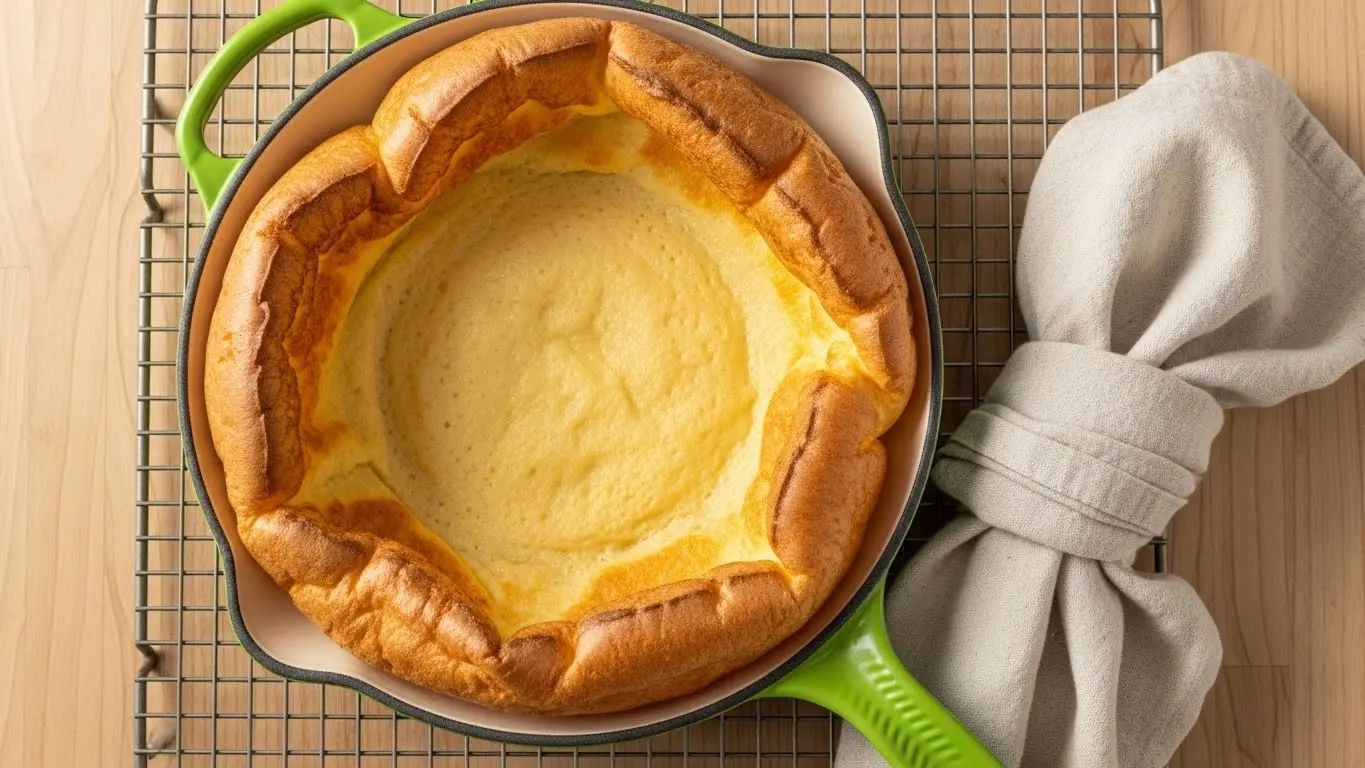
If you’ve ever wondered what makes a proper Sunday roast truly spectacular, the answer is golden, puffy Yorkshire pudding. This classic British side dish has been gracing dinner tables for centuries, and for good reason.
The magic happens when a simple batter of eggs, flour, and milk meets screaming hot fat in the oven. What emerges are crispy, cloud-like cups with edges that shatter at the slightest touch and soft, eggy centers that soak up gravy like a dream.
I grew up thinking Yorkshire pudding was some complicated culinary feat reserved for fancy restaurants. Then my British neighbor shared her foolproof method, and I realized it’s actually one of the easiest and most impressive things you can make at home.
The secret isn’t in fancy ingredients or complicated techniques. It’s all about temperature, timing, and a few key tricks that ensure those dramatic rises every single time.
Today I’m sharing everything I’ve learned about making perfect Yorkshire pudding. From the ideal batter consistency to the best type of fat to use, you’ll have all the knowledge you need to nail this recipe on your first try.
This pairs beautifully with my roasted potatoes for a complete British feast.
Why You’ll Love This Yorkshire Pudding Recipe
This recipe delivers restaurant-quality results with minimal effort and basic ingredients you probably already have. The batter comes together in minutes, and the transformation in the oven is truly magical.
You’ll love how forgiving this recipe is once you understand the basics. Even if your first batch isn’t Instagram-perfect, they’ll still taste incredible and disappear from the table in seconds.
Here’s what makes this Yorkshire pudding special:
- Guaranteed dramatic rise: The batter and temperature technique ensures those towering, crispy edges every time
- Versatile serving options: Perfect alongside roast beef, as breakfast with eggs, or even as a dessert base
- Make-ahead friendly: The batter actually improves when rested, making this ideal for stress-free entertaining
- Budget-friendly: Uses simple pantry staples without any expensive specialty ingredients
- Foolproof method: Clear instructions that work every single time, even for complete beginners
Ingredients
This traditional recipe relies on just a handful of basic ingredients that work together to create those signature puffy, golden cups. The ratios matter more than fancy additions here.
- 2 cups all-purpose flour: Provides structure without making the puddings too dense
- 4 large eggs: The key to that rich, custardy interior and dramatic rise
- 2 cups whole milk: Creates the perfect batter consistency (room temperature works best)
- 1 teaspoon salt: Enhances all the flavors without making them taste savory
- ½ cup beef drippings or vegetable oil: The fat that creates those crispy, golden exteriors
Kitchen Equipment Needed
Having the right tools makes all the difference when you’re aiming for those picture-perfect puffy Yorkshire puddings. Most of these you probably already own.
- Muffin tin or Yorkshire pudding pan: Traditional metal pans work better than silicone for maximum rise
- Large mixing bowl: For combining your batter ingredients
- Whisk or electric mixer: Gets the batter smooth and slightly frothy
- Measuring cups and spoons: Accuracy matters with this recipe
- Ladle or jug: Makes pouring batter into hot pans much easier and safer
Recommended Products for This Recipe
After making Yorkshire pudding countless times, I’ve found a few products that genuinely make the process easier and deliver better results. These aren’t必需品, but they’re worth considering if you plan to make this recipe regularly.
1. Traditional Yorkshire Pudding Pan
The specialized four-well Yorkshire pudding pan creates those classic large, dramatic puddings that rise beautifully. The deeper wells and excellent heat distribution make a noticeable difference compared to standard muffin tins, and you’ll get that authentic British pub look every time.
2. Quality Beef Drippings
Using authentic beef drippings instead of vegetable oil adds incredible flavor and helps achieve that signature golden crust. The drippings have a higher smoke point and create a richer taste that complements roast beef perfectly.
3. Heavy-Duty Metal Muffin Tin
If you prefer individual-sized puddings, invest in a commercial-grade muffin tin that conducts heat evenly. The heavier construction prevents warping at high temperatures and ensures consistent browning across all your puddings.
Another favorite: Prime Rib
Step-by-Step Instructions
1. Prepare the Batter
- Crack the eggs into your large mixing bowl and whisk them until they’re completely broken up and slightly frothy
- Add the flour and salt to the eggs, then whisk until you have a thick paste with no lumps visible
- Gradually pour in the milk while whisking constantly, which prevents lumps from forming
- Continue whisking until the batter is completely smooth and has the consistency of heavy cream
- Cover the bowl with plastic wrap or a clean kitchen towel and let it rest at room temperature for at least 30 minutes (or up to 2 hours for even better results)
2. Preheat Everything
- Position your oven rack in the upper third of the oven, where the heat is most intense
- Preheat your oven to 450°F (230°C), which is crucial for that dramatic rise
- Add about 1 teaspoon of beef drippings or oil to each well of your muffin tin or Yorkshire pudding pan
- Place the pan with the fat in the preheated oven for 10 minutes until the fat is smoking hot and shimmering
- Keep the oven door closed as much as possible during this time to maintain the high temperature
3. Fill and Bake
- Working quickly but carefully, remove the blazing hot pan from the oven and place it on a heat-safe surface
- Give your batter a quick stir to recombine any ingredients that may have separated during resting
- Immediately pour or ladle the batter into each well, filling them about halfway to two-thirds full
- The batter should sizzle dramatically when it hits the hot fat, which is exactly what you want
- Quickly return the pan to the oven and close the door gently but firmly
- Bake for 20-25 minutes without opening the oven door at all, as the cold air will cause them to deflate
- The puddings are done when they’re puffed up dramatically, deep golden brown, and crispy on the edges
4. Serve Immediately
- Remove the pan from the oven and use a thin spatula or butter knife to gently loosen each pudding from its well
- Transfer them to a serving platter or individual plates right away while they’re still piping hot
- Serve within a few minutes of removing from the oven, as Yorkshire puddings start to deflate as they cool
- If needed, you can keep them warm in a low oven (200°F) with the door slightly ajar for up to 10 minutes
You might also enjoy: Dinner Rolls Recipe
Tips for Success
Getting Yorkshire pudding right is all about understanding a few key principles. Once you nail these, you’ll be making perfect puddings every single time.
- Room temperature matters: Bring eggs and milk to room temperature before mixing for better rise and texture
- Rest the batter: At least 30 minutes of resting allows the flour to fully hydrate and creates lighter puddings
- Don’t skip the preheat: That smoking hot fat is non-negotiable for the initial puff and crispy exterior
- Resist opening the oven: Cold air is the enemy of risen Yorkshire pudding, so keep that door closed
- Fill halfway only: Overfilling prevents proper rising and can cause spillover in your oven
- Use the right fat: Beef drippings give the best flavor, but vegetable oil with a high smoke point works too
- Oven temperature is critical: If your puddings aren’t rising, your oven might not be hot enough
Read Also: Buttermilk Biscuit Recipe
Serving Suggestions
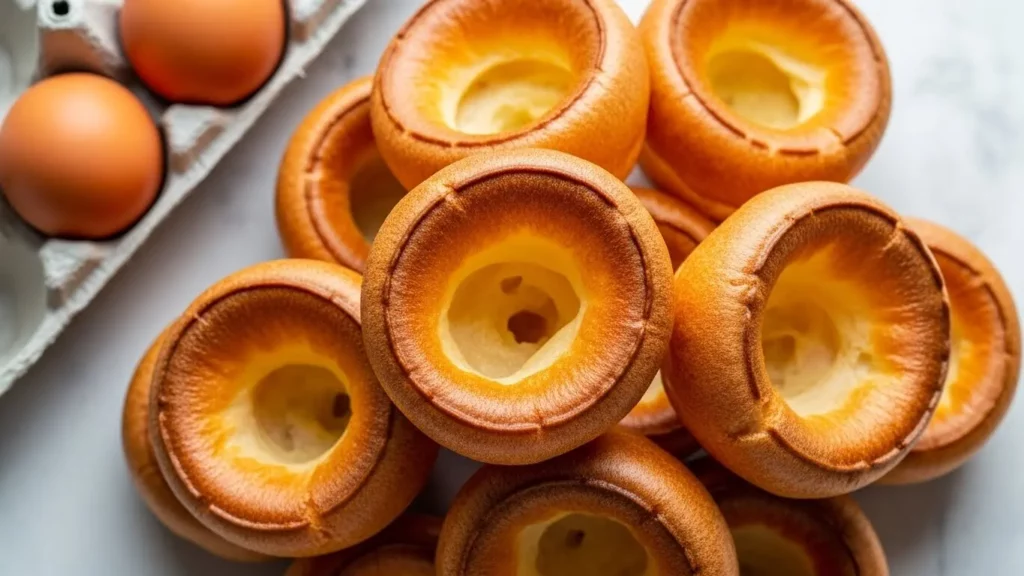
Yorkshire pudding is incredibly versatile and works with far more than just traditional roast beef. The crispy cups are perfect for holding all sorts of delicious fillings and accompaniments.
The classic pairing is alongside roast beef with plenty of rich gravy for dipping and pouring. But these golden beauties also shine at breakfast filled with scrambled eggs and bacon, or as a base for creamed mushrooms.
Here are my favorite ways to serve Yorkshire pudding:
- Traditional Sunday roast: Serve with prime rib, roasted potatoes, and turkey gravy
- Breakfast puddings: Fill with scrambled eggs and crispy bacon
- Sausage and onion gravy: Top with bangers and rich sausage gravy
- Leftover makeover: Use cold Yorkshire puddings as sandwich bread for roast beef sandwiches
- Dessert version: Drizzle with hot fudge sauce and fresh berries
Variations to Try
Once you’ve mastered the basic recipe, experimenting with different flavors and sizes opens up a whole new world of Yorkshire pudding possibilities. These variations keep things interesting without complicating the technique.
- Herb-infused: Add 2 tablespoons of finely chopped fresh rosemary, thyme, or chives to the batter
- Cheese Yorkshire puddings: Stir in ½ cup of grated cheddar or Parmesan before baking
- Giant toad in the hole: Bake sausages directly in a large pan of Yorkshire pudding batter
- Mini puddings: Use a mini muffin tin for bite-sized appetizers that bake in just 12-15 minutes
- Onion gravy puddings: Add caramelized onions to the bottom of each well before pouring in batter
For a lighter option, try: Roasted Broccoli Recipe
Storage and Reheating
Yorkshire puddings are definitely best enjoyed fresh from the oven, but you can store and reheat them if needed. The texture won’t be quite as spectacular, but they’ll still taste delicious.
- Room temperature: Best eaten immediately, but can sit at room temperature for up to 2 hours
- Refrigerator: Store in an airtight container for up to 2 days, though they’ll lose their crispness
- Freezer: Freeze completely cooled puddings in a freezer bag for up to 1 month
- Reheating from frozen: Place frozen puddings directly in a 400°F oven for 5-8 minutes until crispy
- Reheating from refrigerated: Warm in a 375°F oven for 3-5 minutes to restore some crispness
- Avoid the microwave: It makes them soggy and chewy instead of crispy
Read Also: Scalloped Potatoes Recipe
Nutritional Facts
Per serving (1 Yorkshire pudding):
- Calories: 145
- Total Fat: 7g
- Saturated Fat: 2.5g
- Cholesterol: 75mg
- Sodium: 185mg
- Total Carbohydrates: 15g
- Dietary Fiber: 0.5g
- Sugars: 2g
- Protein: 5g
Note: Nutritional information is approximate and varies based on specific ingredients used and portion sizes.
Health Benefits of Key Ingredients
While Yorkshire pudding isn’t exactly a health food, the simple ingredients do provide some nutritional value. Understanding what each component offers helps you appreciate this classic dish even more.
Eggs are nutritional powerhouses packed with high-quality protein, essential vitamins like B12 and D, and minerals including selenium and choline. The protein in eggs helps build and repair tissues throughout your body.
- Eggs: Excellent source of complete protein, vitamin D, B vitamins, and choline for brain health
- Milk: Provides calcium for strong bones, vitamin D, and additional protein for satiety
- Flour: Offers energy-providing carbohydrates and small amounts of iron and B vitamins
- Moderate portions: Yorkshire pudding can fit into a balanced diet when enjoyed alongside nutrient-dense vegetables and lean proteins
Another favorite: Beef Stroganoff Recipe
Frequently Asked Questions
1. Why didn’t my Yorkshire puddings rise?
The most common reason is that your oven or fat wasn’t hot enough when you added the batter. Make sure your oven is fully preheated to 450°F and the fat is literally smoking before you pour in the batter. Opening the oven door during baking also causes them to collapse, so resist the temptation to peek.
2. Can I make the batter ahead of time?
Absolutely, and it actually improves the results. You can make the batter up to 24 hours in advance and keep it covered in the refrigerator. Just remember to let it come back to room temperature for about 30 minutes before baking, and give it a good stir before pouring.
3. What’s the best fat to use for Yorkshire pudding?
Traditional beef drippings give the most authentic flavor and create the crispiest exterior. If you don’t have beef drippings, use a neutral oil with a high smoke point like vegetable, canola, or sunflower oil. Avoid olive oil and butter as they have lower smoke points and can burn at the high temperature needed.
4. Why do my Yorkshire puddings deflate after I take them out of the oven?
Some deflation is normal as they cool, but excessive collapse usually means they weren’t baked long enough. Make sure they’re deeply golden brown and very crispy on the edges before removing them from the oven. Underbaked puddings don’t have enough structure to hold their shape once the steam inside cools.
5. Can I make Yorkshire pudding without eggs?
Eggs are essential to the structure and rise of Yorkshire pudding, so substitutes rarely work as well. However, you can try using a commercial egg replacer designed for baking, though the texture will be different. For best results with dietary restrictions, look for dedicated egg-free Yorkshire pudding recipes rather than trying to substitute in this traditional version.
Final Thoughts
There’s something deeply satisfying about pulling a pan of golden, puffy Yorkshire puddings from your oven. The way they rise and crisp up never gets old, no matter how many times you make them.
This recipe has become my go-to for Sunday dinners, holiday meals, and any time I want to impress guests with minimal effort. The simple ingredients and straightforward technique mean anyone can master this British classic with just a little practice.
I hope you’ll give this Yorkshire pudding recipe a try and experience that moment of pride when you see them puff up perfectly in your oven. Drop a comment below and let me know how yours turned out, or share any family variations you love!
Recommended:
- Meatloaf Recipe
- Baked Salmon Recipe
- Baked Cod Recipe
- Beef Bourguignon Recipe
- Thanksgiving Turkey Recipe
- Turkey Tetrazzini Recipe
- Green Bean Casserole Recipe
- Sweet Potato Casserole Recipe
- Chicken Marsala Recipe
- Hollandaise Sauce Recipe