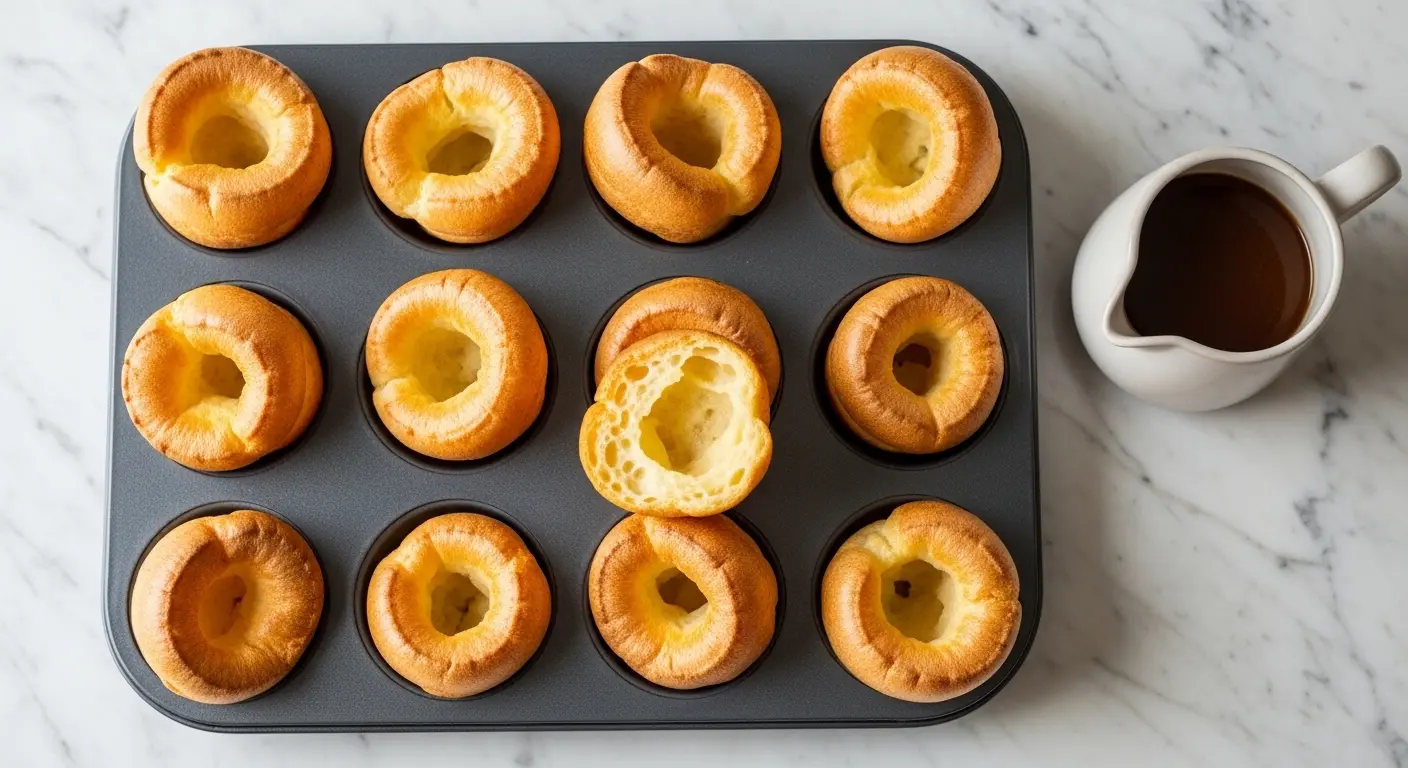
If you’ve ever sat down to a proper British Sunday roast and marveled at those tall, golden, hollow pastry cups sitting next to the beef and gravy, you already know why a great Yorkshire pudding recipe is worth mastering. These beauties are crispy on the outside, soft and eggy in the middle, and completely irresistible when filled with a pool of rich brown gravy. Made from just four pantry staples, the technique is everything, and once you understand the science behind the puff, you’ll nail them every single time.
The secret lies in two things: a well-rested batter and sizzling hot fat. When ice-cold batter meets nearly smoking oil in a hot tin, the rapid steam production is what sends them shooting up over the edges of the pan. Skip either of those steps and you’ll end up with flat, doughy discs instead of the dramatic, hollow puffs that make Yorkshire puddings so iconic.
This recipe walks you through the classic British version, the kind you’d find served at Sunday lunches across Yorkshire and beyond. It uses plain flour, eggs, whole milk, and a splash of cold water for extra lift, cooked in well-heated vegetable oil. Nothing fancy, nothing obscure. Just honest, brilliant baking.
If you love classic British baked goods, you’ll also want to check out this Spotted Dick for another wonderfully traditional pudding to add to your repertoire.
Why You’ll Love This Yorkshire Pudding Recipe
Yorkshire puddings are one of those recipes that feel far more impressive than the effort involved.
Four ingredients, one bowl, and about 25 minutes of active time, yet the results look like something that came out of a professional kitchen.
They’re endlessly versatile, too. Serve them alongside a Sunday roast, fill them with sausages for classic Toad-in-the-Hole, or even spoon in jam and cream for a sweet treat.
The batter can be made up to two days in advance and stored in the fridge, which means less stress on cooking day.
Once you master this recipe, you’ll wonder how any roast dinner could exist without them.
- Incredibly simple four-ingredient batter
- Dramatic, tall rise with crispy edges and a soft, hollow center
- Ready in under 30 minutes once the batter is rested
- Make-ahead friendly: batter stores in the fridge for up to 2 days
- Naturally dairy-adaptable and easy to scale up or down
- The ultimate vessel for soaking up rich gravy
- Pairs beautifully with roast beef, roast chicken, or pork
You might also enjoy: Bread Pudding Recipe
Ingredients
Only four ingredients stand between you and perfect Yorkshire puddings. Whole milk creates a richer, creamier batter, while a small splash of cold water lightens the texture for a better rise. Use the freshest eggs you can find since they provide the lift and structure. As for the fat, vegetable oil works brilliantly because of its high smoke point, but beef drippings add a deeper, more traditional flavor if you have them.
- 4 large eggs (at room temperature, or straight from the fridge for the cold batter method)
- 140 g (1 cup / 5 oz) plain all-purpose flour (do not use self-raising flour)
- 200 ml (¾ cup + 1 tbsp) whole milk
- 50 ml (3½ tbsp) cold water
- 1 tsp fine sea salt
- 4 tbsp vegetable oil (or beef drippings, sunflower oil, or lard)
Makes 12 individual puddings in a standard 12-hole muffin tin, or 8 larger puddings in a Yorkshire pudding tin.
Read Also: Figgy Pudding Recipe
Kitchen Equipment Needed
You don’t need any special equipment to make this recipe, but a few key items will give you the best results. A good quality 12-hole muffin tin or a Yorkshire pudding tin with deep cups gives the puddings walls to climb and helps them hold their shape. A blender or a large jug with a whisk makes a completely smooth, lump-free batter without overworking it.
- Yorkshire pudding tin or 12-hole muffin tin (deep cups work best)
- Large mixing bowl or blender
- Balloon whisk
- Large measuring jug (for pouring batter quickly)
- Oven mitts
- Wire cooling rack
- Rubber spatula
- Kitchen timer
Read Also: Sticky Toffee Pudding Recipe
Recommended Products for This Recipe
These are products I genuinely recommend based on quality and performance. Each one can make a real difference in how your Yorkshire puddings turn out.
1. Non-Stick Yorkshire Pudding Tin (4-Cup or 12-Cup)
A proper Yorkshire pudding tin with deep, wide cups helps the batter climb the sides and hold its structure as it rises. Non-stick surfaces mean your puddings release cleanly without deflating as you lift them out. It’s the single most important piece of equipment for getting that classic tall, cup-shaped result.
2. OXO Good Grips 2-Cup Angled Measuring Cup
Being able to pour the batter quickly and confidently into each hot cup is key to an even rise. An angled measuring jug lets you see the measurement from above without bending down, and the spout controls the pour precisely so no batter dribbles onto the tin edges.
3. Premium Grass-Fed Beef Drippings
If you want the most authentic, deeply flavored Yorkshire puddings, beef drippings are the traditional fat of choice. They add a rich, savory depth that vegetable oil simply can’t replicate, and they reach the high smoke point needed for maximum rise.
4. KitchenAid Hand Blender
A stick blender or immersion blender blitzes the batter in seconds and produces a completely smooth, aerated mixture with zero lumps. It’s quicker than whisking by hand and gives you a slightly lighter, airier pudding.
5. Silicone Oven Mitts
Working with near-smoking hot oil and removing a heavy tin from a 425°F oven requires serious hand protection. Silicone oven mitts give you a firm grip on the tin and protect your forearms from steam burns when the cold batter hits the hot fat.
This recipe also pairs wonderfully with a classic Prime Rib for the ultimate British-inspired dinner.
Step-by-Step Instructions
1. Make the Batter
- Measure 140 g (1 cup) of plain all-purpose flour and 1 tsp of fine sea salt into a large mixing bowl.
- Make a well in the center of the flour using the back of a spoon.
- Crack 4 large eggs directly into the well.
- Pour in 200 ml (¾ cup + 1 tbsp) of whole milk and 50 ml (3½ tbsp) of cold water.
- Whisk vigorously from the center outward, incorporating the flour gradually to avoid lumps. If using a blender, simply add all ingredients and blitz for 30 seconds until the batter is silky smooth and has the consistency of thin cream.
- Taste the batter lightly. It should be well-seasoned. Add a pinch more salt if needed.
- Transfer the finished batter to a large pouring jug for easy pouring later.
2. Rest the Batter
- Cover the jug or bowl loosely with plastic wrap or a clean kitchen towel.
- Place it in the refrigerator to rest for a minimum of 30 minutes, though 1 hour is ideal and overnight is even better.
- Resting allows the gluten in the flour to relax, which means the batter will be more extensible and rise more dramatically in the oven. It also lets the proteins in the eggs fully hydrate the flour for a smoother, more even result.
- Do not skip this step. Even 30 minutes makes a visible difference.
3. Preheat the Oven and Heat the Fat
- When you are ready to bake, preheat your oven to 230°C (450°F / Gas Mark 8). Make sure the oven is fully up to temperature before doing anything else. This is non-negotiable.
- Add 1 teaspoon of vegetable oil (or beef drippings) into each cup of a 12-hole muffin tin, or 1½ teaspoons into each cup of an 8-hole Yorkshire pudding tin.
- Place the tin on the top shelf of the preheated oven and leave it to heat for a minimum of 10 to 15 minutes.
- You want the oil to be almost at smoking point. When you carefully remove the tin, the oil should shimmer, ripple, and sizzle visibly. If it is not this hot, put it back for another 5 minutes.
4. Fill the Tin
- Remove the batter from the fridge. Give it a quick stir or swirl since some settling may have occurred.
- Very carefully remove the tin from the oven using heavy oven mitts and place it on a heatproof surface near the open oven door. Work quickly.
- Immediately pour the cold batter into each hot cup, filling each one about one-third to half full. Do not overfill. The rapid contrast of cold batter hitting near-smoking fat creates the burst of steam that makes the puddings rise.
- You should hear a satisfying sizzling sound as the batter hits the fat. This is exactly what you want.
- If any cups seem under-filled, top them up quickly but do not linger. The batter should not be sitting in the hot tin for more than 10 to 15 seconds before it goes back into the oven.
5. Bake Without Opening the Door
- Immediately slide the tin back onto the top shelf of the oven and close the door firmly.
- Set a timer for 20 to 25 minutes.
- Do not open the oven door at any point during baking. Not even to peek. The rush of cold air can cause the puddings to collapse and go flat. Treat them like a soufflé.
- After 20 minutes, take a quick look through the oven door glass. The puddings should be well-risen, deeply golden brown, and pulling away from the edges of the tin.
- If they look pale or under-cooked after 20 minutes, leave them for an additional 3 to 5 minutes.
6. Serve Immediately
- Once deeply golden and crispy, remove the tin from the oven.
- Using a butter knife or small spatula, loosen any puddings that are sticking at the base.
- Transfer immediately to plates and serve with roast beef, roasted potatoes, vegetables, and plenty of hot brown gravy.
- Yorkshire puddings do not wait. They will begin to deflate within a few minutes of leaving the oven, so have everything else ready before you pull them out.
If you love classic roast-dinner sides, this recipe pairs wonderfully with Creamy Mashed Potatoes on the table.
Tips for Success
Getting Yorkshire puddings right is mostly about understanding two things: temperature and patience. The fat must be ferociously hot, and the batter must have had time to rest. Nail both of those, and perfect puddings are virtually guaranteed. Here are the most important tips to keep in mind.
- Use cold batter from the fridge. Thermal shock is what drives the rise. Cold batter meeting smoking-hot oil creates instant steam, which pushes the batter up dramatically.
- Never use self-raising flour. It will actually cause flat puddings because the baking powder interferes with the steam-driven rise.
- Don’t fill cups more than halfway. Overfilling leads to heavy, collapsed puddings. A third to halfway full is the sweet spot.
- Use the top shelf. The closer to the heat element, the better the rise.
- Do not open the oven door. Cold air is the enemy. Wait until at least 20 minutes have passed before even looking through the glass.
- Make sure every ingredient is whisked smooth. Lumpy batter leads to uneven cooking. Blend until you can pour the batter in a thin, ribbon-like stream from a spoon.
- Rest the batter for at least 30 minutes, ideally 1 hour. The rested batter puffs significantly higher than fresh batter.
- Have your plates and gravy ready before the puddings come out. These need to go straight to the table.
Read Also: Turkey Gravy Recipe
Serving Suggestions
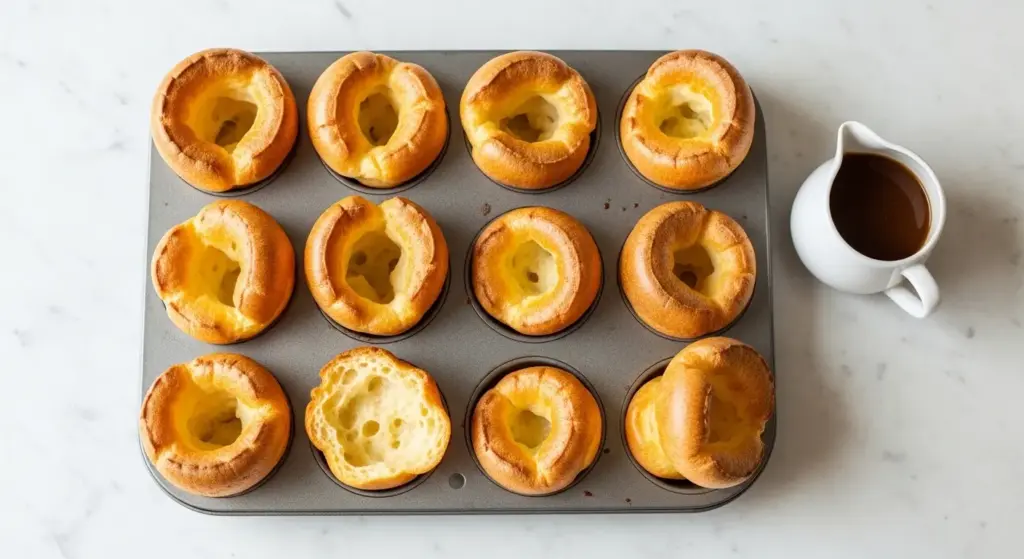
Yorkshire puddings are most at home as part of a traditional British Sunday roast, but they’re incredibly versatile beyond that. The hollow center acts as a natural bowl for gravies, stews, and fillings, which makes them endlessly useful on the dinner table. Serve them hot, right from the oven, and let your guests tear into them while they’re still at their crispiest best.
- Alongside roast beef and lashings of rich brown onion gravy
- Paired with sausage gravy for a comforting, hearty weekend breakfast
- Filled with creamed spinach and roasted mushrooms for a vegetarian option
- Served alongside prime rib at a special occasion dinner
- Topped with caramelized onion gravy and served as a starter before the main course
- Paired with roasted potatoes and peas as part of a full Sunday spread
- Served sweet with a spoonful of jam and a dollop of clotted cream for a traditional British dessert
Another reader favorite to serve alongside: Garlic Mashed Potatoes
Variations to Try
Once you’ve mastered the classic, it’s easy to put your own spin on the recipe. Yorkshire puddings are a blank canvas that welcome all kinds of flavors. From cheesy herb versions to sweet dessert puddings, there’s a variation for every occasion.
- Cheesy herb Yorkshire puddings: Add 2 tablespoons of finely grated Parmesan and 1 tablespoon of chopped fresh thyme or chives to the batter before resting. These are incredible served with soup.
- Toad-in-the-Hole: Pour the batter over browned pork sausages in a large roasting tin and bake until the batter is puffed and golden. Serve with onion gravy.
- Giant single-tin pudding: Pour all of the batter into one large, well-greased roasting tin for a dramatic, shareable centerpiece that can be sliced into portions.
- Sweet dessert puddings: Omit the salt and add 1 teaspoon of vanilla extract and 1 tablespoon of sugar to the batter. Fill the finished puddings with fresh berries, whipped cream, or warm jam.
- Beef dripping puddings: Swap vegetable oil for rendered beef drippings for the most traditional, deeply savory flavor possible.
- Mini canapé puddings: Use a 24-cup mini muffin tin and reduce baking time to 12 to 15 minutes. Fill each tiny pud with sour cream and a sliver of smoked salmon for an elegant party bite.
You might also enjoy: Corn Pudding Recipe
Storage and Reheating
Yorkshire puddings are always best eaten immediately after baking while still hot and crispy. That said, leftovers can absolutely be stored and revived successfully, making this a great make-ahead recipe if you bake them slightly underdone on purpose.
- Refrigerator: Store cooled puddings in an airtight container in the fridge for up to 3 days.
- Freezer: Arrange cooled puddings in a single layer on a baking sheet and freeze until solid, then transfer to a freezer-safe bag or container. They keep well for up to 1 month.
- Oven reheating (recommended): Place refrigerated or thawed puddings on a baking sheet in a preheated oven at 200°C (400°F) for 5 to 8 minutes until hot, puffed back up, and crispy.
- From frozen: Do not thaw first. Place frozen puddings straight into a 200°C (400°F) oven for 8 to 10 minutes.
- Avoid the microwave: Microwaving makes Yorkshire puddings soft, soggy, and chewy. The oven is always the better option.
- Batter storage: Uncooked batter can be stored in a covered jug in the fridge for up to 2 days. Give it a good stir before using.
Read Also: Rice Pudding Recipe
Nutritional Facts
Per serving (1 Yorkshire pudding made with vegetable oil, based on 12 servings)
| Nutrient | Amount |
|---|---|
| Calories | 95 kcal |
| Total Fat | 5 g |
| Saturated Fat | 1 g |
| Cholesterol | 56 mg |
| Sodium | 210 mg |
| Total Carbohydrates | 9 g |
| Dietary Fiber | 0.3 g |
| Total Sugars | 0.8 g |
| Protein | 3.5 g |
| Calcium | 40 mg |
| Iron | 0.8 mg |
Nutritional values are estimates and will vary depending on specific ingredients and portion sizes used.
Another classic British-inspired recipe to try: Cottage Pie
Health Benefits of Key Ingredients
Yorkshire puddings aren’t usually thought of as a health food, but the core ingredients each bring their own genuine nutritional benefits. When enjoyed as part of a balanced meal rich in vegetables and lean protein, they fit comfortably into a varied diet.
The main ingredients contribute more than you might expect to your daily nutrition.
- Eggs are among the most nutrient-dense foods available. They provide all nine essential amino acids, along with choline for brain health, lutein for eye health, and fat-soluble vitamins including A, D, E, and K. The protein in eggs also supports muscle repair and satiety.
- Whole milk contributes calcium for bone density, vitamin D, and high-quality protein. The fat content in whole milk also helps the batter emulsify more smoothly, improving the final texture of the pudding.
- Plain flour (all-purpose) provides complex carbohydrates for sustained energy as well as small amounts of B vitamins including thiamine and niacin, which support energy metabolism.
- Vegetable oil is a source of unsaturated fats, particularly omega-6 fatty acids, and delivers fat-soluble vitamins that help the body absorb nutrients from the rest of the meal.
- The combination of eggs and milk creates a high-quality protein source that supports fullness and muscle function, making Yorkshire puddings a more satisfying accompaniment to any roast dinner than they might first appear.
Another great side dish to explore: Roasted Broccoli
Frequently Asked Questions
1. Why did my Yorkshire puddings not rise?
The most common reason is that the oil was not hot enough before the batter was added. The fat must be shimmering and almost at smoking point before you pour in the batter. A second common issue is opening the oven door during baking, which causes the puddings to deflate before they’ve set. Make sure your oven is fully preheated and that the tin has spent at least 10 to 15 minutes heating up before you begin.
2. Can I make the batter ahead of time?
Yes, and in fact, it is encouraged. The batter actually improves with a longer rest because the flour fully hydrates, the gluten relaxes, and the puddings rise higher and more evenly. You can make the batter up to 2 days ahead and store it in a covered jug in the fridge. Give it a brief stir or shake before using.
3. Can I use semi-skimmed or non-dairy milk instead of whole milk?
You can use semi-skimmed milk for a slightly lighter result, though whole milk produces a richer, more flavorful pudding. Non-dairy milks such as oat milk or almond milk can be substituted with reasonable results, though the texture may differ slightly. Full-fat oat milk tends to work the best of the non-dairy options because its fat content is closest to whole milk.
4. Why does using self-raising flour make Yorkshire puddings go flat?
It sounds counterintuitive, but self-raising flour actually causes Yorkshire puddings to rise less. The leavening agents in self-raising flour release their gas too quickly during baking, before the structure of the batter has had time to set. The proper rise in Yorkshire puddings comes entirely from steam created by the temperature difference between cold batter and extremely hot fat, not from baking powder or bicarbonate of soda.
5. Can Yorkshire puddings be made vegetarian or vegan?
Traditional Yorkshire puddings use eggs and dairy milk, but vegetarian versions can easily be made by swapping beef drippings for vegetable oil, which is actually what most modern recipes do already. A fully vegan version is trickier since the eggs provide structure and lift. Using a mix of aquafaba (the liquid from a can of chickpeas) in place of eggs and full-fat oat milk has been reported to work with varying results, though the texture will differ from the classic.
Read Also: Vanilla Pudding Recipe
Final Thoughts
A great Yorkshire pudding recipe is one of those kitchen skills that pays dividends every single time you pull them from the oven.
The combination of crispy, golden edges, a dramatically puffed top, and that soft, hollow interior that just begs to be filled with gravy is hard to beat for sheer satisfaction.
With just four ingredients and a few key techniques under your belt, you’ll be serving up perfect puds every Sunday.
Give this recipe a try and let me know how yours turned out in the comments below. Did you go classic with beef drippings, or stick with vegetable oil? I’d love to hear!
Recommended:
- Bread Pudding Recipe
- Malva Pudding Recipe
- Chocolate Pudding Recipe
- Banana Pudding Recipe
- Dirt Pudding Recipe
- Chia Seed Pudding Recipe
- Brownie Pudding Recipe
- Sausage Gravy Recipe
- Beef Stroganoff Recipe
- Green Bean Casserole Recipe