A perfectly roasted prime rib recipe is one of those dishes that makes any occasion feel genuinely special — the kind of meal people talk about long after the plates are cleared.
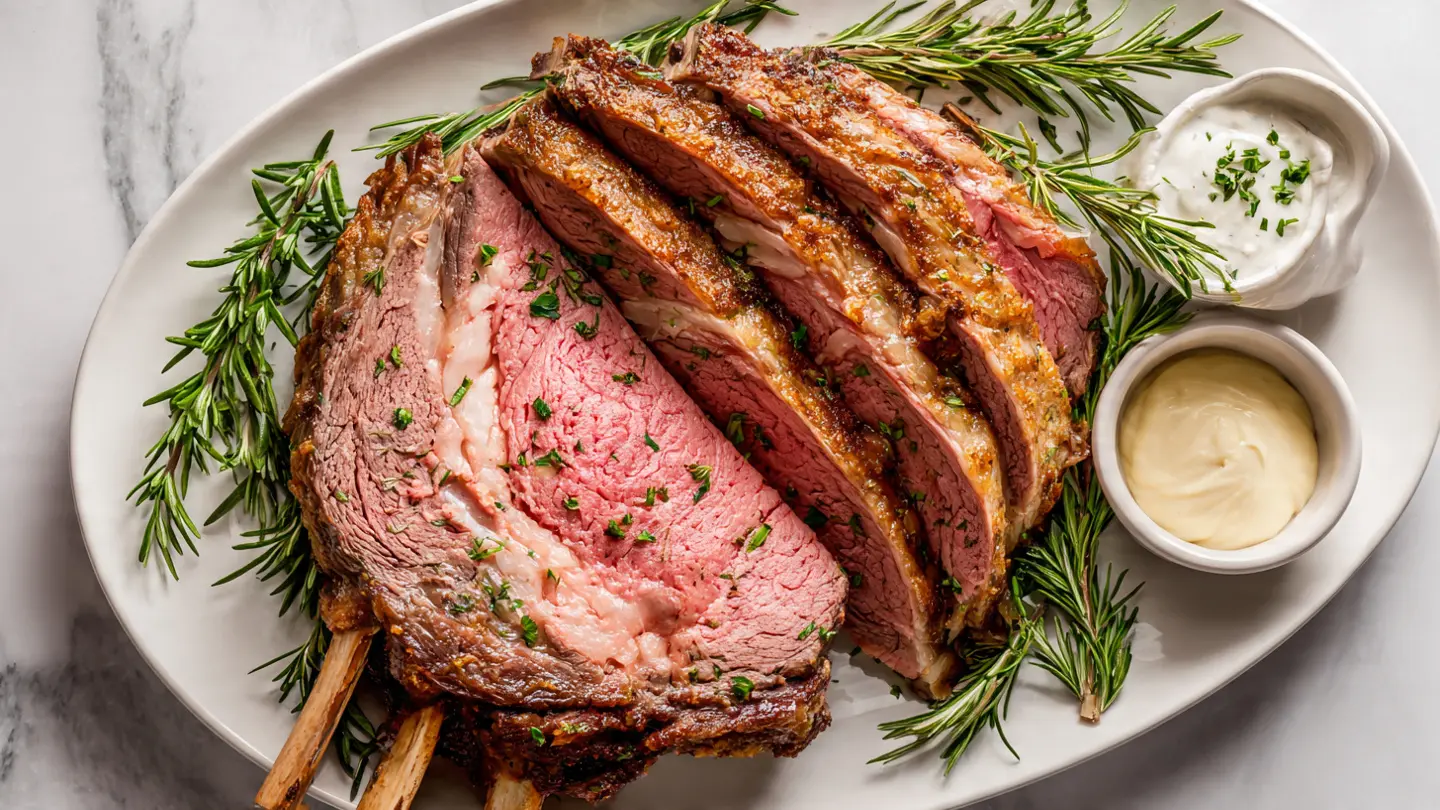
This classic standing rib roast delivers a deeply golden, herb-crusted exterior with a juicy, rosy interior that melts in your mouth. The secret lies in two things: a bold garlic-herb butter rub applied generously before roasting, and a two-temperature cooking method that first sears the outside at high heat, then slow-roasts it to your preferred doneness.
Prime rib earns its “prime” reputation not just from the USDA grade, but from the rib section it comes from — the longissimus dorsi muscle, which does very little work during the animal’s life. That’s why the meat is so tender and well-marbled without any special treatment.
This recipe uses simple ingredients you can find at any grocery store or butcher, yet the results are extraordinary. If you’ve ever been intimidated by a large roast, this step-by-step guide will walk you through every detail so your roast comes out perfectly every single time.
Whether you’re cooking for Christmas dinner, Easter, or just a Sunday worth celebrating — this is the recipe to reach for.
Pair this with a rich, creamy side and you have a meal that rivals any steakhouse. Speaking of elegant beef dishes, you might also love this Beef Wellington for another impressive centrepiece roast.
Why You’ll Love This Prime Rib Recipe
This recipe is genuinely hard to mess up once you understand the method. The two-temperature roasting approach takes all the guesswork out of timing.
You get that gorgeous dark crust — salty, herbaceous, and slightly crispy — while the interior stays blush-pink and juicy from edge to edge. It’s the definition of a perfect roast.
The garlic-herb butter rub is incredibly easy to put together and does all the heavy lifting in terms of flavor. Just five pantry staples, and you have a seasoning paste that transforms the roast.
Prime rib is also surprisingly hands-off once it’s in the oven. You don’t need to baste, flip, or babysit it — just let the oven do the work.
Resting the roast after cooking is non-negotiable and the final step that guarantees juicy slices. The juices redistribute beautifully into the meat during that 20-30 minute rest.
- Impressive presentation: A bone-in standing rib roast is one of the most visually stunning dishes you can bring to a table.
- Feeds a crowd: A 4-bone roast easily serves 8-10 people, making it ideal for holiday gatherings.
- Minimal prep time: Despite the long cook time, active prep takes only about 20 minutes.
- Make-ahead friendly: The dry brine step can be done up to 24 hours ahead for even more flavor.
- Versatile leftovers: Prime rib leftovers are gold — perfect for sandwiches, hash, or a hearty soup the next day.
You might also enjoy this Beef Bourguignon if you love rich, deeply flavorful beef dishes for special occasions.
Ingredients
To make the perfect prime rib roast, you need quality ingredients and nothing fussy. Here’s what you’ll need for a 4-bone standing rib roast that serves 8-10 people.
- 1 standing rib roast (4 bones / 8-9 lbs / 3.6-4 kg), bones frenched if desired
- 6 tablespoons (85g) unsalted butter, softened to room temperature
- 8 garlic cloves, minced
- 2 tablespoons (6g) fresh rosemary, finely chopped
- 2 tablespoons (6g) fresh thyme leaves, finely chopped
- 2 tablespoons (36g) kosher salt
- 1 tablespoon (7g) coarse black pepper
- 1 teaspoon (2g) onion powder
- 2 tablespoons (30ml) Worcestershire sauce
- 1 cup (240ml) beef broth (for the roasting pan, to make au jus)
- 1 tablespoon (15ml) olive oil (for initial searing if using stovetop sear method)
For the Horseradish Cream Sauce (optional but highly recommended):
- ½ cup (120g) sour cream
- ¼ cup (60g) prepared horseradish
- 1 tablespoon (15ml) Dijon mustard
- 1 teaspoon (5ml) fresh lemon juice
- Salt and pepper to taste
Read Also: Cranberry Sauce Recipe
Kitchen Equipment Needed
You don’t need any specialty tools for this recipe, but a few key items will make the process smoother and the results more consistent.
- Large roasting pan (at minimum 16×12 inches / 40×30 cm) with a rack
- Instant-read meat thermometer (absolutely essential — do not skip this)
- Leave-in probe thermometer (optional but very helpful for monitoring without opening the oven)
- Sharp carving knife
- Cutting board (large enough for a full roast)
- Aluminum foil (for tenting the roast while it rests)
- Small mixing bowl (for the herb butter)
- Basting brush or your hands (for applying the rub)
- Medium saucepan (for making au jus on the stovetop)
- Paper towels (for patting the roast dry before seasoning)
Read Also: Beef Stroganoff Recipe
Recommended Products for This Recipe
These are products that genuinely make a difference when cooking a prime rib roast. Each one was selected based on quality, performance, and how much easier it makes the cooking process.
1. Instant-Read Meat Thermometer (ThermoWorks Thermapen Style)
An accurate thermometer is the single most important tool for this recipe. It’s the only way to know exactly when your roast hits that perfect 120°F (49°C) medium-rare mark without cutting into it. A reliable thermometer removes all the guesswork and prevents overcooking an expensive cut of meat.
2. Heavy-Duty Roasting Pan with Rack
A sturdy roasting pan elevates the roast so heat circulates all around it, promoting even browning on all sides. It also catches the drippings for your au jus, which you won’t want to waste. Lightweight pans tend to warp at high heat, so a heavy-duty option is worth the investment.
3. Leave-In Probe Thermometer
This lets you monitor the internal temperature of your roast without opening the oven door, which causes temperature fluctuations. You simply insert the probe, set your target temperature, and it alerts you when the roast is ready. It’s a total stress-reliever for large cuts.
4. Prepared Horseradish (Silver Spring or Bubbies Brand)
A high-quality prepared horseradish with real heat and a clean sharp flavor transforms the horseradish cream sauce. Cheaper versions can taste flat or overly vinegary. A jar of premium prepared horseradish makes a noticeable difference in the final sauce.
5. Carving Knife Set
A long, sharp carving knife is essential for slicing prime rib cleanly without tearing the meat. A proper carving set includes both a slicing knife and a carving fork, making the presentation at the table smooth and impressive.
Another festive centerpiece dish perfect for holiday entertaining is this Cornish Hen Recipe — great for smaller gatherings.
Step-by-Step Instructions
1. Choose and Prepare Your Roast
- Select a bone-in standing rib roast with at least 3-4 ribs. Each rib feeds approximately 2 people, so plan accordingly.
- Ask your butcher to “french” the rib bones if you want that elegant, clean-bone presentation — this just means scraping the top inch or two of the bones clean of meat and fat.
- Remove the roast from the refrigerator at least 2-3 hours before cooking (up to 4 hours is fine). This is critical — a cold roast center will never cook evenly. The meat must come fully to room temperature before entering the oven.
- Pat the roast completely dry on all sides using paper towels. Moisture is the enemy of a good crust — you need the surface to be dry so it sears rather than steams.
2. Make the Garlic-Herb Butter Rub
- In a small bowl, combine the softened unsalted butter, minced garlic cloves, fresh rosemary, fresh thyme, Worcestershire sauce, onion powder, kosher salt, and black pepper.
- Mix everything together until it forms a uniform paste. The butter should be soft enough to spread easily but not melted — room temperature butter is ideal.
- Taste the mixture and adjust salt if needed. It should taste bold and very well-seasoned since it’s going to coat a large cut of meat.
- Set the herb butter aside while you prepare the roasting pan.
3. Season the Roast (Dry Brine Option)
- For the absolute best results, apply the herb butter rub 24 hours ahead of cooking and leave the roast uncovered in the refrigerator overnight. This is called a dry brine. The salt draws moisture out, then reabsorbs back into the meat with the flavors, creating deeper seasoning and a drier surface that crisps up better.
- If doing a same-day cook, apply the rub at least 1 hour before cooking (after bringing the roast to room temperature).
- Using clean hands or a basting brush, rub the butter mixture all over the roast — top, bottom, sides, and between the ribs if possible. Be generous and make sure every surface is well-coated.
- Place the roast bone-side down in your roasting pan on the rack. The bones act as a natural rack and add flavor to the drippings.
4. Preheat the Oven and Begin the Sear
- Position your oven rack in the lower third of the oven (not the very bottom, but one level up). This placement ensures the roast sits in the center of the oven’s heat.
- Preheat the oven to 500°F / 260°C (or as high as your oven goes, up to 500°F). This high initial heat is what creates the signature crust.
- Once the oven is fully preheated and the roast is at room temperature, place the roasting pan in the oven.
- Roast at 500°F for 15-20 minutes, or until the exterior has developed a deep golden-brown crust. You’ll notice the fat beginning to render and the kitchen filling with that unmistakable roasting aroma.
- Do not open the oven during this searing phase.
5. Reduce Temperature and Slow-Roast to Doneness
- After the initial sear, immediately reduce the oven temperature to 325°F / 163°C. Do not remove the roast from the oven during this temperature change — just turn the dial down.
- Pour the beef broth into the bottom of the roasting pan (not over the roast) at this point. It will help prevent the drippings from burning and forms the base of your au jus.
- Continue roasting until the internal temperature reaches your desired doneness. Use your instant-read thermometer inserted into the thickest part of the roast, avoiding the bone:
- Rare: 110-115°F / 43-46°C (pull from oven)
- Medium-Rare: 120°F / 49°C (pull from oven) — this is the classic, most recommended doneness
- Medium: 130°F / 54°C (pull from oven)
- Important: Always pull the roast 5-10°F before your target temperature. The internal temperature will continue rising 5-10°F during the rest period (called carryover cooking).
- As a rough guide, estimate 15-16 minutes of cooking time per pound (per 450g) for medium-rare at 325°F after the initial sear. But always rely on the thermometer, not the clock.
6. Rest the Roast
- Remove the roasting pan from the oven and transfer the roast to a clean cutting board.
- Tent it loosely with aluminum foil. Do not wrap it tightly — you want a gentle tent that traps some heat without trapping steam, which would soften the crust.
- Let the roast rest for 20-30 minutes. This step is non-negotiable. Resting allows the muscle fibers to relax and the juices to redistribute throughout the meat. Cutting too early means all those precious juices run out onto the cutting board instead of staying in your slice.
7. Make the Au Jus
- While the roast rests, place the roasting pan on the stovetop over medium-high heat.
- The pan will have flavorful drippings mixed with the beef broth already in the bottom.
- Bring the liquid to a simmer and scrape up any browned bits stuck to the bottom of the pan — these are packed with flavor.
- Strain through a fine mesh strainer to remove any solids, then season with salt and pepper to taste.
- Keep warm over low heat until ready to serve. For a slightly richer au jus, add an additional splash of beef broth and a teaspoon of Worcestershire sauce.
8. Make the Horseradish Cream Sauce
- In a small bowl, stir together the sour cream, prepared horseradish, Dijon mustard, lemon juice, and a pinch of salt and pepper.
- Mix until smooth and well-combined. Taste and adjust — more horseradish for more heat, more lemon for brightness, more salt to round out the flavors.
- Cover and refrigerate until serving. This sauce can be made up to 24 hours ahead and actually improves in flavor as it sits.
9. Carve and Serve
- After the rest period, remove the foil. The roast should be slightly firm on the outside and have a beautiful, golden-brown crust.
- To carve, stand the roast upright on the cut end (the flat side where the chine bone was removed).
- Using your sharp carving knife, slice downward between the ribs to separate the individual bone sections first if desired, or slice crosswise for boneless slabs.
- For traditional slices, cut across the grain into ½ to ¾ inch (1.2-2 cm) thick slices. The interior should show a beautiful uniform pink from edge to edge.
- Arrange the slices on a warm platter and serve immediately with au jus poured alongside and the horseradish cream sauce in a small bowl.
For another impressive roasted dinner, try this Filet Mignon Recipe for an elegant weeknight alternative.
Tips for Success
Getting prime rib right is all about paying attention to a few key things. Here are the tips that make the biggest difference.
- Always use a thermometer. There is simply no reliable substitute. Oven temperatures vary, roast sizes vary, and the only true measure of doneness is internal temperature.
- Don’t skip the rest. 20-30 minutes minimum. The roast will not get cold — it holds heat very well, especially under foil.
- Dry brine if you have time. Even just 4-6 hours in the fridge after applying the rub makes a meaningful difference in crust and flavor.
- Bring the meat to room temperature. Two to three hours on the counter before roasting is the single biggest factor in getting even, edge-to-edge cooking.
- Buy the best quality roast you can afford. Look for USDA Prime or Choice grade. Prime has more marbling and the result is noticeably juicier.
- Don’t cover the pan during roasting. You want the heat to circulate freely and the fat to render and crisp, not steam.
- Carve against the grain. Look at the direction the muscle fibers run and slice perpendicular to them for the most tender bite.
The same careful temperature technique works beautifully in this Beef Tenderloin Air Fryer recipe if you’re cooking for a smaller group.
Serving Suggestions
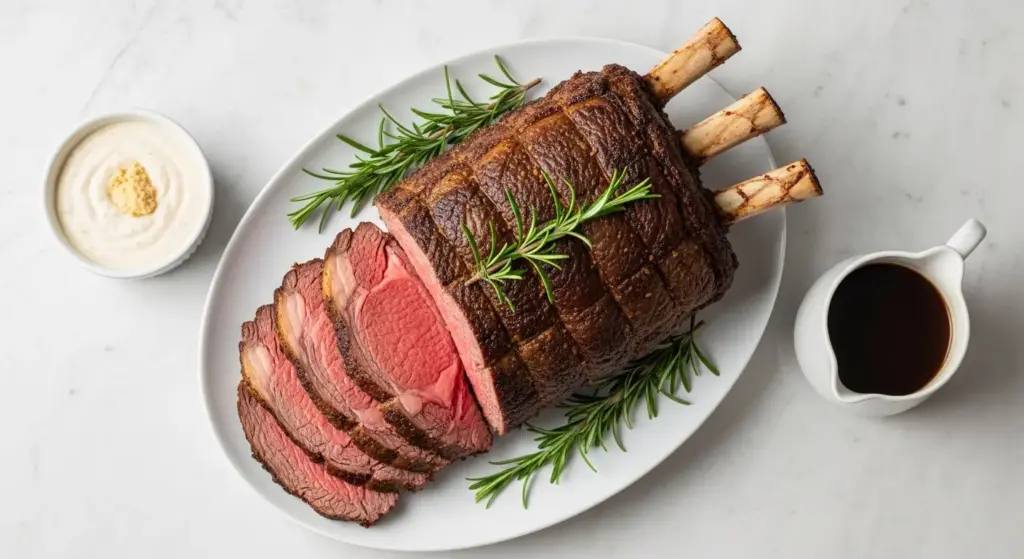
Prime rib calls for sides that complement its richness without competing with it. Classic, comforting sides are always the right call.
The most beloved pairing is a side of Creamy Mashed Potatoes — the buttery smoothness soaks up the au jus beautifully. Add a spoonful of the horseradish cream and it’s pure heaven.
- Yorkshire Pudding — the traditional British side made from the drippings, absolutely perfect with prime rib
- Au Gratin Potatoes — creamy, cheesy, and indulgent alongside the rich roast
- Green Bean Casserole — a classic holiday table staple
- Roasted Brussels Sprouts with Bacon — the slight bitterness balances the richness of the beef
- Creamed Spinach — a steakhouse classic that pairs elegantly with prime rib
- Scalloped Potatoes — layered with cream and cheese, these are irresistible with any beef roast
- Dinner Rolls — soft, pillowy rolls for soaking up every last drop of au jus
- Honey Roasted Carrots — a touch of sweetness that pairs wonderfully with savory beef
Variations to Try
Once you’ve mastered the classic prime rib, there are some wonderful variations worth exploring.
The base technique stays the same across all these variations — what changes is the rub or the added aromatics.
- Reverse Sear Prime Rib: Instead of starting at high heat, cook the roast low and slow at 250°F / 120°C until it’s 10°F below your target temperature, then blast it at 500°F for 10-15 minutes at the end for the crust. This method produces incredibly even doneness throughout.
- Smoked Prime Rib: Cook on an offset smoker at 225-250°F / 107-121°C with cherry or oak wood until it reaches temperature. The smoke ring and flavor are extraordinary.
- Coffee-Crusted Prime Rib: Add 1 tablespoon of finely ground espresso to the herb butter rub for a deep, earthy flavor note that enhances the beefy taste.
- Herb-Crusted with Dijon: Coat the roast with a layer of Dijon mustard before applying the herb butter — this acts as a binder and adds a tangy, mustardy depth to the crust.
- Holiday Spiced Prime Rib: Add a pinch of ground allspice and dried cranberry reduction to the rub for a festive twist.
- Boneless Prime Rib Roast: A boneless rib roast (also called a ribeye roast) uses the exact same method but cooks slightly faster. It’s easier to carve but loses a bit of the dramatic presentation.
You can also use leftover prime rib in this delicious Prime Rib Soup the next day for a truly satisfying meal.
Storage and Reheating
Prime rib stores and reheats beautifully if you handle it correctly. The key is to avoid high heat when reheating, which will overcook the meat and dry it out.
- Refrigerating: Wrap leftover slices tightly in plastic wrap or store in an airtight container. Properly stored, it keeps well in the refrigerator for up to 4 days.
- Freezing: Wrap individual slices in plastic wrap and then foil. Store in a freezer-safe bag for up to 2-3 months. Thaw overnight in the refrigerator before reheating.
- Reheating in the oven: Place slices in a baking dish with a splash of beef broth or au jus. Cover tightly with foil and warm in a 250°F / 120°C oven for 20-30 minutes. This gentle heat warms the meat through without overcooking.
- Reheating in a pan: Sear slices quickly in a hot cast-iron skillet for 45-60 seconds per side if you prefer a slightly crisped exterior.
- Do not microwave if you can help it — it tends to overcook the edges and make the texture rubbery.
- Using leftovers: Leftover prime rib makes outstanding roast beef sandwiches, beef hash with roasted potatoes, sliced thin for prime rib tacos, or chopped into the Prime Rib Soup mentioned above.
Read Also: Mississippi Pot Roast Recipe
Nutritional Facts
The following nutrition information is an estimate per serving, based on approximately 8 oz (225g) of cooked prime rib (without sides or sauce). Nutritional values will vary based on the exact size of the roast, the fat cap left on, and individual serving size.
| Nutrient | Per Serving (8 oz / 225g) |
|---|---|
| Calories | 650-700 kcal |
| Protein | 55-60g |
| Total Fat | 45-50g |
| Saturated Fat | 18-20g |
| Carbohydrates | 1-2g |
| Sodium | 700-900mg (varies with seasoning) |
| Cholesterol | 160-180mg |
| Iron | 4-5mg (20-25% DV) |
| Zinc | 8-10mg (70-90% DV) |
Prime rib is naturally low in carbohydrates and is a significant source of complete protein, iron, and B vitamins. It is a calorie-dense food primarily due to its fat content, which is also what makes it so flavorful and satisfying.
Another holiday classic worth knowing the nutritional profile for is this Thanksgiving Turkey — a leaner but equally festive centerpiece.
Health Benefits of Key Ingredients
Prime rib and its key ingredients offer some meaningful nutritional benefits worth highlighting.
While prime rib is undeniably an indulgent food best enjoyed occasionally, the quality of nutrients it delivers is impressive.
- High-quality protein: Beef provides all nine essential amino acids. A single serving of prime rib can deliver over 50 grams of complete protein, supporting muscle repair, immune function, and satiety.
- Rich in iron: Beef is one of the best dietary sources of heme iron, the form most easily absorbed by the body. This is especially valuable for people at risk of iron deficiency.
- Zinc: Prime rib provides a substantial dose of zinc per serving, a mineral important for immune health, wound healing, and testosterone production.
- B vitamins: Beef is an excellent source of B12, B6, niacin, and riboflavin — all essential for energy metabolism and nervous system function.
- Garlic (in the rub): Fresh garlic contains allicin, a compound with well-documented antimicrobial and anti-inflammatory properties. It also supports cardiovascular health when consumed regularly.
- Fresh rosemary and thyme: Both herbs contain rosmarinic acid and other antioxidants that may help reduce oxidative stress and inflammation.
- Horseradish: The prepared horseradish in the cream sauce is a glucosinolate-rich root that has been studied for its potential antimicrobial and digestive benefits.
Read Also: Collard Greens Recipe
Frequently Asked Questions
1. How many ribs should I buy for my guests?
Plan on one bone per two guests as a general guideline. A 4-bone roast comfortably serves 8-10 people. If your guests are big eaters or you want generous leftovers, go one size up. When in doubt, a slightly larger roast is always better — the leftovers are extraordinary.
2. What is the best internal temperature for prime rib?
For most people, medium-rare is the gold standard for prime rib. That means pulling the roast from the oven at 120°F / 49°C and allowing it to rest to around 125-130°F / 52-54°C.
Going above 135°F / 57°C starts to move into medium territory, and above 145°F / 63°C the beef loses much of its tenderness and juiciness. If your guests prefer varying levels of doneness, the end slices will always be more cooked than the center slices.
3. Can I make prime rib the day before?
You can absolutely do the dry brine up to 24 hours ahead. However, the actual roasting is best done on the day of serving.
If you need to cook it earlier in the day, remove the roast from the oven slightly below your target temperature (about 5°F lower than usual), tent it, and let it cool to room temperature. About 1 hour before serving, warm it uncovered in a 250°F / 120°C oven for 20-30 minutes to gently reheat without overcooking.
4. Do I need to tie the roast?
If your butcher has already tied the roast, leave the string on during cooking and remove it after resting. Tying helps the roast hold an even, round shape during cooking, which promotes more even heat distribution.
If your roast is untied and the bones are still attached, it will usually hold its shape fine on the rack. Tying is more important for boneless roasts.
5. What’s the difference between prime rib and ribeye steak?
Both cuts come from the same section of the cow — the primal rib section (ribs 6-12). The difference is simply in how they’re cut and cooked.
Prime rib is a large, bone-in rib roast cooked as a whole piece then sliced. Ribeye steak is cut from the same muscle into individual steaks and cooked quickly over high heat. Prime rib’s slow-roasting method allows it to develop deeper, more complex flavors and a unique tenderness you can’t achieve with a quick sear.
Read Also: Beef Bourguignon Recipe
Final Thoughts
A prime rib recipe is one of the most rewarding things you can cook for the people you love. Yes, it requires a little planning and patience — but the process is straightforward, and the payoff is extraordinary.
From the moment that golden, herb-crusted roast comes out of the oven to the first juicy slice hitting the plate, everything about this meal feels celebratory and special.
Don’t let the size or the price tag of a prime rib roast intimidate you. With a reliable thermometer, the two-temperature method, and that 20-minute rest, you genuinely cannot go wrong.
Give this recipe a try at your next holiday dinner or Sunday gathering, and watch how fast the platter empties. Come back and leave a comment letting me know how it turned out — I’d love to hear about your roast! If you have your own tips or family traditions around prime rib, share them below.
Recommended:
- Yorkshire Pudding Recipe
- Garlic Mashed Potatoes Recipe
- Sweet Potato Casserole Recipe
- Roasted Potatoes Recipe
- Turkey Gravy Recipe
- Slow Cooker Pot Roast Recipe
- Beef and Barley Soup Recipe
- Meatloaf Recipe
- Roasted Broccoli Recipe
- Sausage Stuffing Recipe